Inspiration
The inspiration for this project came from observing the health conditions of students in our college environment. Many students tend to neglect their health due to academic pressure, irregular schedules, and lack of awareness, which often results in frequent illness, absenteeism, and reduced academic performance.
In many cases, students ignore early symptoms of common viral diseases until the condition becomes severe. This highlighted the need for a simple, accessible, and technology-driven solution that could help in early detection and awareness.
Motivated by this real-life problem, the HealthGuard project was designed to use AI-based symptom analysis and real-time data to support students and communities in identifying potential health risks early and encouraging timely care.
What it does
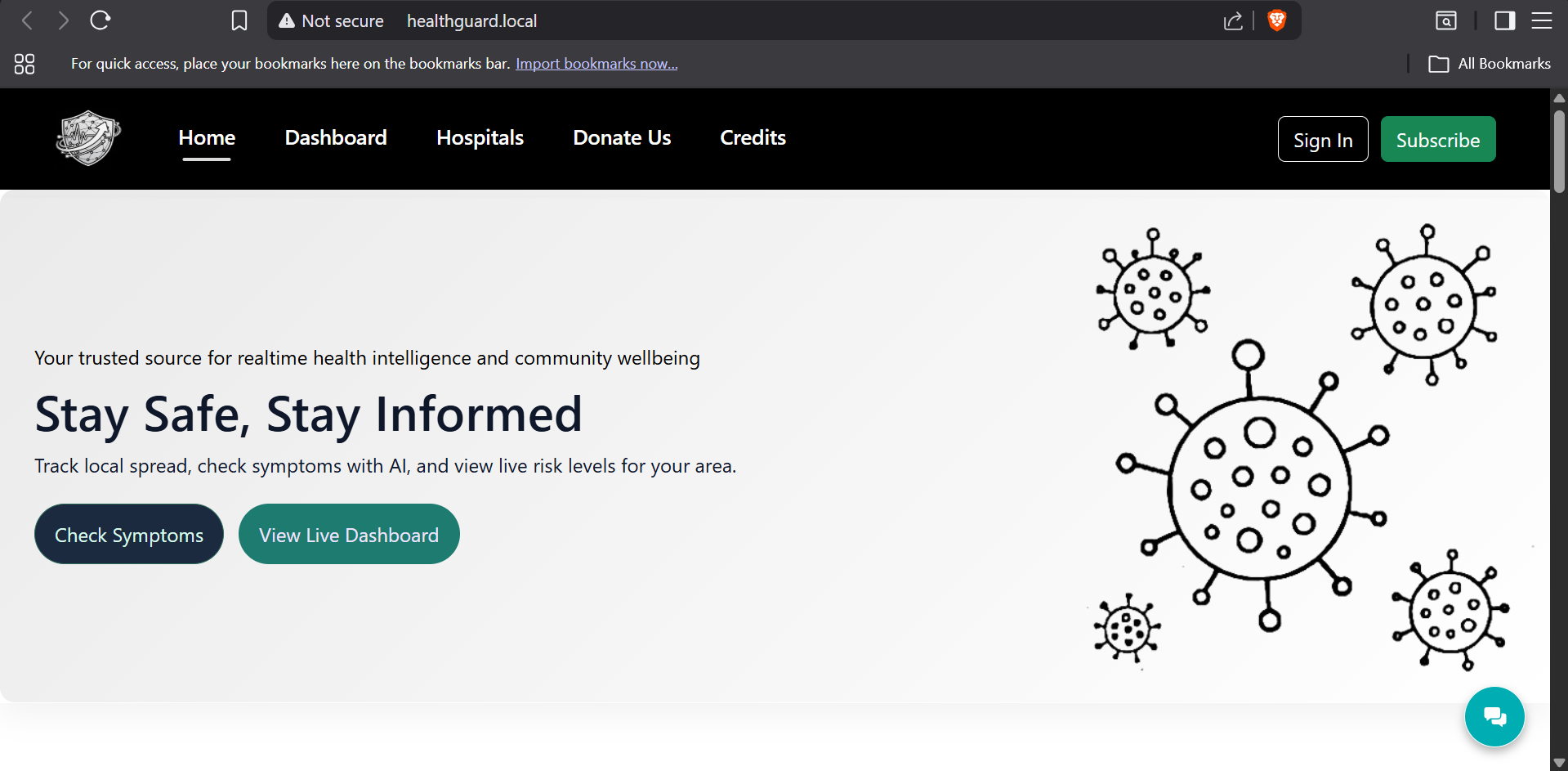
HealthGuard is an AI-powered web-based health monitoring system designed to assist in the early detection and prediction of viral diseases. The system allows users to input symptoms through an interactive chatbot interface, which analyzes the data and provides preliminary disease predictions along with basic health guidance.
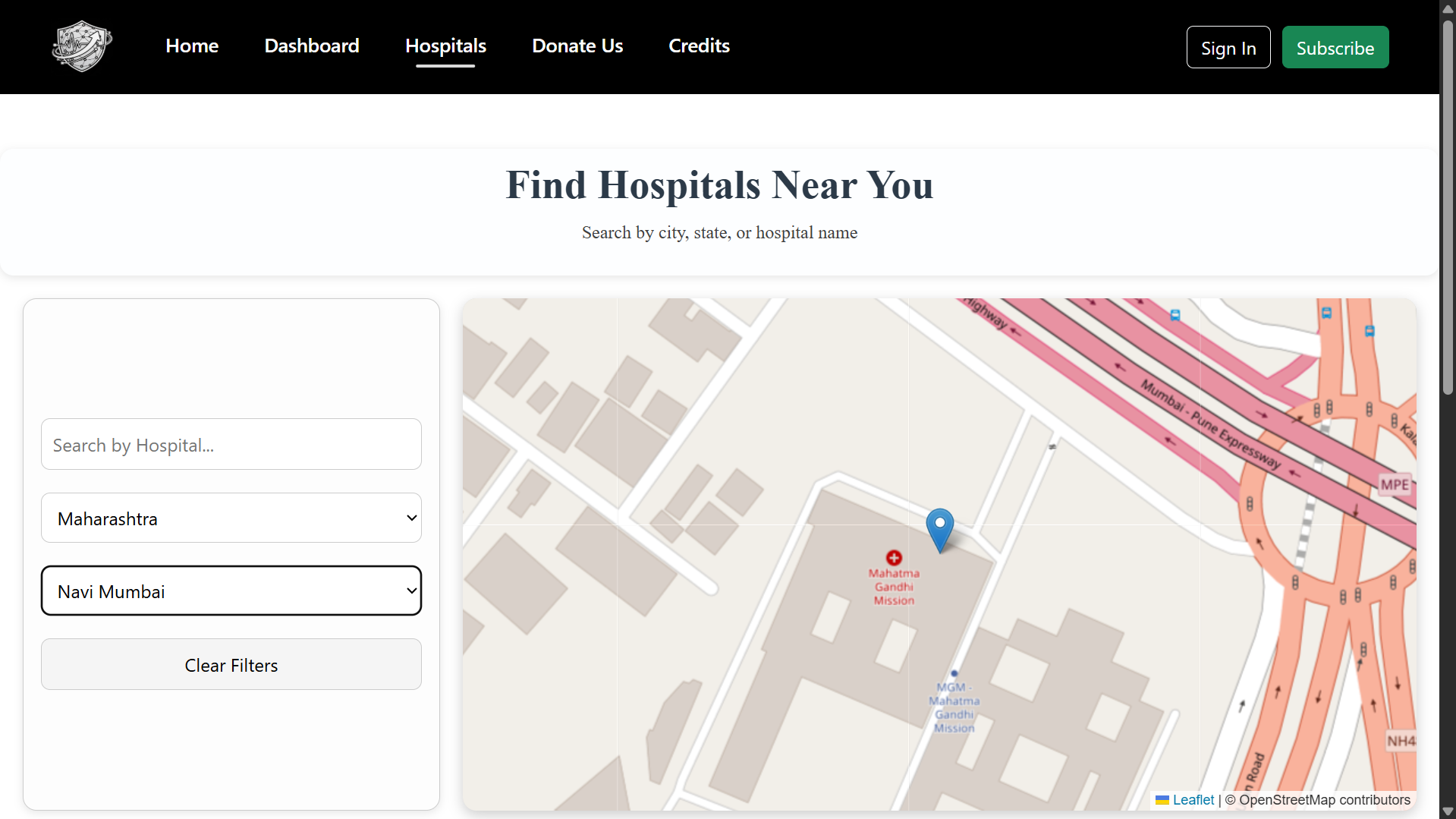
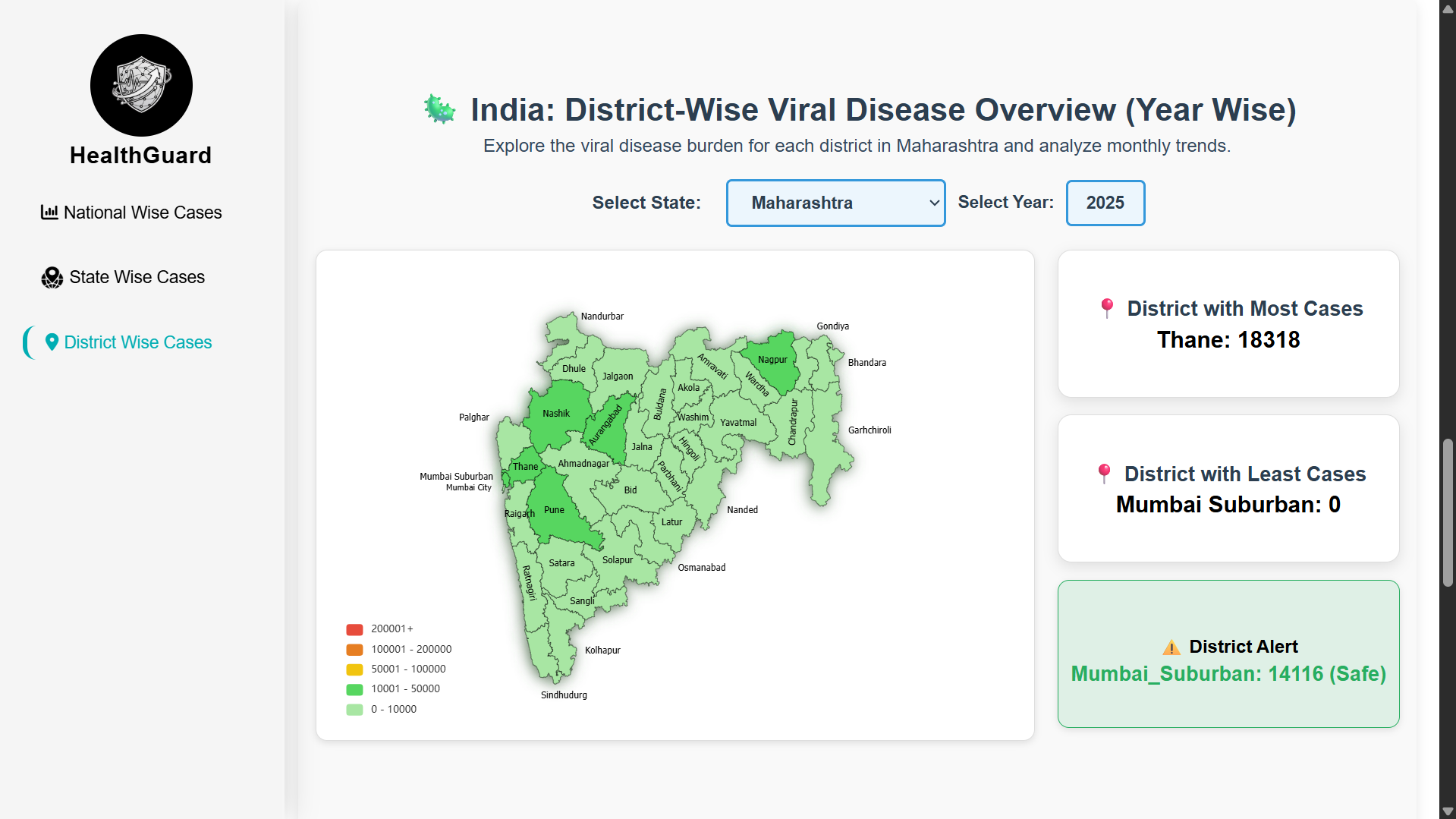
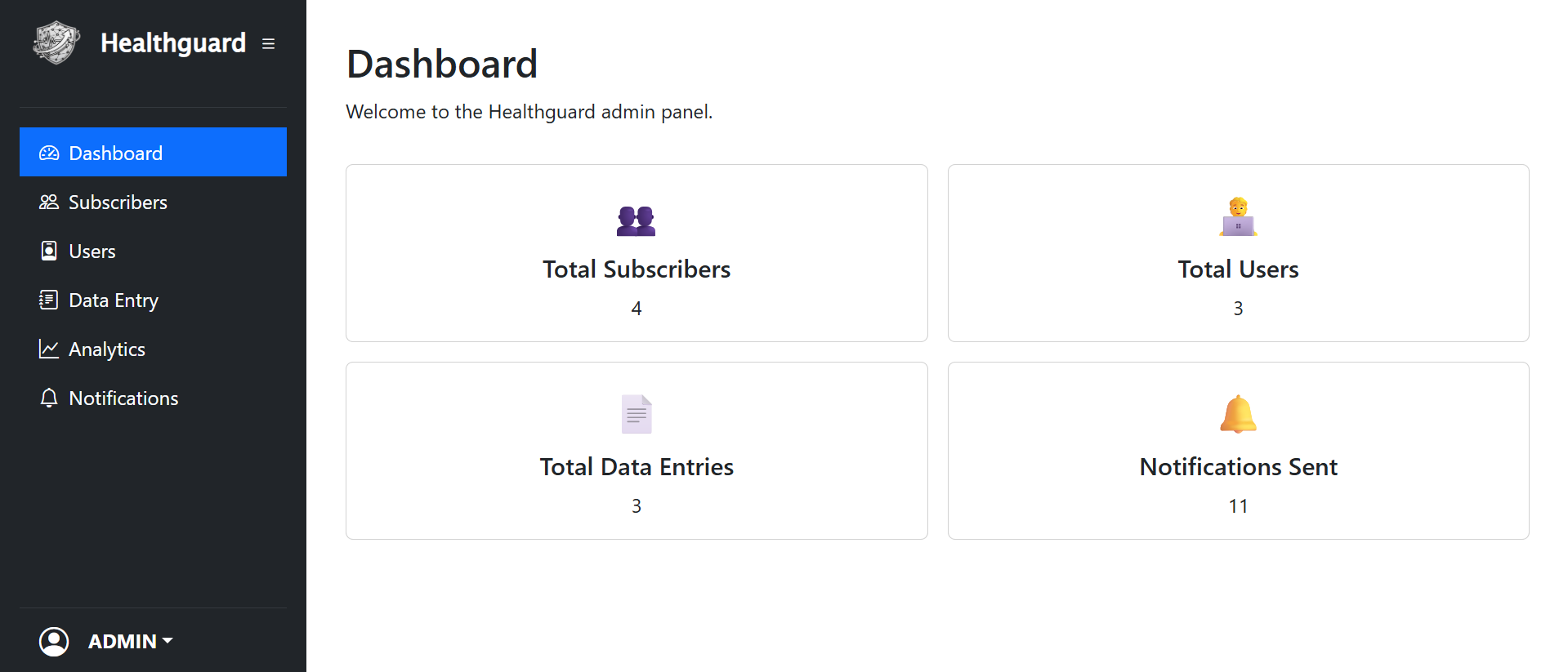
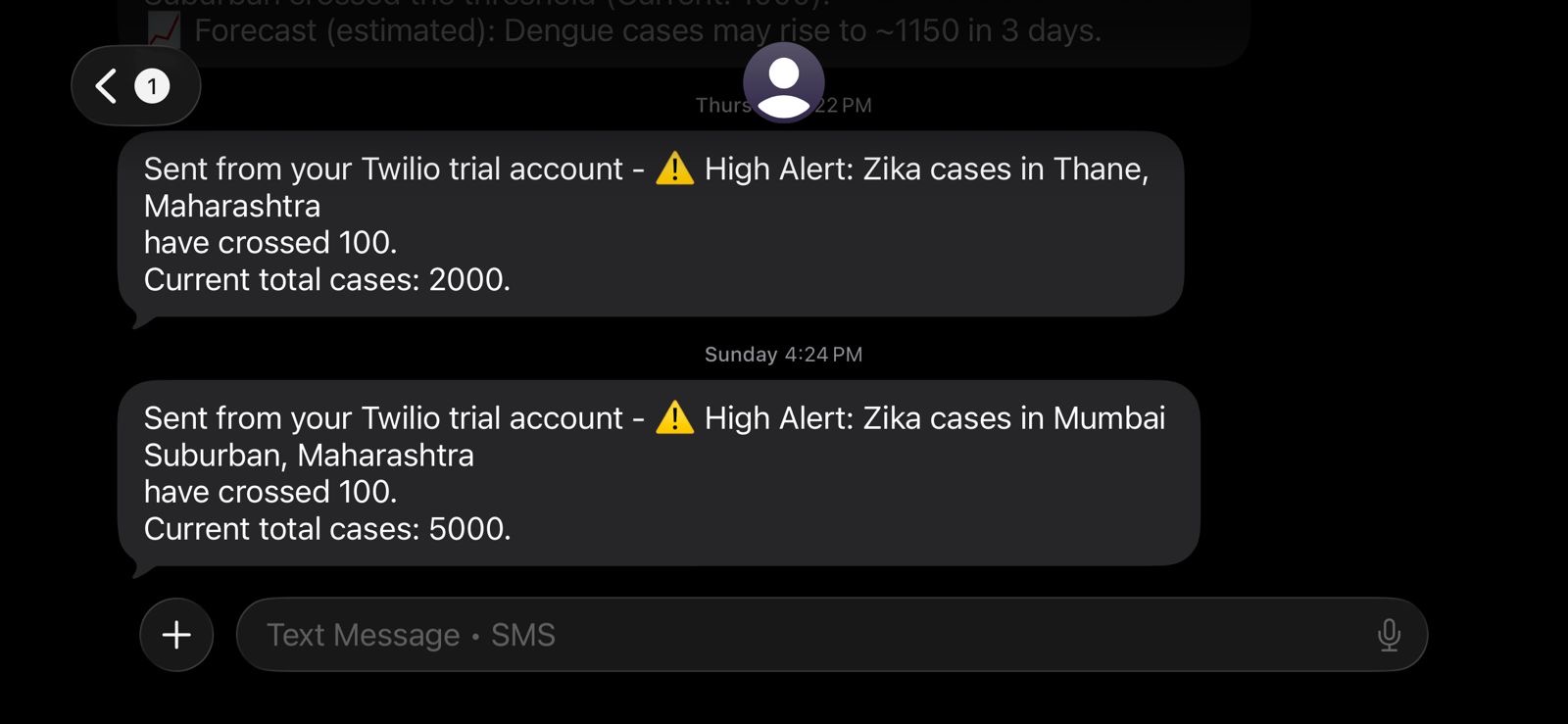
The platform also supports real-time health monitoring by allowing authorized users to submit disease occurrence data, which is verified by an administrator before being shared as alerts via notifications such as email or SMS. Additionally, HealthGuard provides features like disease trend visualization through dashboards and a hospital locator to help users find nearby medical facilities.
Overall, the system aims to improve health awareness, reduce absenteeism, and support timely medical attention by leveraging artificial intelligence and real-time data.
How we built it
HealthGuard was developed using a modular web-based architecture to ensure scalability and ease of maintenance. The frontend was designed using HTML, CSS, Bootstrap, and JavaScript to provide a responsive and user-friendly interface.
The backend was implemented using Node.js and Express.js to handle server-side logic, user authentication, and data processing. A relational database (MySQL) was used to store user details, symptom data, disease records, and notification logs.
The AI chatbot module analyzes user-entered symptoms using rule-based logic combined with basic machine learning concepts to predict possible viral diseases. Email notifications were implemented using Nodemailer, while SMS alerts were integrated using Twilio after admin approval.
Additional features such as real-time dashboards, hospital location mapping using Leaflet, and role-based access control (admin, subscribed user, general user) were incorporated to enhance system functionality and reliability.
Challenges we ran into
One of the major challenges was integrating multiple modules such as the AI chatbot, real-time data handling, notification services, and user role management into a single system.
Designing an accurate yet simple symptom-based prediction logic without using complex medical datasets was also challenging, as the system had to remain lightweight and understandable.
Ensuring data validation and admin approval before sending health alerts required careful handling to avoid misinformation. Additionally, managing real-time updates while maintaining system performance was another key challenge during development.
Accomplishments that we're proud of
We successfully developed a fully functional AI-based health monitoring platform with role-based access control.
The system integrates an interactive chatbot for symptom analysis, real-time dashboards for disease trends, and automated email and SMS notifications after admin verification.
We are proud of building a complete end-to-end solution that addresses a real-world problem using practical web technologies within a limited time frame.
What we learned
Through this project, we gained hands-on experience in full-stack web development and learned how to integrate AI concepts into real-world applications.
We improved our understanding of backend development, database design, API integration, and secure user authentication.
The project also helped us understand the importance of responsible AI usage, especially in health-related applications, where accuracy, validation, and ethical considerations are critical.
What's next for Detection and Prediction AI Chatbot for Viral Diseases
In the future, the system can be enhanced by incorporating machine learning models trained on larger and verified medical datasets to improve prediction accuracy.
Additional features such as multilingual support, mobile application integration, and wearable device data input can be added to increase accessibility.
The platform can also be scaled to support public health authorities by providing anonymized analytics for early outbreak detection and better health decision-making.

Log in or sign up for Devpost to join the conversation.