-
-
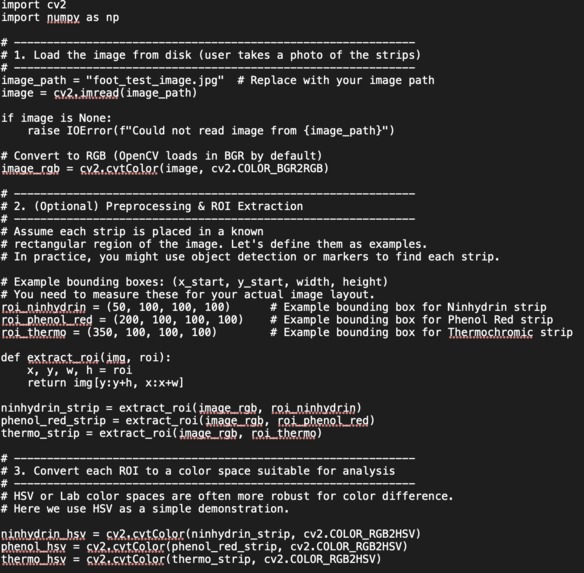
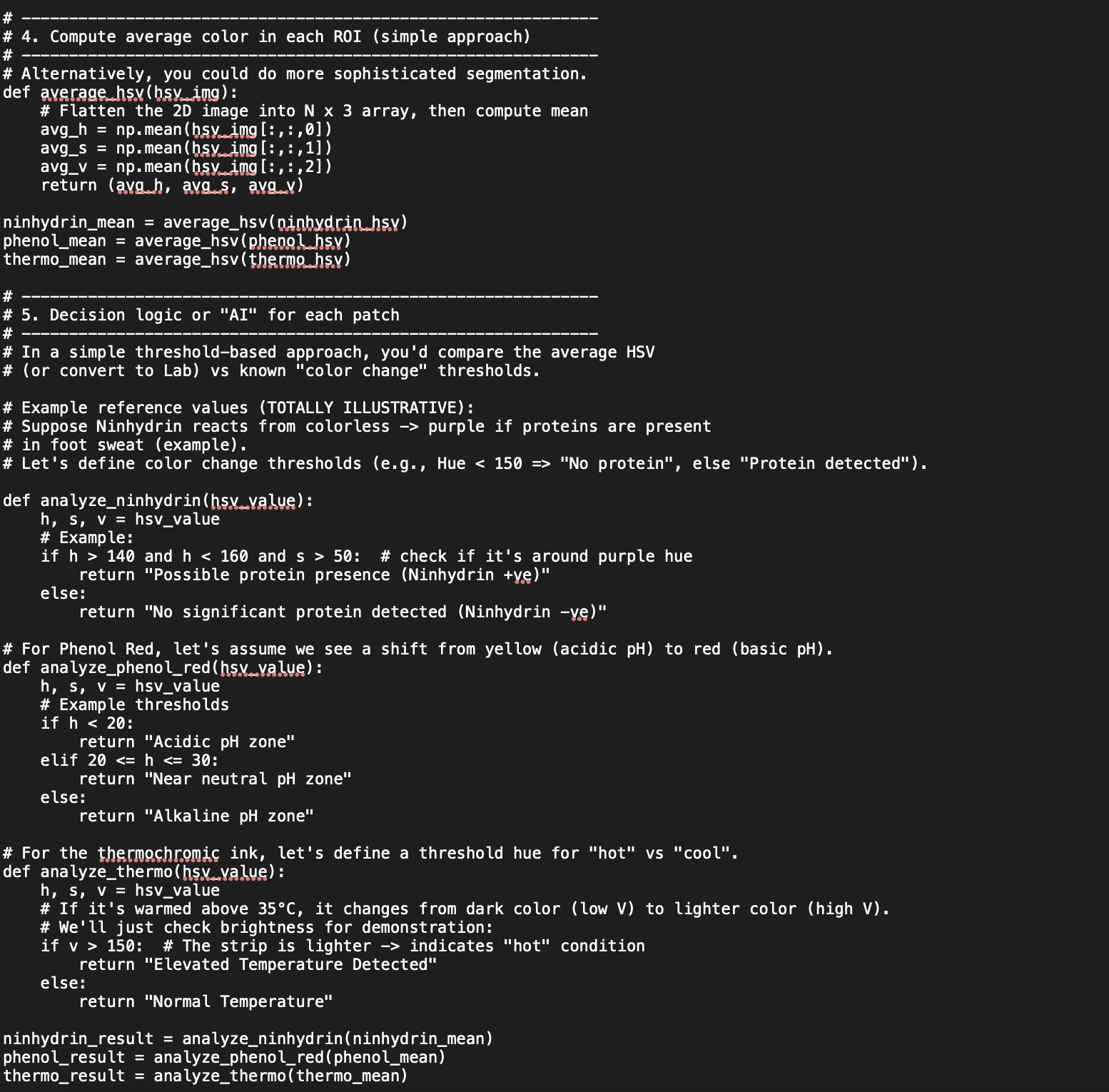
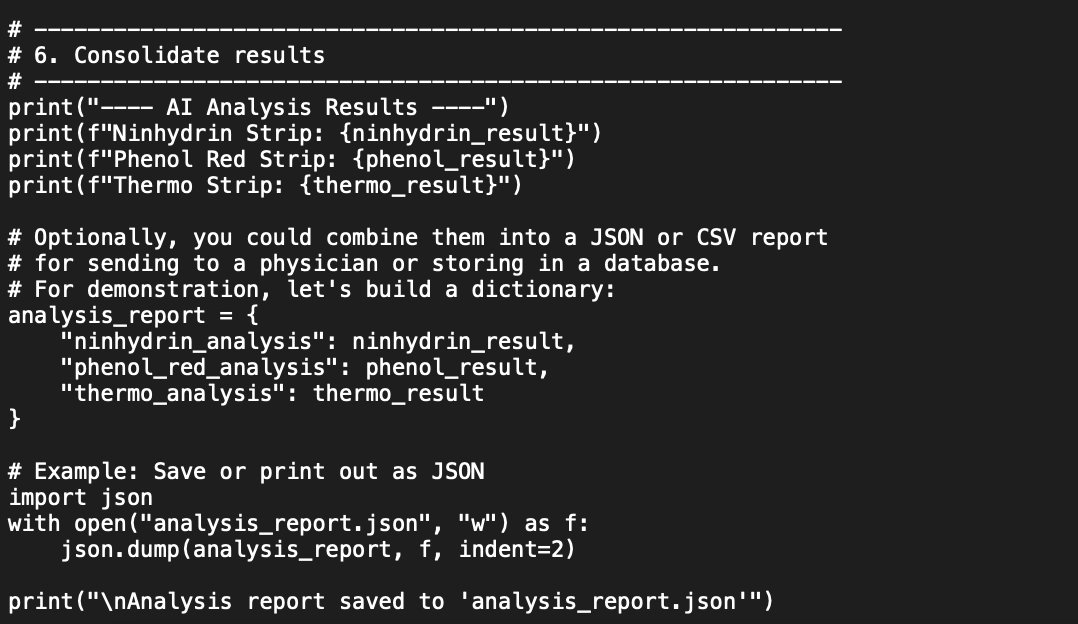
Part 1 of code
-
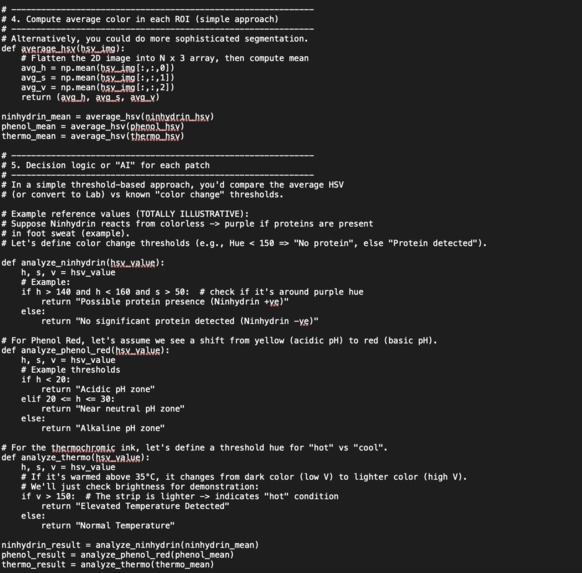
Part 2
-
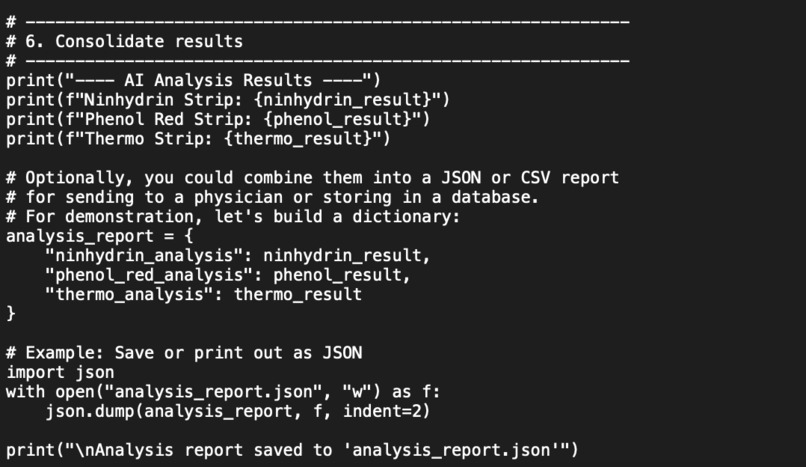
Part 3
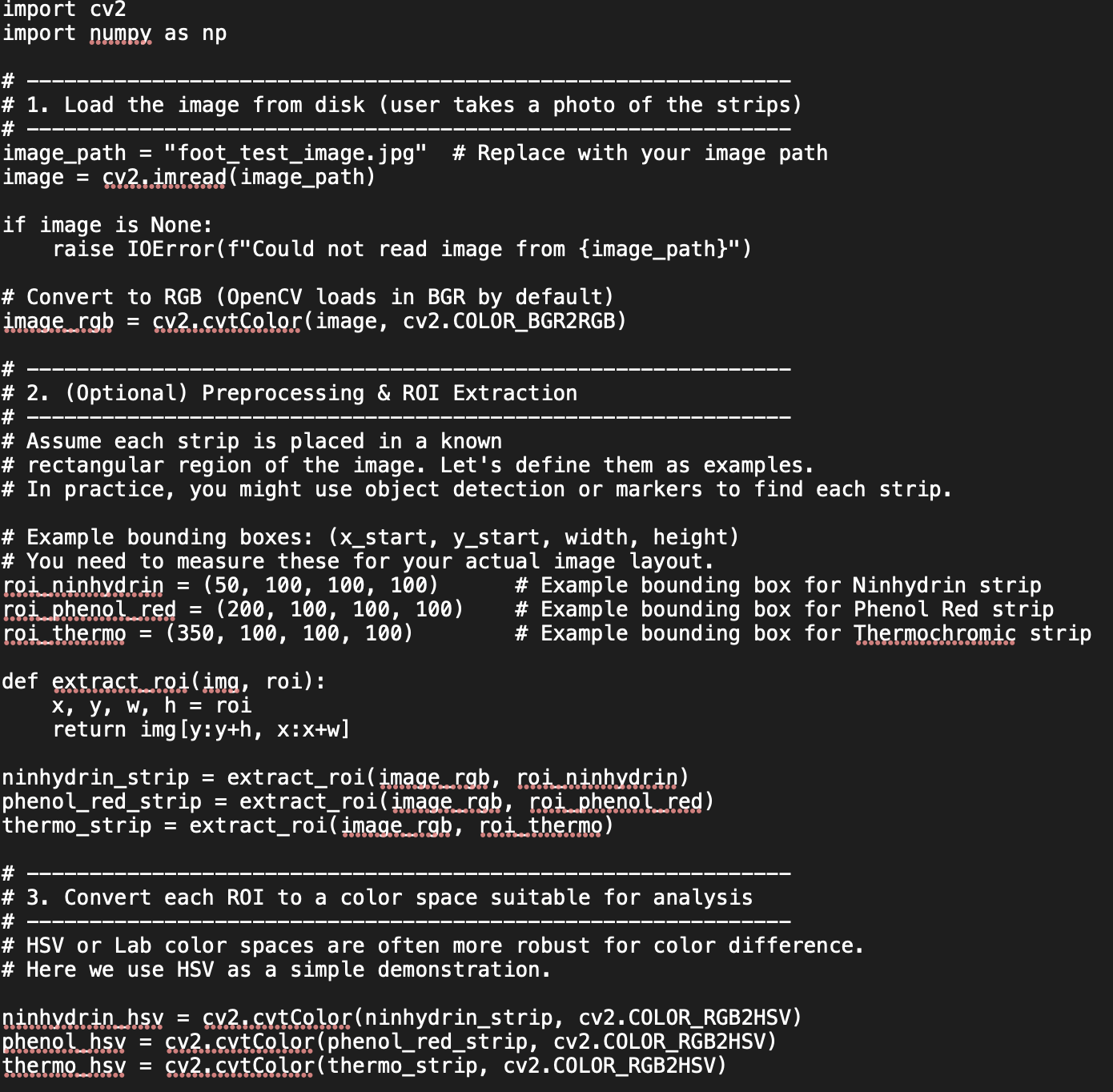
Inspiration
Observing how diabetic foot disease (DFD) leads to serious complications—especially in low-resource settings—sparked our team’s idea. We noticed that early detection and continuous monitoring of diabetic foot ulcers (DFUs) can be life-saving but is often costly and time-consuming. Inspired by simple test strips (like pH papers) and the ubiquity of smartphones, we wanted a low-cost, user-friendly solution that empowers patients and physicians alike.
What it does
Our solution uses three separate cellulose papers embedded with color-changing dyes—ninhydrin (for protein detection), phenol red (for pH changes), and thermochromic ink (for temperature changes). Patients briefly step on or apply these strips to the foot. The dyes respond to certain biomarkers indicative of inflammation, tissue breakdown, or other warning signs of foot ulcers. After 30–60 seconds, the user takes a photo with a smartphone app. The app’s AI module analyzes the color changes and provides real-time feedback on: Potential early warning signs of infection or recurrence, Gradations of severity, and Guidance with medical professionals. The data is saved and can be shared with healthcare providers for remote monitoring, reducing unnecessary clinic visits.
How we built it
To fabricate the paper strips, we use cellulose filter paper, which would be printed or coated with each specific dye. We ensured minimal direct chemical contact by placing a protective layer or encapsulation where necessary. Ninhydrin reacts to proteins and amines, phenol red indicates shifts in pH, and the thermochromic ink changes color based on temperature. To interpret these color changes, we employed a Python and OpenCV backend. The vision pipeline locates each paper in the photo, extracts its region, and calculates average color values, which are compared against known thresholds for each biomarker. We aim to create a simple mobile app to capture the photo, display the analysis, and offer follow-up guidance. The thresholds are intentionally straightforward for the hackathon minimum viable product, but we envision machine-learning models for more nuanced analysis in the future.
Challenges we ran into
One of the challenges, that we ran into was figuring out which dyes can be used in a nontoxic setting which would be cheap and easy to produce on a large scale.
Accomplishments that we're proud of
We successfully developed a roadmap for a product that can be reproduced inexpensively and that yields valuable, color-based diagnostic information. We demonstrated the entire workflow—from applying the strips to photographing them and running AI-based color analysis—within a single minute. We are particularly proud of designing a potentially scalable product that could be deployed in various low-resource environments worldwide.
What we learned
This project taught us about the delicate balance between chemistry, engineering, and user-centric design. We learned how to select dyes, formulate them properly, and ensure that they remain stable over time. From the engineering standpoint, it was instructive to integrate a simple thresholding approach for color detection while planning an eventual transition to a more advanced machine-learning model. Finally, we gained insight into tailoring the user experience so that individuals can confidently and consistently use the strips at home without clinical supervision.
What's next for Detecting and Treating DFD Using Colorimetric Paper and AI
We aim to refine our dye formulations further and investigate safer or more stable replacements for certain indicators. On the software side, we intend to collect more data in real-world settings to train and validate a robust machine-learning model capable of detailed analysis, rather than relying solely on threshold-based detection. We also plan pilot studies in partnership with local clinics to test the real-life efficacy of this solution, gathering patient feedback to refine our approach. Ultimately, we’ll explore the regulatory pathway for medical devices, aiming for approval under relevant health authorities. In the future, we see this solution expanding to track additional biomarkers, integrating seamlessly into a broader diabetes management platform, and making significant strides in reducing diabetic foot complications.
Built With
- ai
- image-processing
- python

Log in or sign up for Devpost to join the conversation.