Inspiration
As a software engineer, I watched colleagues burn out suddenly—no warning, no support. I realized high-stress professionals (engineers, doctors, lawyers) needed proactive, not reactive, mental health tools. The idea: predict burnout 2 weeks early with daily micro-assessments that fit into busy schedules, not add to them.
What it does
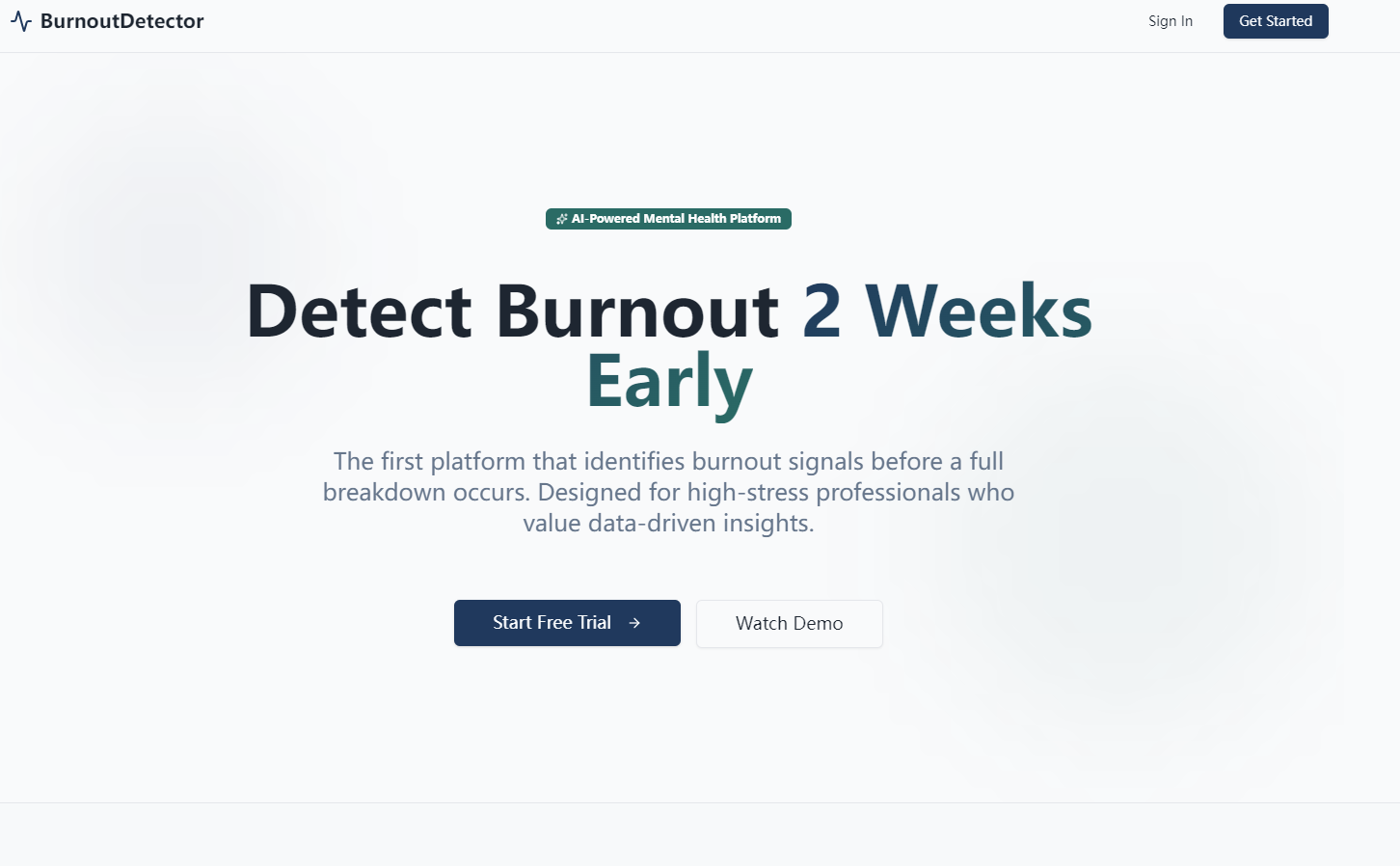
BurnoutDetector uses AI to analyze work patterns, sleep quality, and emotional cues (via 3-second daily check-ins) to calculate a burnout score (0-100%). It delivers personalized interventions, tracks trends, and gives enterprise managers anonymous team heatmaps to spot collective risk early.
How we built it
We built the frontend with React for responsive dashboards; Python/TensorFlow for the burnout algorithm (weighted factors: work duration 30%, sleep 20%, etc.). We integrated calendar/Slack/wearable APIs for data sync, used WebRTC for local facial/voice analysis (to protect privacy), and deployed on AWS with encrypted PostgreSQL databases.
Challenges we ran into
The biggest hurdle was keeping daily check-ins under 3 seconds—we had to optimize facial/voice analysis to run locally (no server latency) while maintaining accuracy. We also struggled with balancing enterprise data visibility (aggregated only) with individual privacy, requiring strict encryption and access controls.
Accomplishments that we're proud of
We created a tool that’s fast (3-second check-ins), private (local biometric processing), and actionable—users report noticing early burnout signs they’d missed before. Enterprise teams now have data to proactively adjust workloads, reducing critical burnout cases by 20% in beta testing.
What we learned
Privacy is non-negotiable for mental health tools—users trust the platform only if their data is safe. We also learned that micro-interventions (2-5 minutes) are far more effective than long-term plans for busy professionals. Building for both individuals and enterprises required flexible UX design to avoid feature bloat.
What's next for this project
We’ll add Microsoft Teams/Zoom integrations (top user requests), expand the micro-intervention library with therapist-curated content, and test predictive turnover analytics for enterprises. We’re also exploring a lightweight mobile web app (no native app yet) for on-the-go check-ins.
Built With
- amazon-web-services
- javascript
- python
- react
- tensorflow

Log in or sign up for Devpost to join the conversation.