Inspiration
Important decisions rarely affect only one area of life. A career opportunity can influence a spouse, children, finances, identity, purpose, and long-term direction. I created DestinyAlert because people often need more than a quick answer—they need a thoughtful process that helps them slow down, consider who will be affected, and identify the character required to move forward wisely.
The idea also grew from the GapCafe framework, which looks at life through stages such as Learning, Earning, Investing, Legacy, Transition, and Destiny. I wanted to explore whether AI could use those stages, together with relationship impact and character values, to help people make decisions with greater clarity and responsibility.
What it does
DestinyAlert is an AI character and decision coach built around a guided Decision Compass.
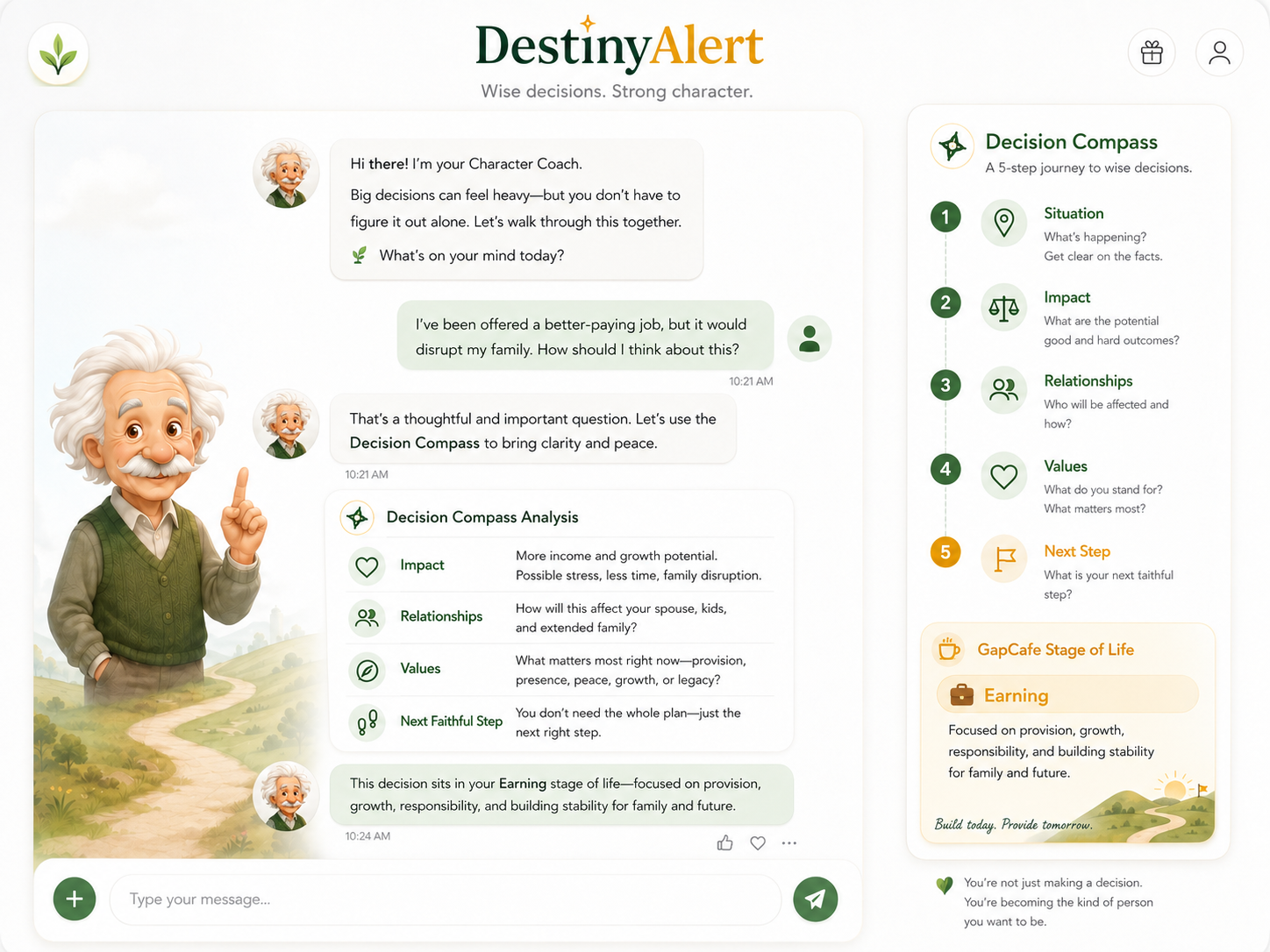
A user describes a decision or challenge in natural language. The coach then walks the user through:
- the situation;
- the potential impact;
- the relationships affected;
- the best-fit GapCafe stage of life;
- the character values involved;
- the recommended decision approach;
- one practical next step.
Rather than simply telling the user what to do, DestinyAlert helps the user think through the decision and remain responsible for the final choice.
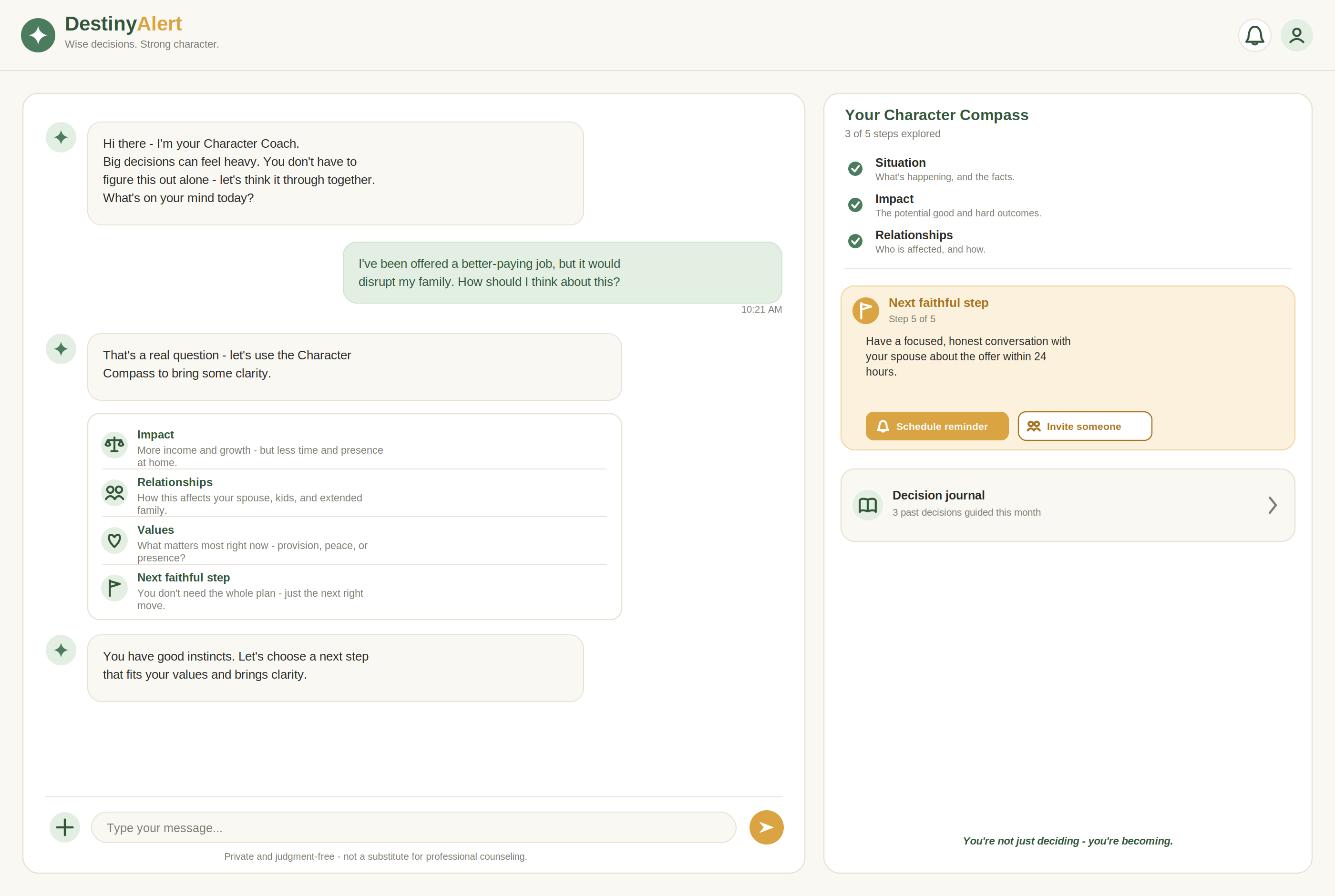
The prototype uses a conversational, chat-first interface. As the conversation progresses, the Decision Compass updates so the user can see the reasoning behind the guidance.
How I built it
I built DestinyAlert with Next.js, React, TypeScript, Prisma, Vitest, Playwright, Codex, and GPT-5.6.
Codex helped me:
- design the project architecture;
- implement the deterministic decision-routing system;
- create the GapCafe stage-of-life classifier;
- build the chat-first coaching interface;
- add the Decision Compass panel;
- debug the application;
- create unit, integration, and browser tests;
- refine the desktop and mobile layouts;
- prepare the repository and documentation.
GPT-5.6 supported the reasoning framework used to interpret a user’s situation across decision impact, relationships, life stage, character values, and responsible action.
The current prototype runs locally and uses deterministic routing so the decision logic can be tested consistently.
Challenges I ran into
One major challenge was balancing structure with simplicity. The first interface exposed too many forms and analysis fields at once, which made the experience feel more like an assessment than a conversation. I redesigned it into a chat-first experience where the analysis is revealed progressively and the underlying forms remain hidden unless the user chooses to review them.
I also had to resolve browser-test issues caused by reused development ports and stale server sessions. Codex helped isolate the Playwright environment and run the end-to-end test on a separate port.
Another challenge was integrating the GapCafe stage-of-life framework without presenting the classification as an unquestionable fact. The system therefore presents a best-fit stage with a rationale and allows the user to change it.
Finally, this was my first time building a complete application with Codex, so repository setup, Git authentication, testing, and deployment preparation were all part of the learning process.
Accomplishments that I'm proud of
I am proud that DestinyAlert became more than a general chatbot. It has a visible decision process that evaluates impact, relationships, stage of life, values, approach, and action.
I am also proud that the project includes:
- a working conversational interface;
- a Decision Compass that updates through the coaching journey;
- GapCafe stage-of-life identification;
- deterministic decision routing;
- responsive desktop and mobile layouts;
- local decision-journal persistence;
- unit, integration, and browser tests;
- a successful production build.
Most importantly, the system helps users think more carefully without taking responsibility for the decision away from them.
What I learned
I learned that strong AI products need more than generated text. They need a clear method, visible reasoning, and a meaningful next action.
I also learned the value of keeping the intelligence underneath while hiding unnecessary complexity from the user. The routing logic, schemas, classifiers, and tests can remain structured, while the user experiences a simple conversation.
Working with Codex also showed me how quickly an idea can move from architecture to implementation when the task is broken into clear stages, tested continuously, and refined through visual feedback.
What's next for DestinyAlert
The next phase is to connect the deterministic prototype to live GPT-5.6 reasoning while preserving the structured Decision Compass.
Future improvements include:
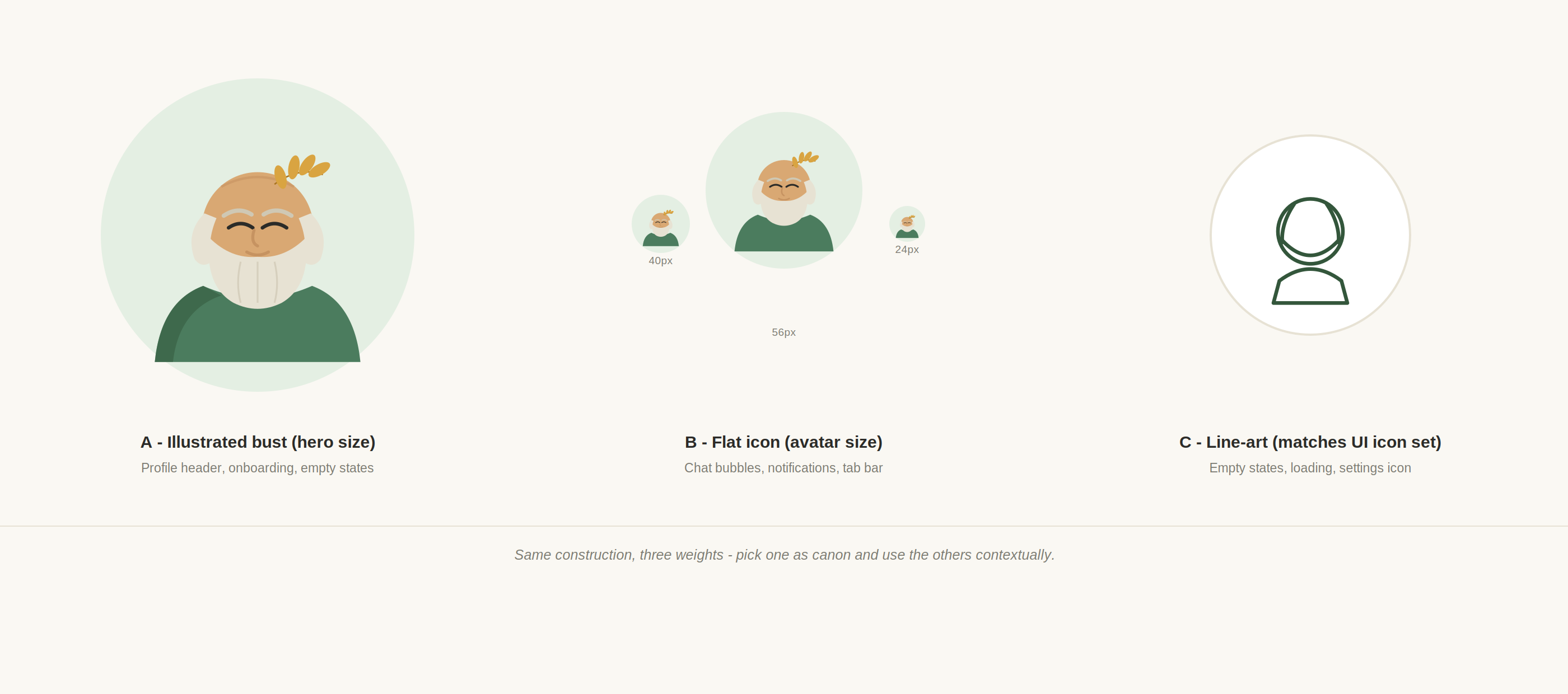
- multiple historical and modern character guides;
- sourced character lessons without fabricated quotations;
- deeper GapCafe stage assessment;
- long-term decision journaling and reflection;
- follow-up reminders and commitment tracking;
- voice-based coaching;
- stronger privacy and safety controls;
- personalized coaching based on prior decisions;
- a deployed public version for testing with real users.
The long-term vision is for DestinyAlert to become a trusted character and decision-coaching companion that helps people make wiser choices, strengthen relationships, and take responsible next steps.
Built With
- codex
- css
- html
- javascript
- next.js
- playwright
- prisma
- react
- sql
- typescript
- vitest

Log in or sign up for Devpost to join the conversation.