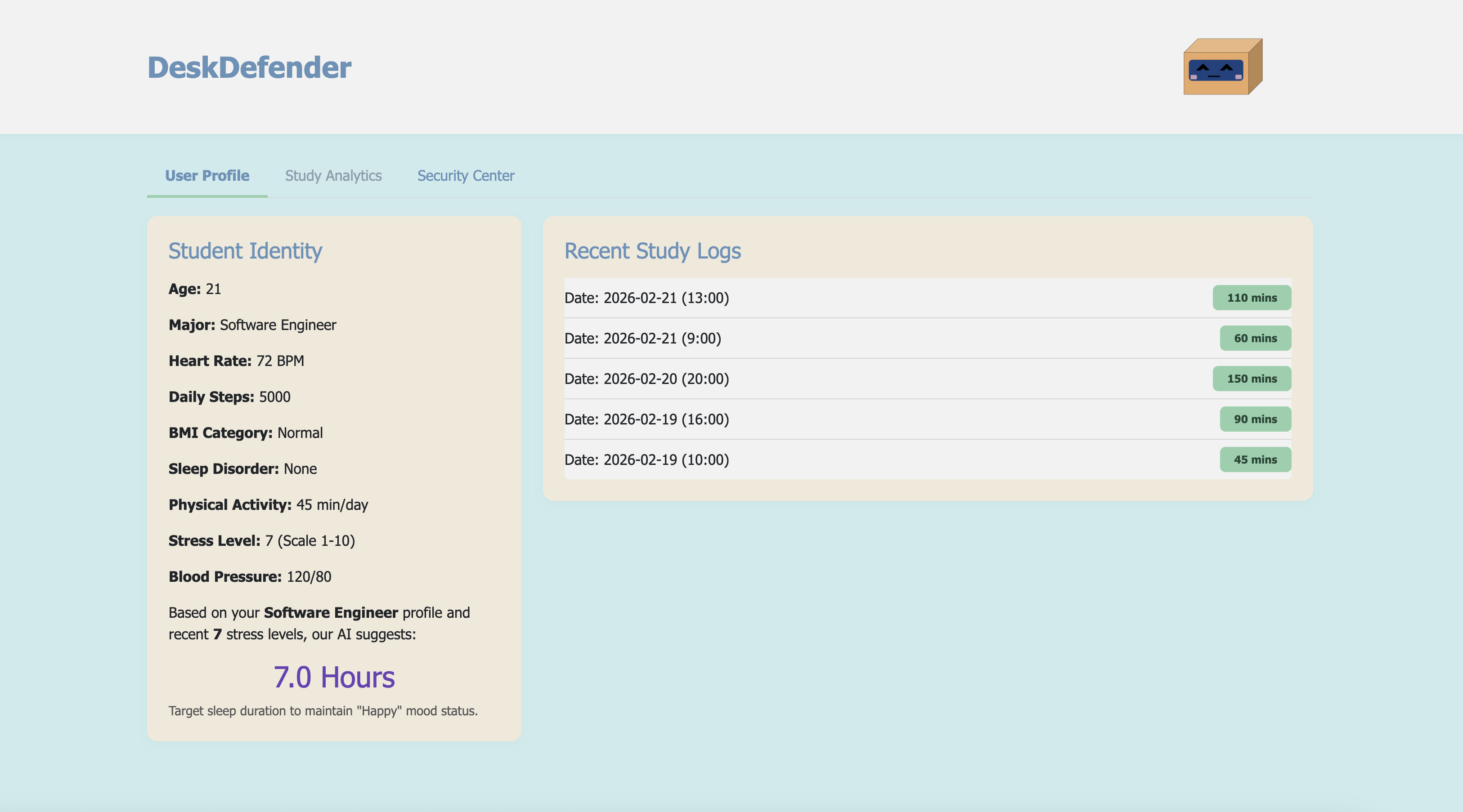
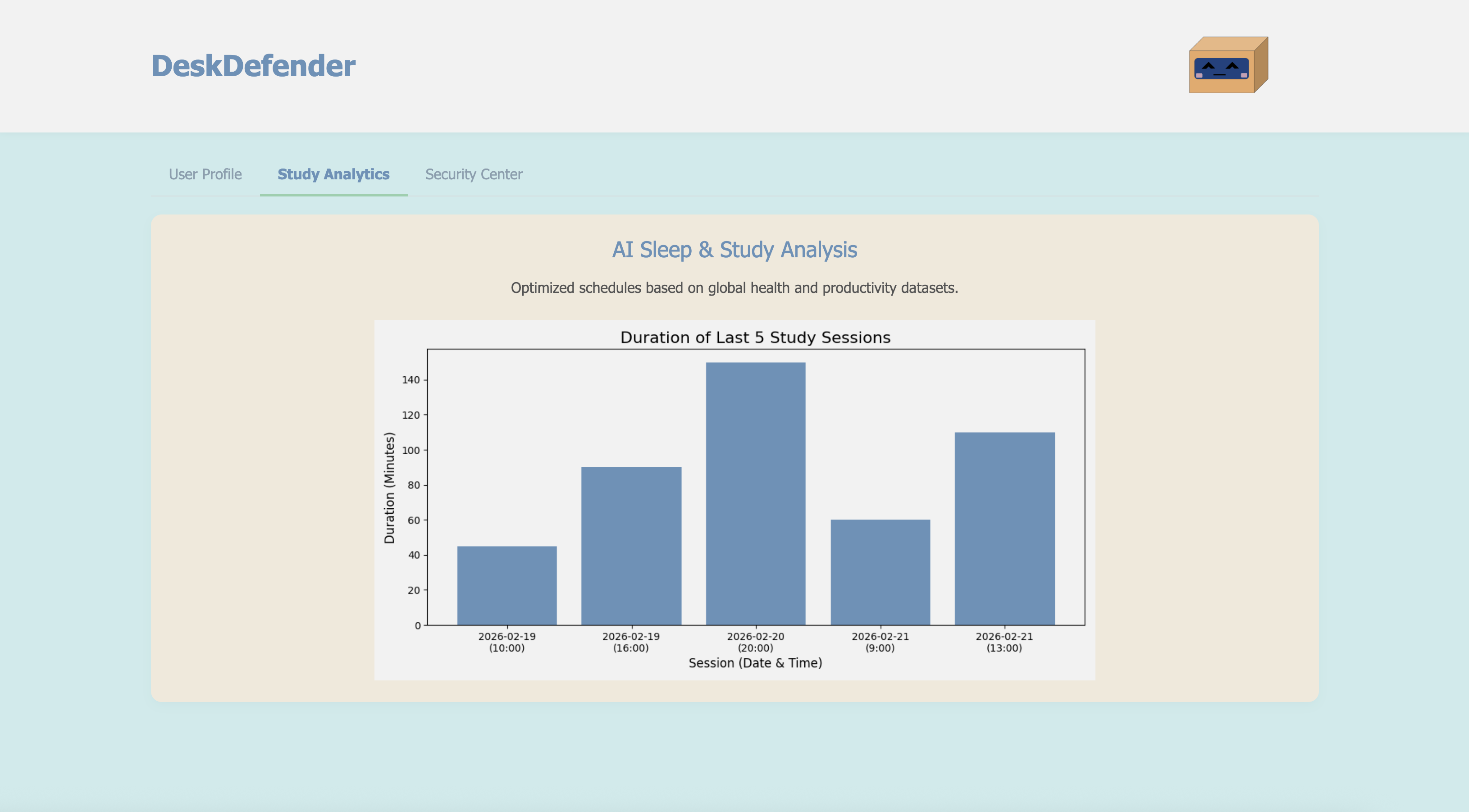
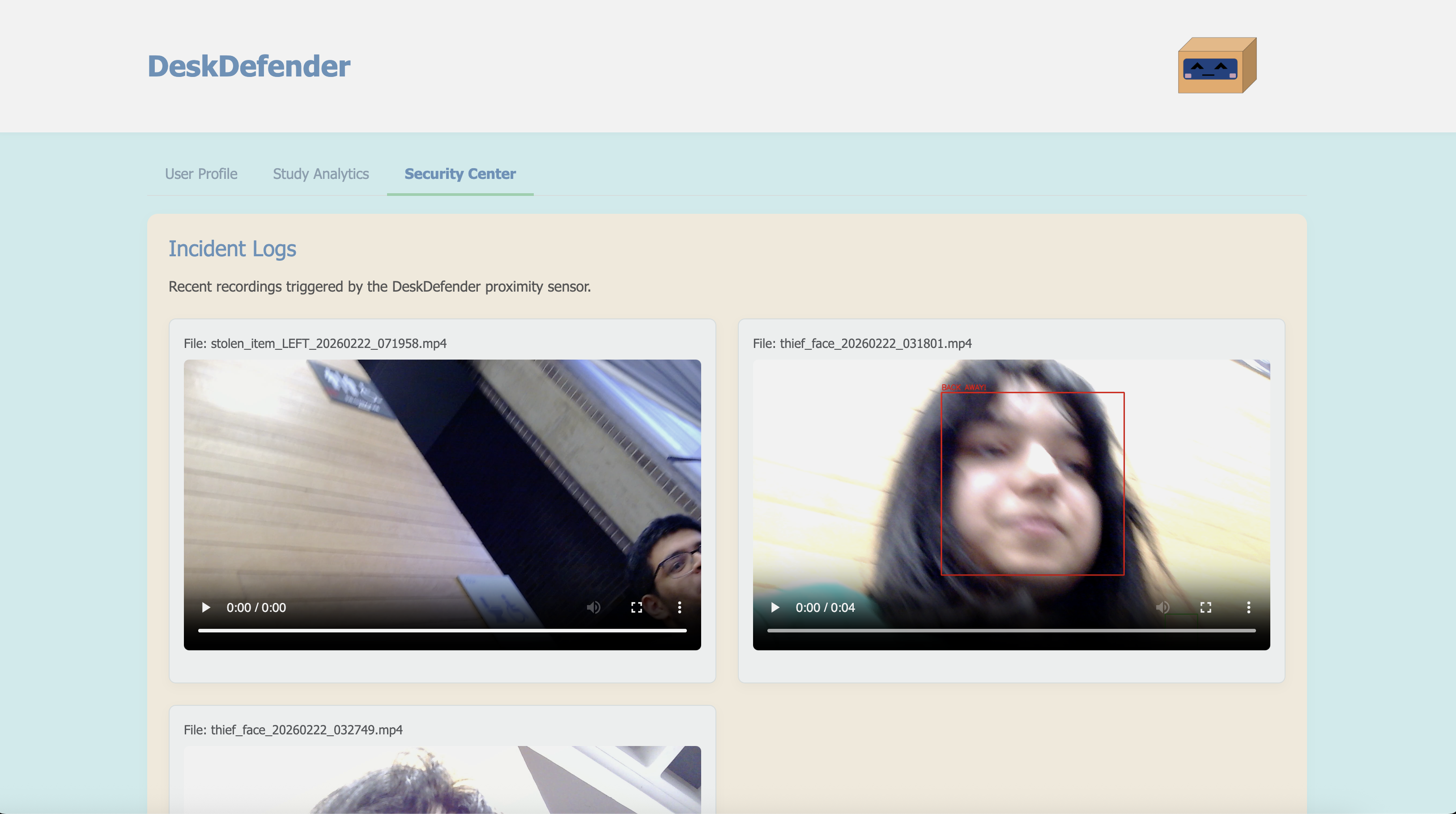
DeskDefender is a smart study ecosystem that uses an ESP-32 to detect your phone (via ultrasonic) and log your mood. While you study, AI Computer Vision (YOLOv8) watches your laptop; if it’s moved, the bot records the thief. All data is summarized on a Flask dashboard to recommend the best sleep and study times.
Features Physical Session Tracker: Start/stop study timers by placing your phone on the robot. Mood Logging: Tactile buttons to track how "Happy," "Stressed," or "Tired" you are. AI Sentry Mode: Uses your webcam to detect theft and record 4-second "evidence" clips. Smart Analytics: Matches study intensity with physiological data to output a custom bedtime.
How it was Built Hardware: ESP-32 (Classic/C3), Ultrasonic Sensor, Tactile Pins. Software: Python (Flask), OpenCV (YOLOv8 & Haar Cascades), SQLite. Frontend: Bootstrap-responsive dashboard for history and security videos.
Challenges & Solutions Serial vs Wi-Fi: We bypassed messy Hackathon Wi-Fi by using USB Serial communication to ensure the robot never disconnects. Chip Conflicts: Debugged "Wrong Chip" errors by switching to the ESP32 Dev Module profile and manual BOOT sequences. Logic: Pivoted from guessing bedtimes to calculating target sleep hours based on study fatigue. Guessing and checking which type of recordings could be added to the web server, as MP4 didn't originally work.
Future Expansion Auto-Mood: Use DeepFace to recognize emotions via camera. App Sync: Move from a local server to a seamless mobile app. Advanced Tracking: Differentiate between the owner and a thief using authorized face-ID.
Tech Stacks: Hardware: ESP-32, Ultrasonic Sensors, Jumper Wire Interface Backend: Python, Flask, SQLite, Serial (pyserial) Computer Vision: OpenCV, YOLOv8, Haar Cascades Frontend: Bootstrap, Jinja2, Matplotlib (Analytics)

Log in or sign up for Devpost to join the conversation.