-
-
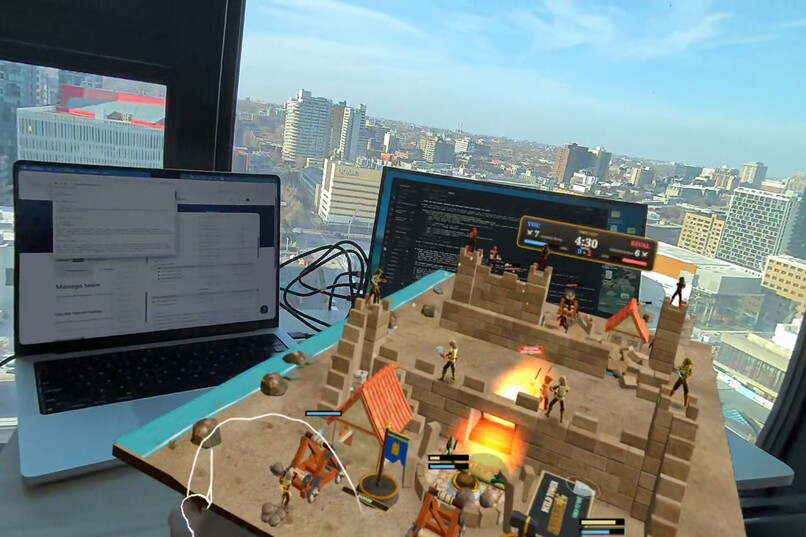
A dragon attacks the desert castle. Your catapults bring it down.
-
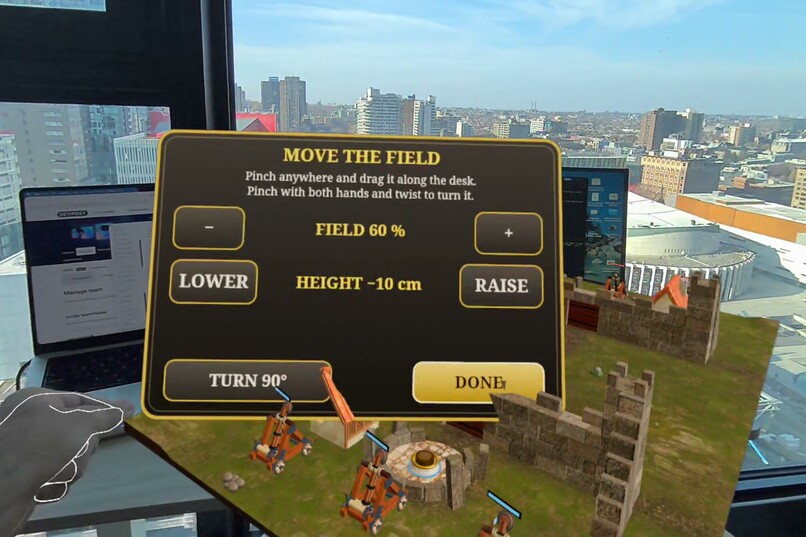
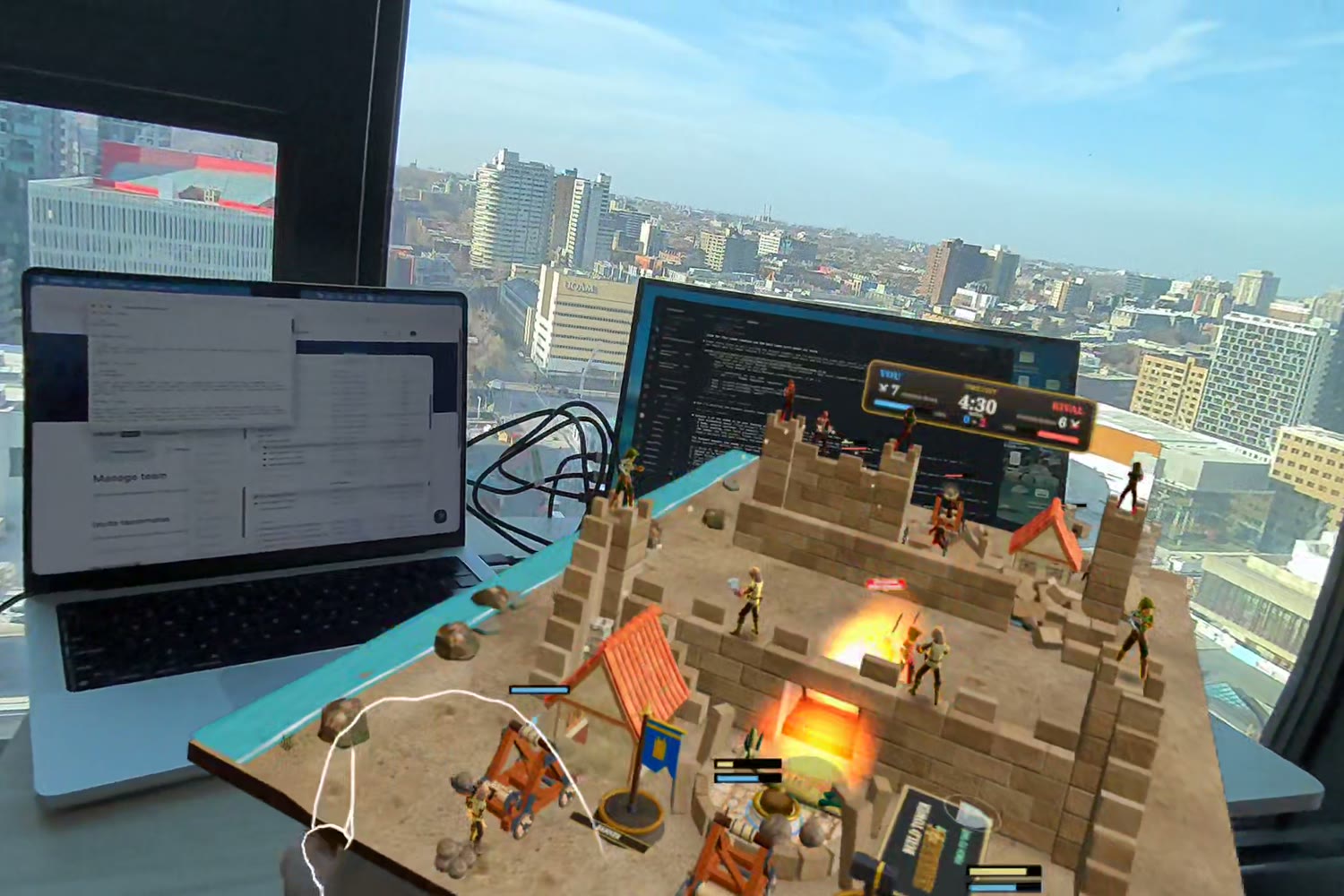
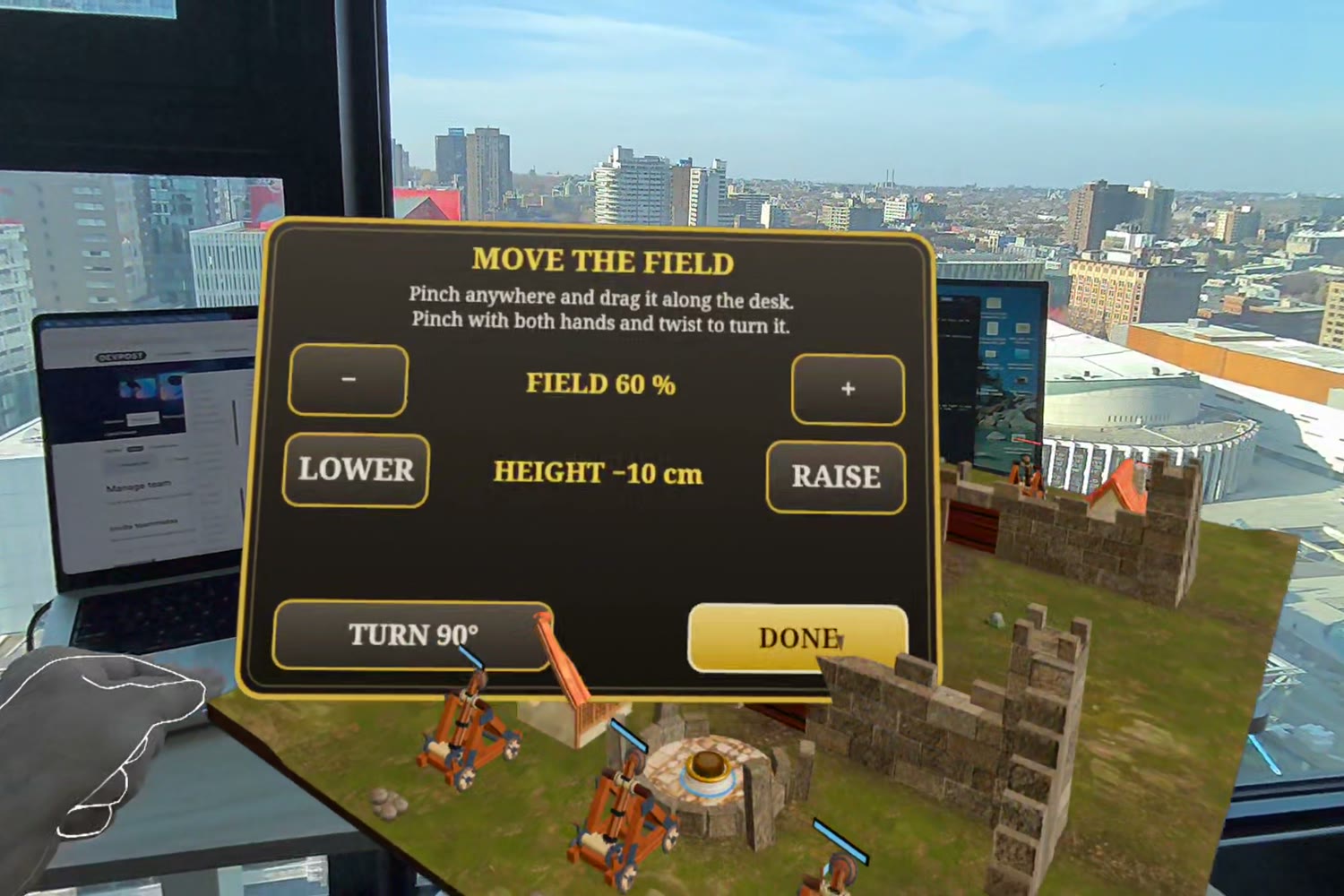
Place the battlefield anywhere on your real desk. Move, turn, resize, raise or lower it with your hands.
-
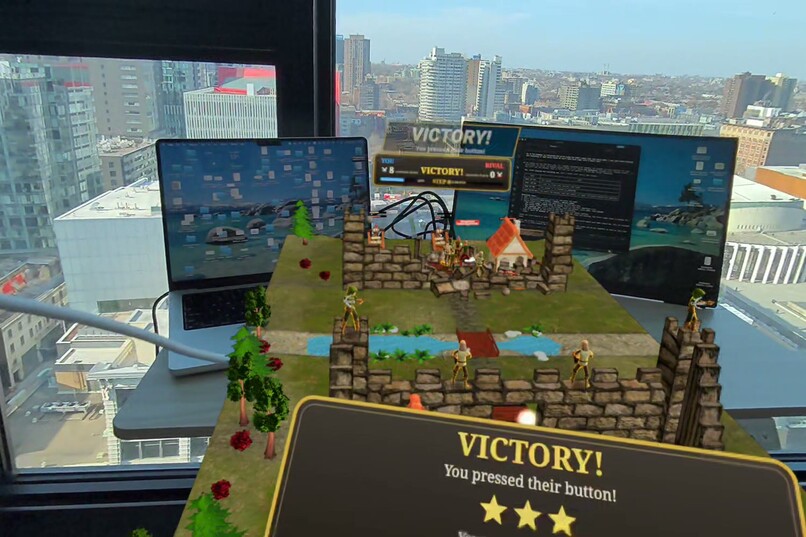
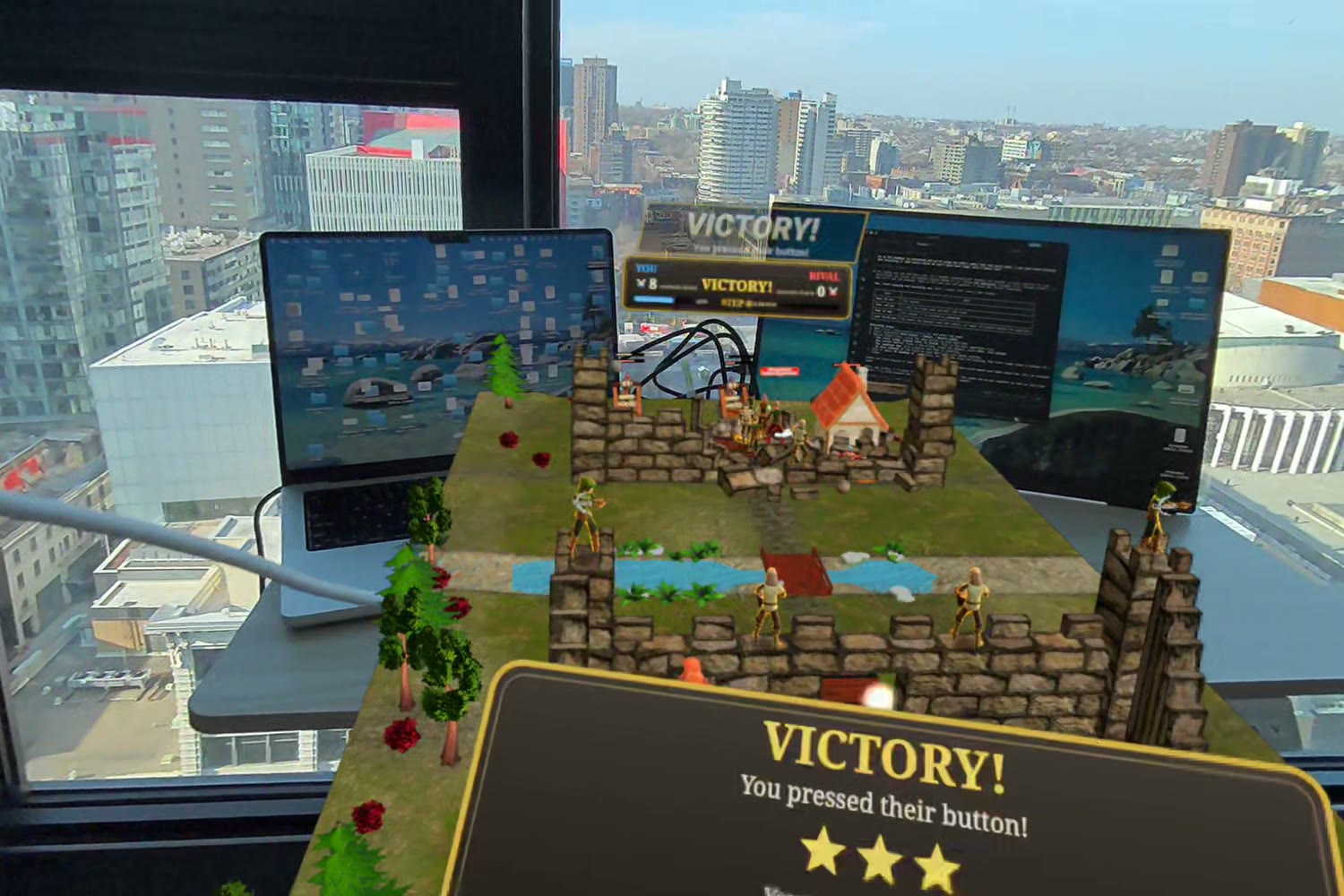
Victory: your heroes broke through the wall and captured the enemy castle.
-
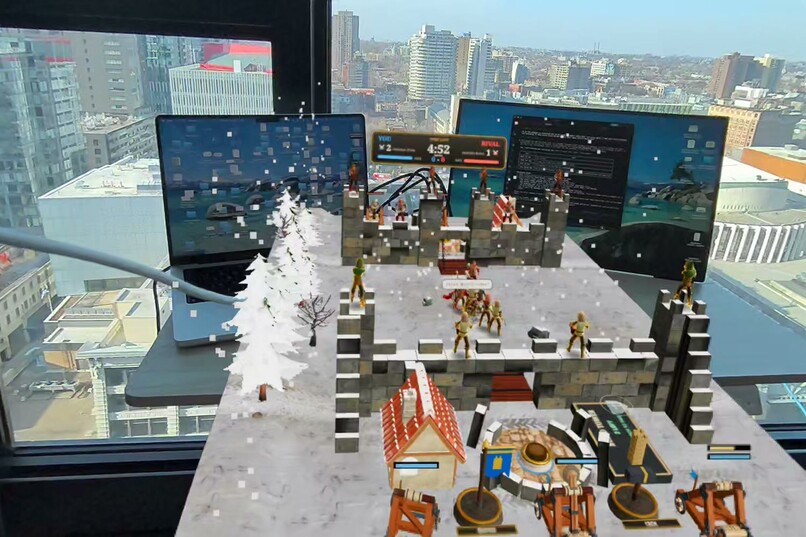
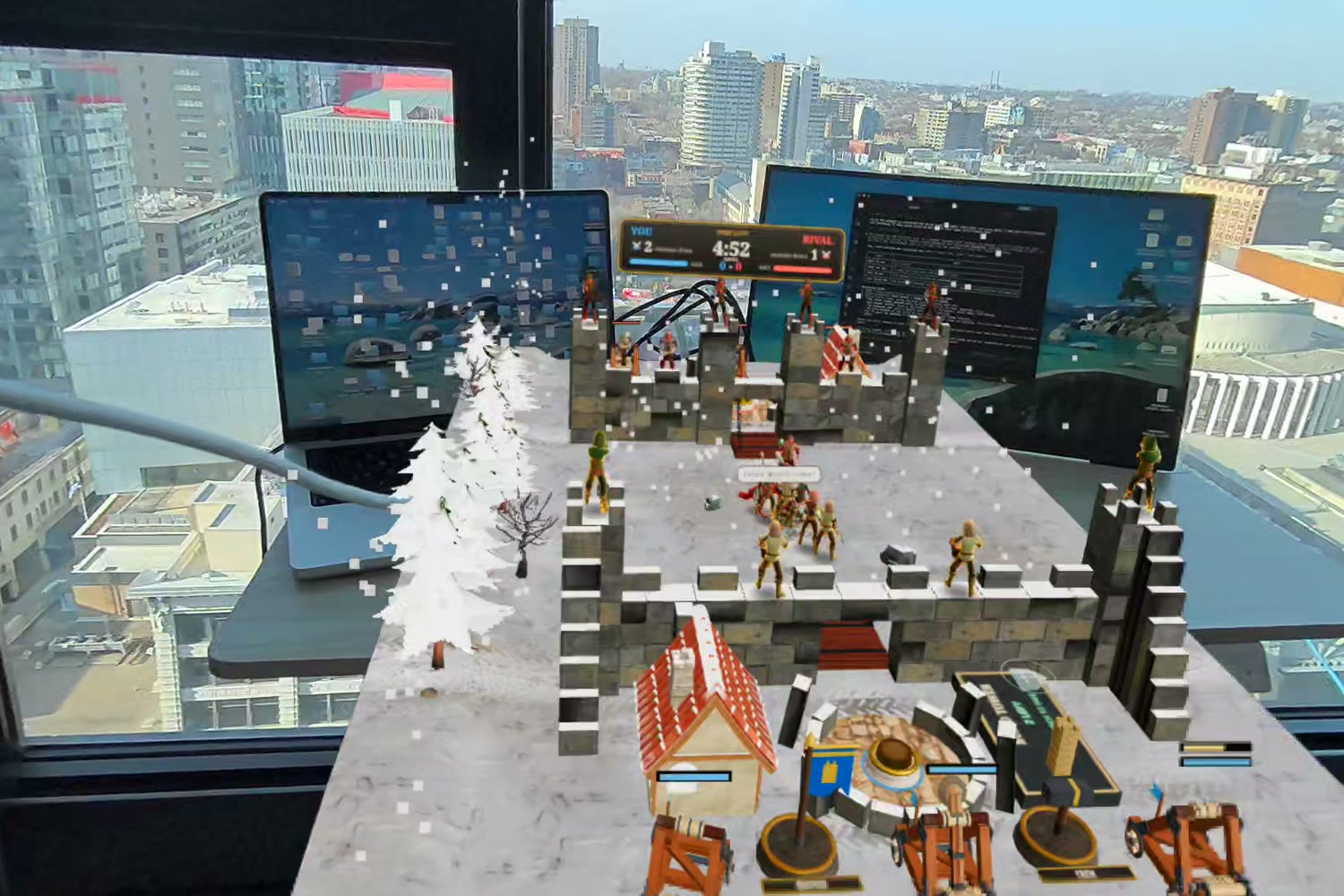
Every siege can be fought on a different land: Green Meadow, Snow Fortress, Autumn Woods or Desert Ruins.
-
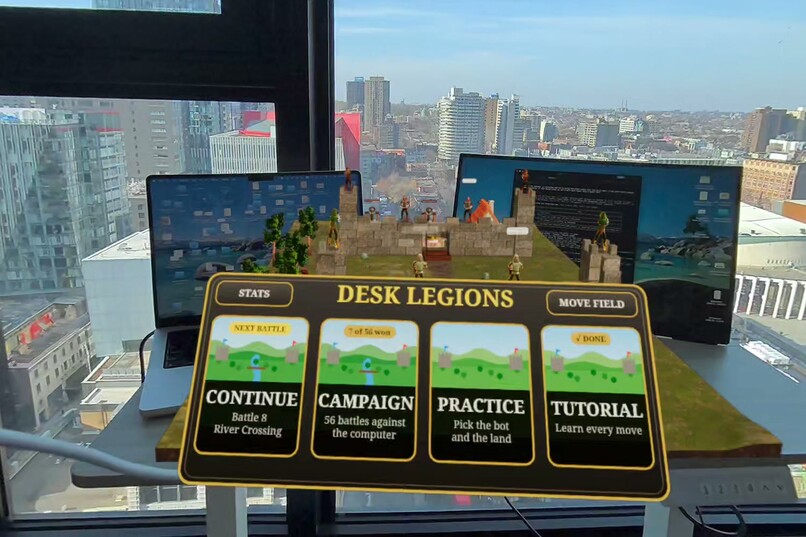
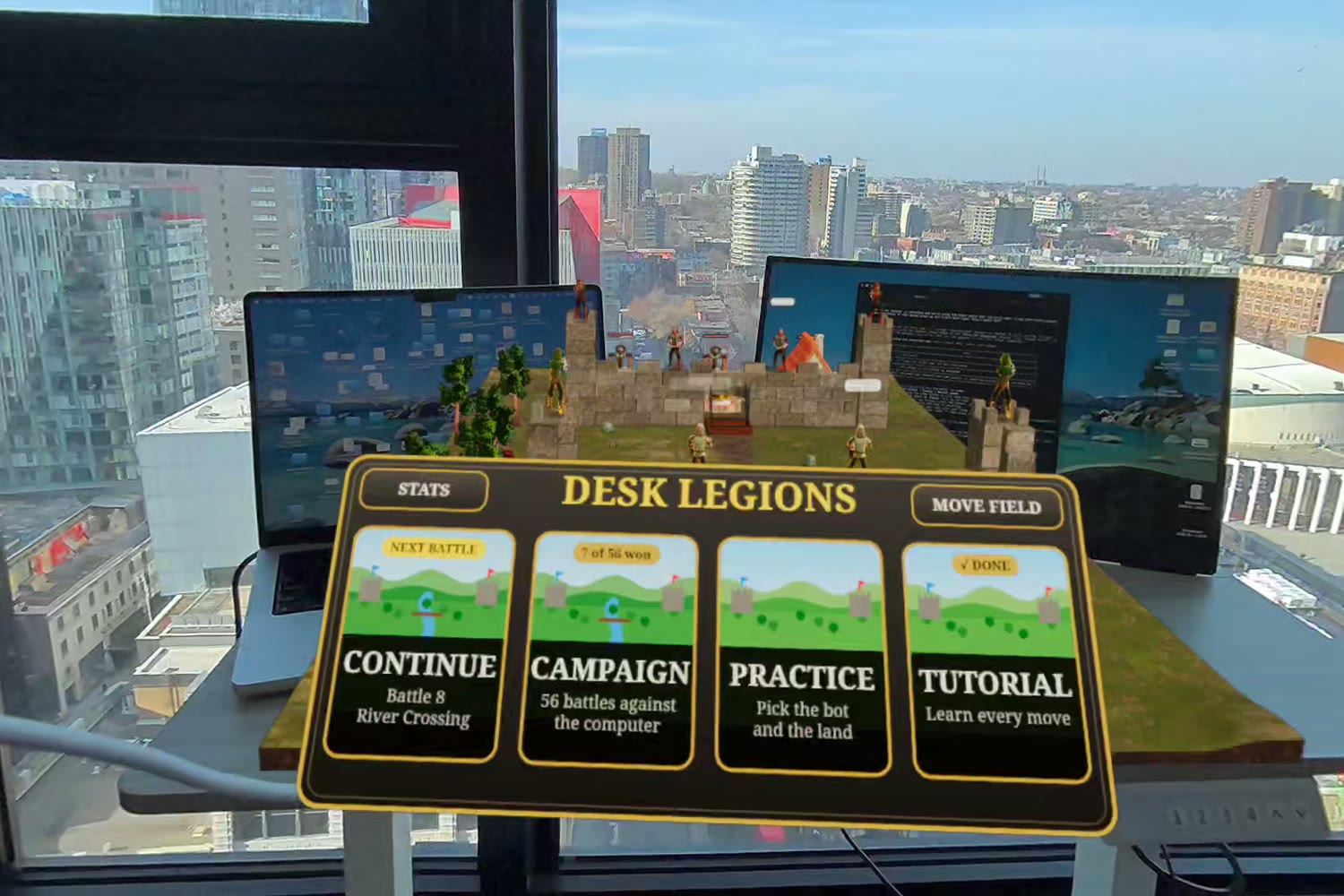
Hands-only menus sit at the edge of the field: continue the campaign, practice, or replay the tutorial.
-
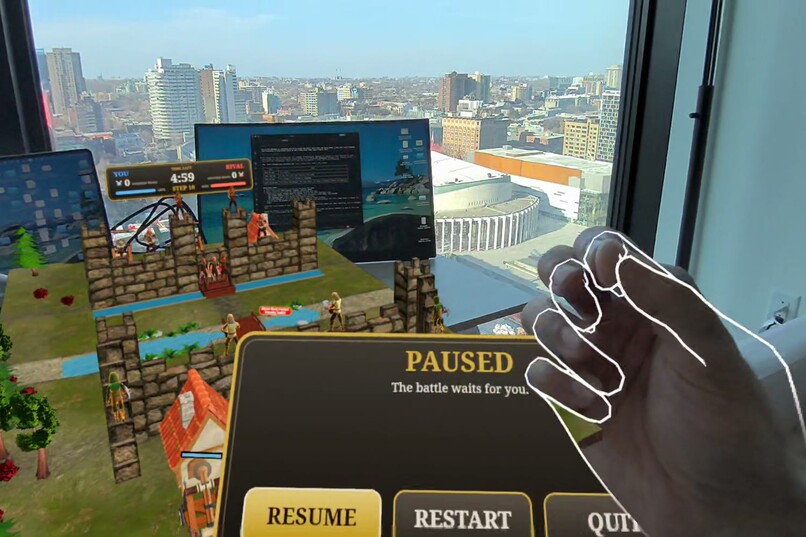
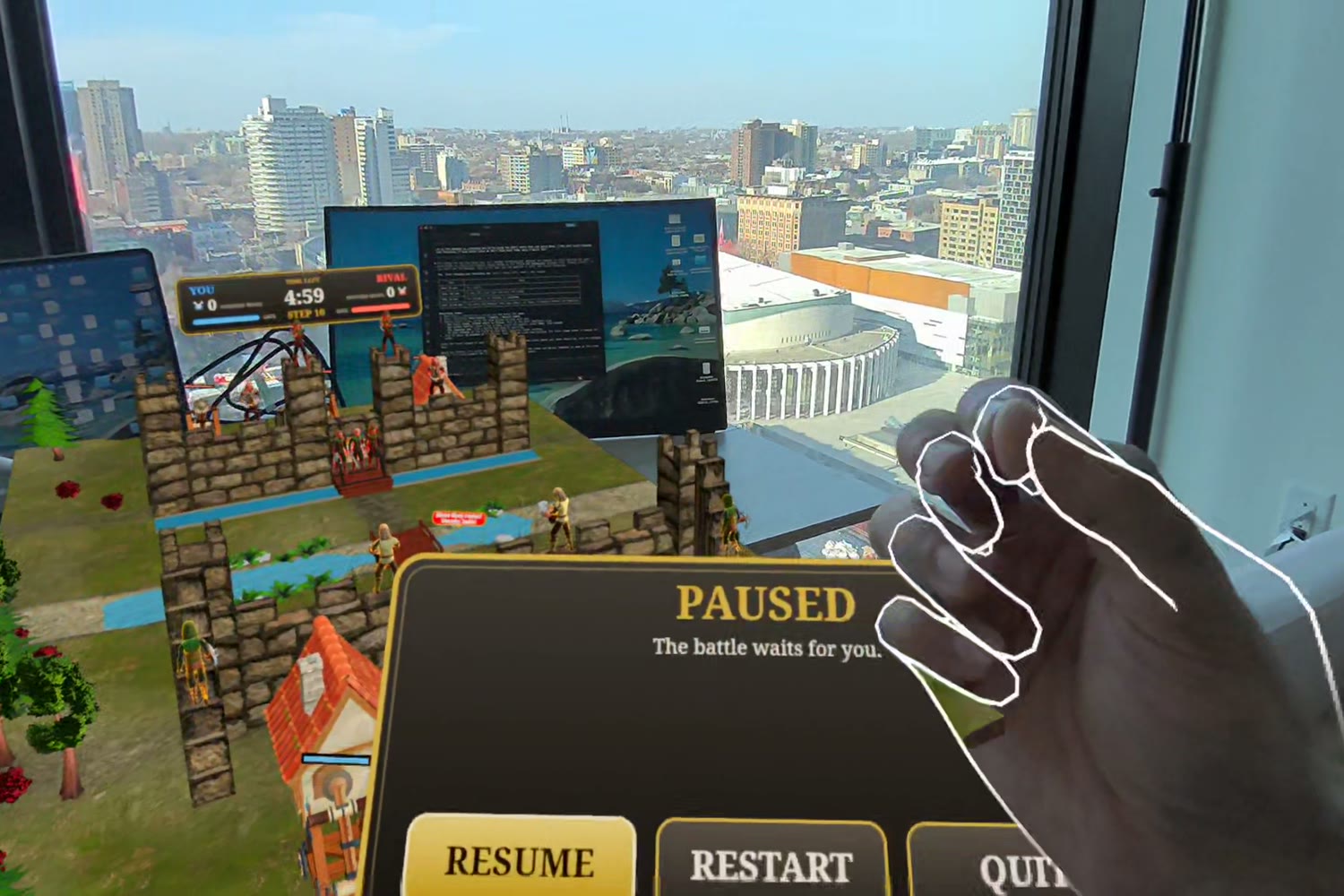
Pause any time from the desk. The battle waits for you.
Inspiration
The idea is simple: make the player a giant looking after a miniature army. Breaking a wall matters because it creates a way forward for the soldiers beneath your hand. The heart of Desk Legions is that relationship: protect your little army, break their wall, and watch them capture the castle.
What it does
Desk Legions is a hands-first mixed-reality castle siege designed for seated play at a real desk. Pinch a loaded catapult bucket, pull back, aim along the dotted arc, and release. Impacts damage the wall; a breach gives your troops a route into the enemy castle. Before battle, adjust the field's position, size, height and orientation to suit your setup.
Your army moves and fights autonomously. Hold an open palm face-down above nearby friendly troops to briefly shelter them from enemy ranged shots. Protection has a limited charge and recovers while inactive, so timing matters. Victory comes when a friendly hero reaches and holds the enemy capture button.
In forward view, pinch in open space, pull back like a slingshot and release to fire from a friendly archer. You can also plant a banner to gather or direct troops, or hold a shield as an alternative to the flat-palm gesture. Campaign battles provide progression; Practice lets you choose difficulty and terrain.
How it is built
The game runs as an immersive web page. Its implementation separates battle rules from tracked-hand input, rendering and physics. The rules handle movement, combat, shelter and capture, while the presentation supplies animated troops, breaking masonry and sound tied to battle events. Automated test files cover rules and input paths.
Challenges
The central challenge is making a small gesture produce a readable consequence. Aiming dots show where a catapult shot is headed. A shelter ring marks the protected area. Menu cards sit along the field's near edge and face the player.
The same hand also serves several actions. Input ownership and cancellation on pause are part of making those actions coexist.
Accomplishments
The guided opening now carries the player through a continuous siege, from the opening shot through breach, advance, shelter and capture. Damage and troops remain on the battlefield as the guidance changes. The lesson ends in an actual castle capture.
Slow motion highlights the opening breach and capture, gate breaks and falling rival siege towers, giving important battle moments room to read.
What we learned
The design lesson is that the consequence matters as much as the gesture. A shot needs a visible impact; protection needs visible feedback; a breach needs troops moving through it. Keeping these events connected gives the hand actions a purpose.
What's next
I want to refine hand comfort, improve feedback where new players hesitate, and measure performance in busy battles. Further work would be guided by observing people play the opening siege without coaching, then using those observations to improve the experience.
Built With
- immersive-web-sdk
- three.js
- typescript
- vite
- web-audio-api
- webxr


