-
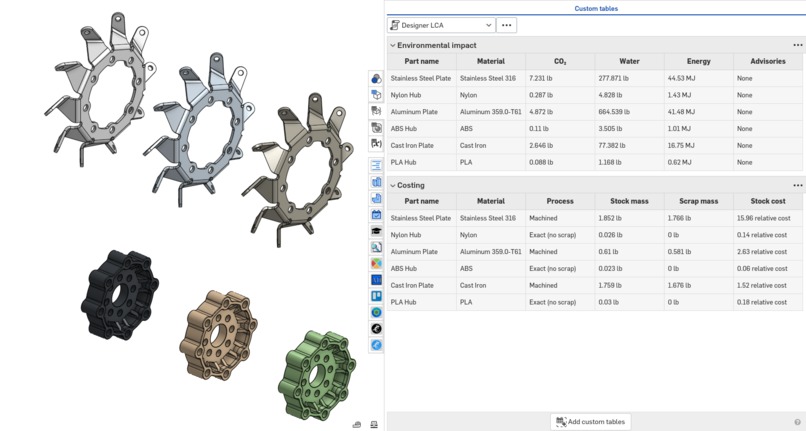
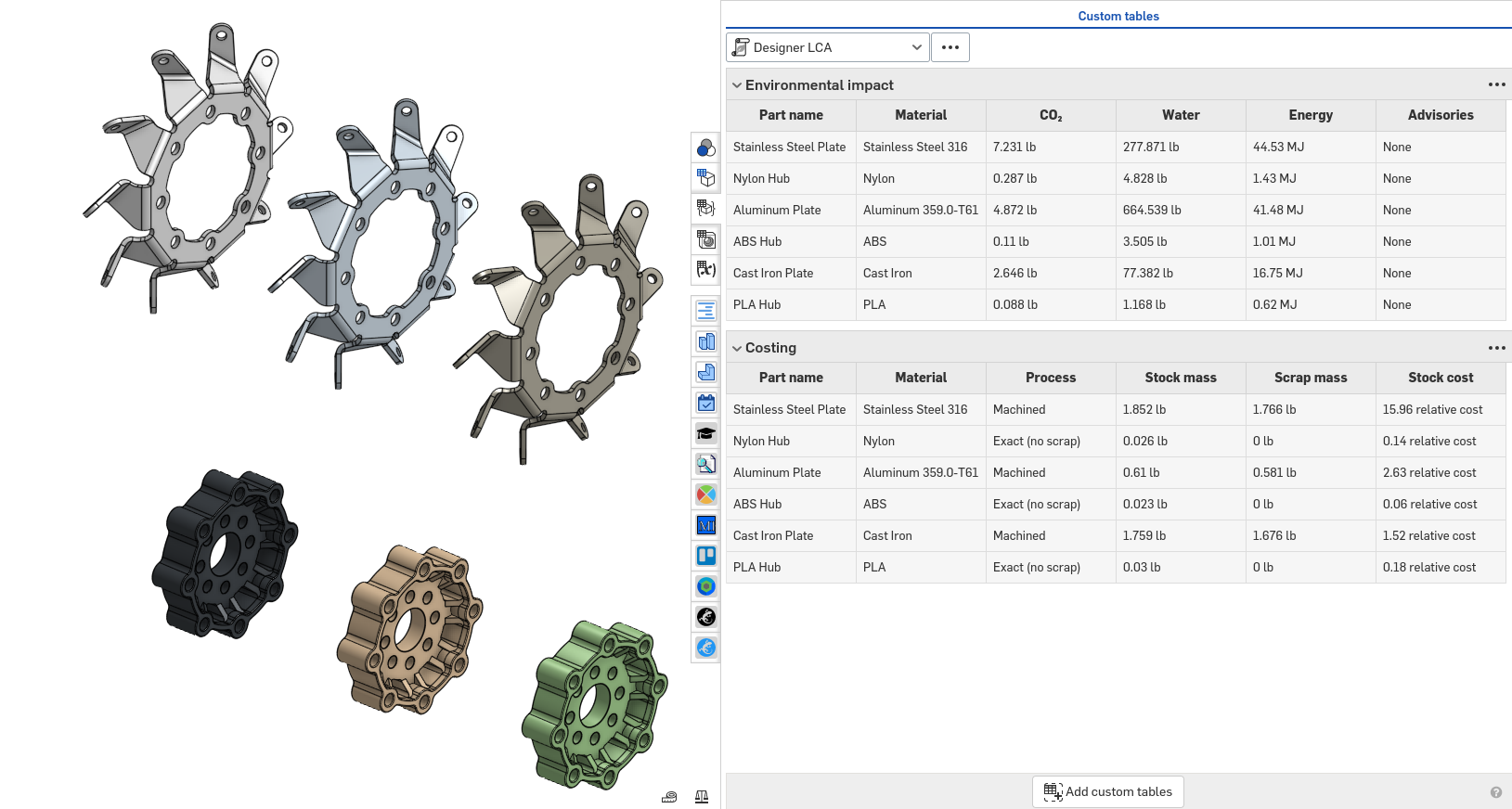
Example environmental & cost analysis of material alternatives for some wheel components
-
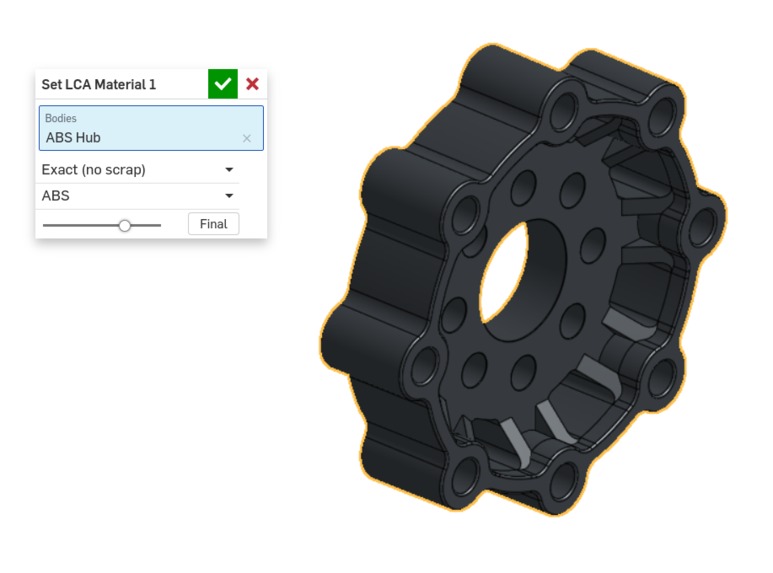
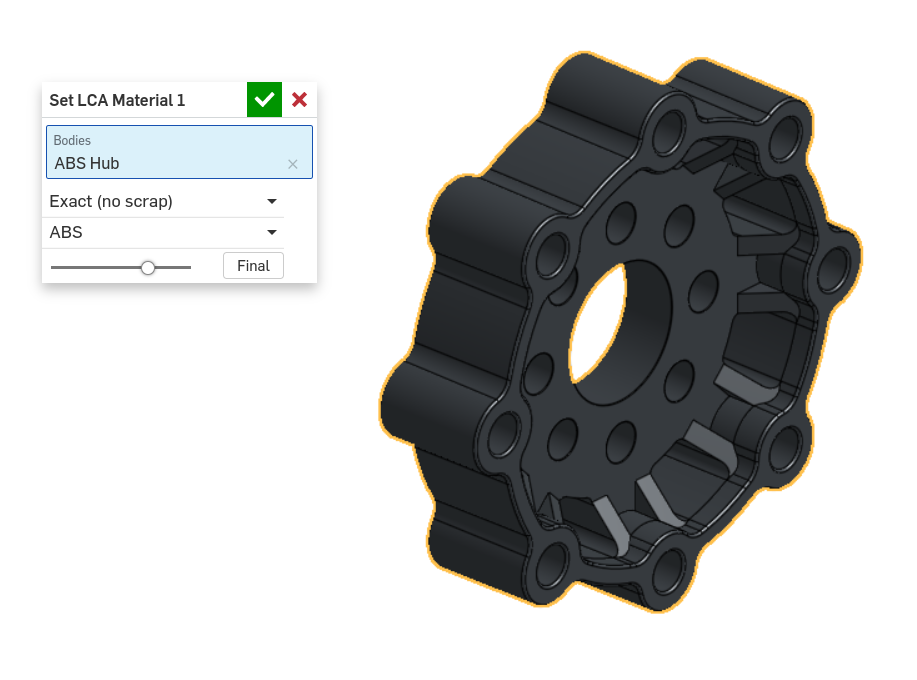
Setting up an analysis is as easy as selecting a part, manufacturing process, and material!
Inspiration
Life Cycle Analysis (LCA) is an expensive and manual process. It would be great if designers could see the predicted environmental impact and cost of products as they are designing in order to make more sustainable decisions!
What it does
As you're modeling in Onshape CAD, "Designer LCA" provides statistics about the predicted environmental impact of manufacturing the product (carbon dioxide emissions, water usage, and energy consumption). As a bonus, it also predicts the cost of production, so you can optimize both cost and environmental impact.
Check out the demo here.
Note: you will need an Onshape account to see the "Toggle custom tables panel" button on the bottom toolbar, which is where the analysis lives.
How we built it
Built in Onshape using FeatureScript to create a Custom Feature for tagging materials in models, plus a Custom Table to summarize impacts. It analyzes the geometry of the part and uses a database of materials to provide the predictions.
Challenges we ran into
Good information about materials is hard to come by, especially with environmental impacts. Fortunately, https://www.makeitfrom.com/ has some great information here. Additionally there are some excellent (but hard to find) academic papers on the topic.
Additionally, LCA is fraught with complexity and unclear boundaries. Therefore, this application very singularly focuses on the impact of the raw resources for the product and the manufacturing process, not shipping and other supply chain concerns. This is a known limitation.
Finally, providing meaningful analysis is tough. Going beyond "mass multiplied by impact" is important, and while this application is rudimentary, it still aims to provide more insight into how much scrap material is produced based on the selected manufacturing process and stock material.
Accomplishments that we're proud of
This is the first time I'm using FeatureScript for this sort of analysis work, and I only ever did a very small project before in the language/environment that was not related to this. Working with data, user-facing tables, and advanced analysis are all new to me in this context. I'm also very proud of working on a project that is limited in scope for a fast development time, while having immediate applicability to designers in a way that can help the environment.
What we learned
FeatureScript stuff:
- Custom tables
- Working with CSV data
- Geometry analysis
Other stuff:
- What goes into LCA
- A sense of the environmental impacts of different materials
- Building towards an MVP from the very start, and staying laser-focused on features that add value to users
What's next for Designer LCA
The immediate next priority after DubHacks is to get this in the hands of professional designers to get feedback and help make products more environmentally friendly. It's already published in a way that beta testers could use it. It's just a matter of finding people who want to try it out it!
Beyond that, in the shorter term, the top priorities are more materials, stock types, and manufacturing methods. In the longer term, assembly-level rollup functionality with the ability to factor in published impact values for off the shelf parts.
Built With
- cad
- featurescript
- onshape


Log in or sign up for Devpost to join the conversation.