-
-
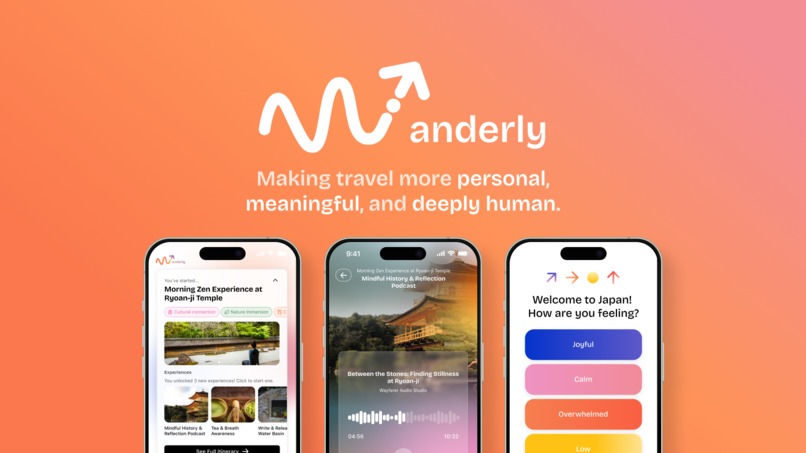
Wanderly: Travel with Intention
Prototype link (Please submit a link to a playable prototype, not a link to your design file) link
Describe your project (max 150 words)
Wanderly is a mindful travel companion designed to help users embark on deeply personal journeys by integrating adaptive AI with real-world presence. In an age where AI-generated content prioritizes convenience and trends, Wanderly shifts the focus back to intentionality, self-discovery, and cultural immersion.
By leveraging AI as a supportive tool rather than a decision-maker, Wanderly tailors travel experiences based on user goals, emotions, and biometric data (via Apple Watch check-ins). Users can create Chapters, dynamic travel logs where itineraries adjust based on how they feel in the moment. The app offers mindfulness-based prompts, immersive audio experiences, and post-trip reflections to ensure travel is not just about movement—but about meaning.
With Wanderly, AI enhances—not replaces—the human experience of travel, guiding users to be more present, self-aware, and deeply connected to the places they visit.
- Describe your research process and findings. If you conducted any surveys or interviews, please include the survey form and/or interview questions here. If you conducted secondary research by pulling from online sources, please include a link to your sources. (Max 500 words)
For Wanderly, our research process was rooted in understanding how travelers connect emotionally with their journeys and how technology can enhance mindfulness during travel. We applied a mixed-methods approach that included user interviews, surveys, and secondary research to capture a holistic understanding of travel behaviors, challenges, and desires.
We began with 8 in-depth interviews with a diverse group of frequent travelers, solo explorers, and mindfulness practitioners. The goal was to understand both their logistical and emotional experiences. The interviews were structured around key questions, such as:
- What makes a travel experience personally meaningful for you?
- How do you deal with unexpected changes or stress during trips?
- How important is it to you to have time for reflection while traveling?
A recurring theme across the interviews was the disconnect many travelers felt when following rigid, pre-designed itineraries. One participant described the frustration of feeling like they were simply “checking boxes” at popular tourist attractions without truly engaging with the locations or their emotions. Many emphasized the importance of flexibility, expressing that the ability to adapt plans on the go made travel more meaningful and less stressful.
We complemented the qualitative insights with a survey of 55 participants. This helped quantify the challenges highlighted in the interviews and allowed us to identify broader trends. The survey aimed to explore how travelers structure their trips, the emotional hurdles they face, and their views on balancing structure and spontaneity. Key survey questions included:
- How often do you feel overwhelmed by rigid travel schedules?
- How important is it for you to have the option to adjust your plans in real time?
- Would you be interested in tools that help you reflect on your experiences during and after your trip?
The responses revealed that 72% of participants wanted more control over adapting their plans mid-trip, and 60% admitted that following strict itineraries often left them feeling rushed and unable to fully enjoy the experience. Additionally, 48% expressed interest in tools designed to help them stay emotionally grounded during their travels.
We also conducted secondary research, examining academic studies and industry reports related to mindfulness, adaptive technologies, and travel behaviors. One key study emphasized that incorporating reflective activities—such as journaling, mindful check-ins, and sensory experiences—can significantly enhance a traveler’s emotional connection to their surroundings. Another study on adaptive travel planning highlighted that real-time flexibility not only reduces travel stress but also fosters deeper engagement and spontaneous discovery.
By combining these qualitative and quantitative methods, we were able to uncover common emotional challenges faced by travelers, such as feeling disconnected, overwhelmed, or rushed. These findings formed the basis for Wanderly’s core design decisions, ensuring that the app addresses these pain points through flexible, adaptive features and encourages users to be present throughout their journeys.
- Describe your most important design decisions. What research findings and/or user testing results led you to make these decisions? (Max 500 words)
Our design decisions for Wanderly centered on creating a deeply personal, adaptive, and mindful travel experience. Based on our research, we found that many travelers felt disconnected when following rigid itineraries and desired more emotional engagement with their journeys. This insight led us to design Wanderly’s onboarding experience as a foundation for personalization—leveraging AI-driven recommendations while ensuring users maintain control over their journey.
Personalized Onboarding for Adaptive AI To combat the “checklist-style” approach to travel, our onboarding experience is designed to feel intuitive and personalized. By collecting user goals, emotional preferences, and interests, Wanderly curates AI-driven travel recommendations that adapt in real-time. The decision to prioritize this level of personalization was influenced by our survey, where 72% of travelers expressed frustration with inflexible itineraries. Rather than dictating plans, our system learns from users over time, shaping each trip into a meaningful, self-reflective experience.
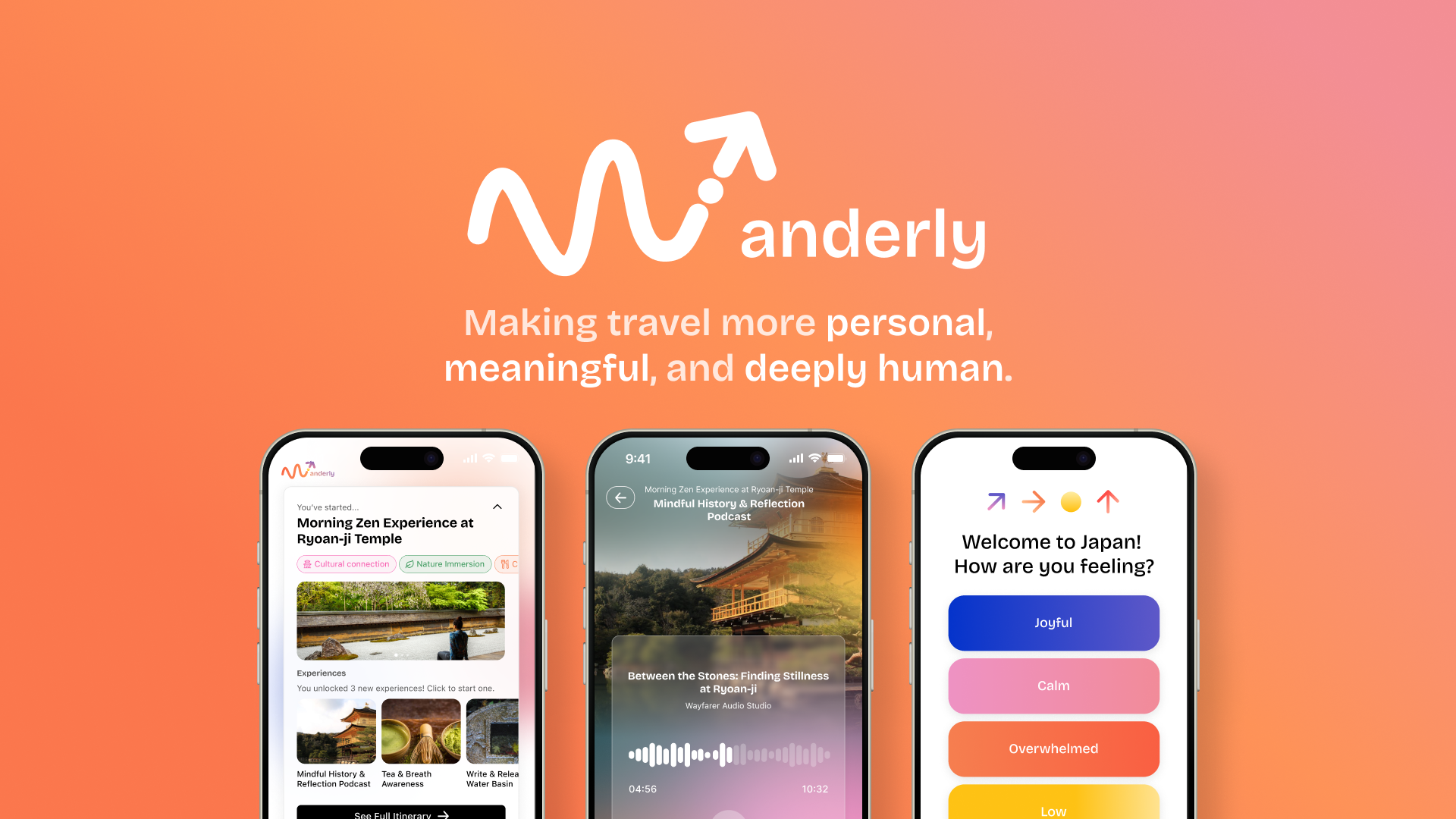
Branding & Visual Identity: Movement and Mindfulness Wanderly’s visual design was shaped by our core theme—travel as a journey of self-discovery. To reflect this, we incorporated fluid motion into our UI, using dynamic gradients to evoke a sense of movement and transformation. The decision to embrace gradients was inspired by the emotional aspect of travel; different colors subtly signal shifting moods and states of mind. This aligns with our research finding that emotional awareness enhances engagement with surroundings. Our branding intentionally avoids rigid, static elements, ensuring that users feel immersed in an experience that evolves with them.
Apple Watch Integration: A Human-Centered Approach to AI One of our most significant design decisions was integrating Apple Watch biometrics into Wanderly’s experience. Unlike AI-generated content, human emotions and physiological states cannot be artificially replicated. Our research showed that travelers often struggle to stay emotionally grounded—leading us to use real-time biometric data (such as heart rate variability) to offer mindfulness-based prompts and adaptive recommendations. This decision reinforces our commitment to using AI as a tool to enhance, rather than replace, human intuition.
Exploratory Home Page: Guiding, Not Dictating Our home page design prioritizes exploration over prescription. Instead of overwhelming users with fixed schedules, the interface offers flexible options based on mood and interest. Inspired by our interviews, where travelers expressed frustration with being locked into predefined plans, we opted for a discovery-based layout—where information is available when needed but does not dictate the user’s choices.
Mindfulness Through Shape & Color: Emotion-Driven Check-ins To encourage mindfulness, we designed our check-in feature using colors and shapes that visually represent different emotional states. Inspired by studies on emotional mapping, we translated moods into dynamic visuals that evolve into a user’s personal “journey.” This approach allows travelers to reflect on their experiences holistically, reinforcing the idea that travel is as much about internal transformation as external exploration.
By prioritizing personalization, adaptability, and mindfulness in our design, Wanderly ensures that AI-driven travel enhances human connection rather than replacing it. Every design choice was made with the traveler’s emotional journey in mind, fostering a more meaningful and immersive experience.
Built With
- figma


Log in or sign up for Devpost to join the conversation.