-
-
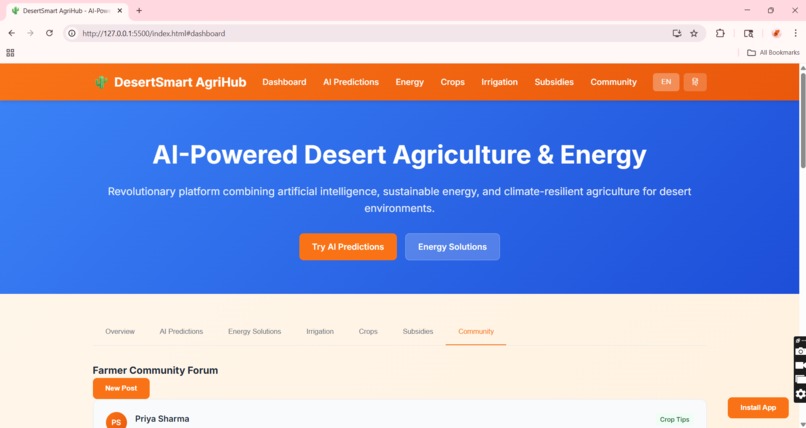
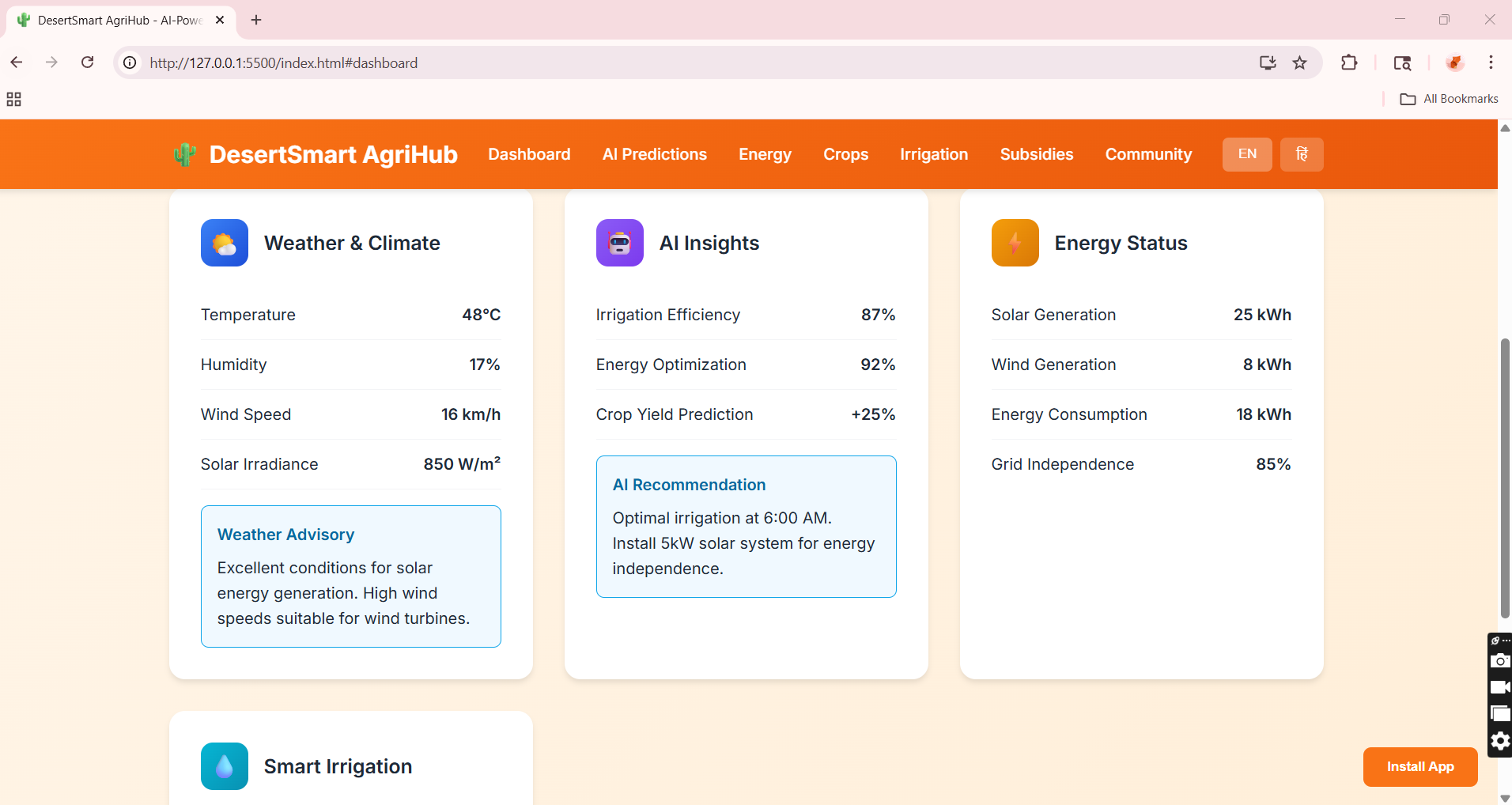
activity button
-
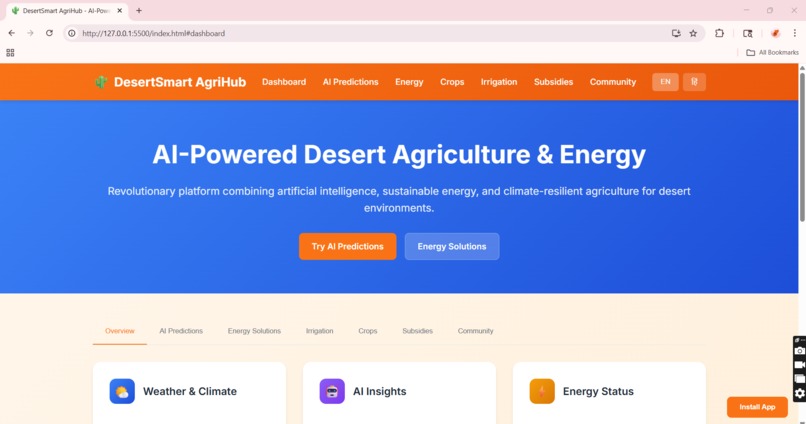
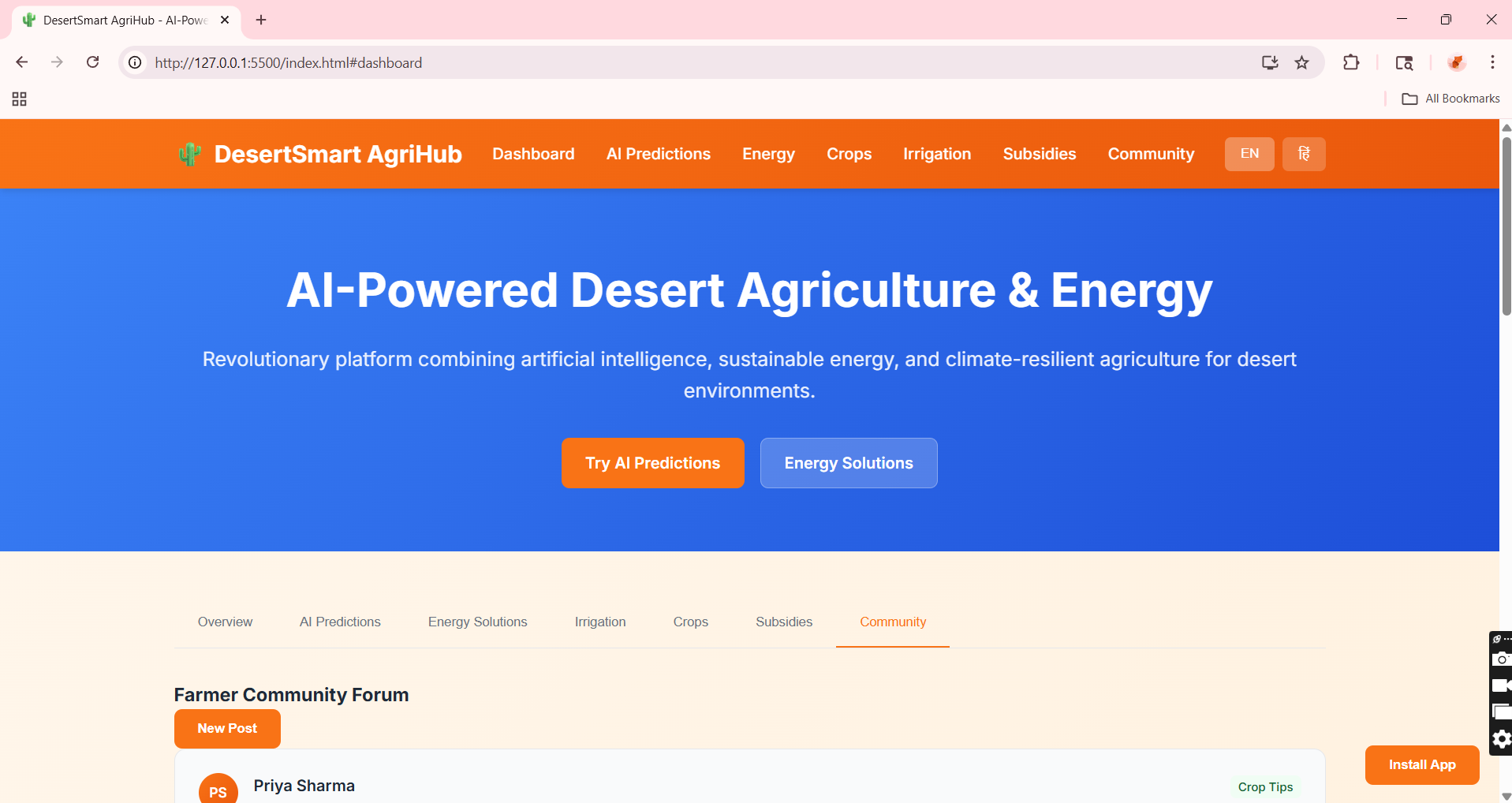
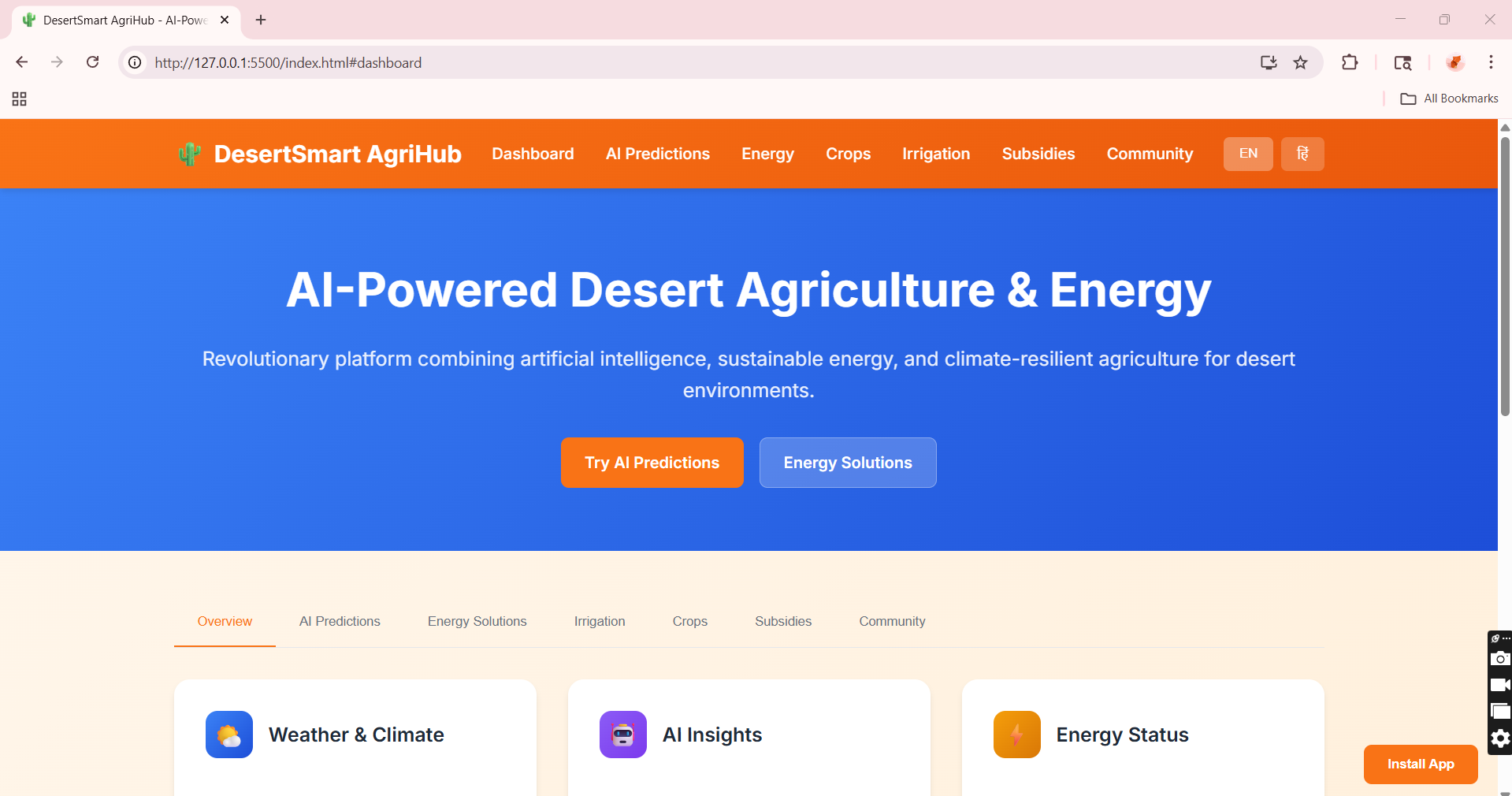
home page
-
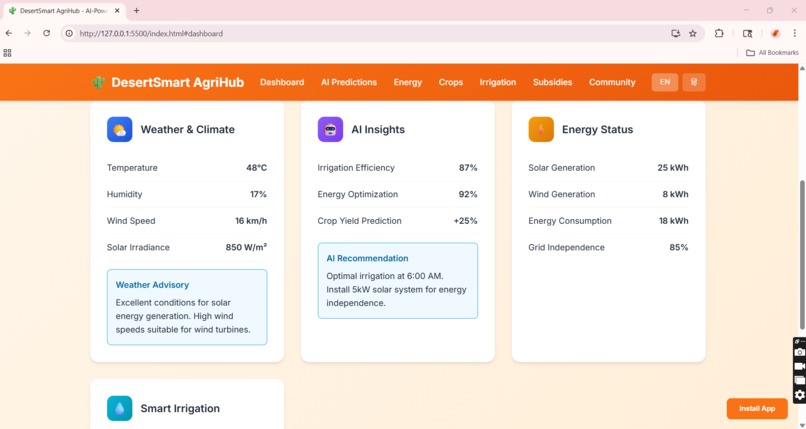
growing crops in deserts, soil preparation, irrigation techniques, and climate-resilient GM crops.
-
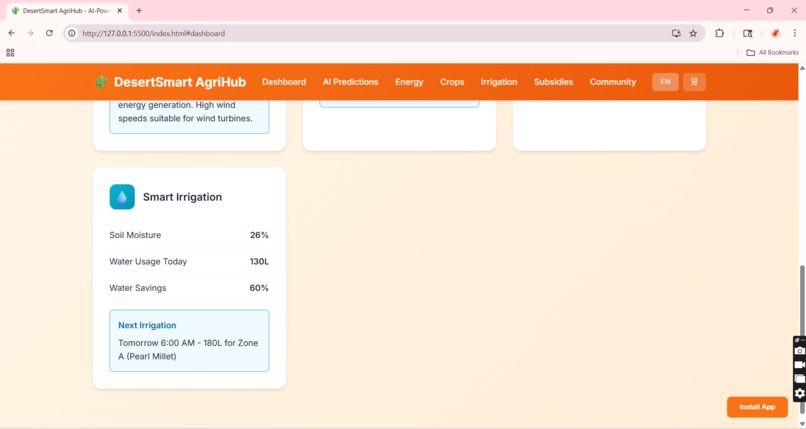
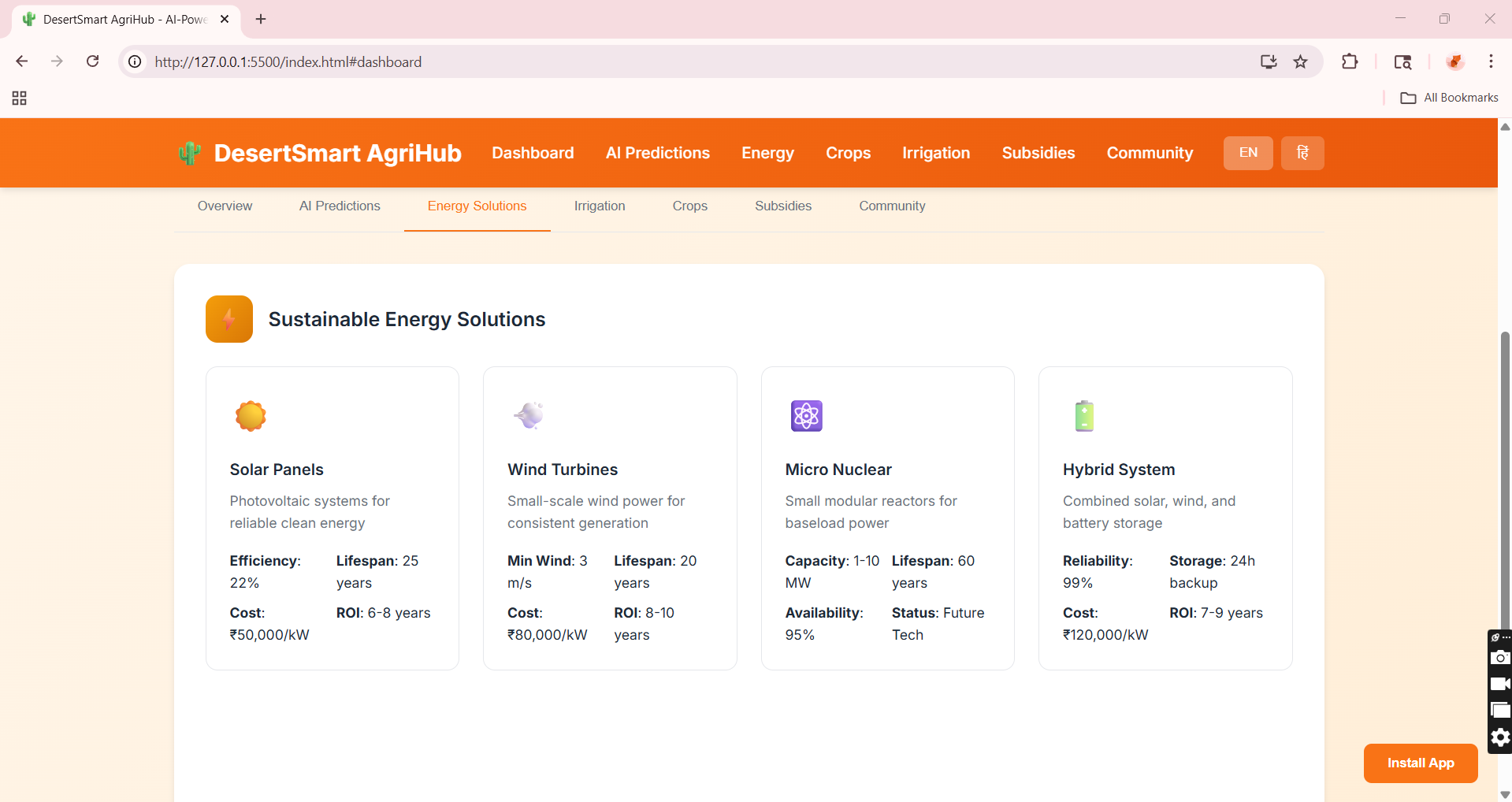
solar energy
-
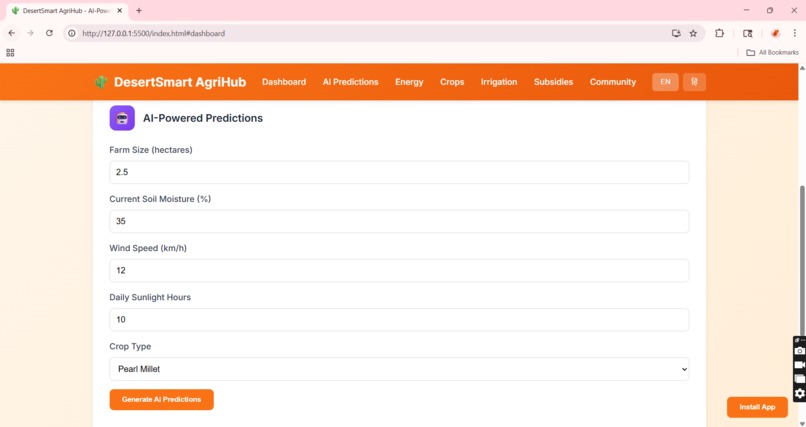
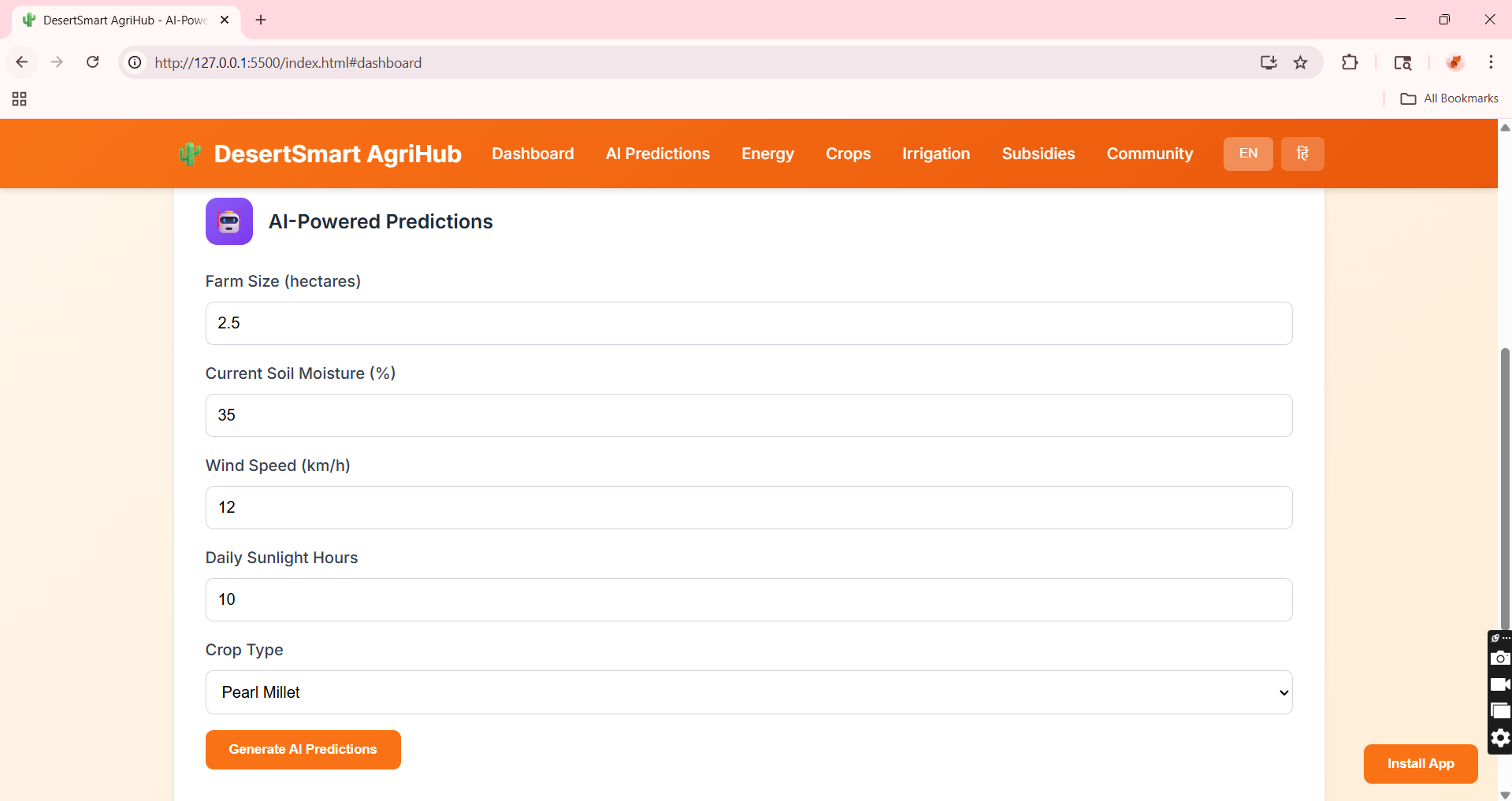
AI-Powered Predictions
-
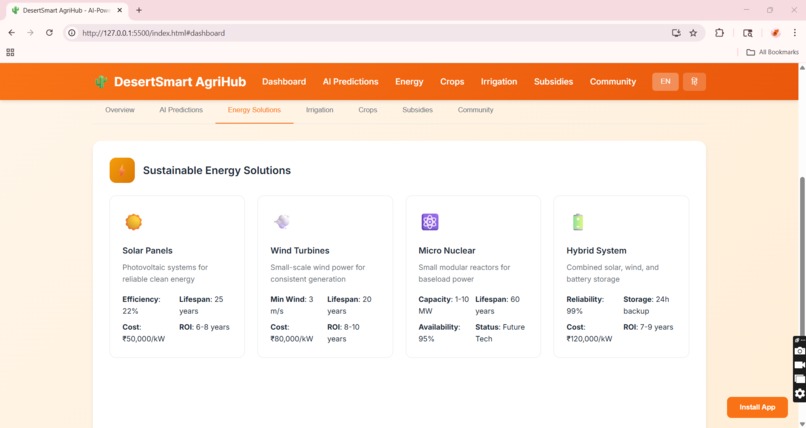
Sustainable Energy Solutions
-
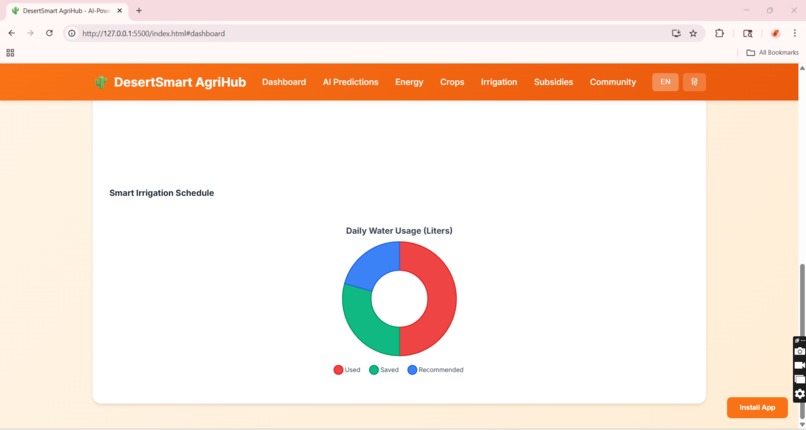
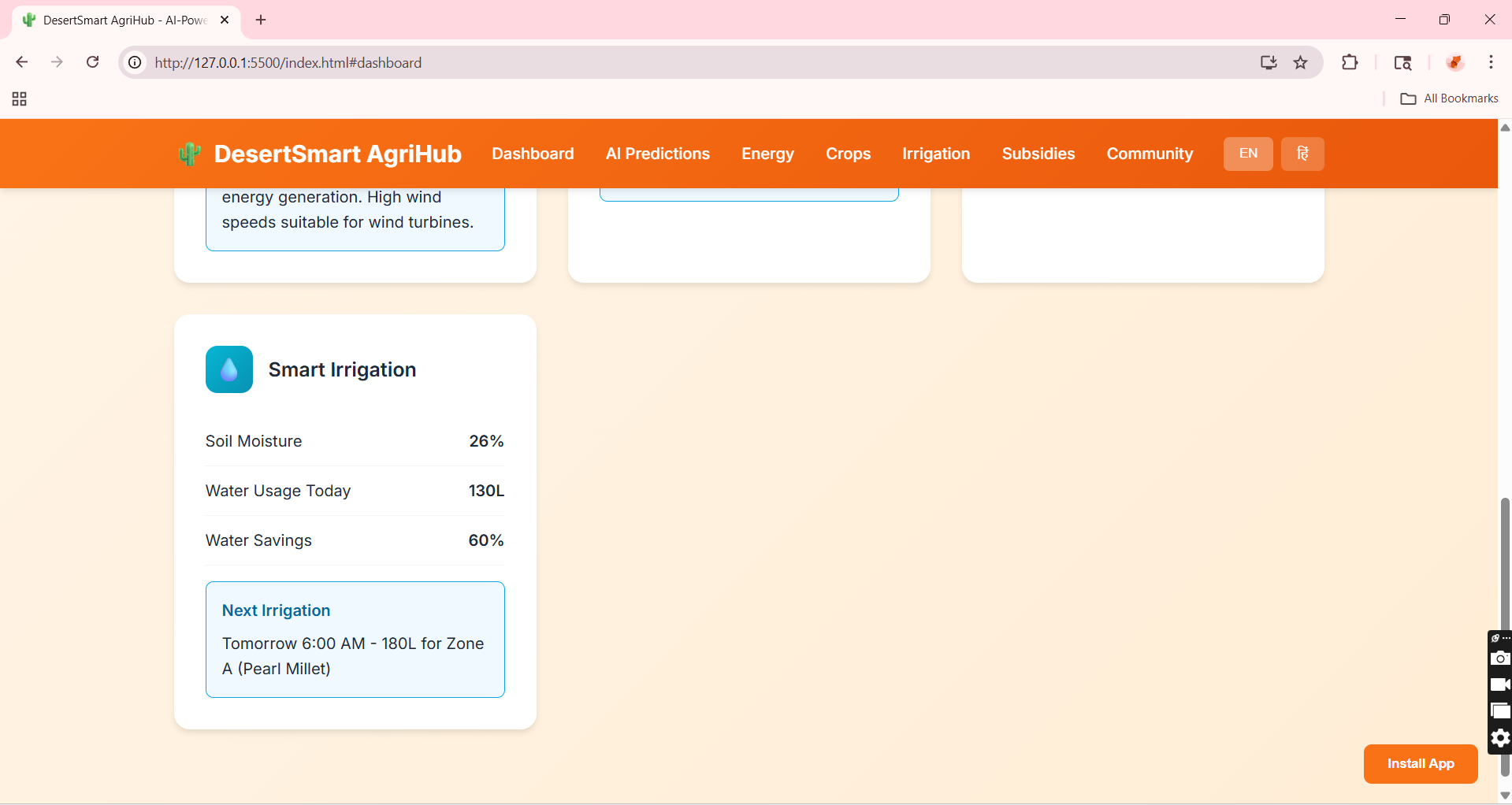
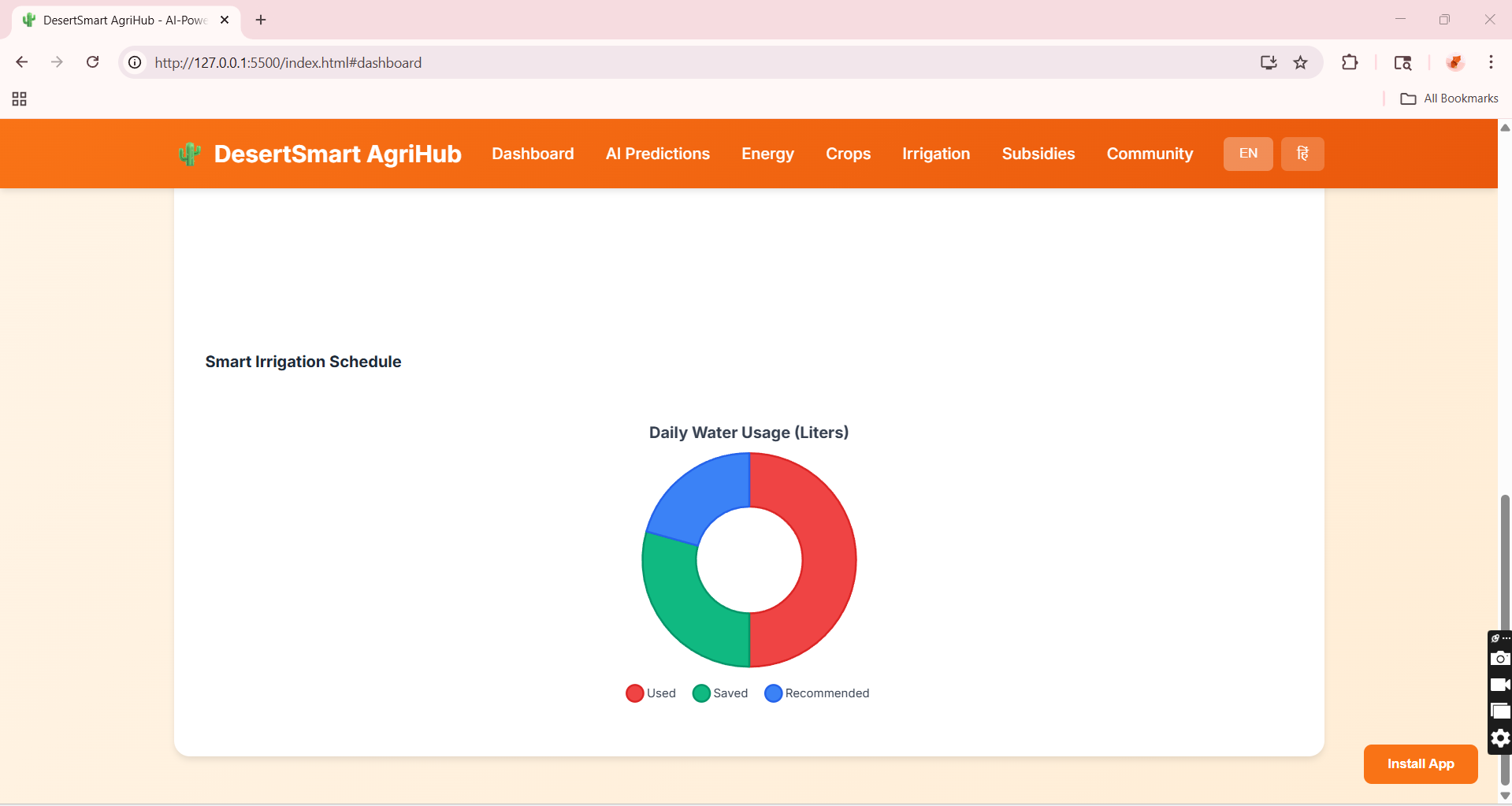
AI-Powered Irrigation Management
-
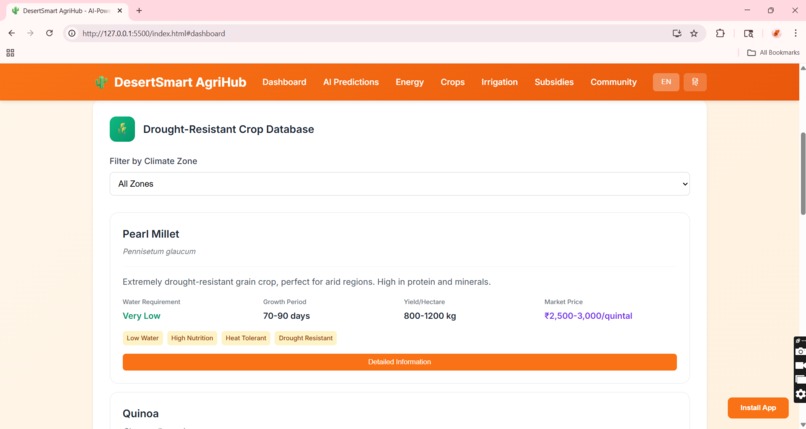
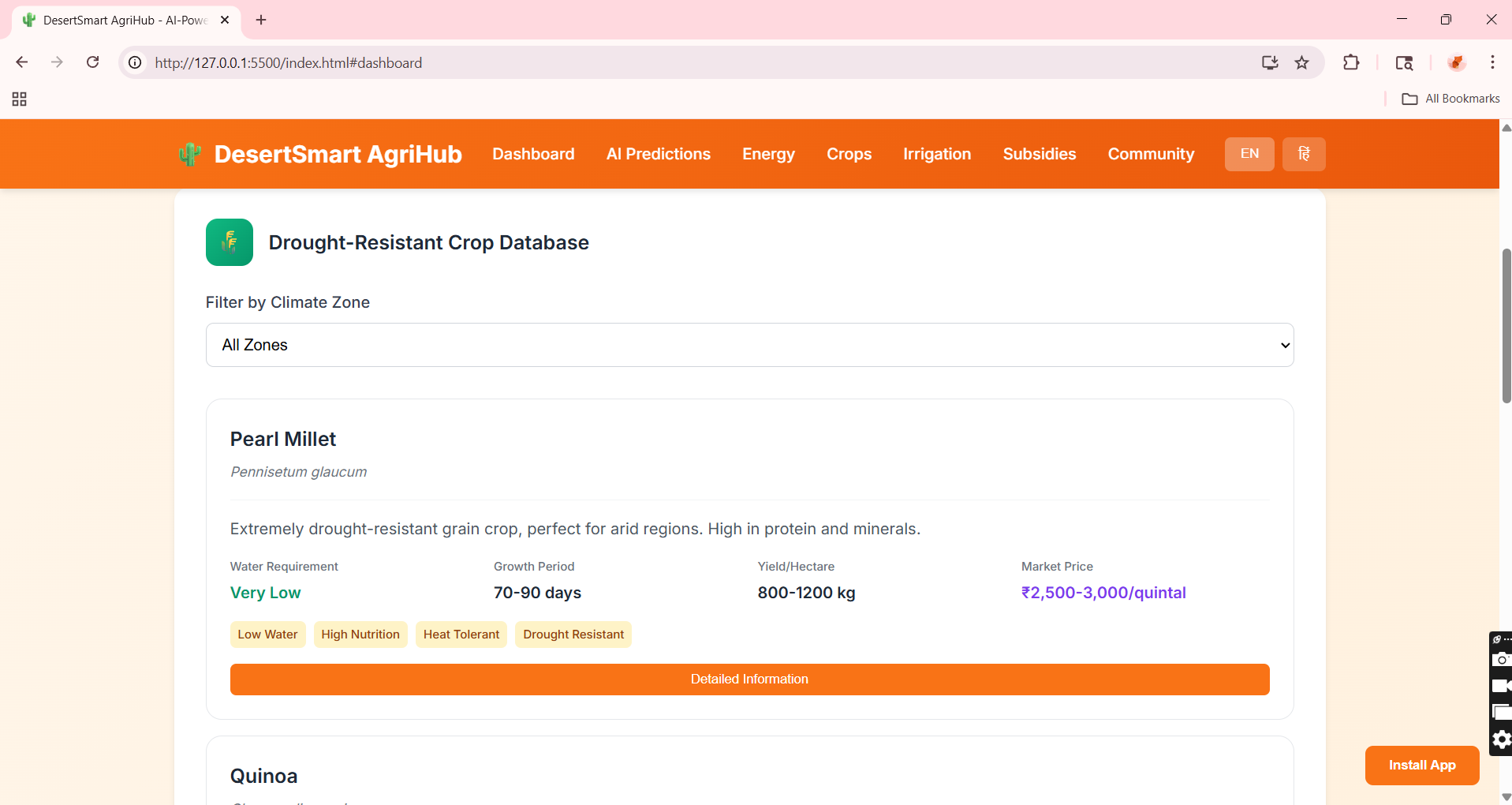
Drought-Resistant Crop Database
-
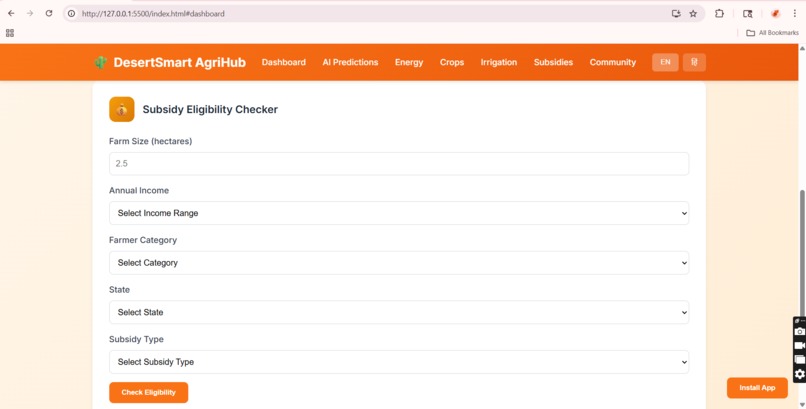
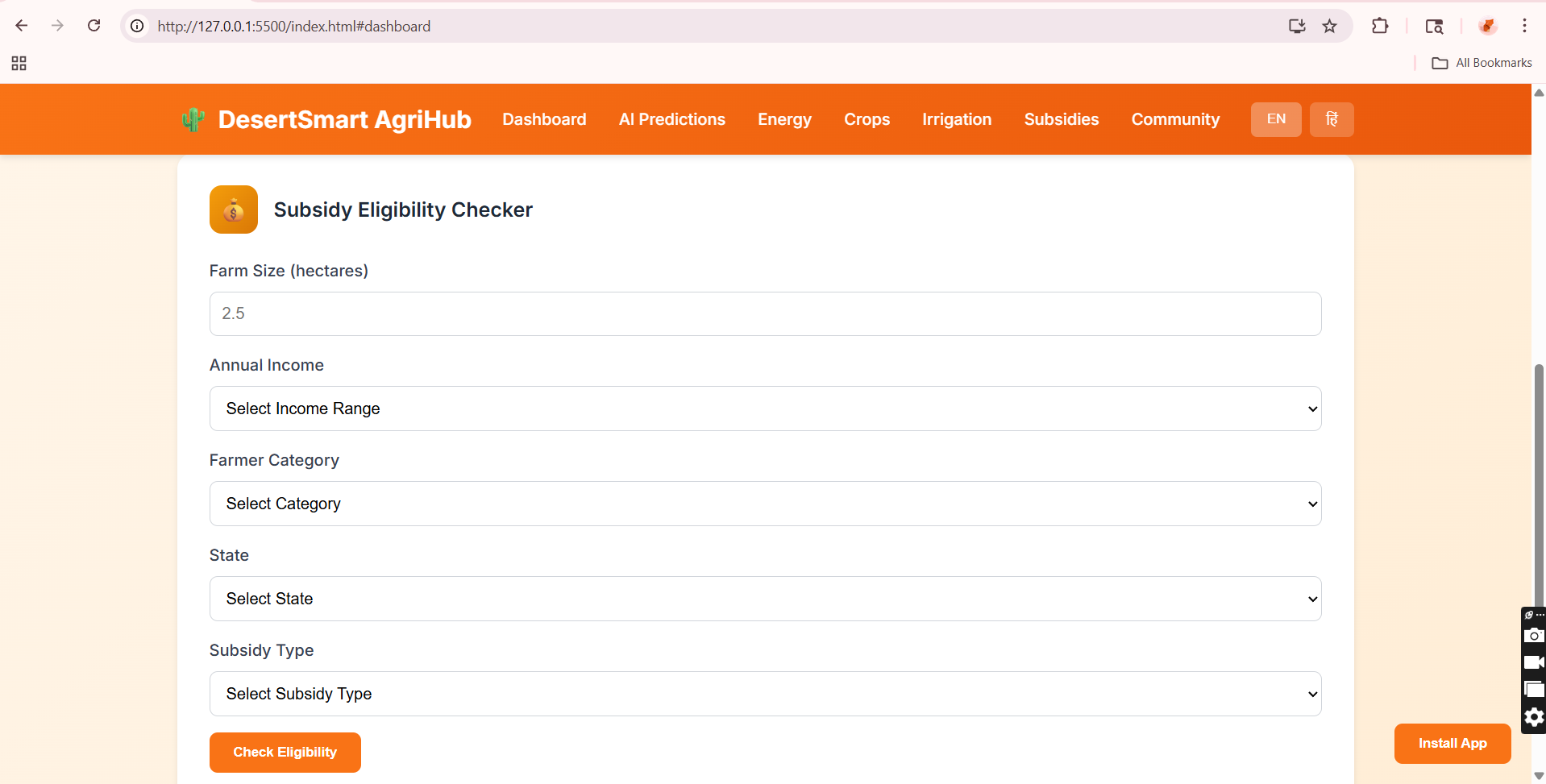
Subsidy Eligibility Checker
-
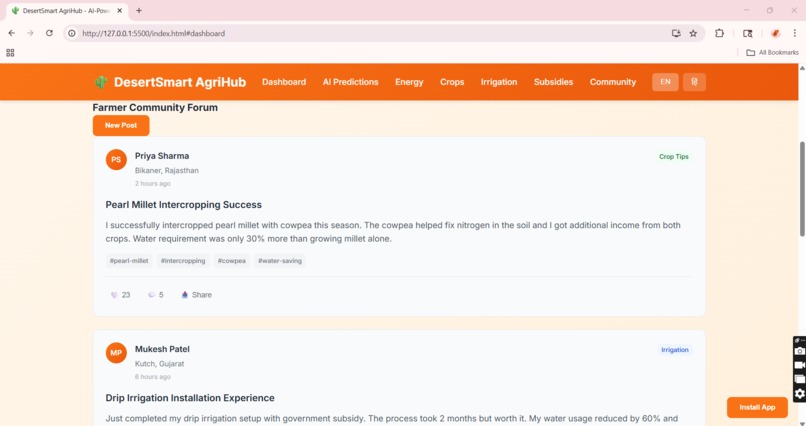
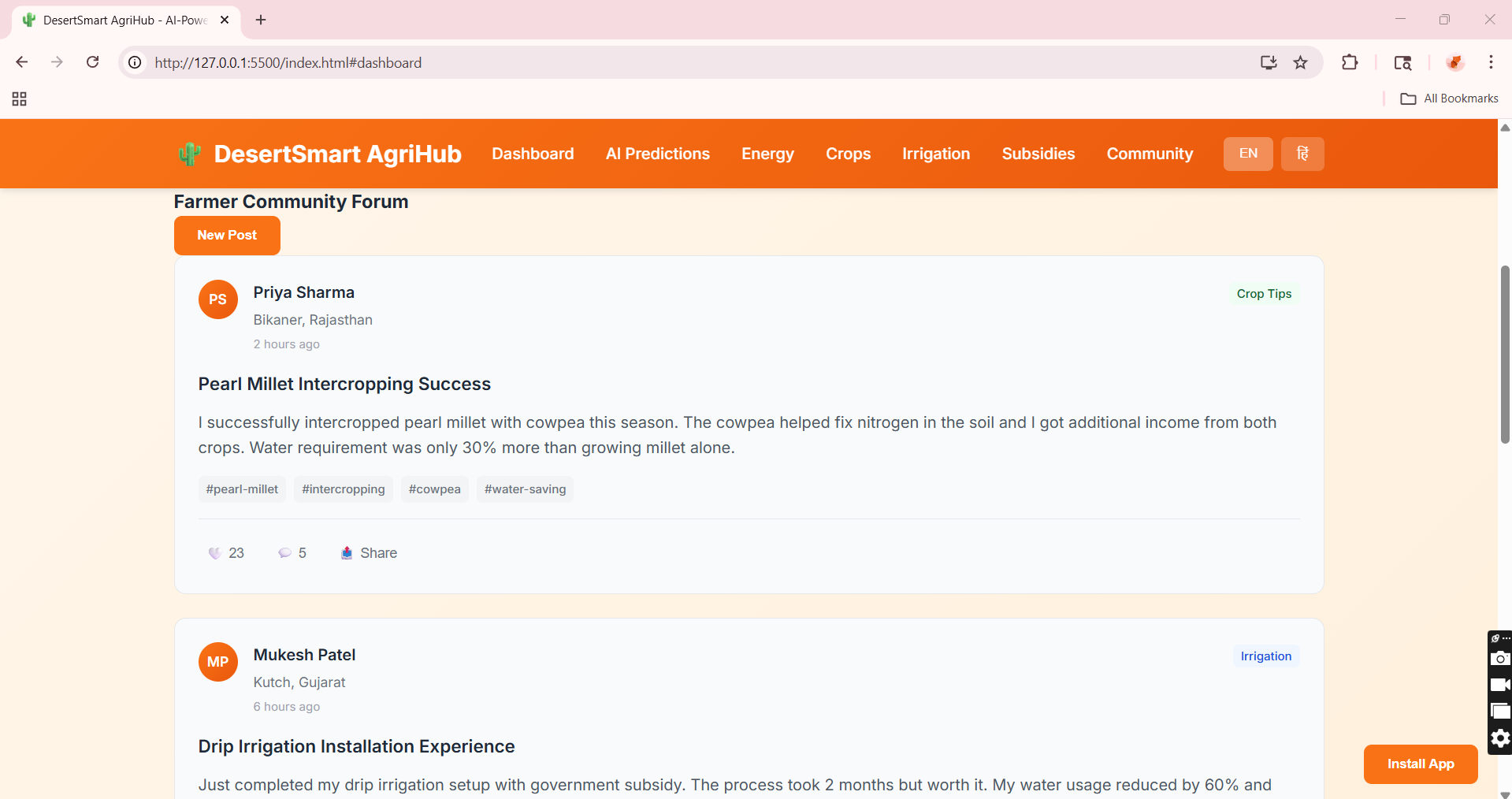
Farmer Community Forum
Problem that we are trying to solve and its significance
Desert agriculture faces critical challenges that impact over 2 billion people globally living in arid regions. Traditional farming methods fail in environments with extreme heat (temperatures exceeding 50°C), severe water scarcity (less than 250mm annual rainfall), and unpredictable climate patterns. Farmers in these regions—from Rajasthan's Thar Desert to Africa's Sahel—lack access to modern agricultural technology, real-time weather data, and localized farming expertise.
The significance is profound: with climate change intensifying desertification and global food security becoming increasingly urgent, we cannot afford to leave desert farmers behind. These communities possess invaluable traditional knowledge but lack the technological tools to optimize their practices for modern challenges. The digital divide further marginalizes them, as most agricultural platforms require reliable internet connectivity and expensive infrastructure that simply don't exist in remote desert regions.
Inspiration for solution
Growing up, my father lived in Rajasthan's desert in India. From a young age, I saw the struggles of desert farmers—water scarcity, extreme heat, and lack of support. I wanted to build a platform that empowers not just my community, but desert farmers worldwide, with technology, knowledge, and hope. That's why I included Indian regional languages and designed the platform to be accessible, offline-first, and globally scalable.
This personal connection drives our mission: to bridge the gap between cutting-edge agricultural technology and the farmers who need it most, regardless of their geographic location, connectivity limitations, or economic circumstances.
How the solution is special / novel / unique
DesertSmart AgriHub revolutionizes agricultural technology through three breakthrough innovations:
Zero-Infrastructure AI: Unlike traditional AgTech solutions requiring cloud connectivity, our platform runs advanced machine learning models entirely in-browser using Pyodide, delivering instant AI predictions even in areas with no internet access.
Desert-Specific Intelligence: Rather than generic farming advice, our AI models are specifically trained on desert agriculture data, providing hyper-localized recommendations for drought-resistant crops, water-efficient irrigation, and extreme weather adaptation.
Inclusive-by-Design Architecture: Built from the ground up for low-resource environments with multilingual support, offline-first functionality, and mobile-optimized interfaces that work on basic smartphones with limited data plans.
How the product is meant to be used
DesertSmart AgriHub serves as a comprehensive digital companion for desert farmers:
Daily Operations: Farmers access real-time weather forecasts, receive AI-driven irrigation schedules, and get crop-specific care recommendations tailored to their exact location and conditions.
Planning & Decision Making: The platform provides drought-resistant crop suggestions, optimal planting calendars, and energy-efficient farming strategies based on seasonal patterns and climate data.
Knowledge & Community: Users tap into a rich repository of desert farming guides, participate in community Q&A forums, and learn from both traditional wisdom and modern agricultural science.
Resource Optimization: Built-in tools help farmers check subsidy eligibility, calculate water requirements, and optimize resource allocation for maximum yield with minimal input.
The platform works seamlessly offline, syncing data when connectivity becomes available, ensuring uninterrupted access regardless of network conditions.
The technologies or techniques used
Frontend Architecture: HTML5, JavaScript ES6+, and Tailwind CSS create a responsive, mobile-first interface optimized for touch devices and varying screen sizes.
In-Browser AI: Python-based machine learning models (scikit-learn) execute directly in the browser via Pyodide, eliminating server dependencies and ensuring instant predictions.
Data Visualization: Chart.js powers interactive analytics dashboards, while Leaflet.js provides lightweight mapping capabilities for location-based insights.
Offline Infrastructure: Advanced service workers enable comprehensive caching strategies, allowing full functionality without internet connectivity.
Multilingual Engine: Modular localization system supports English and Hindi natively, with extensible architecture for rapid deployment in additional regional languages.
Client-Side Architecture: 100% client-side processing ensures scalability, reduces infrastructure costs, and maintains functionality in low-bandwidth environments.
Key challenges
Technical Complexity: Running sophisticated AI models in browser environments while maintaining performance across diverse device capabilities required extensive optimization and innovative approaches to data processing.
Accessibility Balance: Creating an interface powerful enough for advanced agricultural analysis yet simple enough for farmers with varying technical literacy levels demanded careful UX research and iterative design refinement.
Multilingual Implementation: Developing a localization system that goes beyond simple translation to include culturally appropriate agricultural terminology and region-specific farming practices.
Offline Reliability: Ensuring seamless functionality across unreliable network conditions while maintaining data integrity and synchronization when connectivity returns.
Resource Constraints: Optimizing for devices with limited processing power, storage capacity, and battery life while delivering rich, interactive experiences.
The product as a business and/or at scale
Market Opportunity: The global smart agriculture market, valued at $13.8 billion in 2023, largely underserves arid regions. Our addressable market includes 2+ billion people in desert and semi-arid regions across 40+ countries.
Revenue Streams:
Freemium model with premium features (advanced AI insights, extended weather forecasts)
B2B partnerships with agricultural input suppliers and equipment manufacturers
Government and NGO licensing for rural development programs
Data insights (anonymized) for agricultural research institutions
Scalability Strategy: Client-side architecture enables exponential scaling without proportional infrastructure costs. Each new user region requires minimal additional resources, making global expansion economically viable.
Impact Metrics: Success measured through farmer income improvement, crop yield increases, water usage optimization, and expansion into new geographic regions.
Partnership Ecosystem: Collaborations with local governments, agricultural universities, seed companies, and international development organizations create sustainable growth channels while ensuring cultural relevance and local adoption.
Long-term Vision: Evolving into a comprehensive ecosystem for desert agriculture, incorporating IoT integrations, satellite imagery analysis, and AI-powered supply chain optimization while maintaining our core commitment to accessibility and offline functionality.
Why it Matters:
DesertSmart AgriHub tackles a deeply underserved challenge: enabling sustainable agriculture in some of the world's harshest environments. By designing for limitations instead of ignoring them, we prove that inclusive innovation can transform agriculture, even in the most unforgiving conditions. This is not just a tool; it's a step toward agricultural equity and climate resilience in regions long left behind.
What's next:
Add more regional languages and expand to other desert regions globally, integrate advanced AI models and larger datasets, partner with local governments and NGOs for real-world deployment, add voice input/output for accessibility, and enable remote expert consultations with live weather alerts.
Built With
- ai
- html
- javascript
- python
- skikit-learn
- tailwindcss
- ui


Log in or sign up for Devpost to join the conversation.