-
-
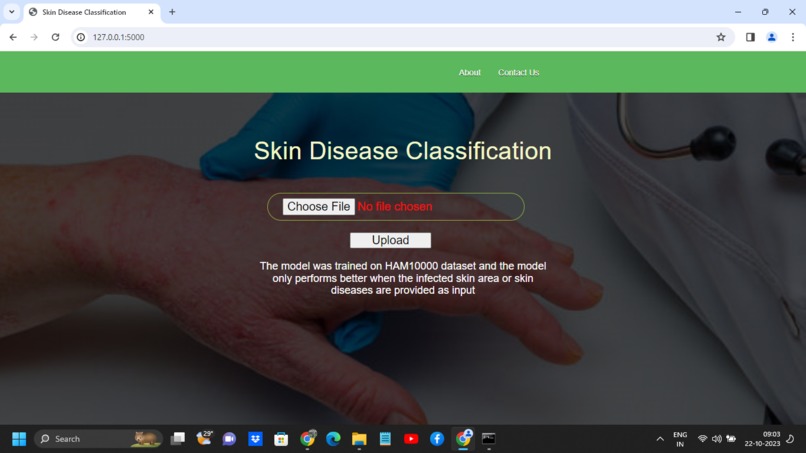
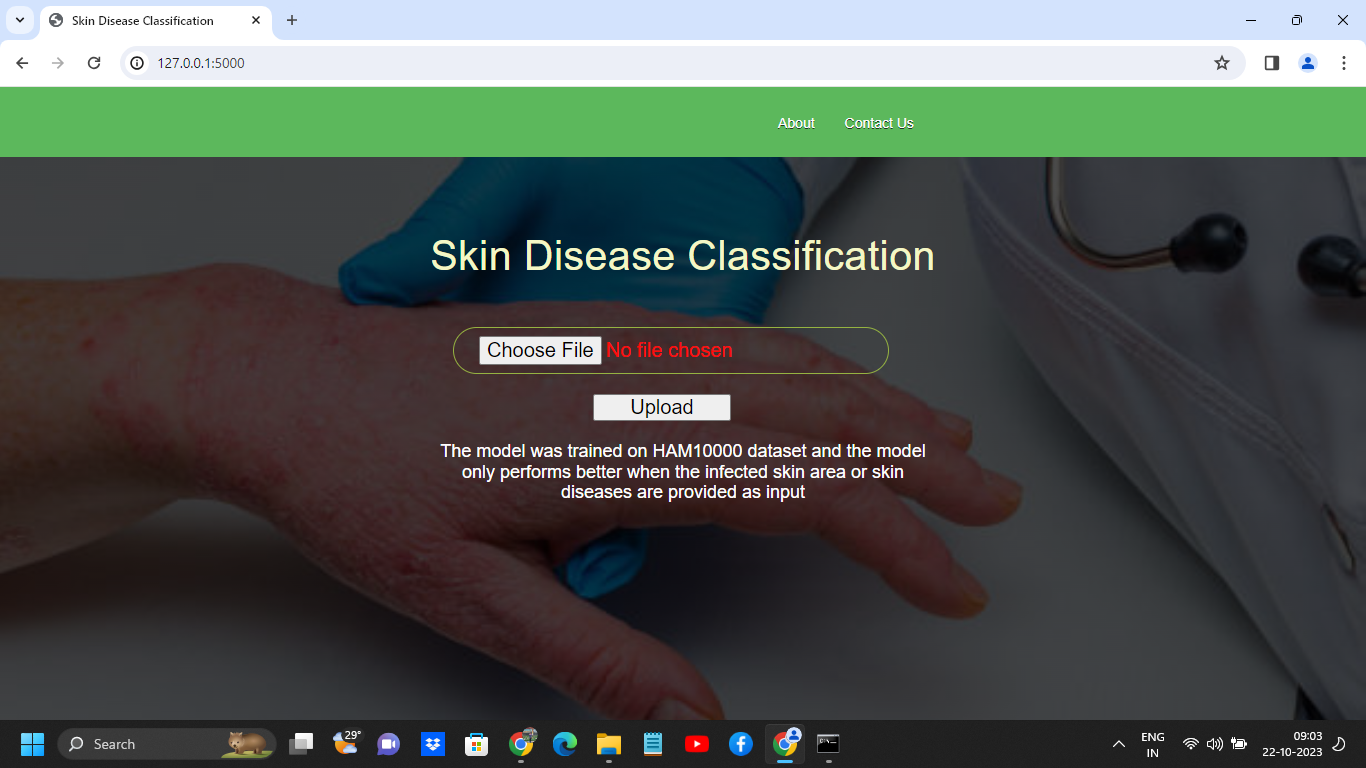
Landing page
-
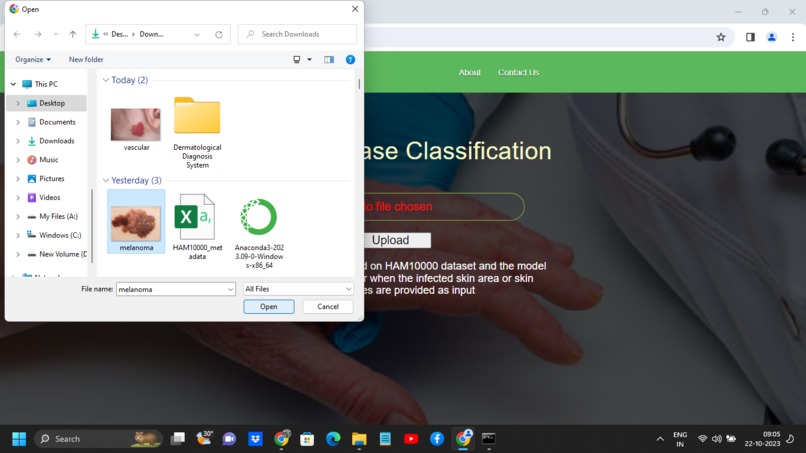
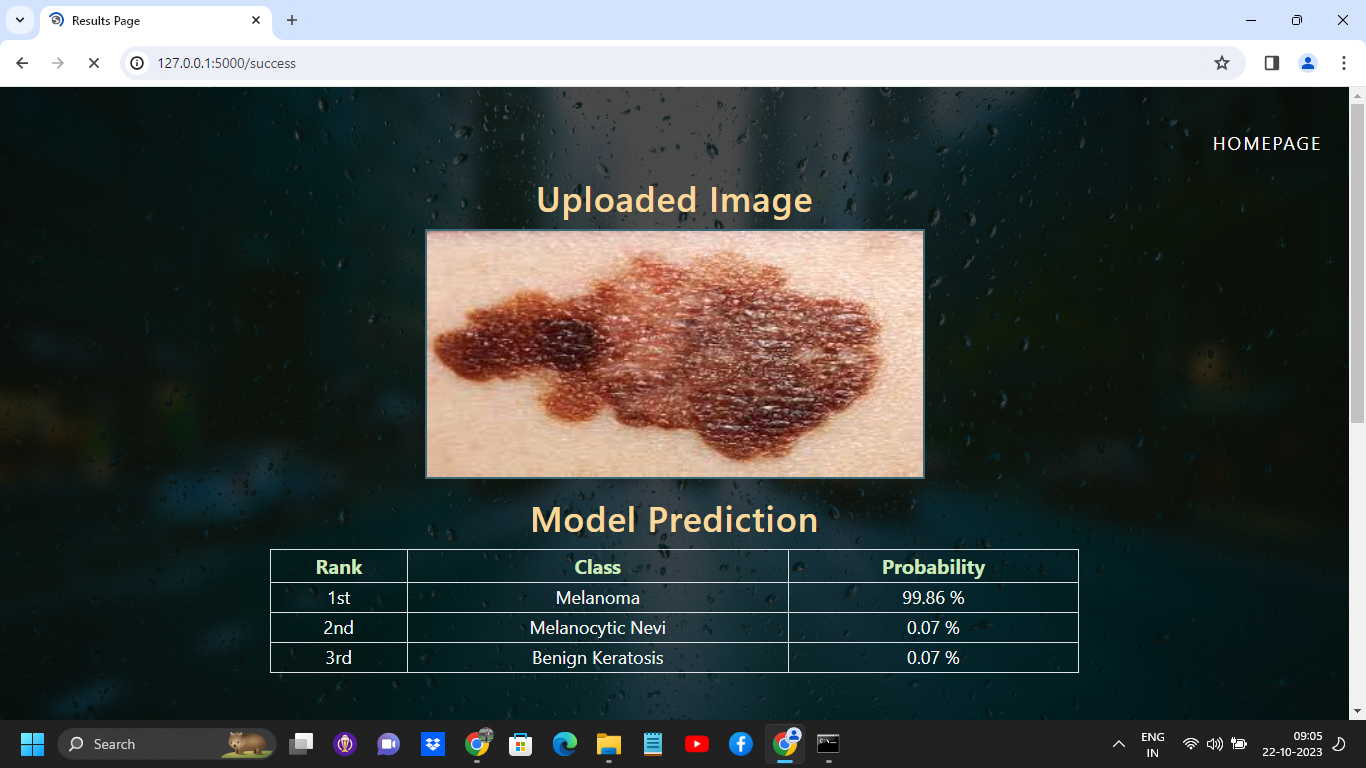
Upload Image
-
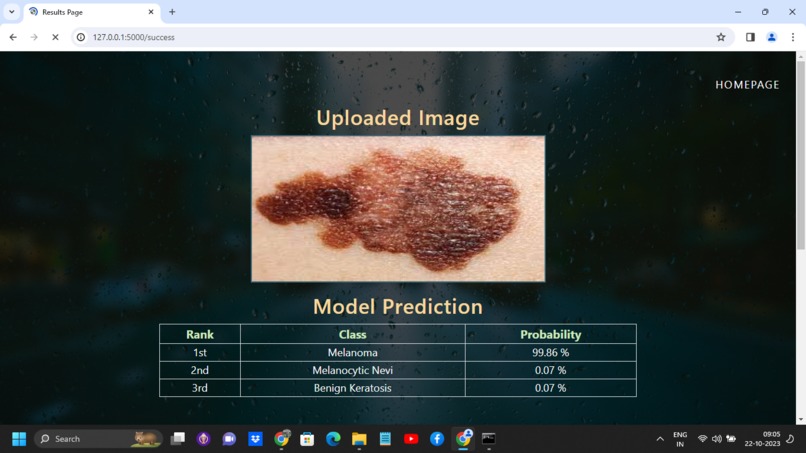
Final Output
-
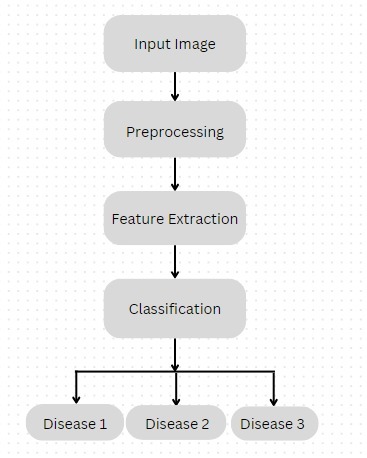
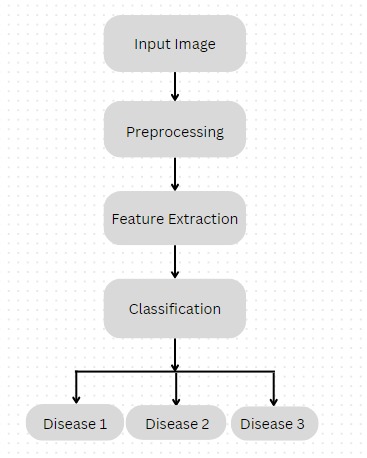
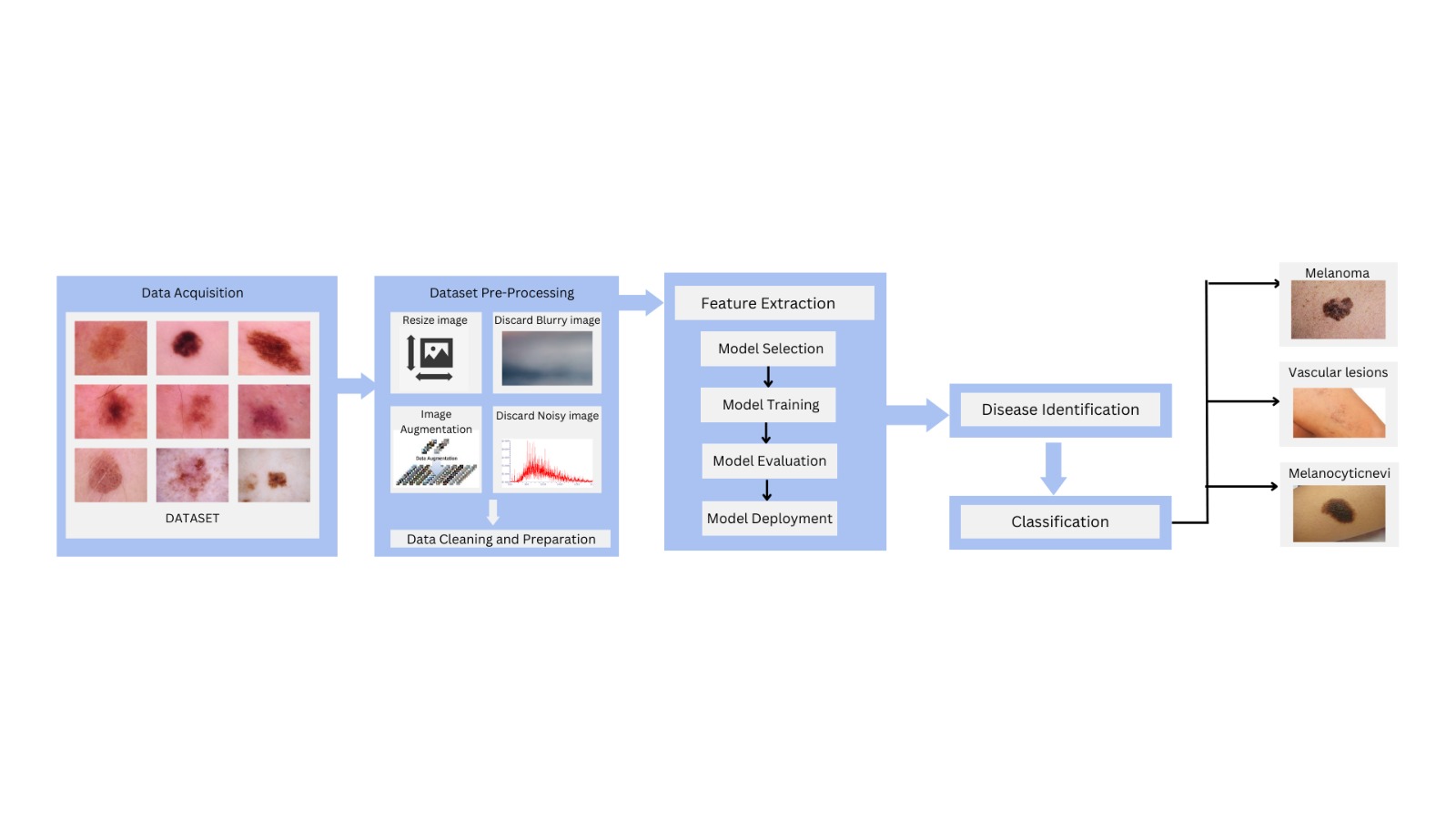
Project Flow diagram
-
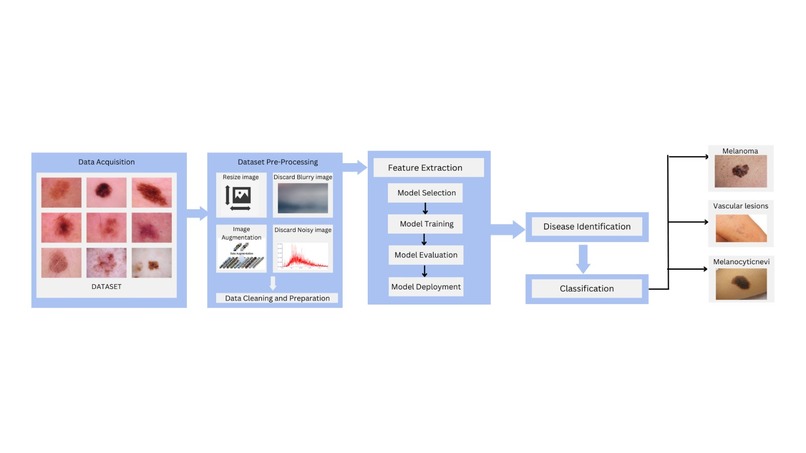
Architecture diagram

Inspiration
The inspiration for the DermAI project was driven by the prevalent challenges in dermatological care, including misdiagnoses and limited access to specialized healthcare. Recognizing the transformative potential of AI, the project sought to empower individuals by providing a user-friendly platform for early detection and accurate prediction of various skin diseases. By harnessing advanced machine learning algorithms and a comprehensive dataset, the project aimed to bridge the gap in healthcare accessibility, promoting proactive skin health management and fostering a culture of preventive care and timely treatment, ultimately improving overall well-being and quality of life.
What it does
DermAI is an innovative skin disease prediction system capable of accurately identifying and predicting seven common dermatological conditions, through the analysis of uploaded images. By employing sophisticated deep learning algorithms and a robust dataset, it swiftly analyzes the uploaded image, detecting key patterns and features indicative of specific skin diseases. Its user-friendly interface provides accessible and prompt results, enabling timely interventions and facilitating informed decision-making for dermatologists, physicians, and patients, ultimately improving the accuracy and efficiency of skin disease diagnosis and treatment.
How we built it
The development of DermAI involved a multidisciplinary approach, integrating expertise from dermatologists, data scientists, and software engineers. We curated a comprehensive dataset of diverse skin disease images, meticulously labeled for training deep learning models. Leveraging state-of-the-art convolutional neural networks, we conducted extensive model optimization and fine-tuning, emphasizing robust feature extraction and pattern recognition. Rigorous testing and validation procedures ensured the system's accuracy and reliability. The user-friendly interface was designed through iterative feedback from dermatology professionals and patients, prioritizing simplicity and accessibility. Continuous collaboration and feedback loops enabled us to refine and enhance DermAI, ensuring its effectiveness and practicality in real-world clinical settings.
Challenges we ran into
During the development of DermAI, we encountered several notable challenges. Acquiring a diverse and comprehensive dataset of accurately labeled skin disease images proved to be a significant hurdle, requiring extensive collaboration with healthcare institutions and data collection efforts. Implementing complex deep learning algorithms demanded substantial computational resources and expertise, leading to optimization difficulties and prolonged model training times. Ensuring the system's robustness and generalizability across various skin types and ethnicities posed additional complexities, necessitating continuous data augmentation and algorithm refinement. Balancing the need for both high prediction accuracy and real-time performance within the user interface imposed constraints on system design and architecture. Furthermore, ensuring compliance with stringent data privacy regulations and ethical considerations throughout the development process added an additional layer of complexity. Despite these challenges, our team's dedication, collaboration, and perseverance ultimately led to the successful realization of the DermAI system, poised to revolutionize dermatological care.
Accomplishments that we're proud of
We take pride in several key accomplishments achieved through the development and implementation of DermAI. Firstly, our system demonstrated exceptional accuracy in predicting seven common skin diseases, outperforming existing diagnostic methods and significantly reducing the incidence of misdiagnoses. The successful integration of telemedicine capabilities expanded access to dermatological care, particularly benefiting underserved communities and remote areas. Our user-friendly interface received widespread acclaim for its simplicity and accessibility, facilitating seamless interactions between patients, healthcare providers, and the system. Collaborative partnerships with leading research institutions and healthcare organizations solidified DermAI's position as a pioneering solution in the field of AI-driven healthcare. Furthermore, the system's compliance with rigorous data privacy regulations and ethical standards earned recognition for its commitment to patient confidentiality and data security. Overall, these accomplishments reinforce our commitment to advancing healthcare accessibility and quality through innovative technology and interdisciplinary collaboration.
What we learned
The DermAI project provided invaluable insights into the intersection of AI technology and healthcare. We learned the critical importance of a meticulously curated and diverse dataset for training robust machine learning models, emphasizing the need for comprehensive data collection and accurate labeling. Furthermore, we gained a profound understanding of the significance of interdisciplinary collaboration, recognizing the synergistic potential of incorporating medical expertise, data science, and software engineering in healthcare innovation. The project underscored the necessity of continuous algorithm optimization and rigorous testing to ensure the system's reliability and accuracy. Additionally, navigating the complex landscape of healthcare regulations and ethical considerations heightened our awareness of the importance of data privacy and patient confidentiality. Overall, this project reinforced the transformative impact of AI in improving healthcare accessibility, diagnostics, and patient outcomes, inspiring us to continue driving innovation in the healthcare industry.
What's next for DermAI - Dermatological Diagnosis System
Looking ahead, we envision several key avenues for enhancing the DermAI project. Expanding the system's repertoire to encompass a broader spectrum of skin diseases, including rarer conditions, will remain a priority, necessitating the continual enrichment of the dataset and the refinement of the deep learning models. Integration of additional diagnostic modalities, such as genetic data and patient-reported symptoms, holds promise for enhancing the system's predictive capabilities and fostering a more personalized approach to dermatological care. Furthermore, exploring the potential integration of augmented reality and virtual reality technologies could revolutionize the user experience, facilitating more immersive and interactive consultations between patients and healthcare providers. Continuous research and development efforts will focus on optimizing the system's performance, ensuring its seamless integration into diverse clinical settings and its continued contribution to advancing dermatological care.
For More Info
=> Project's Github link is attached for viewing project source code. => A video explaining the project details with ppt is attached for the reference as a youtube video link.


Log in or sign up for Devpost to join the conversation.