-
-
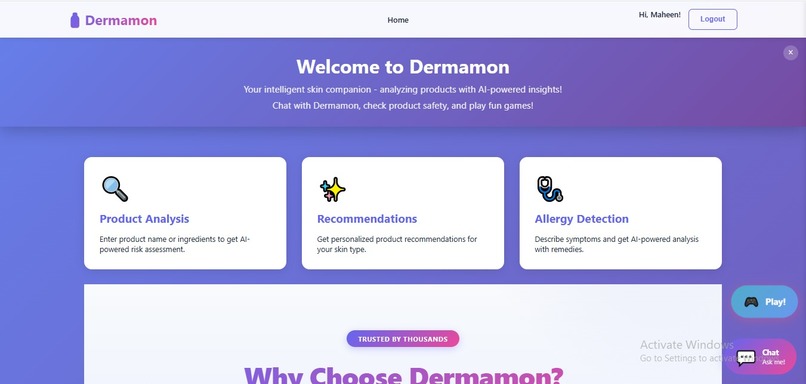
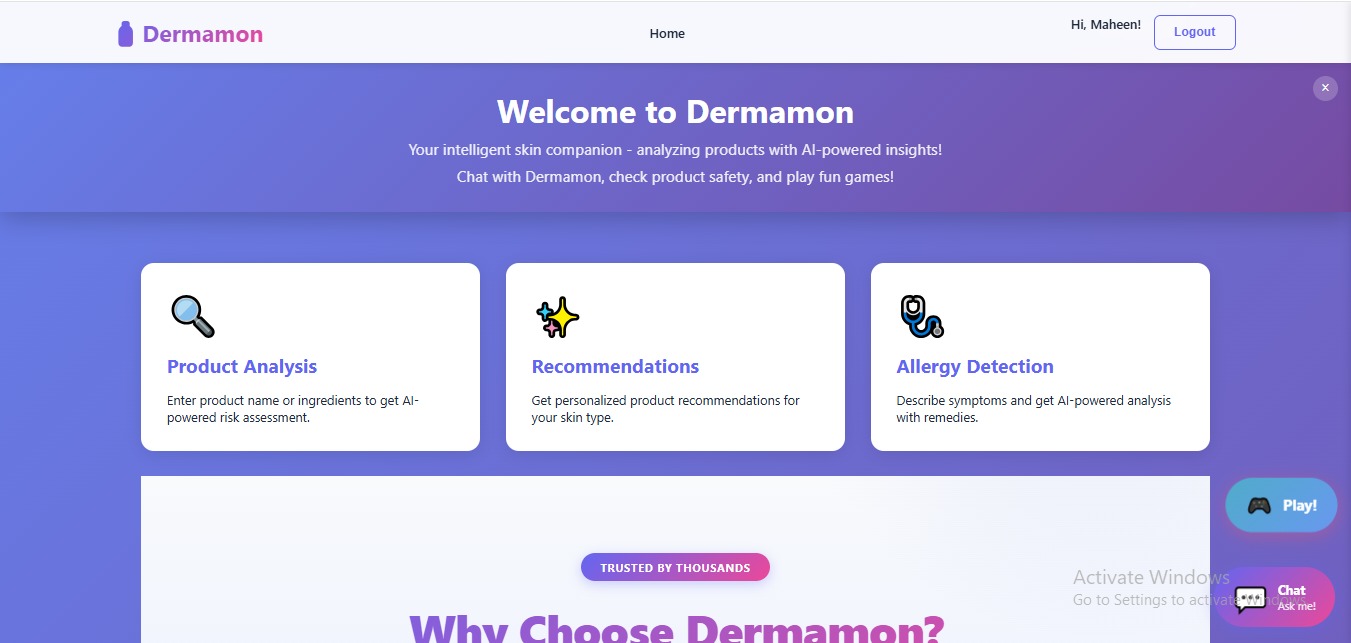
homepage
-
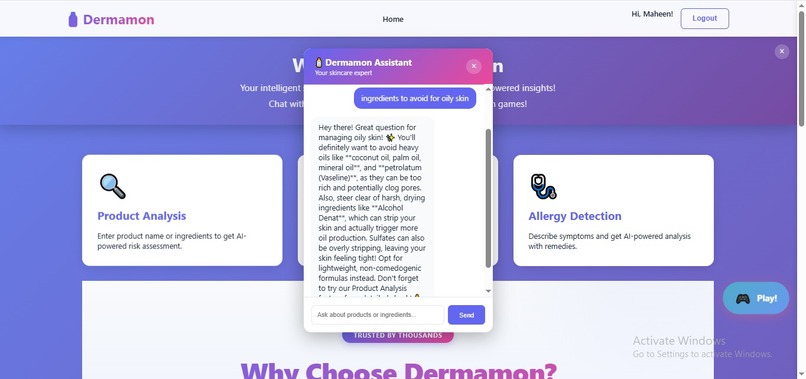
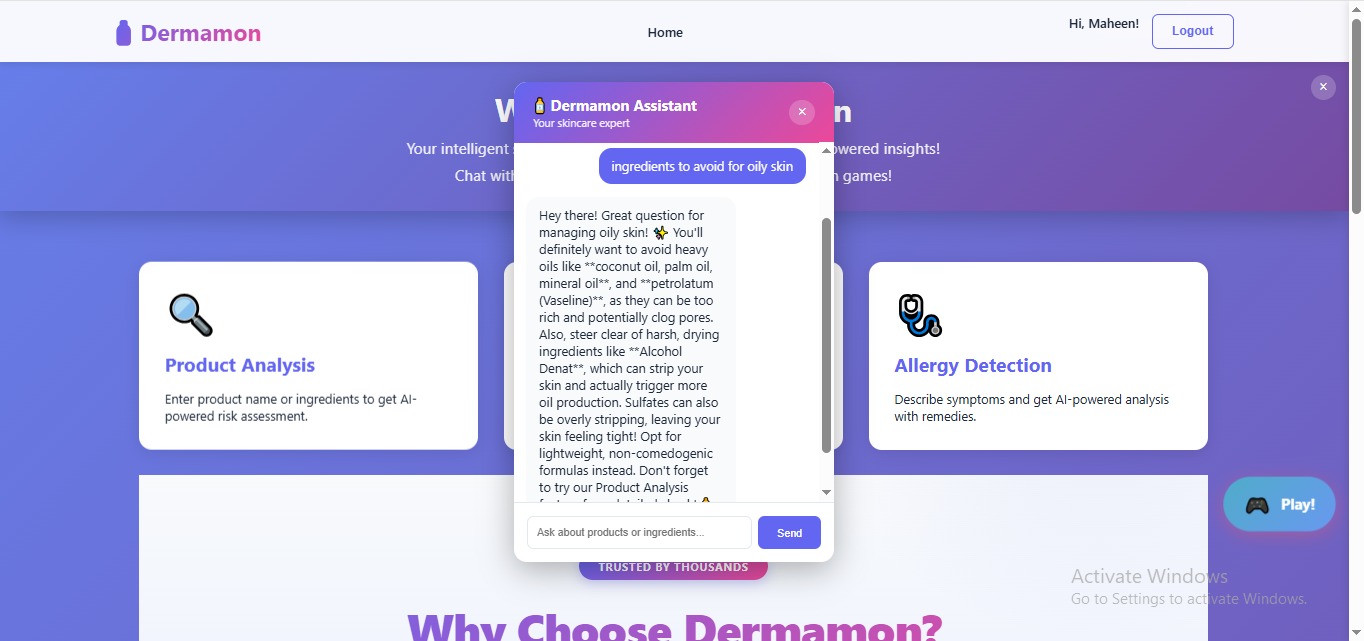
chatbot
-
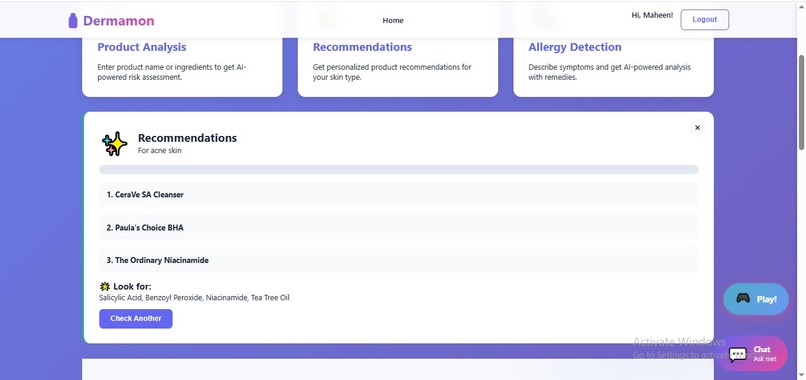
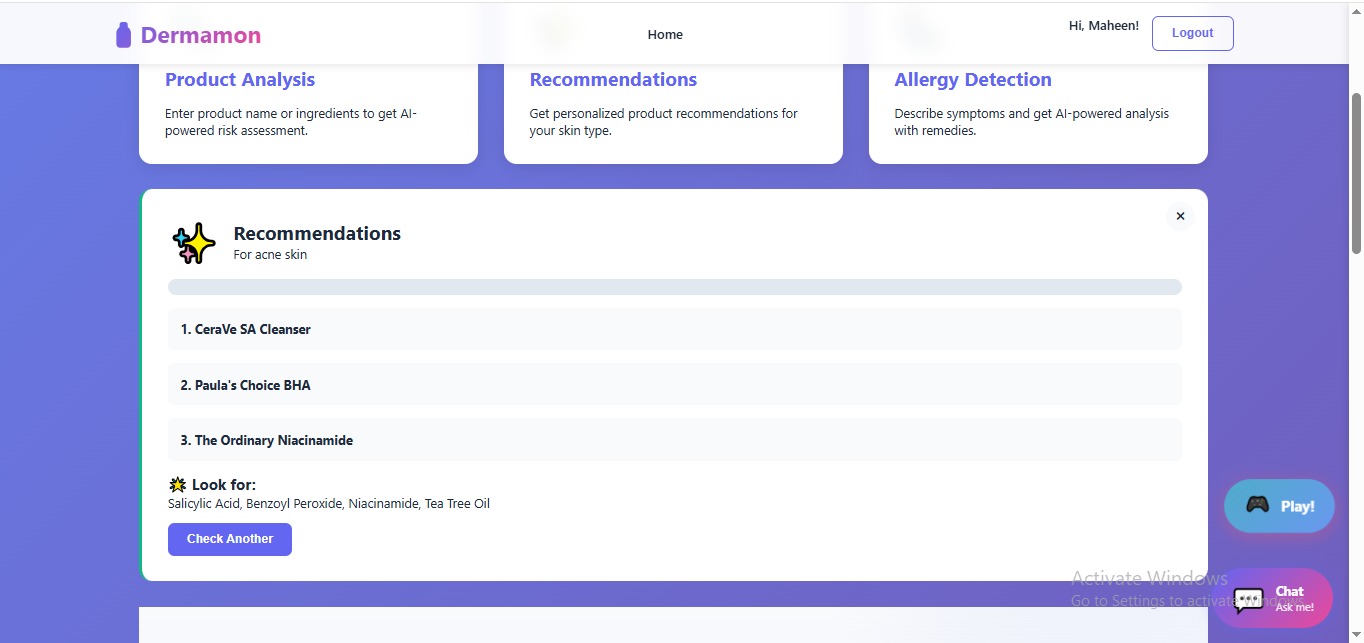
product recommendation form
-
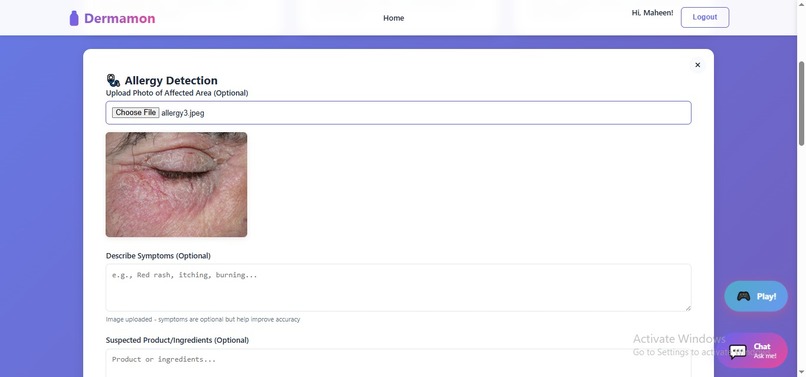
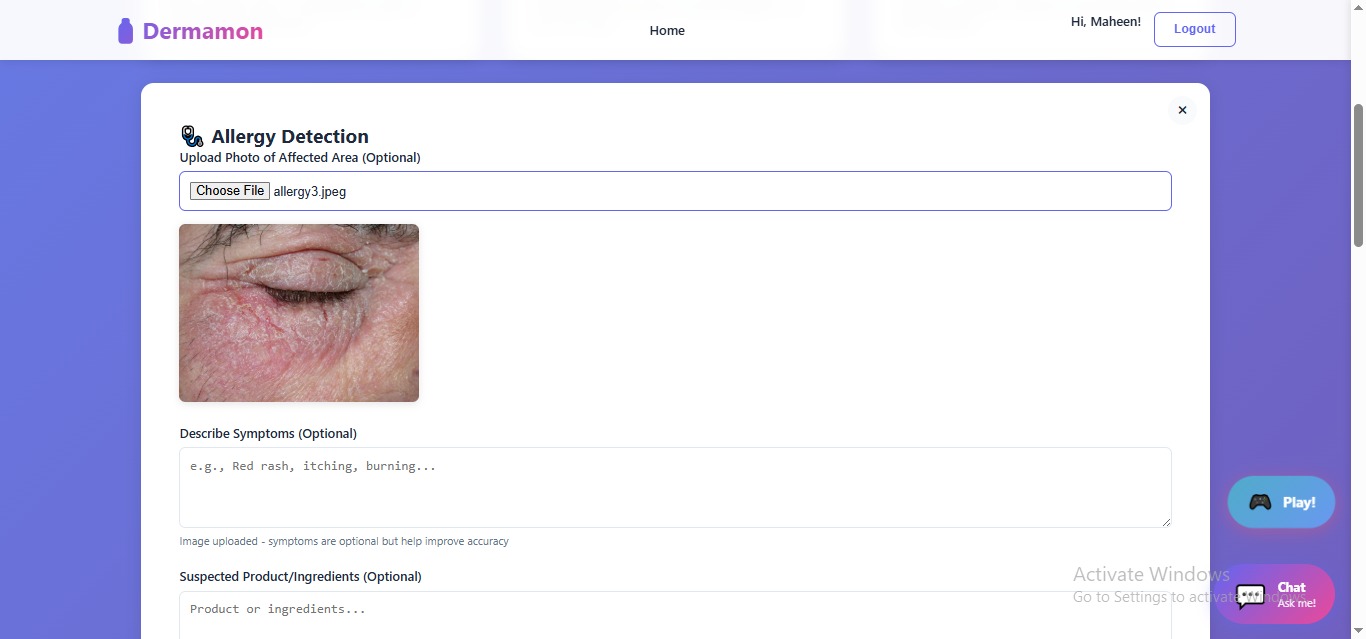
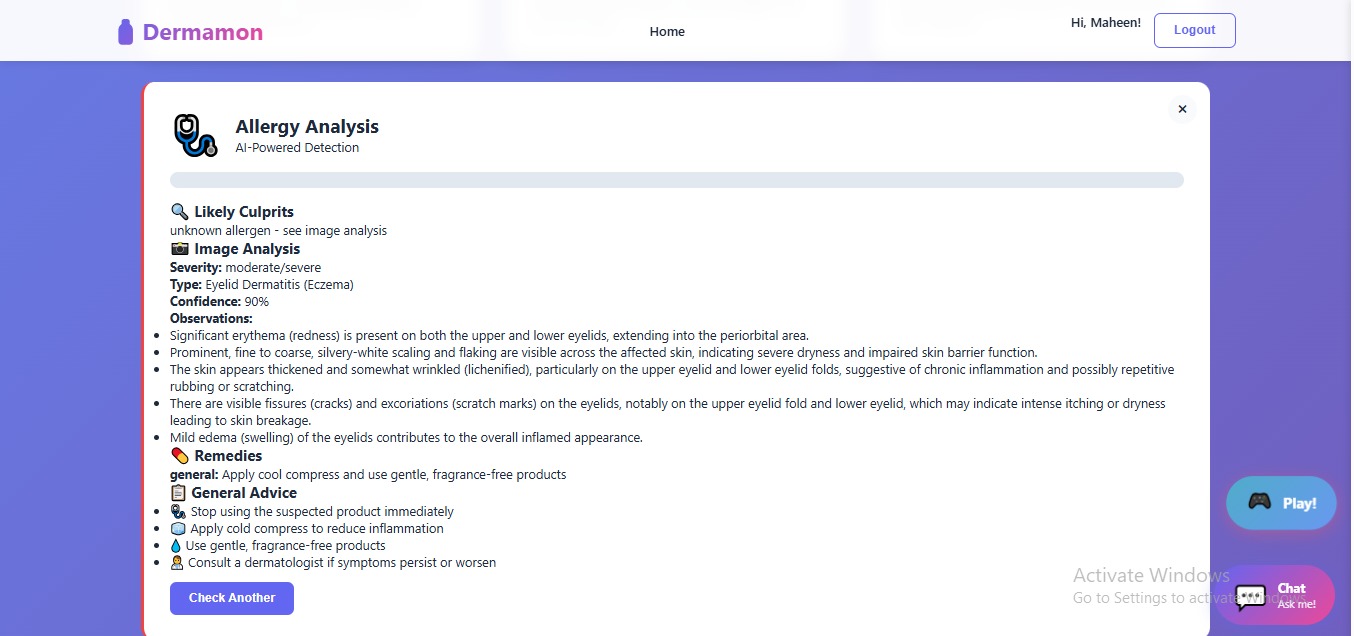
allergy detection
-
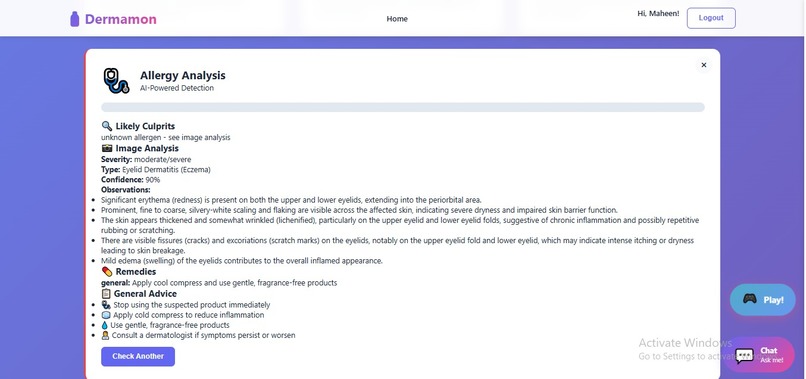
accurate allergy detection results
-
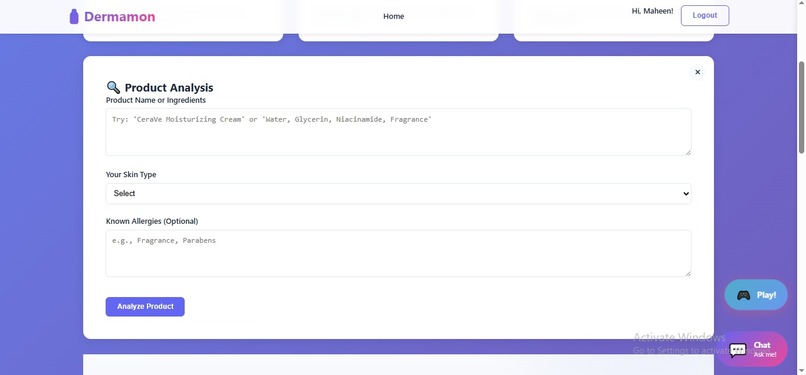
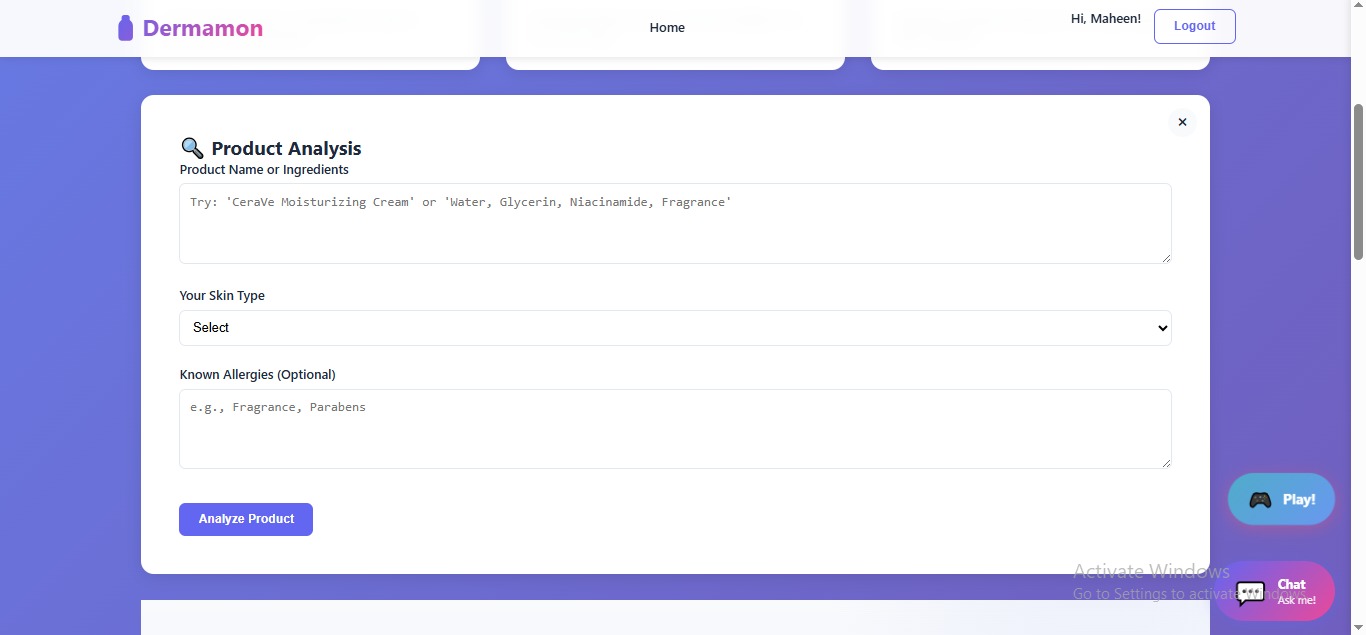
product analysis
-
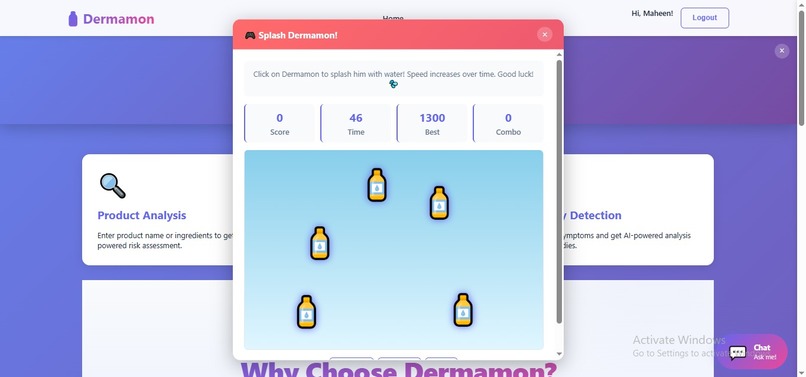
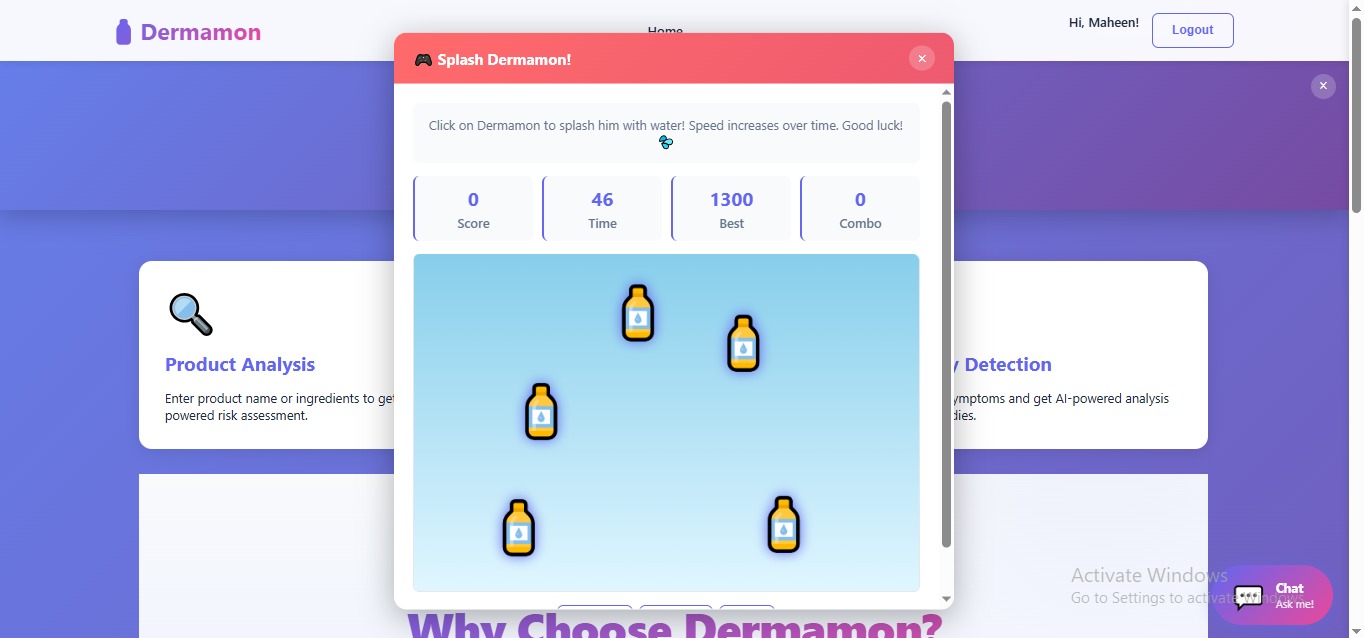
A fun feature-splash dermamon game
-
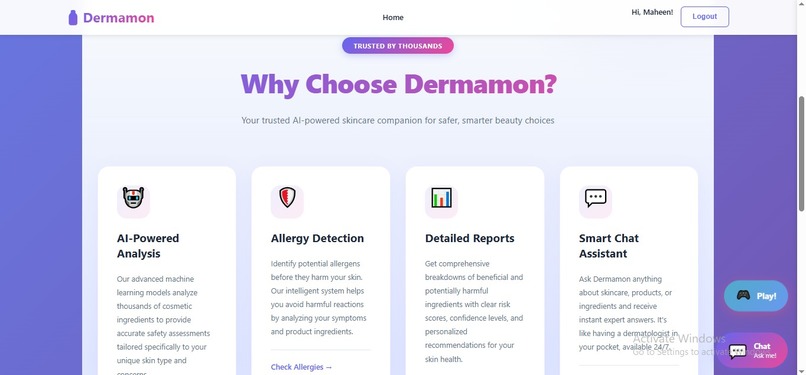
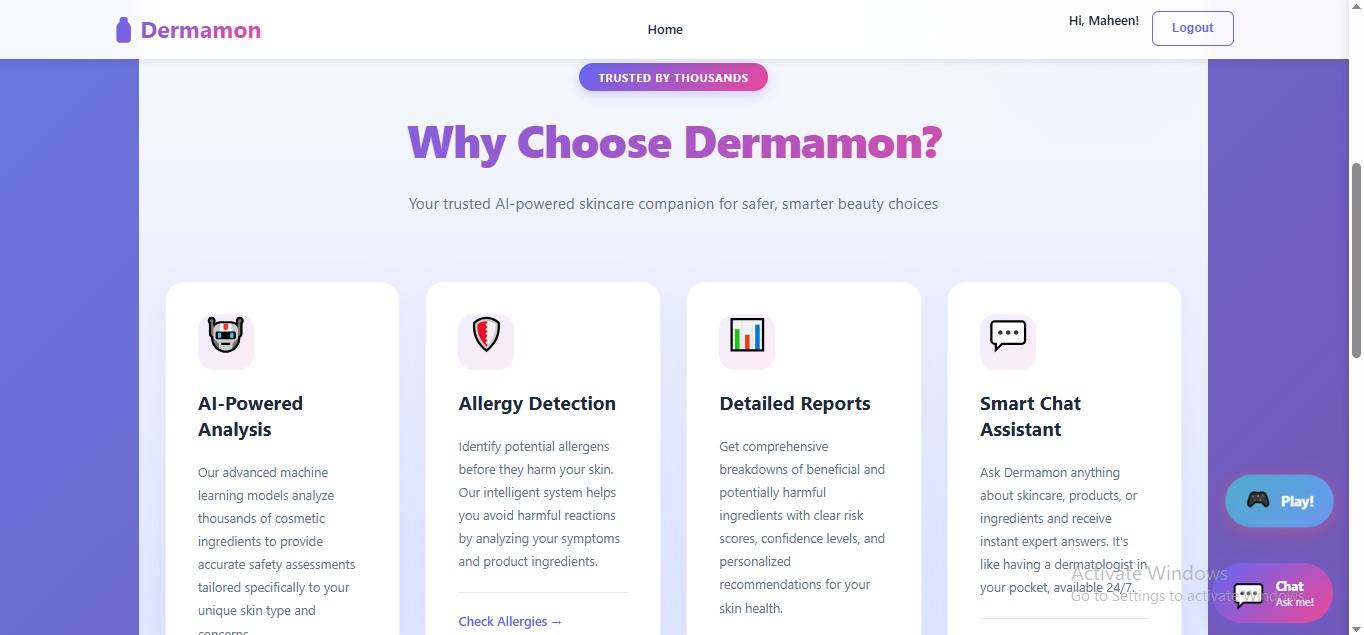
about section
Inspiration
The skincare industry is overwhelming. With over 10,000+ cosmetic ingredients flooding the market, consumers face an impossible task: understanding what they're putting on their skin as dermatologists charge a lot these days. The statistics are alarming—approximately 60% of people experience adverse reactions to skincare products at some point in their lives, yet most have no way to identify harmful ingredients or understand which products are safe for their unique skin type. I was inspired to create Dermamon after witnessing friends, family, and myself too, struggle with skin reactions, spending hundreds of dollars on products that didn't work or, worse, caused harm. I envisioned a world where anyone could point their phone at a product, upload a photo of their skin condition, or simply ask questions—and receive instant, personalized, professional-grade guidance.
What it does
Dermamon is an AI-powered skincare analysis platform that helps users: -Analyze skincare products by ingredient list or product name -Detect potential allergens or harmful ingredients -Receive a clear risk score and safety classification -Get personalized recommendations based on skin type and concerns -Chat with an AI skincare assistant for instant guidance -Upload images for AI-assisted skin condition detection The platform translates complex dermatological data into simple, actionable insights for everyday users.
How we built it
Dermamon uses a modern three-tier architecture: Frontend (HTML, CSS, JavaScript) ↓ Backend (Flask REST API PYTHON ) ↓ AI & Data Layer (ML Models, Gemini API, PostgreSQL)
Key Technologies: Frontend: HTML5, CSS3, Vanilla JavaScript (responsive, mobile-first UI) Backend: Python, Flask, RESTful APIs, JWT authentication, bcrypt security Database: Supabase (PostgreSQL) AI/ML: -Scikit-learn for ingredient risk classification -Google Gemini 1.5 Flash for NLP chatbot and vision tasks -PIL for image preprocessing Core Logic Ingredient risk is calculated using a weighted scoring system: $$ \text{Risk Score} = \sum_{i=1}^{n} w_i \cdot r_i $$ where: $w_i$ = weight of ingredient $i$ $r_i$ = normalized risk factor (0–100) The ML pipeline follows: X \xrightarrow{\text{Feature Extraction}} \hat{y} \in [0, 100]
Challenges we ran into
- Real-Time AI Latency Problem: Initial AI responses took several seconds. Solution: -Prompt compression -Response streaming -Client-side caching Latency improvement formula: \text{Optimized Latency} = \text{Original Latency} \times (1 - \alpha), \quad \alpha \approx 0.6 2.** Managing 10,000+ Ingredients** Problem: Large datasets caused slow queries. Solution: -PostgreSQL indexing -Optimized joins -Materialized views
- Image Processing Variability Problem: User images varied in size, quality, and format. Solution: # Image preprocessing pipeline
- Client-side compression
- Server-side validation
- Resize to 512×512
- Base64 encode for API
- Error handling for corrupted images
Accomplishments that we're proud of
- Built a full-stack AI product end-to-end during a hackathon
- Analyzed 10,000+ skincare ingredients
- Achieved ~95% accuracy in risk classification
- Delivered sub-3-second AI responses
- Designed a healthcare-focused UX that feels friendly
What we learned
-I can build solutions to my problems through my technical skills. -Integration of multiple AI systems in a single product -Full-stack system design under tight deadlines -Secure authentication and API design -Practical applications of machine learning in healthcare -Importance of empathy and clarity in health-related UX -Mathematically and conceptually, this project strengthened our understanding of how data, models, and user behavior intersect.
What's next for DERMAMON-AI powered skincare analyst
Planned future enhancements: -Community-driven ingredient reviews -AI-powered skincare routine builder -barcode scanning for ease -Batch product scanning -Native mobile applications (iOS & Android) -Dermatologist verification and partnerships
Built With
- bcrypt
- canvas-api
- css3
- fetch-api
- flask
- flask-cors
- git
- github
- google-gemini-2.5-flash-api
- html5
- javascript
- joblib
- jwt
- localstorageapi
- numpy
- pillow
- postgresql
- postman
- python
- scikit-learn
- sql
- supabase
- vs-code


Log in or sign up for Devpost to join the conversation.