-
-
Dermalyze Pro.
-
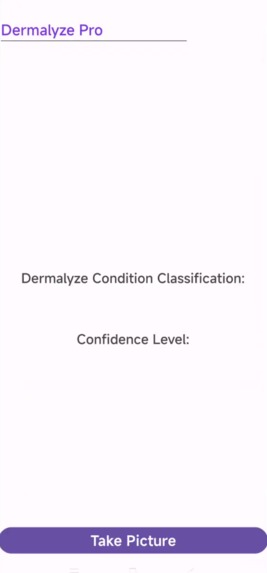
Main User Interface.
-
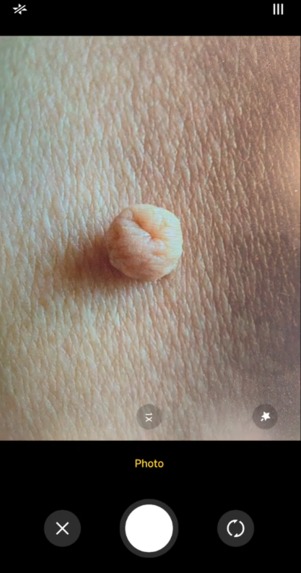
Camera Permissions.
-
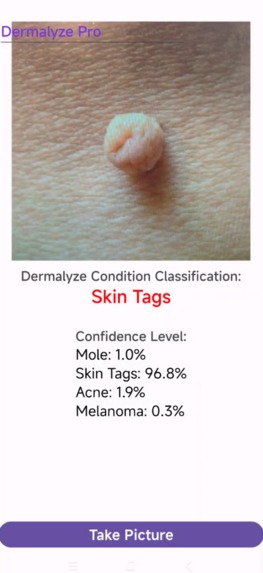
Classification and Display of Confidence Values.
-
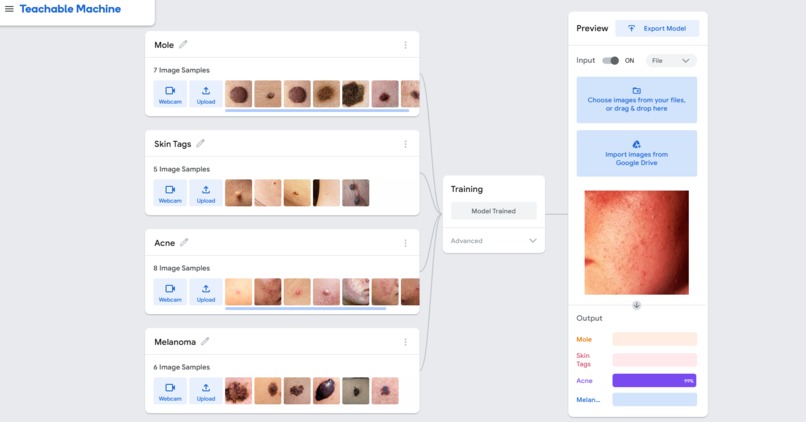
Teachable Machine - Training the TensorFlow Lite Model
Inspiration
With over 900 million cases worldwide, skin diseases rank among the most prevalent illnesses affecting people. It ranks as the world's 18th most common cause of death. The WHO has published a pictorial training guide on the recognition of neglected skin diseases. You can access it here. A skin condition of some kind, be it teenage acne or malignant melanoma, has affected almost everyone at some point in their lives. Nowadays, medical professionals diagnose the majority of skin conditions in a non-technical setting using only visual observation. Additionally, increasing levels of stigma souround many common skin conditions including acne, birthmarks, psoriasis, and more. Meanwhile, Java Script and TensorFlow are seamlessly combined by Google's Teachable Machine software to train machine learning models visually using image databases. This has significant implications for the diagnosis of conditions that can be seen with the naked eye, such as skin conditions like melanoma, acne, and skin tags. My goal was to develop an application that investigates the potential in the future diagnosis of visible skin conditions combining machine learning and easy-to-use applications that can be used anywhere.
What it does
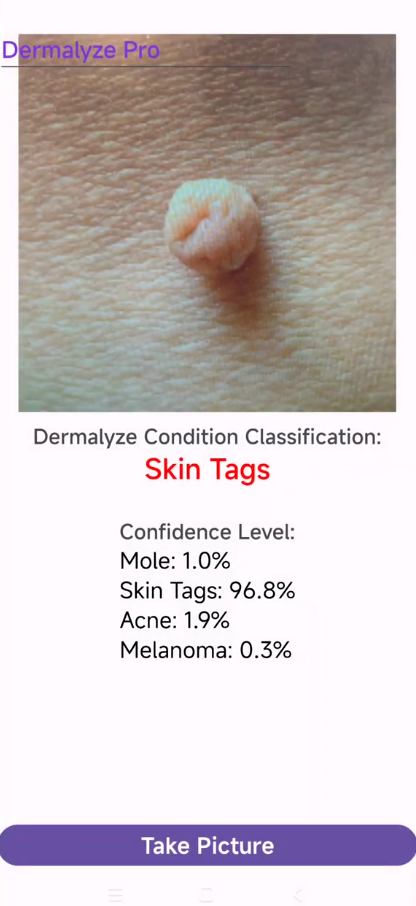
Dermalyze Pro, a fully operative health phone based application, categorizes skin conditions and lesions. With the help of a sizable dataset of images from that each condition, it enables users to capture a real-time photo of their skin lesion and classify it in accordance with the classes.
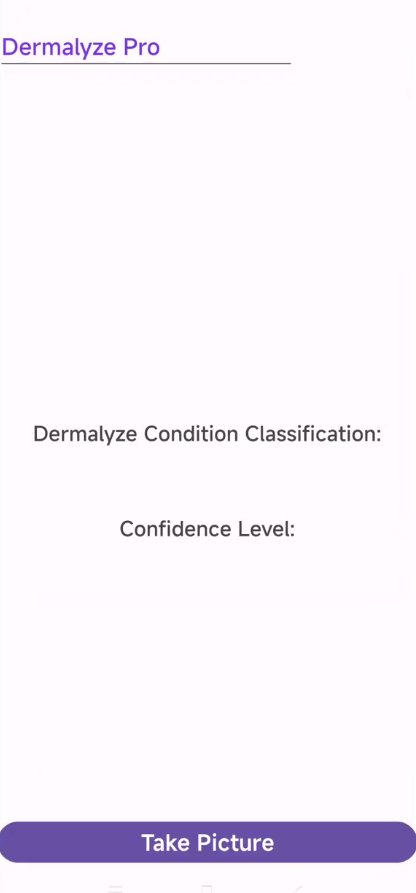
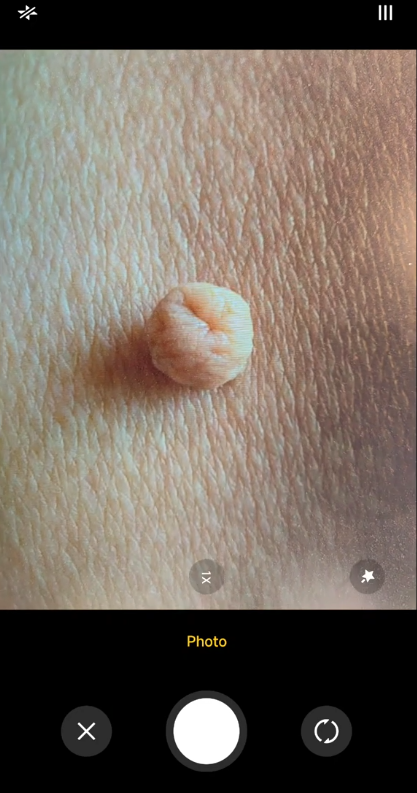
- Dermalyze Pro prompts users to take a photo directly from their phone camera.
- Displays the photo as a bitmap image.
- Displays the type of skin lesion based on Teachable Machine trained AI model.
- Displays the confidence levels (%) for the prediction and each of the other possibilities.
How we built it
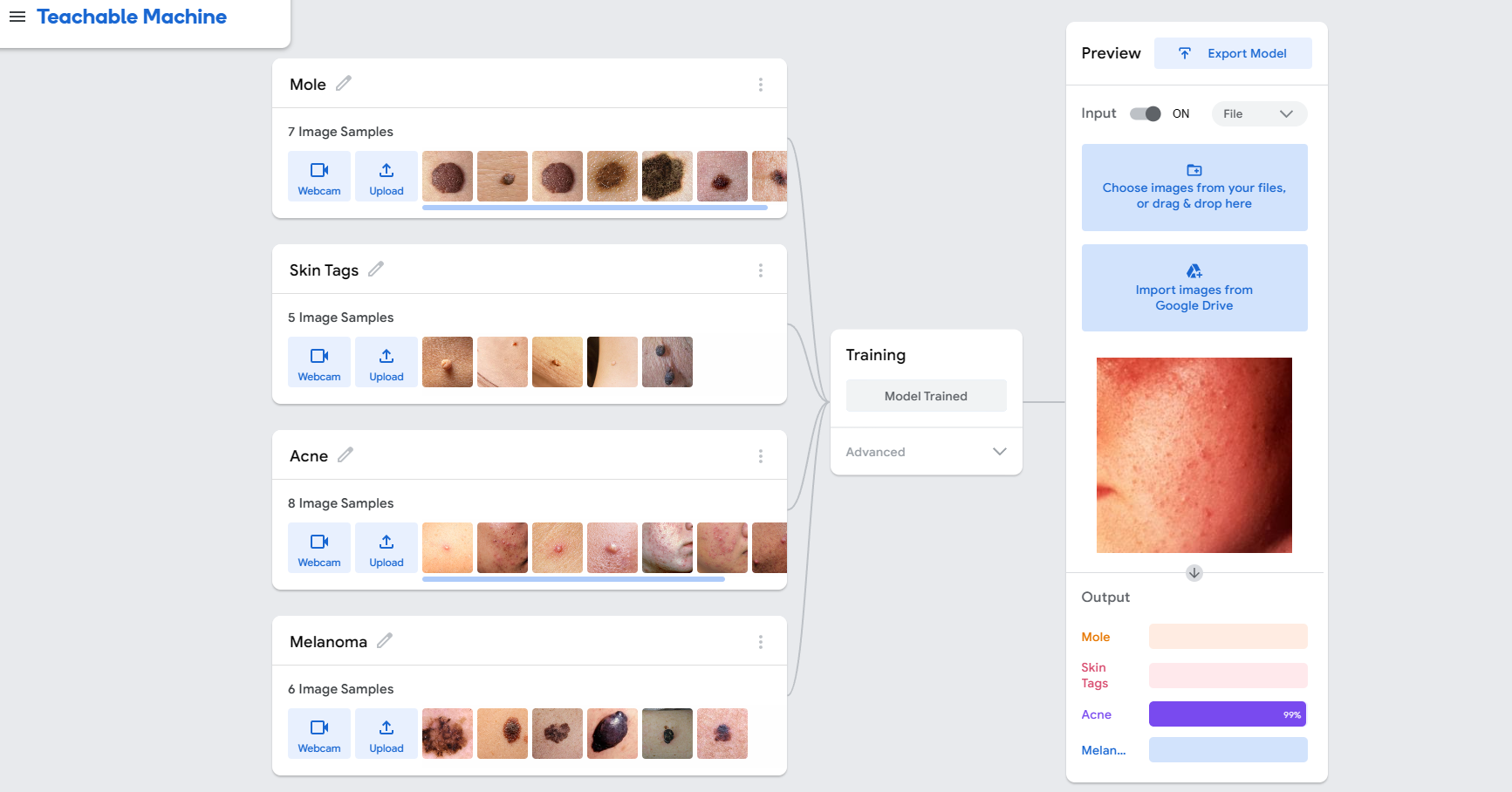
- I first trained the AI model using four datasets of skin lesions.
- Using base source code provided in github linked to Android Studios, I exported the trained model as a tensorflow lite file and incorporated it into the code via Android Studios.
- I tested the code using the virtual emulator built into Android Studios and also in real life by installing the application onto a phone via USB debugging.
Challenges we ran into
- Many errors resulted from numerous thrown Exceptions as well as incorrect naming of packages and referring, causing classes and variables to be unresolved.
- I struggled to find an accurate variety of dataset images for specific conditions such as "Skin Tags", causing the model training accuracy to be not symmetrical across all the classes.
- Syntax errors, lots of them.
Accomplishments that we're proud of
- This is my very first online hackathon and I was able to learn to train an AI image recognition model with Teachable Machine.
- I was able to design a basic application with Android Studios and also export the app to an actual phone by using USB debugging.
- Debugged over 300 errors manually in Java.
What we learned
- I learned more about neural networks and how they process data similiar to the human brain.
- Android Studio Basics: designing application layout, xml files, implementing Java code in the studio.
What's next for Dermalyze Pro
- To improve functionality and accuracy of _ Dermalyze Pro _ in the future, I would use Teachable Machine to retrain and optimize the AI machine model by adding more dataset variety and amount from reliable databases.
- I would devote more time to enhancing the application's visual appeal for a better user experience by adding more streamlined, visually appealing formatting and color schemes.
⚠️DISCLAIMER⚠️
- Images included in the Project Media section and Demonstration include graphic database images of skin conditions and may cause discomfort for some viewers. Viewer discretion is advised.
- The app should not be used to give medical diagnosis, seek a dermatologist or certified medical professional to diagnose conditions.
Built With
- android
- android-studio
- java
- teachable-machine
- xml

Log in or sign up for Devpost to join the conversation.