-
-
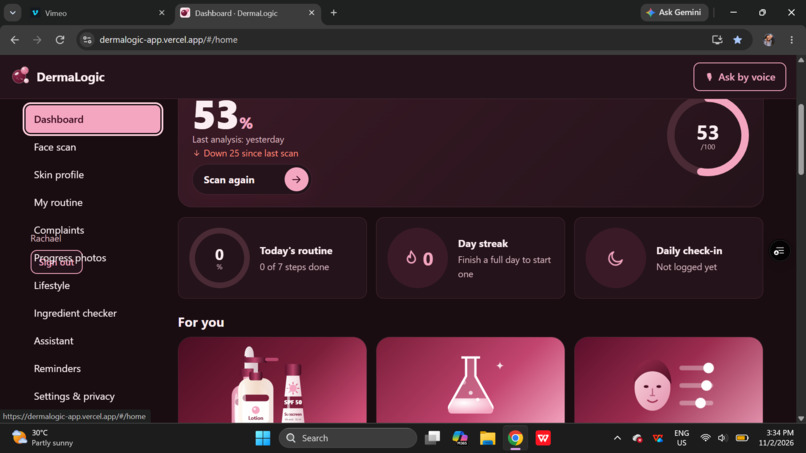
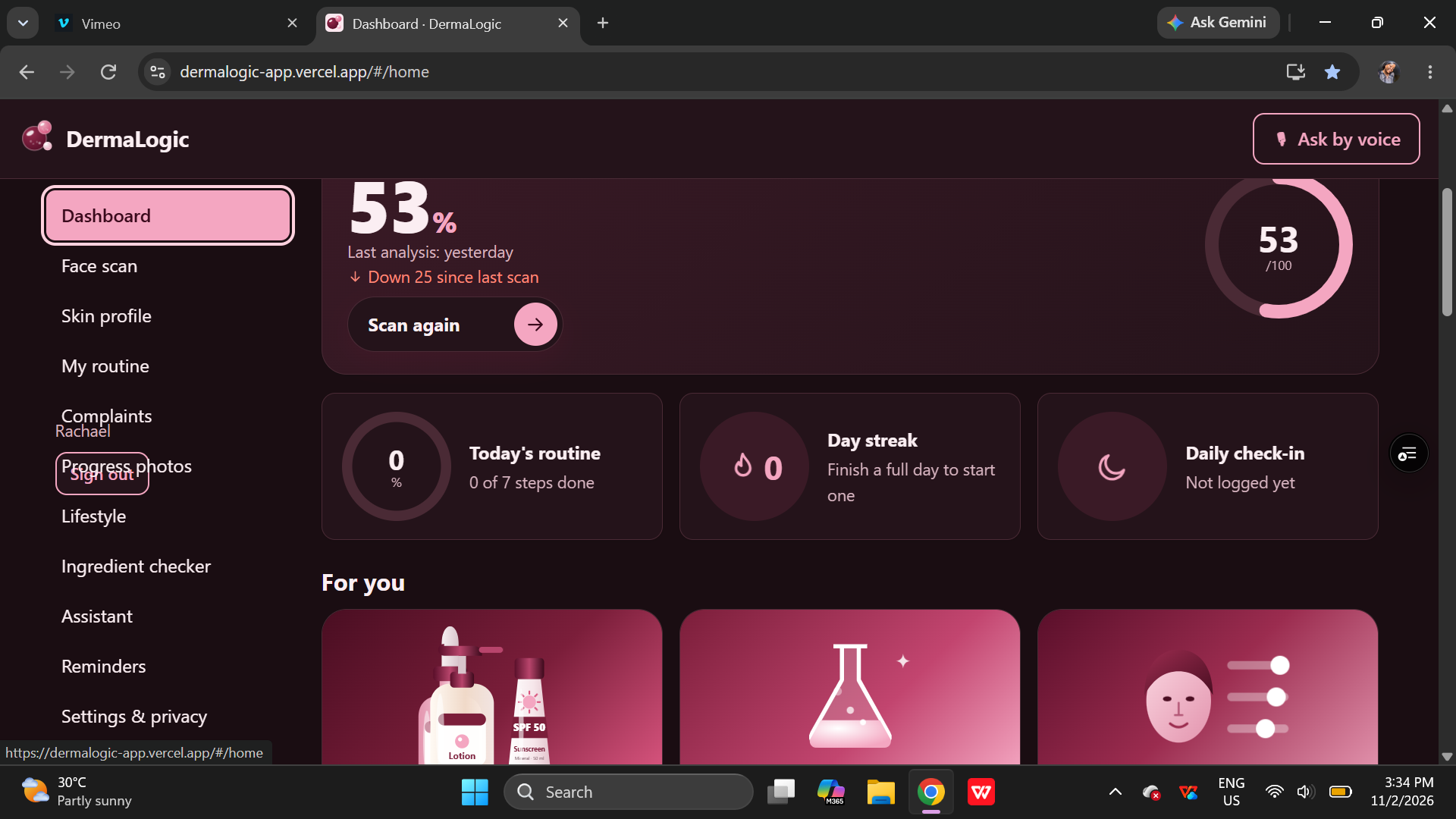
dermalogic dashboard
-
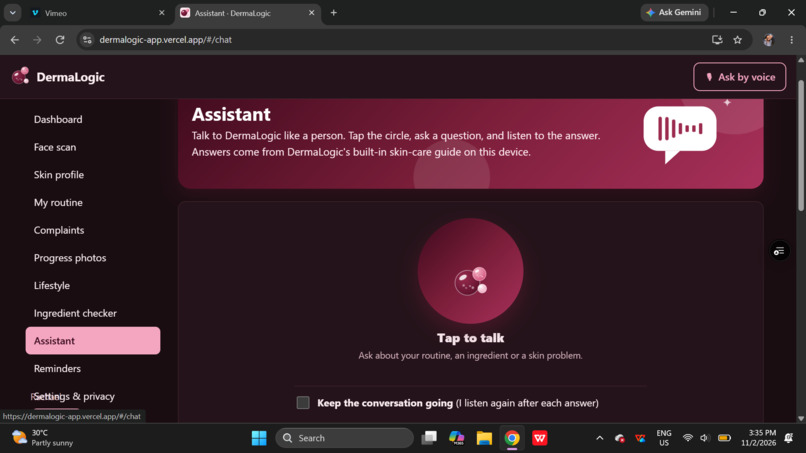
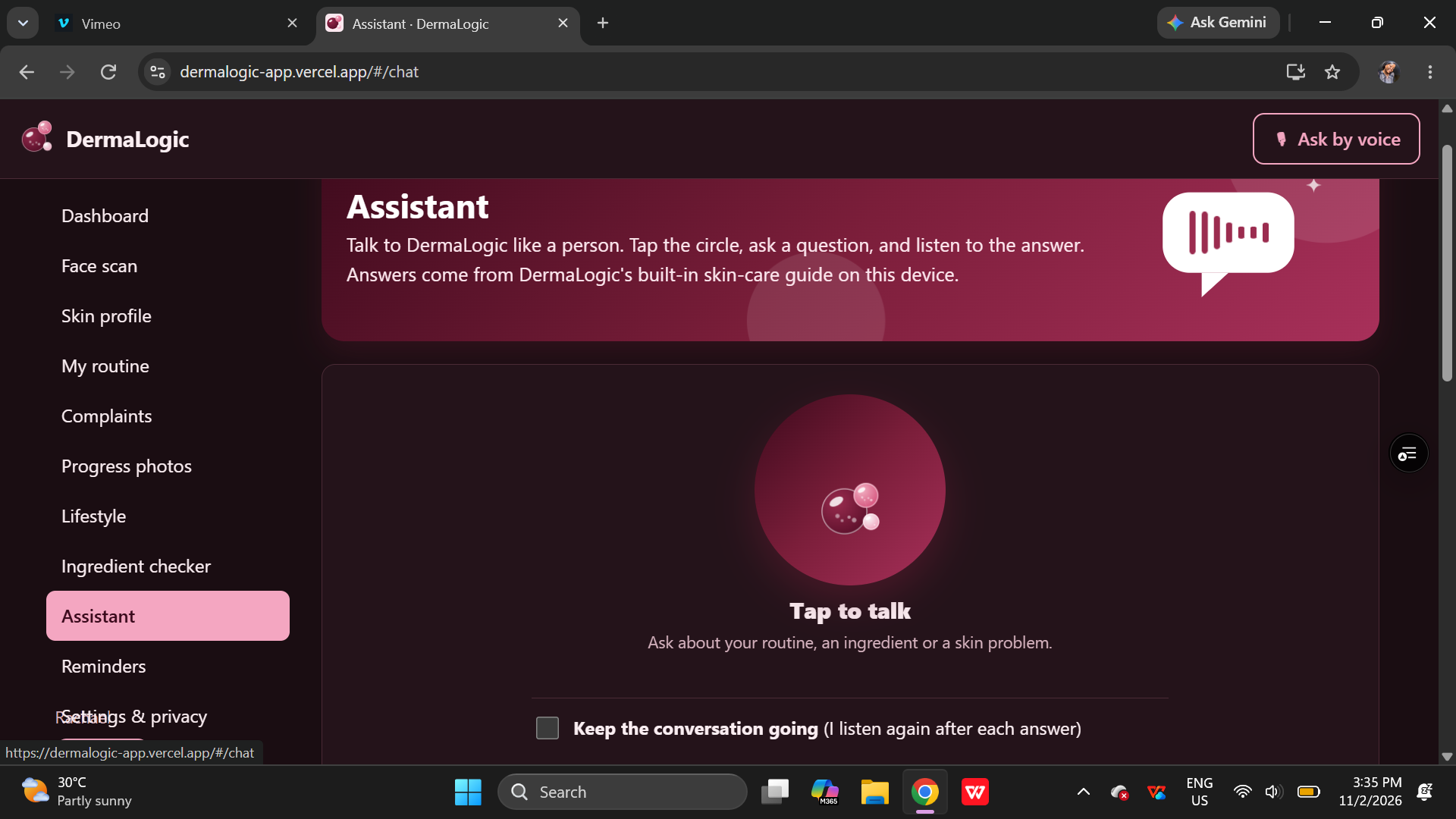
dermalogic chat bot assistant
-
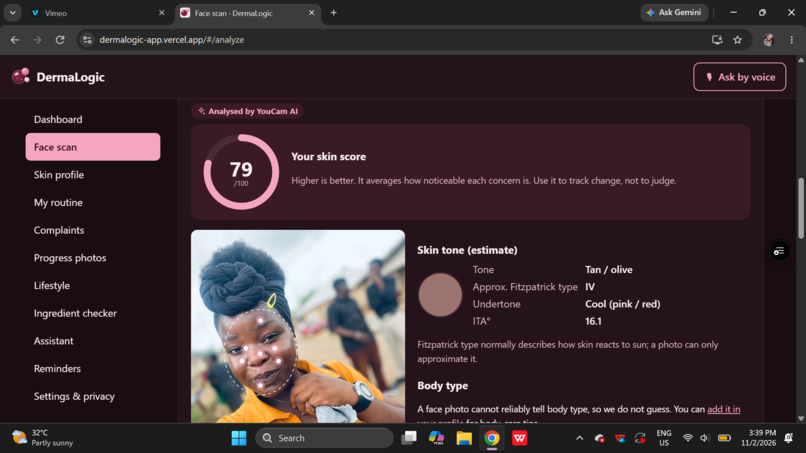
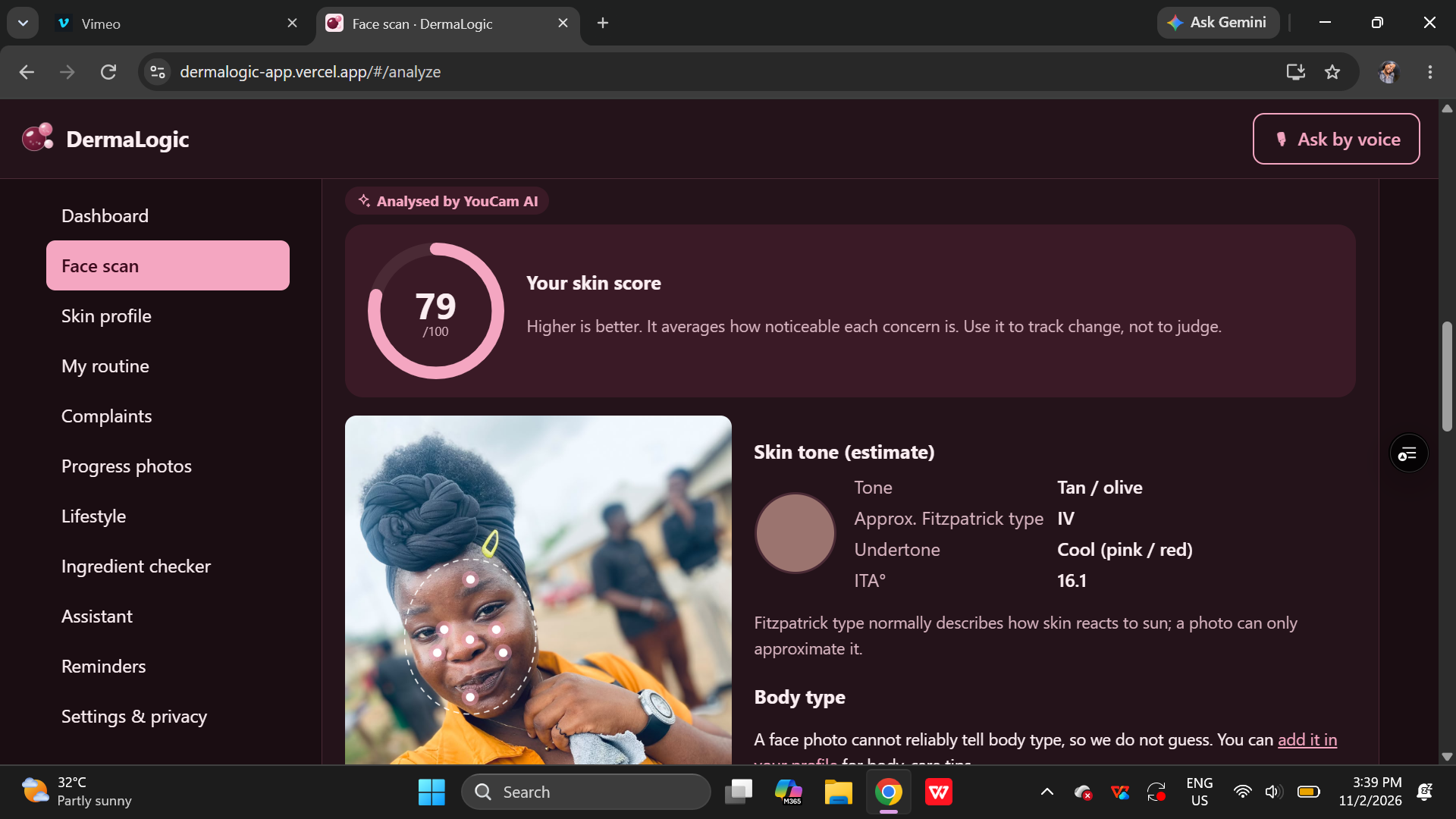
face scan
-
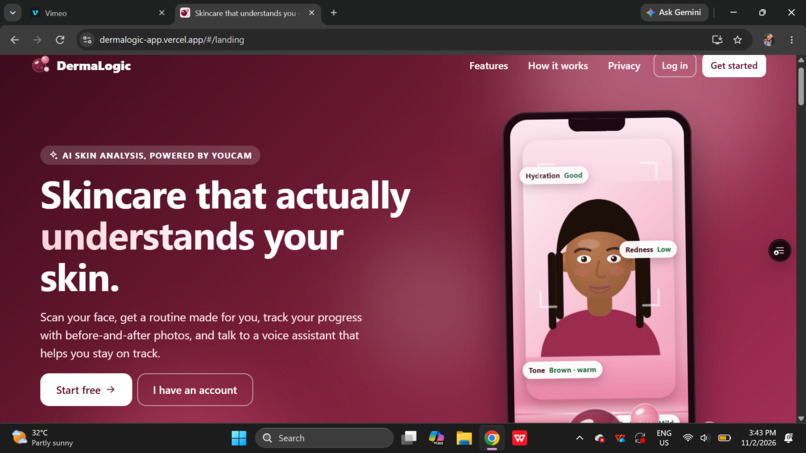
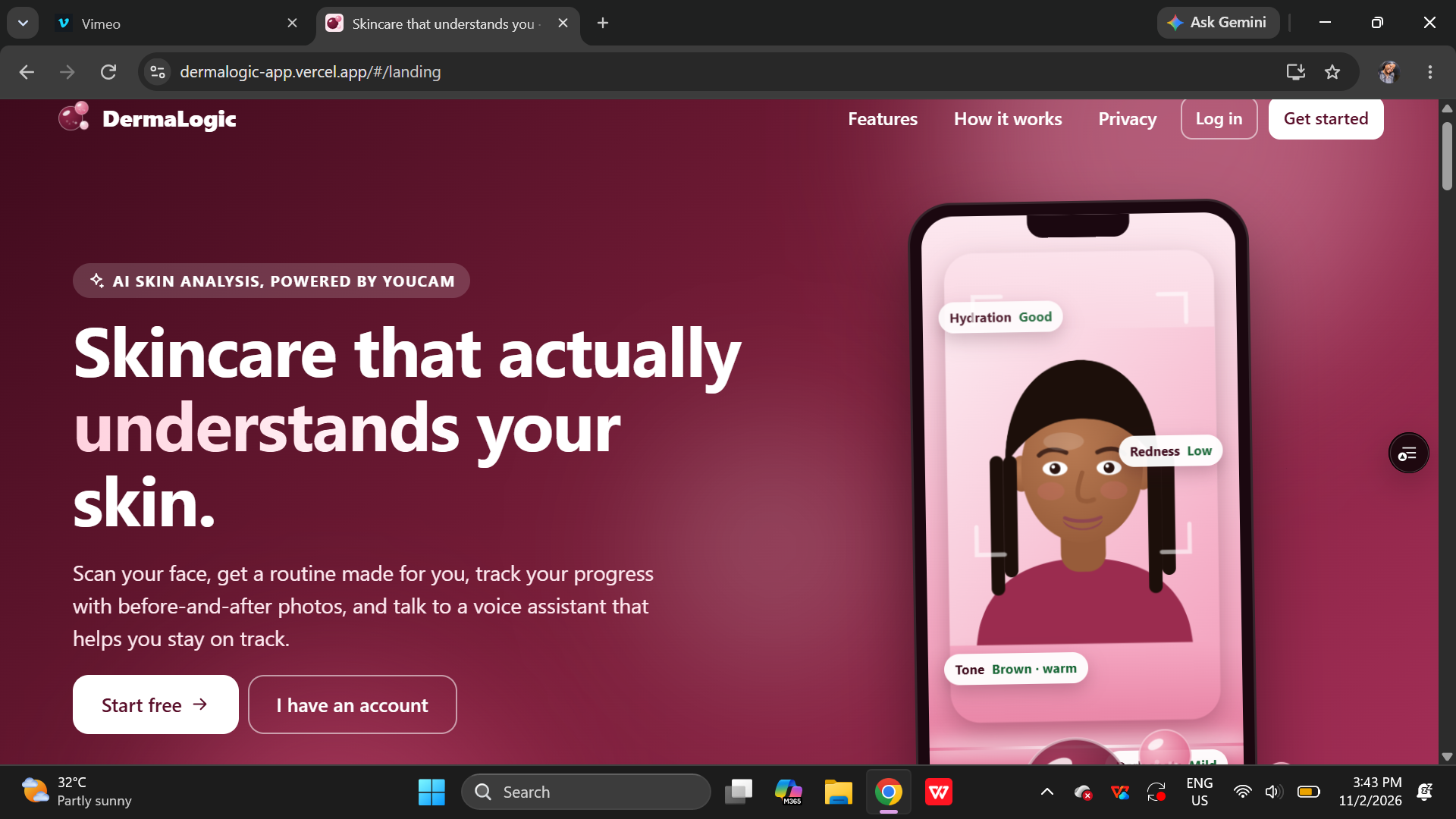
landing page
Inspiration
Nigeria has about 81 dermatologists for roughly 198 million people, around one for every 2.4 million Nigerians, according to the Nigerian Association of Dermatologists. Into that gap come unsafe products. Skin bleaching is among the highest in the world in Nigeria, with prevalence quoted between 40% and 84% by the NAD and the WHO Afro Region. Many creams sold as "organic" or "natural" are secretly laced with corticosteroids, and dermatologists report permanent skin thinning, stretch marks, rebound flares, and with long use, diabetes, high blood pressure and liver and kidney damage.
Most people harmed never chose to hurt their skin. They had a real concern, such as dark marks, acne or uneven tone, and the nearest dermatologist was hours away and expensive, while the cream was in the shop next door. We built DermaLogic to be a trustworthy first stop for those people.
What it does
DermaLogic is a free skincare web app that works in any phone browser, with no download.
- AI face scan, powered by the YouCam AI Skin Analysis API. Live coaching helps the user frame their face. The scan reports eight skin concerns: acne, dark spots, dark circles, moisture, oiliness, pores, redness and texture. Skin tone is measured on the device.
- Personalised routine for morning and evening, built from the scan, skin tone, body type and lifestyle.
- Ingredient and product checker that flags steroids (such as clobetasol and betamethasone), mercury compounds, hydroquinone and other risky ingredients, with a plain-language warning for each.
- Barrier-repair path for people with a history of skin bleaching or steroid use, with red flags that should send them to a doctor.
- Voice assistant so visually impaired users can use the app.
- Complaint log, before and after photos, daily reminders and lifestyle tracking, plus a skin score on the dashboard.
- Accounts with email and password, onboarding, and password reset by email.
How we built it
- Front end: plain JavaScript with ES modules, no build step, designed for phones.
- YouCam AI Skin Analysis API: the browser crops the face and sends it to our own Vercel serverless function, which holds the YouCam key, runs the analysis for eight skin concerns and returns clean scores. The key never reaches the browser, and requests are rate limited.
- Supabase Auth for real accounts and password reset.
- Vercel for hosting and the serverless function.
- Web Speech API for speech recognition and spoken answers.
- Camera API and on-device analysis for live face coaching and skin tone.
- Offline-friendly: service worker, IndexedDB and localStorage, kept per user on their own device for privacy.
- Quality: automated tests and accessibility checks.
Challenges we ran into
- Keeping the YouCam key secret while calling the API from a static site. We solved it with a serverless function and rate limits so strangers can't spend credits.
- Voice on phones. Browsers block audio until the user taps, and speech can fail silently. We unlock audio on the first tap, speak in short chunks, and added a fallback so the screen never gets stuck.
- Helping people take a good scan. Bad lighting and distance ruin a result, so we added live coaching for position, distance and light.
- Accounts; Our first version stored accounts on one device only, so people couldn't sign in elsewhere. We moved to Supabase for real accounts, then built the password reset flow.
- No stock photos in our build environment, so we drew our own product bottles and portraits and left a slot for real photos.
- Safety without overclaiming: A photo can't show steroid damage, so we check ingredient lists, give a gentle recovery plan and send people to a doctor early.
Accomplishments that we're proud of
- A working end-to-end scan powered by the YouCam AI Skin Analysis API, running live.
- An ingredient checker aimed at a real safety problem in Nigeria.
- Voice control and accessibility built in from the start, with automated checks passing.
- Real accounts with password reset, and a design that works well on a phone.
What we learned
- The data behind the problem is patchy. Dermatologist counts and bleaching rates differ between sources, so we cite ranges and name sources.
- A scan is only as good as the photo, so coaching the user matters as much as the model.
- Safety messaging has to be built into the product and not left to a small footnote.
- Small details, such as unlocking audio on a tap, decide whether something works for real users on phones.
What's next for DermaLogic
- Local-language voice and text: Yoruba, Hausa, Igbo and Pidgin.
- A barcode and NAFDAC-number check for products.
- Teledermatology: let a user share their scan history and complaint log with a dermatologist.
- Partnering with the Nigerian Association of Dermatologists to review the advice content.
- Tracking skin change over time, with clearer before and after comparisons.
Built With
- css3
- github
- html5
- indexeddb
- javascript
- localstorage
- mediadevices-camera-api
- node.js
- service-worker
- supabase
- vercel
- vercel-serverless-functions
- web-speech-api
- youcam-ai-skin-analysis-api
