Inspiration
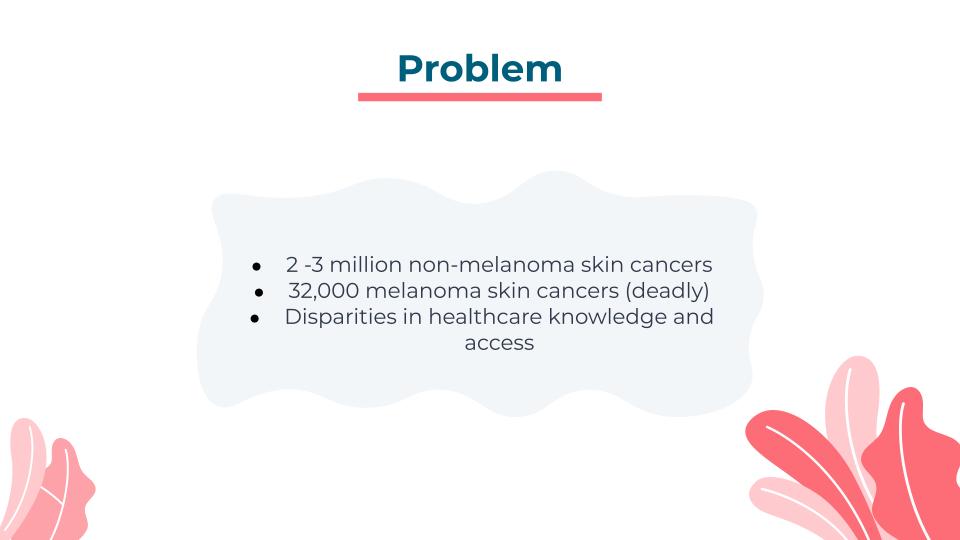
The inspiration behind dermAI stems from the alarming statistics surrounding skin cancer prevalence and the critical issues of misdiagnosis and disparities in healthcare access. Globally, between 2 and 3 million non-melanoma skin cancers and 132,000 melanoma skin cancers occur annually, making skin cancer one of the most diagnosed cancers worldwide. Despite its prevalence, skin cancer often goes undiagnosed or misdiagnosed, exacerbating the need for innovative solutions. Compounding this challenge are disparities in healthcare access, with individuals from lower socioeconomic backgrounds, rural areas, and minority communities facing barriers to timely screenings and dermatological care.
These statistics underscore the urgent need for DermAI, a technology-driven solution aimed at improving access to dermatological care, enhancing diagnostic accuracy, and addressing disparities in skin cancer prevention and treatment. By harnessing the power of artificial intelligence, DermAI empowers individuals to prioritize their skin health and mitigate the burden of skin cancer on a global scale.
What it does
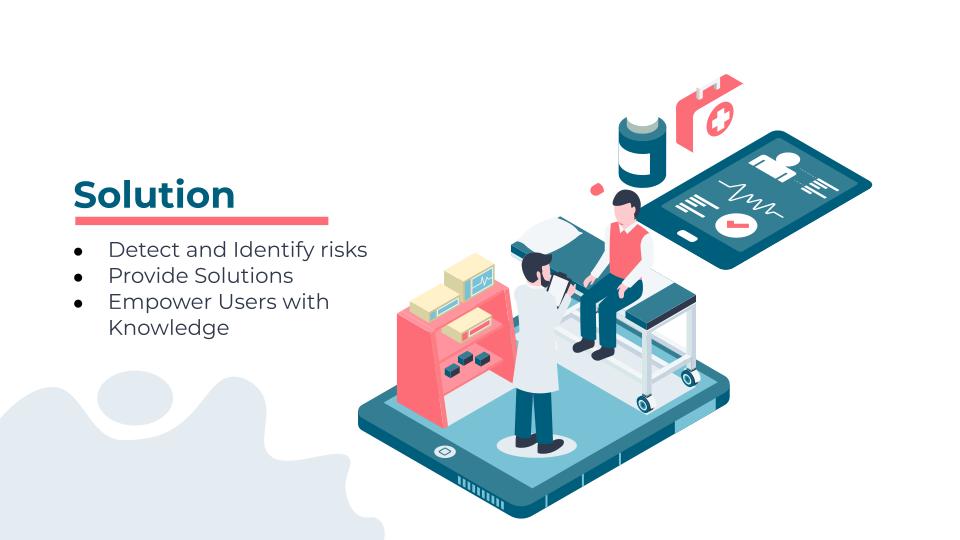
Introducing DermAI: a cutting edge, ai powered application devoted to universal skincare access. With DermAI, access to advanced skincare solutions is no longer a luxury but a fundamental right for all. This innovative platform harnesses the power of state-of-the-art machine learning algorithms and artificial intelligence to offer unparalleled skin disease detection and management to users worldwide. Through seamless skin scans, DermAI swiftly and accurately diagnoses various skin conditions, including non-melanoma and melanoma skin cancers, ensuring that everyone, regardless of their background or location, can receive timely and accurate care.
Furthermore, DermAI delivers comprehensive reports tailored to individual needs, detailing risk levels, recommended specialists, recent research findings, and actionable next steps. DermAI curates news articles related to detected skin conditions, empowering users with knowledge and awareness. Complementing these features is an AI-powered chatbot, delivering expert advice and support in real-time, further bridging the gap in access to dermatological care. With dermAI, everyone has the opportunity to prioritize their skin health and embrace confidence, regardless of socioeconomic status or geographic location.
How we built it
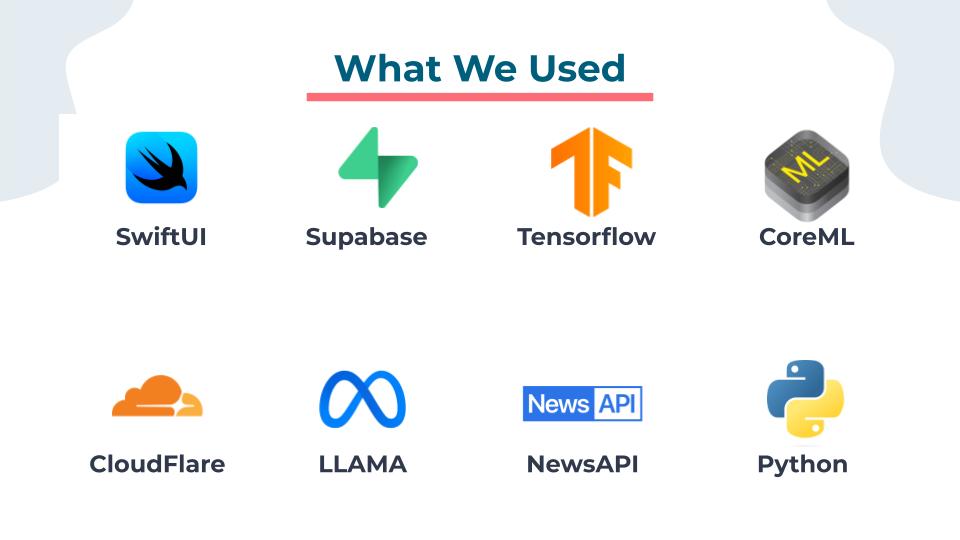
In our pursuit to make DermAI the most comprehensive skincare tool on the market, we decided to utilize a variety of new technologies. For the frontend development, we opted for Swift, leveraging its compiled nature to ensure superior performance compared to alternatives like React Native. Swift's optimization for iOS and its continuous introduction of new features empowered us to create a fast and modern user experience.
SupaBase emerged as our backend framework of choice, providing unmatched flexibility and scalability in managing user data and authentication. To develop our skin cancer detection model, we turned to CoreML and TensorFlow, opting to build our own model from scratch to ensure maximum accuracy and customization. This involved leveraging MLCore, Python, and TensorFlow to curate a comprehensive dictionary of diseases tailored to DermAI's needs. We trained our own model with 20,000 images and a deep learning architecture featuring 4 convolutional layers, 4 max pooling layers, and a softmax activation function is a robust strategy for achieving 91% accuracy in skin cancer detection.
Cloudflare played a crucial role in optimizing DermAI's performance and ensuring the security of user data through its robust network infrastructure and security features. LLAMA, deployed on Cloudflare, powered the AI chatbot functionality, enabling natural language processing and real-time user interaction.
To keep users informed with the latest news and research on their specific skin problems, we integrated NewsAPI, a comprehensive scraper that provides up-to-date information. By harnessing these technologies in a cohesive manner, we've empowered DermAI to deliver unparalleled skincare solutions, combining accuracy, performance, and usability in a single comprehensive package.
Challenges we ran into
Throughout the development journey of DermAI, we encountered many different challenges. One significant obstacle arose from our decision to use Swift for the first time in our development process. None of us have ever used swift before which resulted in many issues with architecture and framework compatibility, challenging us to learn swift as we created the most challenging app to date.
Another significant challenge we encountered during the development of DermAI revolved around the curation and preprocessing of diverse datasets for training our skin cancer detection model. This endeavor required careful attention to detail as we navigated through the complexities of addressing data quality issues, ensuring accurate labeling, and optimizing feature extraction techniques to enhance the overall model accuracy. The iterative nature of this process, along with the necessity for high accuracy and extensive customization to accommodate various skin conditions and classification criteria, led us through numerous cycles of trial and error until we achieved satisfactory results. From dealing with data quality concerns to fine-tuning feature extraction methods, each iteration brought us closer to refining our model and fulfilling our vision for DermAI's robust skin cancer detection capabilities.
Accomplishments that we're proud of
One of our most significant achievements lies in the remarkable accuracy achieved by our skin cancer detection model. Through rigorous training and optimization efforts, our model demonstrates an impressive ability to identify various forms of cancer with an accuracy rate exceeding 90%. Additionally, we are also proud to have successfully implemented a live chat feature within DermAI. This feature enhances user engagement and accessibility by providing real-time assistance and support to users seeking information or guidance regarding their skincare concerns. By integrating natural language processing capabilities and AI-driven chatbot functionality, we have created a seamless and interactive platform that caters to the diverse needs of our users.
What we learned
We learned a lot through the challenge of developing an accurate machine learning model for skin disease detection, such as emphasizing the critical role of data quality, preprocessing techniques, and model optimization to achieve accurate results. Additionally, navigating the nuances of frontend and backend development using Swift, SupaBase, and other technologies gave us a new perspective on mobile development and highlighted the importance of adaptability and continuous learning in a rapidly evolving landscape.
What's next for DermAI
Looking ahead, we are committed to advancing DermAI's capabilities and expanding its impact in the field of skincare technology. One key focus area for future development is enhancing the accessibility and usability of DermAI through platform expansion and localization efforts. We aim to extend DermAI's reach to a broader audience by supporting additional languages, integrating user-friendly features, and optimizing the user experience across different devices and platforms. Furthermore, we will continue to refine and fine-tune our skin cancer detection model, leveraging ongoing advancements in machine learning and data science to improve accuracy and reliability. Collaborating with healthcare professionals and research institutions, we aspire to integrate new diagnostic tools, treatment recommendations, and preventive measures into DermAI's offerings, ensuring that users receive the most comprehensive and personalized skincare solutions. Ultimately, our vision for DermAI is to empower individuals worldwide to take control of their skin health, fostering a future where everyone has access to quality dermatological care and the resources needed to thrive.
Sources
We used many different research papers for machine learning, as well as WHO to check skin cancer statistics and facts https://www.who.int/news-room/questions-and-answers/item/radiation-ultraviolet-(uv)-radiation-and-skin-cancer https://www.ncbi.nlm.nih.gov/pmc/articles/PMC7670315/ https://www.ncbi.nlm.nih.gov/pmc/articles/PMC10252190/#:~:text=Among%20the%20different%20computer-aided,images%20in%20much%20more%20detail https://www.ncbi.nlm.nih.gov/pmc/articles/PMC9759648/
Built With
- cloudflare
- coreml
- llama
- news-api
- supabase
- swift
- swiftui
- tensorflow


Log in or sign up for Devpost to join the conversation.