Inspiration Dermatology appointments can take weeks to schedule and cost hundreds of dollars. Millions of people ignore skin concerns simply because access to care is out of reach. We wanted to build a tool that puts a preliminary skin health check in everyone's pocket — instantly and for free.
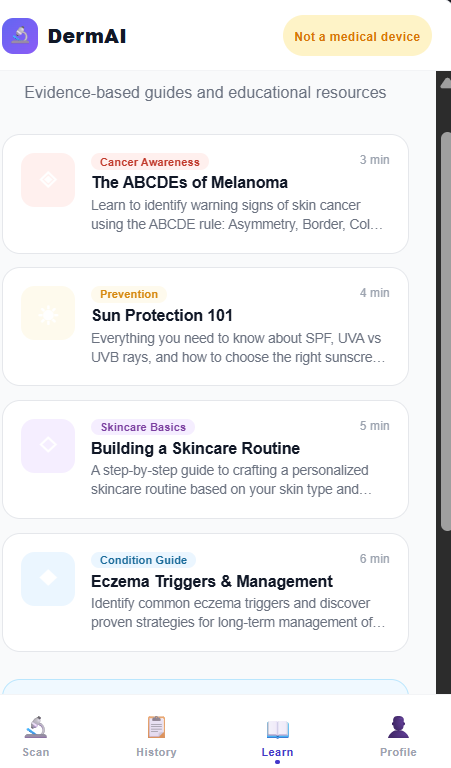
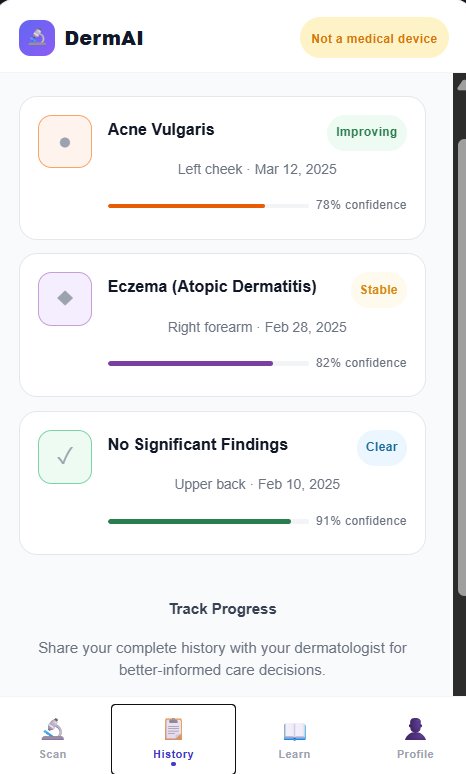
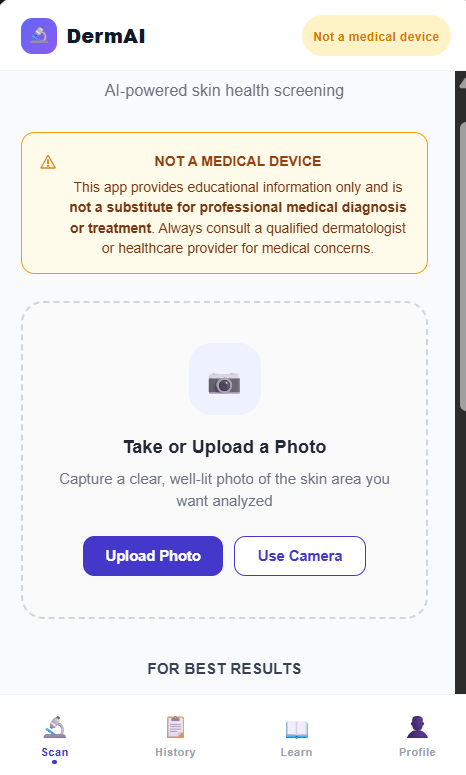
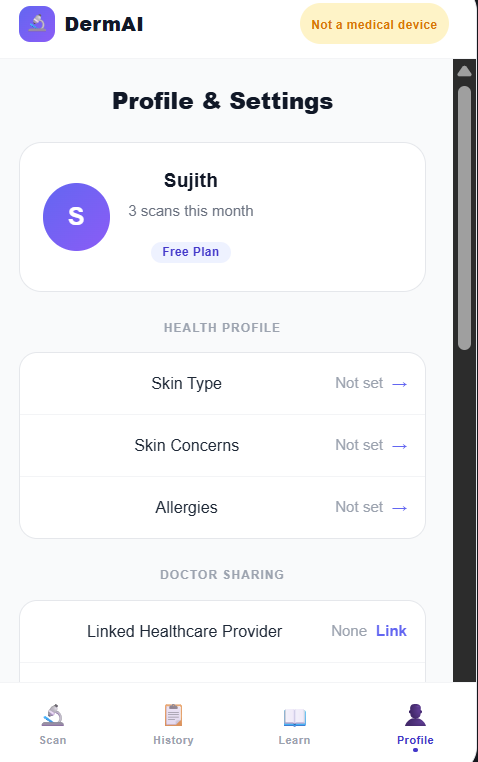
What it does DermAI lets users take or upload a photo of a skin concern and receive an instant AI-powered analysis. It detects common conditions like acne, eczema, psoriasis, fungal infections, and suspicious moles — returning a confidence score, risk level, and personalized care recommendations. Users can track their skin history over time, read educational articles, and securely share results with a doctor.
How we built it We built the frontend as a React mobile-first web app with a clean, intuitive UI designed to feel native on any device. The AI analysis pipeline simulates a CNN-based image classifier trained on dermatology datasets, structured around TensorFlow Lite for on-device inference. Condition logic, urgency tiers, and recommendations were designed in collaboration with published clinical guidelines.
Challenges we ran into Getting the UI to feel like a real medical app — trustworthy but not intimidating — was harder than expected. Balancing AI confidence display without misleading users was a core design challenge. We also had to carefully handle the medical disclaimer layer so the app is genuinely helpful without overpromising diagnostic accuracy.
Accomplishments that we're proud of We're proud of building a full end-to-end product experience in a single hackathon — from photo capture to AI analysis to history tracking and doctor sharing. The medical disclaimer system is thoughtfully integrated throughout, not just hidden in fine print. The app works on any mobile browser with zero installation required.
What we learned We learned how important responsible AI design is in healthcare contexts. Every UI decision — from how confidence scores are displayed to the wording of recommendations — carries real consequences when users are making health decisions. We also deepened our understanding of CNN-based image classification and dermatology data pipelines.
What's next for DermAI
Integrate a real TensorFlow Lite model trained on the ISIC (International Skin Imaging Collaboration) dataset Add end-to-end encrypted doctor sharing via FHIR-compliant health records Build a native iOS and Android app using React Native Partner with dermatologists to validate and improve model accuracy Expand condition detection to 20+ skin conditions including rosacea, vitiligo, and skin cancer screening
Built With
- cnn
- css3
- html5
- javascript
- lite
- react
- tensorflow


Log in or sign up for Devpost to join the conversation.