-
-
-
-
Solution
-
-
Our project contributes to SDG 3 by enhancing cancer diagnosis, promoting health equity, and improving healthcare outcomes globally
-
By fostering collaboration with healthcare professionals, our project aligns with SDG 17, strengthening partnerships for better future
-
Addressing healthcare disparities, our project aligns with SDG 10 by promoting inclusivity and reducing inequalities in cancer diagnosis
Inspiration
Walid's life was forever intertwined with the ominous shadow of cancer. The disease had claimed the lives of his grandparents, leaving a haunting legacy that cast a dark cloud over his childhood. Witnessing the pain and suffering of his beloved grandparents ignited a burning desire within him to break this generational curse. Later on we met as AI students and we delved into the world of tech and AI algorithms . We marveled at the potential of technology to unravel the mysteries of biology and medicine, particularly in the field of cancer research. Witnessing the limitations of traditional cancer detection methods, We decided to find a more effective solution intensified.
What it does
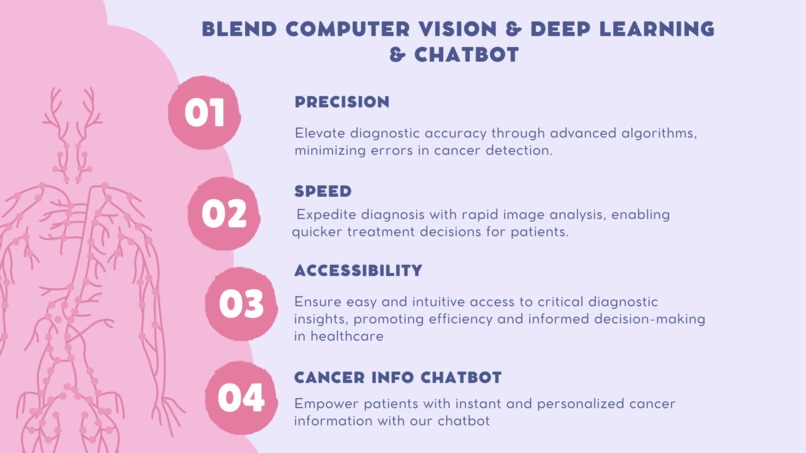
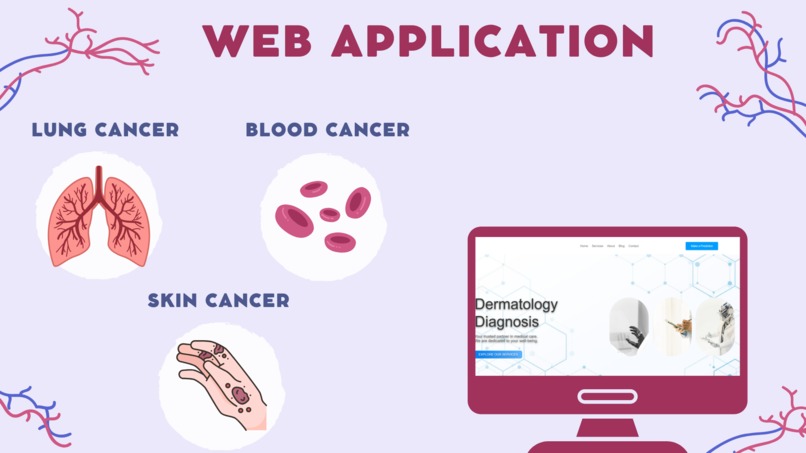
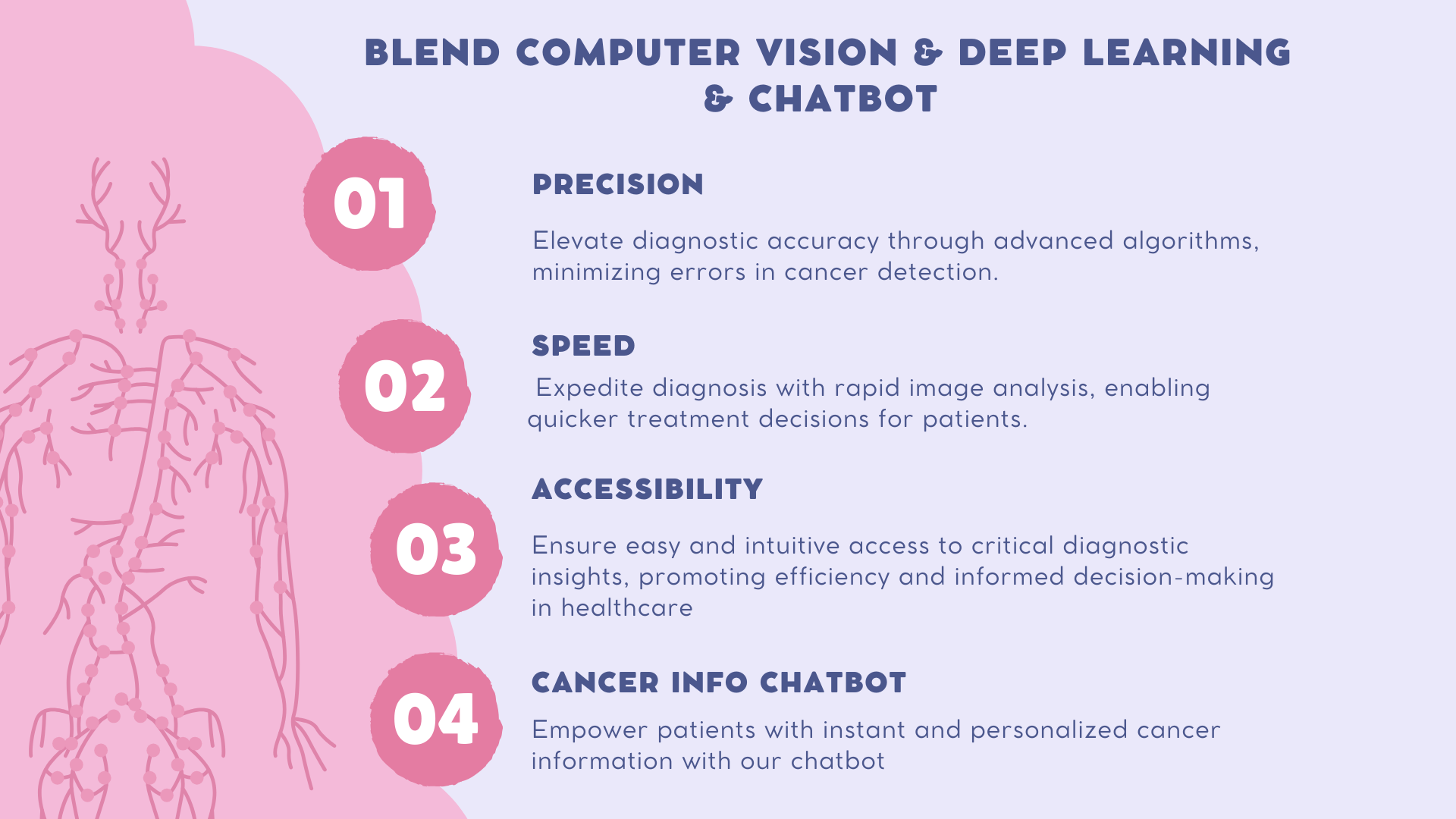
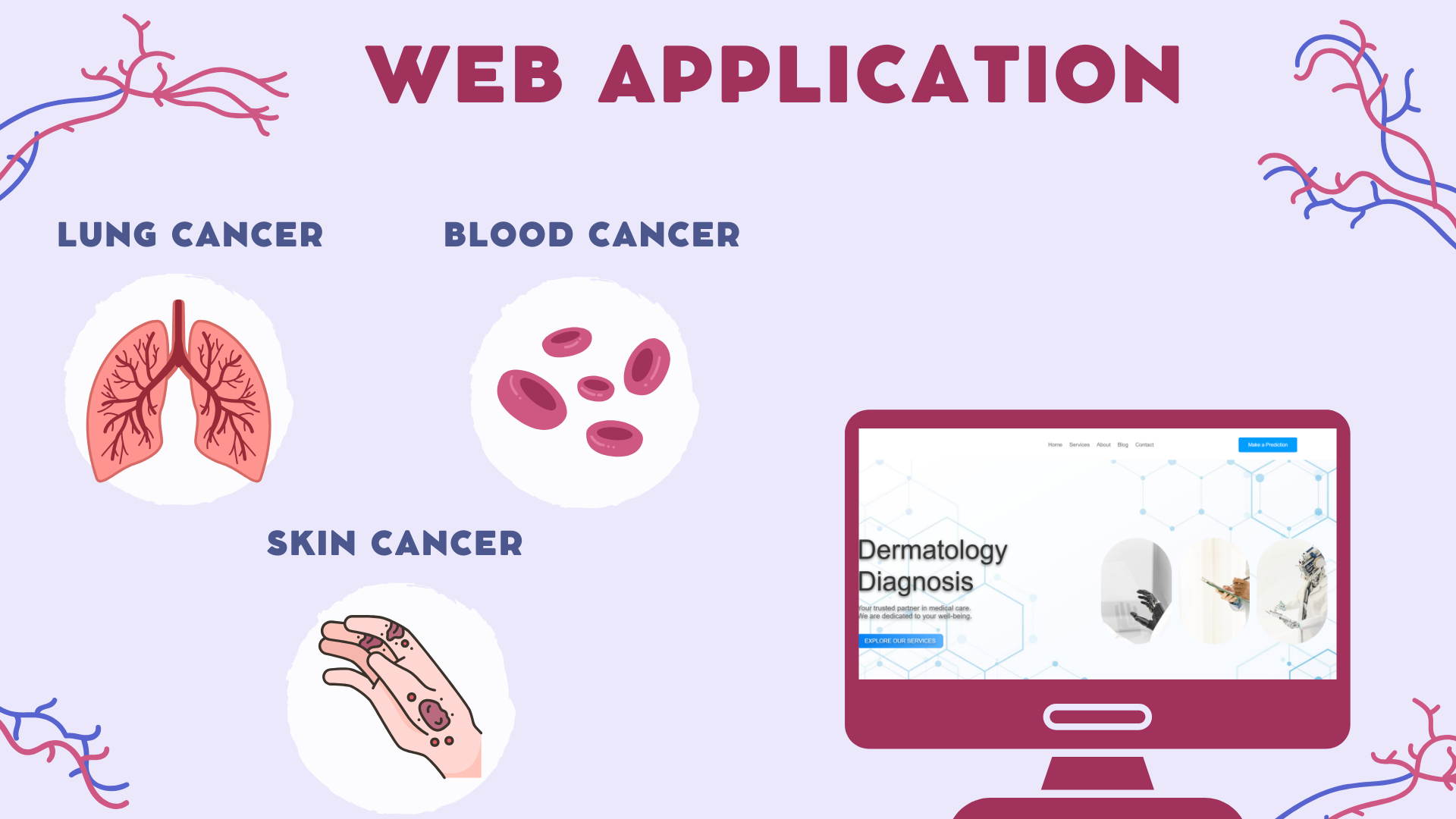
Drawing upon the expertise of a cancer researcher and leveraging cutting-edge computer vision techniques, we developed a groundbreaking cancer detection system that revolutionizes early diagnosis and treatment. Our system meticulously analyzes medical images, such as X-rays, CT scans, and MRIs, employing sophisticated algorithms to identify subtle patterns that even experienced doctors might miss. This remarkable accuracy in detecting cancerous lesions empowers healthcare professionals to intervene promptly, saving countless lives and transforming the fight against cancer.
How we built it
We built it based on computer-vision , image processing and NLP for the case of the chatbot.
Challenges we ran into
There were a number of challenges that we faced in building the cancer detection system. These challenges included:
The complexity of medical images: Medical images are complex and can be difficult to analyze.
The need for a large dataset: We needed a large dataset of medical images in order to train our algorithm.
Accomplishments that we're proud of
We are proud to participate in this open competition and be an active member in this new community.
What we learned
Data is the Foundation of AI: AI algorithms are heavily reliant on the quality and quantity of data they are trained on
What's next for DermaHub
Our journey with DermaHub has just begun. We are excited to explore the vast potential of AI in revolutionizing healthcare, and we have several exciting plans for the future: like make partnerships with doctors or hospitols to make it more accurate and save lives.
Built With
- computer-vision
- deep-learning
- django


Log in or sign up for Devpost to join the conversation.