-
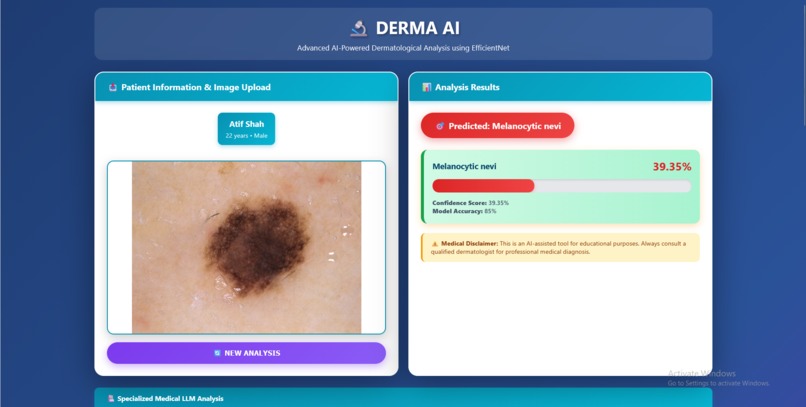
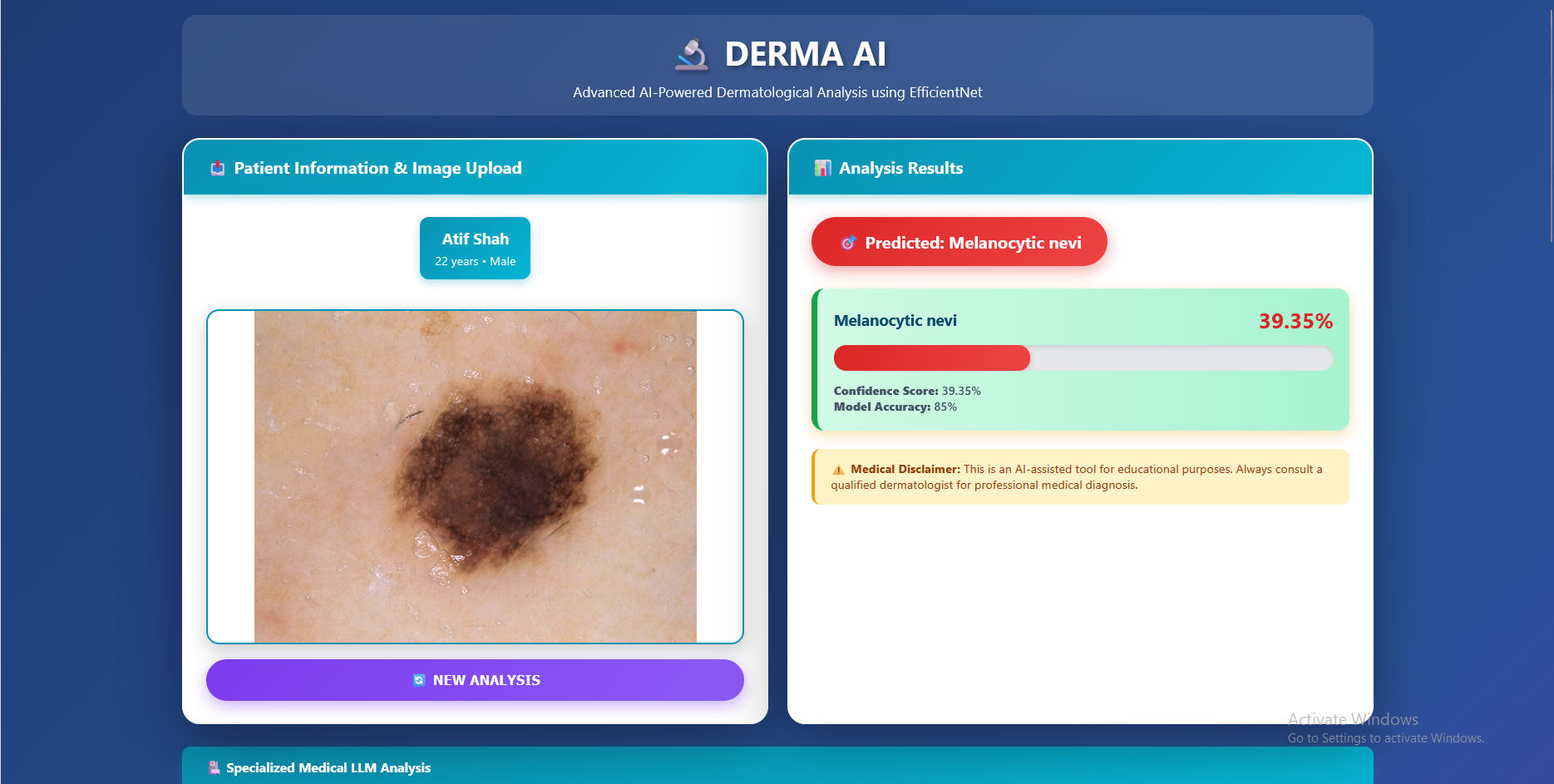
Upload Image and Predicted Disease Type
-
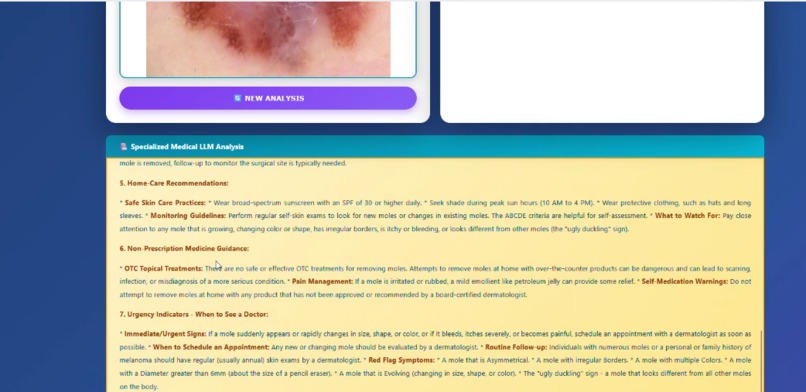
AI Explaination
-
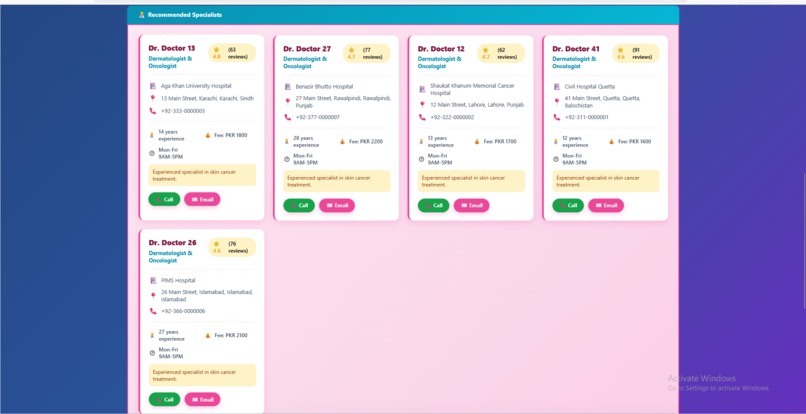
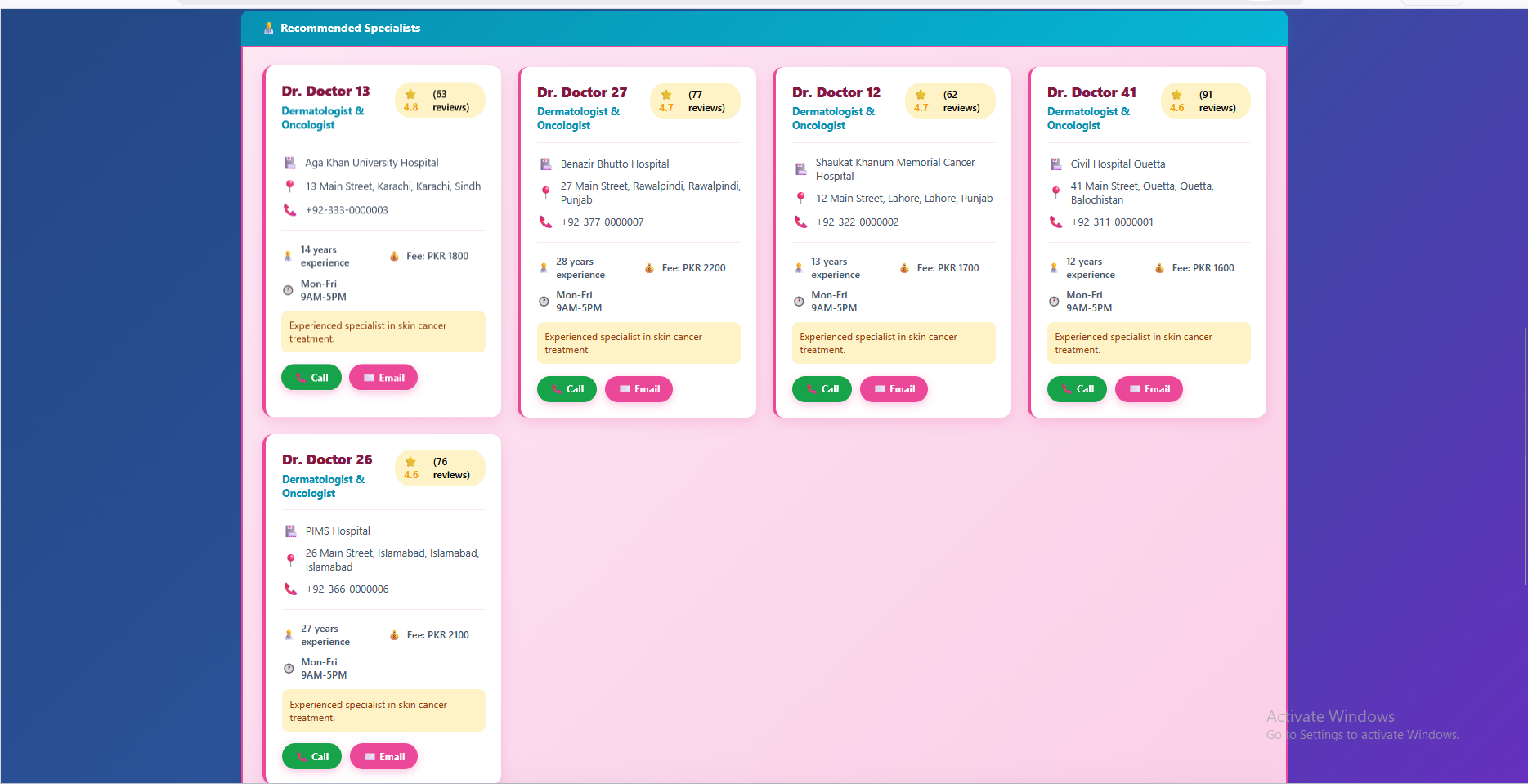
Doctor Recommendation
-
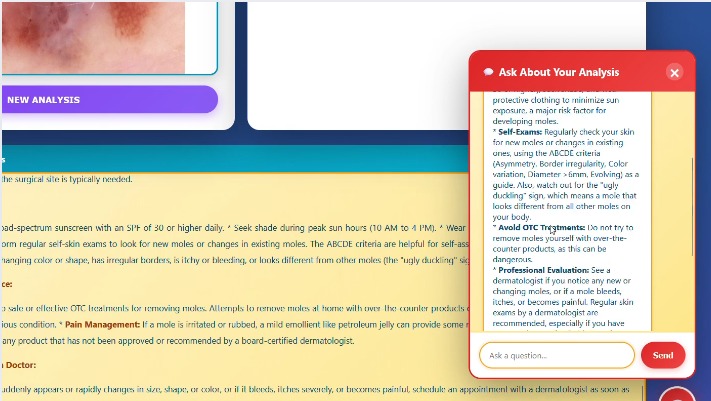
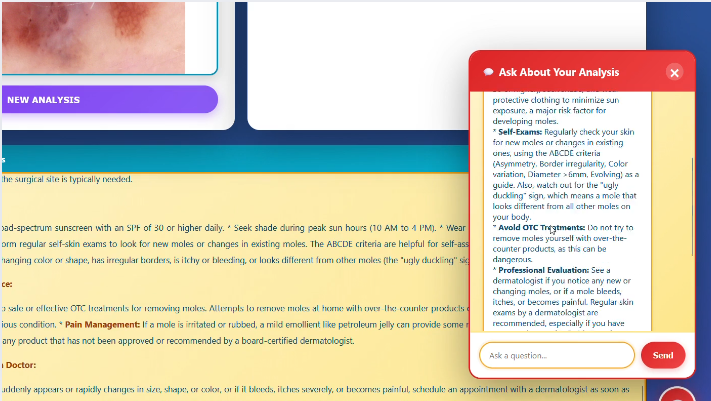
Interactive Chatbot
-
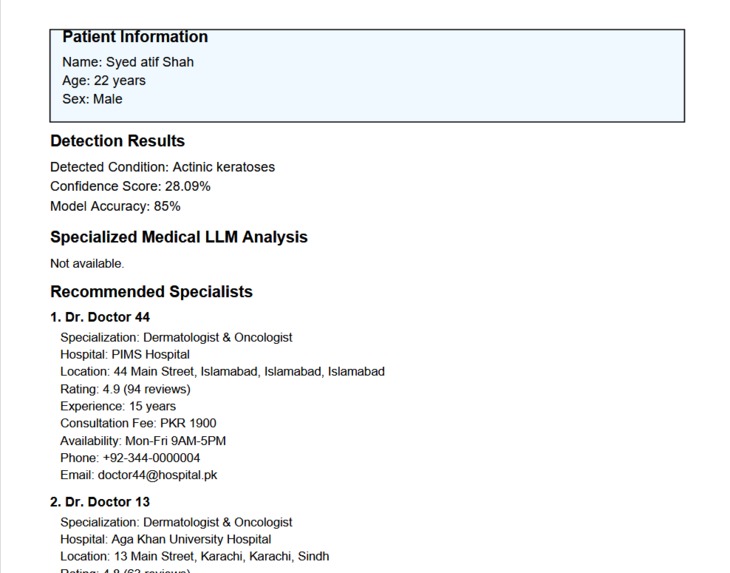
Pdf Report


Inspiration
Skin cancer is one of the most common cancers worldwide, yet early detection is often delayed due to limited access to dermatologists, high costs, and lack of awareness. I wanted to create an accessible AI-powered tool that helps users quickly analyze skin lesions, understand the results, and get recommendations for dermatologists in Pakistan.
What it does
DermAI is a web application that allows users to:
- Upload an image of a skin lesion
- Automatically classify it into one of seven categories using EfficientNetB0
- Receive a confidence score for the prediction
- Get an AI-generated medical explanation using Google Gemini AI
- Obtain dermatologist recommendations in Pakistan
- Download a detailed PDF or DOCX report summarizing the results
How we built it
- Frontend: HTML, CSS, JavaScript for a responsive interface with drag-and-drop image upload and interactive results.
- Backend: Python Flask handles image upload, preprocessing, and model inference.
- AI Models:
- EfficientNetB0 for lesion classification
- Google Gemini AI for medical reasoning and explanation
- EfficientNetB0 for lesion classification
- Data: HAM10000 dataset (images split into part 1 & part 2)
- Reports: Generated using
reportlabandpython-docx - UI/UX Assistance: Claude AI was used for design inspiration and coding guidance
Challenges we ran into
- Integrating Google Gemini AI with Flask for dynamic medical explanations
- Processing large HAM10000 image datasets efficiently
- Designing a clean and user-friendly UI that works for both desktop and mobile users
- Securing API keys and sensitive information while preparing the project for GitHub
Accomplishments that we're proud of
- Successfully integrated deep learning classification with LLM medical explanation
- Built a working web interface with PDF report generation and dermatologist recommendation module
- Created a reproducible MVP that demonstrates AI-assisted skin lesion analysis
- Ensured a secure workflow by excluding
.envand.venvfrom GitHub
What we learned
- How to combine computer vision models with large language models for practical healthcare applications
- Best practices for handling sensitive API keys and large datasets in projects
- Web deployment strategies and creating downloadable medical reports
- The importance of UX/UI design in user adoption of AI tools
What's next for DermAI
- Improve model accuracy using larger datasets and advanced augmentation
- Add real-time camera capture for mobile and web users
- Implement user accounts and history tracking for scans and reports
- Deploy the project on cloud hosting with GPU support for faster inference
- Develop a mobile app version for iOS and Android
- Enhance UI/UX with interactive dashboards and risk visualizations
Built With
- css3
- flask
- google-gemini-api
- html5
- javascript
- python
- tensorflow
- vscode

Log in or sign up for Devpost to join the conversation.