Project Story
About the Project
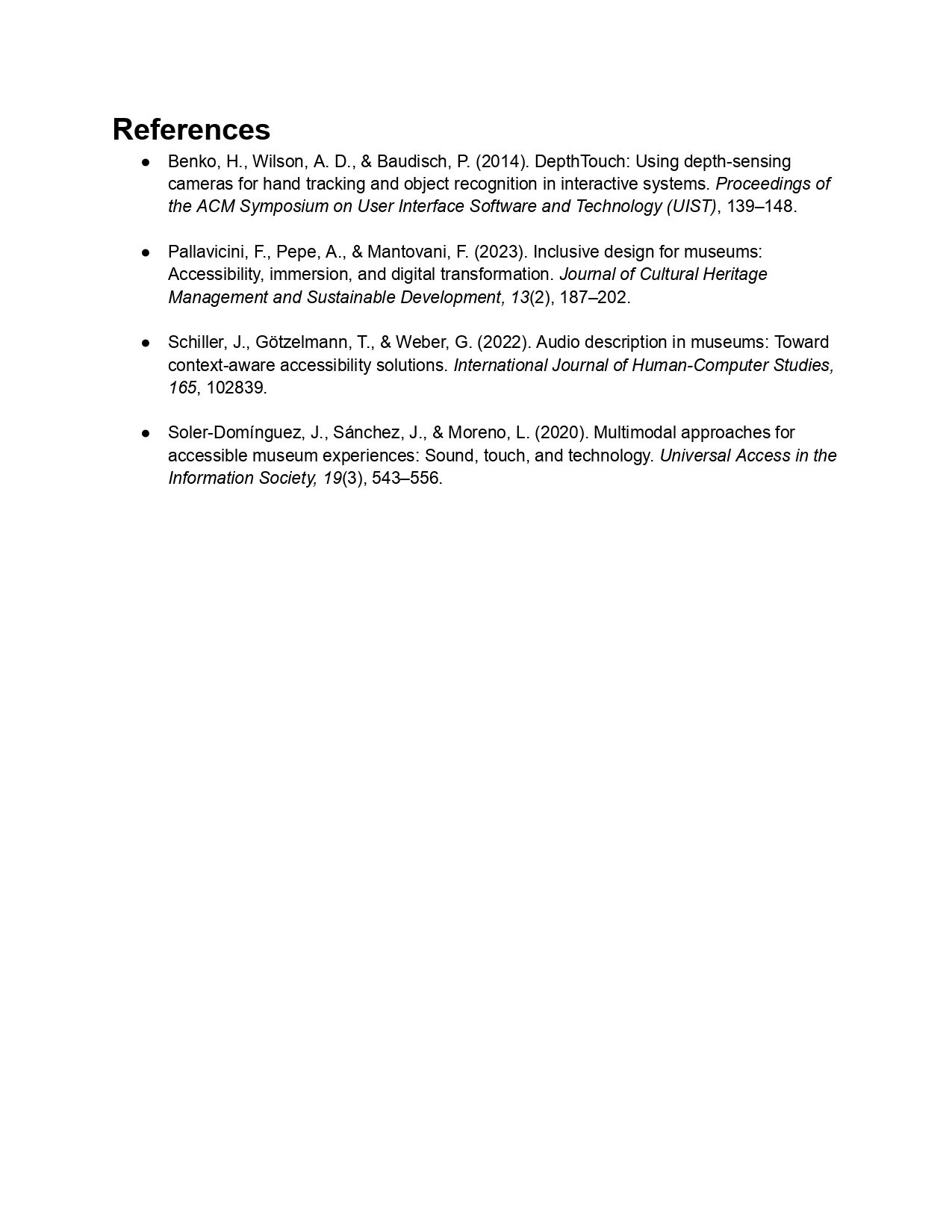
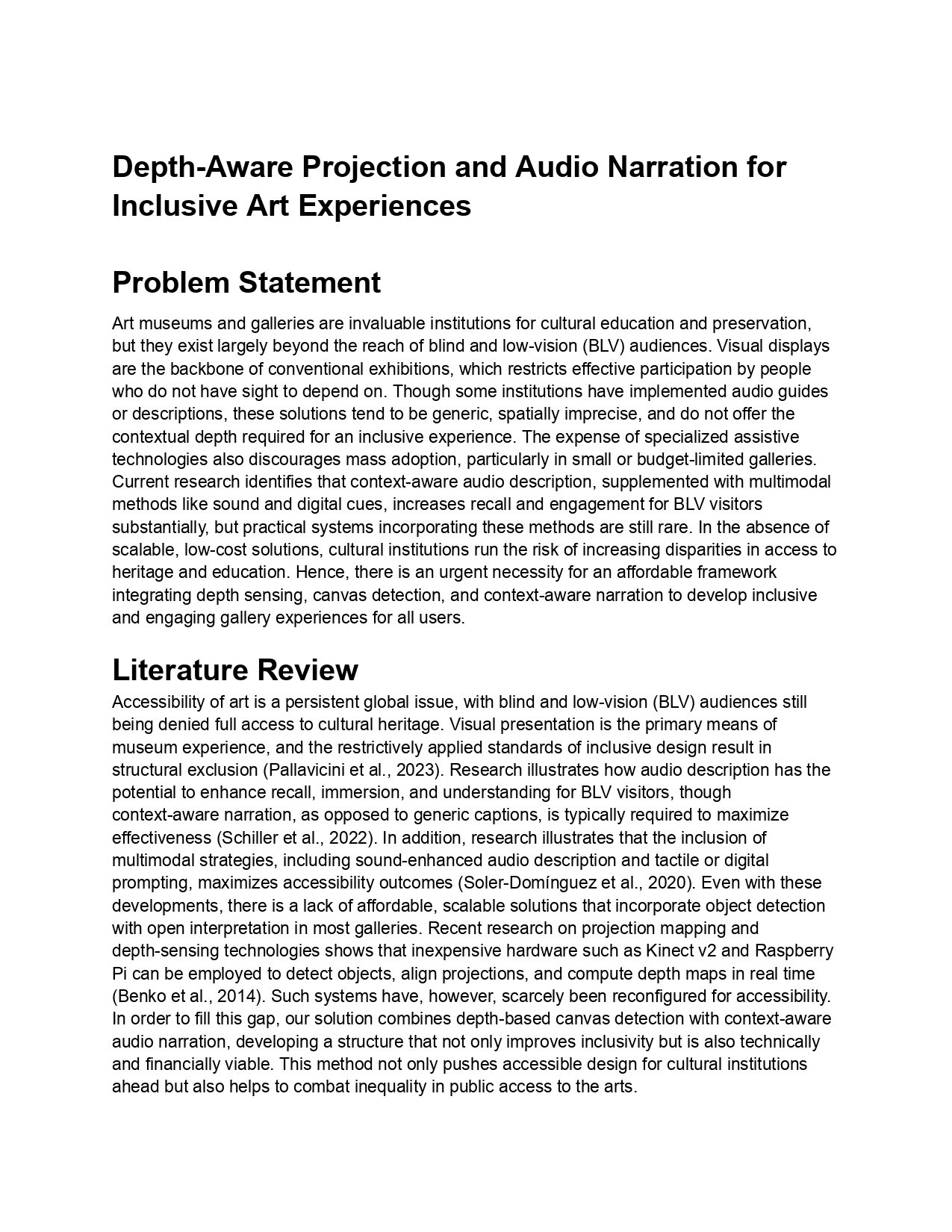
This literature review project was inspired by the recognition that accessibility in art and cultural spaces remains an underexplored issue in both research and practice. While many studies emphasize the importance of inclusive design, there is limited integration of depth-sensing technology and audio narration as a combined solution for blind and low-vision (BLV) audiences. By reviewing prior work on audio description, computer vision, and projection mapping, I aimed to situate my proposed system within the broader scholarly conversation on accessibility and digital transformation in museums and galleries.
What I Learned
Through this review, I learned how different strands of research connect:
- Accessibility Research: Evidence shows that context-aware audio descriptions significantly improve recall and immersion for BLV visitors.
- Computer Vision Literature: Depth cameras such as Kinect v2 have been widely used for object detection and projection alignment.
- Gap in Integration: Despite these advances, few studies explicitly combine technical feasibility with accessibility outcomes.
This process sharpened my understanding of how to identify gaps in existing scholarship and justify a new technical approach.
How I Built It
I collected and analyzed peer-reviewed articles, technical reports, and case studies related to accessibility, computer vision, and projection mapping. Key themes were coded around problem areas (exclusion in galleries), proposed solutions (audio description, multimodality), and technical enablers (depth sensing, projection systems). This thematic synthesis provided the foundation for framing my own proposed contribution.
Challenges Faced
- Scattered Literature: Research was spread across computer vision, HCI, and accessibility studies, making synthesis complex.
- Technical-Accessibility Divide: Technical papers often ignored accessibility outcomes, while accessibility studies rarely addressed implementation details.
- Limited Case Studies: Few real-world projects integrated both depth-based detection and narration.
These challenges underscored the importance of bridging the gap between technical feasibility and inclusive design principles.
Built With
- litreture-review

Log in or sign up for Devpost to join the conversation.