Inspiration
Depression is a common mental health disorder that affects many people worldwide.
It can have a significant impact on an individual's quality of life.
Left untreated, depression can lead to suicide.
Early detection and intervention are crucial for managing depression and improving outcomes.
The project aims to raise awareness of depression and its symptoms.
It provides tools and resources for individuals to recognize and manage their symptoms.
The ultimate goal is to improve the mental health and well-being of people struggling with depression.
What it does
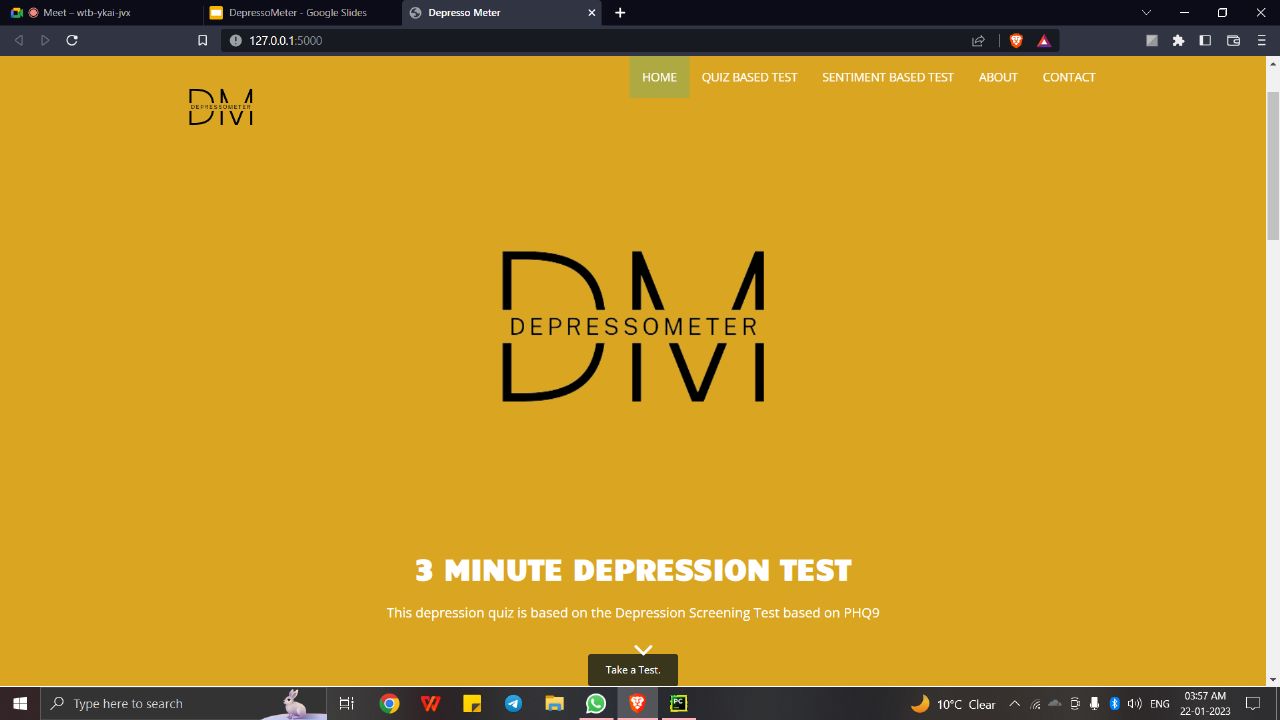
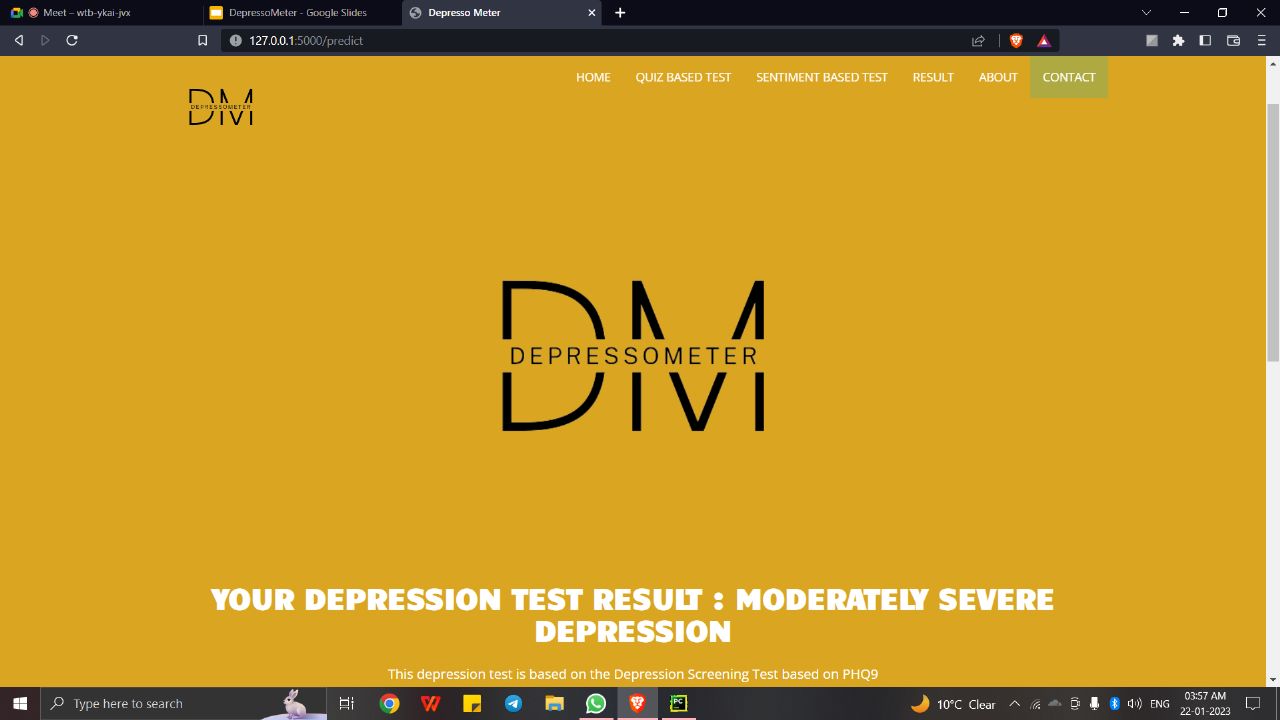
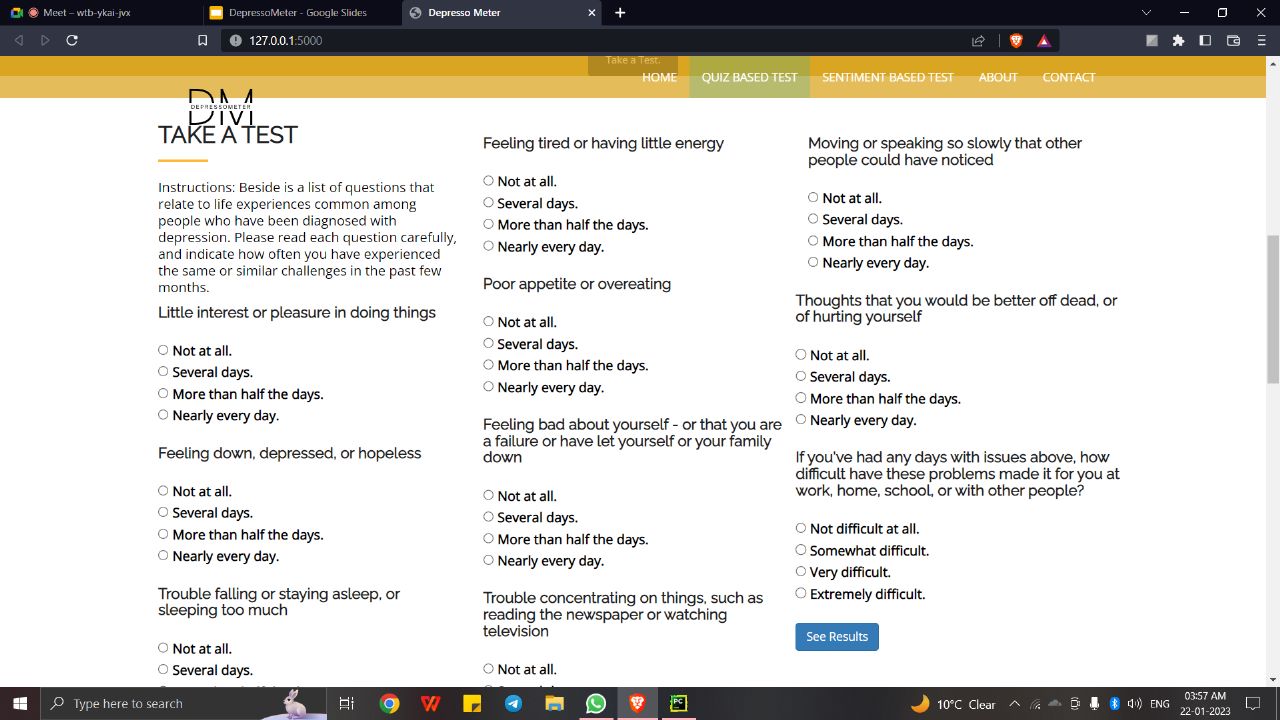
Online self-assessments and quizzes to help individuals identify and understand their symptoms. Information and resources about different types of depression and treatment options. Support groups and online forums for individuals to connect with others who are also struggling with depression. Referral to professional help and mental health care services. AI powered Test
How we built it
We built the depression detection project using a combination of technologies including: Python: As the primary programming language, we used Python to develop the machine learning models and other back-end logic of the project. AI/ML: We used advanced AI/ML techniques to train and test the models that are responsible for detecting depression. Data Science: We employed data science techniques to analyze and understand the depression dataset and identify the patterns in the data that the model can learn from. Flask: We used the Flask web framework to build the web application that provides the user interface for the project. HTML/CSS: We used HTML and CSS to design and style the user interface of the web application. JavaScript: For the interactive frontend and dynamic features. By using these technologies, we were able to create a robust and effective depression detection tool that can help individuals recognize and manage their symptoms of depression.
Challenges we ran into
Data availability and quality: One of the main challenges we faced was obtaining a large and diverse enough dataset to train and test the machine learning models. It's hard to find large datasets of depression-related data that is reliable and unbiased. Model accuracy: Another challenge we encountered was achieving a high level of accuracy with the machine learning models. Depression is a complex condition with many different symptoms and causes, and it can be difficult to create a model that can accurately detect it. Privacy and security: As the project deals with sensitive information, we had to ensure that the user's data is secure and private. We had to make sure that the data is stored and transmitted securely, and that appropriate measures are in place to protect the user's privacy. Scalability: With the increasing number of users, it was challenging to ensure that the system can handle the load and scale accordingly. Integration: Integrating all the different components of the project and making sure that they work together seamlessly was also a challenge. Ethical concerns: As the project deals with mental health, we had to make sure that we are not contributing to any discrimination or bias, and that we are following all the ethical guidelines.
Accomplishments that we're proud of
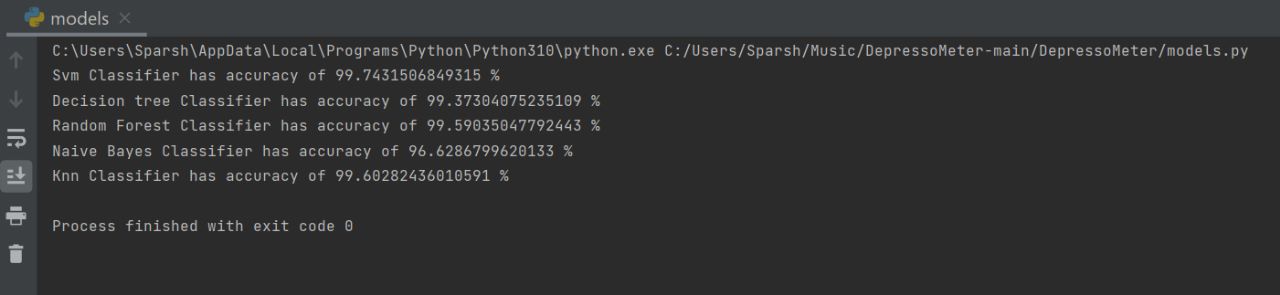
We are proud of several accomplishments that we achieved while building the depression detection project: Achieving high accuracy: One of the major accomplishments we are proud of is achieving an accuracy rate of 99.7% with our machine learning models. This level of accuracy is a testament to the effectiveness of the models we developed and the quality of the data we used to train them. Building a comprehensive tool: We are proud of creating a comprehensive tool that provides a range of resources and features to help individuals recognize and manage their symptoms of depression. This includes self-assessments, information and resources, support groups, and personalized tracking and monitoring. Providing a user-friendly interface: We are proud of designing a user-friendly interface for the web application that is easy to navigate and understand for users of all levels of technical proficiency. Ensuring privacy and security: We are proud of implementing robust security measures to ensure that the user's data is protected and kept private. Addressing ethical concerns: We are proud of taking the necessary steps to address ethical concerns and make sure that the project is not contributing to any discrimination or bias. Creating a scalable system: We are proud of creating a system that can handle a large number of users and scale accordingly.
What we learned
The importance of obtaining a diverse and reliable dataset for training machine learning models. The complexity of depression as a condition and the difficulty of creating accurate models for detecting it. The importance of privacy and security when dealing with sensitive information. The need for a comprehensive approach to help individuals recognize and manage their symptoms of depression. The importance of user-friendly design and easy navigation for web applications. The need to address ethical concerns and make sure that the project is not contributing to any discrimination or bias. The importance of scalability when building a system that needs to handle a large number of users.
What's next for DepressoMeter
There are several things that can be done next for the DepressoMeter project: Further improve the accuracy of the machine learning models: We can continue to train and fine-tune the models with more data and advanced techniques to improve their accuracy even further. Expand the range of resources and features: We can add more resources and features to the tool such as virtual reality therapy, CBT based exercises and more personalized tracking and monitoring to help individuals manage their symptoms of depression. Develop a Mobile application: We can create a mobile application that provides the same resources and features as the web application, making it more accessible to users on the go. Integrate with other mental health platforms: We can integrate the DepressoMeter with other mental health platforms to provide a more comprehensive support system for individuals with depression. Partner with mental health organizations and professionals: We can collaborate with mental health organizations and professionals to validate the effectiveness of the tool and to make sure that it aligns with the best practices in the field. Incorporate more languages and cultural sensitivity: We can work on adding more languages and cultural sensitivity to the tool, to make it more accessible to individuals of different backgrounds and cultures. Research and Development: We can conduct more research and development to explore new techniques and technologies that can be incorporated into the tool to improve its performance and effectiveness.
Built With
- ai
- css
- datascience
- flask
- html
- javascript
- ml
- python


Log in or sign up for Devpost to join the conversation.