
Depression Risk AI
Project Overview
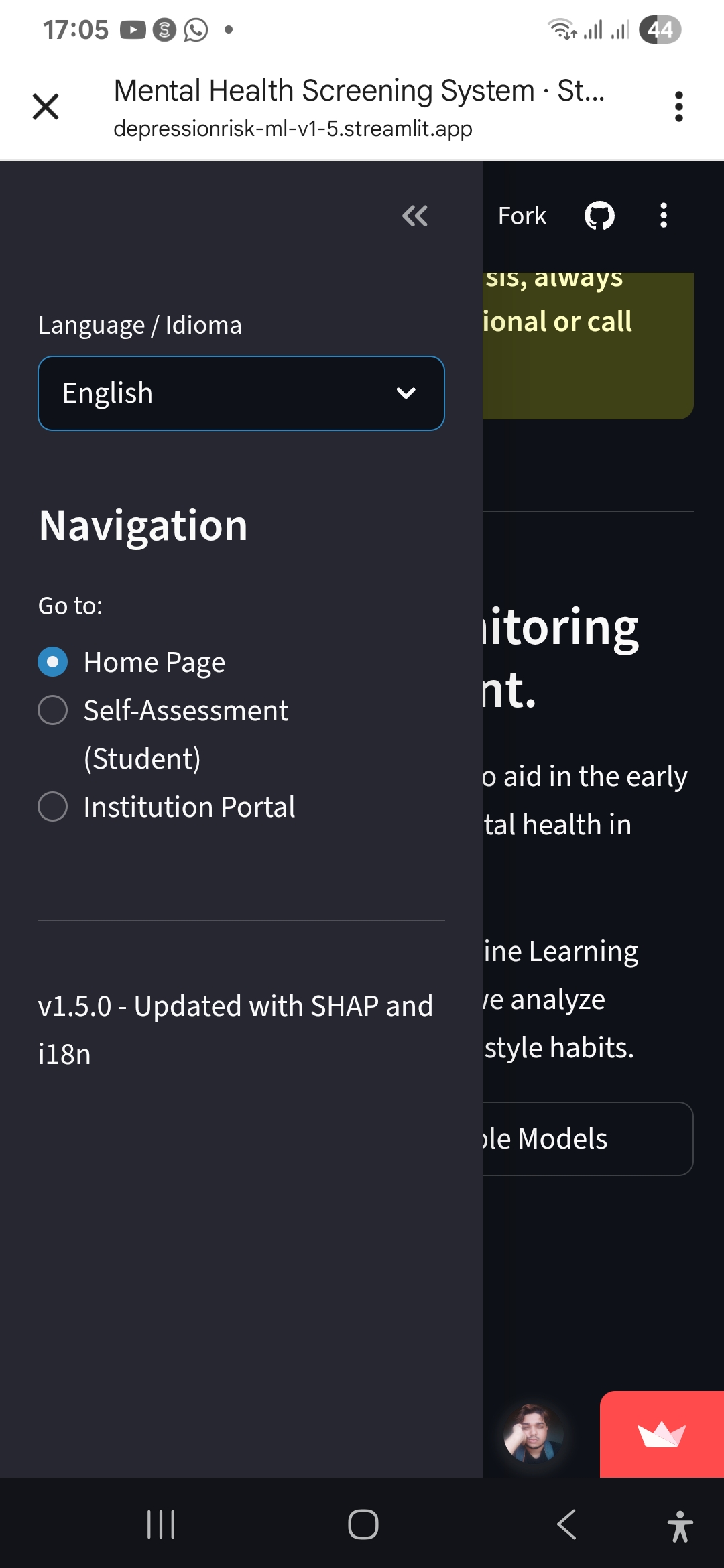
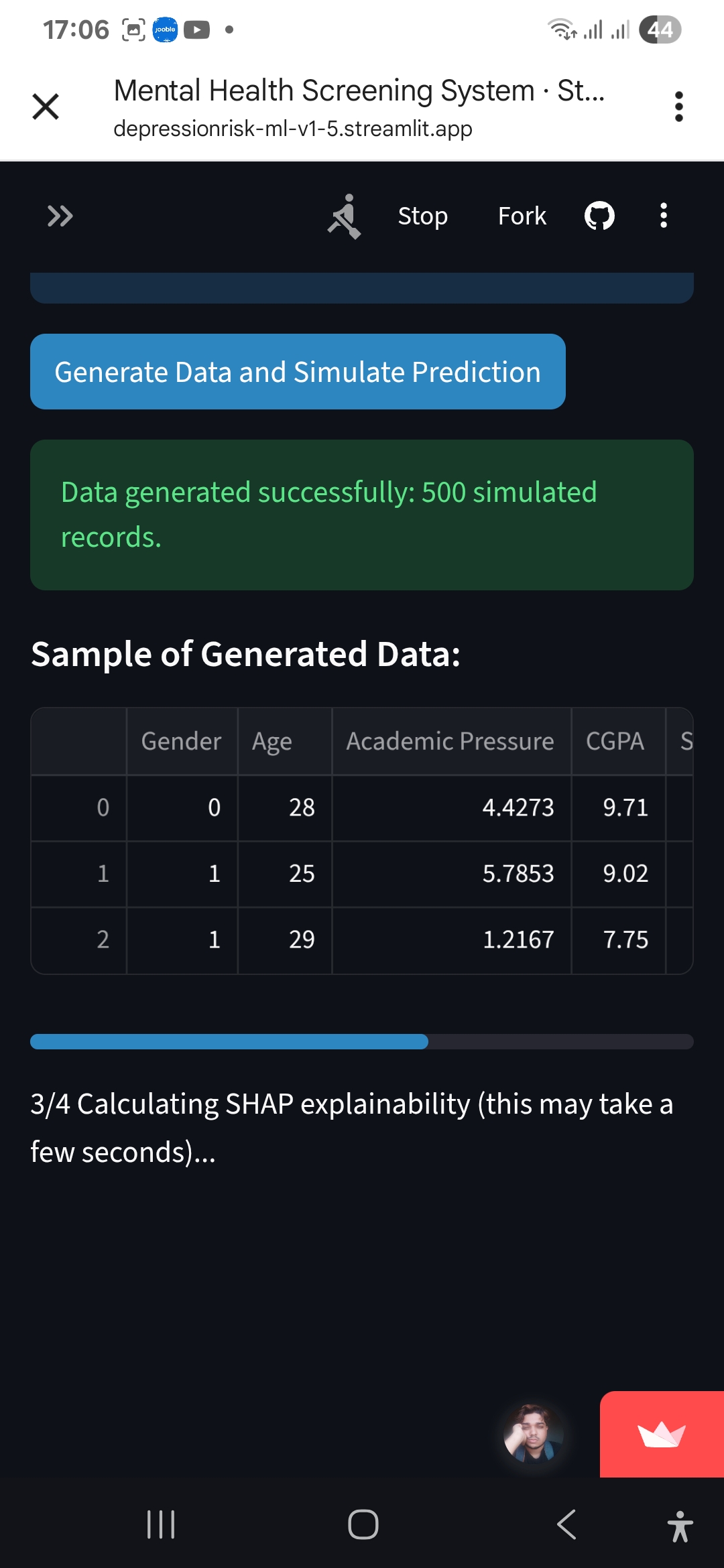
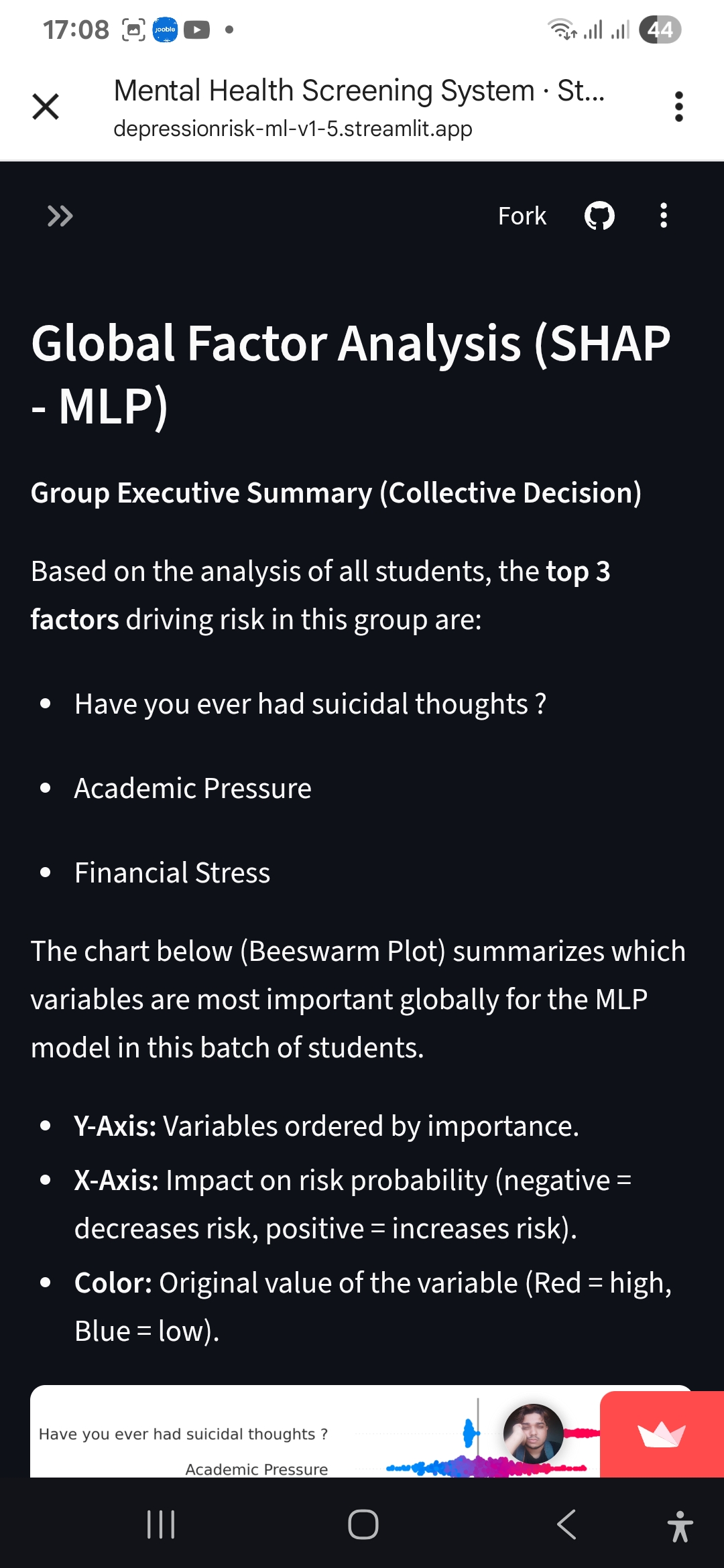
Depression Risk AI is a Machine Learning–based decision support system designed to provide explainable depression risk estimation using behavioral, academic, and socioeconomic data. The project focuses on early risk detection, algorithmic responsibility, and measurable social impact, integrating Explainable Artificial Intelligence (XAI) techniques—specifically SHAP (SHapley Additive exPlanations)—to ensure that every prediction is transparent, interpretable, and auditable.
Problem
Depression is one of the most prevalent mental health disorders worldwide and yet remains significantly underdiagnosed. In many real-world contexts:
- Access to mental health professionals is limited;
- Support often occurs only after symptoms worsen;
- Institutions lack preventive screening tools;
- AI-based solutions face distrust due to black-box decision-making.
In mental health applications, lack of explainability is not just a technical issue, it is an ethical risk.
Proposed Solution
- Depression Risk AI addresses this challenge by combining:
- Supervised classification models for depression risk estimation;
- Explainable AI (XAI) to interpret individual predictions;
- A preventive, non-diagnostic approach;
- Human-centered decision support, not automation of care.
The system is designed to assist, not replace ,mental health professionals and institutions.
What the Project Does (Core Contributions)
Depression Risk Prediction
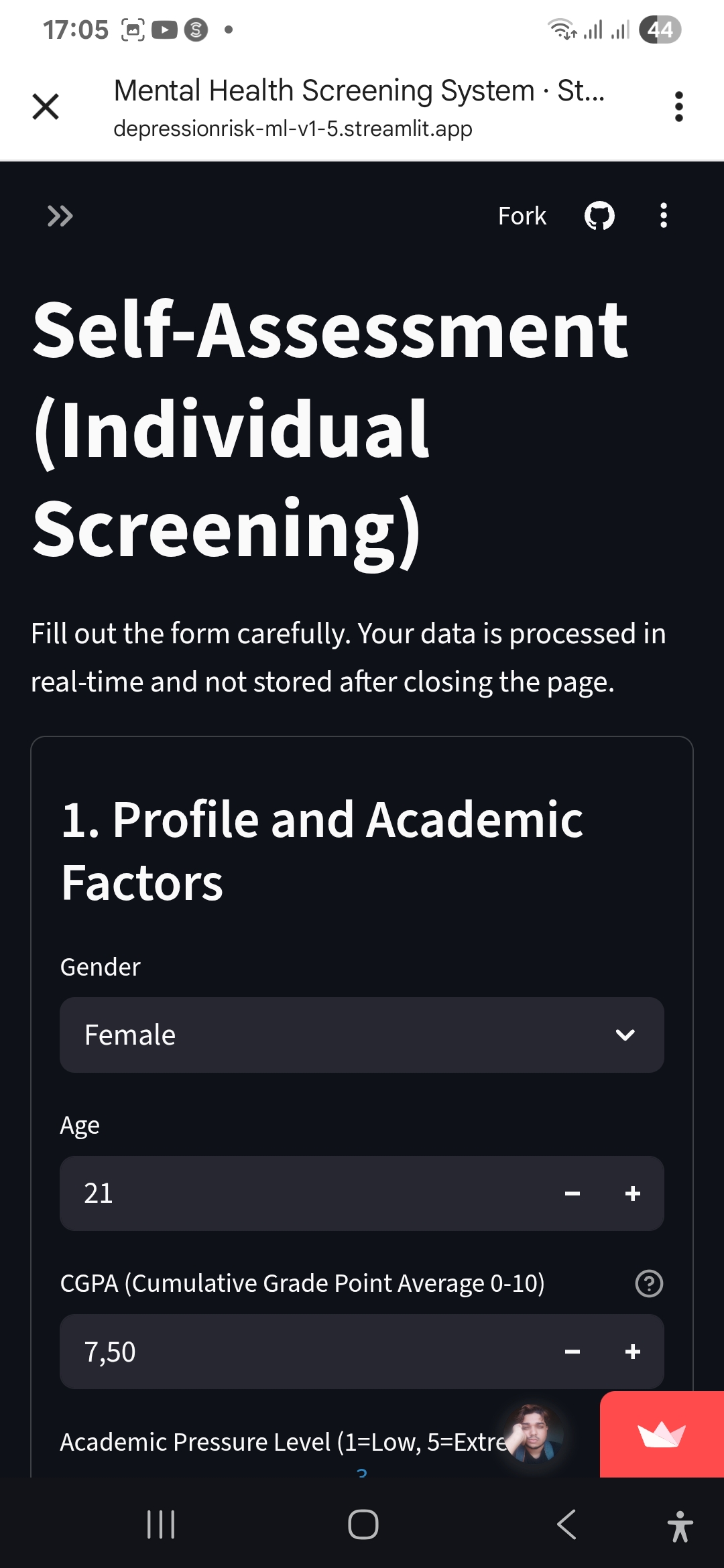
The model analyzes variables such as:
- Study or work workload;
- Sleep duration and quality;
- Financial stress levels;
- Academic or professional satisfaction;
- Family history of mental illness;
- Lifestyle habits.
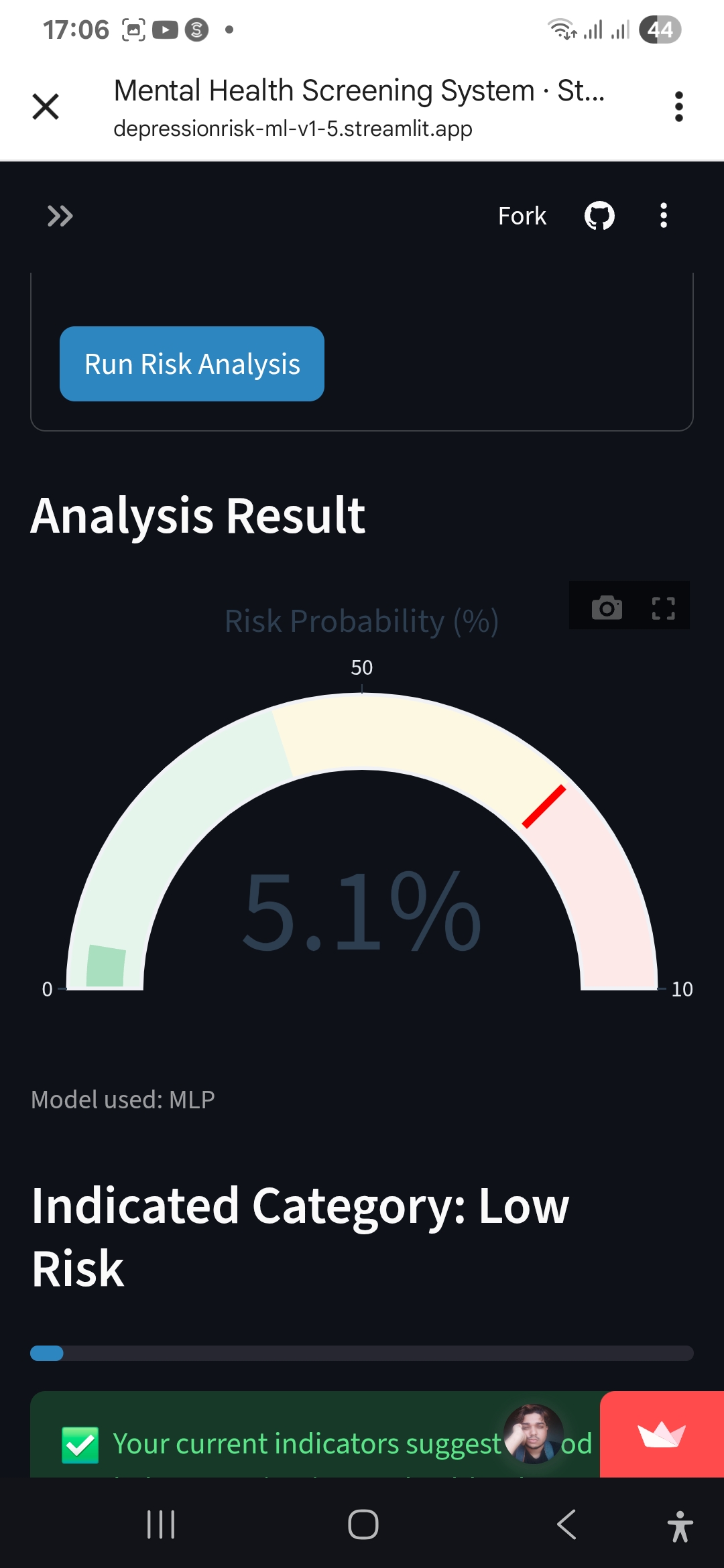
Based on these features, the system classifies depression risk, with a strong emphasis on high recall, minimizing false negatives in high-risk cases.
Explainability with XAI (SHAP)
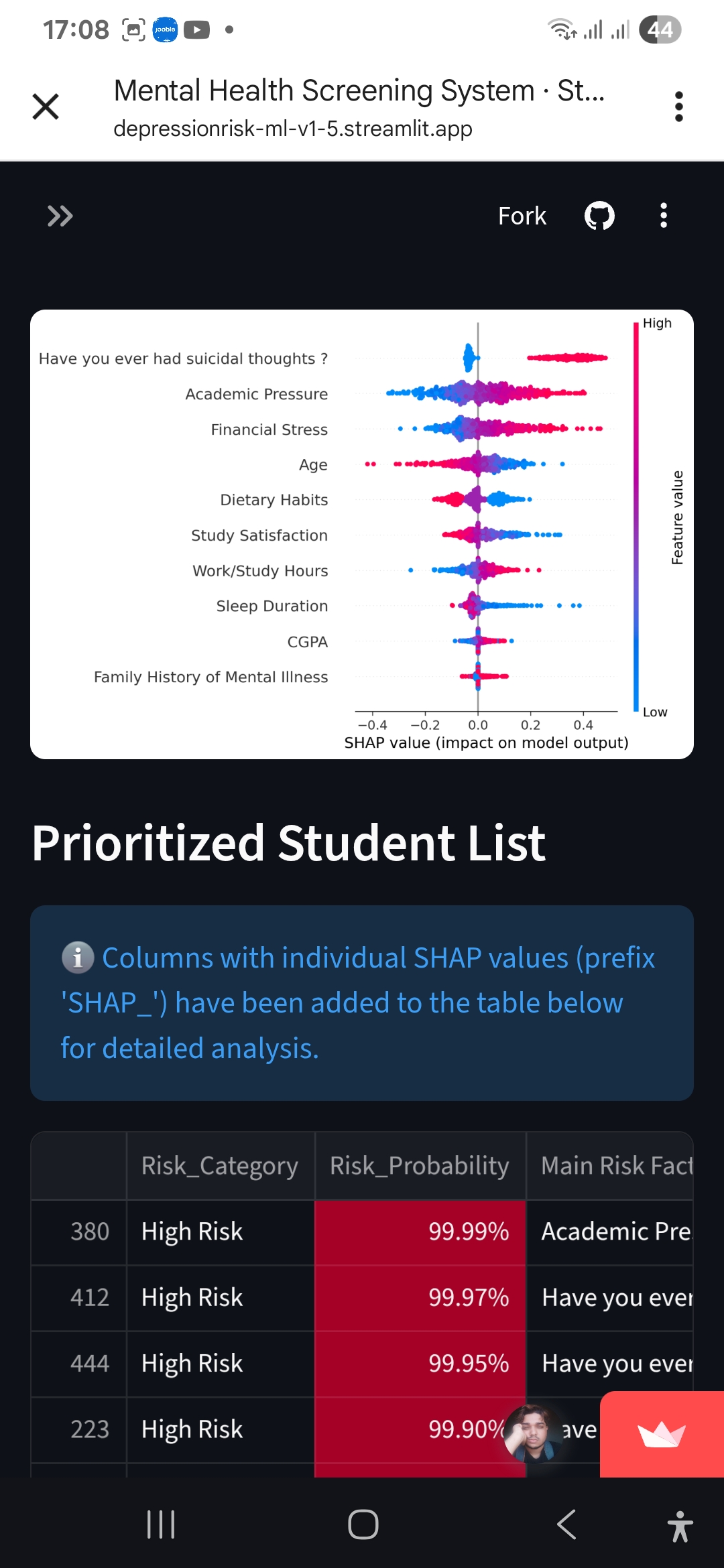
Every prediction is accompanied by SHAP-based explanations, enabling:
- Identification of the most influential features;
- Understanding whether each feature increases or decreases risk;
- Quantification of feature-level impact for each individual prediction;
- Comparison between local (individual) and global (population-level) explanations.
This ensures:
- Algorithmic transparency;
- User and institutional trust;
- Bias detection and mitigation;
- Responsible AI deployment in sensitive domains.
Data-Driven Decision Support
The system functions as:
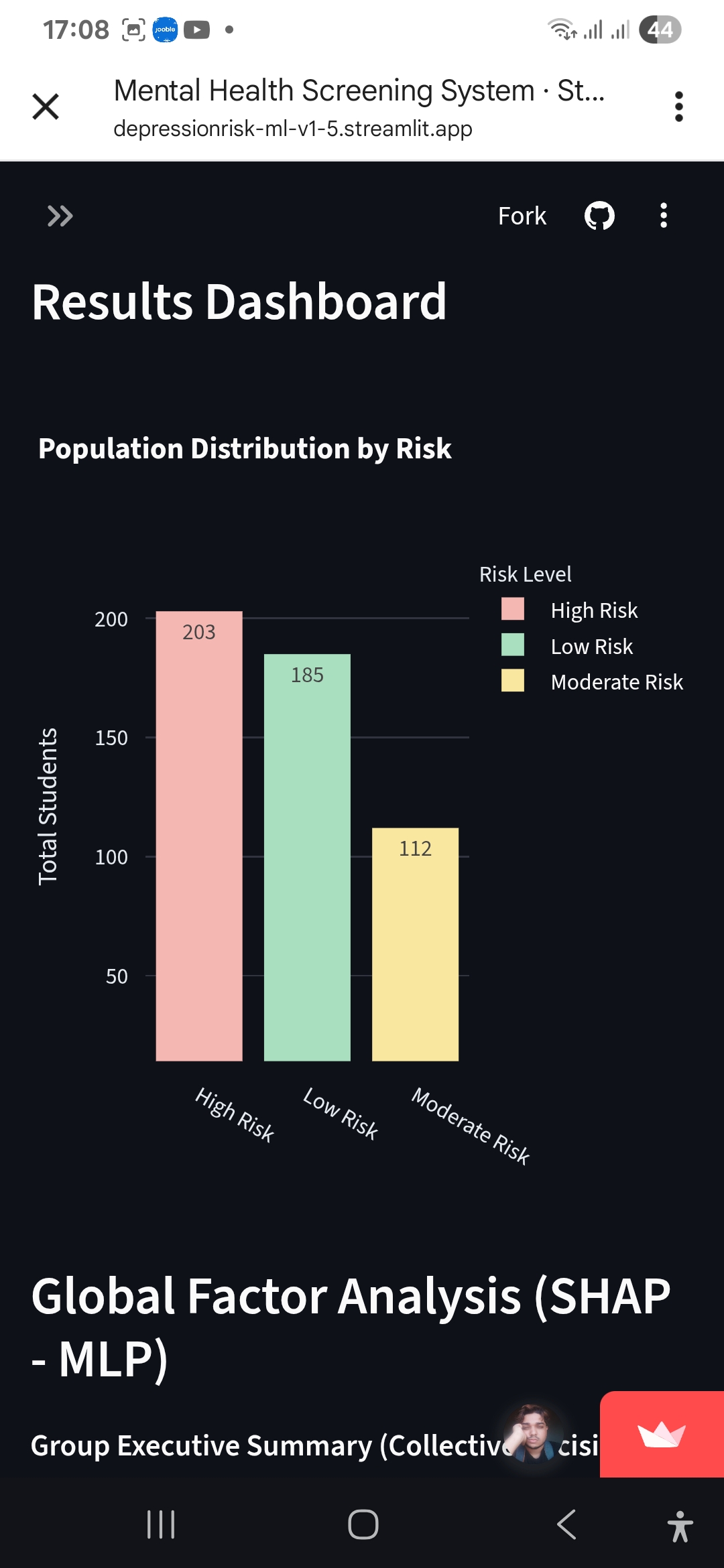
- An early screening and triage tool;
- A prioritization mechanism for psychosocial support;
- A data-informed foundation for institutional prevention strategies.
It explicitly does not replace clinical diagnosis, but provides interpretable insights to support human decision-making.
Target Users and Beneficiaries
The project primarily benefits:
- University students
- Young adults under high psychological pressure
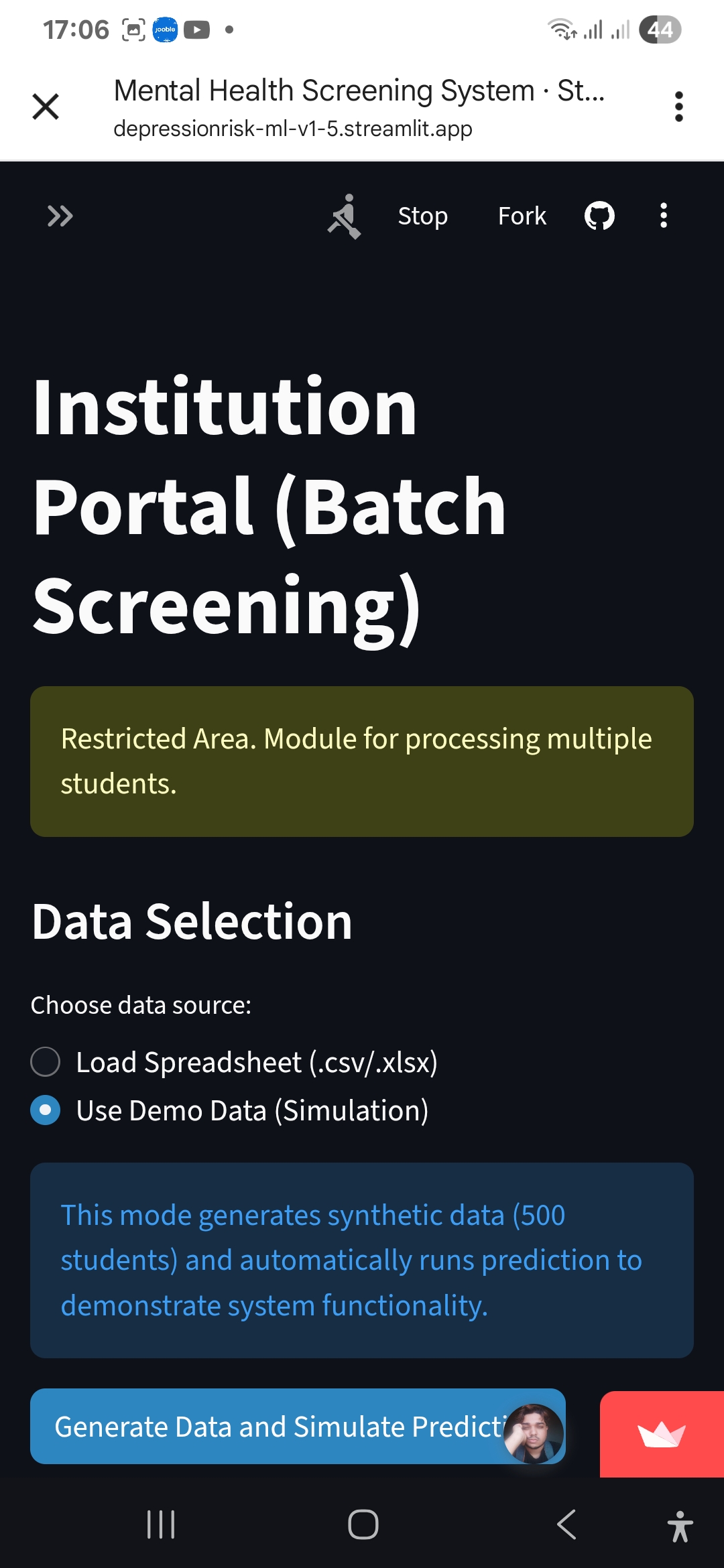
- Educational institutions
- Public or private mental health support programs
It is especially relevant for underserved and marginalized communities, where:
- Mental health resources are scarce;
- Preventive action is more effective than late intervention;
- Scalable and low-cost tools are critically needed.
Measurable Impact
Technical Metrics
- Accuracy, precision, recall, and F1-score;
- Strong focus on minimizing false negatives;
- Model stability across cross-validation folds.
Explainability Metrics
- Frequency and consistency of top SHAP features;
- Alignment between SHAP explanations and established mental health literature;
- Feature impact analysis across different user profiles.
Social Impact Metrics
- Number of users screened;
- High-risk cases successfully prioritized;
- Potential scalability in educational and community settings.
Impact Statement
Depression Risk AI addresses a critical real-world need: ethical, explainable, and preventive AI for mental health.
By integrating:
- machine learning,
- explainability through SHAP,
- a strong focus on vulnerable populations,
the project demonstrates how AI can move beyond prediction to empower understanding, accountability, and informed action. Even as a prototype, the system lays a solid foundation for real-world deployment in educational and community-based mental health initiatives.
Next Steps
- Incorporation of longitudinal data;
- Integration with institutional systems;
- User-centered evaluation studies;
- Interactive explainability dashboards;
- Collaboration with mental health professionals.
Built With
- python
- streamlit
- streamlit-clound


Log in or sign up for Devpost to join the conversation.