-
-
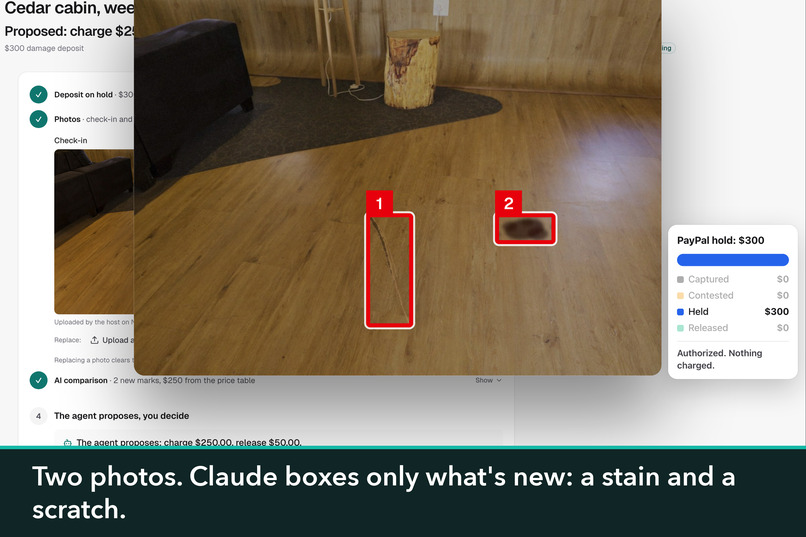
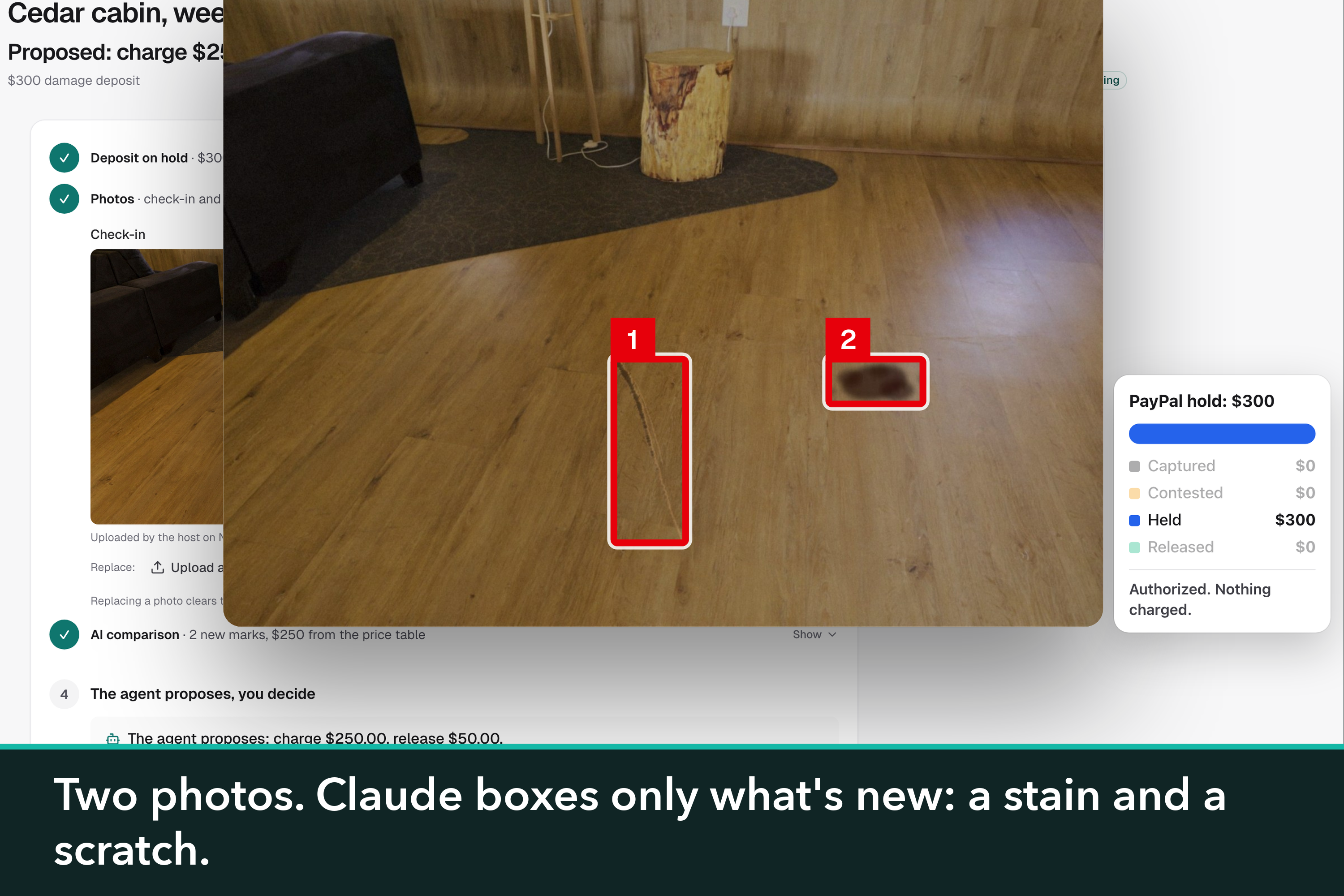
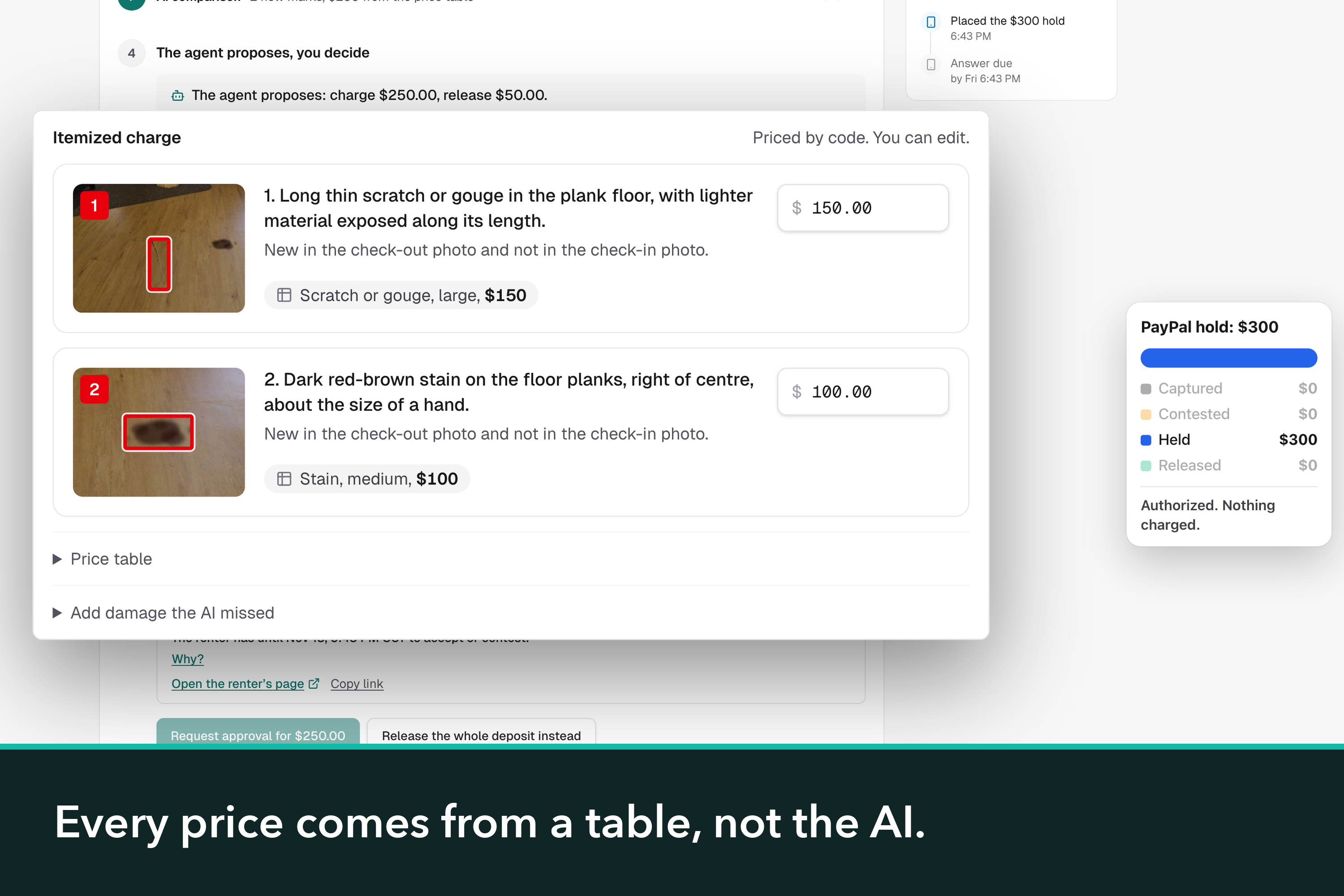
Two photos. Claude boxes only what's new: a stain and a scratch.
-
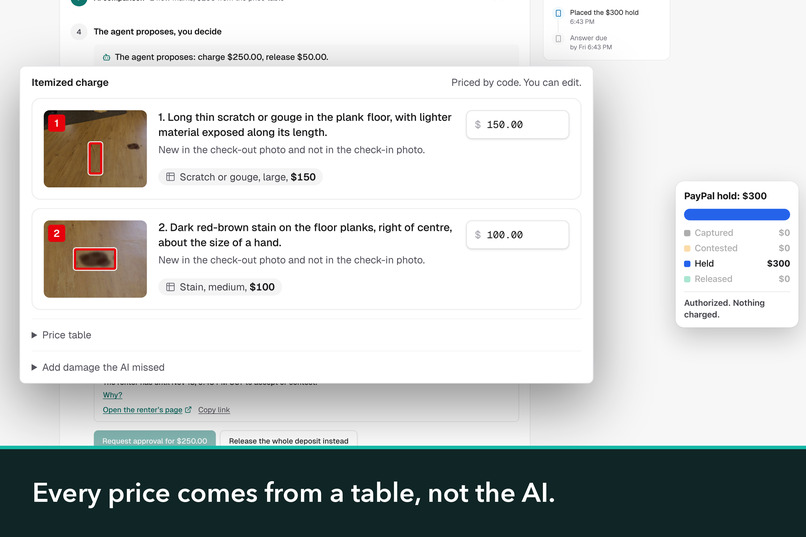
Every price comes from a table, not the AI.
-
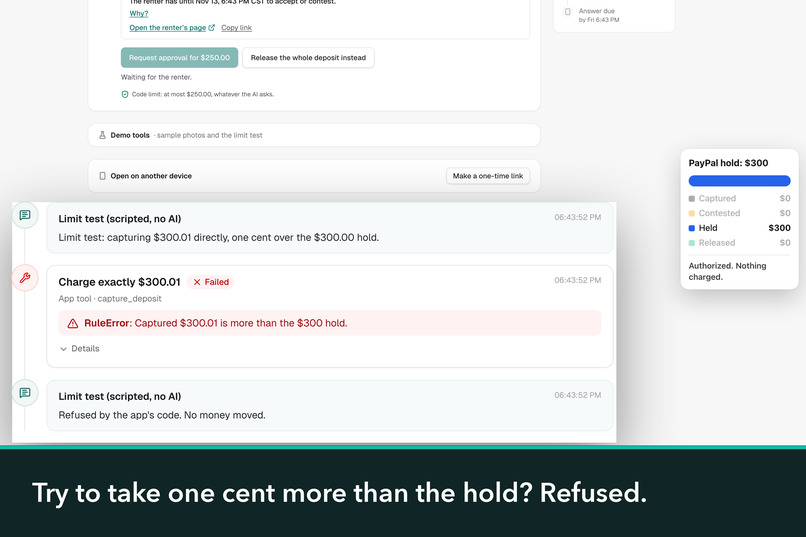
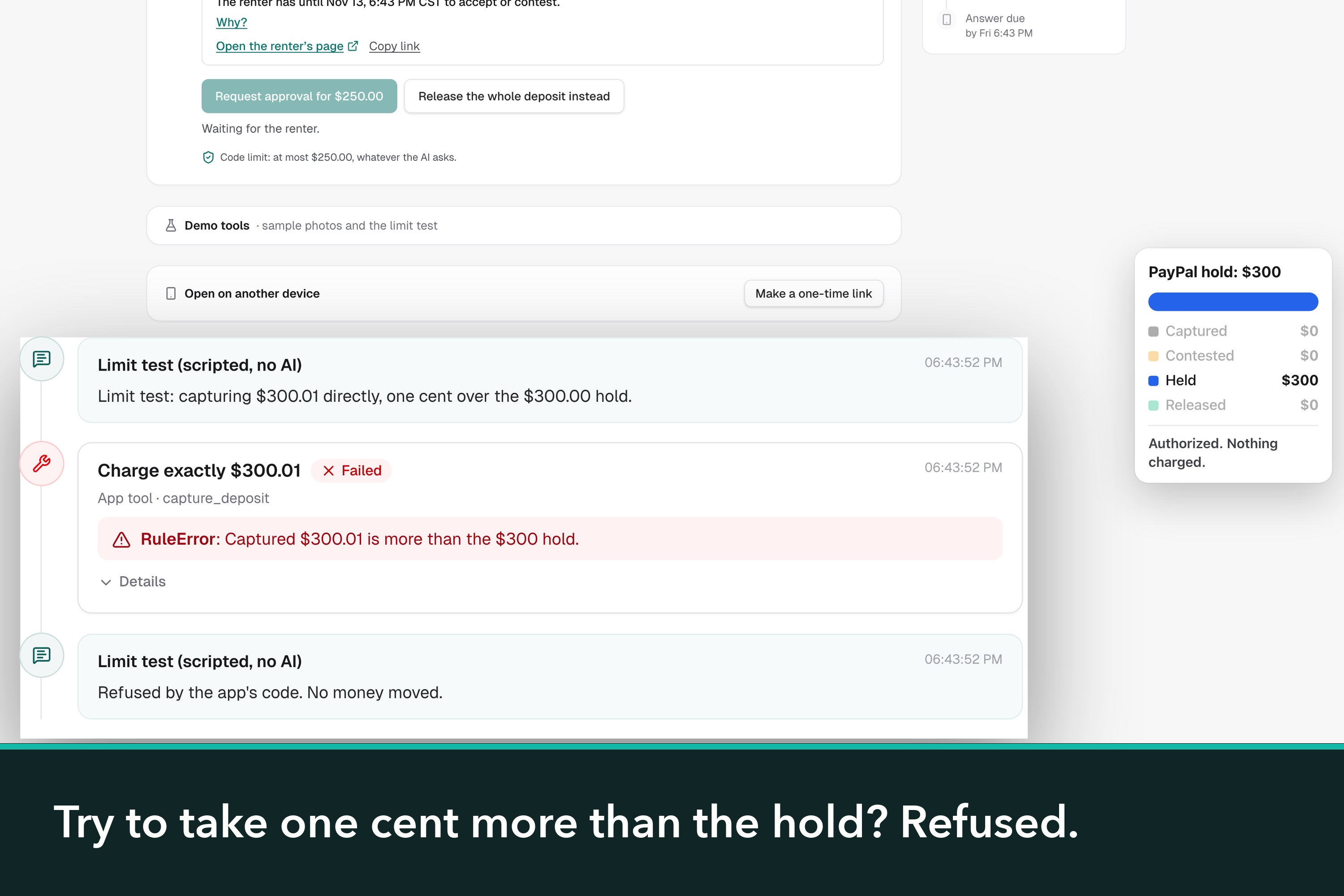
Try to take one cent more than the hold? Refused.
-
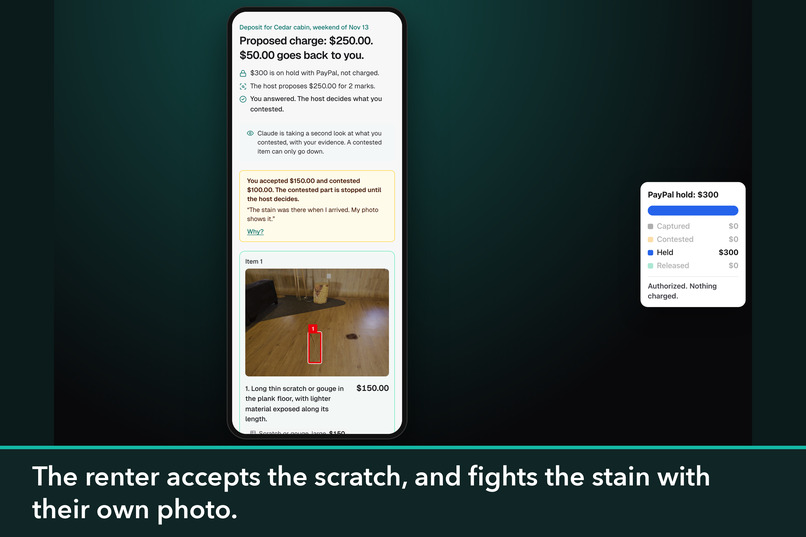
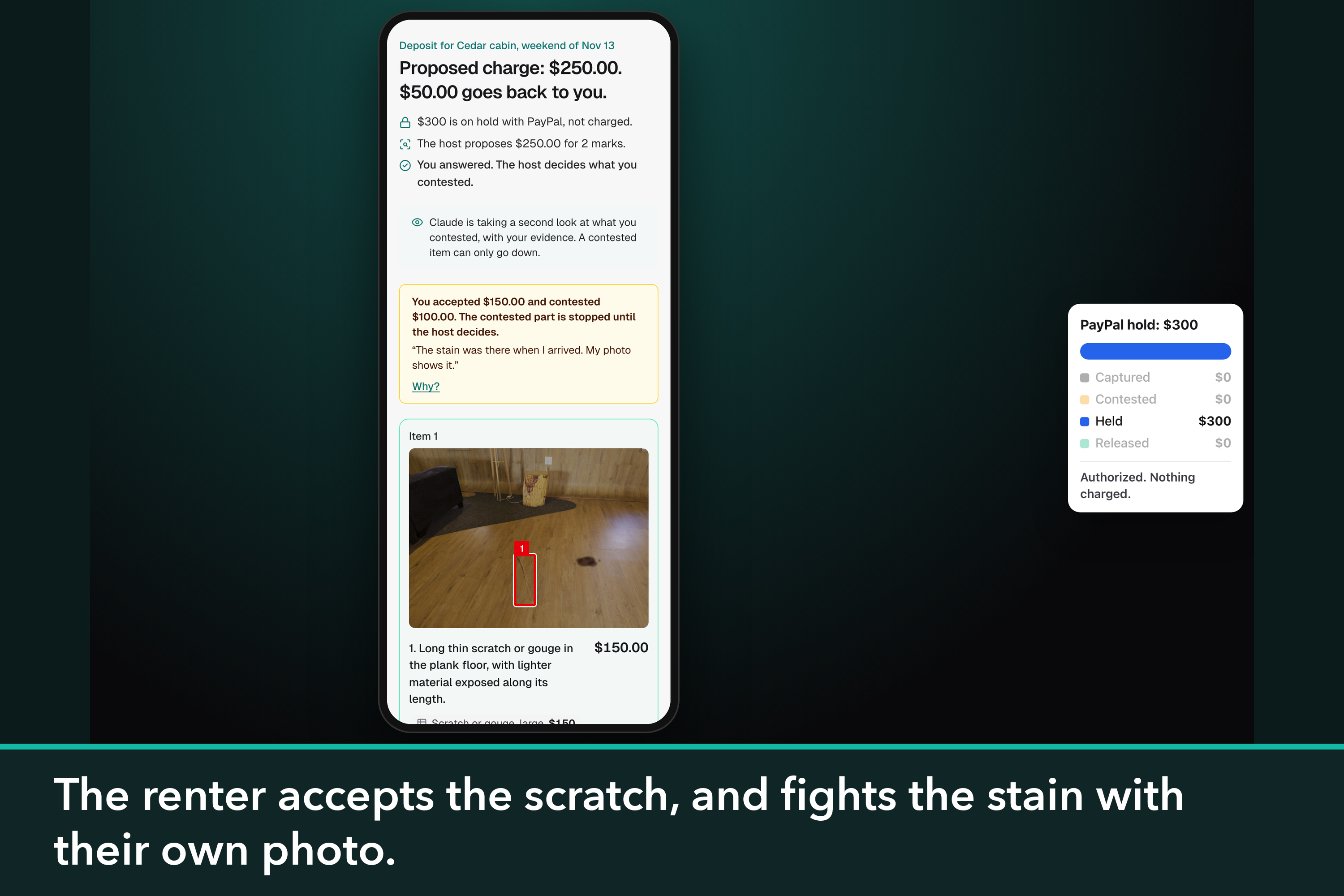
The renter accepts the scratch, and fights the stain with their own photo.
-
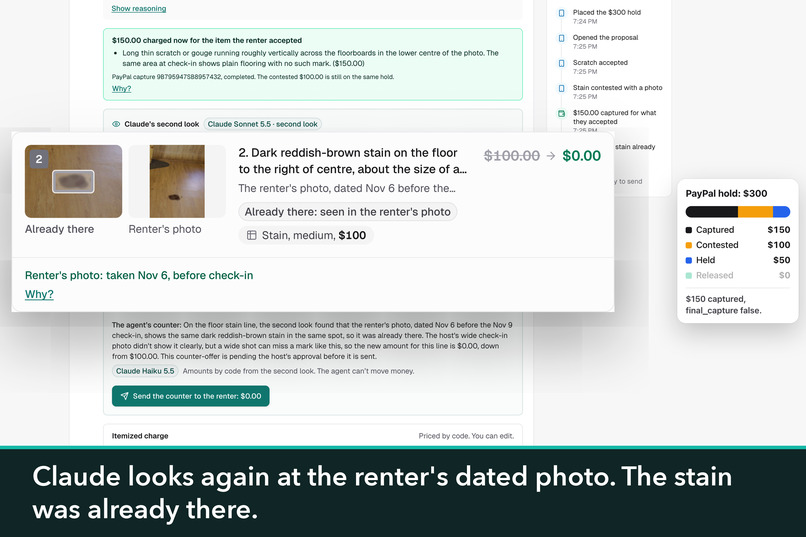
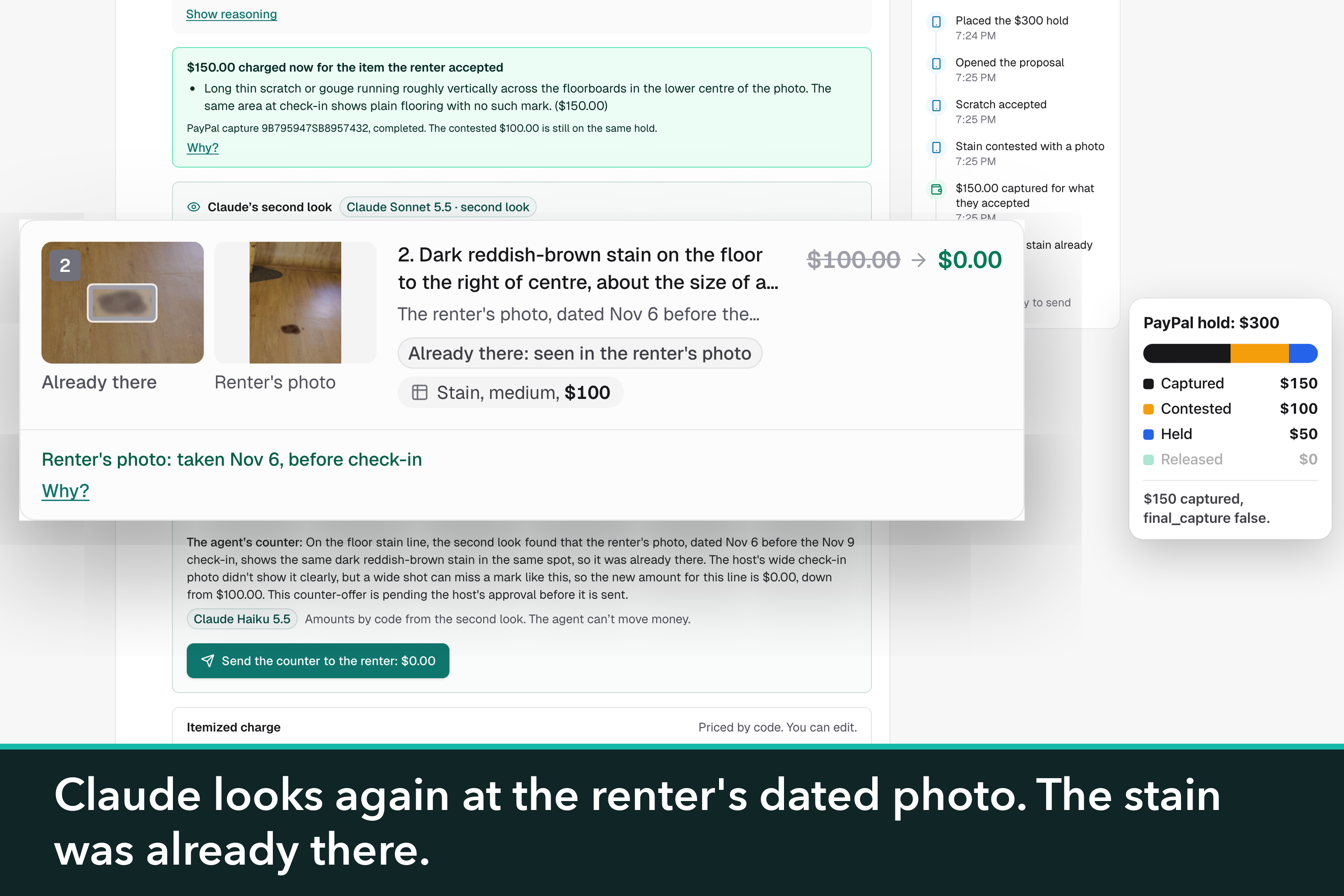
Claude looks again at the renter's dated photo. The stain was already there.
-
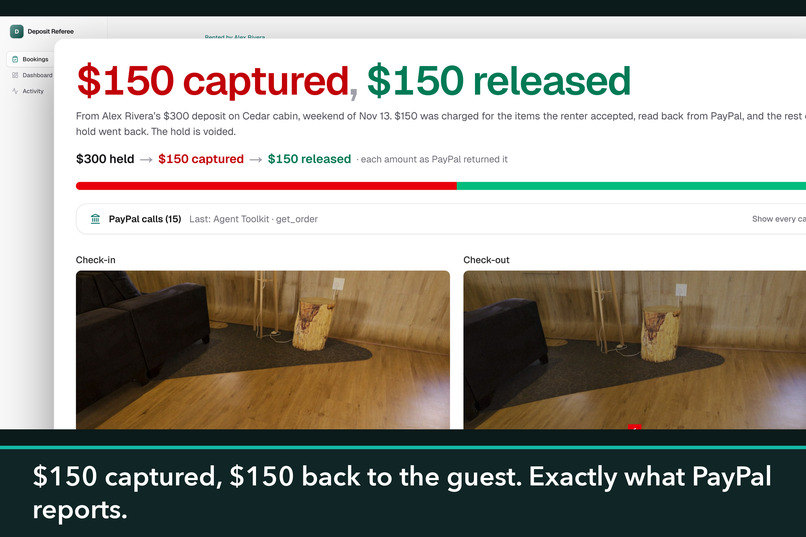
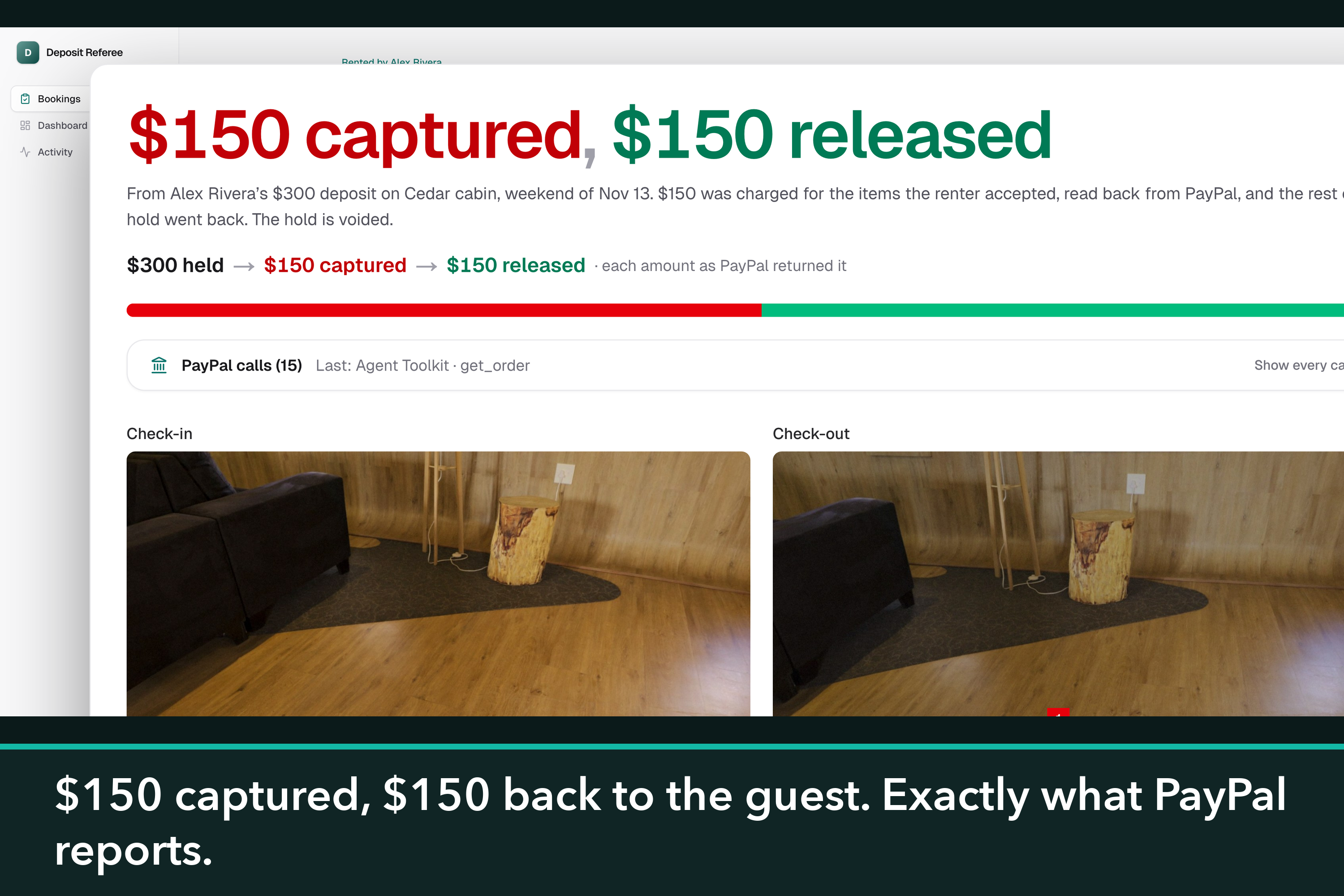
$150 captured, $150 back to the guest. Exactly what PayPal reports.
-
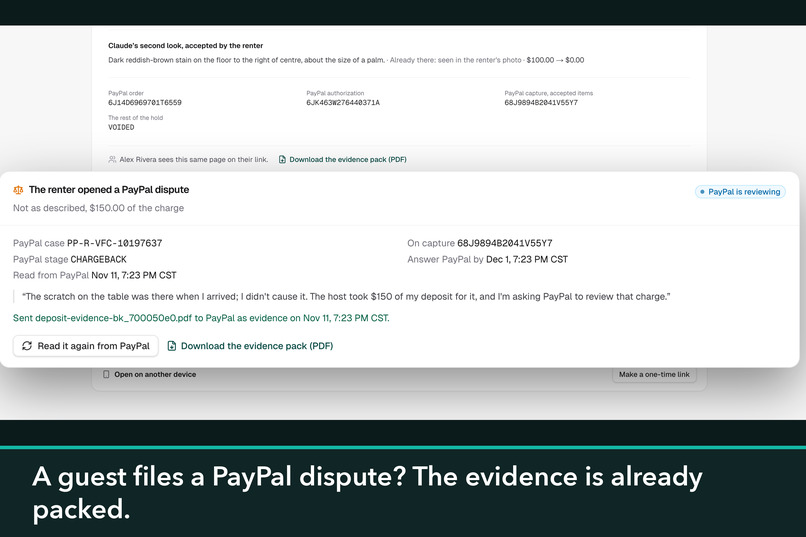
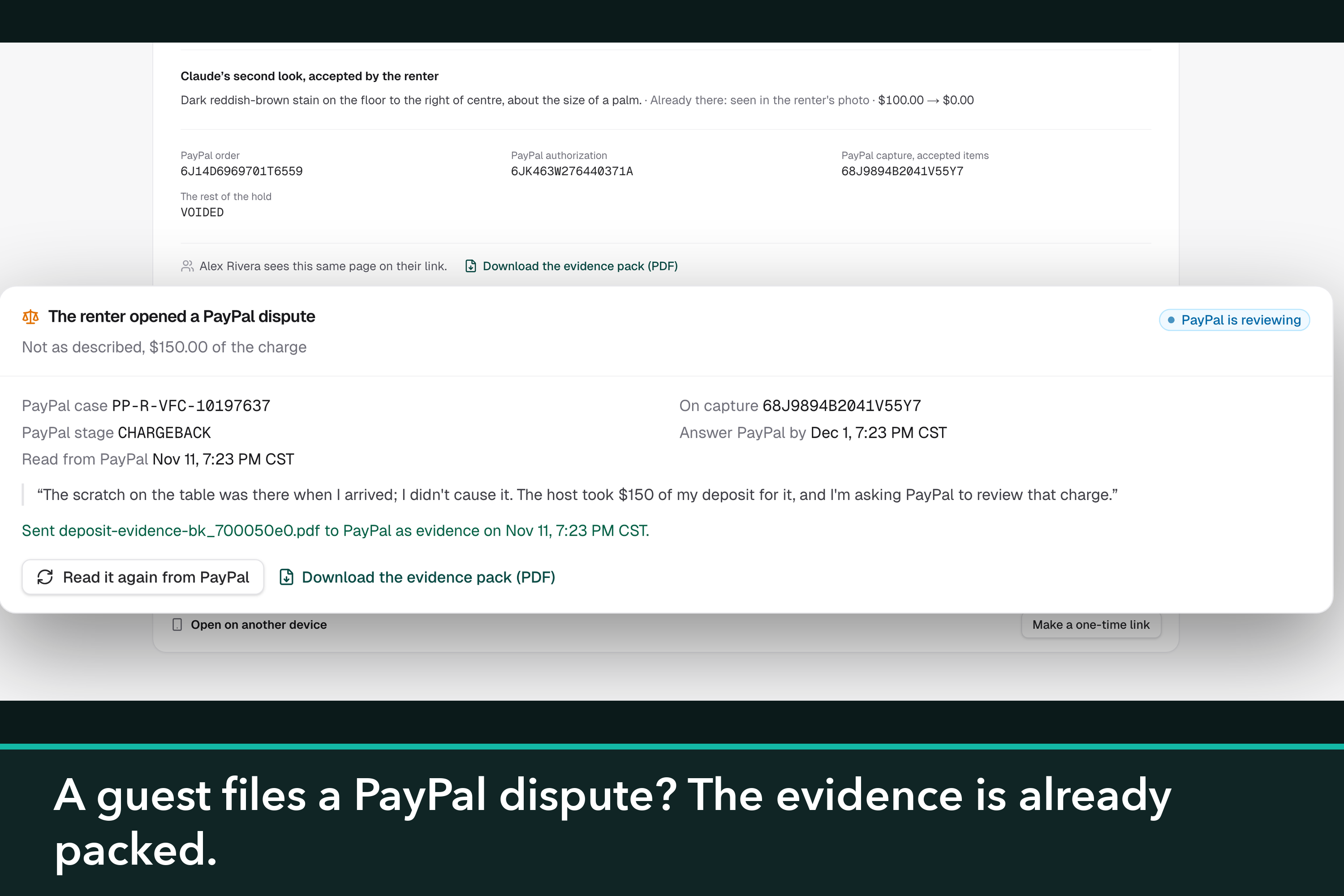
A guest files a PayPal dispute? The evidence is already packed.
Inspiration
A guest leaves. There is a new scratch on the floor. The guest says it was already there. Hosts who rent a cabin, a room or gear from their own site have no platform damage protection, so the host keeps the deposit and risks a chargeback, or lets it go. We wanted a third way. The money stays on a PayPal hold while both sides look at the same evidence, and only what the host approves ever moves.
What it does
A host rents out a lakeside cabin and asks for a $300 deposit. The renter places it as a PayPal authorization, so nothing is charged. After the stay, the host finds a scratch and a stain. From here the app runs the argument:
- The host adds check-in and check-out photos. Claude compares them and draws a box only around what is new.
- Each mark is priced from a table in code, so the AI never sets an amount.
- The renter opens their own link and sees one card per line, with its photo and price row. They accept or contest each.
- A contested line can carry the renter's own photo. Claude takes a second look, and the amount can only fall.
- The host approves. PayPal captures that amount and voids the rest.
- If the renter disputes the charge with PayPal, the host sends an evidence pack.
How we built it
All four of our entries share an open starter kit: Next.js, the PayPal Agent Toolkit behind a Guard that enforces money limits and human approval, and a timeline of every PayPal call. This entry's own work is:
- the hold flow and the split capture
- the photo review and the second look
- the price table
- the accept and contest pages
- the dispute pack
PayPal calls are Orders v2 (intent AUTHORIZE), Payments v2 capture and void, webhooks and Disputes v1. The first capture uses final_capture: false, so the contested part waits on the same hold. Claude Sonnet 5.5 reads the photos. Claude Haiku 5.5 runs the settlement agent, which proposes and then stops; it has no tool that can move money.
The PayPal ledger, the activity log and the host's deposit dashboard are AG Grid (Community) tables, and the app is hosted on Render.
Challenges we ran into
- PayPal cannot shrink a hold, so the app's own limit keeps the second charge to the contested amount.
- A hold is guaranteed for 3 days, so a late charge first refreshes it. The sandbox cannot age a hold, so unit tests on a mocked clock prove it.
- PayPal takes dispute evidence differently for an inquiry and a claim, so code reads the links on the dispute record to choose.
Accomplishments that we're proud of
- Code refuses a capture one cent over the hold, and a button lets a judge watch it refuse.
- In a blind test of 10 photo pairs on the real API, nothing was falsely charged. The sample is small, so real photos may do worse.
- A faint or low-confidence mark is never charged. It goes under "Worth a look", and the host decides.
What we learned
Several captures on one authorization let accepted items be charged while contested ones wait. Letting the model name a verdict while code sets the amount made the money easy to test.
What's next
Long leases do not fit a 29-day hold. Next are more real photo tests and a review for live mode.
Built With
- ag-grid
- anthropic-sdk
- claude
- claude-haiku-5.5
- claude-sonnet-5.5
- next.js
- paypal
- paypal-agent-toolkit
- paypal-disputes
- paypal-js-sdk
- paypal-orders-v2
- paypal-payments-v2
- paypal-webhooks
- react
- render
- tailwindcss
- typescript
- zod
