-
-
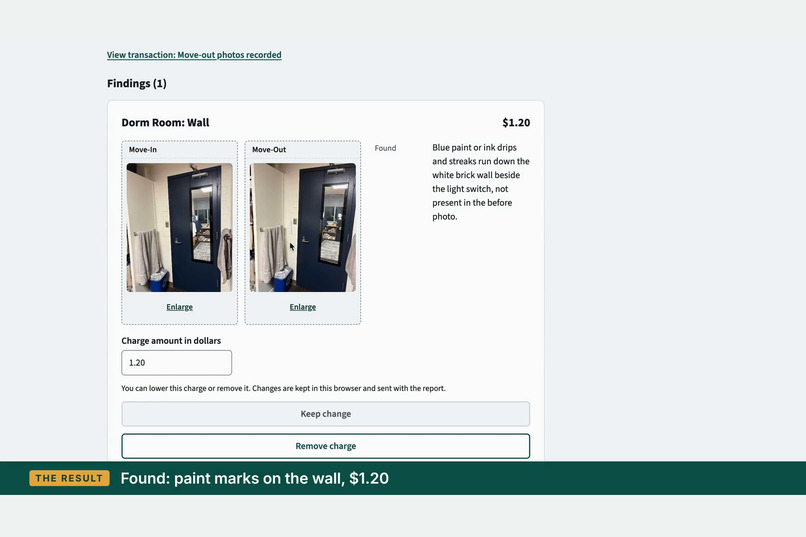
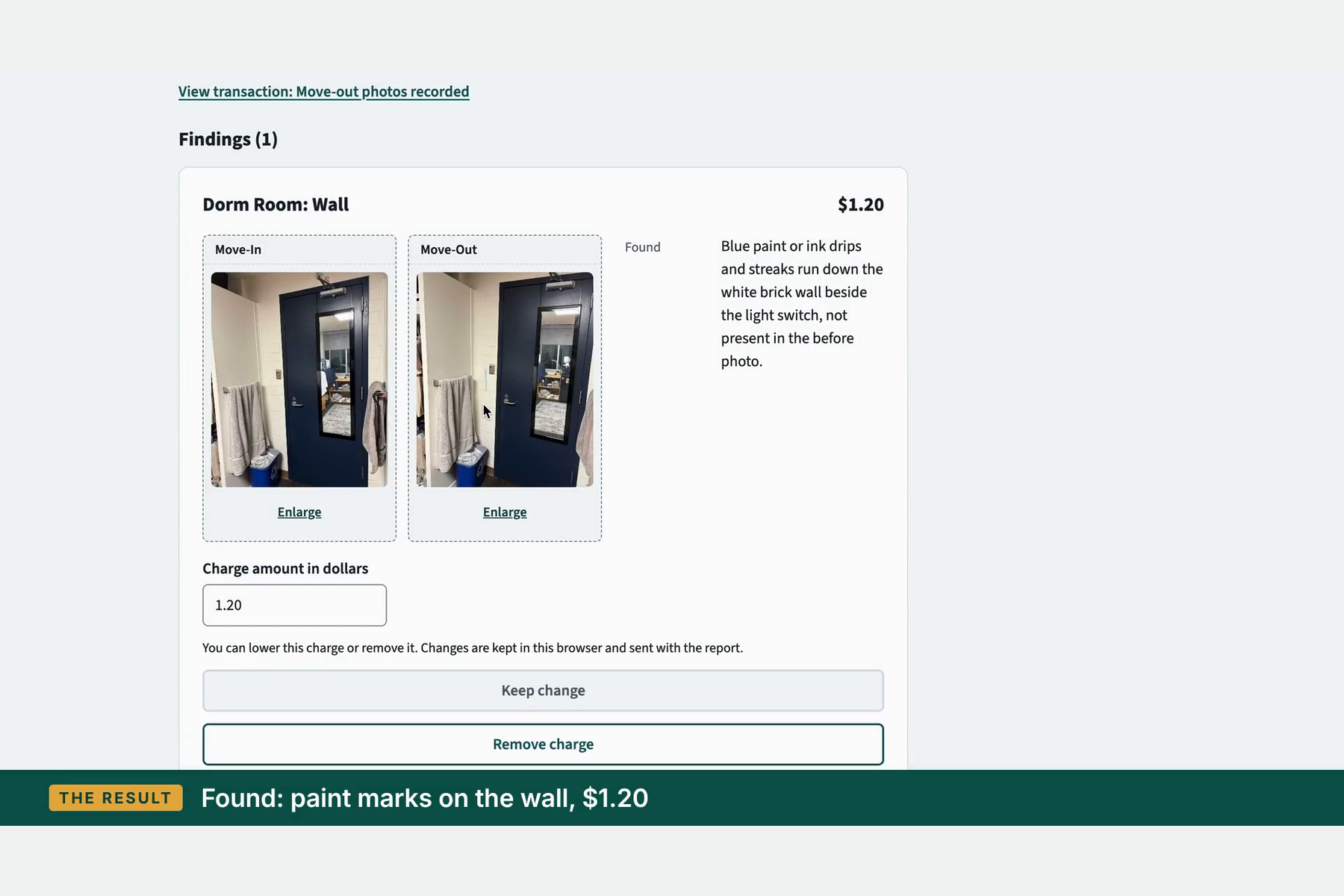
The AI finds paint marks on the wall: $1.20. The landlord can lower or remove a charge, never raise it.
-
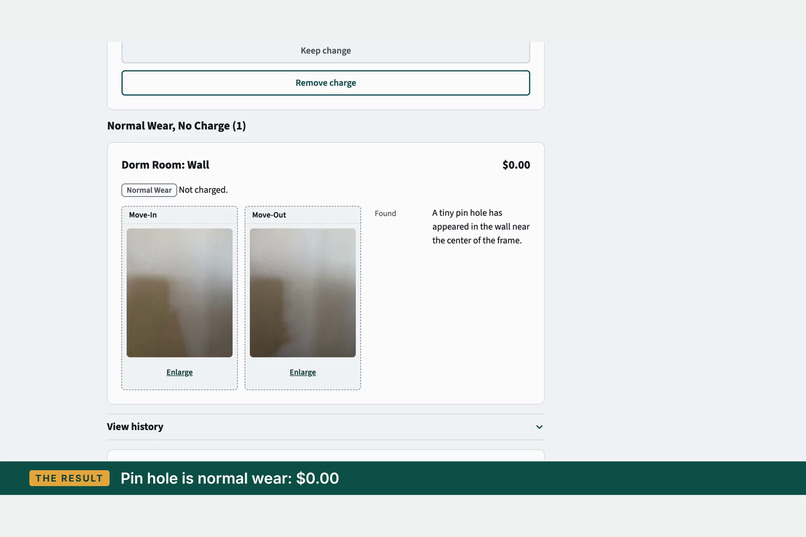
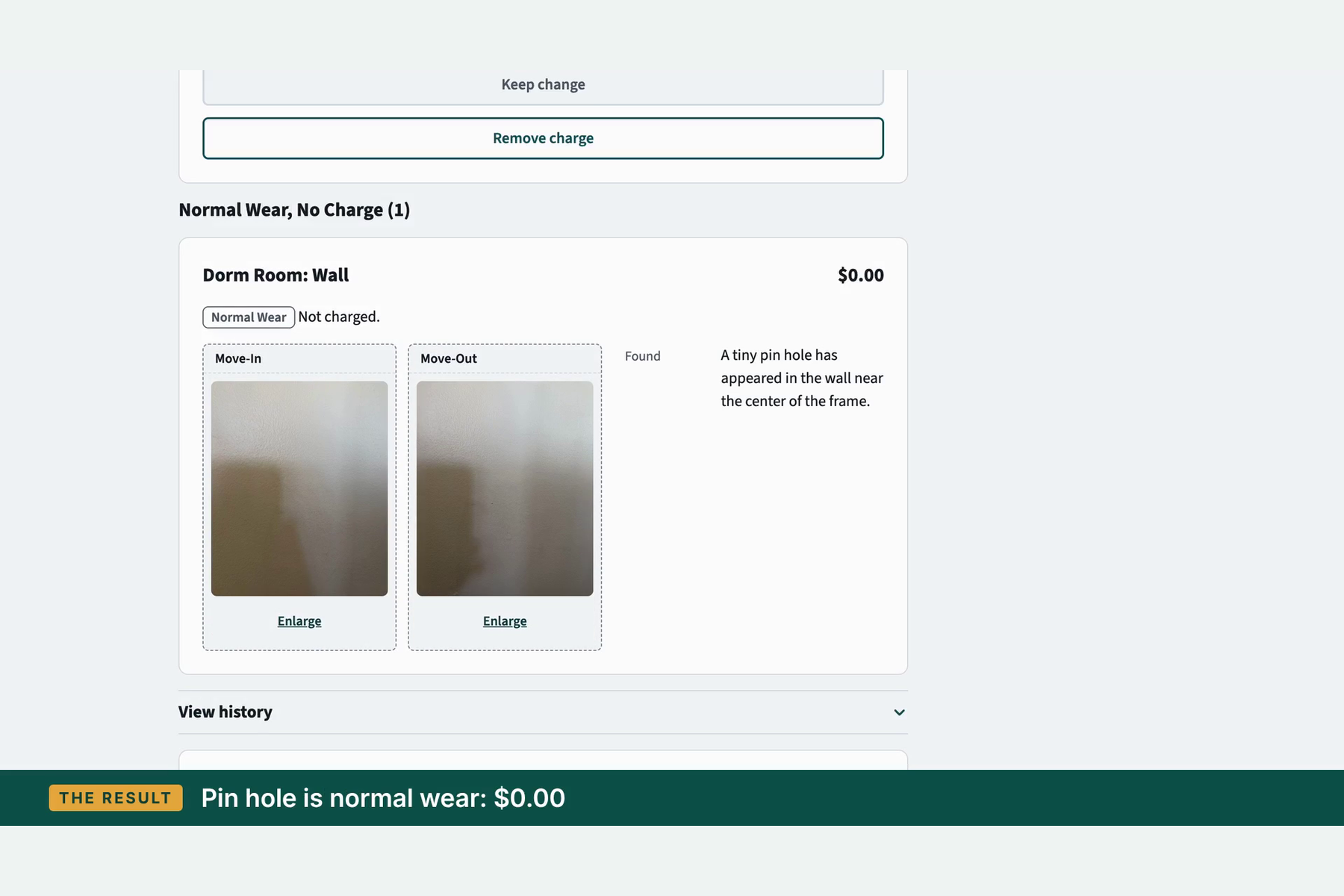
A small pin hole is flagged as normal wear and costs $0.00. Normal wear is never charged.
-
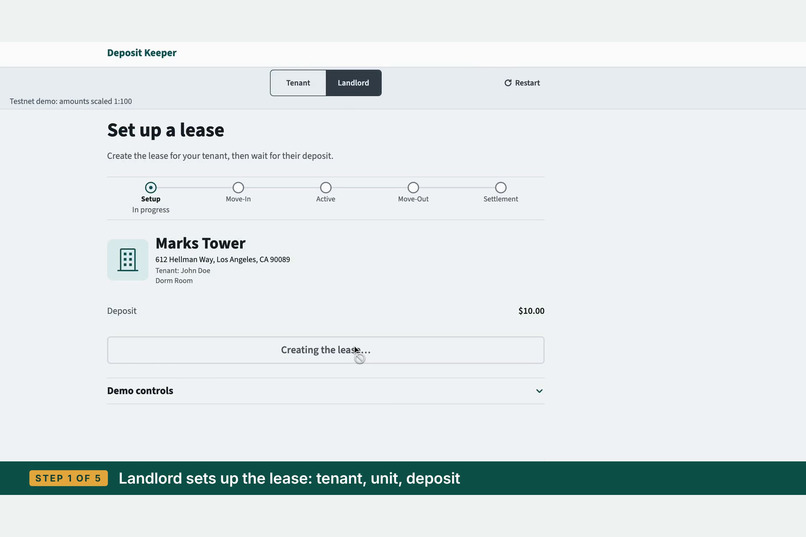
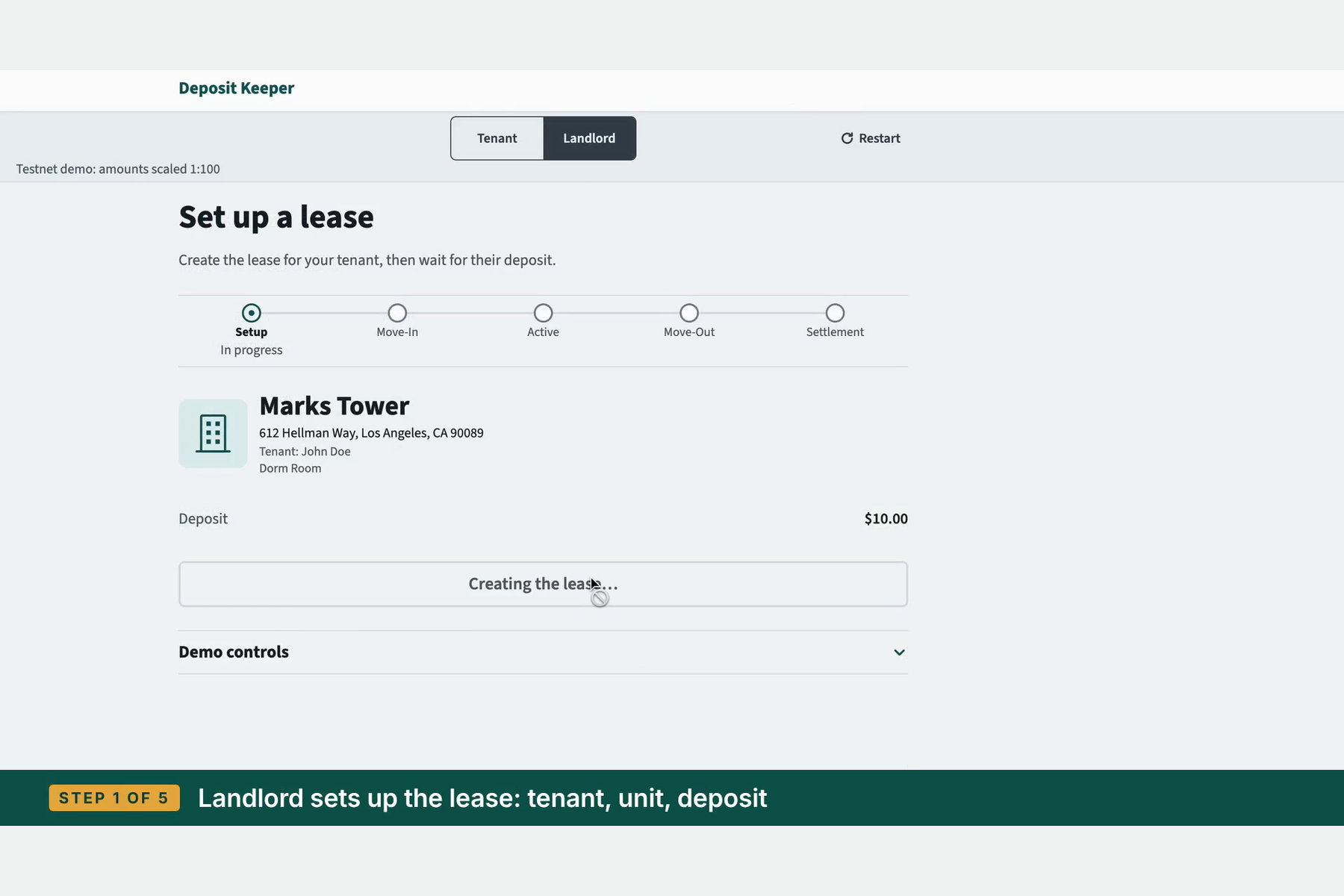
The landlord creates the lease. The tenant is invited and pays the deposit into USDC escrow on Arc.
-
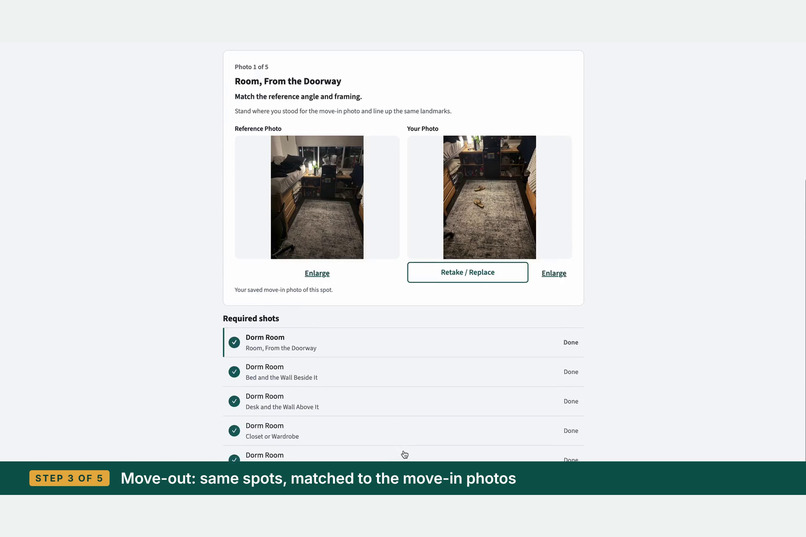
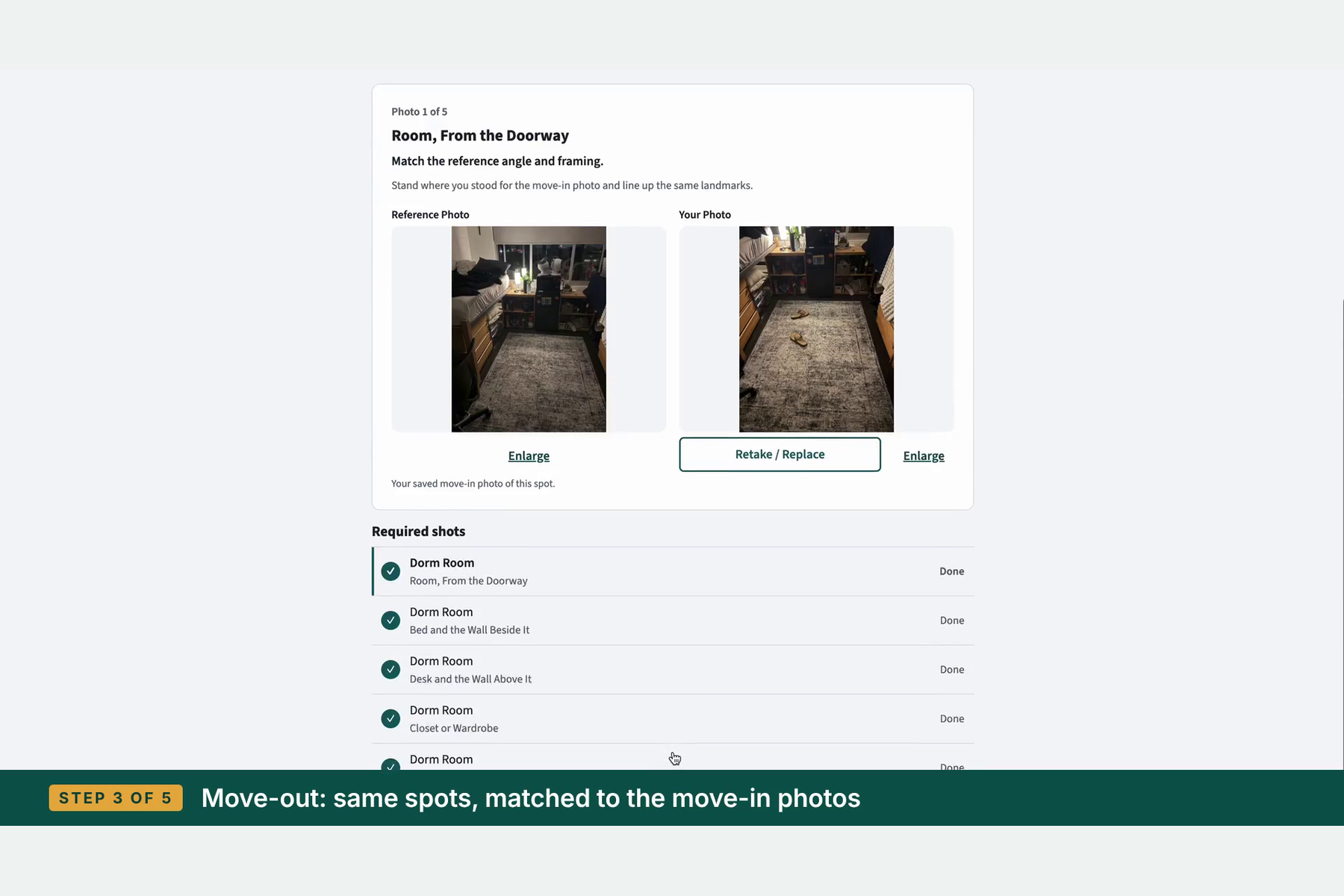
Move-out photos are guided: the tenant sees the original photo and shoots the same angle again.
-
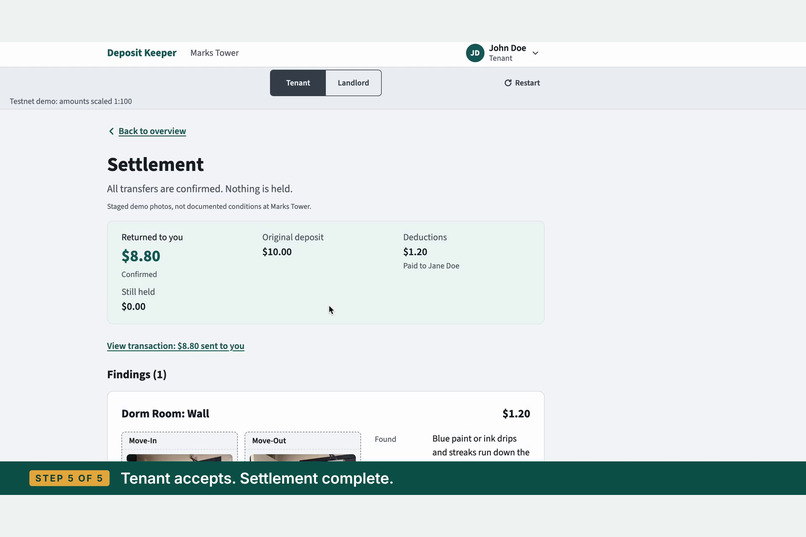
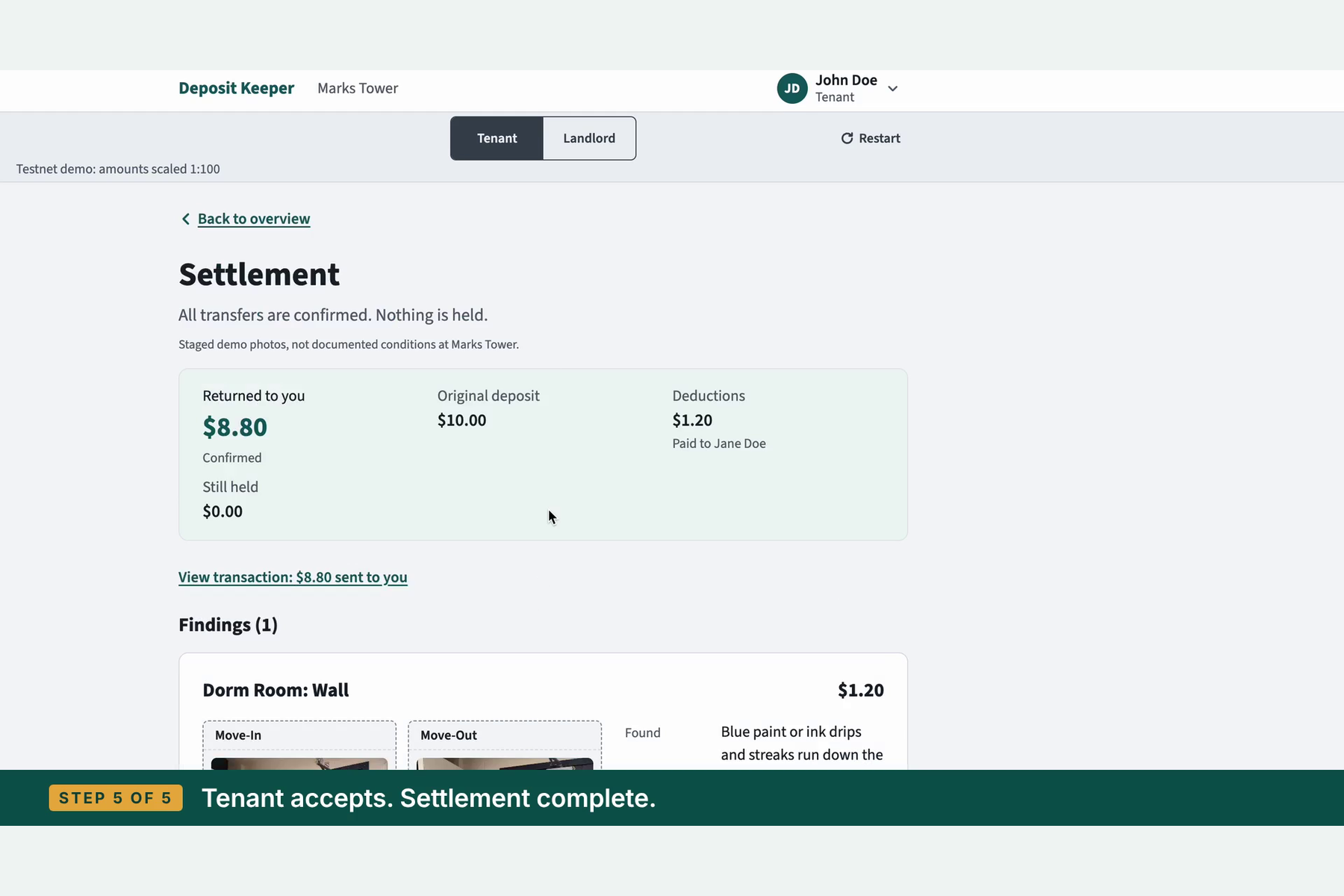
The tenant accepts. $8.80 goes back to the tenant, $1.20 to the landlord, and nothing is held.
-
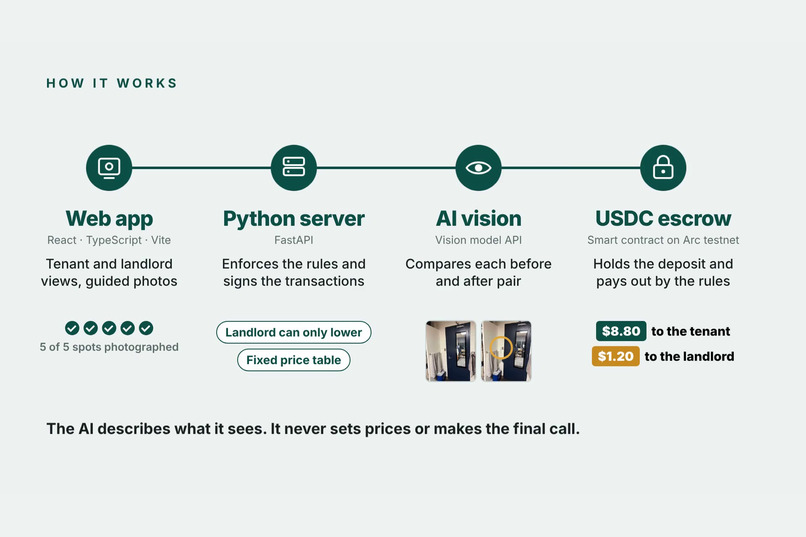
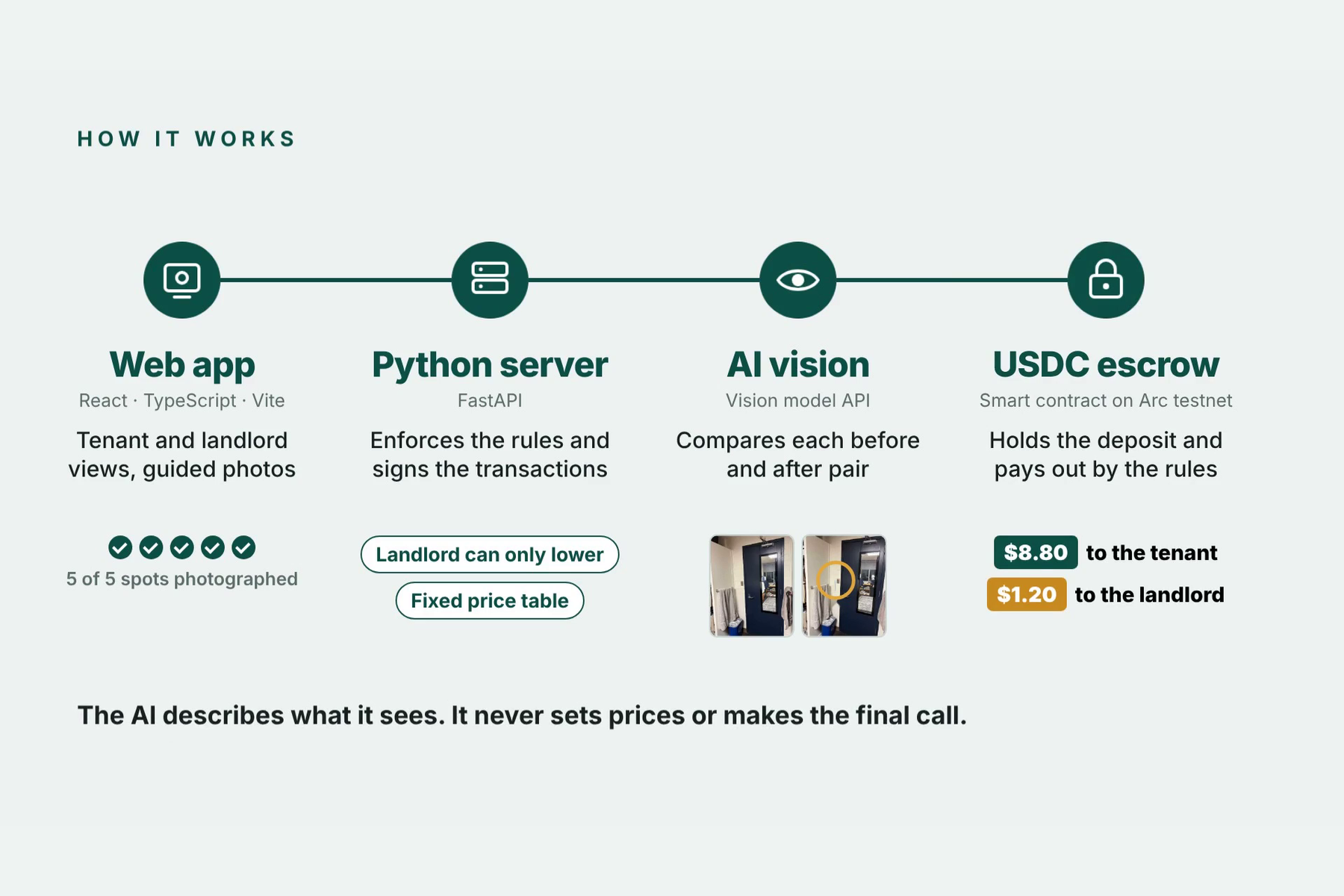
Four parts: a web app, a Python server, AI vision and a USDC escrow contract on Arc.
-
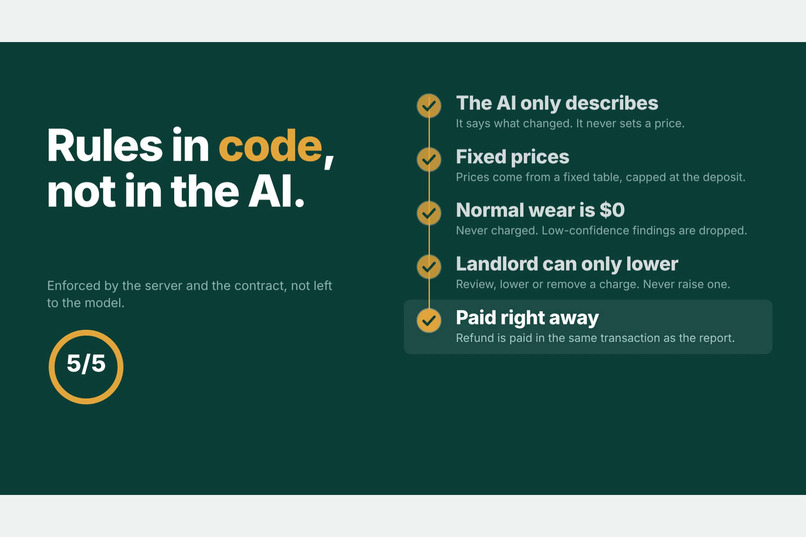
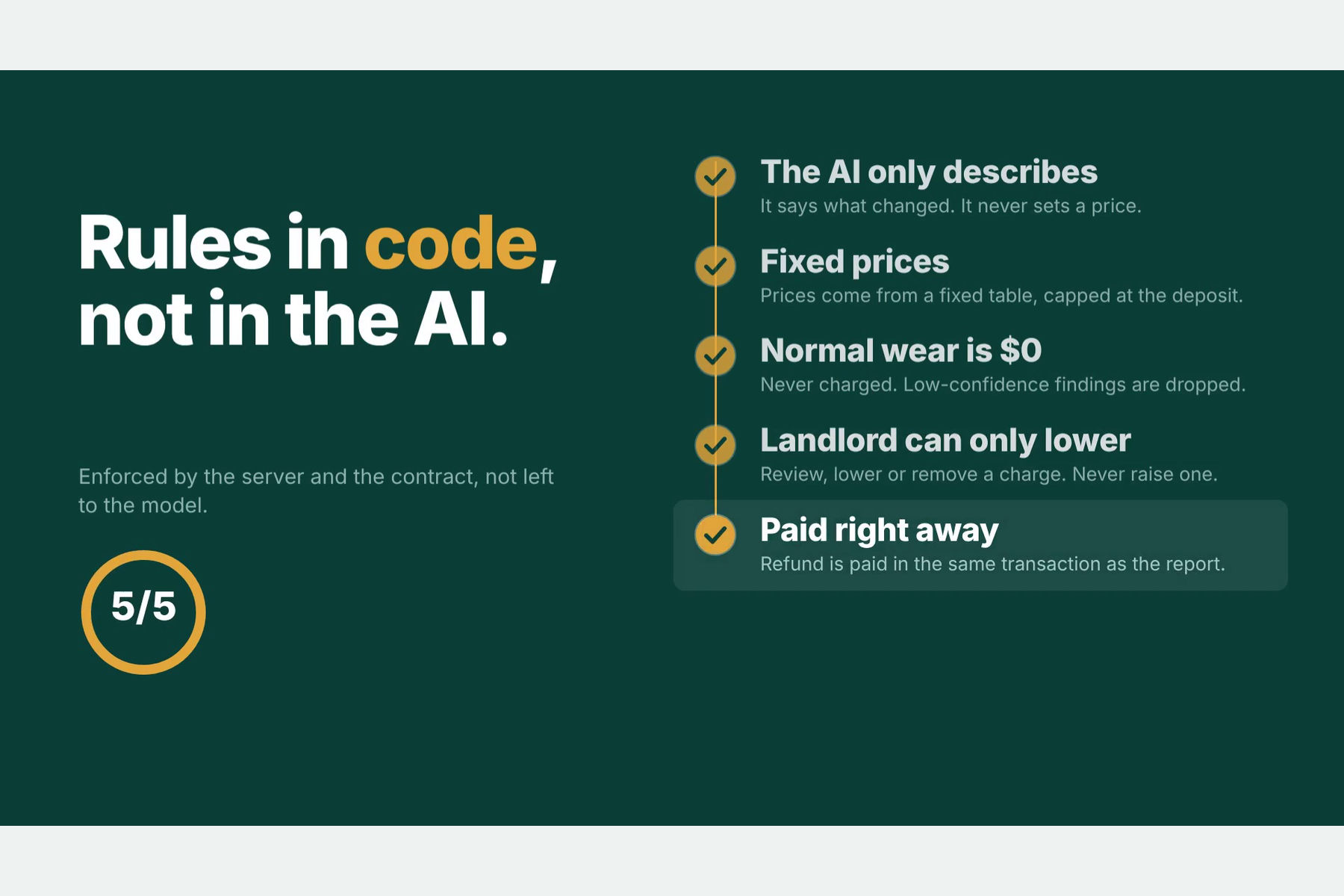
The rules live in code, not in the AI. Fixed prices, normal wear is $0, and the landlord can only lower charges.
-
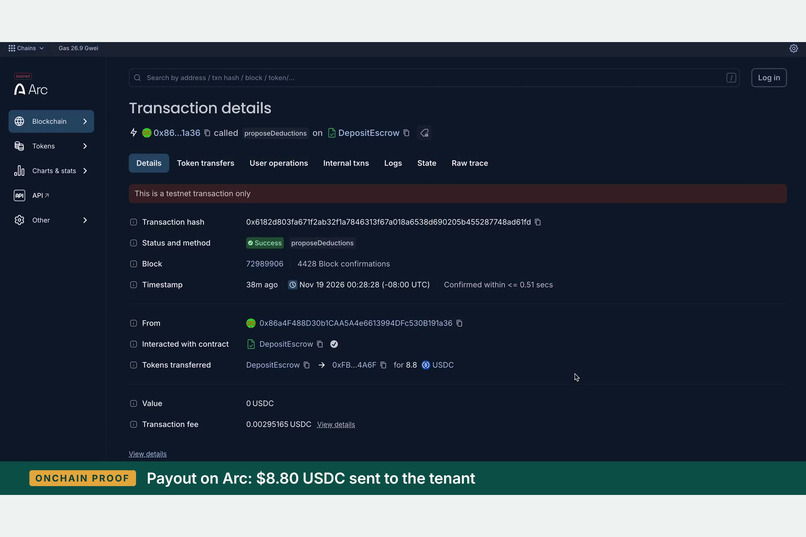
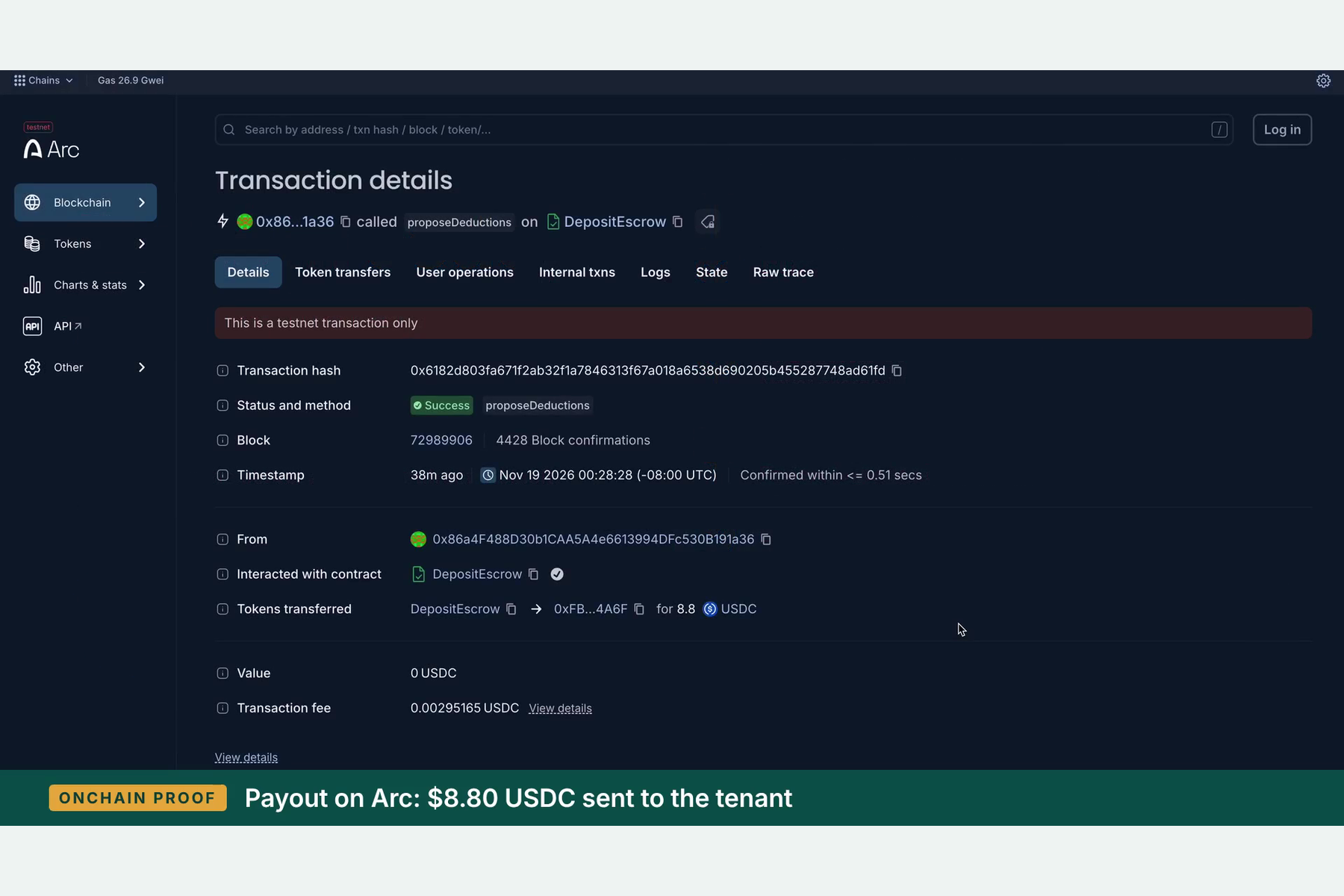
The $8.80 refund as a real transaction on the Arc explorer, paid in the same transaction as the landlord’s report.
Inspiration
In California, a landlord has 21 days after move-out to return a rental deposit or send an itemized statement (Civil Code §1950.5). In practice, tenants wait weeks and can rarely check the charges taken out of their money, while landlords have to prove those charges with photos nobody compared carefully. We wanted the deposit to move by rule instead of by trust.
What it does
Deposit Keeper holds a rental deposit in a neutral USDC escrow on Arc testnet. At move-in and move-out, the tenant photographs the same spots from a guided shot list. Claude compares each before/after pair and drafts itemized charges, priced from a fixed table. The landlord reviews the draft and can only lower or remove charges, never add them. When the landlord sends the report, the undisputed amount goes to the tenant immediately. The tenant then accepts the charges, or disputes them to a neutral reviewer. Every step has a “View proof” link to the Arc block explorer, and there is no wallet, gas or seed phrase on screen.
How we built it
- Web app: React, TypeScript and Vite, with tenant and landlord views.
- Server: Python and FastAPI, which enforces the rules and signs testnet transactions. Vision pipeline: a Python module calling the Anthropic API (claude-sonnet-5-5) with structured JSON output. The model never sets a price. Costs come from a fixed table on the server. Damage findings below 0.7 confidence are dropped, normal wear is always $0, and the total deduction is capped at the deposit.
- Contract: DepositEscrow in Solidity, built with Foundry, deployed on Arc testnet and source-verified on Blockscout. A fingerprint of the move-in photo set is recorded onchain.
- Hosting: the app and API run on Render, and the demo is live. ## Challenges we ran into
- Keeping the AI from deciding the money. We boxed it in: a fixed price table, a confidence cutoff, normal wear at $0, and a landlord who can only lower charges. Getting the model to flag real damage without charging for pin holes took many test runs.
- Making crypto invisible. The app shows dollars and “View proof” links, and the server holds testnet keys so the demo needs no wallet. We say so plainly in the README.
- Staying honest about testing. We ran 7 staged photo pairs, 3 runs each, which is small, so we treat it as proof the pipeline works, not an accuracy claim.
- Getting a hosted, safe demo up in two days: a demo-token header and daily limits keep the public demo from being abused. ## Accomplishments that we're proud of
- A full lease runs end to end on Arc testnet from a public URL: deposit, photos, AI report, payout, and settlement, each with an explorer link.
- We measured the cost on Arc: about $0.012 in fees for a full lease run, paid in USDC.
- On our demo photo set the AI flagged the wall mark ($1.20 on a $10 demo deposit) and labelled the pin holes normal wear at $0, with 47 unit tests covering the rules around the model.
- The payout of the undisputed $8.80 happens in the same transaction as the landlord sending the report ## What we learned
- Letting an AI draft a decision is much easier to defend when a rule engine, not the model, controls the money.
- Onchain proof is most useful as a receipt people can click, not as something they have to understand.
- Small staged tests are fine for finding bugs, but not for making accuracy claims. ## What's next for Deposit Keeper
- Real sign-in and wallets, so the server no longer holds testnet keys.
- Guided photo capture, with an outline overlay so move-out photos match move-in angles. Showing yield on held deposits.
- A real network of neutral reviewers for disputes.
- Testing on far more real photos and damage types, with regional price tables.
- Other states’ deposit deadlines and photo rules.
Built With
- anthropic-api
- arc
- blockscout
- fastapi
- foundry
- python
- react
- render
- solidity
- typescript
- usdc
- vite
- web3.py
