-
-
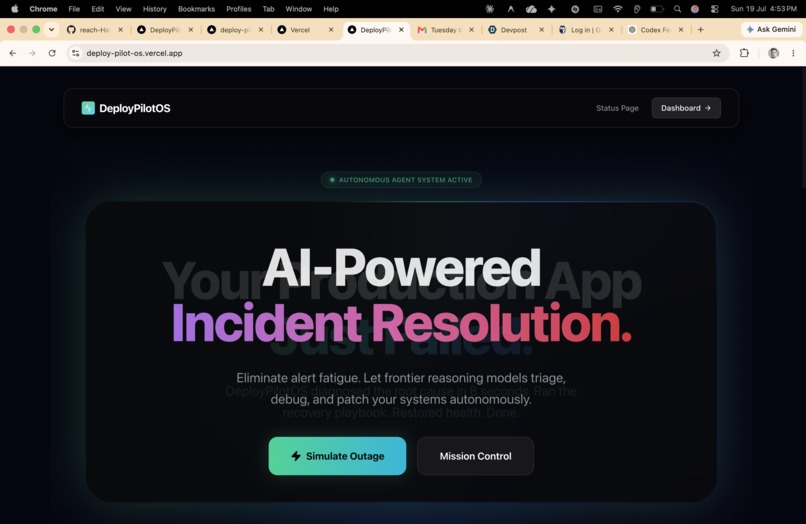
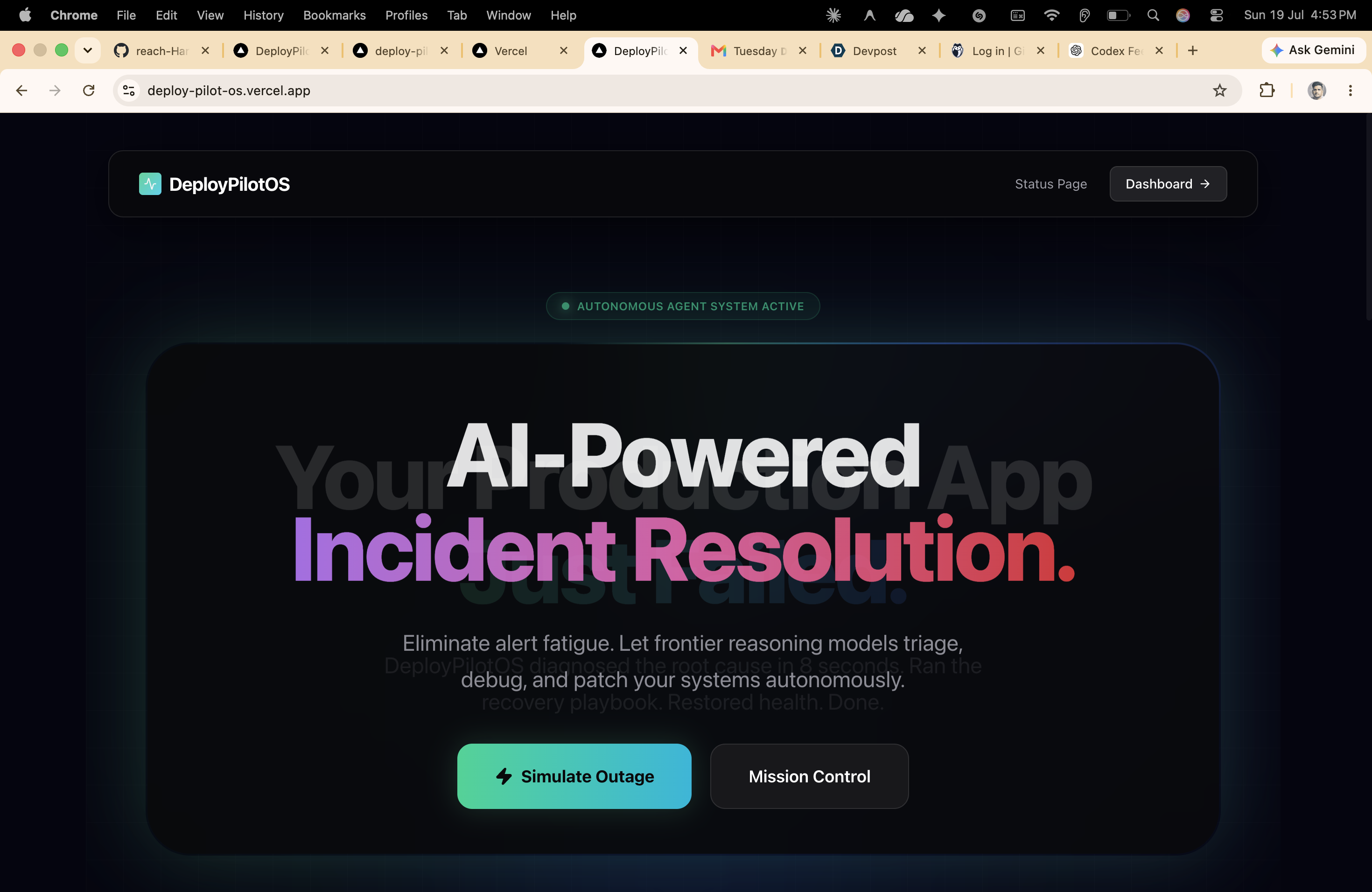
home page
-
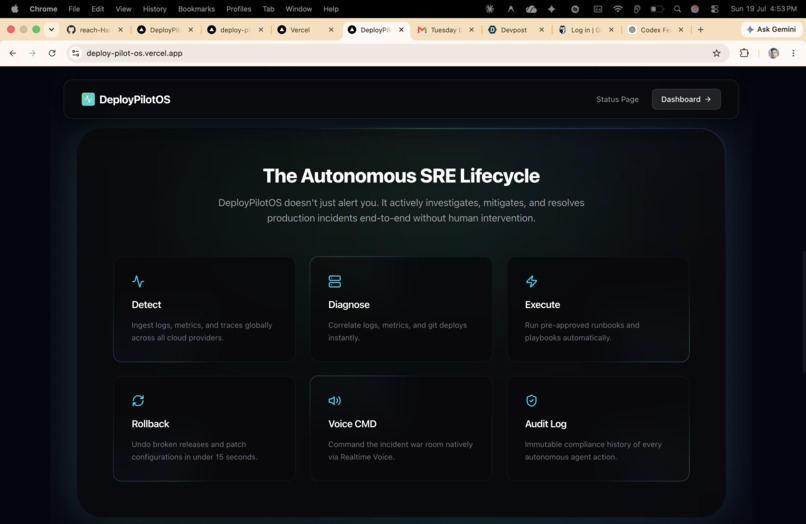
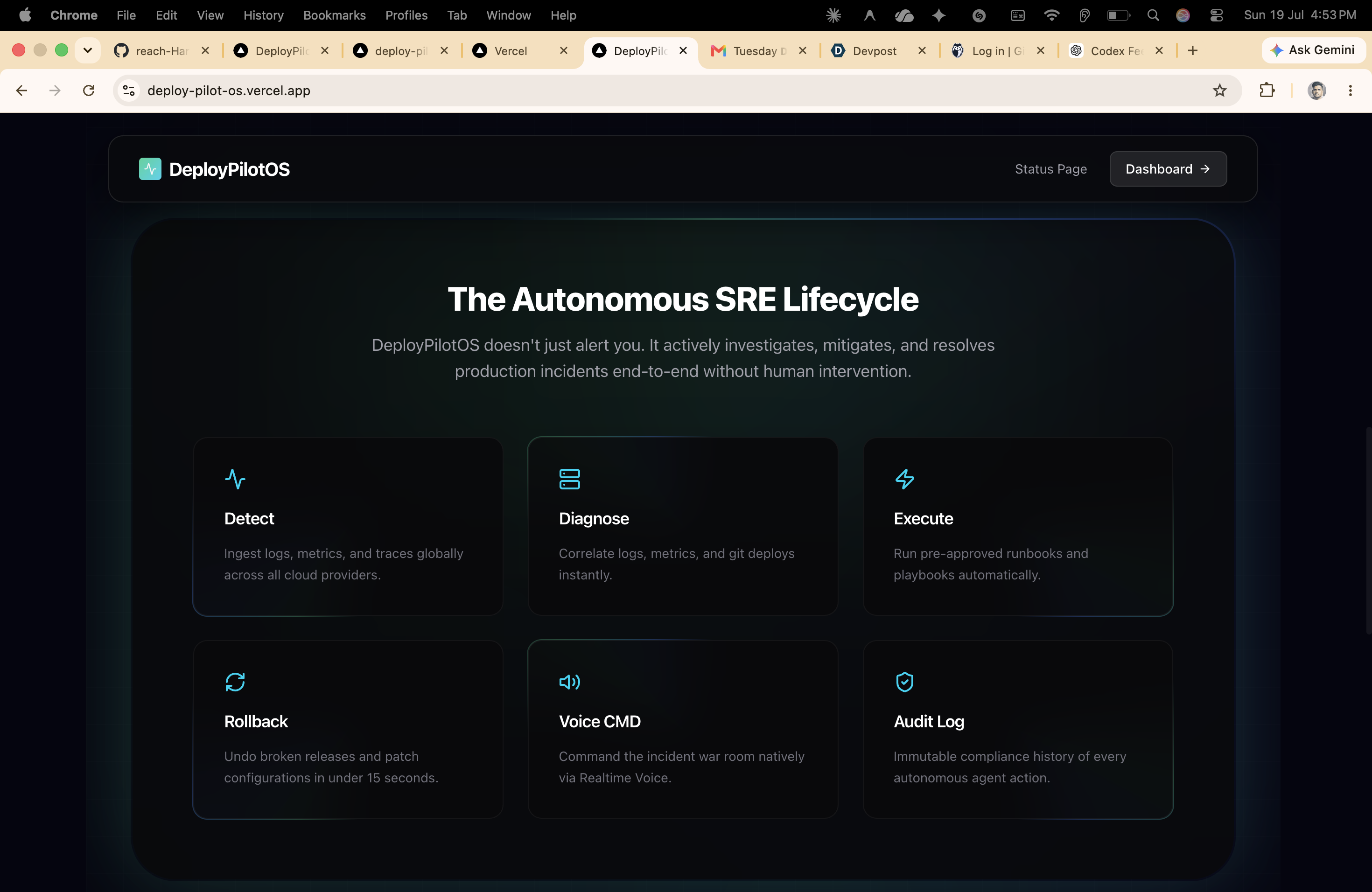
autonomous Lifecycle
-
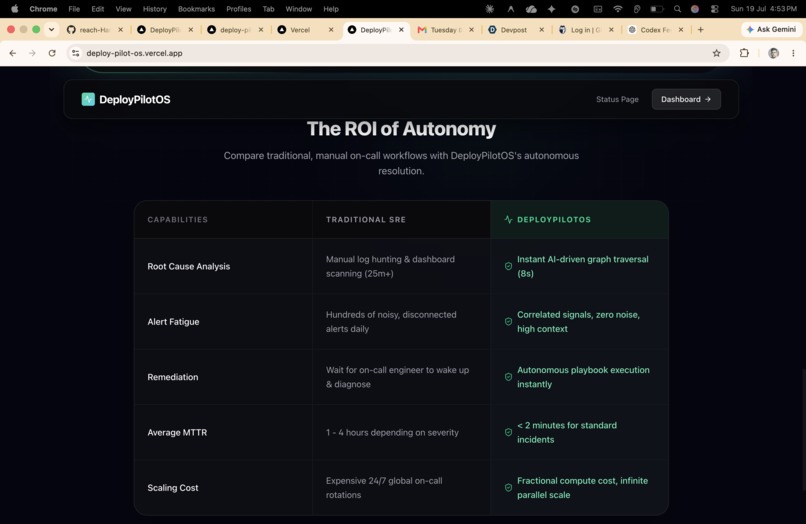
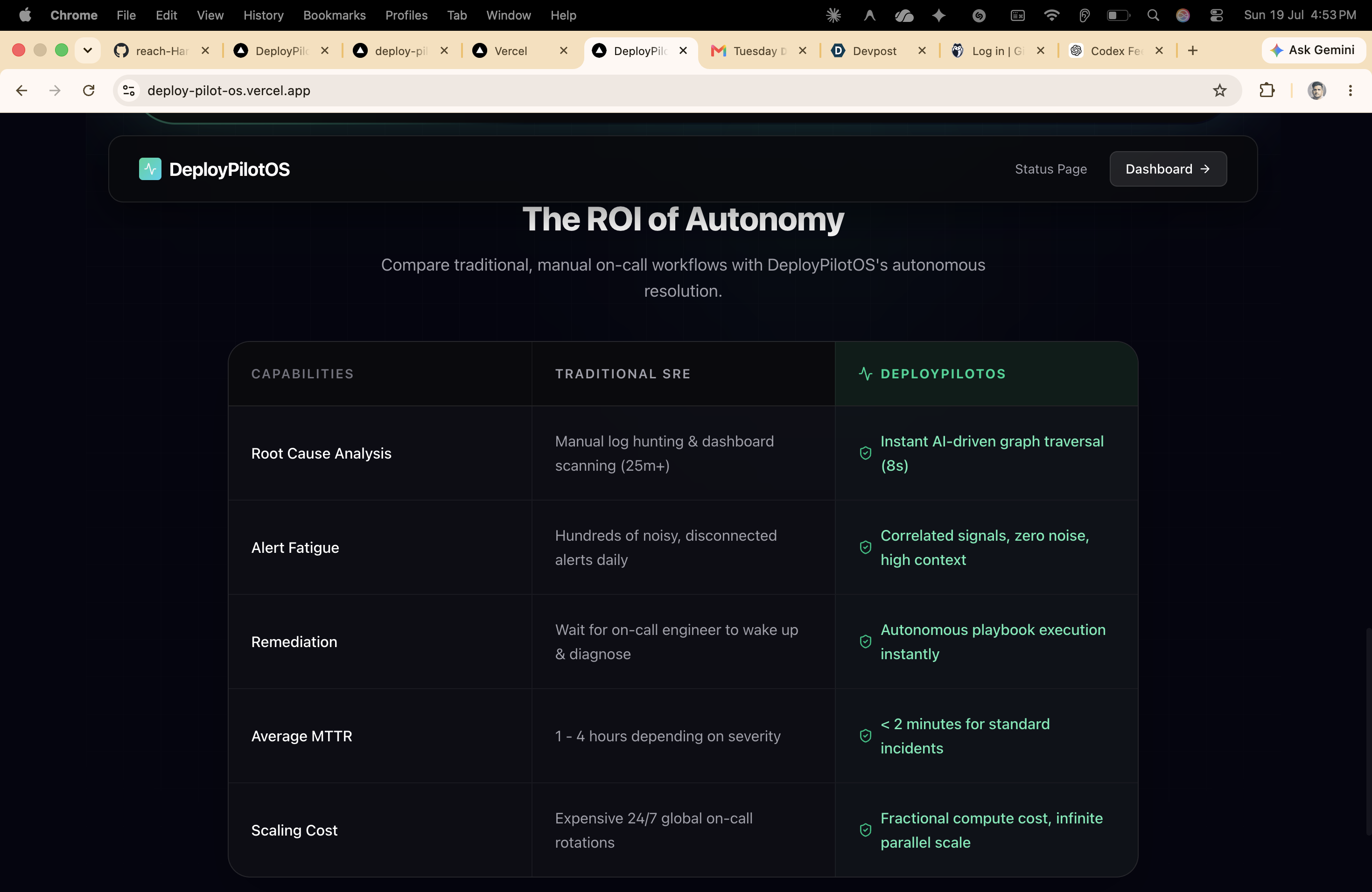
ROI of Autonomy
-
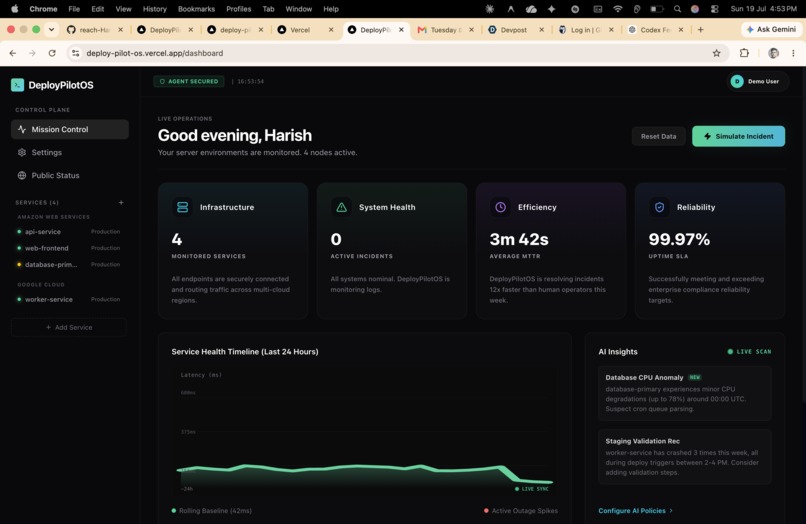
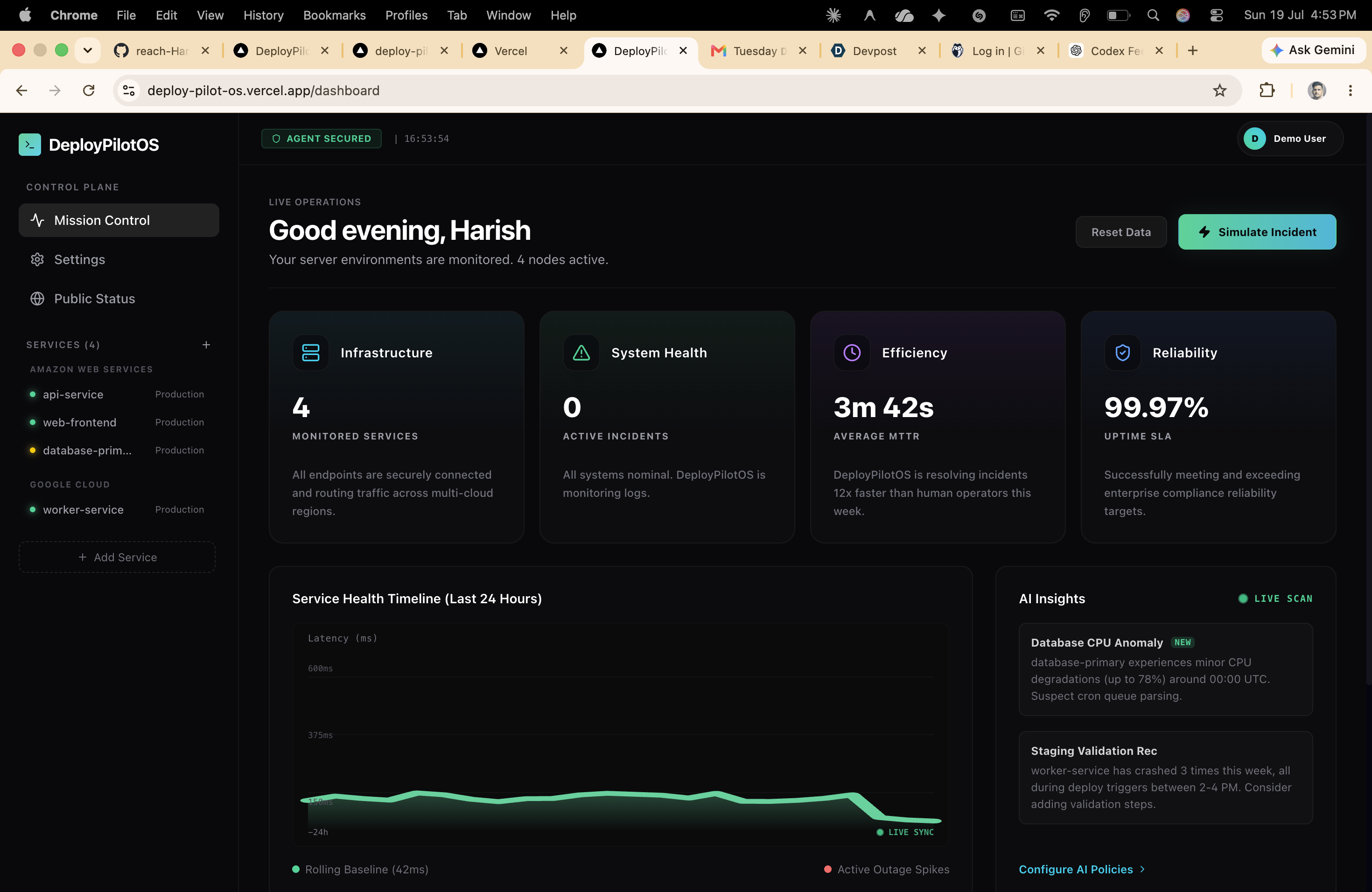
Dashboard of Mission Control
-
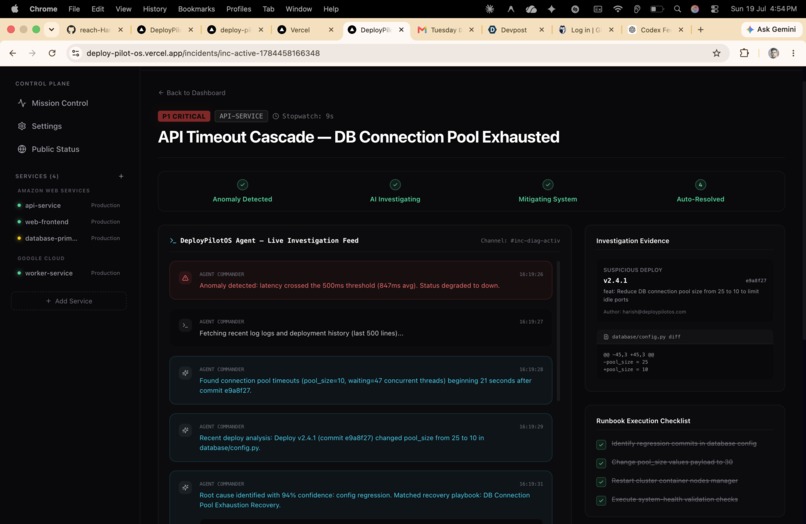
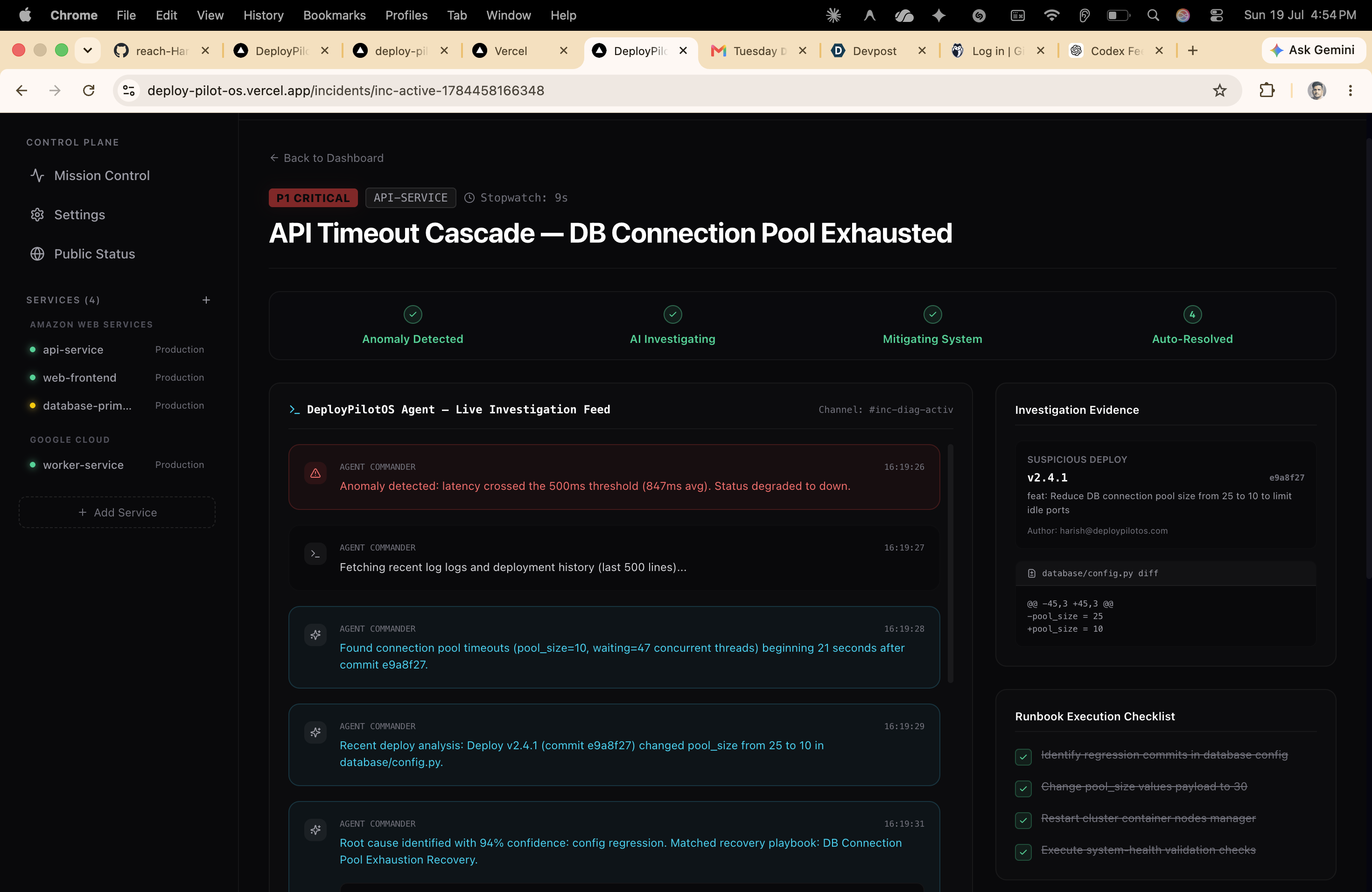
Investigation Dashboard along AI live insight
-
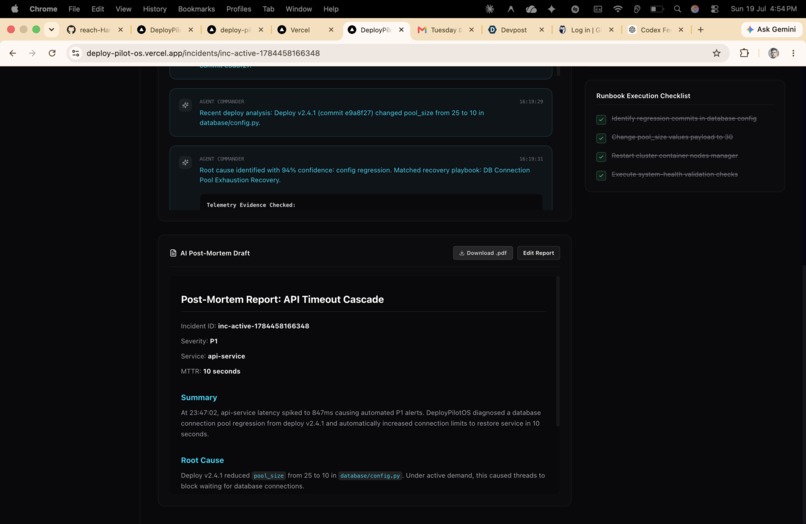
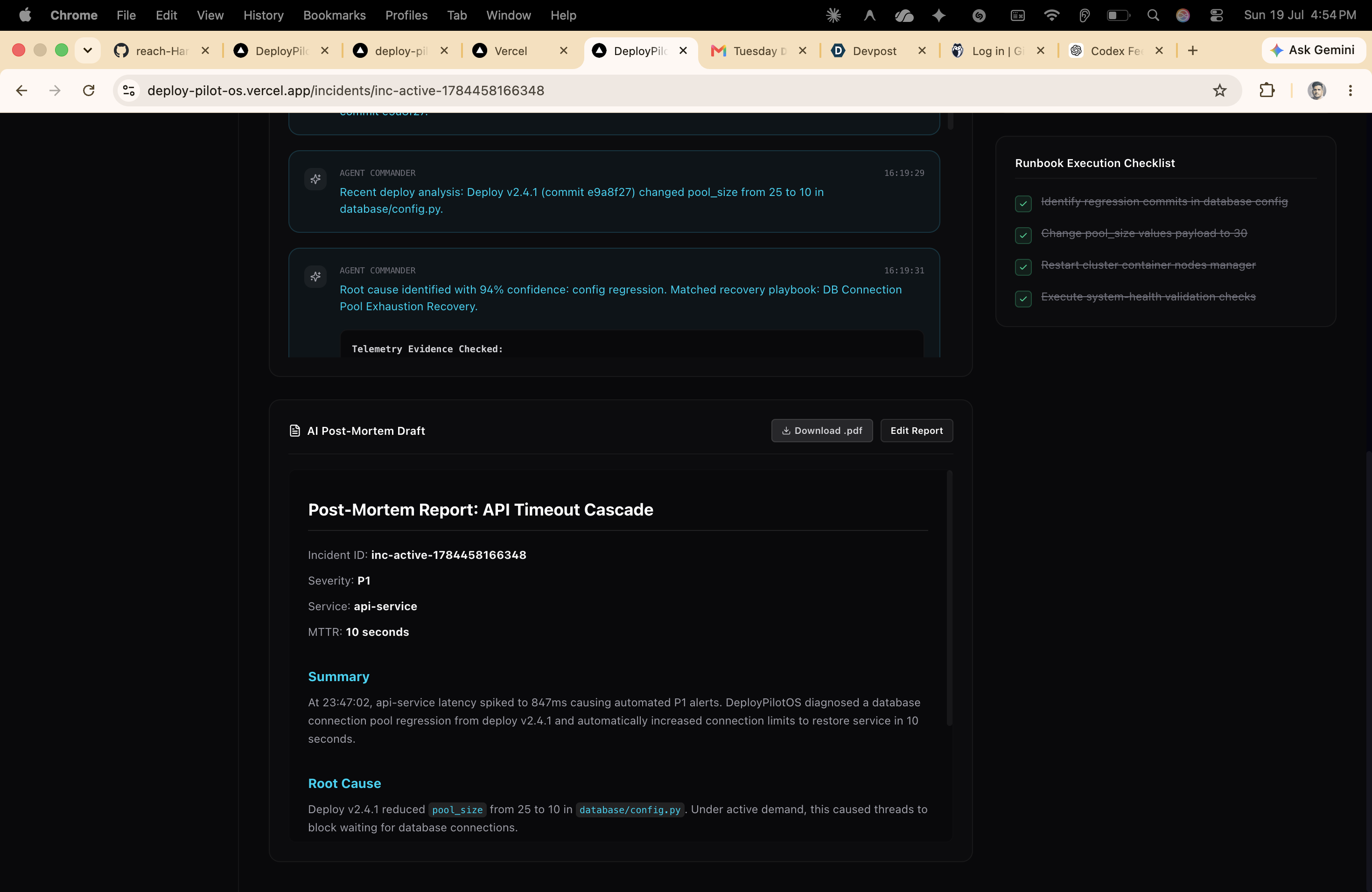
final report after resolve
-
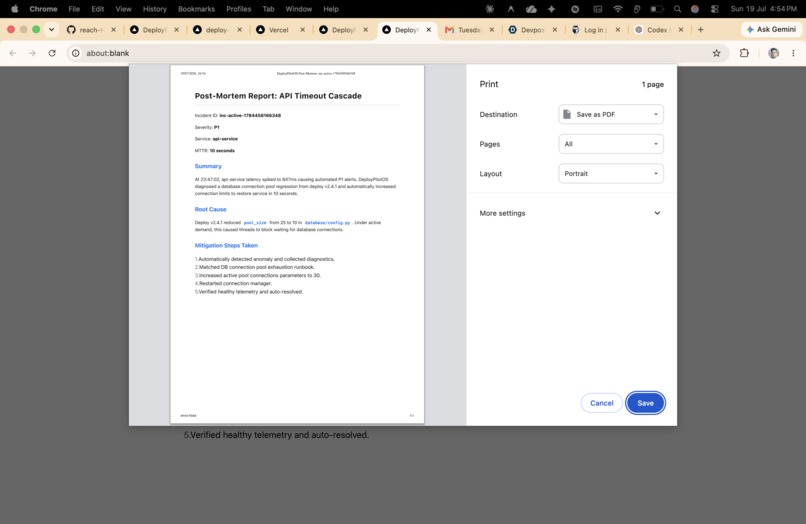
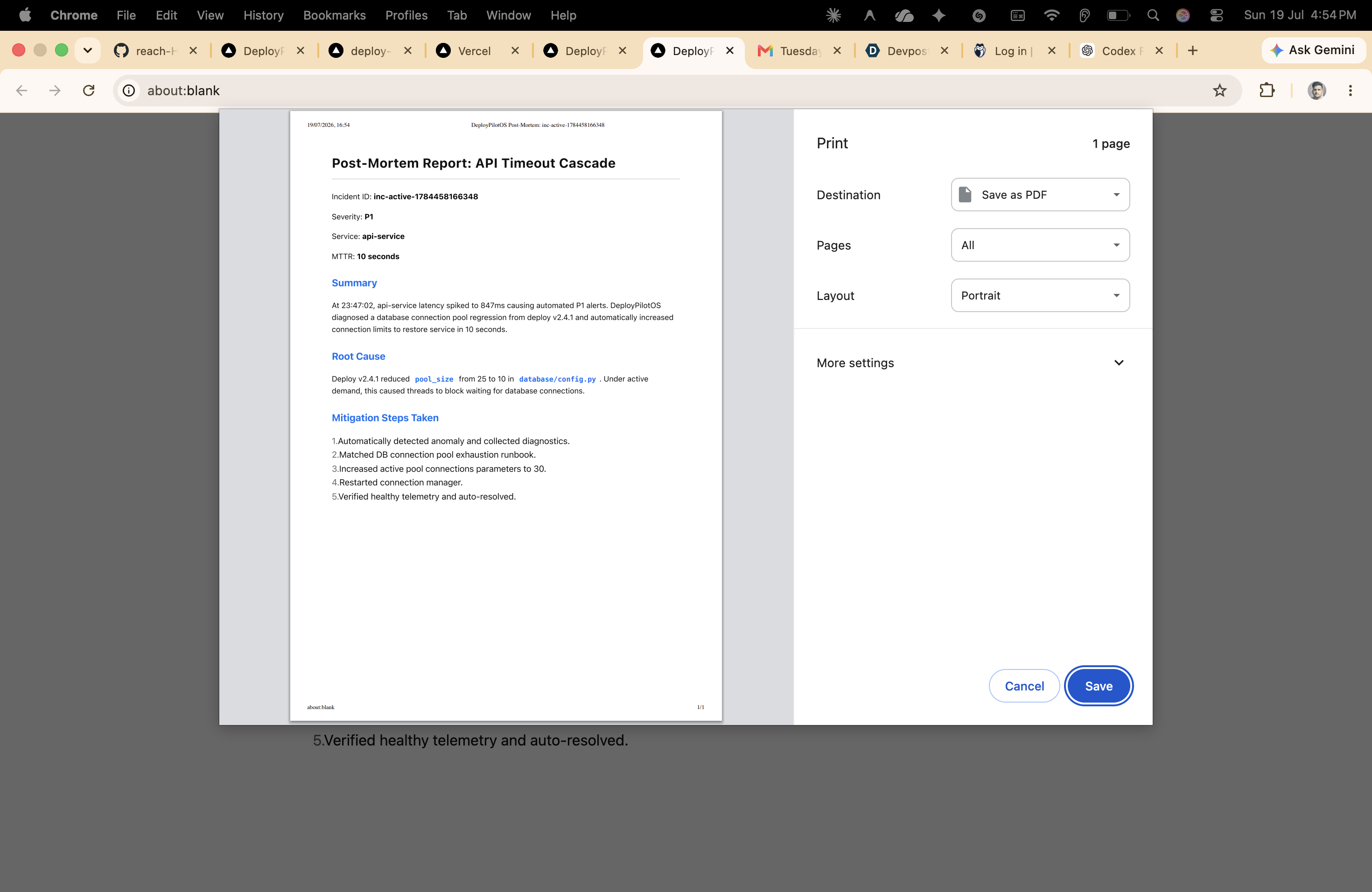
Report in PDF
-
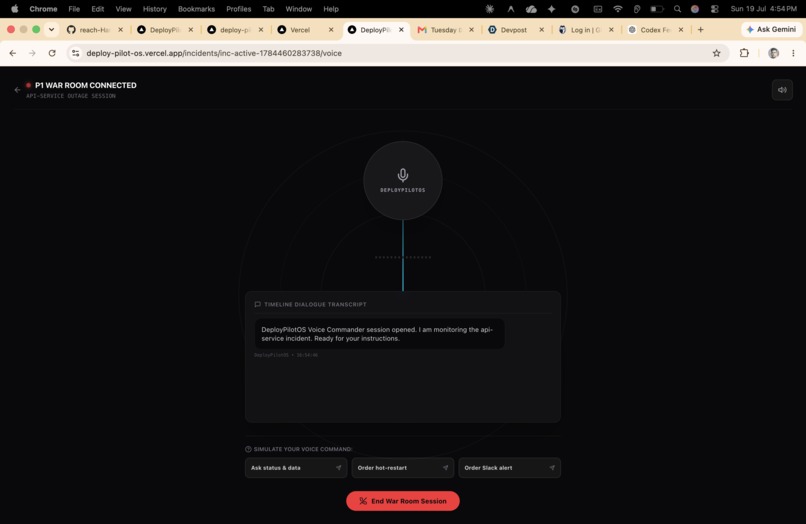
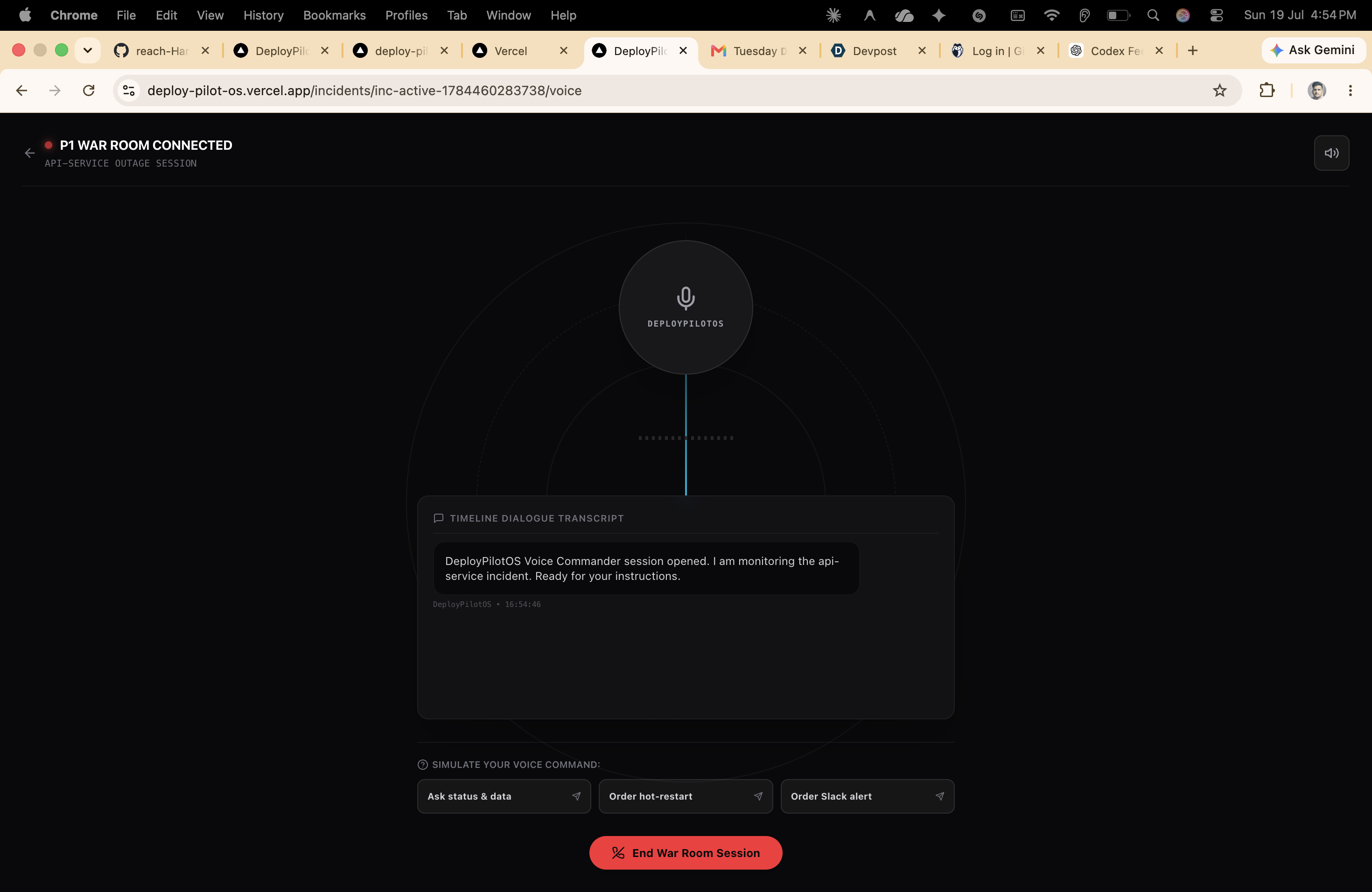
Real Time Voice War Room
-
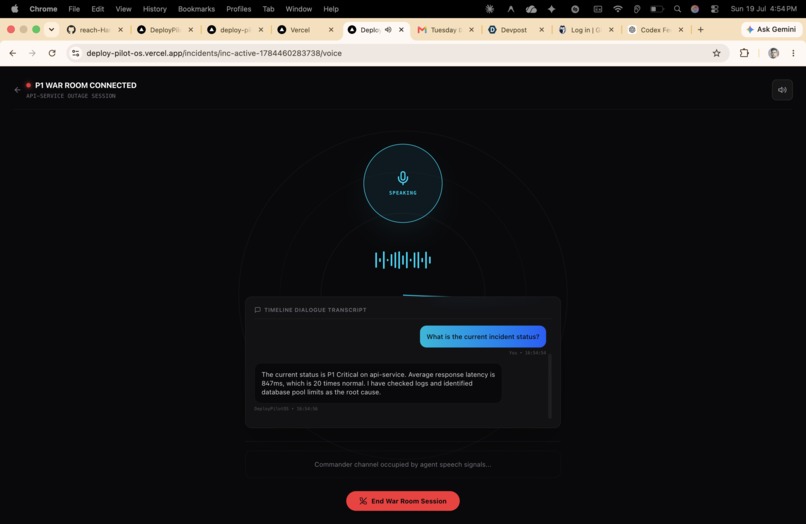
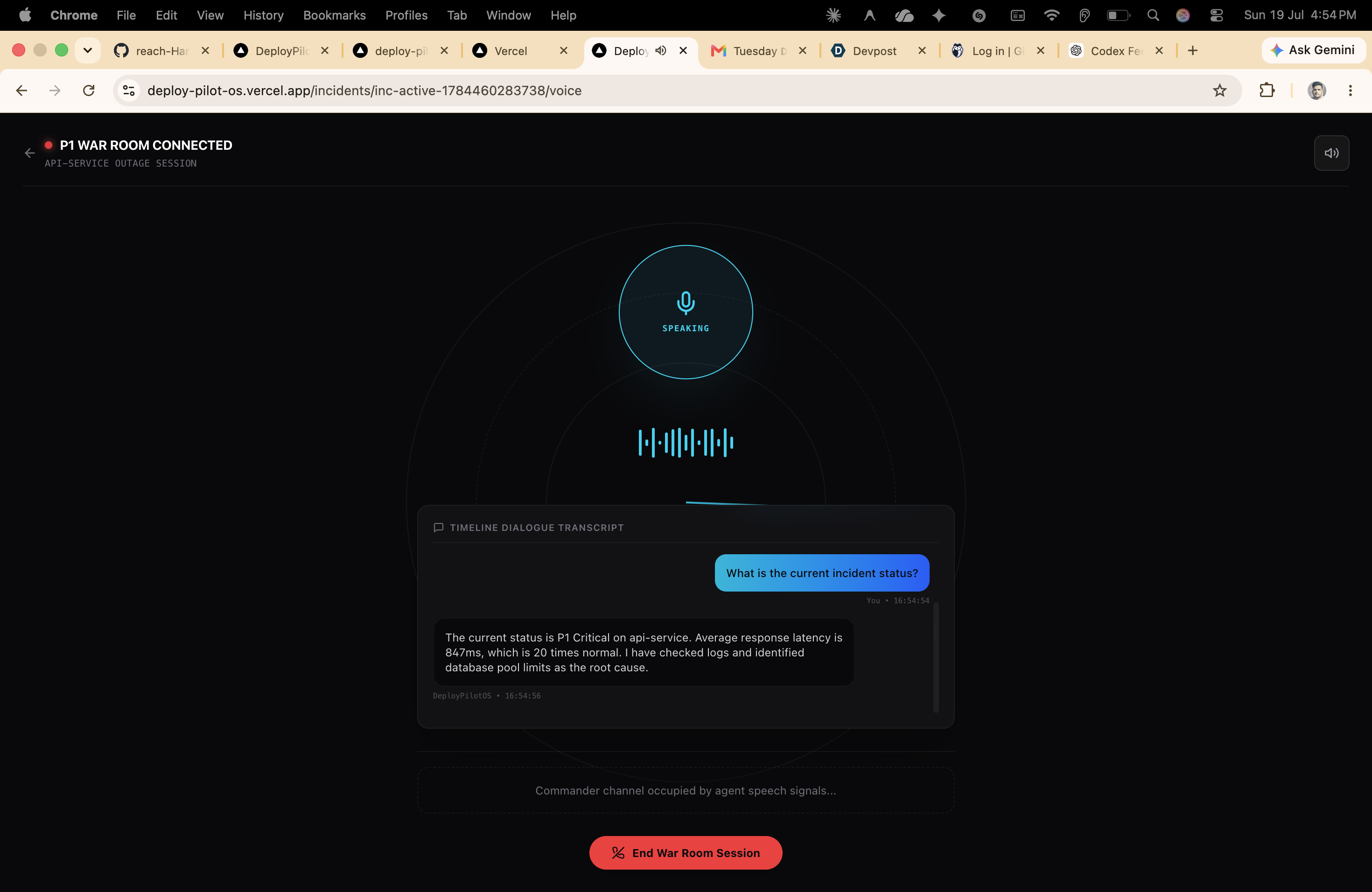
Voice Agent Solving the Issues
-
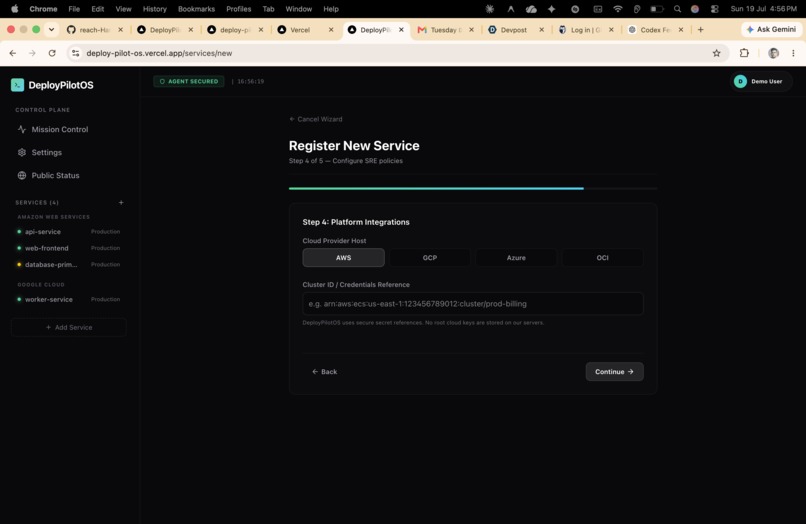
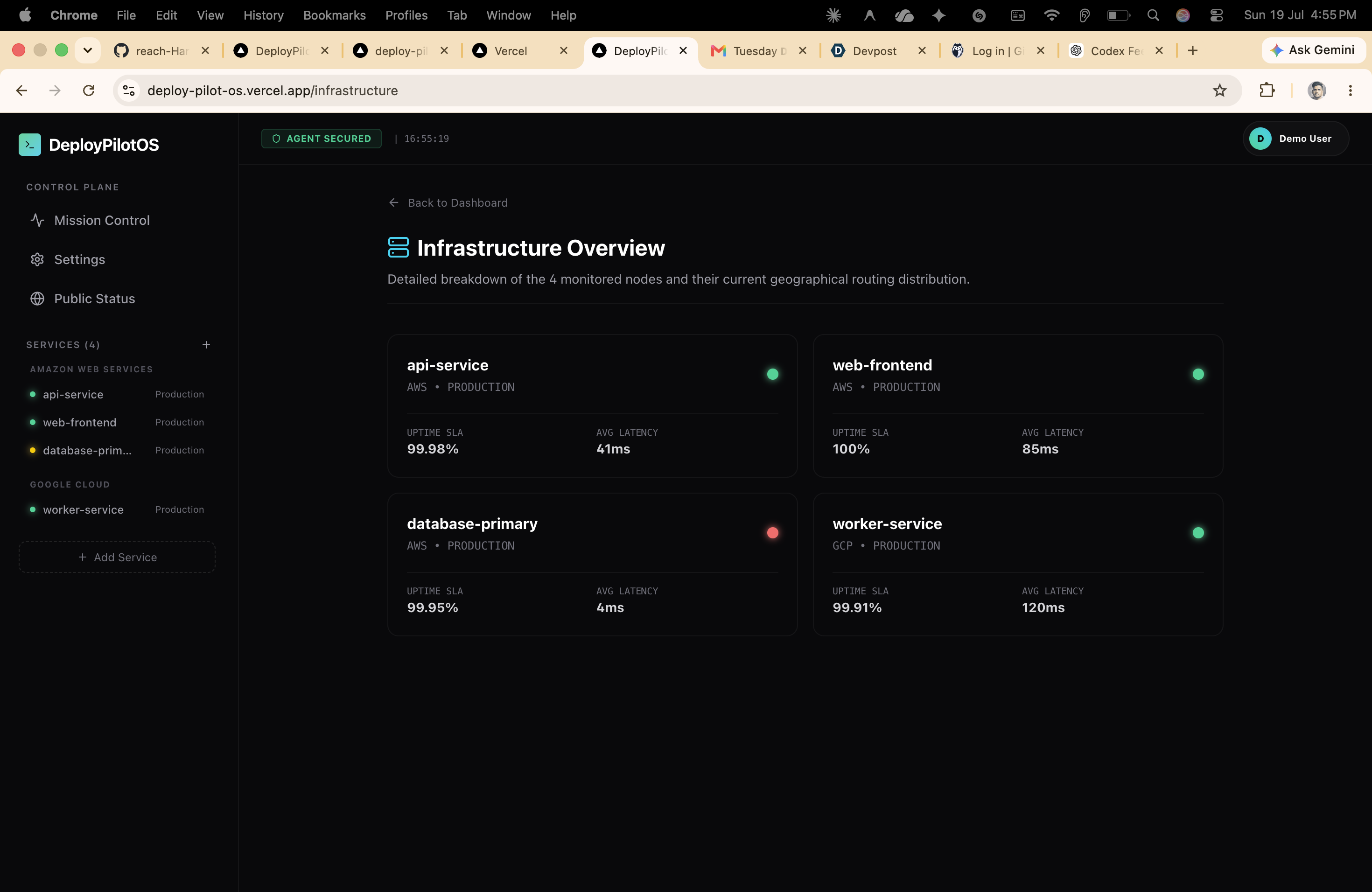
Supported Public Cloud Providers
-
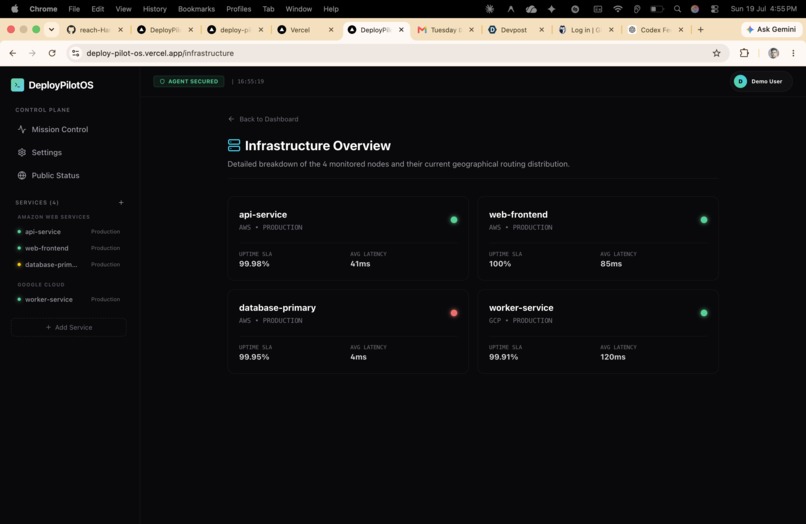
individual information
Inspiration
Production incidents are expensive, stressful, and usually happen at 3 AM. Average *MTTR (Mean Time to Recover) * takes hours, and on-call engineers are burning out. Current tools like Datadog or PagerDuty send alerts, but they still require a human to groggily stare at a wall of logs to figure out what went wrong. We wanted to close the loop. DeployPilotOS was inspired by a simple question: What if the AI didn't just page you, but actually fixed the outage while you slept?
What it does
DeployPilotOS is the world's first autonomous AI DevOps agent. It watches your stack 24/7, and when an anomaly is detected, it acts.
Real-Time Diagnosis: It fetches recent logs and deploy history, streaming a live GPT-5.6 Chain-of-Thought investigation directly to the UI.
Autonomous Runbook Execution: It maps the identified root cause to your pre-defined YAML runbooks using Semantic Embeddings, safely executing actions like scaling replicas, rolling back bad deploys, or restarting services.
Voice War Room: During critical outages, engineers can enter a hands-free "War Room" powered by the OpenAI Realtime API to verbally command the infrastructure.
How we built it
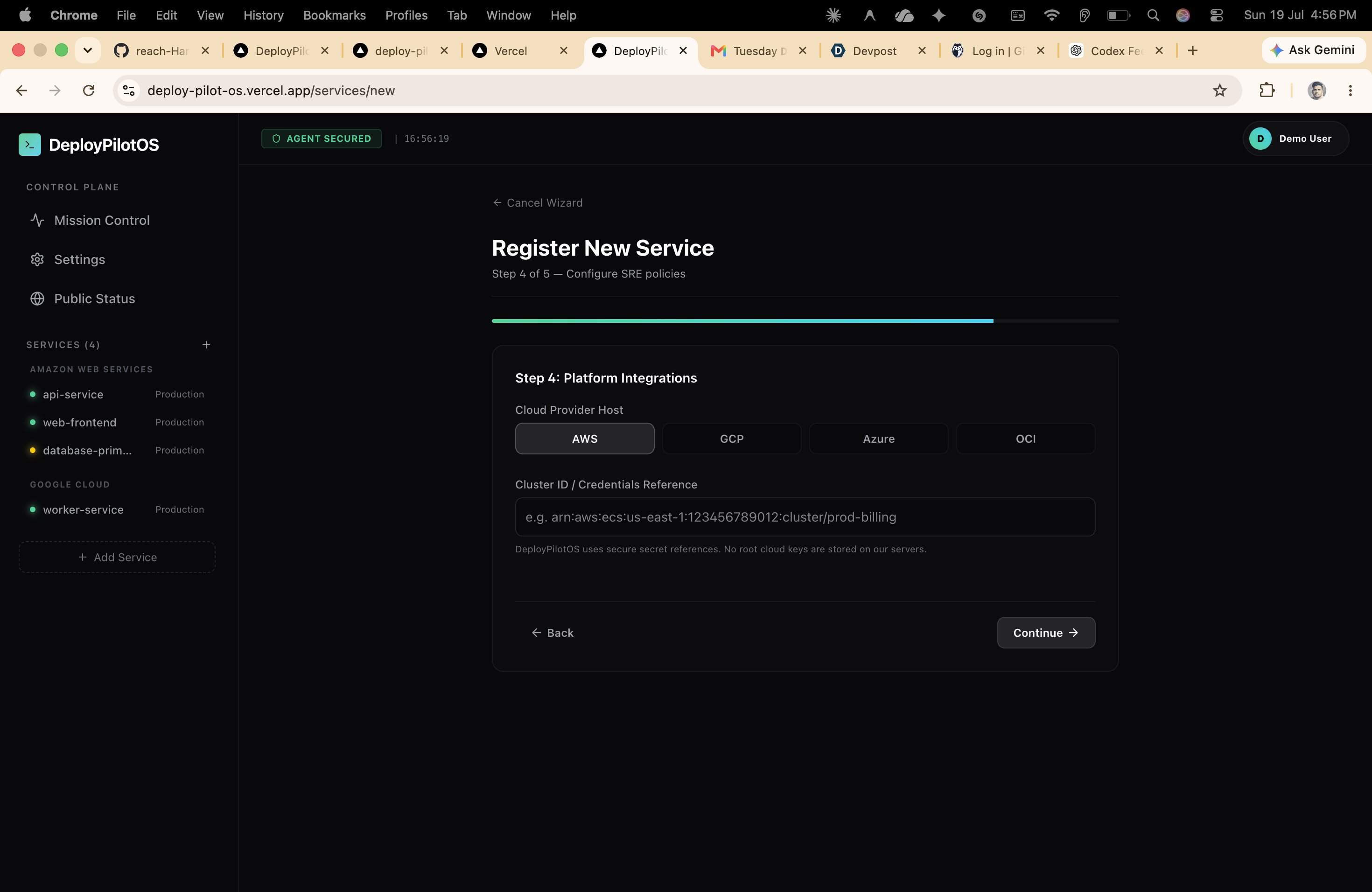
We built the application using Next.js 14, React, and TailwindCSS to create a highly responsive, glassmorphic dark-mode dashboard. To make it instantly accessible for the judges without needing complex cloud setups, we engineered a zero-setup simulated Sandbox environment with custom hooks and interval math to simulate live telemetry and streaming log analysis.
The brain of the agent is entirely powered by OpenAI:
GPT-5.6 + Structured Outputs: We feed the incident payload (logs + commit diffs) into GPT-5.6, enforcing a strict JSON schema to output a deterministic root cause and confidence score.
Embeddings API: Used for semantic matching to instantly pair the AI-generated root cause with the closest recovery runbook.
Realtime API (WebSockets): Powers the Voice Incident Commander for live, spoken war-room interactions.
Challenges we ran into
The biggest challenge was transitioning the AI from a conversational chatbot into a deterministic execution engine. We had to heavily engineer our prompts and rely on Structured Outputs to ensure the model consistently returned actionable JSON rather than conversational text. Additionally, building the simulated sandbox to make the UI look and feel like a real-time production environment (with pulsing status indicators and streaming investigation feeds) required complex React state management to prevent hydration mismatches.
Accomplishments that we're proud of
We are incredibly proud of the "Magic Moment" in our sandbox . Watching the agent detect a P1 critical latency spike, stream its live thought process as it reads the logs, match the issue to a connection pool runbook, and autonomously resolve the incident in under 9 seconds is a massive shift in how we think about DevOps.
What we learned
We learned that the latest generation of models are more than capable of acting as autonomous agents in high-stakes enterprise environments, provided they are given strict boundaries, specific tool schemas (function calling), and semantic matching to ground their actions in pre-approved runbooks.
What's next for DeployPilotOS: Autonomous AI SRE
We plan to build native adapters for Kubernetes (EKS/GKE) to execute real kubectl commands, integrate directly with GitHub Actions for deployment gating, and introduce "Multi-Agent War Rooms" where a Database Agent and a Frontend Agent can collaborate on cross-service outages.
Built With
- agent
- ai
- ai%agent
- assistants-api
- automation
- devops
- embeddings-api
- framer-motion
- gpt-5.6
- moderation-api
- next.js
- openai-api
- prisma
- react
- realtime-api
- recharts
- sqlite
- sre
- structured-outputs
- tailwind-css
- text-to-speech-api
- typescript


Log in or sign up for Devpost to join the conversation.