Inspiration
Deploying applications shouldn’t feel harder than building them — yet for many developers and students, it still does. We were inspired by the frustration of juggling scripts, Docker configs, environment variables, documentation, and deployment platforms just to get a project live. In hackathons and real-world projects alike, great ideas often lose momentum at the deployment stage. DeployForge was born to eliminate that friction and let developers focus on building, not battling infrastructure.
What it does
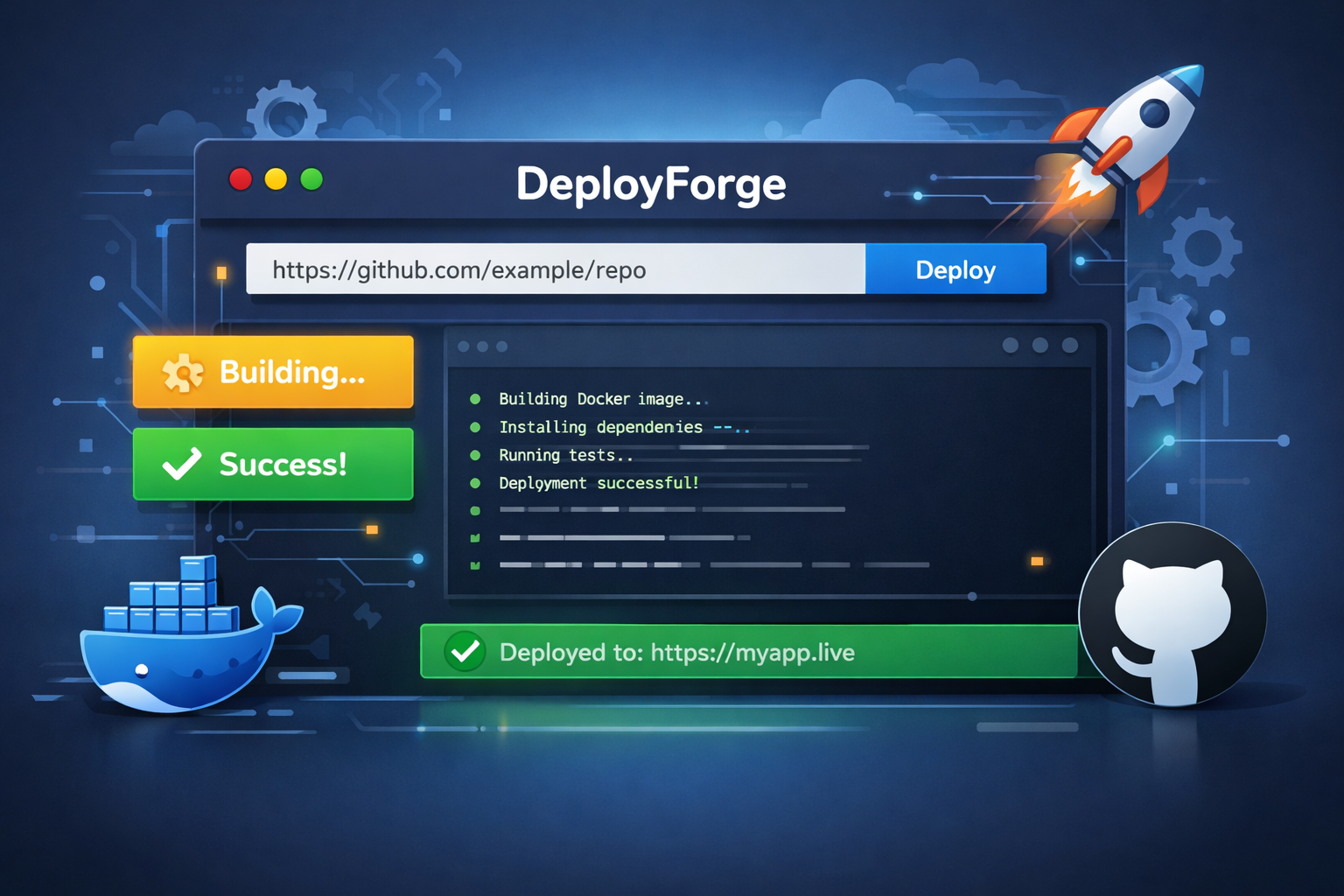
DeployForge is a developer tool that streamlines the entire deployment lifecycle into a single, unified workflow. It helps developers go from repository to production with minimal setup by automating deployment, environment configuration, and documentation.
Key capabilities includes One-click deployment pipelines, Auto-generated environment and deployment configs, Built-in monitoring and status tracking and Automatic README and API documentation generation
How we built it
We designed DeployForge as a modular system with scalability in mind. The backend handles deployment orchestration and configuration logic, while the frontend provides a clean, intuitive dashboard for developers. Containerization using Docker Backend services built with Go/Rust for performance and reliability Frontend dashboard built using modern web frameworks CI/CD logic designed to be cloud-agnostic Documentation automation powered by static analysis of repositories Our focus was on building a realistic, usable tool rather than a prototype-only concept.
Challenges we ran into
One of the biggest challenges was abstracting deployment complexity without oversimplifying it. Different projects have different needs, and building a flexible yet intuitive system required careful architectural decisions. Integrating deployment automation while keeping the system secure and stable was another major hurdle, especially under hackathon time constraints.
Accomplishments that we're proud of
Built a fully functional deployment workflow within the hackathon timeline Reduced deployment setup time from hours to minutes Created a clean developer experience with minimal learning curve Delivered a scalable foundation that can grow into a full DevOps platform
What we learned
This project taught us the importance of developer experience and thoughtful abstraction. We learned how small workflow improvements can have a massive impact on productivity. On the technical side, we gained deeper experience with containerization, deployment automation, and system design under pressure.
What's next for DeployForge
Next, we plan to add support for more cloud providers,introduce team collaboration features,improve monitoring and rollback capabilities and expand plugin support for custom workflows.


Log in or sign up for Devpost to join the conversation.