-
-
Making Africa Green
Inspiration
The inspiration behind DepGreen is the everyday situation faced by African countries with a poor waste disposal framework, moving from irregular intervals of waste disposal to a lack of sufficient budget or expenditure to help finance equipment or infrastructure to prevent extreme consequences, which affects so many communities and societies and results in several bad consequences and dreaded occurrences such as sicknesses like Cholera, Malaria, Dengue, and yellow fever.
What it does
This project creates a platform meant to coordinate the regular cleaning of Communities using a decentralized framework of democratized agents, neighborhoods, sets, and household relationships meant to ensure the regular disposal and collection of waste to prevent land pollution as we have it in Nigeria and my neighborhood, and to ensure people have fresh air to breathe. DepGreen ensures smooth communication between the org and the users through agents, especially for in-demand requests. Encourage recycling as a means of earning while they dispose of their waste.
How we built it
The tools used are Next.js, JavaScript, Motion for animations, Tailwind, Vercel, and the use of dependencies to speed up development.
- Custom Components for each task: I created a custom module for Typography and a Status Modal for request status such as pending, success, and failure, as well as loading components.
- Authentication (AuthContext): With the Use of the global store context and the user array, I can store users' data in JSON format in the Local Storage using the saveStore() module, then operate the signIn using the loadStore(), which is utilized on signIn request to find() an object matching the credentials in the store.user array. I would have used Clerk(), but was trying to be time efficient.
- Custom Font: The font used was green and nude color, meant to give a clean, natural, and efficient look while still feeling transparent.
Challenges we ran into
The challenges and the critical thinking part came from assigning an affordable fee to each household or entity. The Target was urban, suburban, and peri-urban homes in MVP; cause they too are also victims of the problem being treated
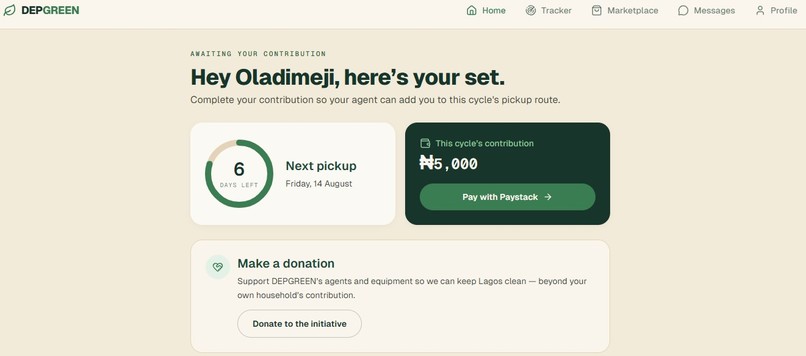
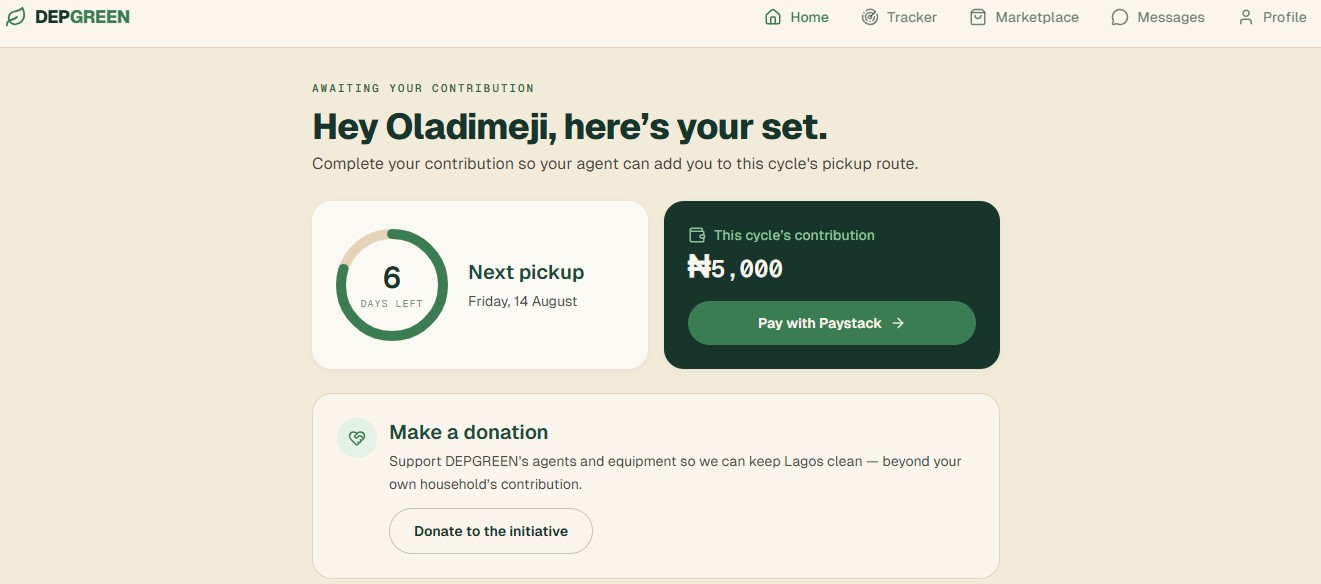
- Justification for pricing: Freehold houses are charged 5,000(owned by one person), Leasehold house with 1- 5 tenants are charged 5,000, and 8,000 for 5- 8 tenants. We stopped at 5 -8 tenants because we believe houses from 8 upwards are likely low-income earners; increasing the price upward might prove to be regressive in nature, which disrupts the flow of cash.
- Irregular Cashflow consequences: The covering of the 5 - 8 tenant is likely to increase expenditure and also increase revenue, but the prediction of receiving irregular cash flow from these tenants will reduce liquidity and reduce our capability to pay back our monthly obligations. Making me play safe with these 5 neighborhoods for the MVP. ## Accomplishments that I am proud of Most businesses want to think out of the box to create the next big thing, but the next big is just the issue sitting right NEXT to you, and being able to move from the ideation phase, feasibility study stage across what it means in the market, in the technological space and creating financial analysis into it, not only make this hackathon worth but a business idea that should be encountered by me, when I get the right fund to start.
What I learned
That Change doesn't start from the people who we entrust to act in our affairs, but we are equally responsible for being the catalyst for change; we just need to do it the right way and be ready when the opportunity kicks in.
What's next for DepGreen
Market Scalability: I built a market-ready application, although some things still need to be factored in, such as collaborating with environmental legal authorities in these African countries to comply with standards and regulations. Development Scalability:
- Readability: By using modules to mock clerk user fetch, creating custom modules such as loading modal, request states, and consistent use of fonts, any engineer can read and understand in minutes.
- Revenue: There are several opportunities to generate revenue while still being very concerned about the communities in Africa. Recycling materials being returned to the official producers, Hard Materials used in Printing Factories being sold to companies likely to make efficient use of them Initial capital expenditure: With adequate capital, I get straight into getting equipment, materials and infrastructure to bring this to life.
Built With
- framer-motion
- javascript
- nextjs
- node.js
- tailwind


Log in or sign up for Devpost to join the conversation.