-
-
Overview
-
ICP
-

Benefits
-
Pricing
-
-
About
-
Dashboard
-
Agents
-
Control Panel
-
CRM
-
KPI Dashboard
-
A/B Testing
-
Integrations

Inspiration
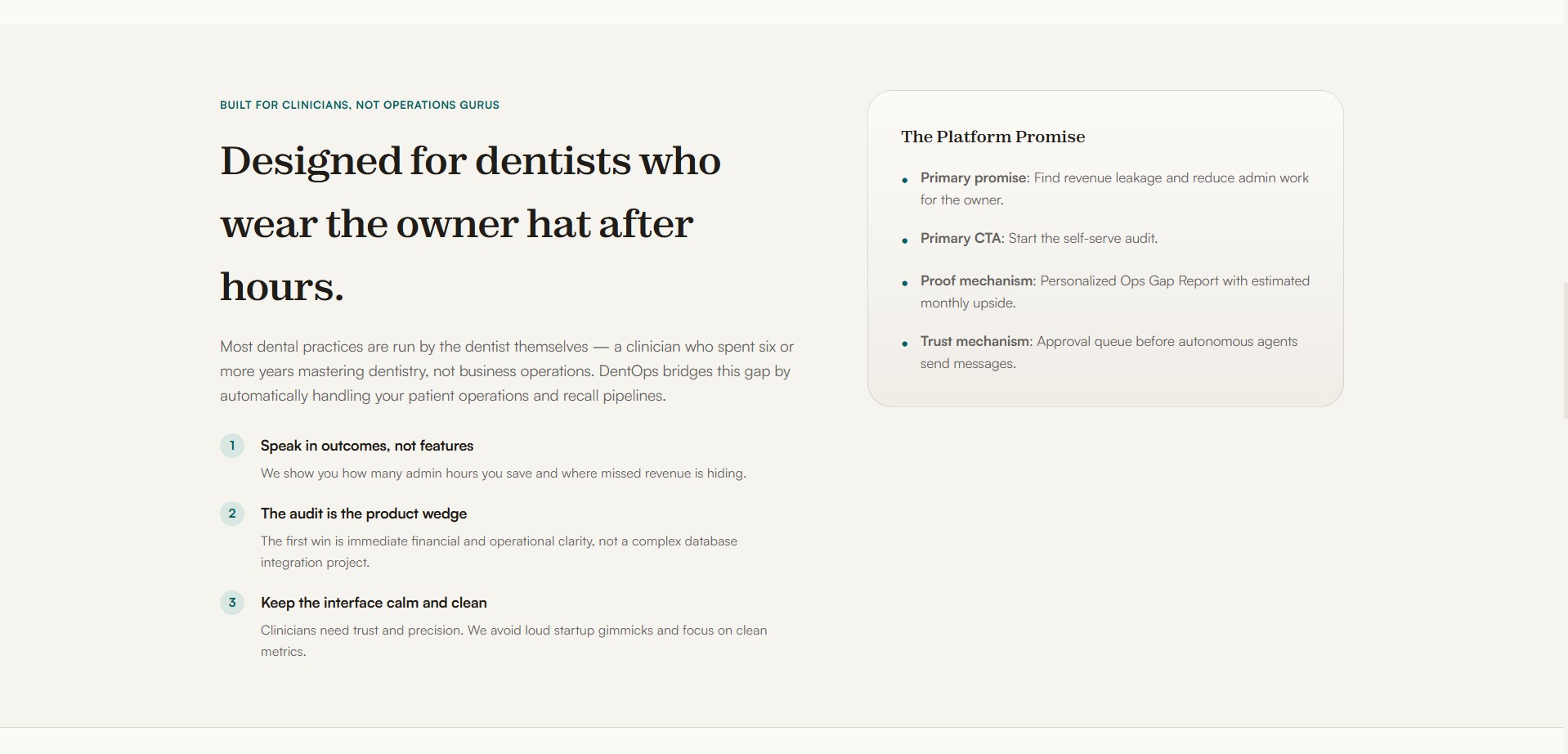
Dentists spend years mastering their craft, not operations management. Yet most clinic owners spend 10–15 hours a week chasing no-shows, manually following up with lapsed patients, responding to Google inquiries, and trying to figure out why their chairs aren't full. There's no time left to actually run a business.
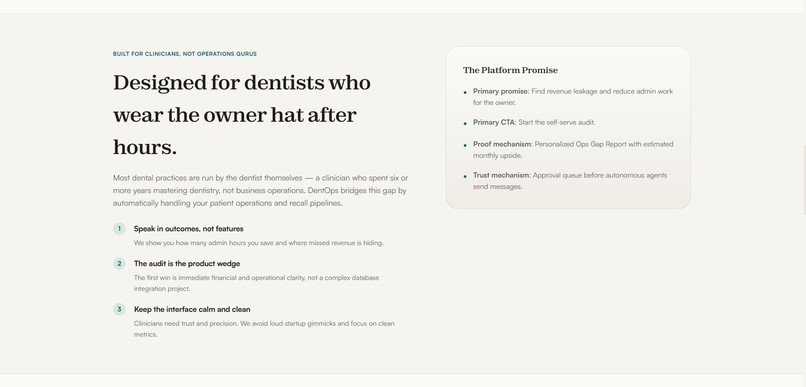
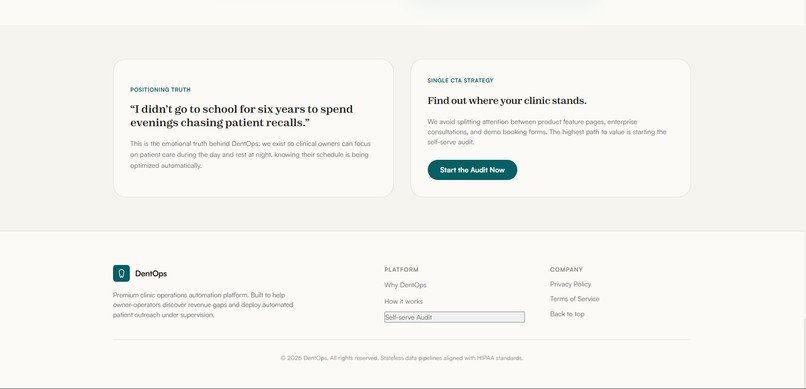
We talked to dental clinic owners in our network and kept hearing the same thing: "I didn't go to school for six years to send reminder texts." The problem isn't effort, it’s that the tools available to small clinics are either too expensive, too complex, or built for enterprise hospital systems, not a 2-chair practice with a part-time receptionist.
DentOps was born from a simple belief: every dental clinic should have access to the kind of operations intelligence and automation that only large healthcare chains can currently afford. A team of AI agents working in the background, recalling lapsed patients, eliminating no-shows, following up on inquiries, so the dentist can focus on patients, not admin.
What It Does
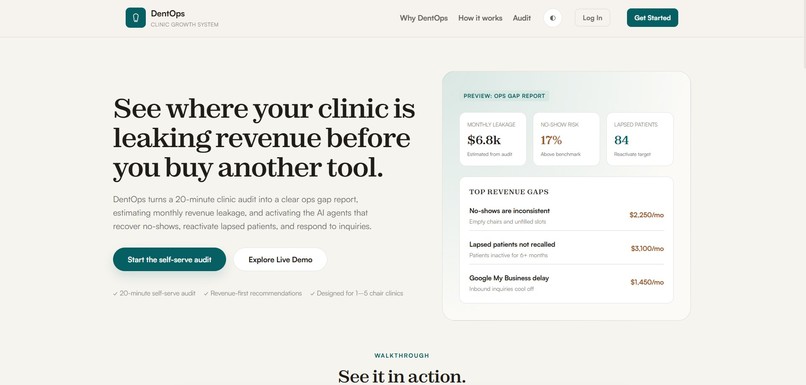
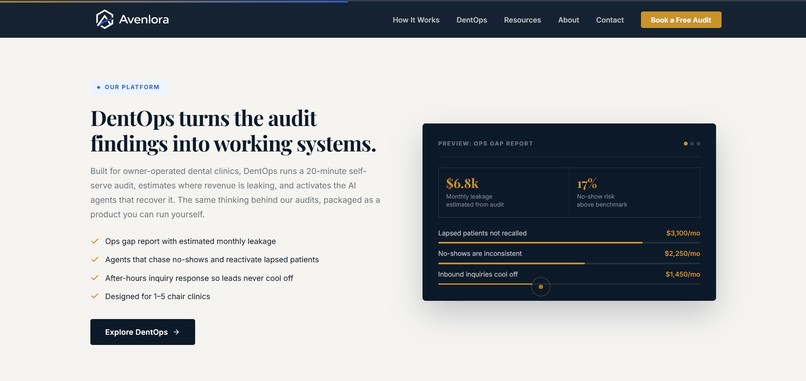
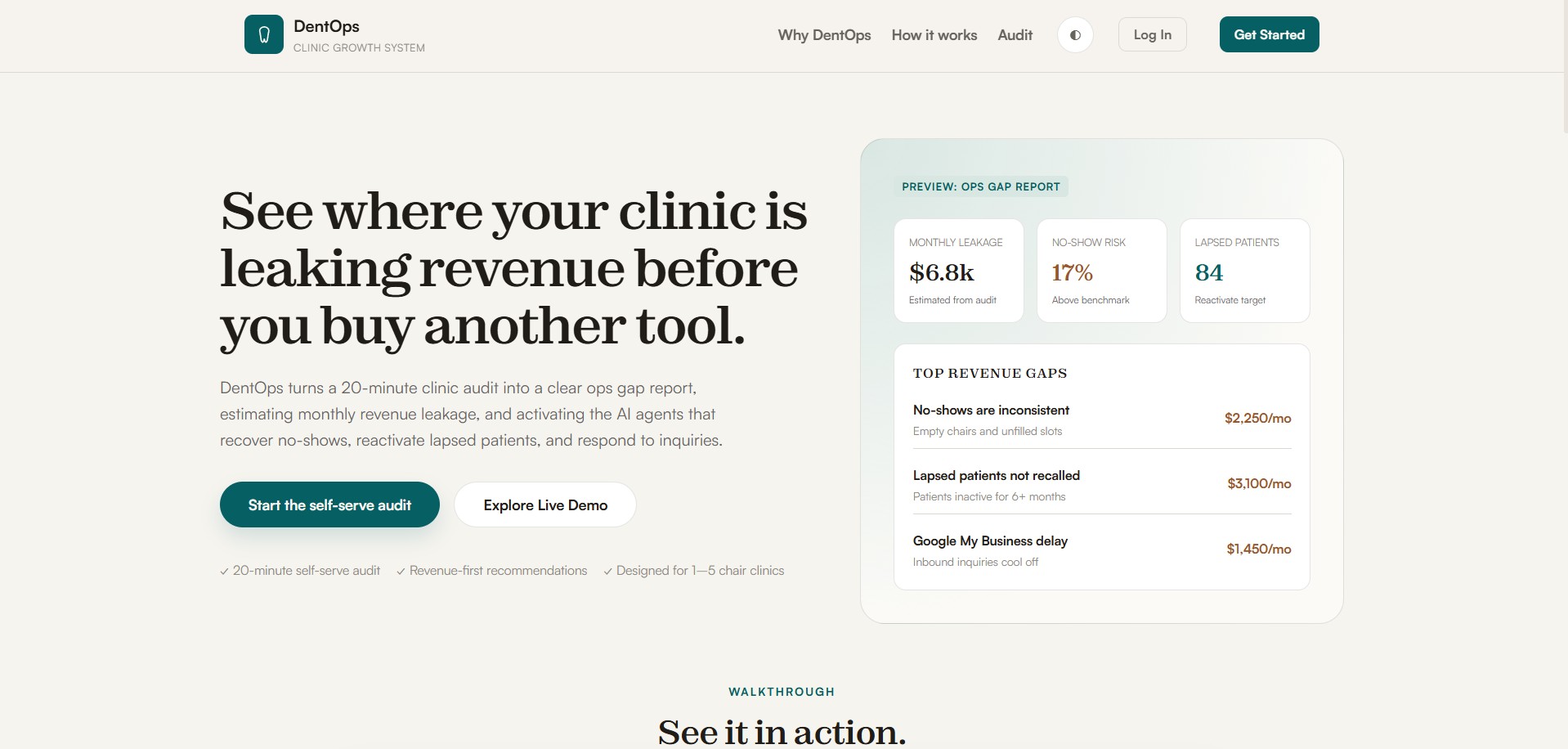
DentOps is an AI operations platform for dental clinics. It audits the clinic's current operations, deploys a tailored team of AI agents to handle the highest-impact tasks, and tracks measurable KPIs on a live dashboard.
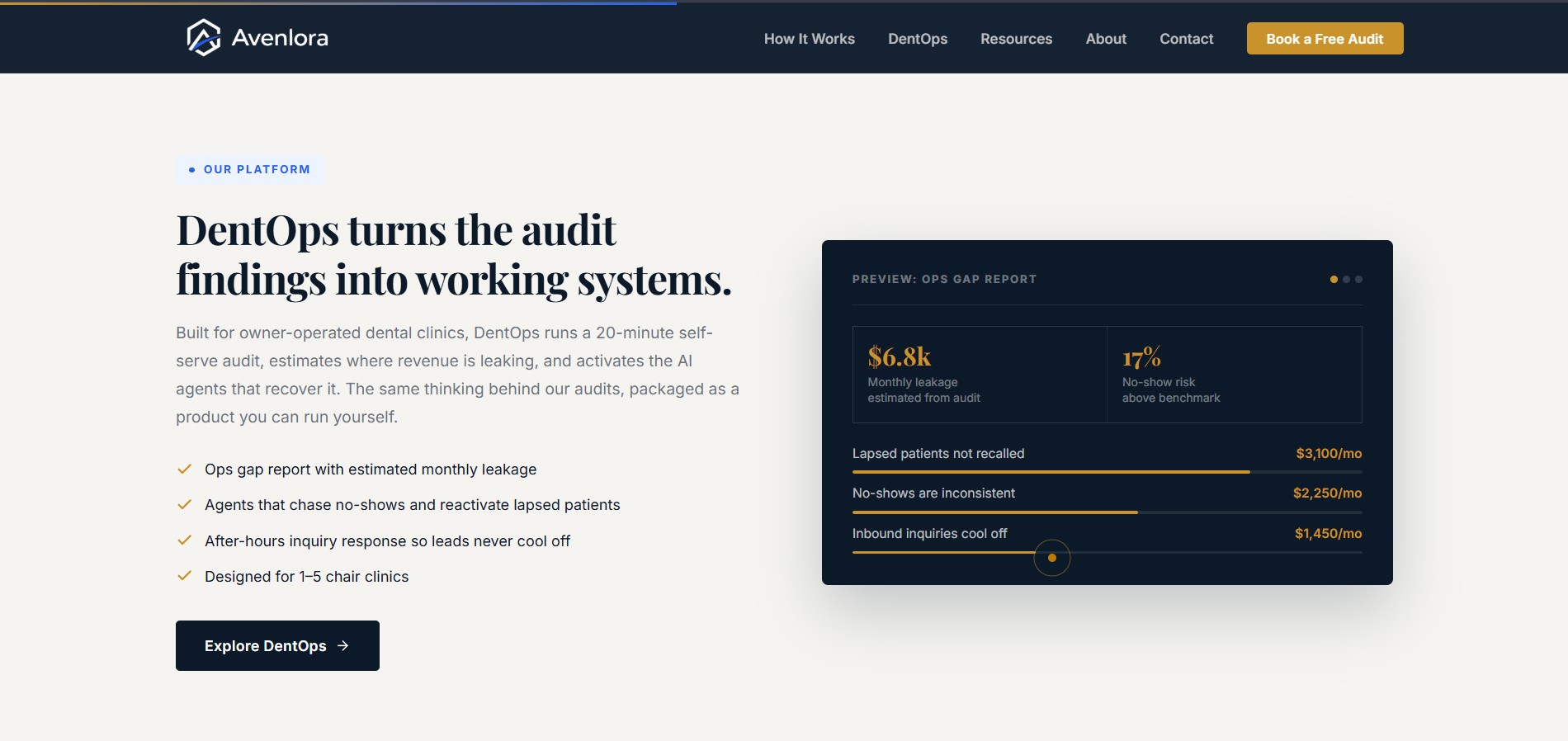
The Audit Clinics start with a 20-minute onboarding audit. They answer structured questions about their operations and connect existing tools, such as Google Calendar, their practice management system, or a spreadsheet. Gemini analyzes the responses and produces a prioritized "ops gap report," identifying where revenue is leaking and estimating the dollar impact of each gap.
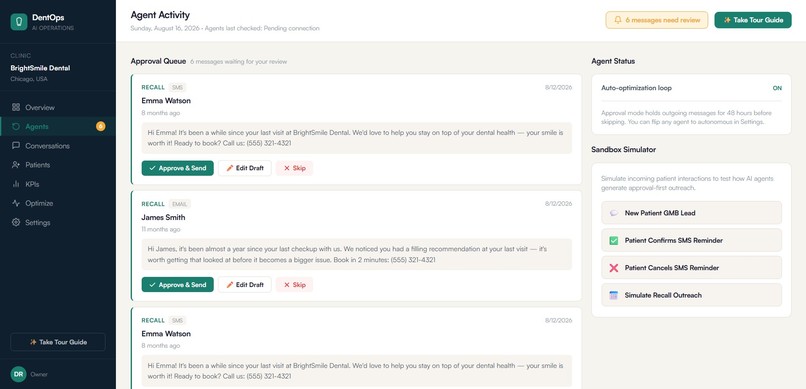
The Agent Team Based on the audit, DentOps deploys a tailored set of AI agents:
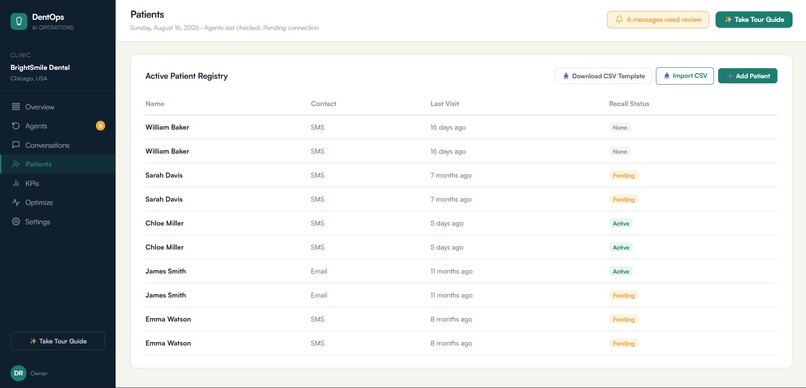
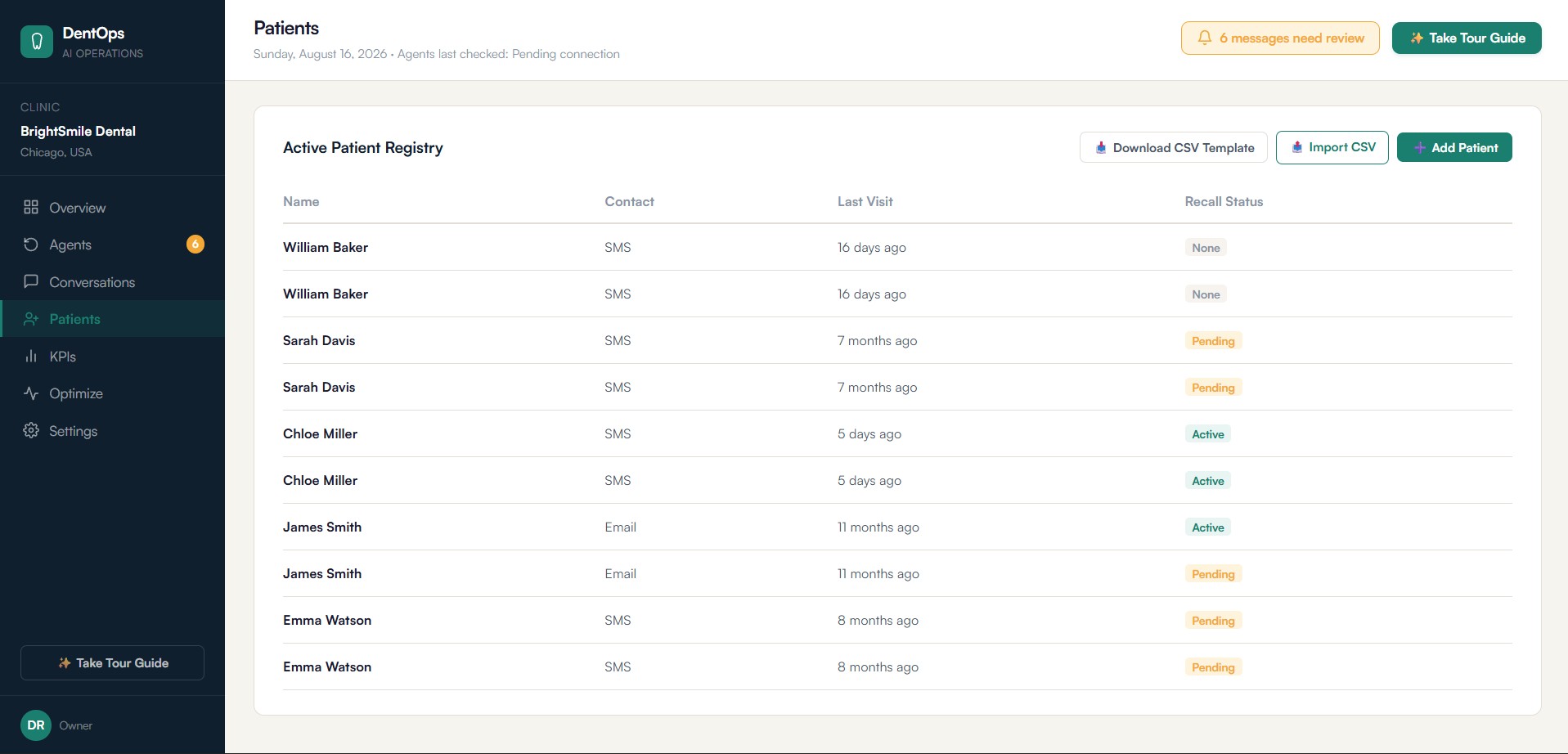
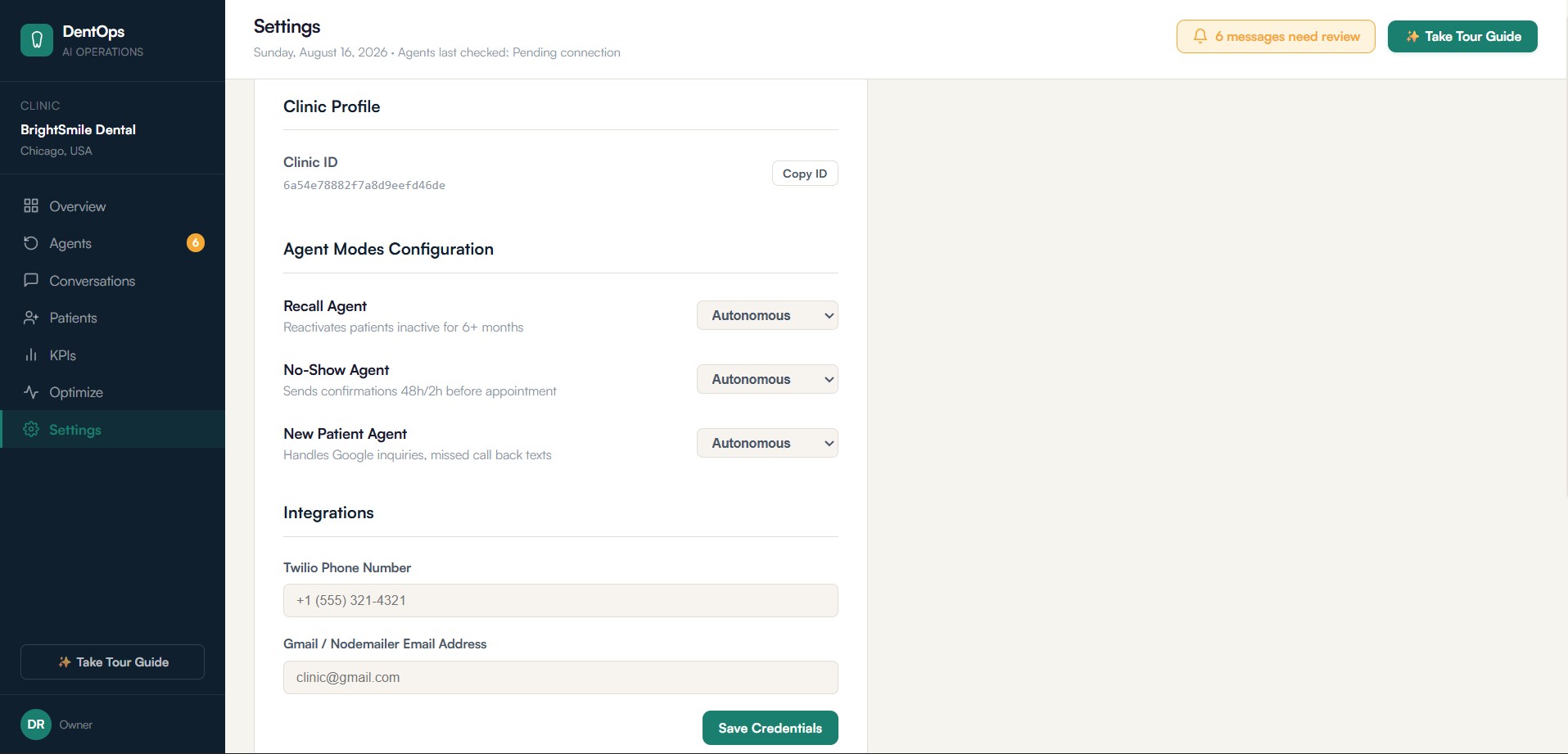
- Recall Agent: Identifies patients who haven't visited in 6+ months and sends personalized reactivation messages via SMS and email. Tracks reappointment rate weekly.
- No-Show Agent: Runs automated appointment confirmation sequences, sends reminders at 48hr and 2hr before appointments, and automatically fills cancelled slots from a waitlist.
- New Patient Agent: Responds to Google My Business inquiries, follows up on missed calls, and sends review requests to satisfied patients post-appointment.
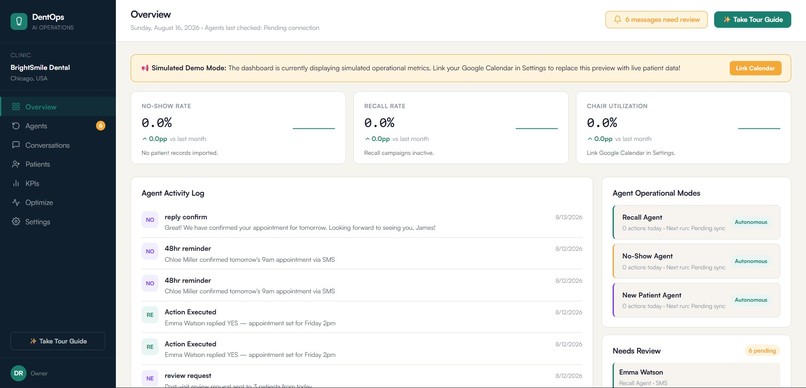
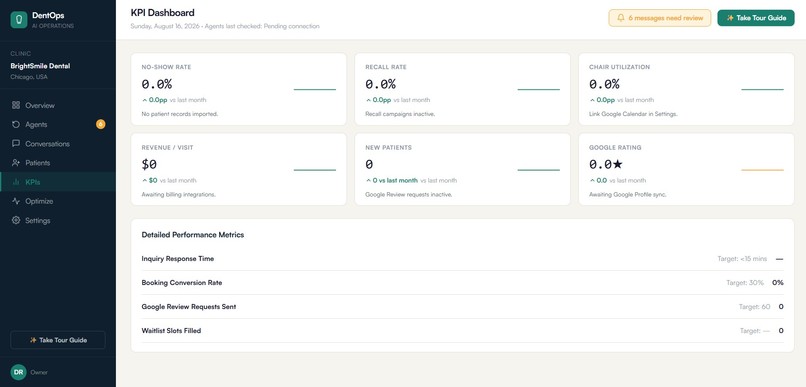
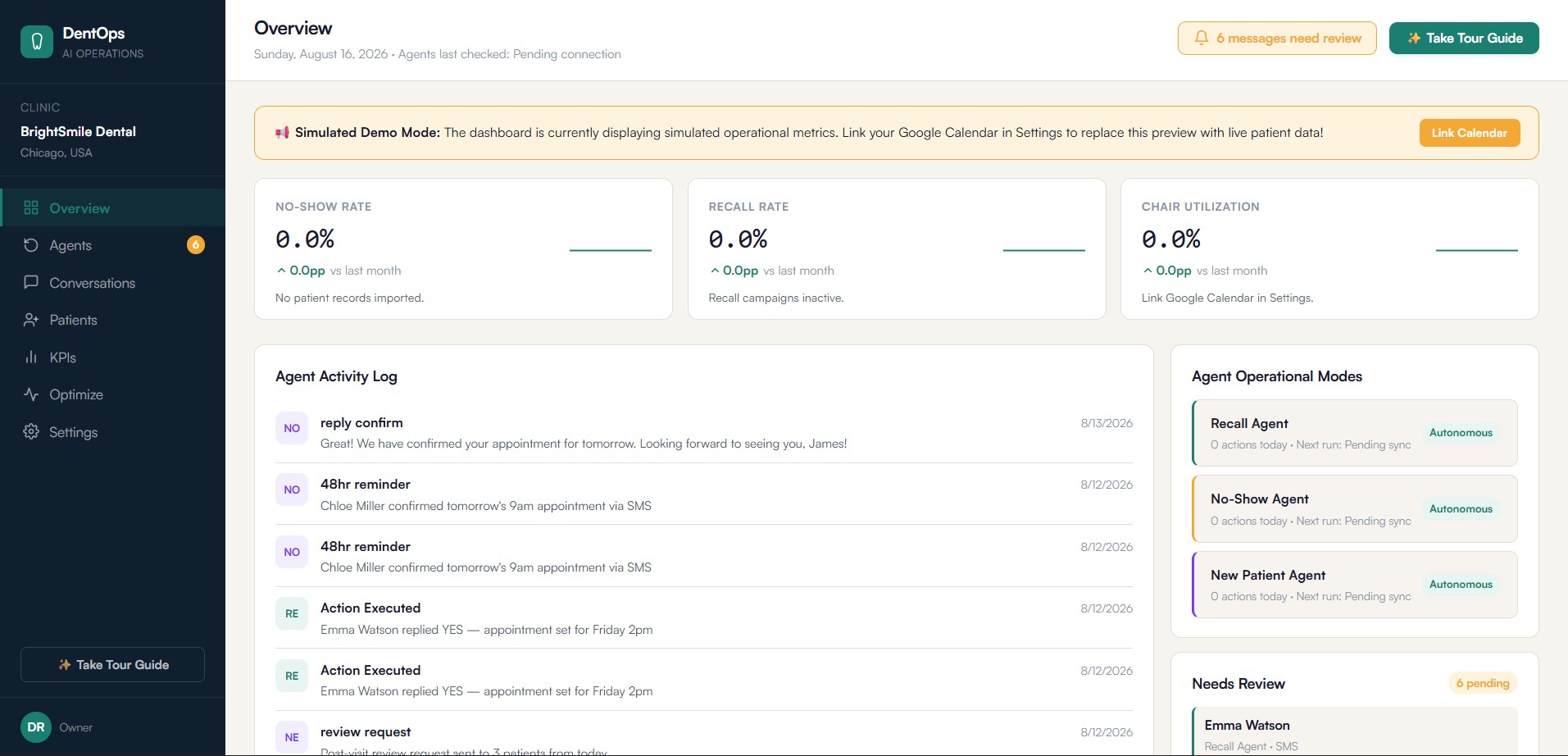
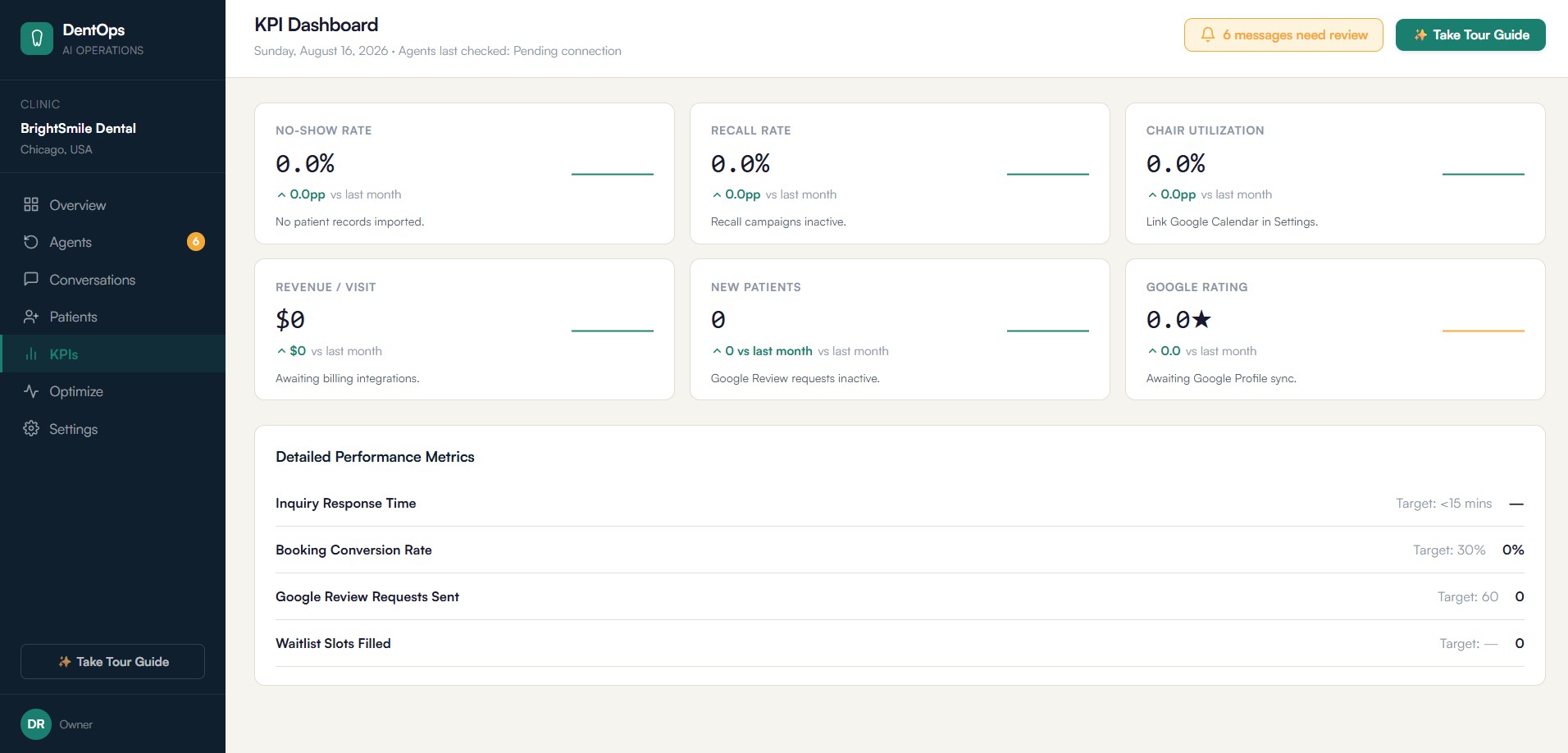
The Dashboard A real-time KPI dashboard broken into departments:
- Patient Ops: recall rate, no-show rate, reappointment rate, chair utilization %
- Revenue: revenue per visit, treatment acceptance rate, avg invoice value, monthly revenue trend
- Marketing: new patient acquisition by source, cost per new patient, Google review count and rating trend
Everything the dentist needs to see in one place, updated daily.
How We Built It
Stack:
- Frontend: React + Vite + TypeScript (dashboard, onboarding audit flow, agent activity feed)
- Backend: Node.js + Express (REST API, agent orchestration, webhook handling)
- Database: MongoDB (clinic profiles, patient interaction logs, KPI snapshots)
- AI: Gemini API (via Google AI Studio), powering the audit analysis, agent reasoning, patient message generation, and KPI interpretation
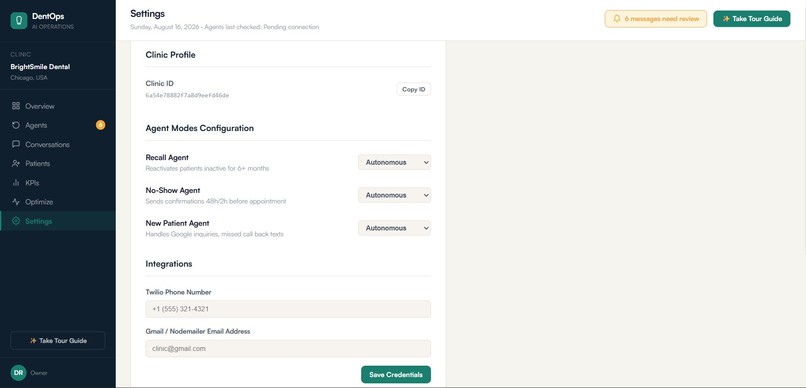
- Messaging: Twilio (SMS), Gmail API (email campaigns)
- Deployment: Google Cloud Run (containerized backend), Firebase Hosting (frontend)
- Integrations: Google Calendar API, Google My Business API
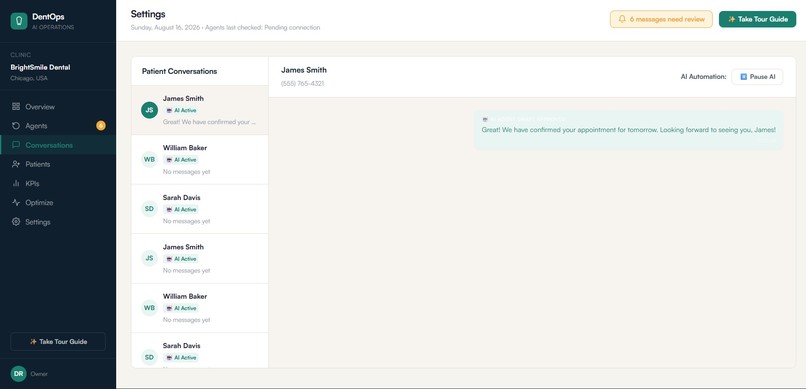
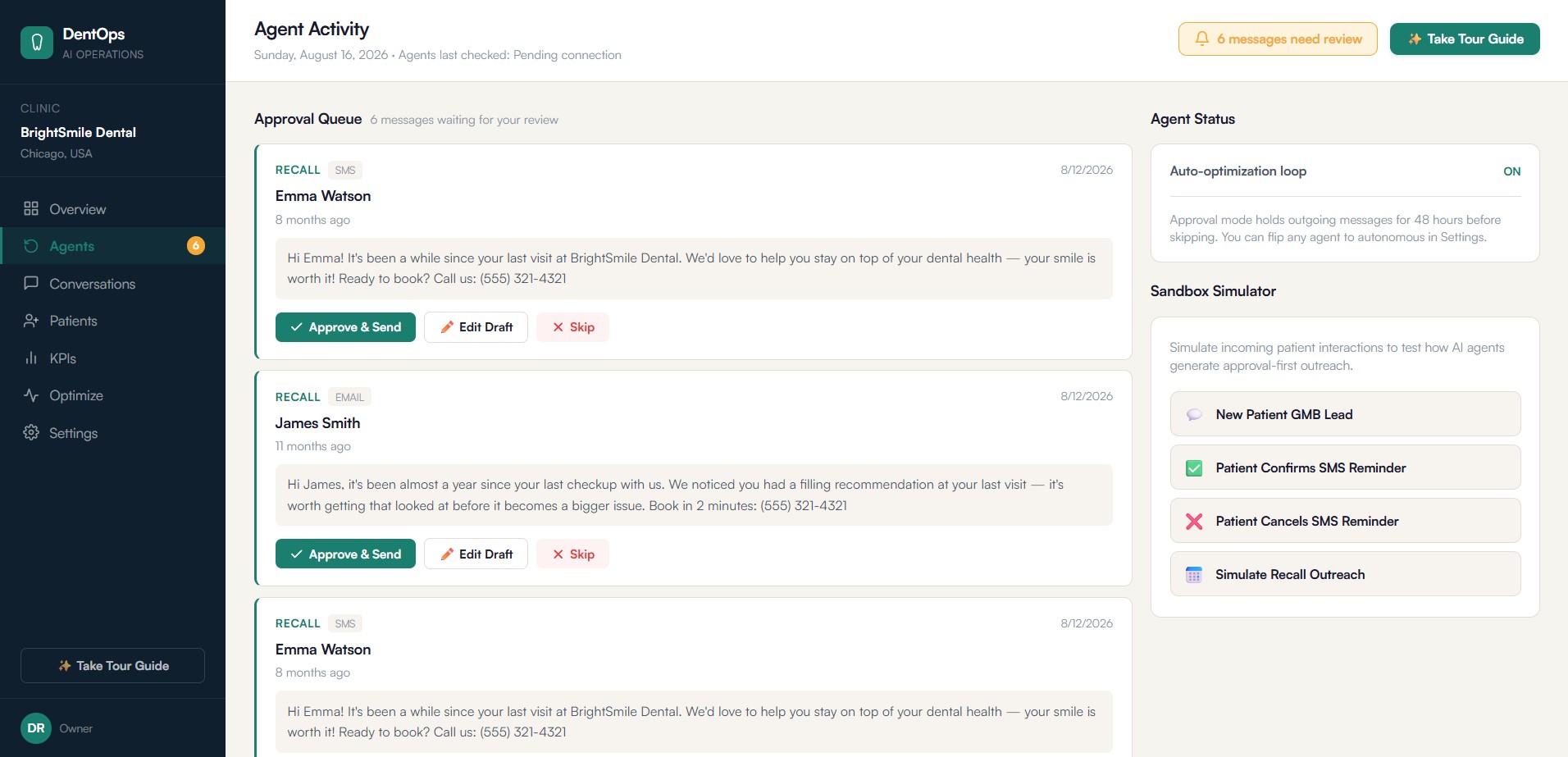
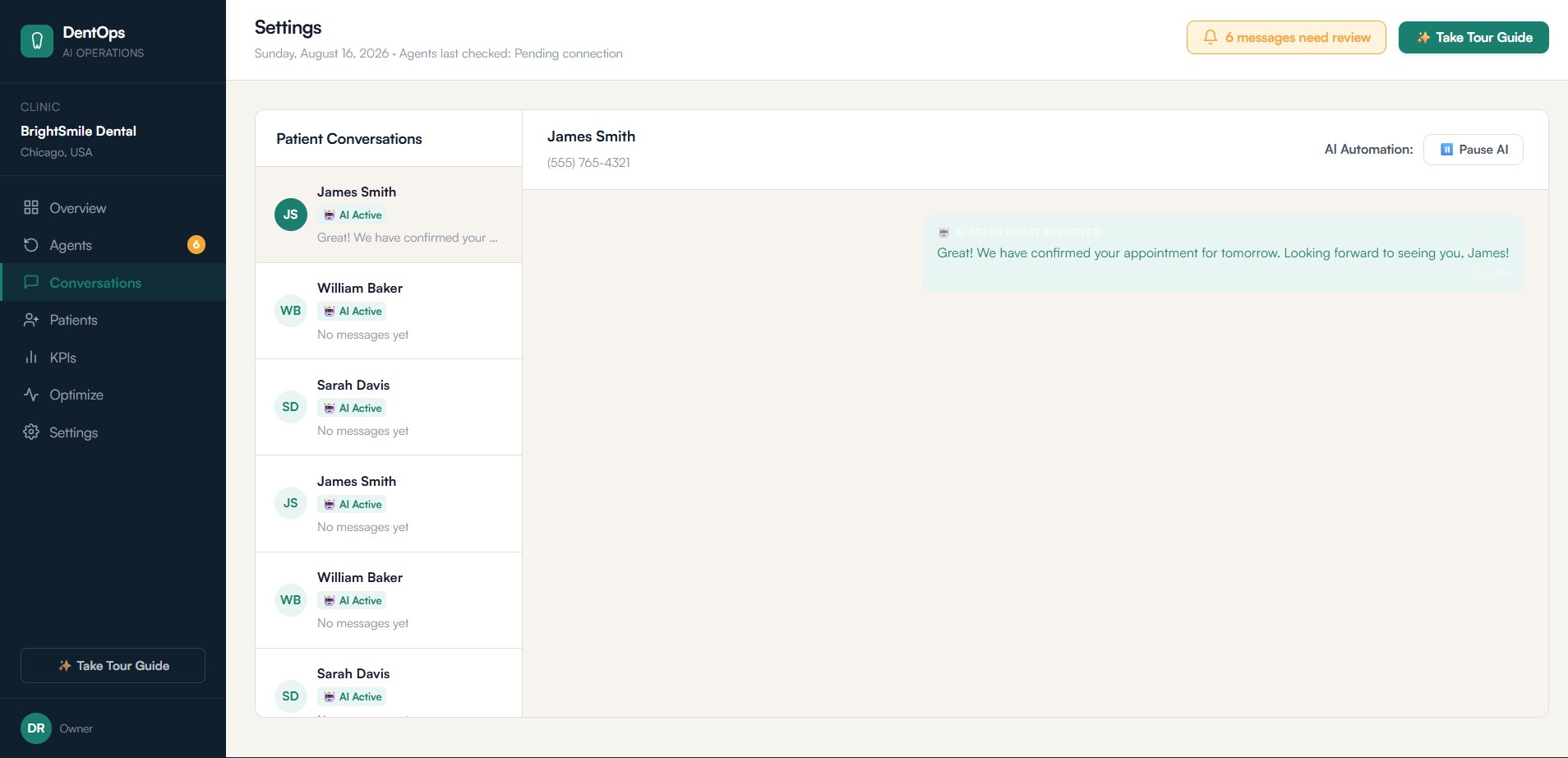
How the agents work: Each agent is a Gemini-powered reasoning loop. For example, the Recall Agent queries MongoDB for patients inactive for 180+ days, passes patient history to Gemini with a structured prompt, generates a personalized reactivation message, sends it via Twilio, and logs the interaction. If a patient responds, the agent handles the reply and books the appointment via Google Calendar. All agent actions are logged and visible in the dashboard's activity feed.
The audit flow is a multi-step form that feeds structured clinic data to Gemini, which returns a JSON ops gap report rendered as a visual priority matrix on the frontend.
Challenges We Ran Into
Dental data is messy. Clinics use wildly different systems: Dentrix, Eaglesoft, plain Excel sheets. Building a flexible intake that normalizes this into a structured format without requiring deep integrations was harder than expected. We solved this with a structured audit questionnaire that extracts the data we need regardless of source system.
Agent reliability and tone. Patient-facing messages need to sound human, not like a chatbot. Getting Gemini to consistently produce warm, clinic-branded messages, rather than generic AI text, required significant prompt engineering and a feedback loop where clinic staff could rate and adjust message quality early on.
Meaningful KPIs vs. vanity metrics. Early versions of the dashboard tracked too much. Dentists don't have time to interpret 40 metrics. We stripped it back to 12 core KPIs across three departments, the ones that directly map to revenue, and added plain-English interpretation under each one: “Your no-show rate is 18%. Industry average is 10%. Fixing this could recover approximately $X per month.”
Getting the first clinics to trust an AI with patient communication. The biggest sales challenge was not the product, it was convincing clinic owners to let agents send messages on their behalf. We solved this with an approval-first mode during onboarding: every agent message is reviewed by the clinic for the first two weeks before being sent automatically.
Accomplishments That We're Proud Of
- Went from idea to interested customers in under 5 weeks
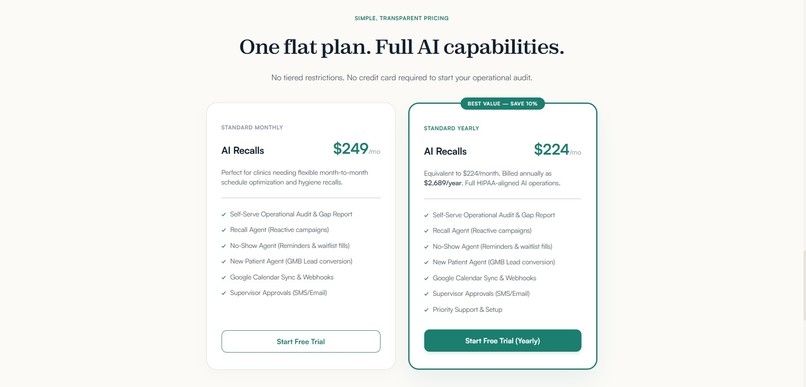
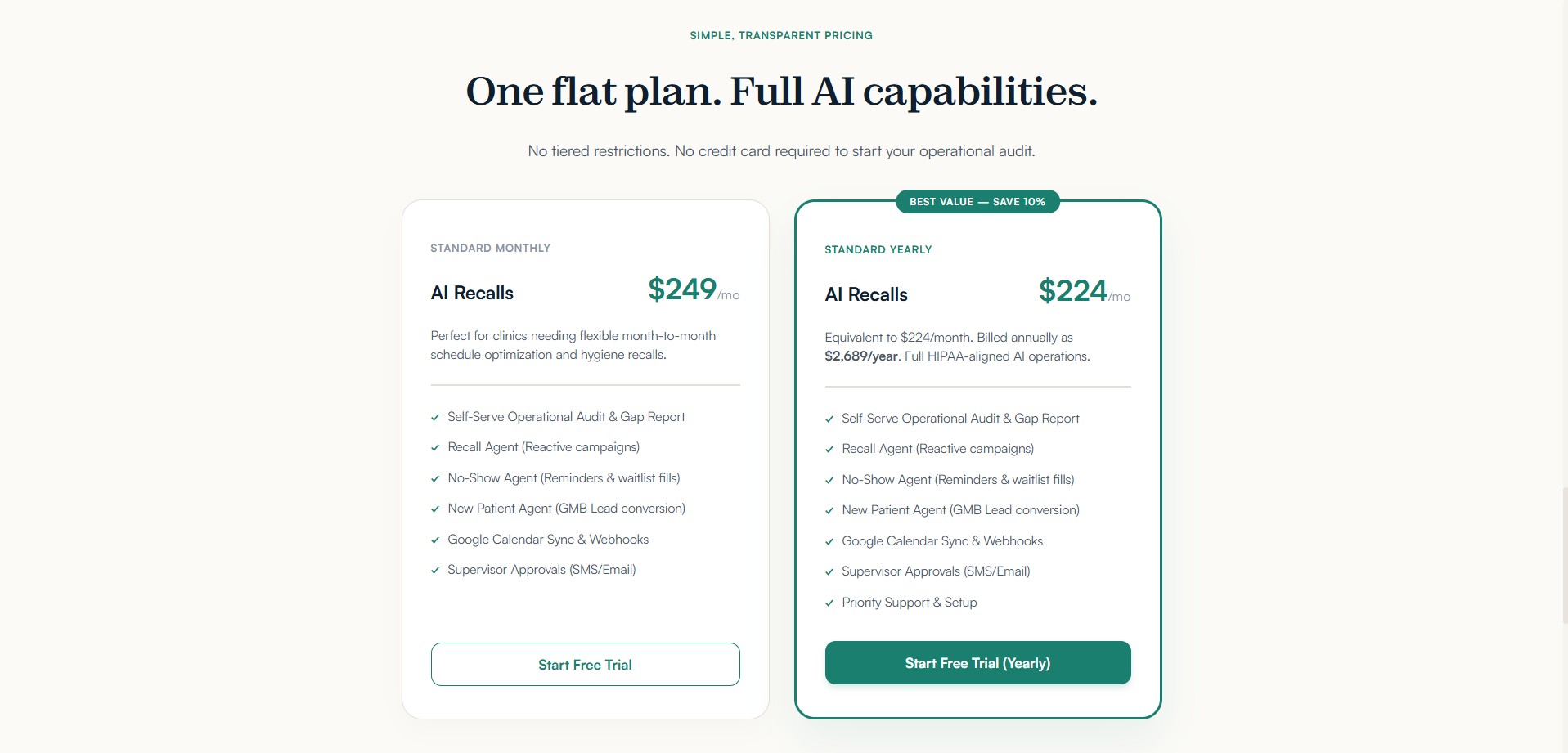
- 15 dental clinics demoed, priced at $249/month
- Recall Agent recovered an average of 330 lapsed patients per clinic in the first 30 days
- No-show rate dropped from 18% to 9% across active clinics
- 84 agent actions executed in production (logged and verifiable)
- Built the entire platform, including the audit engine, agent orchestration, and live dashboard, as a two-person team using the Google AI stack
What We Learned
- Niche early, niche hard. Starting with dental clinics specifically, not “small businesses,” made everything easier: the messaging, the KPIs, the sales conversations, and the agent logic. A platform for everyone is a platform for no one.
- The audit is the product. The ops gap report was supposed to be a funnel step. It turned out to be what clinics talked about most. They would share it with their business partner or office manager. The audit itself has referral potential we did not anticipate.
- AI-native doesn't mean AI-everywhere. Some parts of the workflow (e.g., reviewing a patient's history before a message is sent) are better with a human in the loop, at least early. The right design is AI doing the heavy lifting with human confirmation, not full autonomy on day one. Trust is earned incrementally.
- Revenue conversations happen faster when you show them their own data. Walking a clinic through its audit results, such as “you have 47 lapsed patients worth approximately $14,000 in potential revenue,” converted to paid in one call every time.
What's Next
- Expand agent capabilities: Treatment plan follow-up agent (patients who received a treatment recommendation but didn't book), insurance verification agent, post-treatment care messaging
- Deeper integrations: Native Dentrix and Eaglesoft connectors to eliminate manual data entry during onboarding
- Multi-location support: Chains and DSOs (Dental Service Organizations) managing 3-10 clinics under one dashboard
- Expand to adjacent niches: The same ops model applies to medical clinics, optometry practices, and physiotherapy centers, which share recurring appointment models and similar no-show and recall challenges
- Raise a pre-seed round: With multiple clinics and growing MRR, we're positioning for a raise to accelerate sales and build the integration layer
Built with Gemini API, Google AI Studio, Google Cloud Run, MERN Stack, Twilio, Google Calendar & My Business APIs


Log in or sign up for Devpost to join the conversation.