I work with dental insurance verification, where collecting patient and insurance information and preparing the right questions for payers can be repetitive and time-consuming. This inspired me to explore how generative AI could help organize the preparation process without pretending to replace actual insurance verification.
What it does
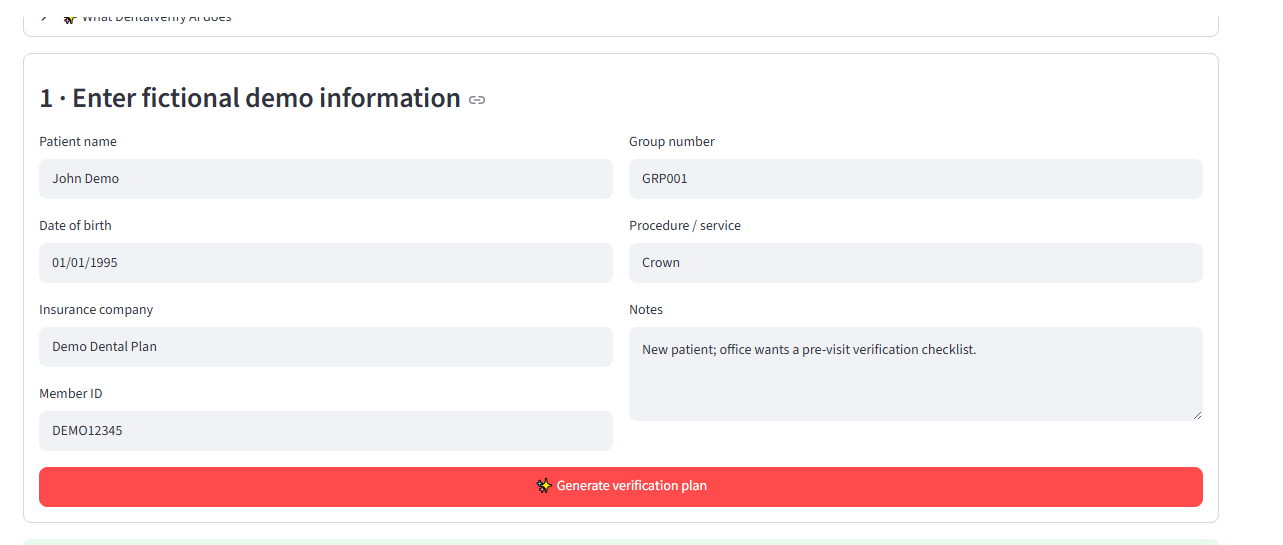
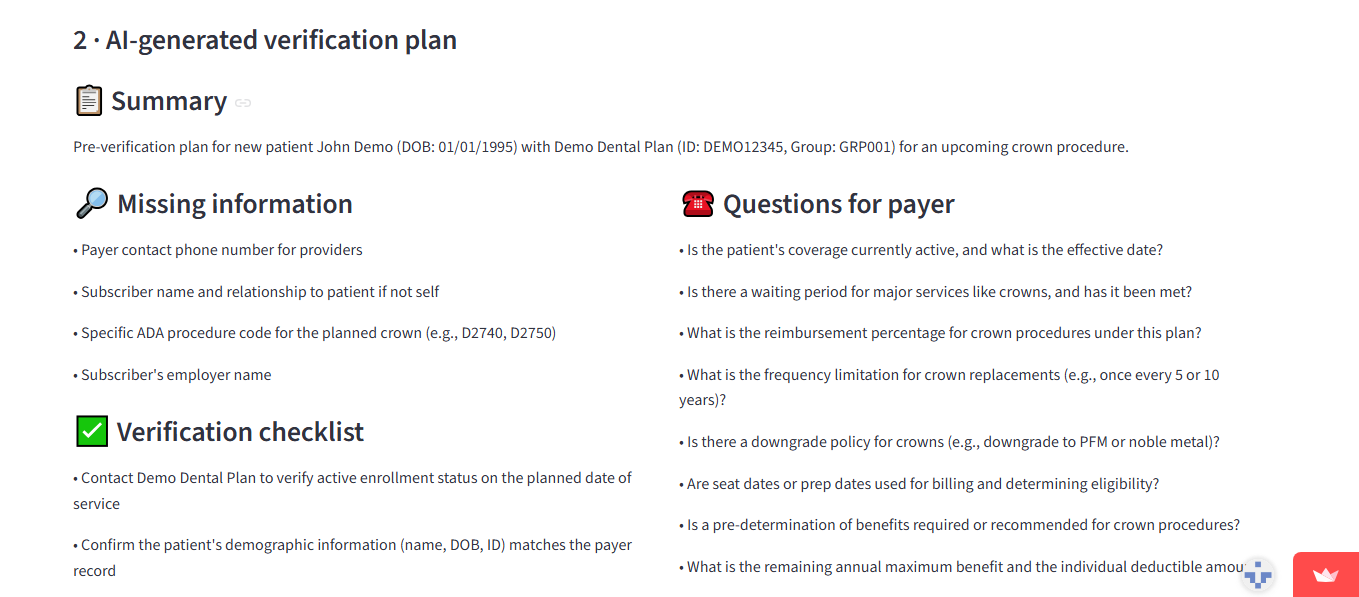
DentalVerify AI turns fictional dental insurance intake information into a structured verification-preparation plan. It identifies missing information, generates questions for the insurance payer, creates a verification checklist, and recommends the next action. The application clearly reminds users that eligibility and benefits must always be confirmed directly with the payer.
How I built it
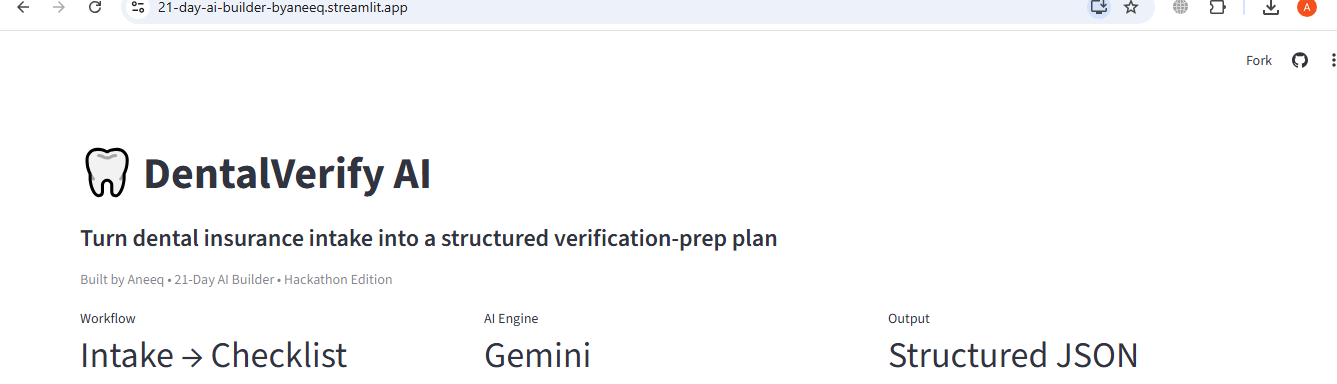
I built DentalVerify AI using Python and Streamlit for the application and user interface. I integrated the Google Gemini API to analyze the entered information and generate structured verification guidance. I used GitHub for source-code management and Streamlit Community Cloud to deploy the application as a working web app.
Challenges I faced
One of the main challenges was getting the AI to return useful and structured information while preventing it from presenting unverified insurance benefits as facts. I also encountered API errors and temporary model availability issues while testing the application. Building and deploying the complete workflow helped me understand how different components of an AI application work together.
What I learned
This project taught me how to integrate an AI API with Python, design prompts for structured outputs, build an interactive Streamlit interface, manage a project with GitHub, troubleshoot API and deployment problems, and turn a real workflow problem into a functioning AI prototype.
What's next
Future versions could include saved verification cases, office-specific checklists, downloadable reports, improved validation, and secure workflow integrations while maintaining strong privacy safeguards.
