-
-
DentalCAD Connect — An AI-powered marketplace for dental labs, clinics, and CAD designers.
-
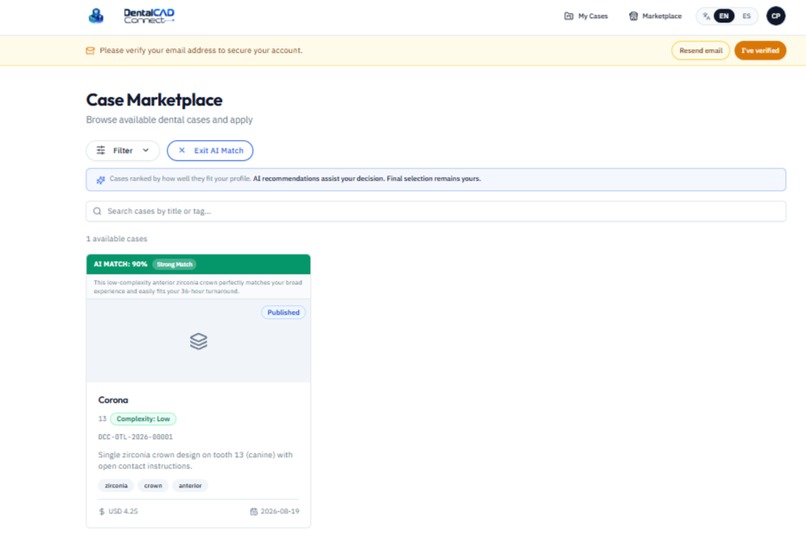
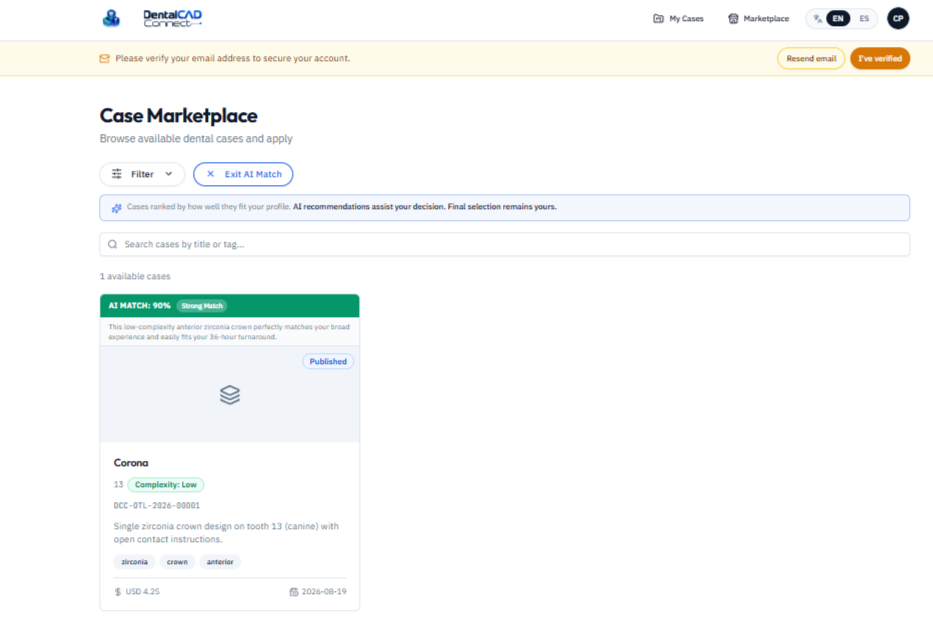
AI Match ranks available cases based on the designer’s experience, specialties, and profile.
-
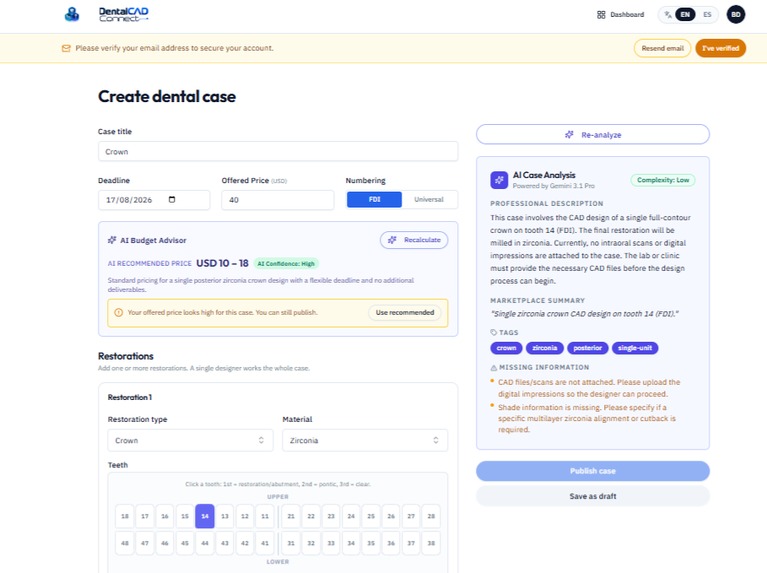
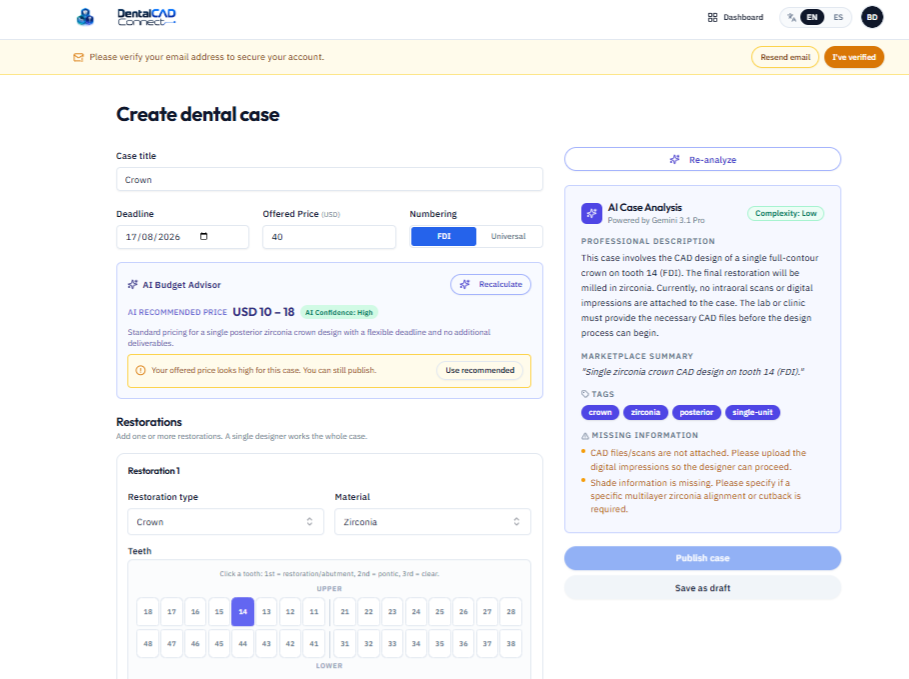
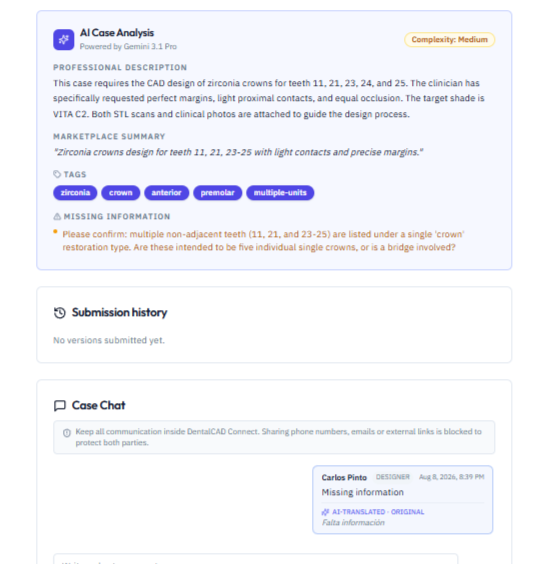
Gemini analyzes the dental case, identifies missing information, estimates complexity, and recommends a fair price.
-
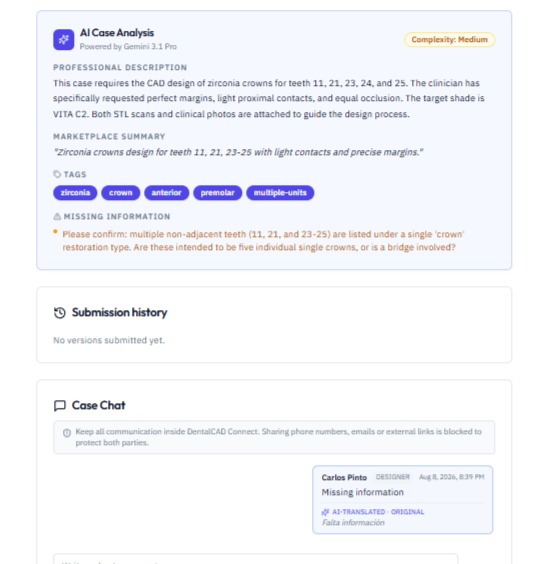
Gemini translates case information and messages to help labs, clinics, and designers communicate across languages.
-
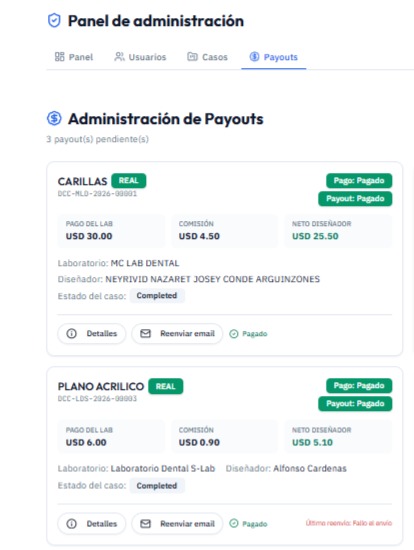
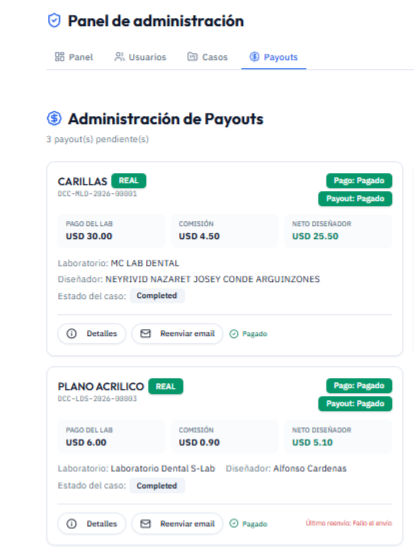
Completed real cases with platform commissions and designer payouts tracked in the administration panel.
Inspiration
Working in the dental industry has shown me the daily problems dental laboratories and clinics face when outsourcing CAD design. Case information is often divided between WhatsApp messages, emails, spreadsheets, and file-sharing services. This can create communication problems, missing information, language barriers, unclear prices, and difficulty finding the right designer.
My experience is in marketing and the dental industry, not software development. I wanted to prove that someone with direct industry knowledge could use AI to build a practical solution to a real problem.
That idea became DentalCAD Connect: an AI-powered marketplace where dental laboratories and clinics can find dental CAD designers, organize their cases, communicate clearly, and manage the complete workflow in one place.
What it does
DentalCAD Connect is a working web marketplace that connects dental laboratories and clinics with dental CAD designers worldwide.
A laboratory or clinic can create a case with the restoration type, tooth numbers, material, shade, deadline, offered price, clinical instructions, photos, and dental files. The platform then uses Gemini to analyze the case.
The AI Case Analysis creates:
- A professional case description
- A short marketplace summary
- Relevant dental tags
- A complexity level
- Warnings about missing or inconsistent information
The AI Budget Advisor reviews the case and recommends a fair price range. This helps laboratories avoid offering an unrealistic price and gives designers clearer expectations.
AI Match analyzes each case and compares it with designer profiles, experience, specialties, and availability. It helps designers find cases that fit their skills and helps laboratories or clinics choose the right designer. The final decision always remains with the user.
Gemini also helps translate case information and messages, reducing language barriers between users in different countries while keeping the dental meaning of the communication.
The platform includes user accounts, designer profiles, case management, a dental case marketplace, secure file access, a 3D dental-file viewer, chat, translation, status tracking, Stripe payments, designer payouts, and administrative controls.
How I built it
I began development on August 5, 2026. I first tried building the project with Google AI Studio and Antigravity. Because I do not have a software development background, that workflow was difficult for me to manage, so I moved the main MVP to Emergent while continuing to use AI throughout the development process.
I built the frontend with React and the backend with FastAPI and MongoDB. I used Firebase Authentication for user access, Google Cloud services for the Gemini integration, object storage for case files, Three.js for the 3D viewer, and Stripe for real payments.
Gemini API is used inside the production application for case analysis, price guidance, matching, and translation. I also used ChatGPT and Claude as development assistants for planning, troubleshooting, writing, and reviewing parts of the project.
Challenges I ran into
After registering for the competition, serious personal circumstances delayed my ability to begin the project. I was only able to start development on August 5, which gave me approximately eleven days to build and test the MVP before the deadline.
My largest technical challenge was building a complete platform without being a software developer. I had to learn how the frontend, backend, authentication, databases, APIs, payments, file permissions, and deployment work together.
I also had to change development platforms during the hackathon. This cost time, but it helped me find a workflow that I could manage more effectively.
Another major challenge was designing AI features that provide useful guidance without taking control away from users. Dental cases can contain incomplete or conflicting information, so the system needed to identify problems and explain its recommendations while leaving the final decisions to laboratories, clinics, and designers.
Payments and confidentiality were also important challenges. The platform needed to track commissions and designer payouts while limiting access to case files and protecting communication between both parties.
Accomplishments that I am proud of
I turned the idea into a deployed and functional MVP in approximately eleven days, despite changing platforms during development and having no previous software development background.
During the hackathon, I worked with two dental laboratories and two real CAD designers. I tested the complete workflow with two completed transactions representing USD 36 in processed volume and USD 5.40 in platform commissions. One USD 30 transaction was a founder-funded end-to-end test, while the other USD 6 transaction came from an independent user.
Both designer payouts were completed and recorded in the administration panel. This allowed me to test more than the interface: case creation, AI analysis, matching, payment, commission calculation, work completion, and payout tracking all operated as part of the same workflow.
What I learned
I learned that industry knowledge can be a strong starting point for building technology. AI did not replace the decisions I needed to make, but it helped me convert my dental and marketing experience into a working product.
I also learned the importance of testing with real users and real transactions. A feature can appear correct in a demonstration but reveal different problems when someone actually creates a case, uploads files, makes a payment, or completes the work.
Most importantly, I learned that useful AI should explain and support decisions. Users must understand why a price, complexity level, warning, or match is being recommended, and they must remain in control of the final action.
What’s next for DentalCAD Connect
My next goal is to improve the MVP through feedback from more laboratories, clinics, and designers. I plan to strengthen designer verification, portfolios, case privacy, payments, automatic payouts, notifications, translation, and the accuracy of AI recommendations.
DentalCAD Connect is intended to become the first platform in a larger dental technology ecosystem. In the medium term, I plan to connect it with a specialized workflow-management system for dental laboratories, covering case tracking, production, billing, inventory, deliveries, and performance data.
Later, this ecosystem can expand to include systems for dental clinics. My five-year vision is to create a connected group of tools designed specifically for the dental industry, helping laboratories, clinics, and dental professionals work together more efficiently across countries.
Testing Instructions
Live application: https://dentalcadconnect.app
Lab/Clinic test account
- Email: [email protected]
- Password: Xprize
- Role: Lab/Clinic
Designer test account
- Email: [email protected]
- Password: Xprize
- Role: Designer
These demonstration accounts contain no sensitive patient information. Judges may also create their own free accounts.


Log in or sign up for Devpost to join the conversation.