-
-
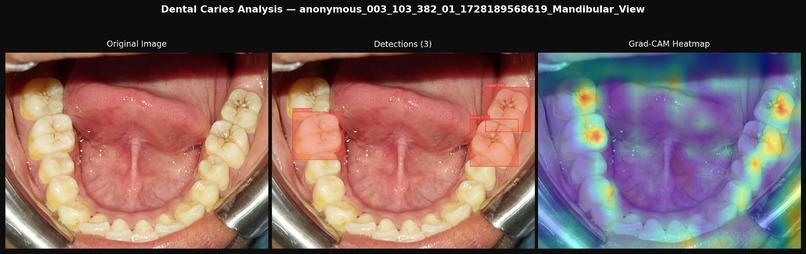
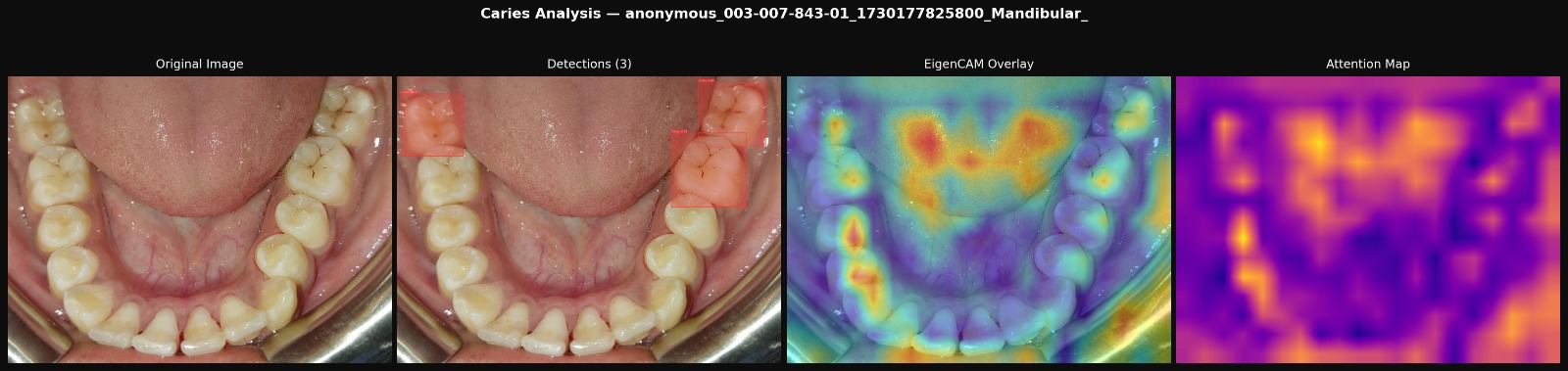
gradCAM
-
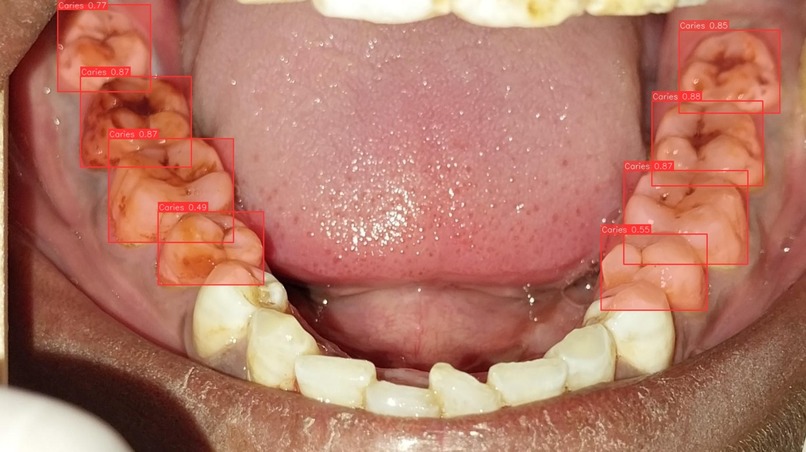
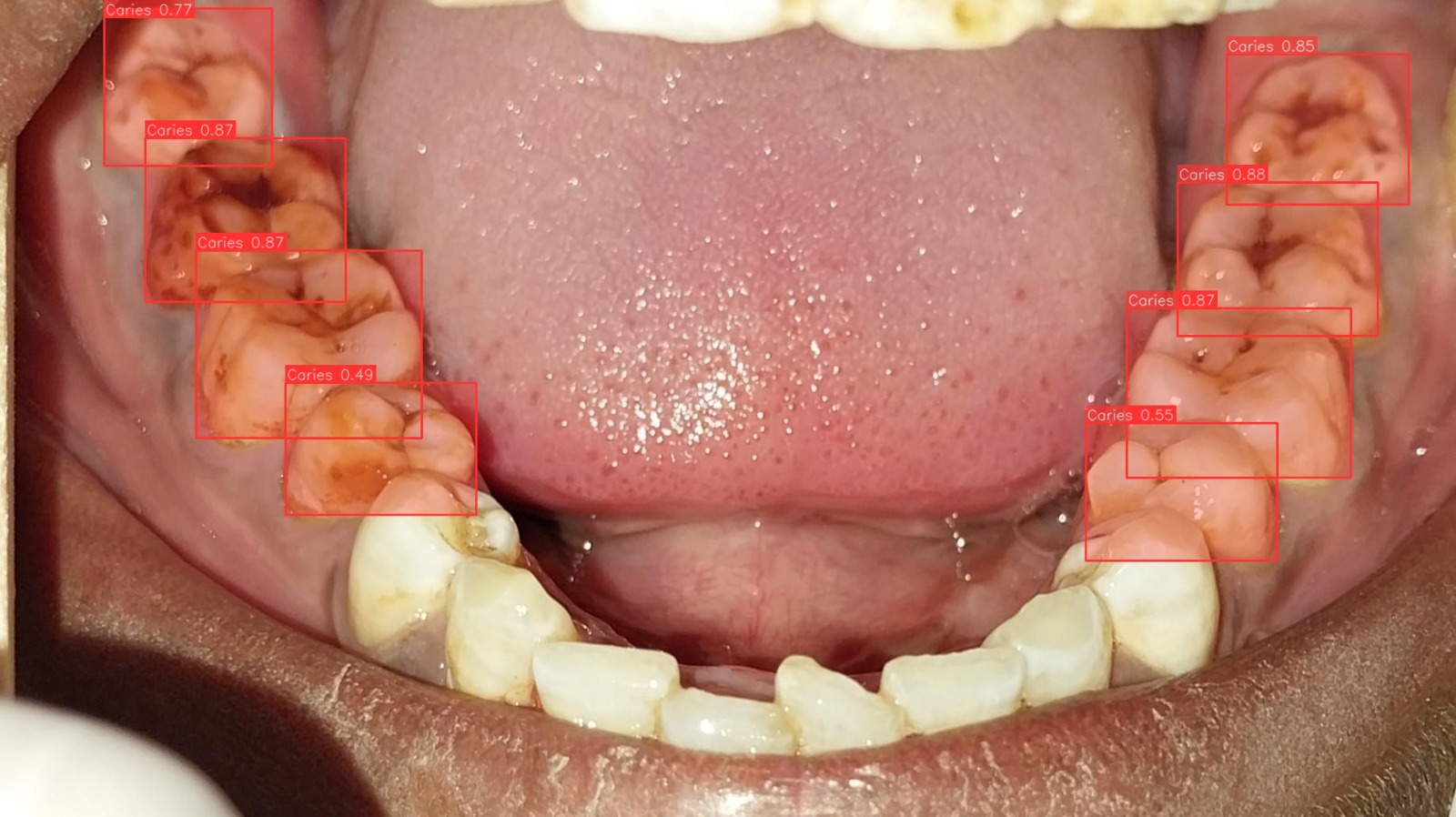
Caries detection
-
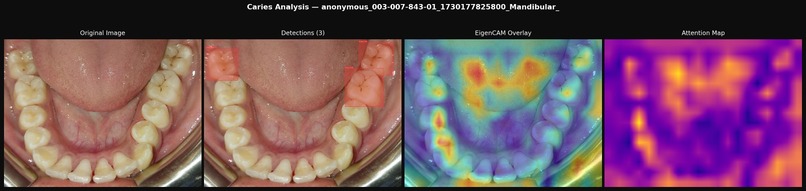
EigenCAM and Attention maps
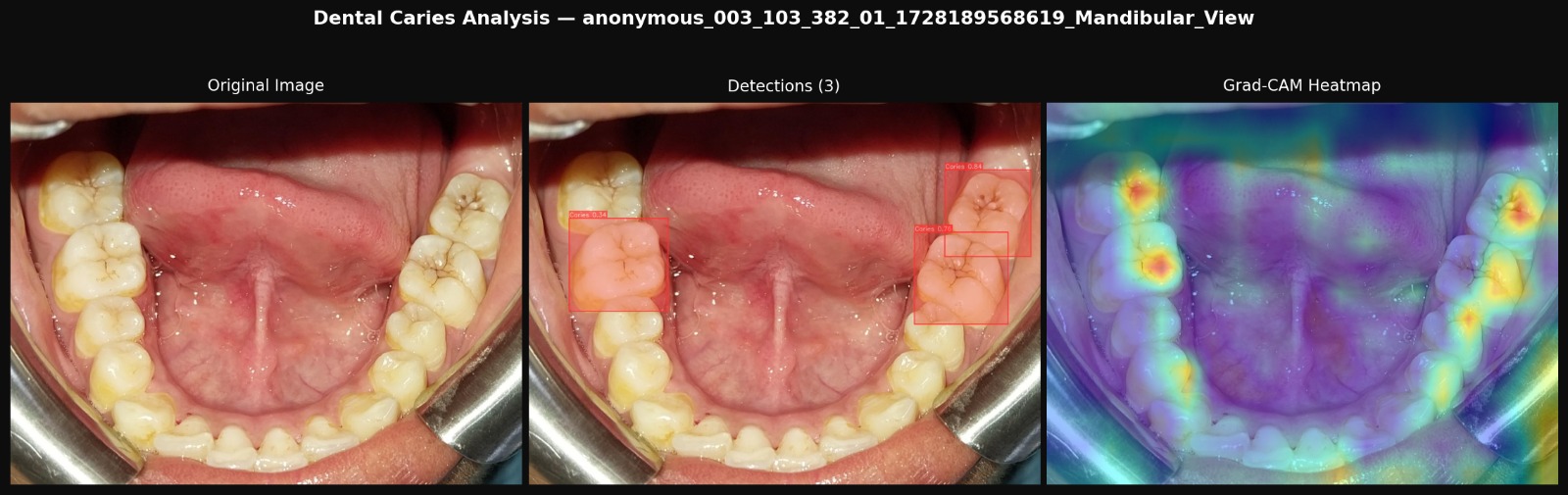
Project Theme: 🏥 Healthcare || ❤️AI for Social Impact
From Pain to Prevention: Our Journey Building an AI Dental Screening System
The Inspiration
Dental caries (tooth decay) is one of the most common health problems in India, yet it often goes unnoticed until it becomes painful. Many people visit a dentist only when the pain is unbearable, by which time a simple filling may have turned into a root canal or even tooth loss.
This problem is even more severe in rural India, where access to dental professionals is limited. During our research, we realized that the biggest challenge wasn't a lack of awareness, it was the lack of early detection.
That inspired us to ask a simple question:
What if anyone with a smartphone could screen their teeth for cavities before they became serious?
That question became the foundation of our project.
Our Solution
We are building an AI-powered dental screening system that detects dental caries from intraoral photographs.
At this stage, we have trained a YOLOv8 object detection model to identify potential cavities, with Grad-CAM integrated to visually explain the regions driving each prediction. Instead of a confusing "positive" or "negative" result, the model highlights the suspected region, laying the groundwork for guidance on whether a user should monitor the tooth or see a dentist.
Our current build is the trained detection model itself, see the attached demo video, where we feed the model sample intraoral images and it detects and highlights suspected caries in real time. The smartphone capture flow, the web application shell, and longitudinal tracking across scans are the next stages we're building toward and are described under "Looking Ahead" below.
How We Built It
Building the project so far has involved two main stages.
Dataset Preparation
We collected and studied publicly available annotated dental image datasets. Since real-world datasets contain images taken under different lighting conditions and from different angles, we performed preprocessing and augmentation to improve model robustness.
Model Training
We trained a YOLOv8 model to detect dental caries in intraoral images.
The model learned to localize areas affected by tooth decay while balancing detection accuracy and inference speed, with deployment on a lightweight web platform as the target down the line.
Explainable AI
Medical AI should never behave like a black box.
To increase user trust, we integrated Grad-CAM into the model pipeline, so predictions come with a visual highlight of the regions that contributed to the result,.. not just a bare label. This groundwork is what will make results interpretable for both users and healthcare workers once the app layer is built.
Challenges We Faced
Limited Data
Medical datasets are relatively small compared to datasets available for general computer vision tasks. This required careful preprocessing and augmentation to improve generalization.
Real-World Image Variations
Smartphone images vary greatly because of lighting, camera quality, shadows, reflections, and viewing angles. Building a model that performs consistently across these variations was one of our biggest technical challenges.
Balancing Accuracy and Speed
A highly accurate model is useful only if it can provide results quickly enough for everyday use. We optimized our model to maintain good detection performance while keeping inference fast enough for real-time use once deployed.
Making AI Explainable
Users are more likely to trust AI when they can understand its reasoning. Integrating Grad-CAM and shaping how its output will eventually be presented required significant experimentation and refinement.
What We Learned
This project taught us far more than machine learning.
We learned how important high-quality data is for medical AI, how explainability builds user trust, and how difficult it is to create solutions that will work outside controlled laboratory conditions.
Most importantly, we learned that technology creates the greatest impact when it solves a real problem for people who need it the most.
Looking Ahead
Our vision extends beyond the model we've trained so far.
Near-term build:
- Wrapping the current model (already validated on sample images, as shown in our demo video) in a web interface where users can upload or capture a photo using a smartphone.
- Preventive guidance based on the findings, presented alongside the Grad-CAM highlight.
Further ahead:
- Longitudinal tracking, storing scans over time to observe whether a suspicious region is stable or worsening.
- Because the application will only require a smartphone, it could also be used by ASHA workers and community healthcare volunteers to conduct village-wide dental screenings during routine health visits.
- Improving detection accuracy with larger datasets, supporting additional oral diseases, enabling offline inference for low-connectivity regions, and integrating with public healthcare programs.
Conclusion
Our project is built on a simple idea: prevent dental problems instead of reacting to them.
By combining artificial intelligence, explainable machine learning, and smartphone accessibility, we aim to make early dental screening available to everyone, especially those with limited access to dental care. We've built and demonstrated the core detection model, you can see it identifying caries on sample images in our demo video; building it out into a full smartphone-accessible tool is our immediate next step.
We believe that even a small intervention at the right time can prevent pain, reduce treatment costs, and improve oral health for millions of people.

Log in or sign up for Devpost to join the conversation.