Inspiration
Hair loss affects millions of individuals, including our co-founder Ujjwal. When he began his own restoration journey, he encountered a paradoxical hurdle that many patients face. The medical community refers to this as the "Dread Shed", which is a highly stressful period where daily shedding significantly increases before any visible regrowth occurs.
This phase takes a massive psychological toll. For months, patients rely on flawed visual memories and stressful daily mirror checks to guess if their medication is actually working. The real breaking point for Ujjwal came during a routine check-in with his dermatologist. When the doctor asked how the treatment was progressing, Ujjwal struggled to provide a clear answer. He lacked any concrete evidence to show the specialist what was happening on a day-to-day basis. Instead of a data-driven medical consultation, the appointment turned into a frustrating guessing game based on vague statements like, "I feel like I am losing more hair."
This experience highlighted a massive flaw in the current telehealth landscape. The true anxiety of hair loss stems from a complete lack of objective measurement and the inability to clearly communicate clinical progress to medical professionals. We created Densly to fix this broken communication loop by empowering patients with hard, actionable biometric data.
What it does
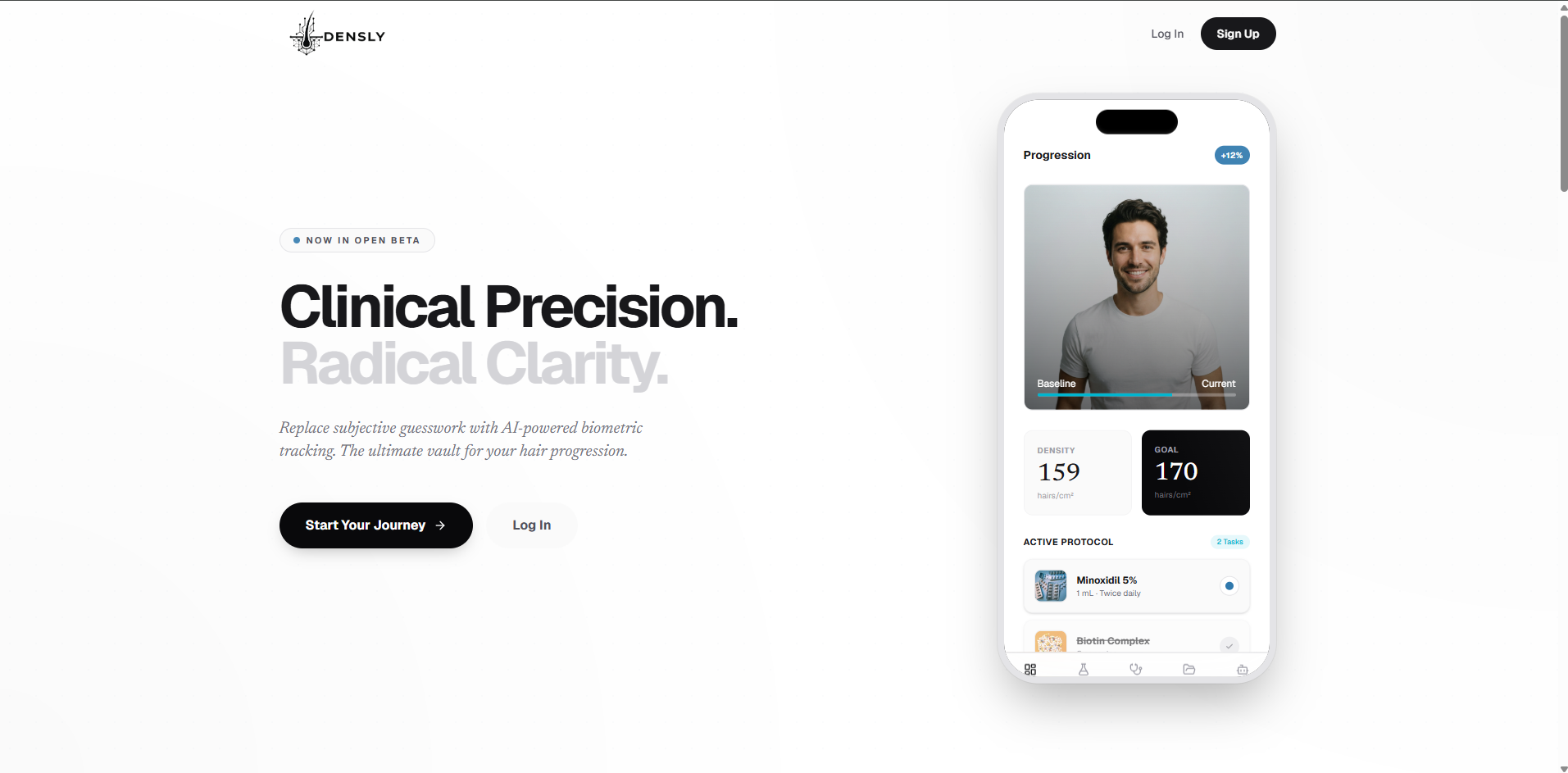
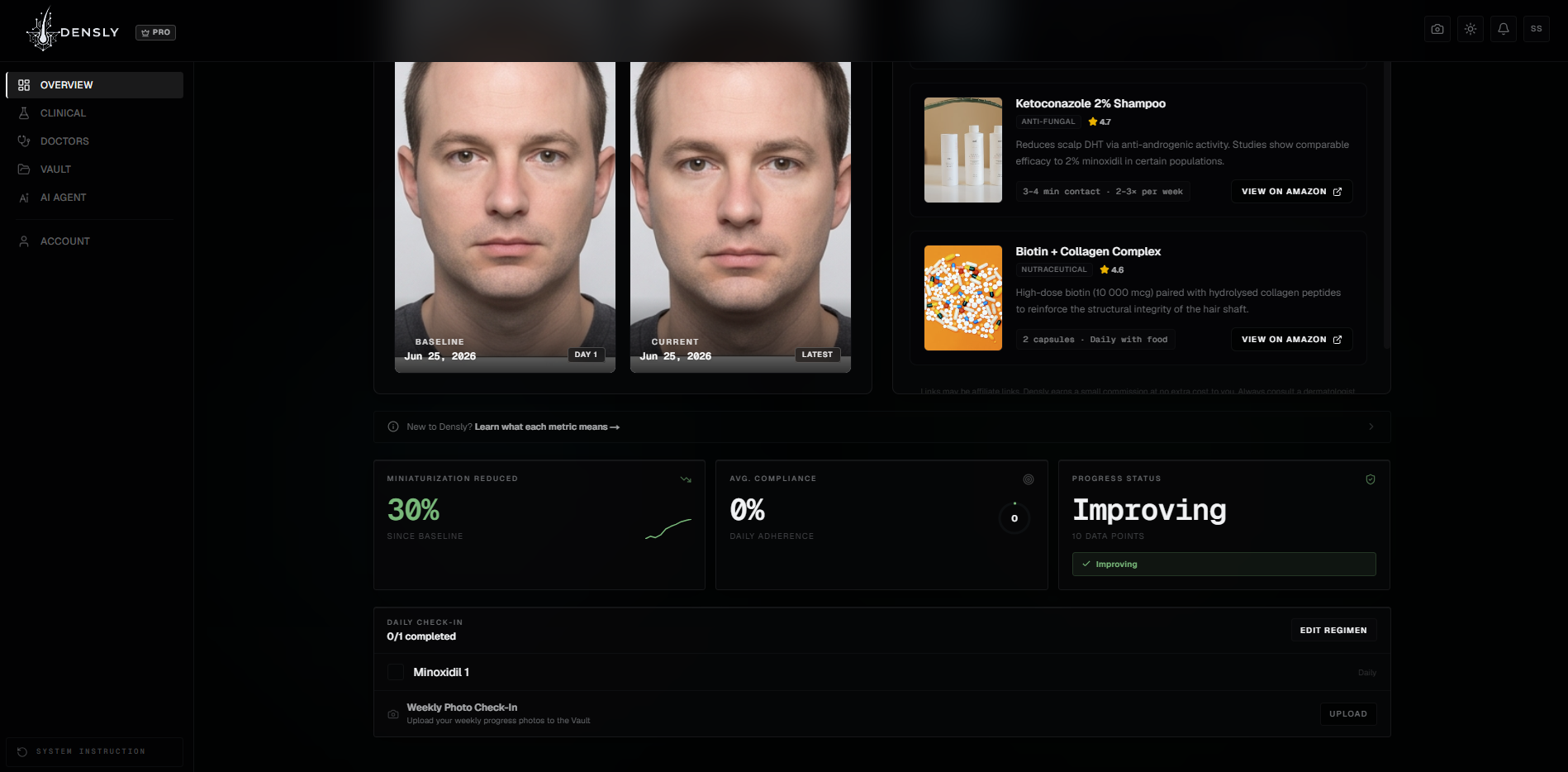
- The Frontend & UI: We utilized Vercel v0 to rapidly prototype and iterate on our clinical-grade, dark-mode dashboard, deploying the final Next.js application on Vercel.
- Biometric Capture: To ensure data integrity, we engineered a scanner that actively tracks luminance and motion. It securely locks the capture button until strict lighting and alignment parameters are met.
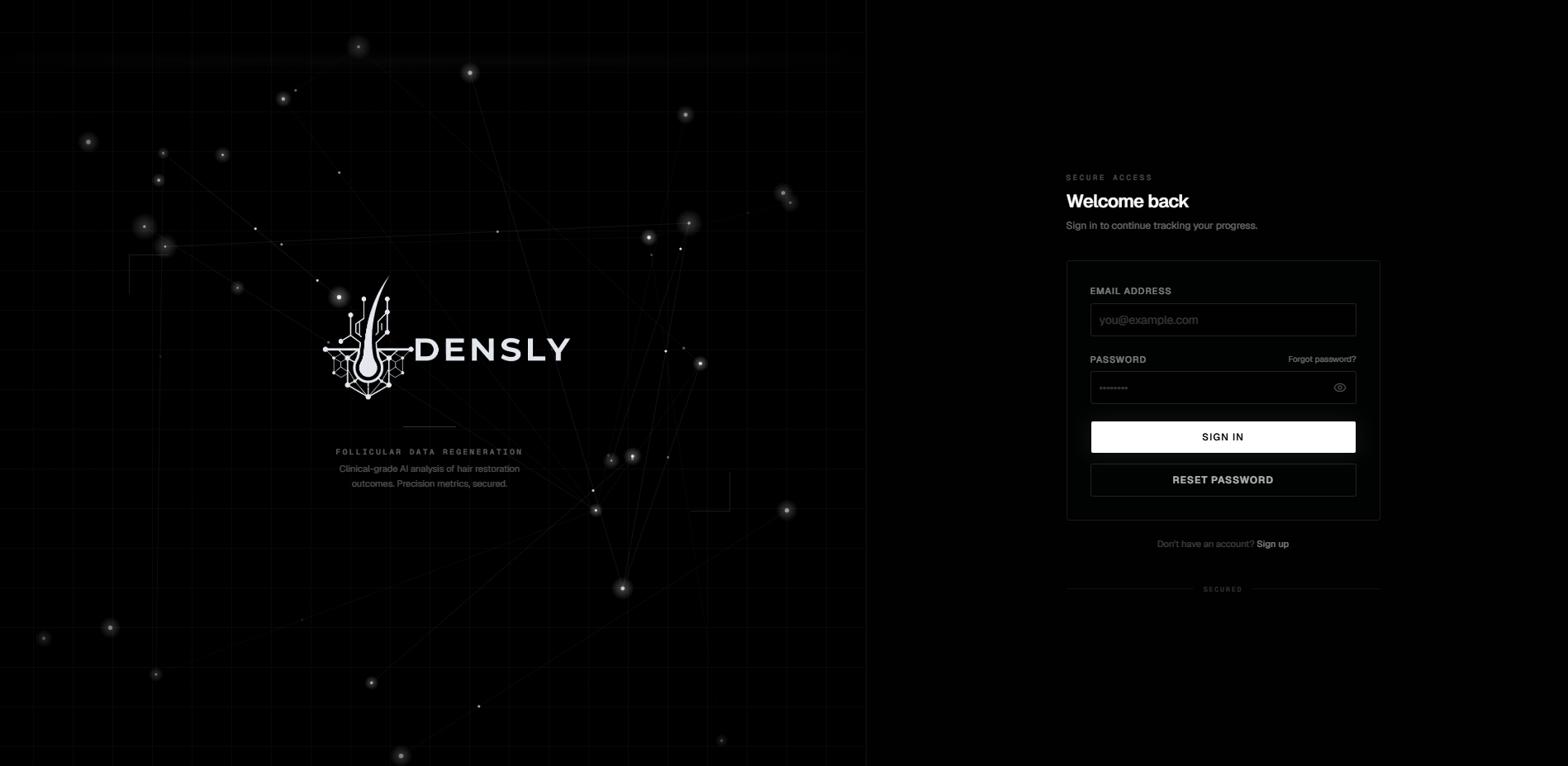
- Authentication & Security: We implemented a frictionless, OTP-verified onboarding flow powered by the Brevo Email API to ensure patient accounts and clinical vaults remain secure from day one.
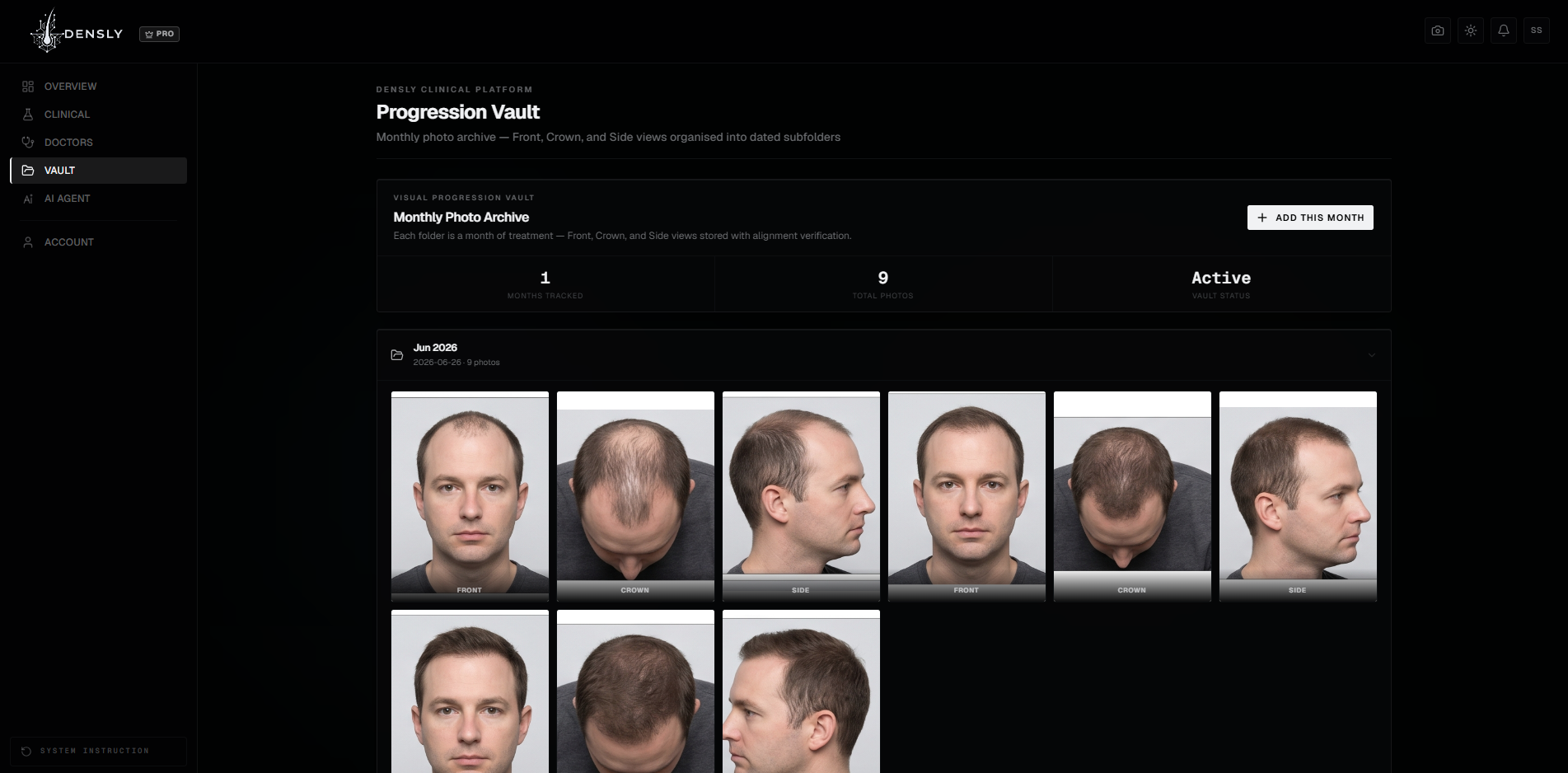
- The Image Vault (Amazon S3): All raw biometric assets (daily progression photos and PDF lab reports) are securely encrypted and routed to an Amazon S3 Image Vault for highly durable object storage.
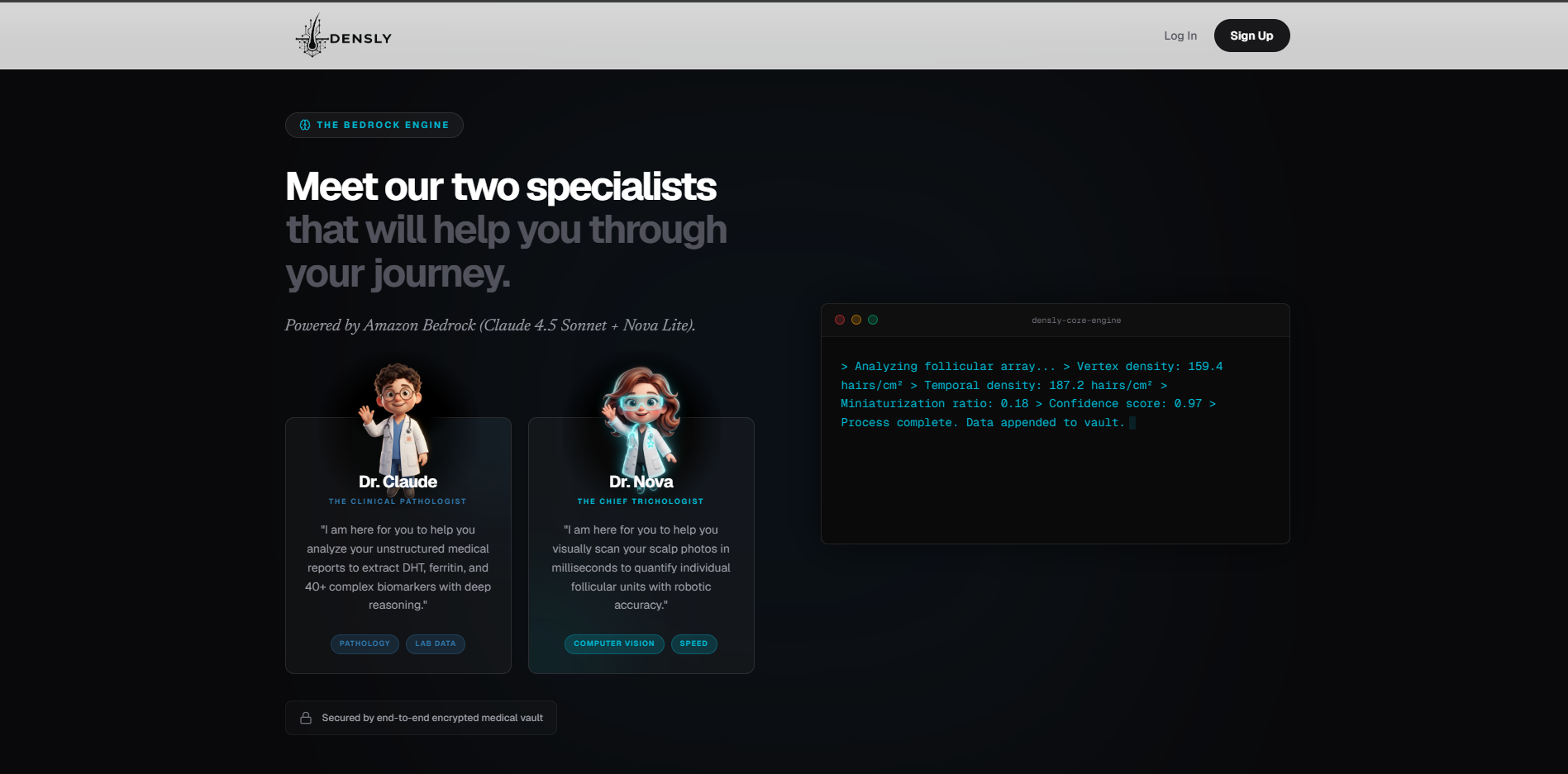
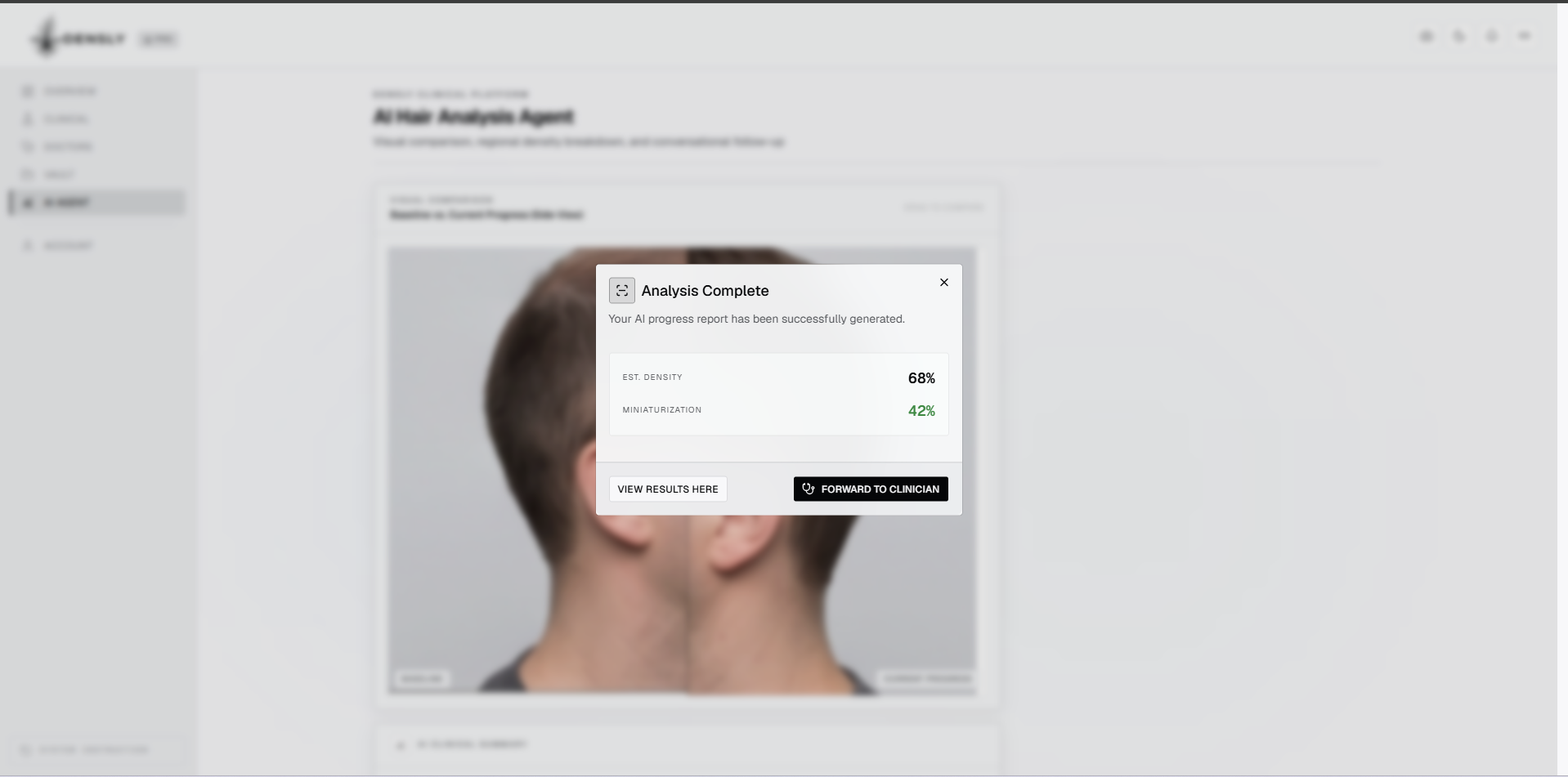
- The Backend AI: Once an asset is secured in S3, it is processed through our Multi-Agent Pipeline on AWS Bedrock. Claude 4.5 Sonnet acts as our vision specialist to extract spatial follicular density and miniaturization metrics. Amazon Nova Lite acts as our data formatting utility to parse the raw trichological output into strict JSON.
- Lab Parsing: We utilized Bedrock OCR to read unstructured PDF lab reports. Our anti-decoy filtration system ignores irrelevant data and extracts targeted biomarkers like $DHT$ and Free Testosterone.
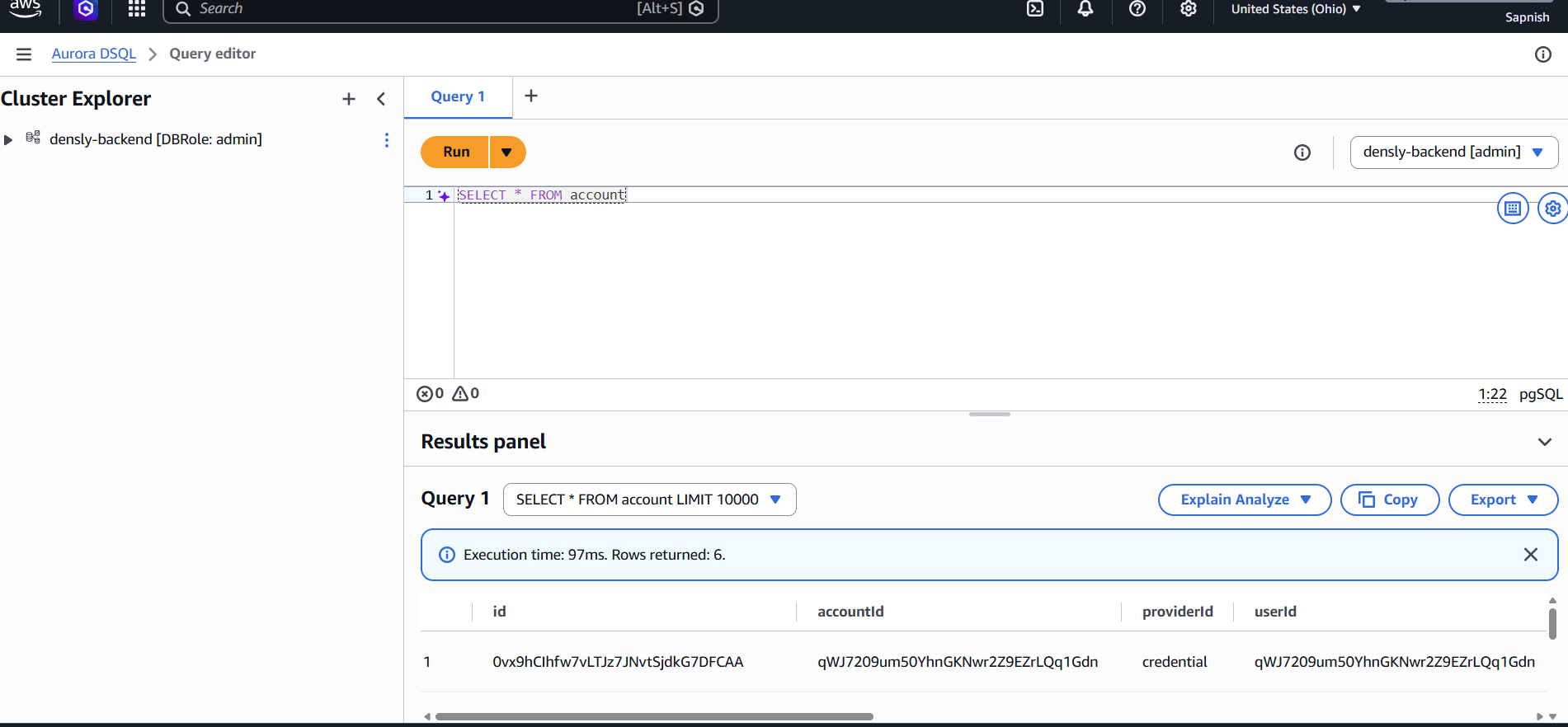
- The Database: While S3 handles our objects, Densly tracks highly structured longitudinal medical timelines. For this, our entire backend relies on Amazon Aurora DSQL. Its serverless active-active architecture allows us to query complex historical patient milestones instantly without manual provisioning.
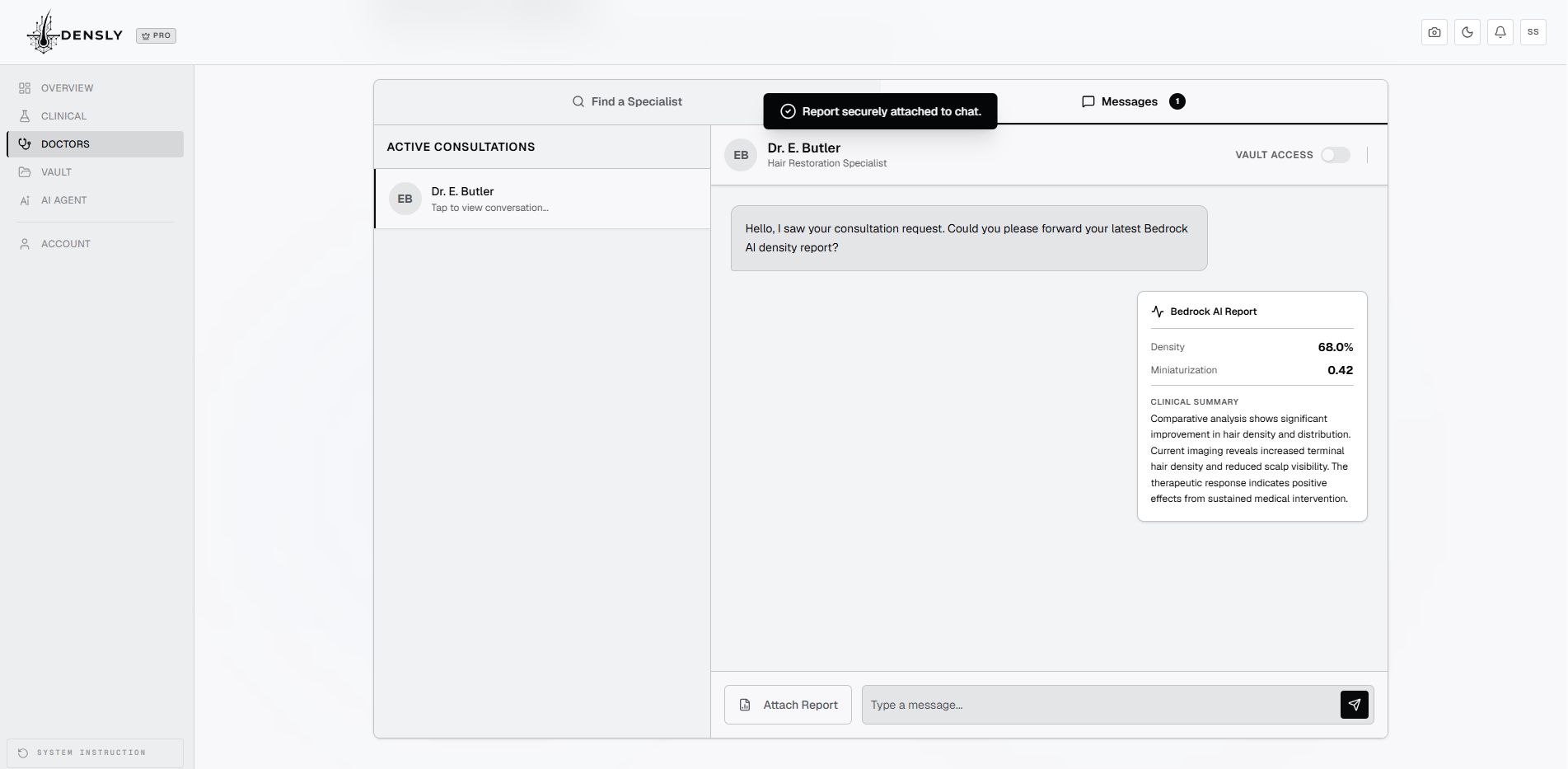
- Secure Vault Access: We implemented secure sharing protocols that allow patients to grant verified medical professionals direct, read-only access to their clinical vaults for data-driven consultations.
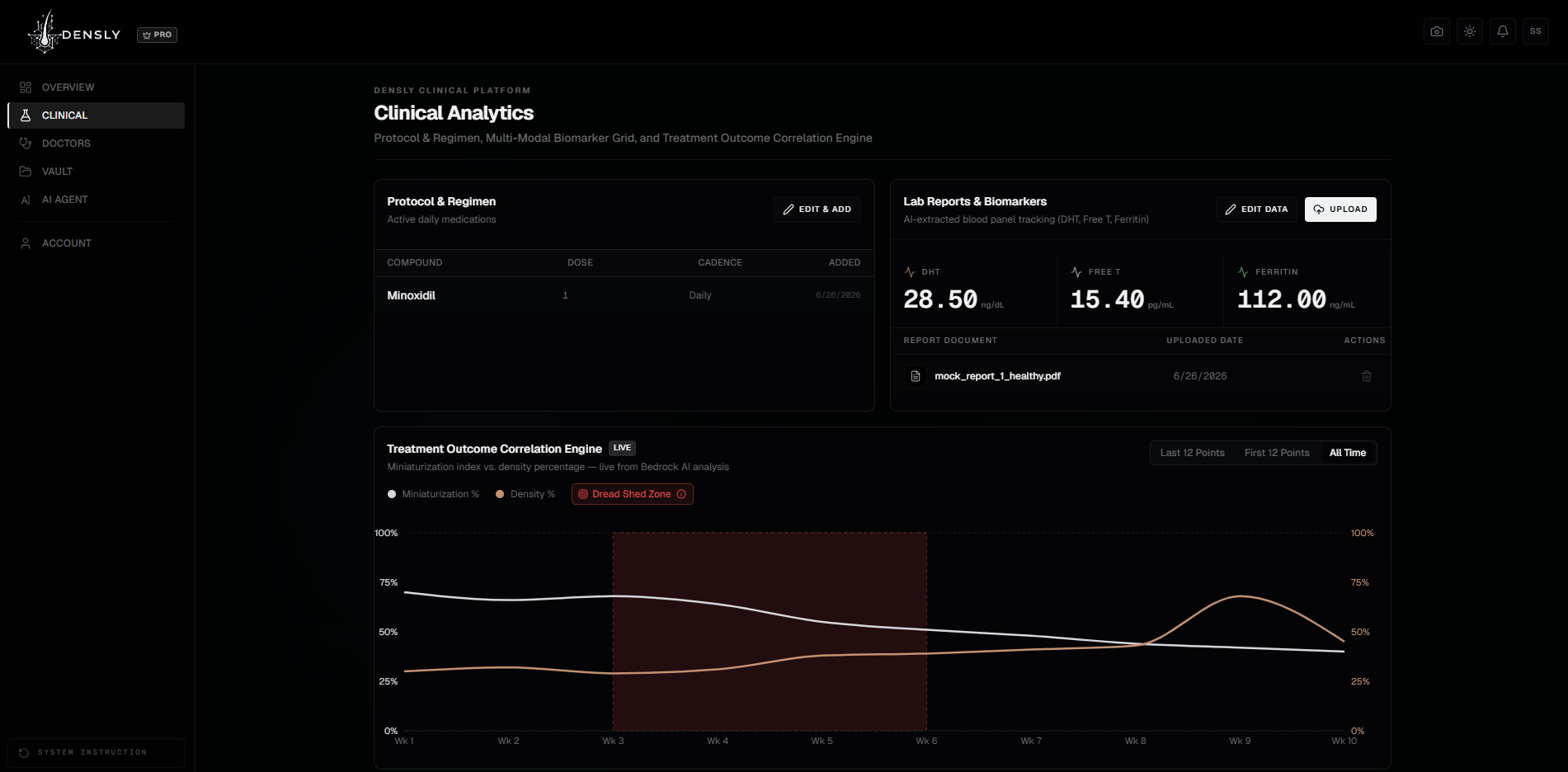
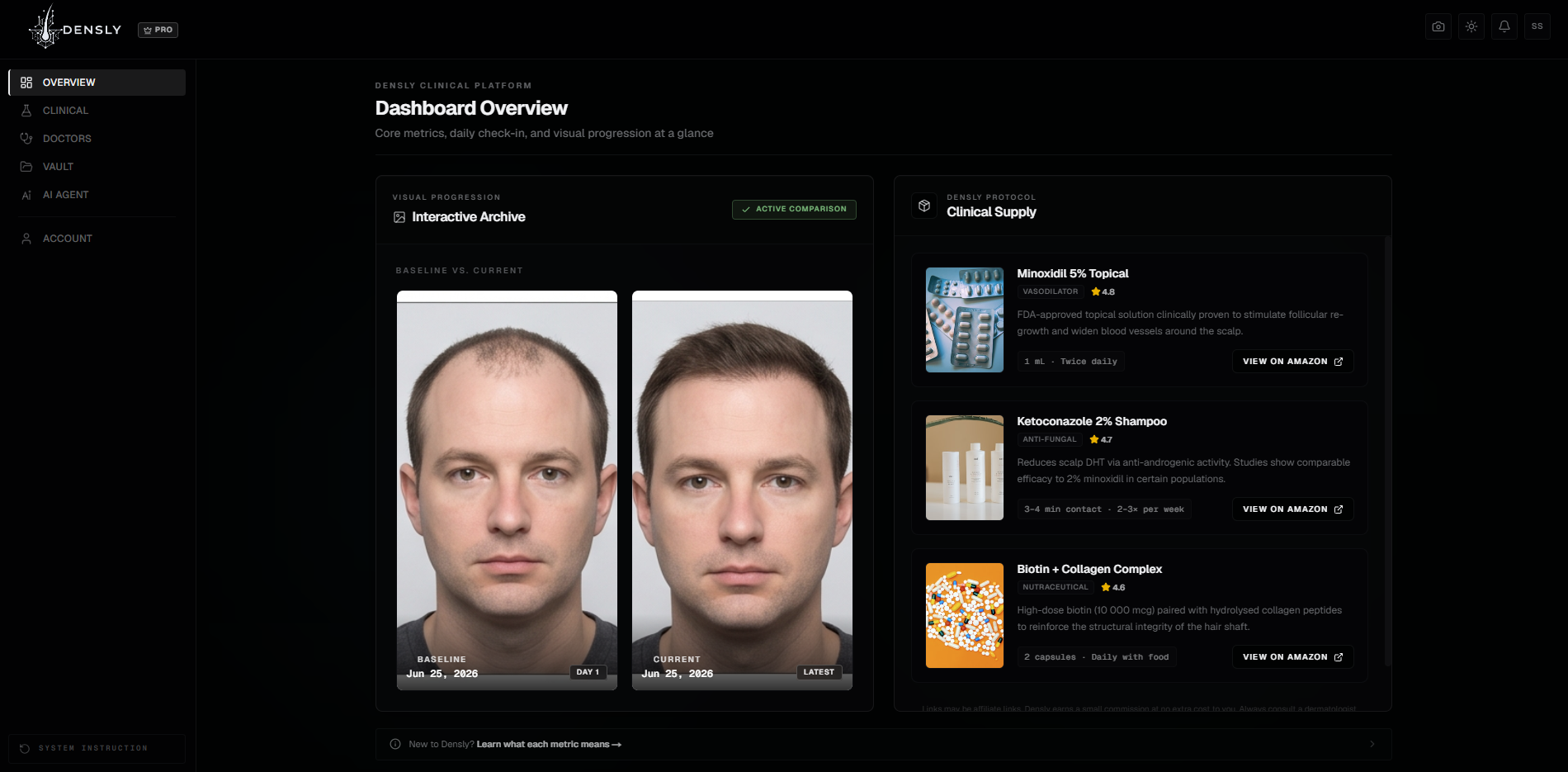
- The Correlation Engine: To visually prove that a treatment protocol is working, Densly correlates physical progression against lab biomarkers using discrete algorithmic telemetry:
1. Clinical Density Delta ($\Delta\rho_{\text{pct}}$)
First, we track the absolute percentage change in follicular density between the patient's baseline ($t_0$) and their most recent capture:
$$ \Delta\rho_{\text{pct}} = \left( \frac{\rho_{\text{current}} - \rho_{\text{baseline}}}{\rho_{\text{baseline}}} \right) \times 100 $$
| Parameter | Definition | Purpose |
|---|---|---|
| $\rho_{\text{current}}$ | Current Follicular Density | Measured active hairs/cm² |
| $\rho_{\text{baseline}}$ | Baseline Follicular Density | Day 1 reference density |
| $\Delta\rho_{\text{pct}}$ | Percentage Growth Delta | Quantifies absolute hair growth/loss |
2. The Dread Shed Detection Criteria
During the first 3–6 months of treatments like Minoxidil, hair follicles undergo a synchronized shedding phase before growing back stronger. This often looks like a treatment failure to the patient.
To prevent patients from panic-stopping their treatments, our Dread Shed Algorithm runs a discrete pattern-matching check. It flags a safe, positive "Dread Shed" phase when both conditions are met at the density nadir point (the lowest measured hair count):
$$ \text{Dread Shed Alert} \implies \begin{cases} \text{Hair Density} < \text{Baseline Density} & \text{— Active hair count drops temporarily} \ \text{Miniaturization} \le \text{Baseline Miniaturization} & \text{— Follicle health is improving (shafts are thickening)} \end{cases} $$
The Plain-English Translation: If a patient's overall hair volume decreases but the remaining hair follicles are actually growing thicker (lower miniaturization), the follicle is successfully resetting its growth cycle. Densly presents this hard clinical proof to keep patients calm, informed, and compliant during their most stressful phase.
Challenges we ran into
- Data Integrity: In early tests, blurry or poorly lit selfies caused the AI analysis to hallucinate. We solved this by building a rigorous frontend quality gate that refuses to snap a photo unless the clinical standard is met.
- Structuring AI Output: Large language models are prone to formatting errors. We overcame this by orchestrating a dual-agent system where Claude handles the reasoning and Nova Lite acts purely as a strict JSON formatter.
- Longitudinal Scaling: Managing time-series arrays of S3 images, shared physician access tokens, and daily regimen logs creates massive schema complexity. Implementing Amazon Aurora DSQL resolved our scaling bottlenecks and allowed us to fetch active user timelines with zero latency.
Accomplishments that we're proud of
We are incredibly proud of building a product that solves a genuine psychological and medical problem. Engineering the real-time quality lock on the camera was a major technical milestone. We are also proud of architecting a Track 1 viable B2C application with a clear freemium-to-Pro monetization pipeline that is ready for real-world acquisition.
What we learned
- AI-Assisted UI: We learned how to leverage Vercel v0 to drastically accelerate frontend development, allowing us to focus our engineering hours on the complex AWS backend.
- AWS Orchestration: We mastered chaining multiple foundation models together using AWS Bedrock to create a specialized multi-agent pipeline.
- Serverless Infrastructure: We learned how to split our data architecture efficiently—using Amazon S3 for durable object storage while leveraging Amazon Aurora DSQL for globally scalable, serverless relational data.
- Exit-First Architecture: We learned how to structure a B2C application for maximum retention by funneling users from a free baseline tracker into a premium Telehealth Network.
What's next for Densly
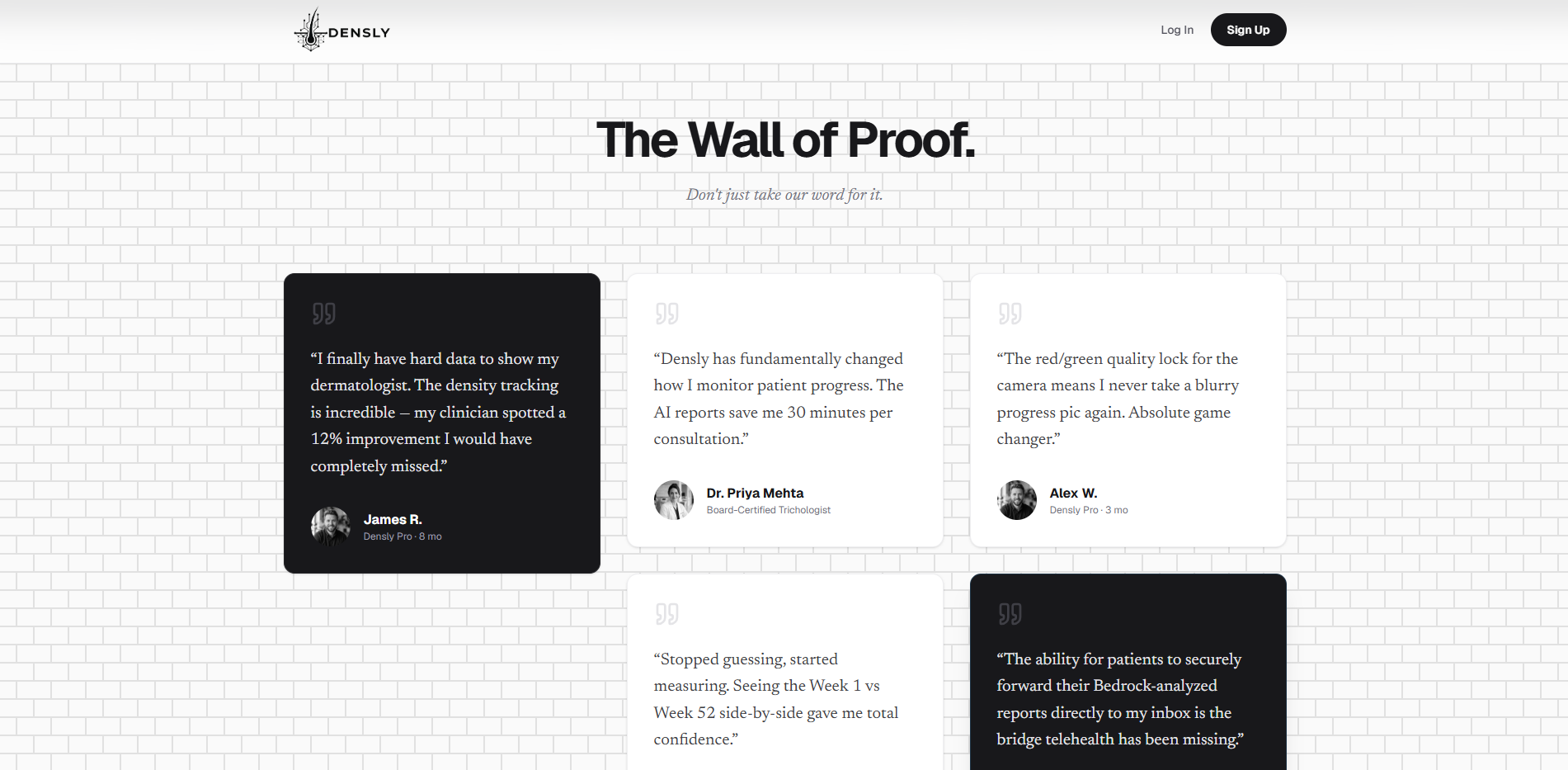
Densly is fully prepared to scale. Our immediate technical focus is expanding our integrated Telehealth Specialist Network by onboarding certified Trichologists and Dermatologists. This will allow users to seamlessly forward their AWS Bedrock AI reports for encrypted, one-click medical consultations directly within the app.
Beyond clinical features, we are aggressively optimizing our freemium-to-Pro conversion funnel to position Densly for strategic acquisition. By proving high user retention and establishing a pipeline of validated, data-rich patients, we are structuring the platform as a prime acquisition target for larger telehealth networks and pharmaceutical companies seeking an established B2C distribution channel.
Built With
- amazon-aurora-dsql
- amazon-nova-lite
- amazon-web-services
- aws-bedrock
- brevo-email-api
- claude
- docker
- fastapi
- framer-motion
- next.js
- python
- react
- recharts
- tailwindcss
- typescript
- vercel
- vercel-v0


Log in or sign up for Devpost to join the conversation.