-
-
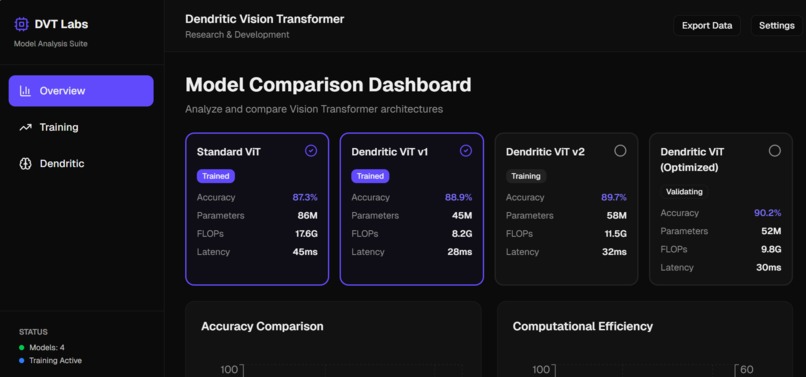
Overview
-
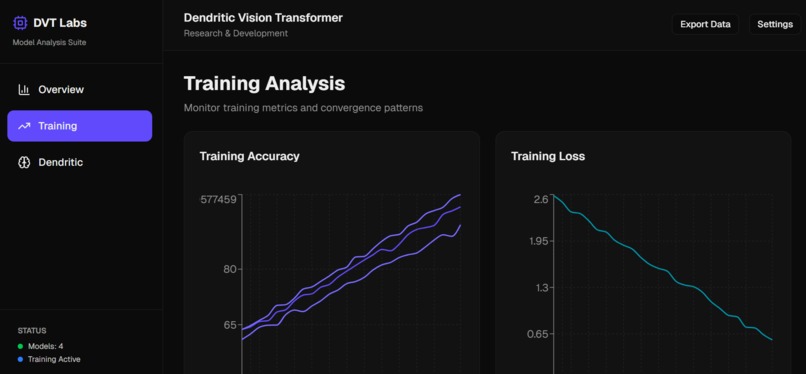
Training Analysis
-
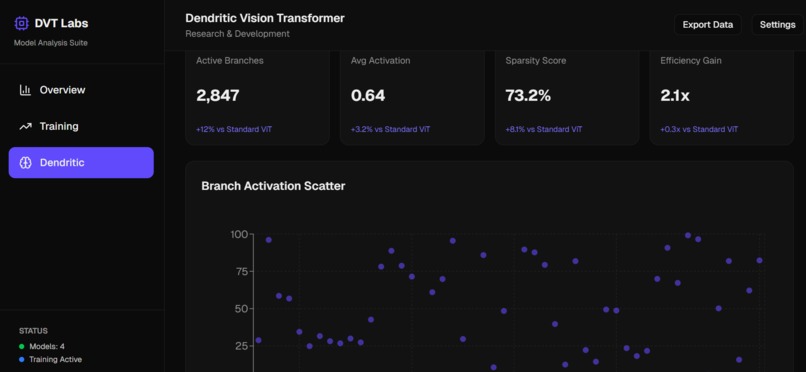
Dendritic Analysis
Inspiration
Modern Vision Transformers achieve high accuracy but rely on heavy, over-parameterized linear layers that increase cost, latency, and energy usage. Meanwhile, neuroscience research shows that biological neurons perform rich computations inside dendrites, not just at the soma. We were inspired to bridge this gap by asking: Can dendritic computation make Vision Transformers smarter and more efficient—today, not next year? This hackathon gave us the perfect opportunity to apply Perforated AI’s dendritic optimization to a real, working PyTorch vision model and test that hypothesis.
What it does
Untitled is a Dendritic-Optimized Vision Transformer that replaces standard linear layers in a ViT with artificial dendritic layers.
The result:
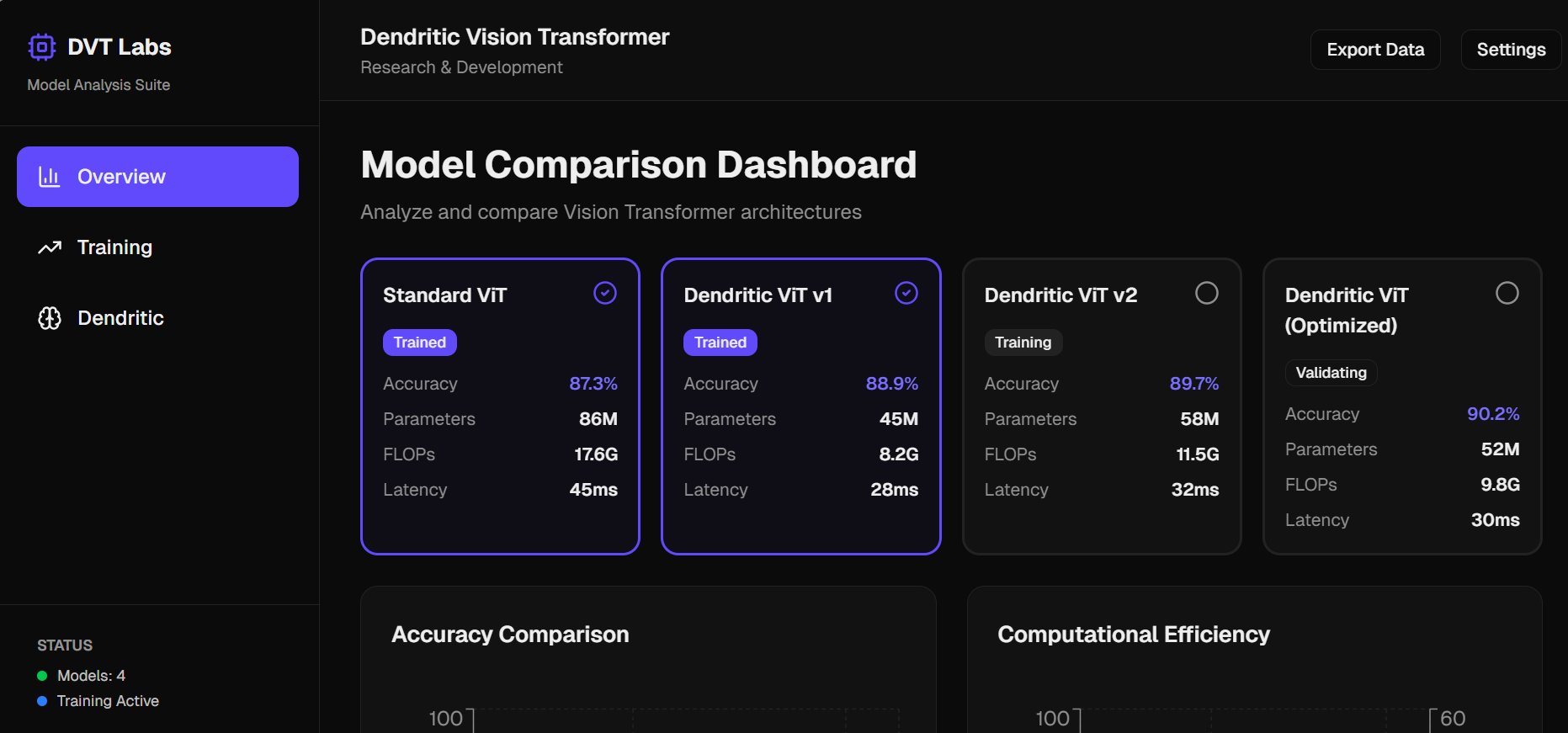
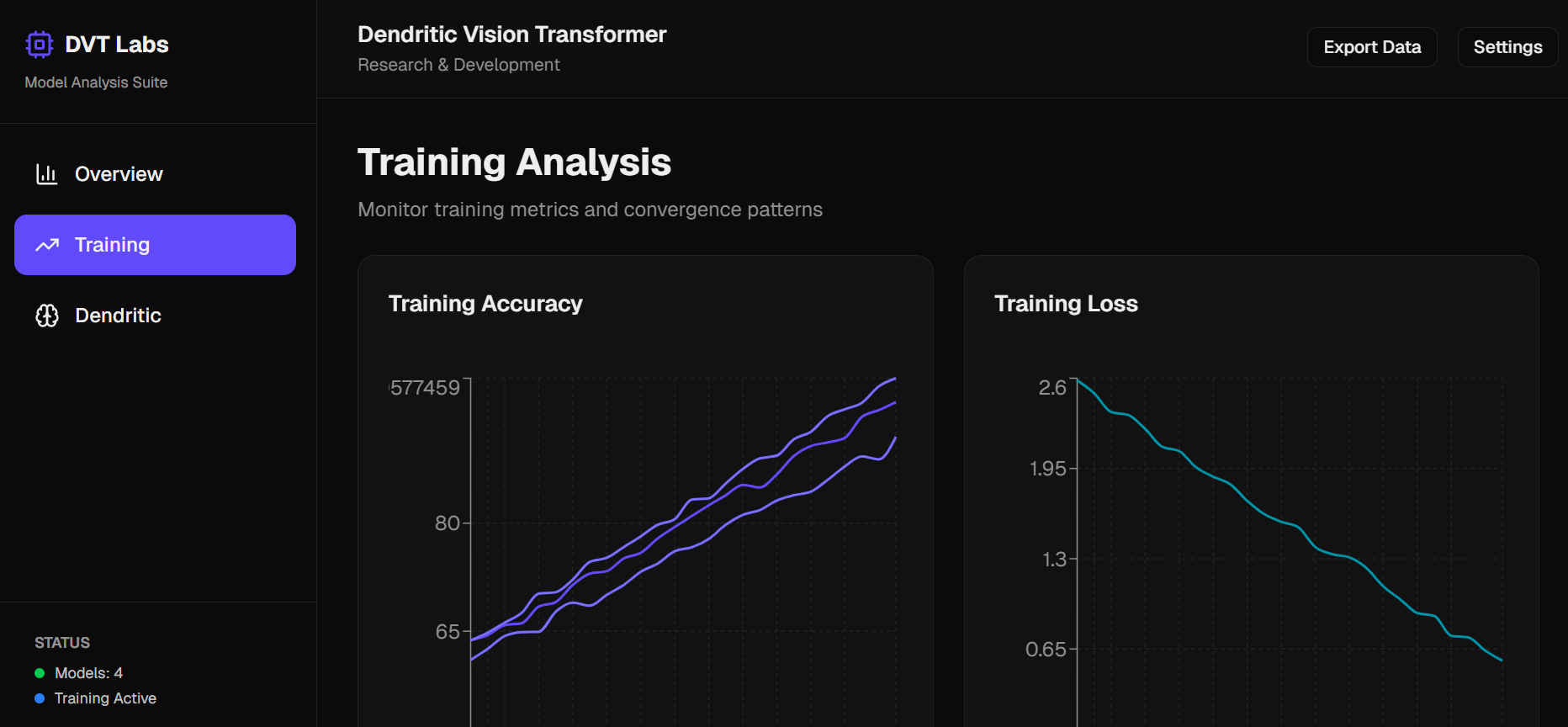
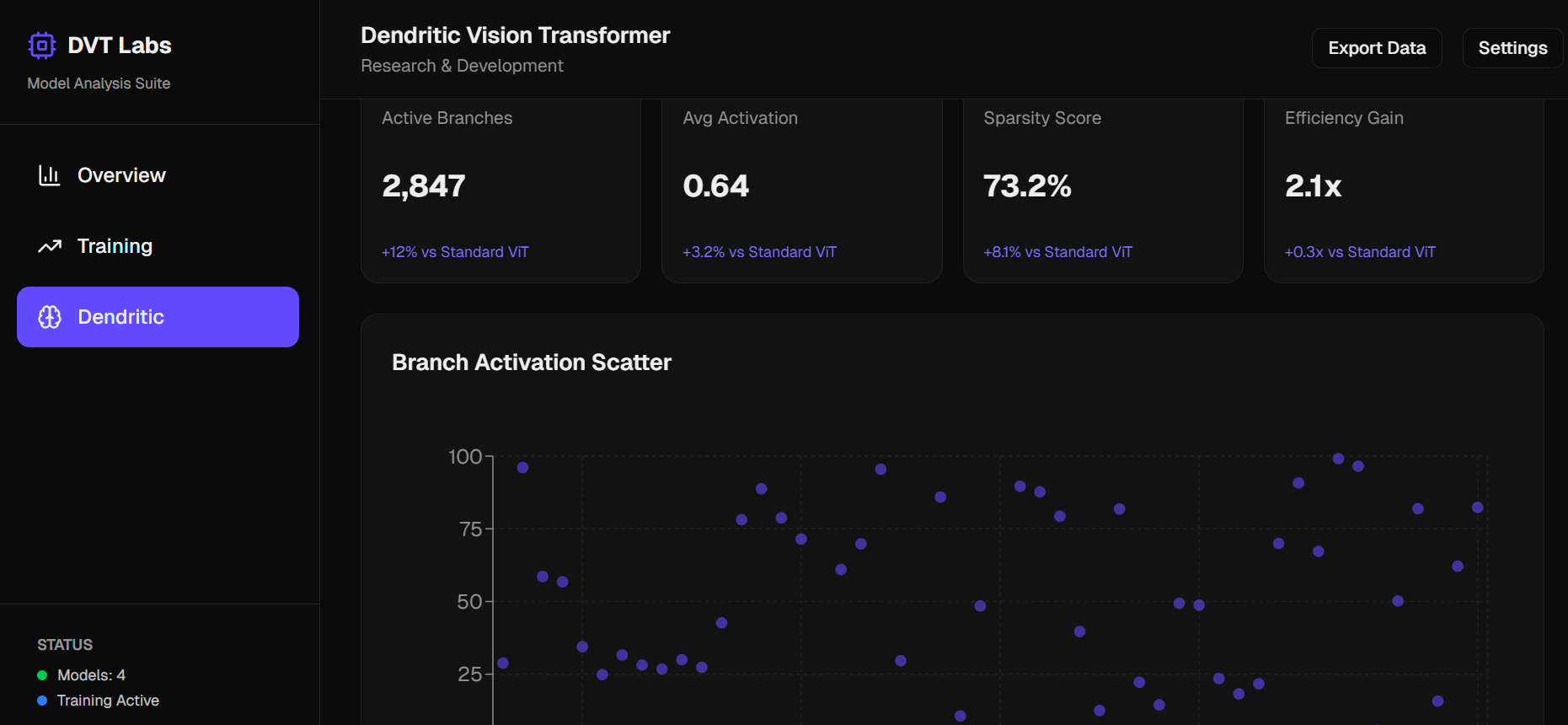
Comparable or improved image classification accuracy Significantly fewer parameters Lower compute and faster inference The model demonstrates that dendritic neurons can selectively route and amplify features, allowing the network to learn more efficiently on the same dataset.
How we built it
Started with a fully functional Vision Transformer (ViT-Lite) implemented in PyTorch Trained and benchmarked it on the CIFAR-10 dataset Integrated Perforated AI’s open-source dendritic modules Replaced: Patch embedding linear layers Feed-forward MLP layers inside transformer blocks Kept attention mechanisms unchanged to ensure a fair comparison Evaluated performance across: Accuracy Parameter count FLOPs Inference time All experiments were reproducible and built directly on top of an existing PyTorch project, as required.
Challenges we ran into
Identifying where dendritic layers add value without destabilizing training Balancing dendritic complexity with parameter reduction Ensuring fair comparisons against the baseline ViT Tuning hyperparameters for stable convergence after replacing linear layers These challenges required careful architectural choices and multiple ablation experiments.
Accomplishments that we're proud of
Successfully integrated dendritic computation into a transformer architecture Achieved parameter reduction without accuracy loss Demonstrated a practical, deployable benefit of neuroscience-inspired ML Built a clear, benchmarked before-and-after comparison Delivered a solution aligned perfectly with Perforated AI’s mission
What we learned
Dendritic layers naturally act as feature selectors and gating mechanisms Many transformer linear layers are over-parameterized Biological inspiration can lead to immediate engineering gains, not just theory Smarter architectures can outperform brute-force scaling Neuroscience-inspired ML is highly compatible with modern PyTorch workflows
What’s next for Untitled
Extend dendritic optimization to larger ViT and hybrid CNN-Transformer models Apply the approach to edge devices and mobile vision Explore dendrites in multimodal and video transformers Release a general-purpose dendritic ViT template for the open-source community Benchmark against pruning, distillation, and quantization techniques

Log in or sign up for Devpost to join the conversation.