-
-
Starter Page
-
-
-
-
Learning Tree
-
Edurism
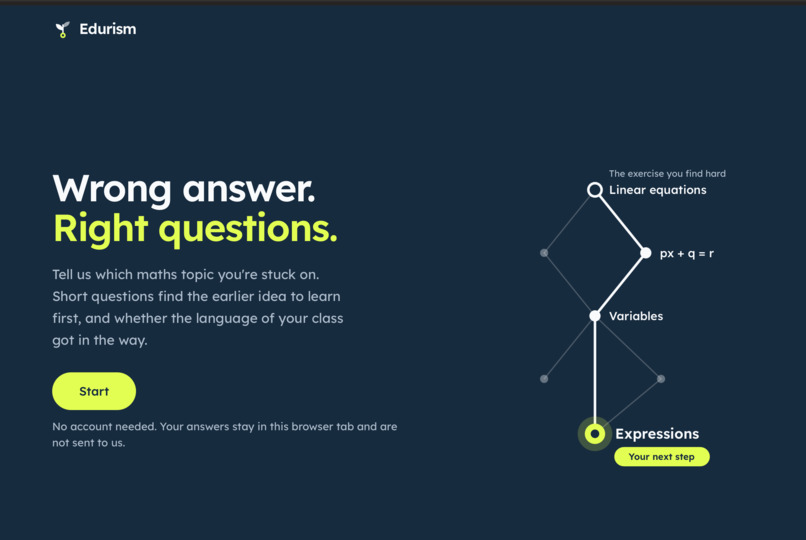
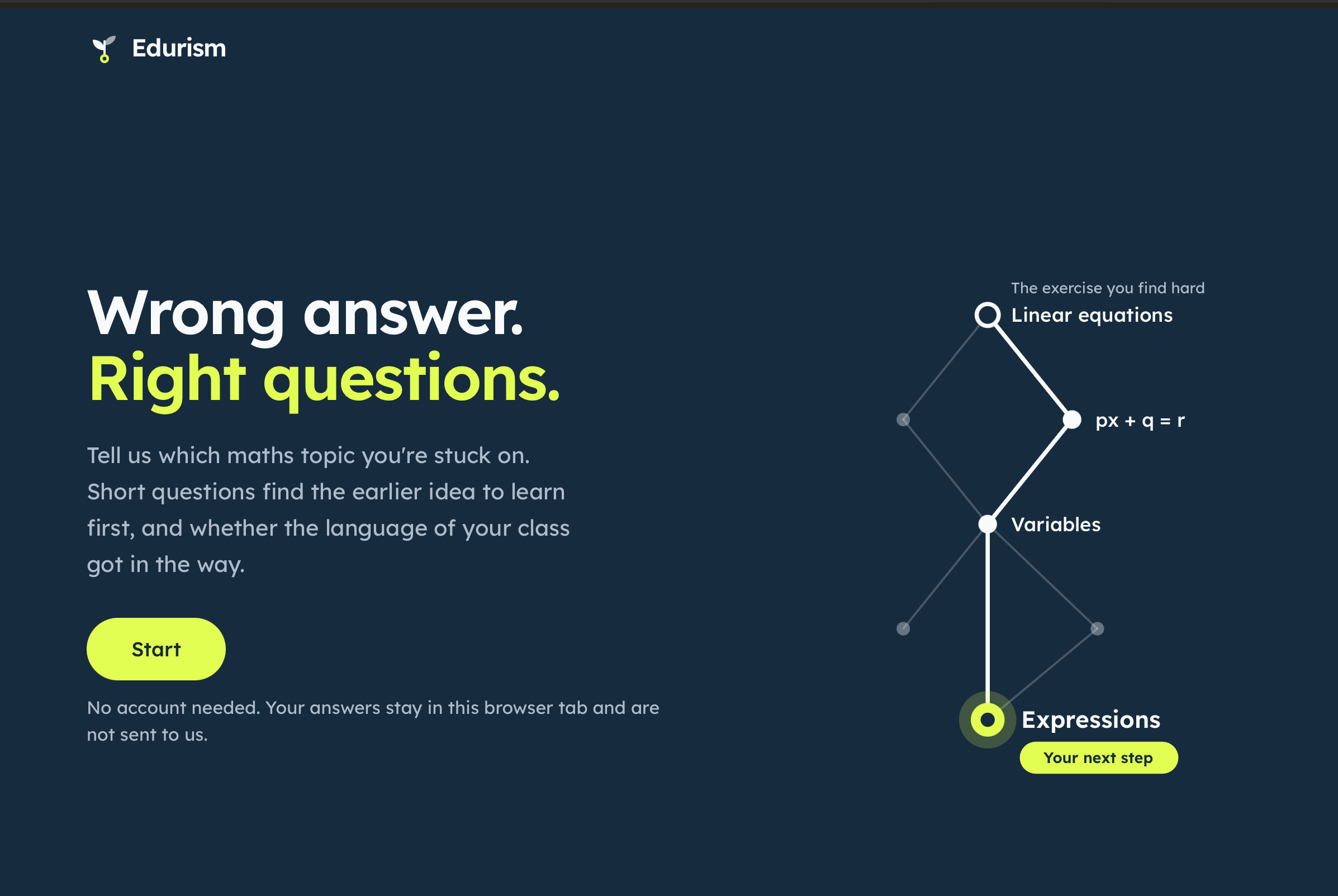
Wrong answer. Right questions.
Inspiration
Some of us are international students. We know what it's like to fail an exercise without knowing why. Was it the math, or the language it was written in? We are familiar. Sometimes we cannot seem to figure out an exercise, and it turns out the issue was the language.
A good tutor spends the first few sessions finding the cause for your mistakes. Most learners never get those sessions. They re-study the wrong thing, or get labelled "weak at math" while the real problem is buried.
What it does
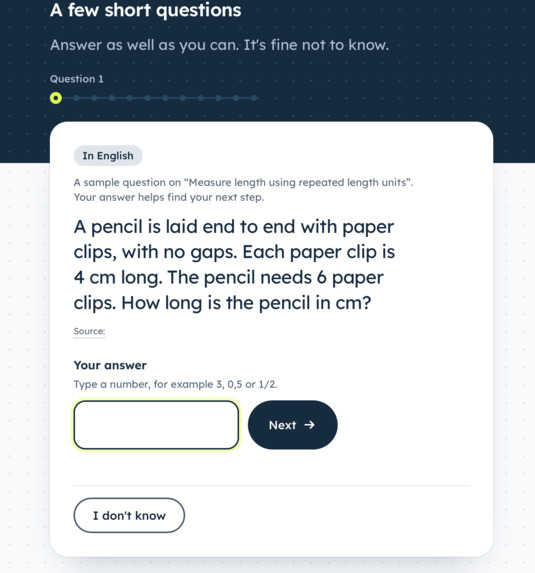
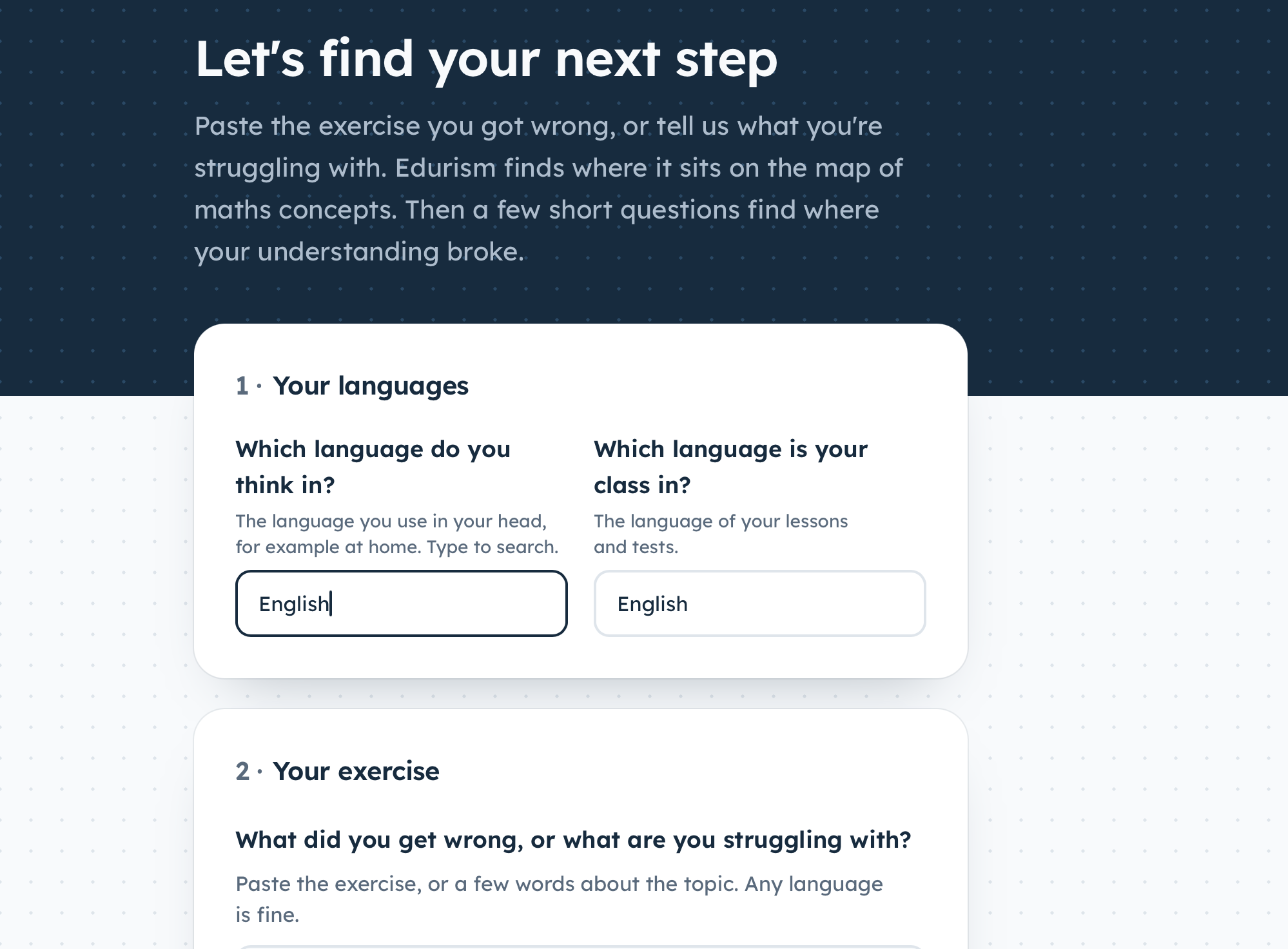
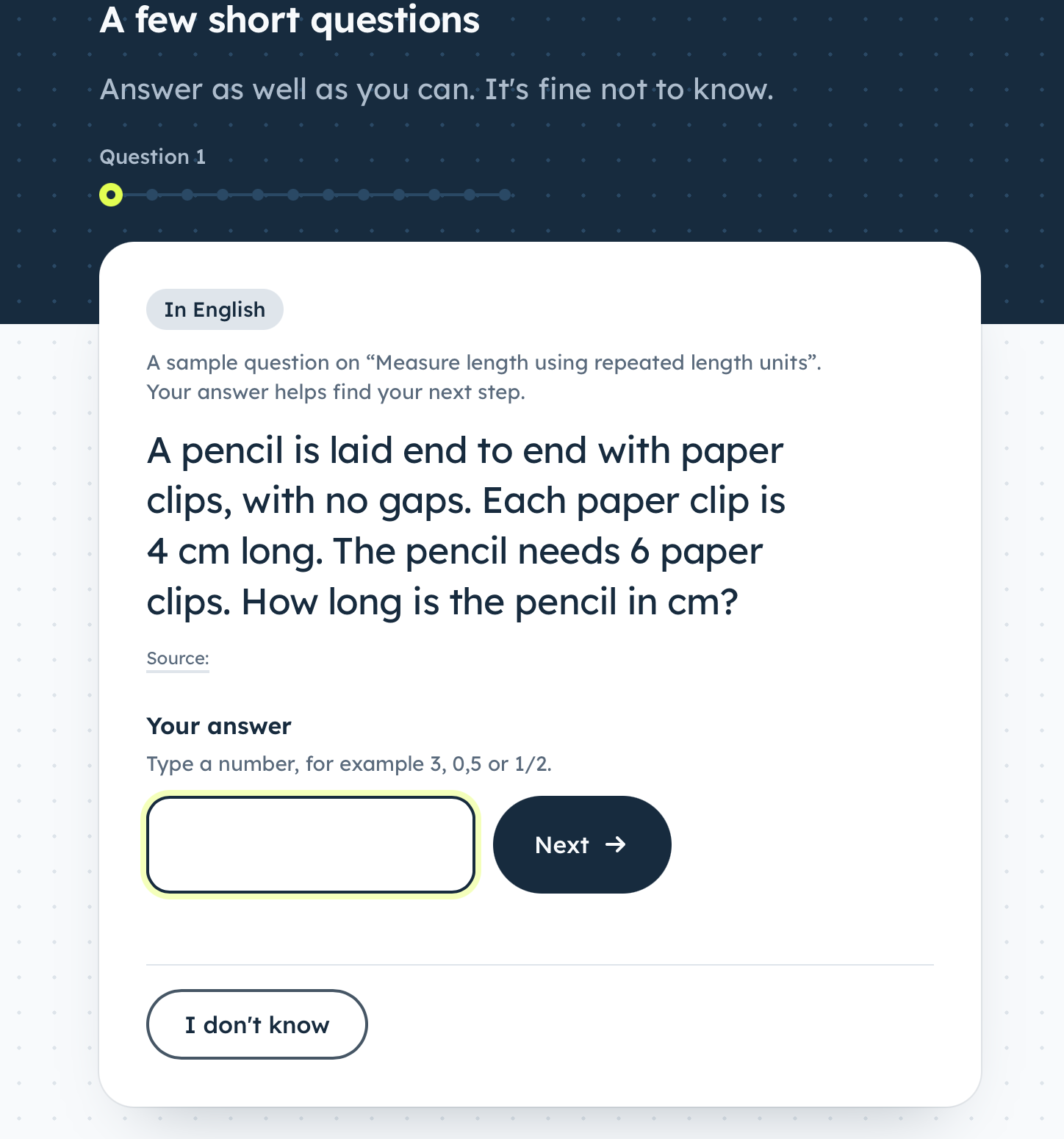
When a learner fails an exercise, Edurism asks a few short questions and finds two things:
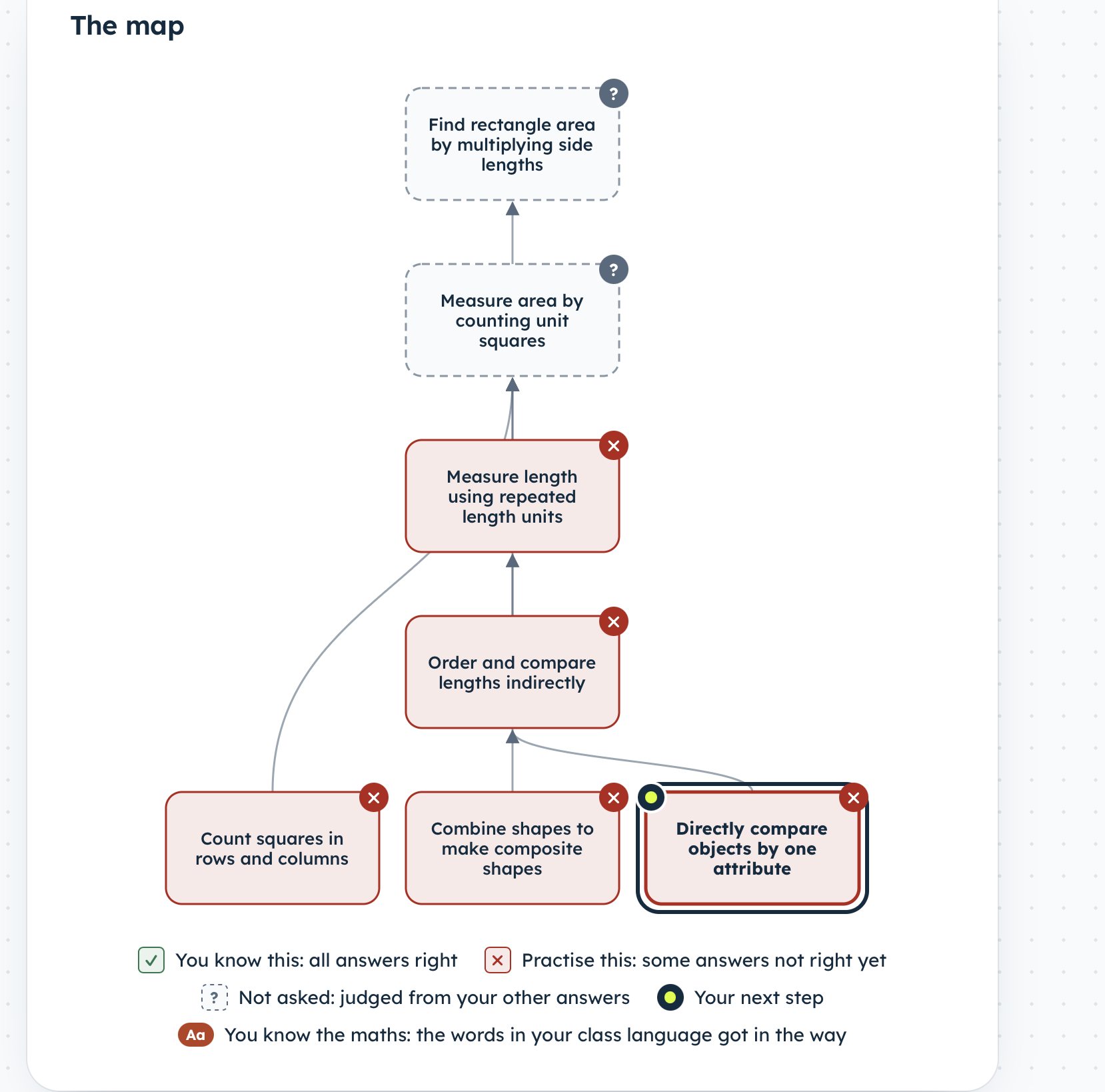
- Where their knowledge broke: the earlier concept that everything else depends on.
- Whether the problem is the technical knowledge or the language of the exercise.
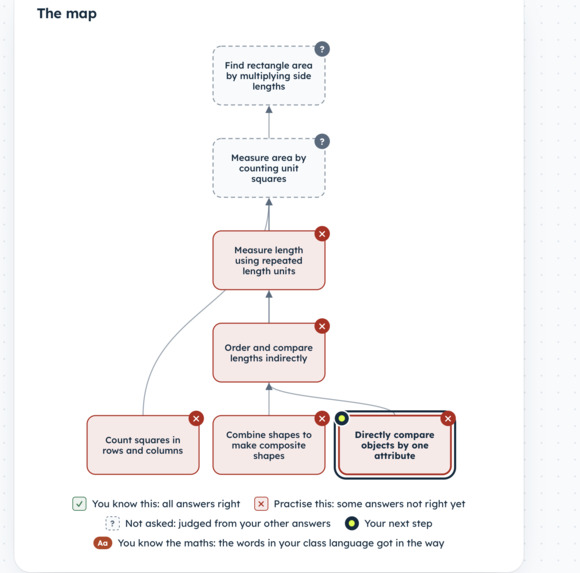
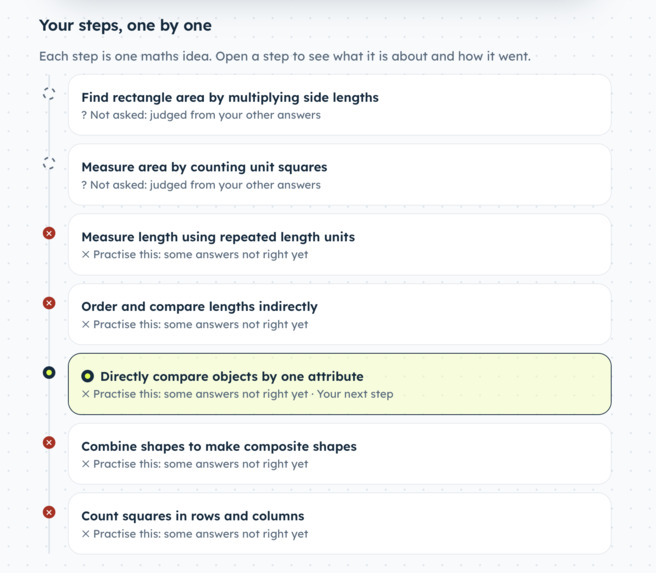
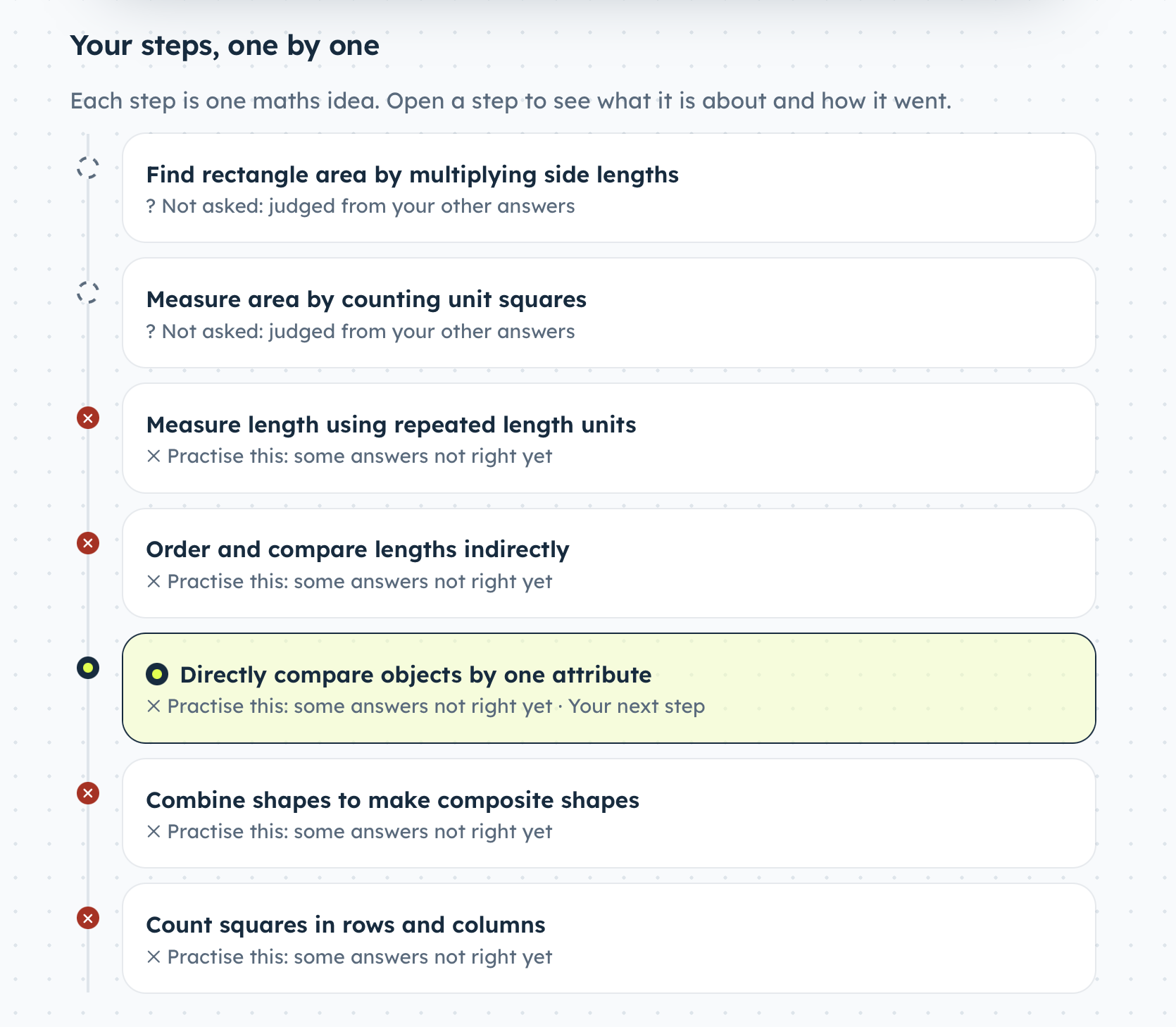
Then it shows the next step. That's either a short path from the missing concept back up to the exercise they failed, or the words that blocked them, translated.
The learner solves every question. Edurism never hands out answers. It only decides what to ask next.
For teachers and tutors, it shows where a group tends to break, and which learners need language support rather than more math.
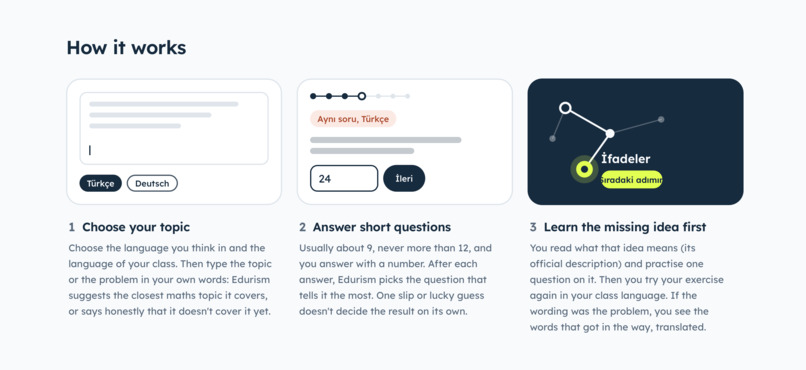
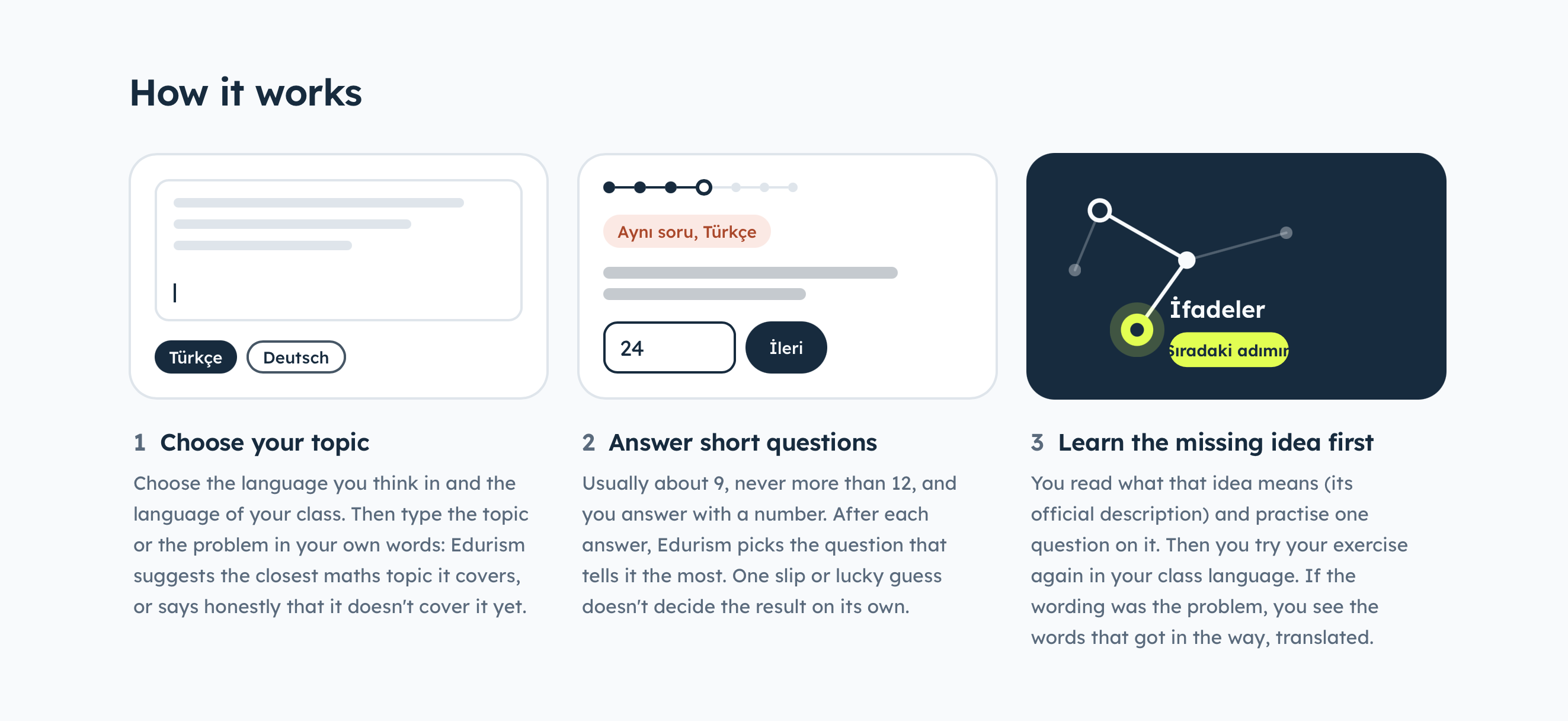
How it works
- A map of concepts: which ideas build on which, from fractions up to derivatives.
- Ruling out the suspects: A probabilistic model determines the most likely gaps in the knowledge based on the student's answers.
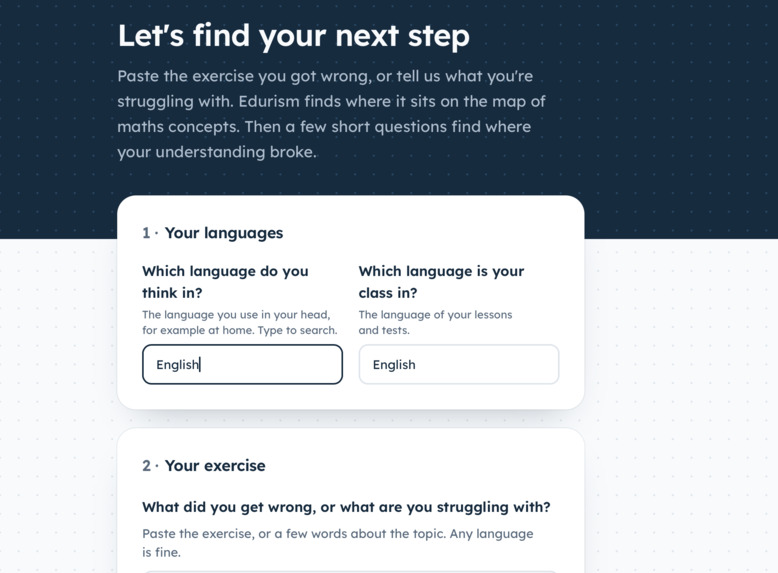
- The same question in your language: if a learner fails in the class language, Edurism asks the same question in their own language. If they solve it, the problem is the language, not the math.
Where AI fits
AI prepares and curates the content ahead of time. It finds the problems and translates them into any language. A person reviews the map, and code checks every question: each language version must have the same correct answer.
During a diagnosis there are no AI calls. The search runs in the browser, so it's instant, works offline, costs almost nothing per learner and gives the same result every time. It can also explain why it reached that result.
Who it's for
- Students who failed an exercise and don't know why, especially in their first semester or studying in a second language.
- Teachers and tutors who have many learners and no time for one-to-one diagnosis.
- Children learning math in a language they're still learning, and the schools and charities that support them.
There are no accounts and no personal data. It runs in any browser.
How we built it
The frontend is React and TypeScript, and the probabilistic model runs in the browser. A Python twin of the engine runs the benchmark, and a parity test keeps the two identical. The content pipeline uses AWS Bedrock to curate questions and sympy to check the answers.
Challenges
- Noisy answers: learners make careless mistakes and lucky guesses, so the engine has to tell the math from the language without trusting any single answer.
- Trusting AI-generated content: a wrong question gives a wrong diagnosis, so questions are fetched rather than generated.
What's next
- Compare Edurism's diagnosis with a human tutor's on real learners.
- Pilot it in a university tutorial and in a tutoring programme.
- Build maps for more courses and subjects.
