Inspiration
The most recent statistics suggest that almost 500,000 Canadians are facing dementia, with 76,000 more being diagnosed annually. Further, dementia unevenly effects women, with two-thirds of Canadians living with dementia being women. Unfortunately, the effectiveness of non-pharmacological treatment for dementia remains low due to the one-size-fits-all, generalized treatment activities currently prescribed to dementia patients across the nation. Being able to track the progression of dementia in a patient and recommend personally tailored treatments means increasing the effectiveness of said treatments, improving outcomes and, ultimately, the lives of those effected.
What it does
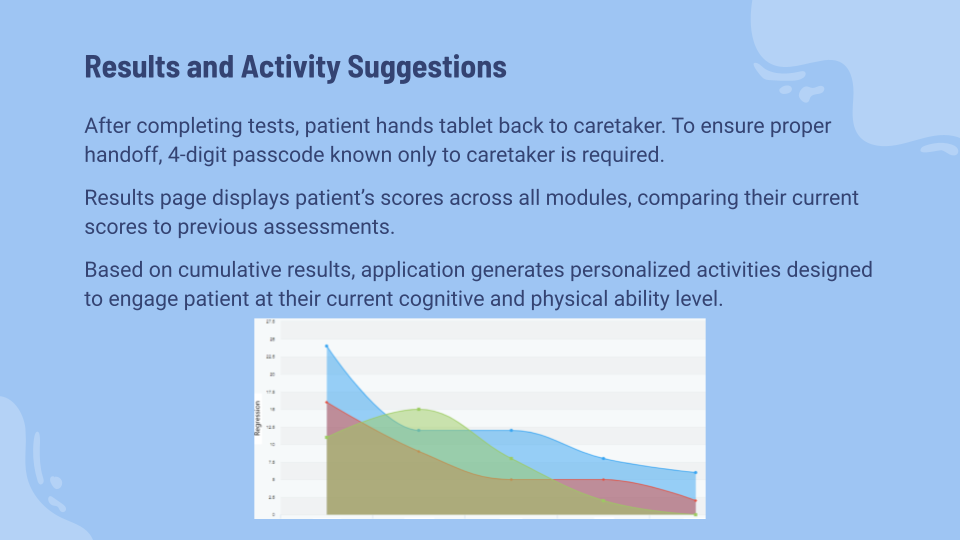
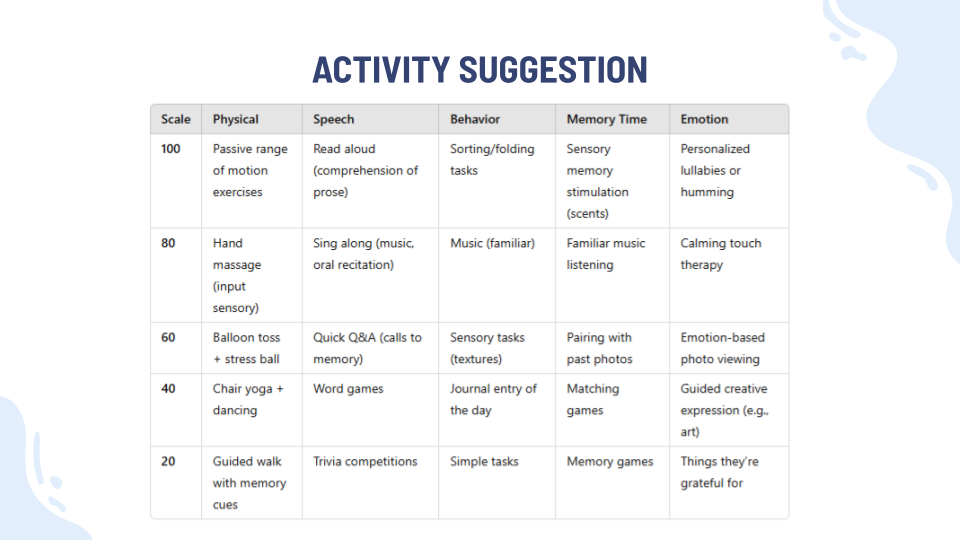
Dementions is a device that tracks the progression of dementia in a patient and suggests personalized, non-pharmacological activities and treatments. Instead of a hit-or-miss outcome with treatment activities, patients are given optimized rehabilitation activities. While wearing an electroencephalogram (EEG), a device that measures the brain’s electrical activity, users are walked through various tasks that determine their dementia’s progression. Tasks are divided into categories of dementia symptoms such as memory impairment or behavioral instability and, when the tasks are finished, the patient and caretaker are given optimized activities as well as insights into dementia’s development.
How we built it
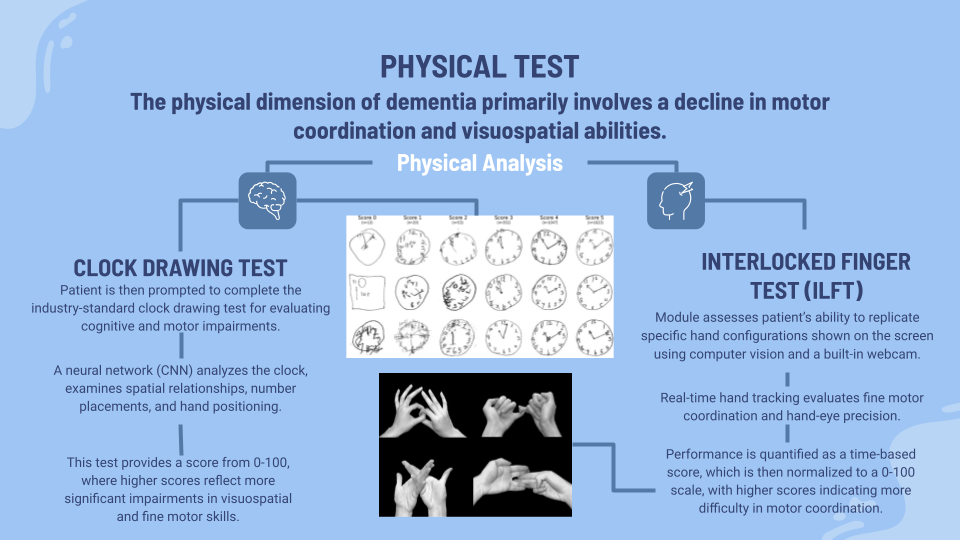
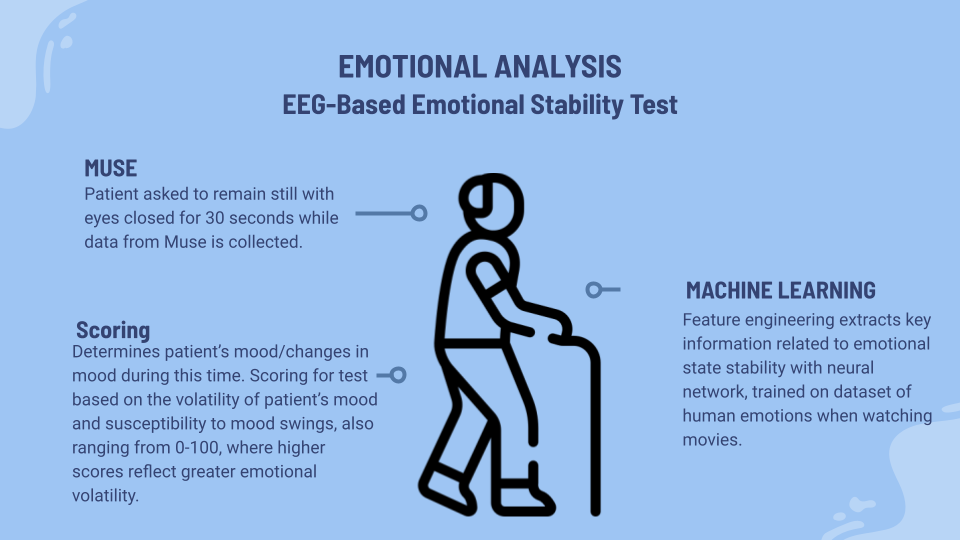
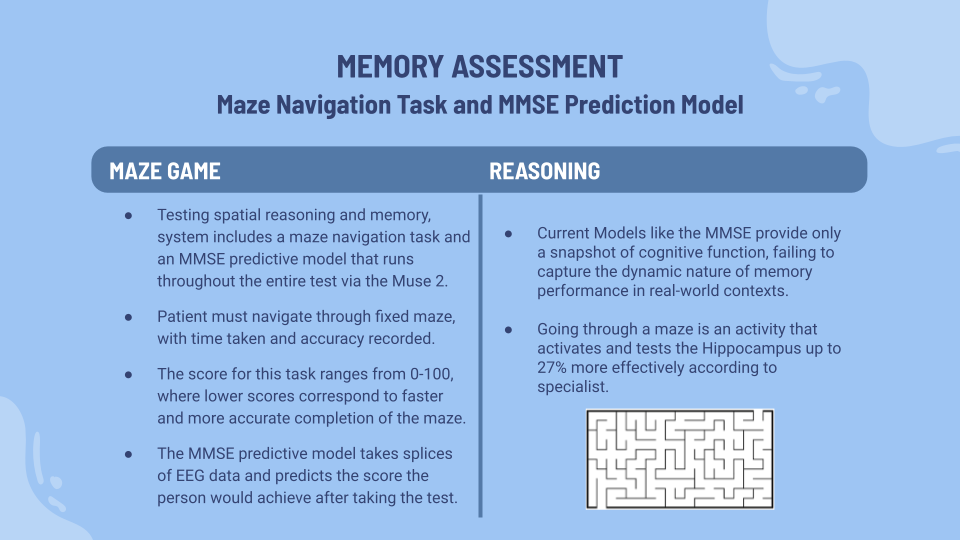
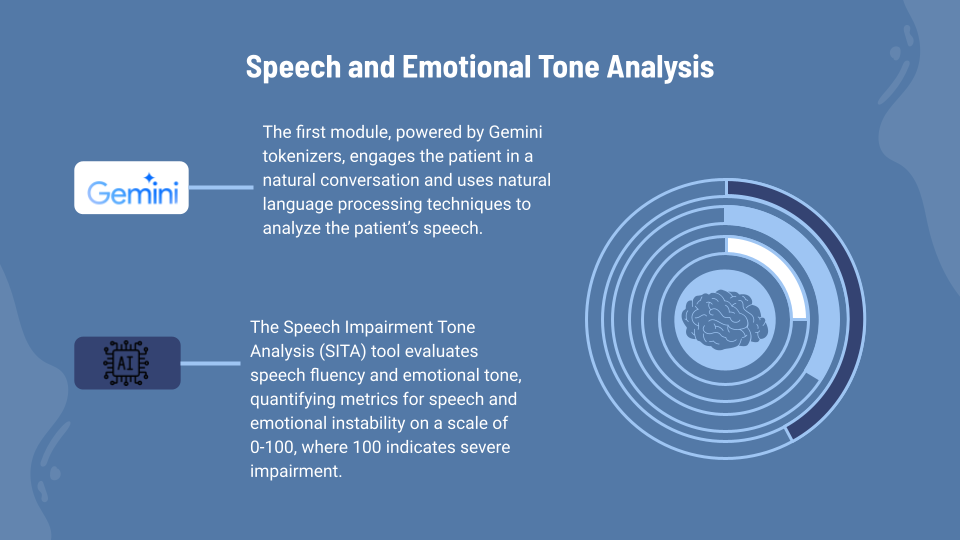
The system is comprised of five categories of dementia's impact on a patient: memory impairment, physical impairment, speech impairment, emotional instability, and behavioral instability. Dementions incorporates a Maze Navigation Task and an ML model that uses EEG recording snippets recorded while users use the app to predict a patient’s MMSE score. We next have a physical impairment tracking module, which leverages a CNN for Clock Drawing Test (CDT) and Interlocking Finger Test (ILFT). This objective approach ensures consistency and precision, allowing for repeatable and accurate assessments. The speech impairment module conducts a Speech Impairment Tone Analysis (SITA) using Natural Language Processing (NLP) techniques. To provide an accurate assessment of emotional instability, Dementions integrates EEG data collected via the Muse headband. EEG technology captures real-time brain activity, offering a window into the patient’s emotional state. Our system applies feature engineering and a Recurrent Neural Network (RNN) to analyze EEG data, identifying patterns of emotional volatility. Finally, the behavioral instability module makes use of caregiver reports which were determined to be the most effective tool for behavior tracking according to clinical psychiatrists.
Challenges we ran into
Getting a complete understanding of how psychiatrists and caregivers handle dementia in a real world setting was difficult as we aimed to understand our problem's nuances beyond a simple Google search. After doing careful research and speaking to professionals on the front lines of dementia care, we were able to answer many pressing questions we have and tailor our solutions to the problems that actually exist in clinical and geriatric settings.
Accomplishments that we're proud of
We were very proud to have been able to receive feedback from six professionals and get user testing done on five dementia patients, which isn't something usually expected (or possible, given the time crunch) during a hackathon.
What we learned
The most important thing we learnt was the importance of constant communication throughout this hackathon. Very quickly we realized that building separate parts of the project individually and trying to piece together everything to a front-end later was a recipe for trouble and (two!) sleepless nights.
What's next for Dementions: Dementia Treatment Optimization
Carrying this project forwards would mean finalizing a marketable Minimum Viable Product (MVP) and conducting rigorous user testing. We would also always be looking for better sources of data or creating our own clinical datasets, something that wasn't possible during this hackathon.


Log in or sign up for Devpost to join the conversation.