-
-
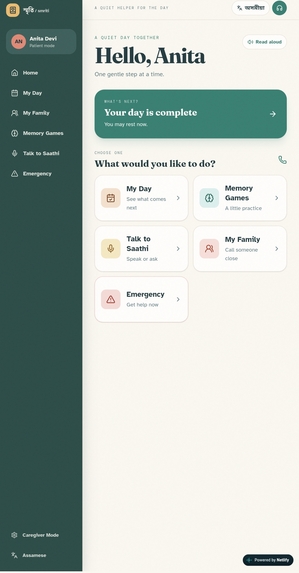
Main page
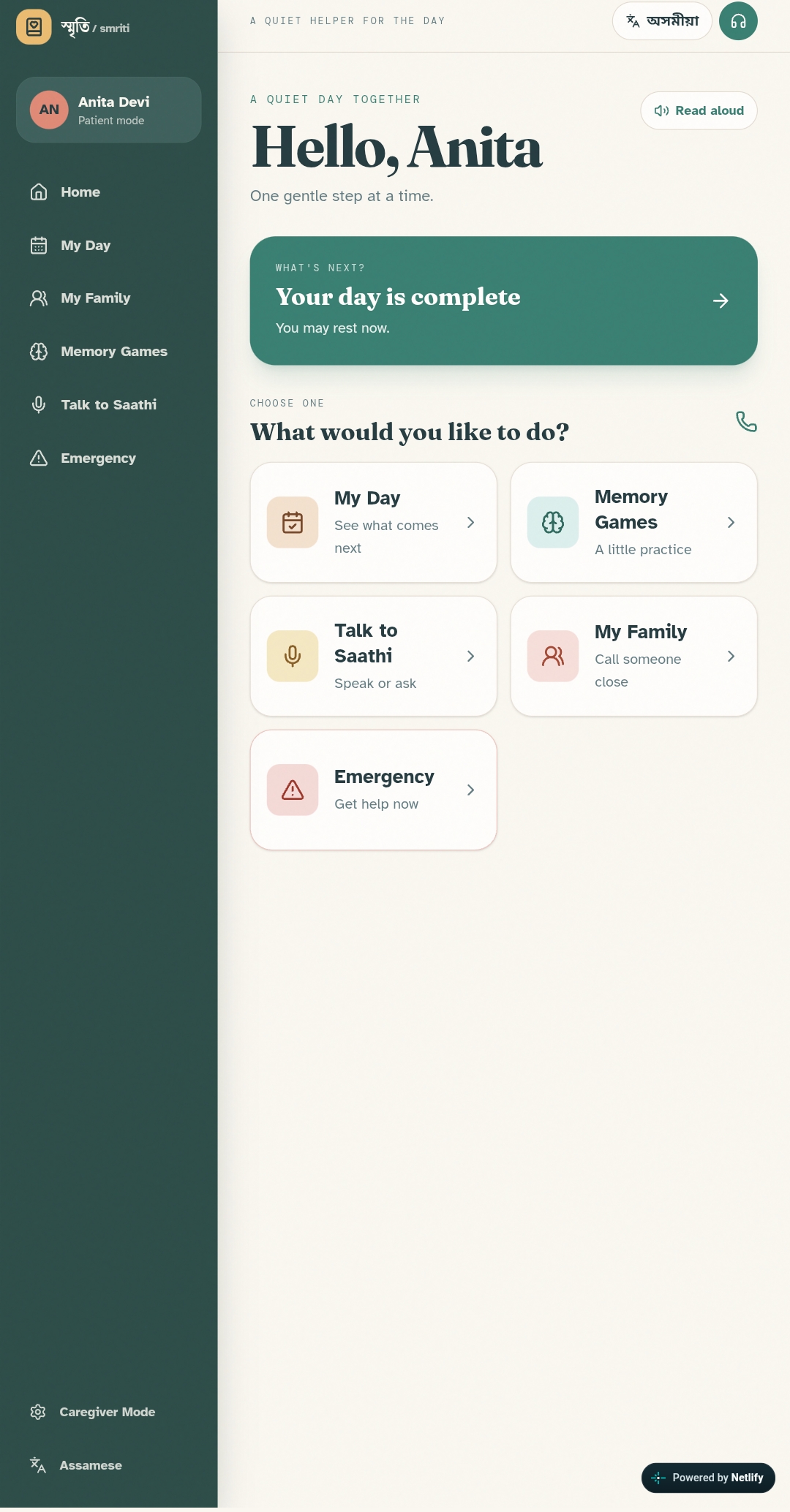
Inspiration
Dementia affects memory, thinking, communication, and everyday life. It can also create emotional and practical challenges for family members and caregivers. We were inspired to explore how technology and artificial intelligence could help people monitor cognitive health, practice memory exercises, and access useful caregiving support. Our goal is to create a simple, accessible digital platform that makes dementia-related support easier to understand and use.
What it does
DementiaCare AI is a dementia-support platform designed to help users and caregivers access cognitive wellness resources in one place.
The project's intended capabilities include:
- Cognitive wellness: Memory exercises and activities that encourage mental engagement.
- Health tracking: A way to record observations and monitor changes over time.
- Caregiver support: Helpful information and resources for people caring for someone with dementia.
- AI-assisted insights: Potentially identifying patterns in user-entered information to support conversations with healthcare professionals.
- Awareness and education: Accessible information about dementia, care, and the importance of professional assessment.
These features should be described as implemented only where they are available in the submitted prototype.
How we built it
We approached the project by focusing on the needs of people affected by dementia and their caregivers. The development process involves designing an accessible user interface, organizing information clearly, and exploring how digital tools and AI could support cognitive wellness and caregiving.
The technology stack should reflect the actual implementation of the project. We prioritized a straightforward user experience, understandable content, and a design that could be extended with additional capabilities in the future.
Challenges we faced
One of the main challenges was turning a complex healthcare topic into a simple and approachable digital experience. Dementia affects people differently, so the application must avoid making assumptions about users or presenting uncertain information as a medical conclusion.
Another challenge is balancing useful AI-assisted features with privacy, reliability, and responsible communication. Health-related information must be handled carefully, and users should understand the limitations of any automated insights.
What we learned
This project helped us explore how technology can be applied to meaningful healthcare and social challenges. We learned the importance of accessible design, user-centered thinking, responsible AI, privacy awareness, and clear communication when developing tools related to health.
We also recognized that technology is most useful when it complements—not replaces—the knowledge and guidance of qualified healthcare professionals.
What's next
Future improvements could include personalized cognitive exercises, secure progress tracking, caregiver reminders, multilingual support, accessibility enhancements, and carefully evaluated AI-assisted summaries that help users prepare for discussions with healthcare professionals.
Our long-term vision is to make DementiaCare AI a supportive and accessible platform that helps individuals and caregivers navigate dementia-related challenges with greater confidence and understanding.
Responsible Use
DementiaCare AI is intended as a supportive and educational tool. It is not a substitute for professional medical advice, diagnosis, or treatment. Any potential screening or risk-assessment capabilities would require appropriate clinical validation before being used for medical decision-making. User privacy and responsible handling of sensitive information are essential priorities.
Built With
- and
- claim
- css
- development.
- do
- healthcare
- html
- javascript
- machine-learning
- not
- python
- react
- recommend-relevant-technology-tags-based-on-the-project's-actual-implementation
- such-as-artificial-intelligence
- technologies
- that
- web
- were


Log in or sign up for Devpost to join the conversation.