Inspiration
The rising incidence rate of dementia and Alzheimer's globally, as well as an aging population, served as inspiration for our project.
What it does
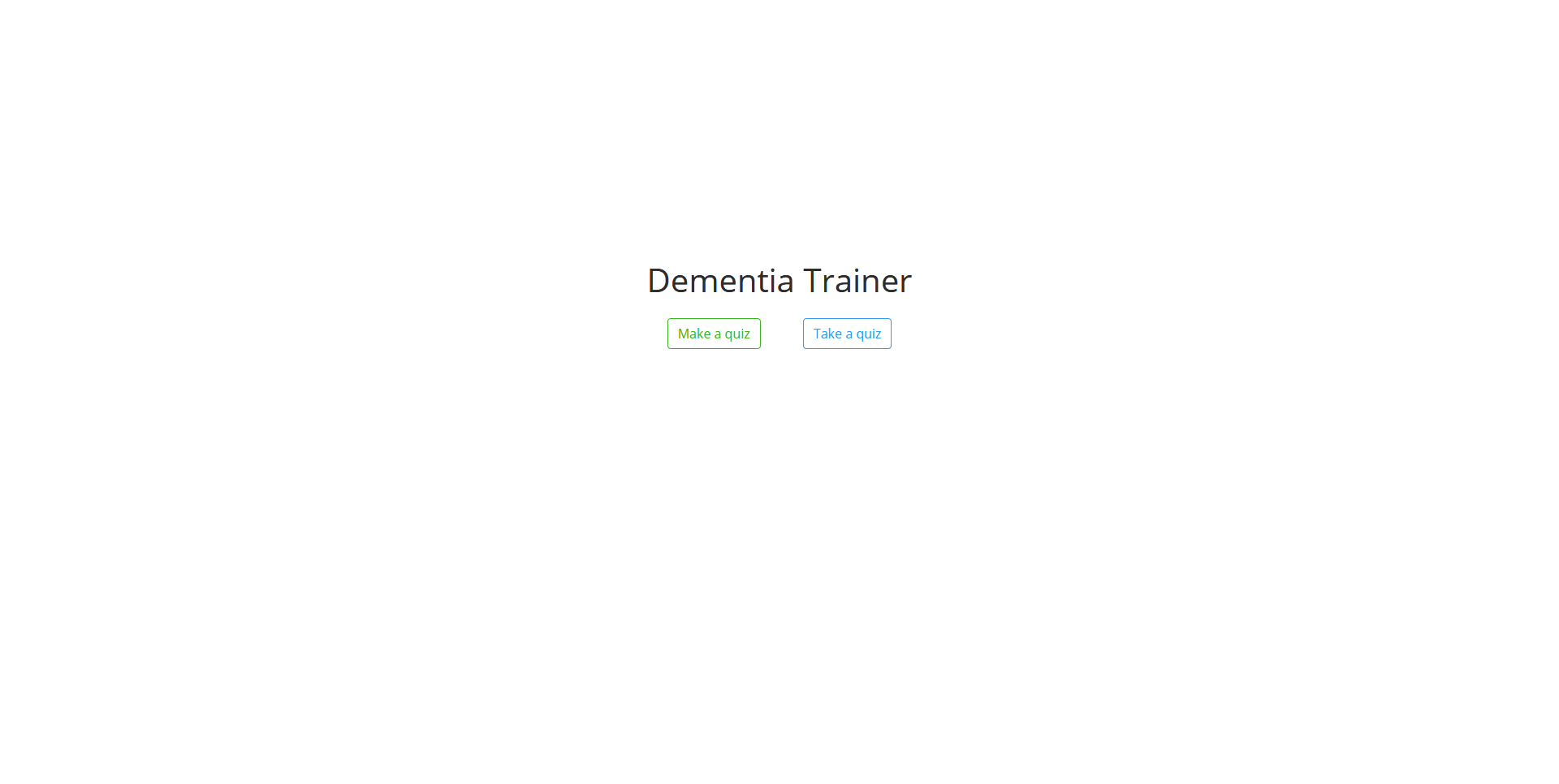
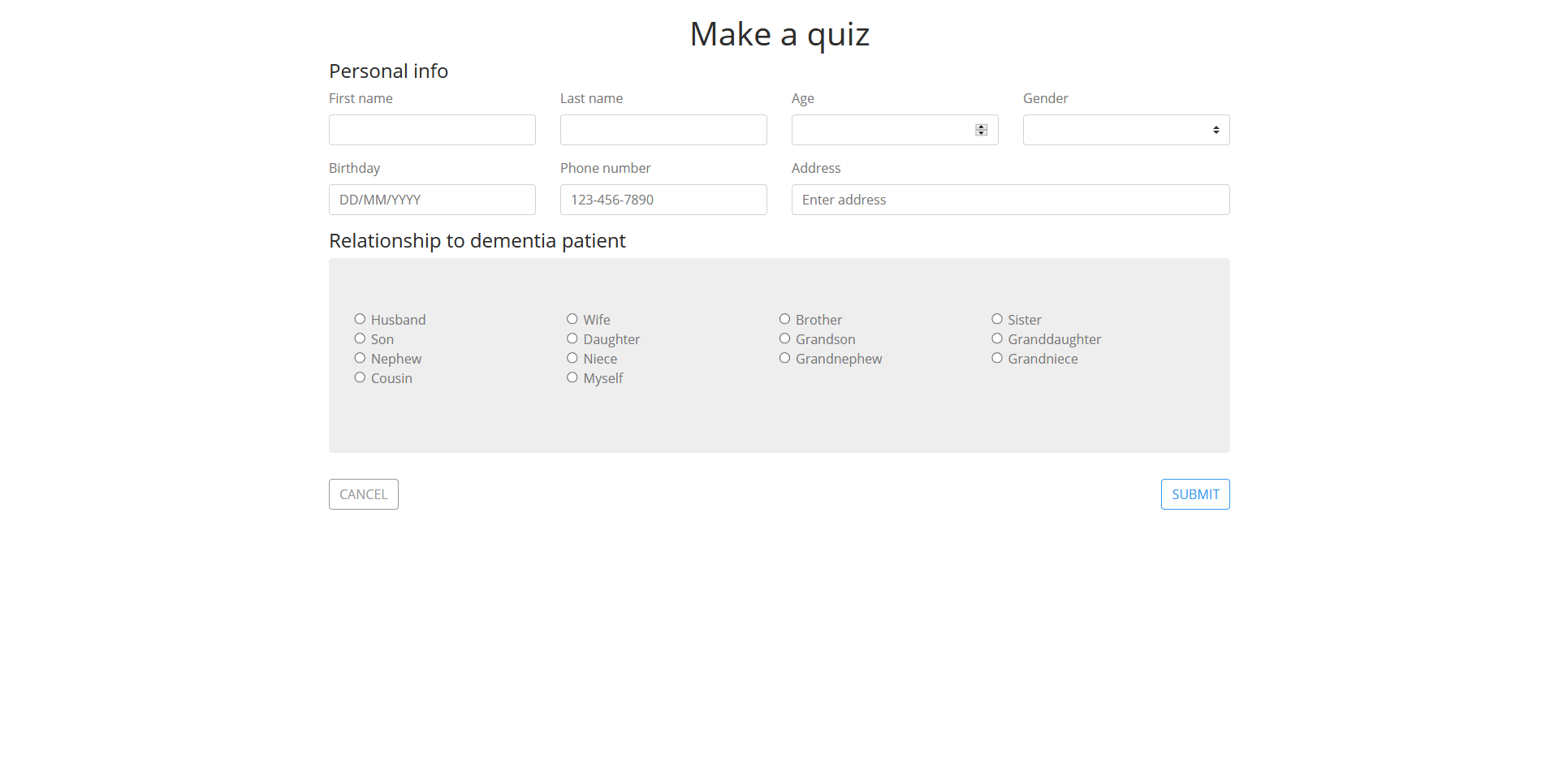
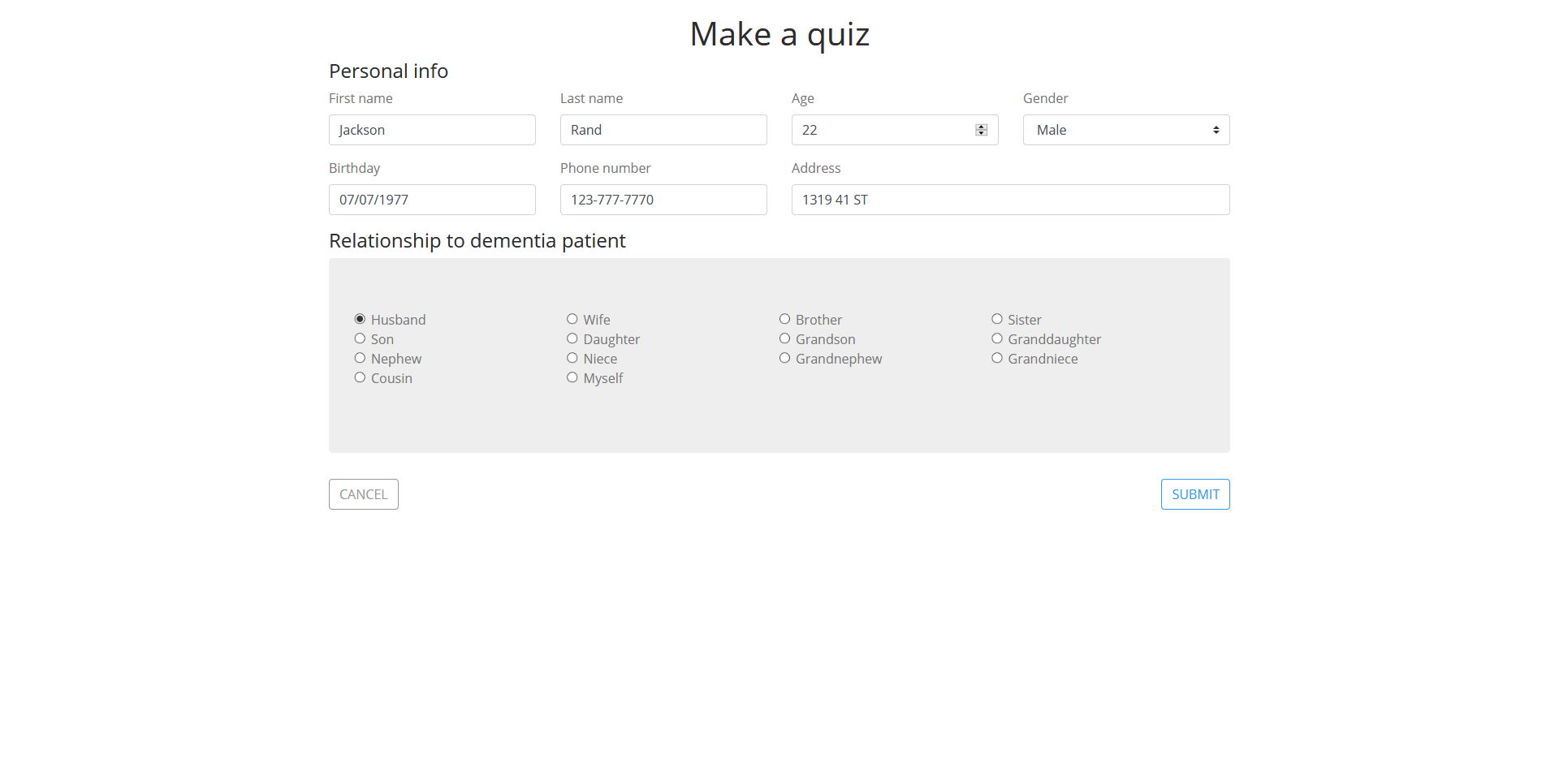
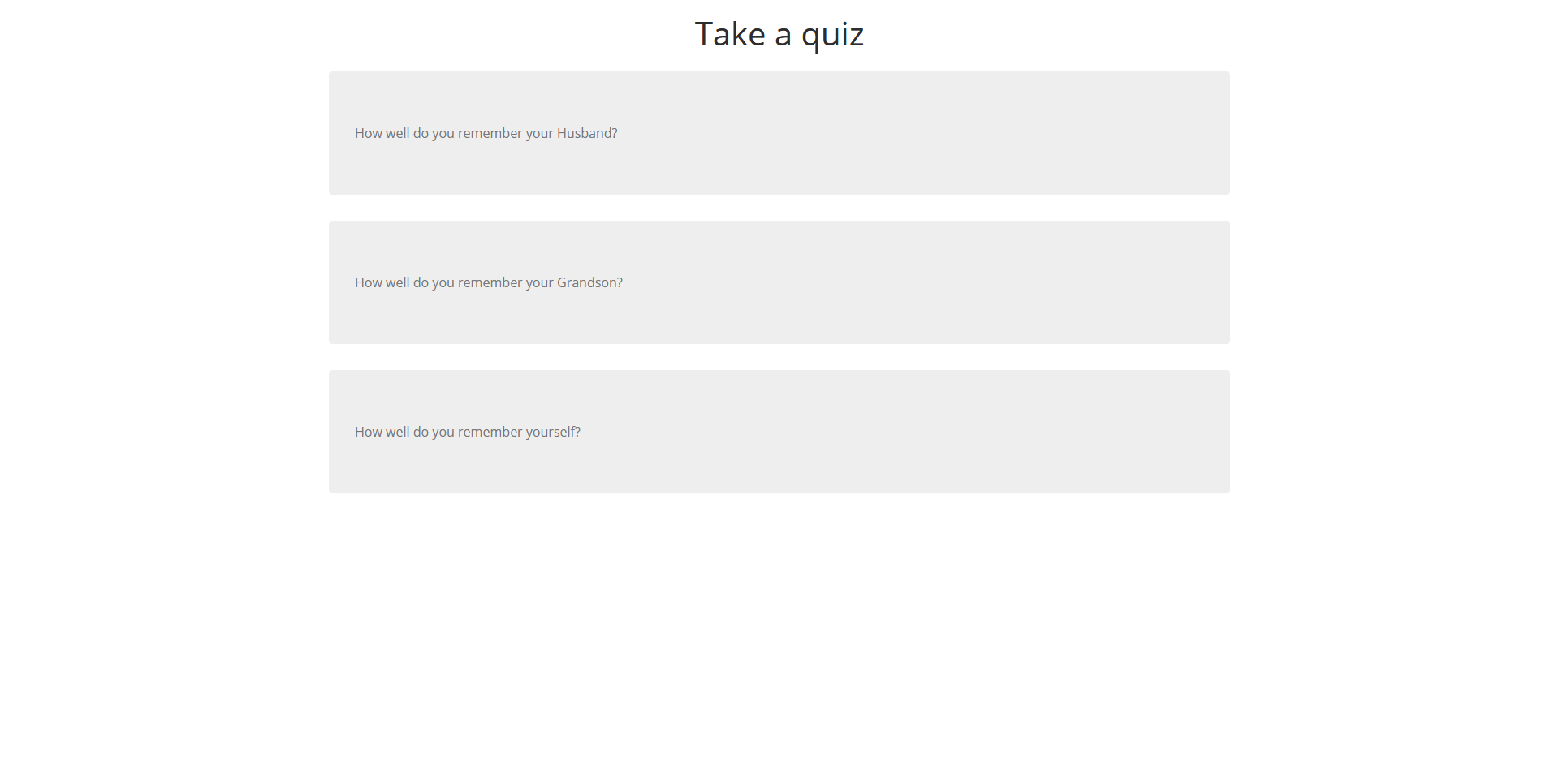
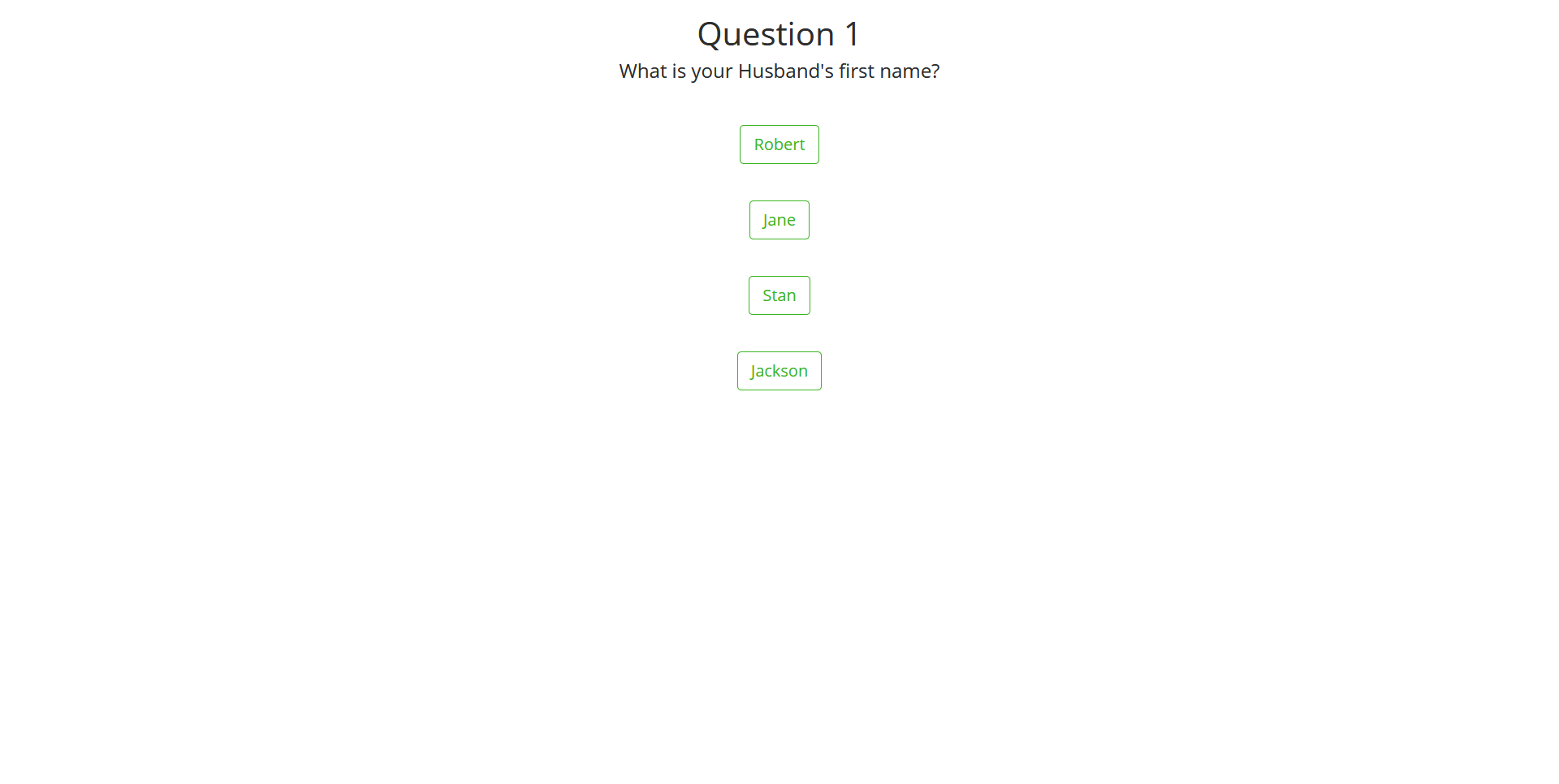
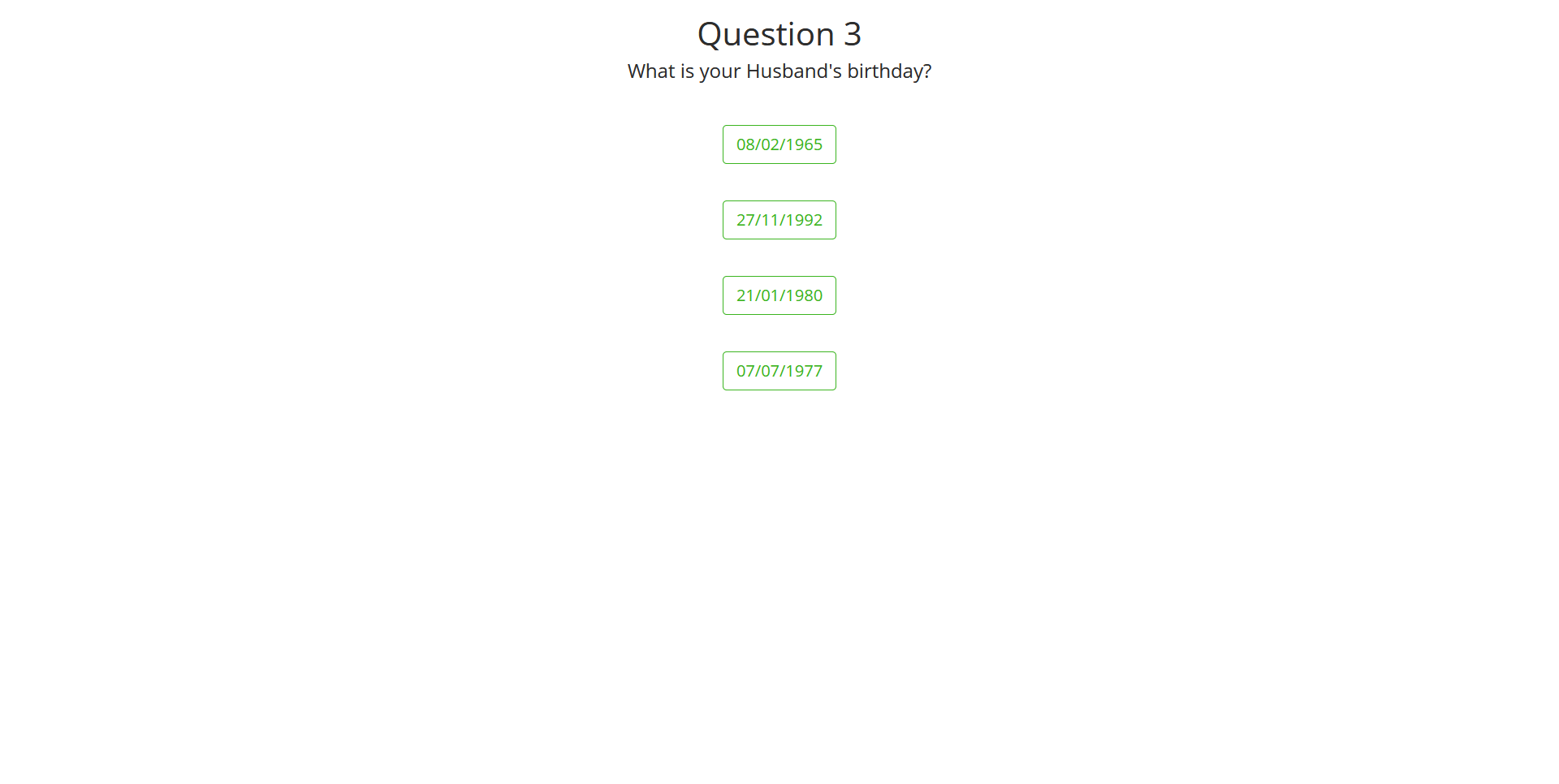
We developed a website that requires the patient to fill out information about themselves, and from this information, a quiz type of game is created which tests the patient’s memory. The patient’s information, game, and its results (score) is saved in a database. Our website is meant for patients to visit and play repeatedly over time, and patients’ results would be assessed holistically for each individual
How I built it
We first created the website by using AngularJS for front-end development and node.js for back-end development. In addition, we also used Bootstrap. Dummy data was used to test the functionality of the algorithm, but for real world use, data would be obtained through the patient information form on our website.
Challenges I ran into
Challenges we faced along the way include determining appropriate questions to build a patient portfolio and thus, a quiz game. Questions must be strictly factual and cannot be opinions that change over time (eg favorite food). Additionally, our team has little experience in back-end development, so it created an obstacle for us.
Accomplishments that I'm proud of
As individuals, we gained new knowledge in other topic areas. For example, our computer science member learned more about human biology and patient interaction, whereas our biochemistry member learned more about web app development. Additionally, creating possible solutions to improve the accessibility of resources for the elderly in low income areas was an exciting and interesting experience.
What I learned
As a whole, we learned more about dementia, development of web apps, and the creation of algorithms. Expanding our knowledge and building upon our preexisting knowledge was a very rewarding experience.
What's next for Dementia Tracker
Based on further research, we hope to implement more questions that would give a better assessment for the patient's risk. We also need to research more about which questions answered incorrectly are more indicative of dementia patients.


Log in or sign up for Devpost to join the conversation.