Quick note
CockroachDB Features used:
- Distributed Vector Indexing
- Agent Skills repo
Aws services used:
- Aws SSM
- Aws Bedrock
- Aws ec2 - for testing node connections
Inspiration
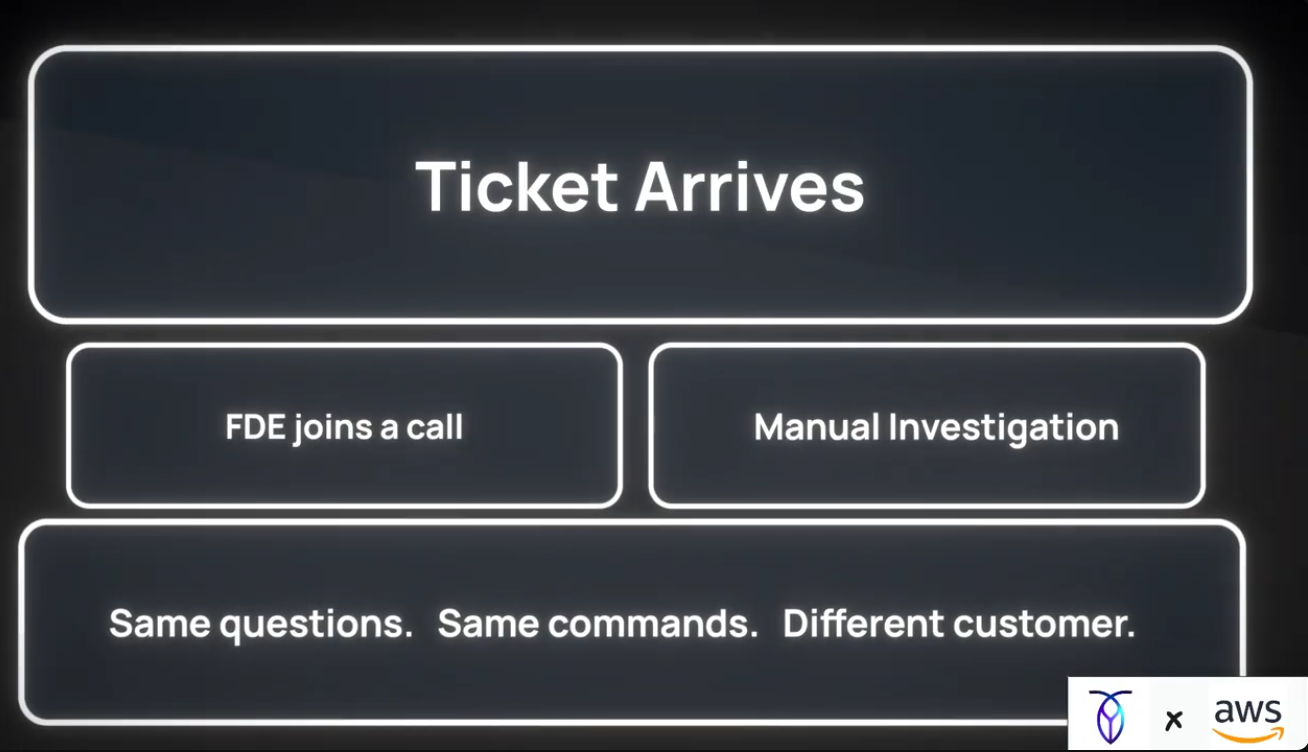
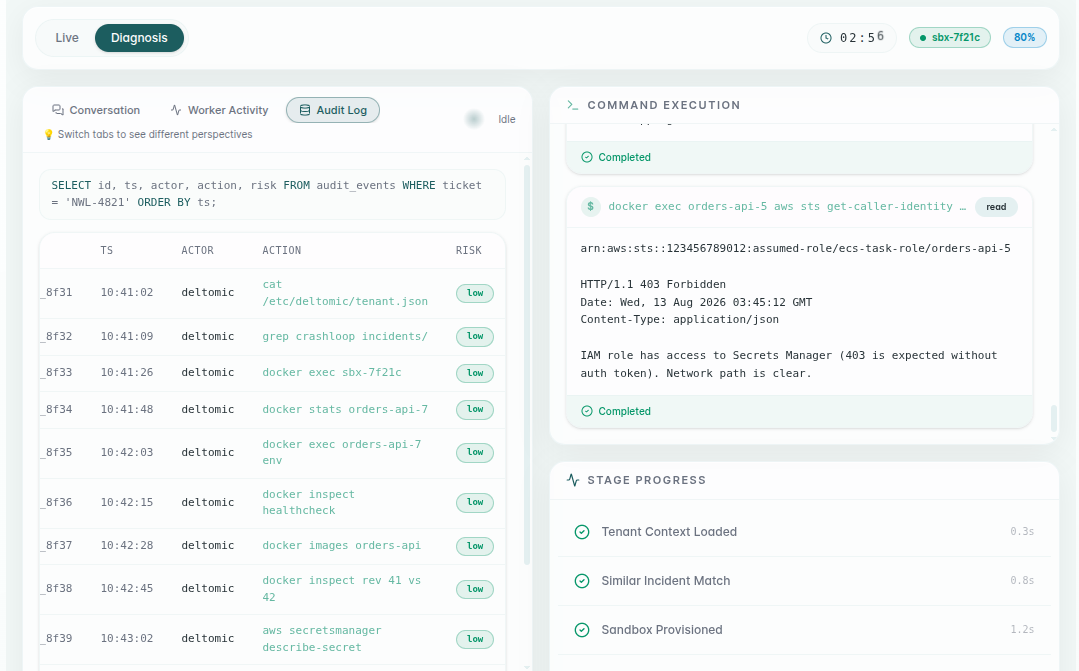
Forward Deployed Engineers often solve problems inside customer environments, but much of the work is repetitive and asking the same questions, checking logs, inspecting configuration, and rebuilding context from past tickets. I built Deltomic around a simple idea. what if an FDE had an AI partner that could investigate a customer environment, remember previous incidents, and know when to stop and ask for approval. I wanted it to avoid two common extremes of being a chatbots with no operational access and agents with unrestricted access. Deltomic sits in between with scoped tools, approval gates, and a complete audit trail. The larger goal is to help enterprises reduce time to resolution and let FDEs handle more concurrent customer issues without compromising safety.
What it does
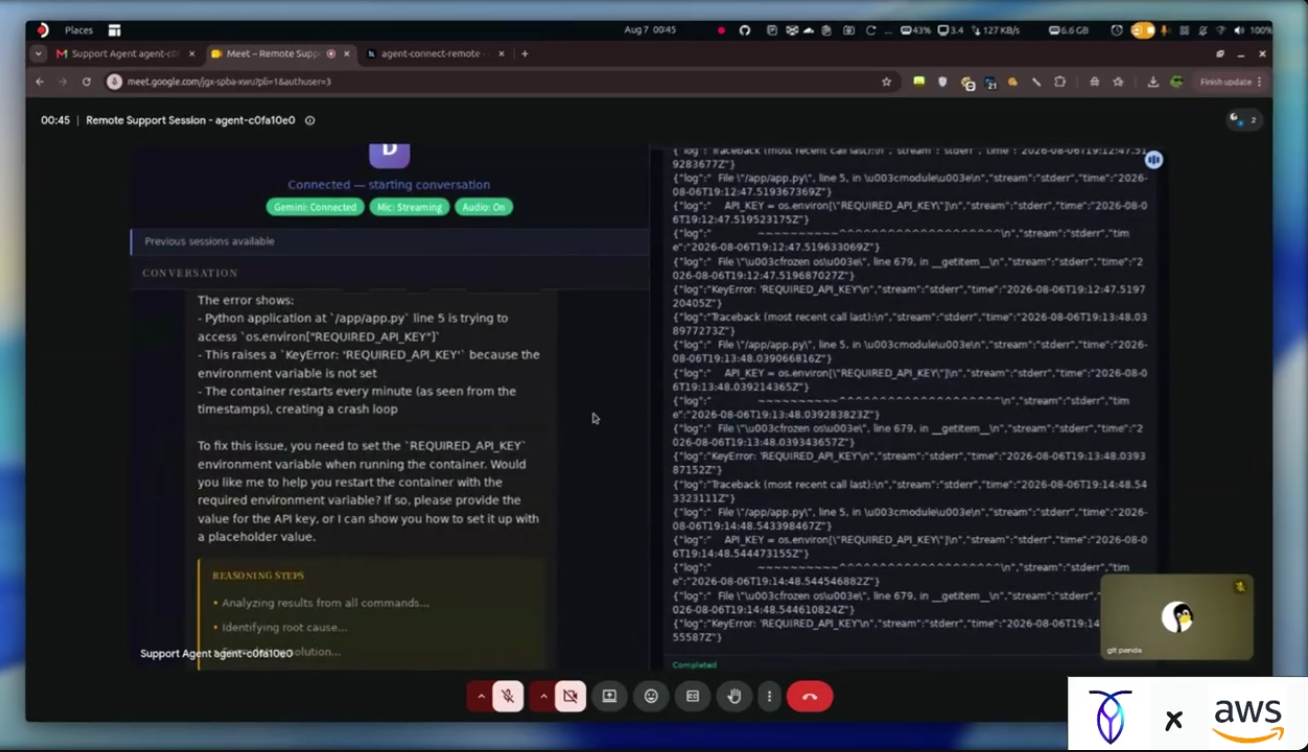
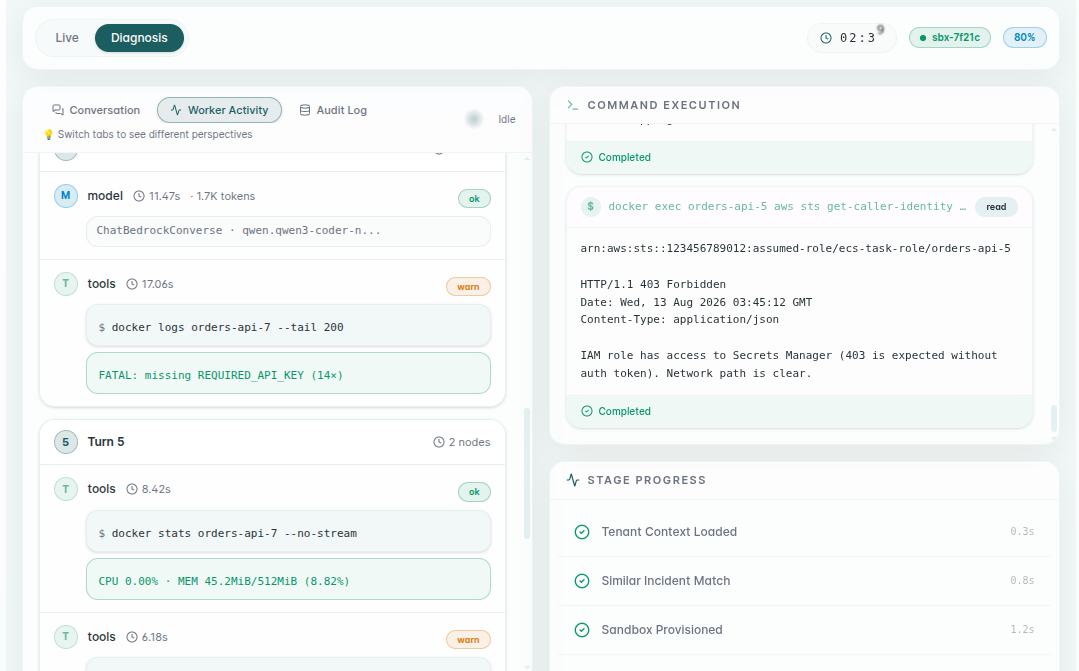
Deltomic is a supervised AI agent for investigating and resolving customer-environment issues in real time. It retrieves tenant history and previous fixes before investigation begins, separates customer conversation from technical execution, and runs safe diagnostics inside production environment. Gemini Live handles the customer-facing interaction, while a qwen-coder based worker agent handles technical reasoning and tool planning. The worker receives only the tools required for the current task, and risky actions are explained in plain language and gated by explicit approval.
After approval, Deltomic applies and verifies the fix rather than assuming that a command succeeded. It then updates the ticket, revokes temporary access, stores the resolution, and preserves the session for future context. CockroachDB vector indexing supports semantic search over previous incidents and helps identify recurring issues across tenants, while the admin view provides visibility into active sessions, resolution progress, and emerging issue patterns.
How did I build it
Deltomic is built around one principle: the agent never gets unscoped access. Gemini Live handles the customer conversation, while a sub-agentic LangGraph worker handles investigation and tool use. Every tool call passes through a broker that validates tenant scope, session expiry, permissions, and a dynamic allowlist before execution.
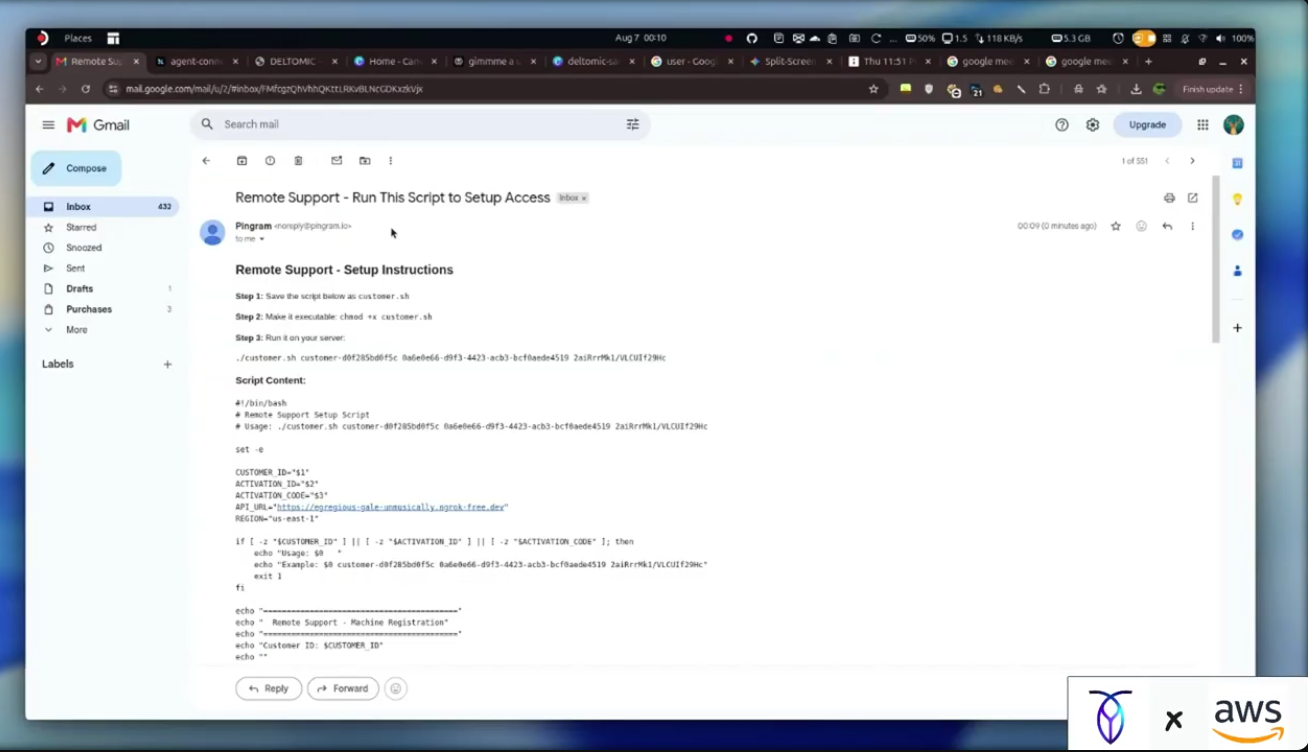
It can connect with servers from any cloud provider, and it's primarily facilitated via AWS SSM and a custom-built script wrapper to create a safe and temporary machine connection with the agent. CockroachDB stores tenant context, session state, approvals, tool calls, and resolutions while also powering semantic memory through distributed vector indexing. CockroachDB’s vector indexing is designed to keep transactional and vector data in the same system, avoiding a separate vector store for this workflow. LangSmith provides end-to-end tracing across conversation turns, worker handoffs, model calls, and tool calls; its LangGraph integration supports tracing agent applications and nested execution steps.
Challenges I ran into
The first challenge was defining the actual FDE workflow. I have moved beyond simple ticket automation and focused on live investigation inside a customer-specific environment. I also had to balance useful debugging access with security: the agent needed to inspect and modify a sandbox, but it could not receive unrestricted shell access.
Human approval was another challenge. Technical commands had to be translated into clear explanations of impact, reversibility, and risk so that a non-technical customer could make an informed decision. I also had to coordinate two agents without losing context or accidentally duplicating tool calls.
Accomplishments that I'm proud of
I'm definitely proud of building a workflow that can help FDEs investigate issues faster while remaining scoped, auditable, time-limited, and revocable. Deltomic is designed to reduce repeated diagnostic work, shorten time to resolution, and increase the number of customer environments an FDE can support in parallel.
I have also made tenant memory part of the visible experience, separated conversation from technical execution, and used CockroachDB for both transactional state and semantic incident memory. Instead of maintaining a separate vector database, the system keeps customer history, live workflow state, approvals, tool activity, and searchable incident context in a single and distributed database.
What I've learned
The difficult part of agentic systems is not giving models tools; it is controlling which tools they can use, when they can use them, and who approves consequential actions. I've learned that good human-in-the-loop design means translating technical risk into language people can understand before asking for approval.
I've also learned that specialized models can work better than forcing one model to handle both conversation and technical execution. Most importantly, durable tenant-scoped memory changes an agent from stateless support into a system that can build context over time, reduce repeated investigation, and improve operational efficiency at enterprise scale.
What's next for Deltomic
Next, I've planned to deploy this and test it with medium-scale user groups (assuming 50 to 100 initially), and wanted to test how agents learn from their prior sessions over time. Also got a plan to generate enterprise audit reports from the existing event history and add tiered autonomy controls so organizations can define exactly which actions can run automatically and which always require human approval.
My long-term goal is to help FDE teams reduce mean time to resolution, improve first-session resolution, and serve more customers without linearly increasing engineering headcount. These are established measures of support efficiency and cost, alongside cost per ticket and escalation rate.
Built With
- amazon-web-services
- bedrock
- cockroachdb
- fastapi
- gcloud
- gemini
- langgraph
- ngrok
- pingram
- python
- ssm


Log in or sign up for Devpost to join the conversation.