-
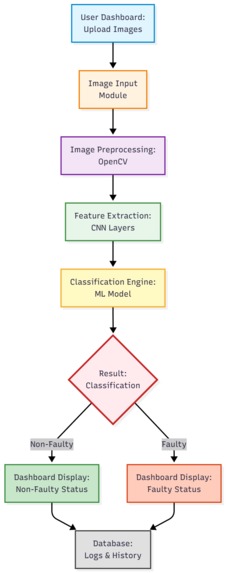
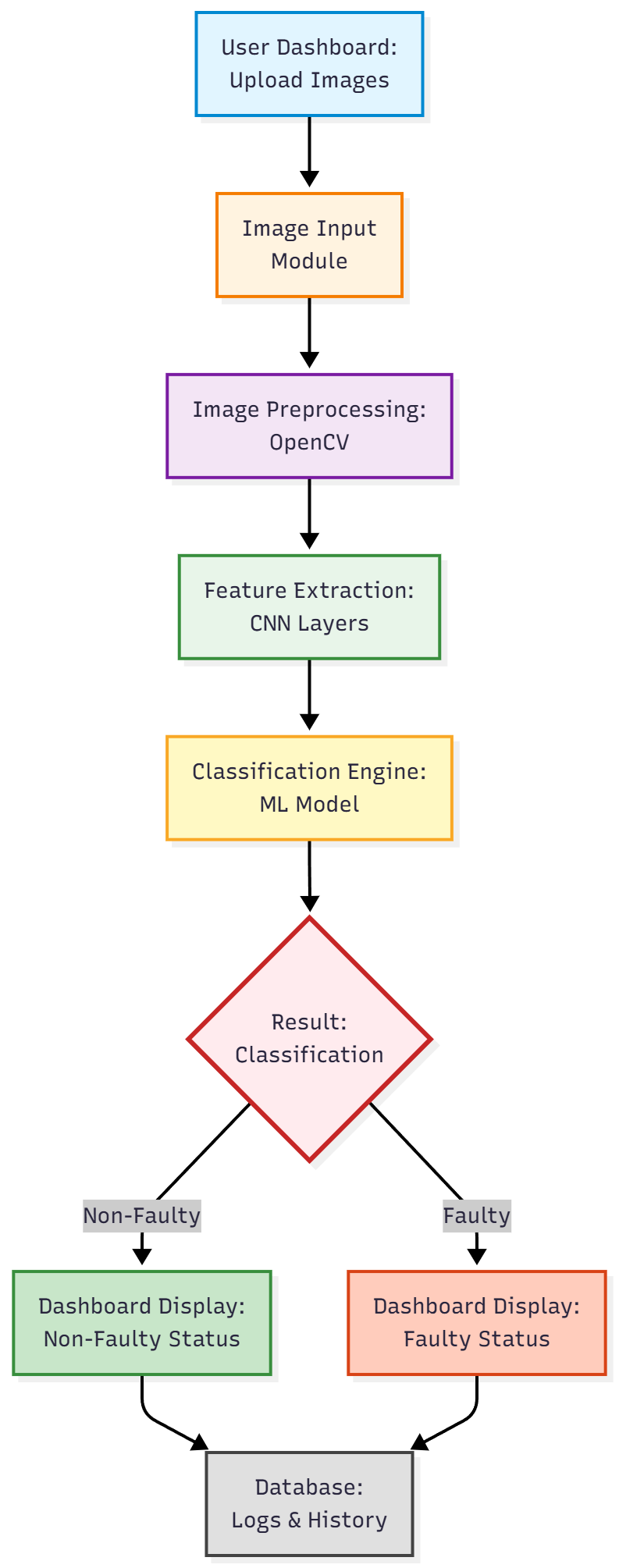
Workflow diagram for DeltaVision
-
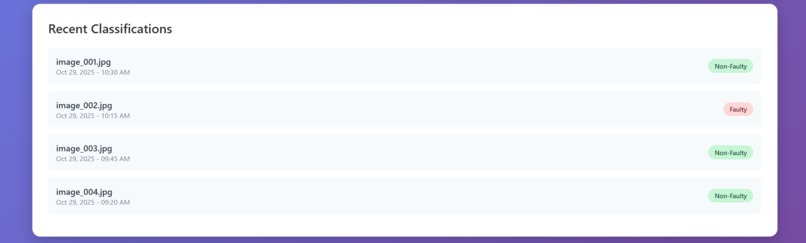
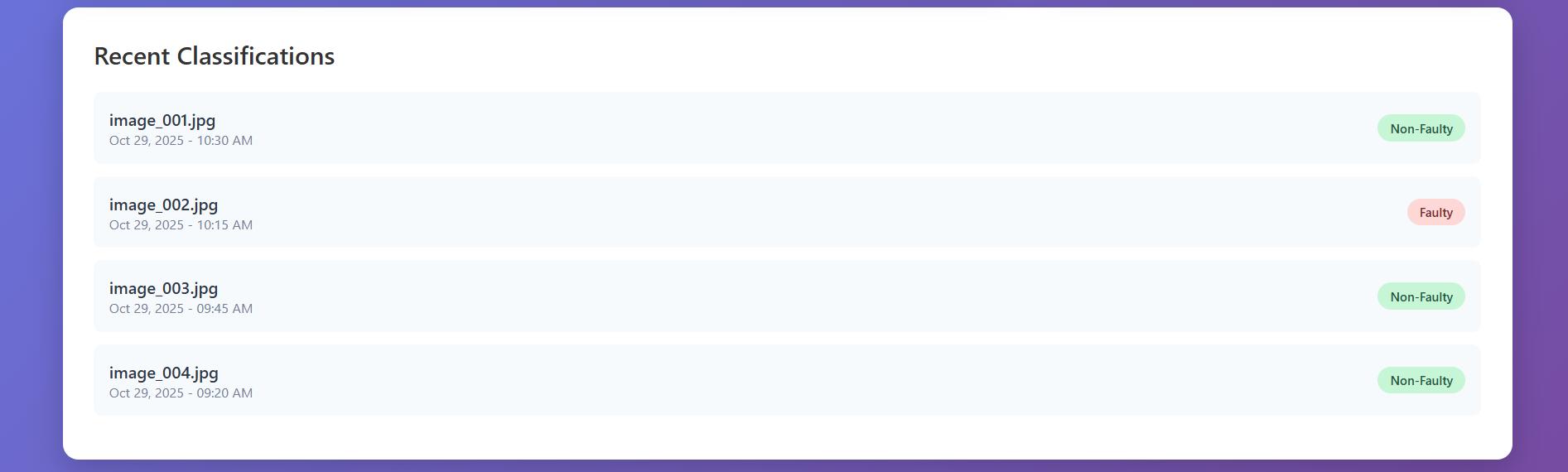
Classification Log UI
-
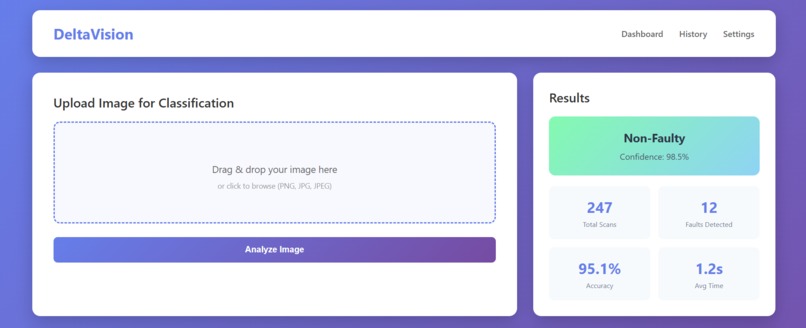
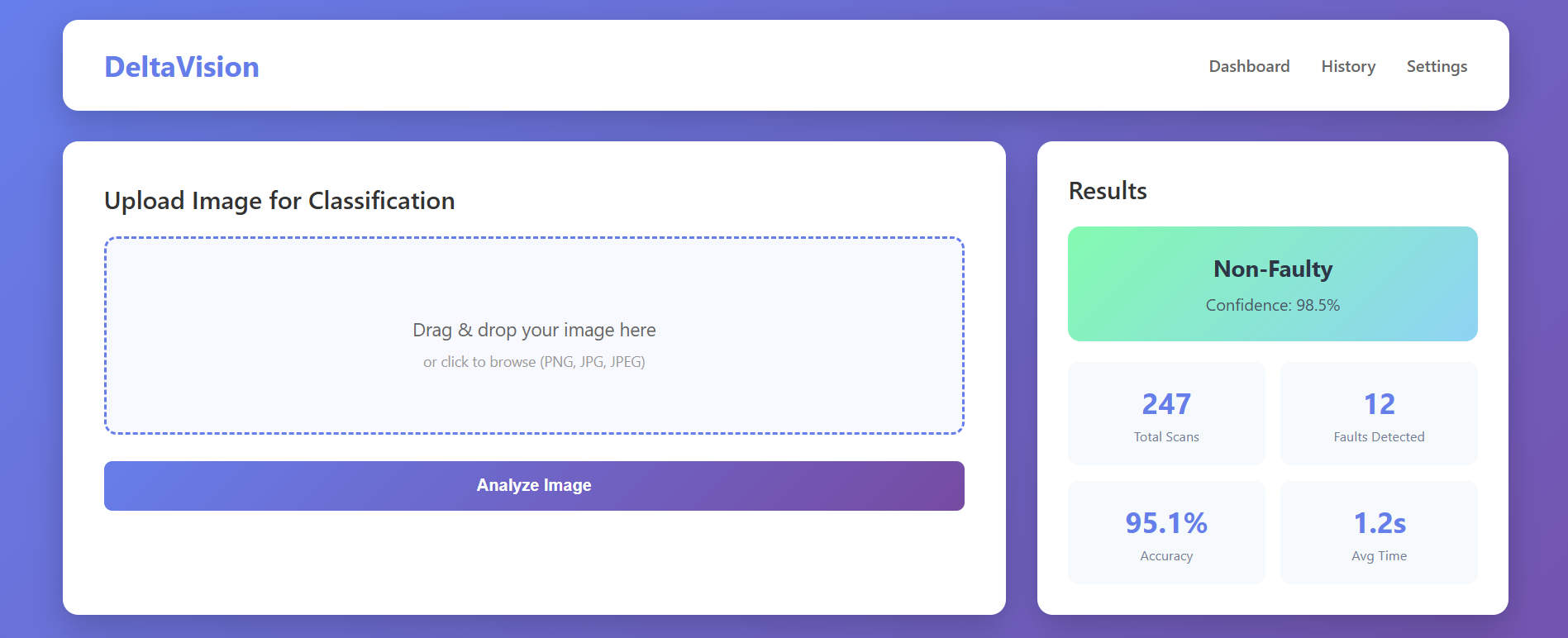
The main dashboard UI
Inspiration
Real-time image analysis prevents race-ending failures by identifying defects or wear long before they become problematic.
Our team was inspired by the fact that manual manufacturing inspections are inherently prone to error, especially in high-speed and high-precision industries like motorsports.
The problem statement immediately caught our attention because it connected deeply with the Formula 1 (F1) theme. In such an environment, even a single faulty component can lead to performance loss or, worse, safety hazards for the driver.
We imagined a scenario where every car part — from a suspension rod to a brake disc — could be checked in real-time through image analysis, identifying defects or wear long before they turn into race-ending failures.
This not only ensures performance consistency but also enhances driver safety and operational reliability.
That idea became the foundation of DeltaVision.
What the Project Does
DeltaVision acts as a visual intelligence system that detects and classifies changes or faults across time-series images using AI and computer vision.
The process starts with a set of images captured at different times or from various manufacturing stages. These images are processed through our main unit, which integrates OpenCV and machine learning algorithms, such as Convolutional Neural Networks (CNNs), to analyze the visual data.
The output is simple yet effective — the system determines whether a component is:
- Correct and ready to use, or
- Faulty, with a specific fault category such as damage, corrosion, or structural inconsistency.
By automating this inspection, the system drastically reduces the chances of human oversight and ensures a faster, more reliable quality assurance pipeline.
How We Built It
Currently, DeltaVision is in its idea and prototype phase.
We’re designing it using Python as the core language, leveraging OpenCV for image preprocessing and CNN-based architectures for fault classification.
The plan is to develop an interactive dashboard where users can:
- Upload images
- Receive classification results
- Monitor inspections in near real-time
— all within a clean and intuitive interface.
The backend logic will focus on modular design, ensuring scalability for future use in industries like manufacturing, automotive, and infrastructure.
Challenges Faced
One of the biggest challenges we faced was achieving accurate and consistent results across diverse image conditions.
Lighting variations, texture differences, and minor misalignments can significantly affect the model's confidence.
To address these issues, we are planning:
- Data augmentation strategies to minimize dataset imbalance
- Continual learning techniques to counteract model drift
This ensures our system maintains high accuracy and reliability over time.
Another challenge was time management — developing a project from idea to prototype in under nine hours required adaptability, coordination, and rapid decision-making.
What We Learned
This hackathon taught us more than just technical skills — it showed us how to ideate, collaborate, and execute efficiently under time constraints.
We learned how to:
- Identify the right technologies for a problem
- Integrate them quickly to form a coherent pipeline
From brainstorming to building the processing logic, we understood the importance of clarity, division of tasks, and iteration speed.
What’s Next
Moving forward, our goal is to transform DeltaVision into a fully working prototype capable of processing real-world image data from industrial environments.
Built With
- fastapi
- googlecloudvisionapi
- huggingface
- keras
- numpy
- opencv
- python
- scikit-learn
- streamlit
