DeltaVision - Universal Visual Difference Engine
Inspiration
In industries like automotive, aerospace, semiconductors, and infrastructure, even microscopic deviations can lead to catastrophic failures or costly recalls. Traditional manual inspections are time-consuming, subjective, and limited by human fatigue.
Inspired by the precision and speed of Formula 1 engineering we envisioned DeltaVision, an engine that can detect, classify, and quantify visual changes or defects with unmatched consistency and speed.
Our mission:
“See what humans can’t - with machine-level precision.”
What It Does
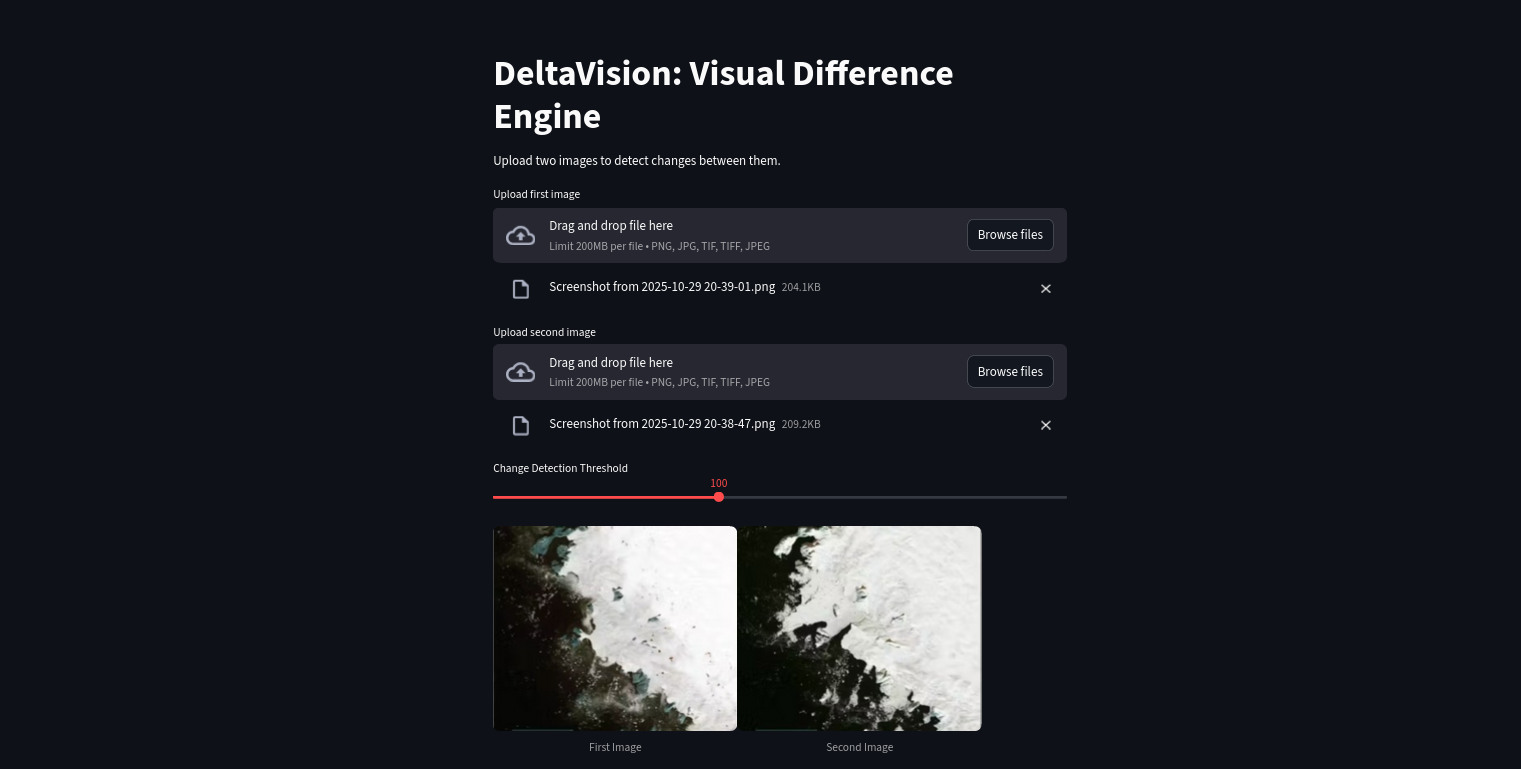
DeltaVision is a Visual Difference Engine that compares two or more images to detect subtle or large-scale changes. It functions as a universal change detection framework that can adapt to multiple domains such as:
Industrial & Manufacturing
- Detect surface defects (scratches, dents, misalignments, wear).
- Compare assembly stages to validate production consistency.
- Inspect 3D-printed or CNC-machined components for micro-defects.
Mapping And Agriculture
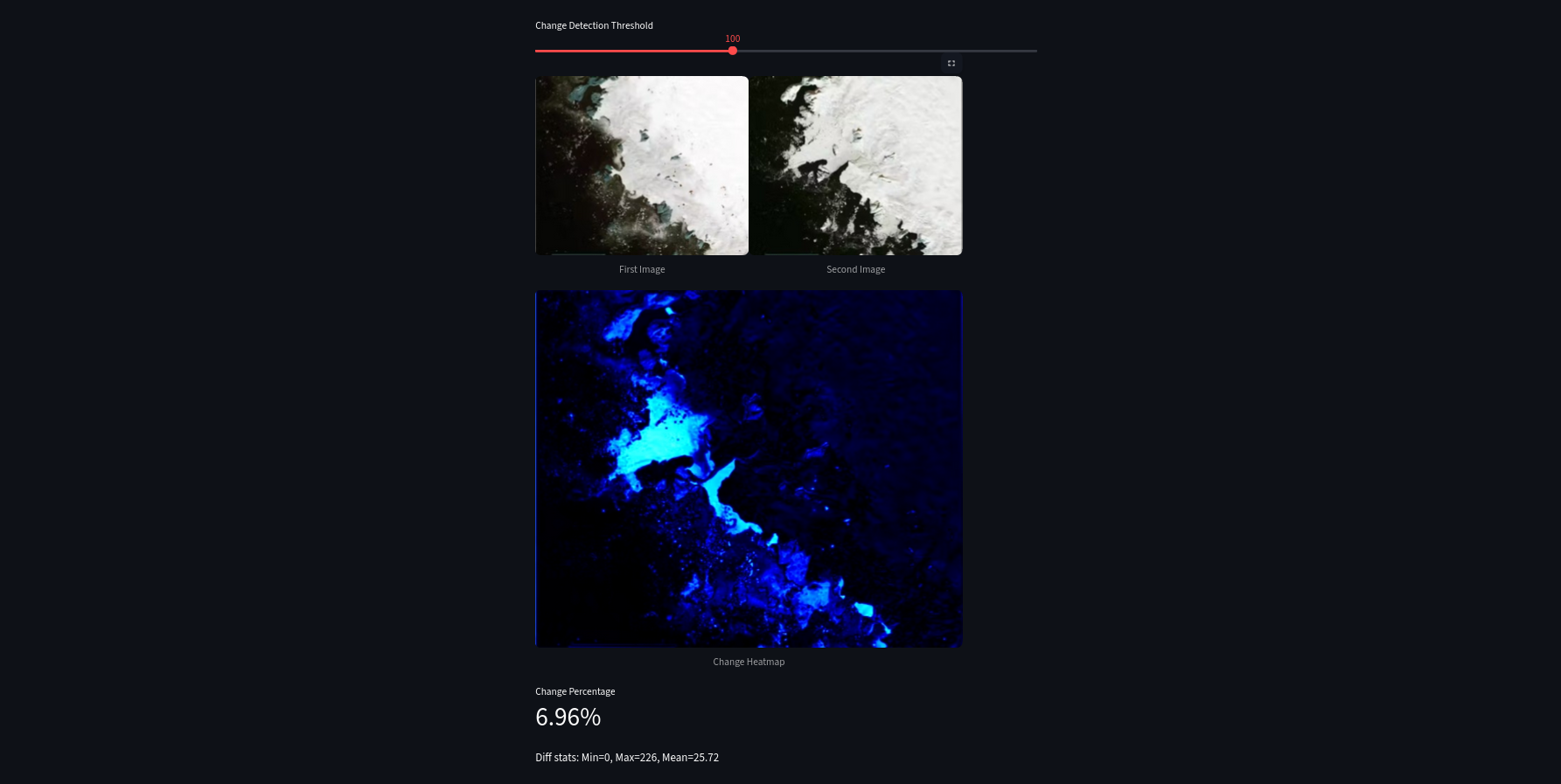
- Track land changes, deforestation, or crop growth from satellite imagery.
- Compare drone imagery for early detection of pest or water stress zones.
Infrastructure & Civil Monitoring
- Identify cracks, corrosion, or deformation in bridges, tunnels, and pipelines.
- Monitor long-term degradation trends in public infrastructure.
Medical & Research
- Identify microscopic changes in pathological or biomedical imaging.
- Compare sample slides to detect disease progression.
How We’re Building It
We’re developing a multi-stage AI pipeline combining traditional computer vision and deep learning techniques for robust, scalable analysis.
1. Preprocessing & Alignment
- Feature Matching: SIFT/SURF/ORB keypoints for accurate registration.
- Geometric Correction: Homography or affine transformation to align reference and target images.
- Illumination Normalization: Histogram equalization and adaptive contrast enhancement.
2. Change Detection Core
- Siamese CNN / Vision Transformer Backbone: Extracts embeddings for both images.
- Difference Map Generation: Highlights localized deviations (texture, color, or geometry).
- Classification Head: Categorizes the type of difference (e.g., defect, design update, lighting variance).
3. Temporal Reasoning (Optional for Time-Series Data)
- ConvLSTM / TimeSFormer Integration: Detect gradual wear, corrosion, or pattern evolution over time.
- Trend Prediction: Forecast when a part or structure may fail using temporal embeddings.
4. Feedback Alignment Loop (Human-in-the-Loop Learning)
Inspired by RLHF/DPO from LLM training, DeltaVision integrates a feedback loop where inspectors or QA engineers can approve or reject AI detections.
- The model fine-tunes using this human feedback to improve reliability.
- Over time, it adapts to factory or domain-specific visual nuances.
5. Dashboard & API
- Web-based Interface: Upload, compare, and visualize image differences.
- Analytics Reports: Quantitative metrics (area affected, severity, confidence).
- API Integration: For industrial systems, ERP, or IoT camera streams.
- Automation Hooks: Automatically trigger alerts or maintenance workflows.
Tools & Technologies
- Computer Vision: OpenCV, scikit-image
- Deep Learning: PyTorch / TensorFlow, timm (for ViT models)
- Temporal Modeling: ConvLSTM, TimeSformer
- Feedback System: FastAPI backend + MongoDB/PostgresSQL for feedback storage
- Visualization: Streamlit / React dashboard
- Deployment: Docker, ONNX Runtime, VLLM/ NVIDIA TensorRT, SGLang for real-time inference
Proposed Results & Impact
- Up to 90% reduction in inspection time compared to manual QA.
- 4× increase in defect detection accuracy through multi-view fusion.
- Self-improving model - performance enhances over time via feedback loop.
- Domain Agnostic - same architecture works for manufacturing, medical, or environmental monitoring.
Challenges We Faced
- Achieving robust image alignment under variable lighting or camera angles.
- Differentiating real defects from environmental noise (e.g., reflections, dust).
- Designing a lightweight yet effective human feedback loop for real-world factories.
Accomplishments
- Conceived a unified framework bridging machine perception and human expertise.
- Designed a self-improving defect detection system inspired by RLHF.
- Built a vision pipeline that could scale to F1-grade manufacturing environments.
What We Learned
- True anomaly detection is more than pixel differences - it’s contextual understanding.
- Gradual changes require temporal modeling, not static comparison.
- Human-AI feedback is crucial to reduce domain-specific false positives.
What’s Next for DeltaVision
- Expand to 3D & multispectral data (LiDAR, infrared) for richer comparisons.
- Integrate with factory cameras or drone systems for autonomous inspections.
- Open-source the visual difference engine for researchers and developers.
- Explore edge inference deployment for real-time defect detection in manufacturing lines.


Log in or sign up for Devpost to join the conversation.