-
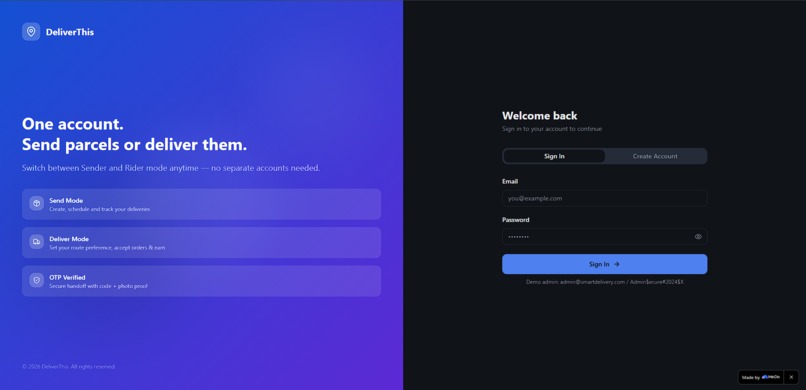
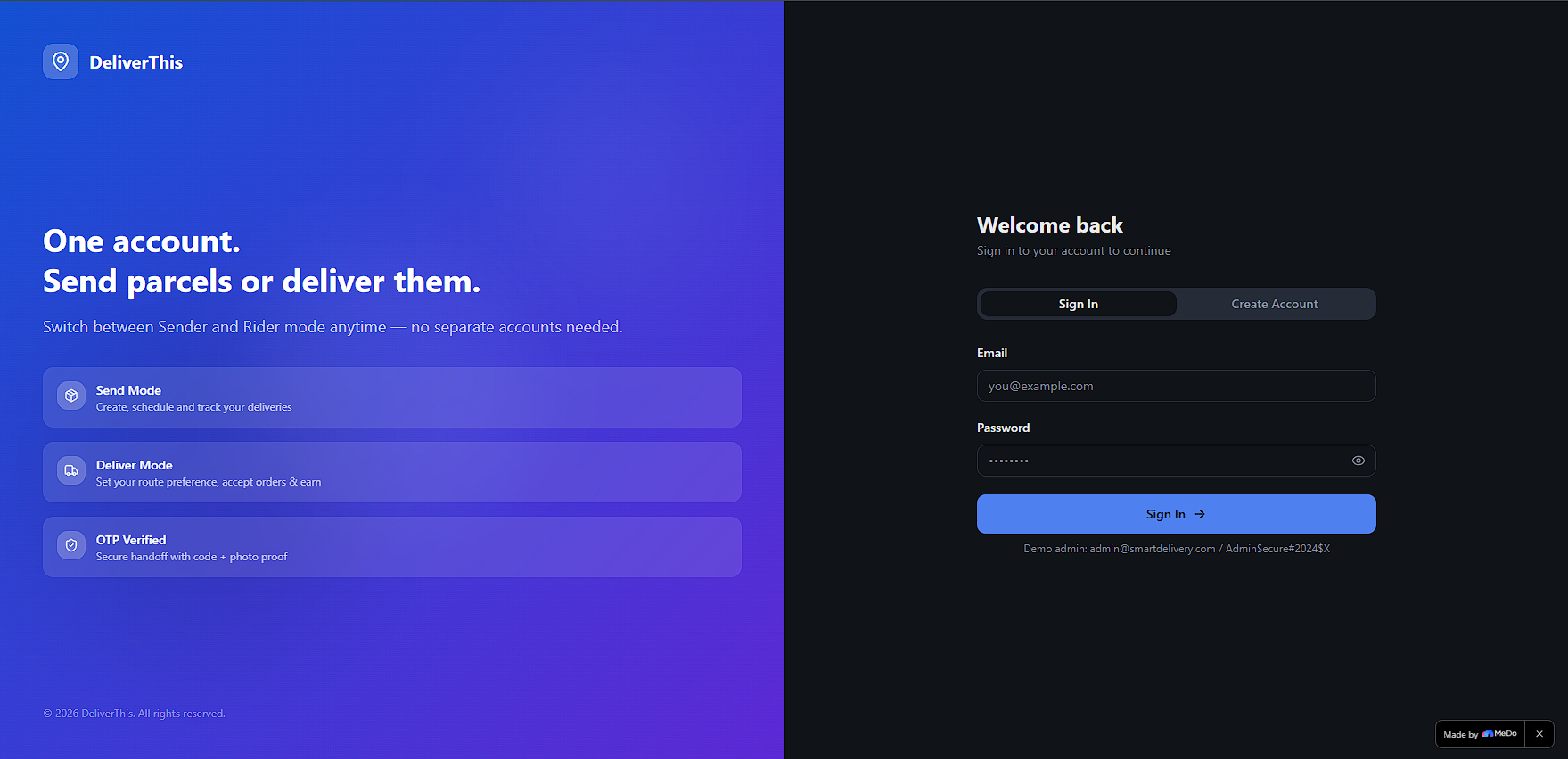
Landing Page
-
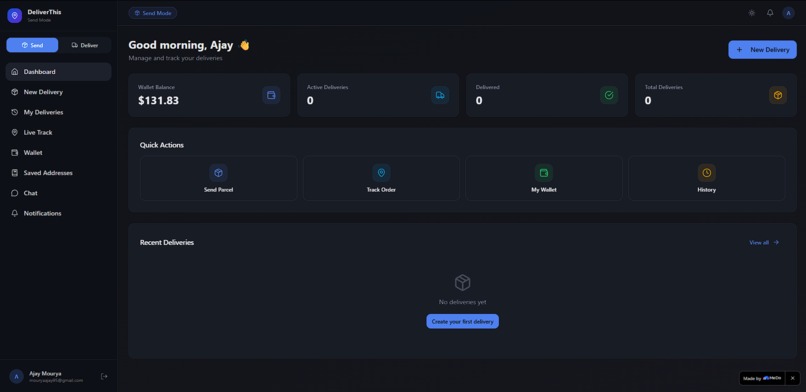
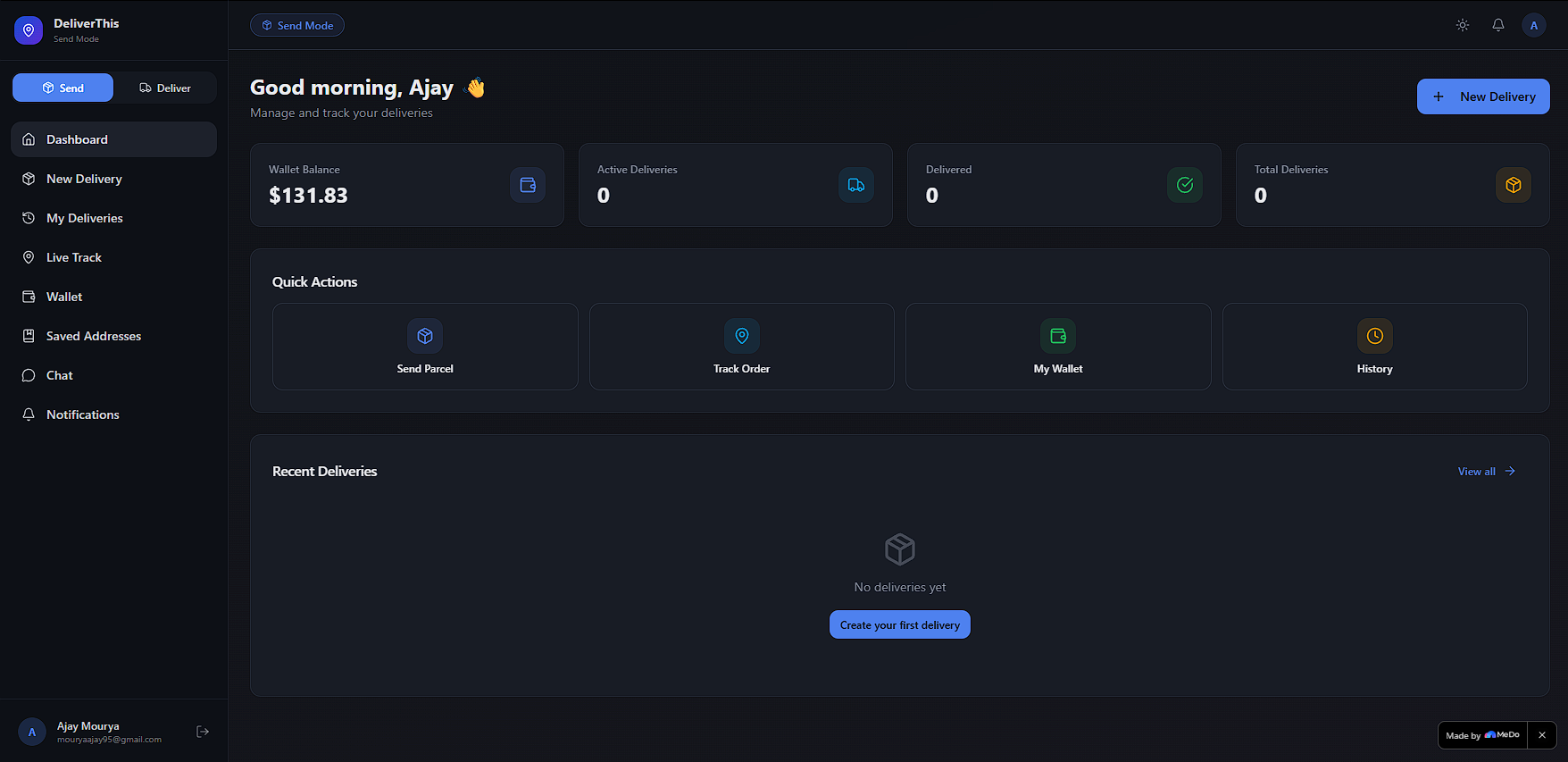
User's Dashboard
Inspiration
Last-mile delivery is still surprisingly inefficient for many small and mid-sized logistics businesses. Most operations rely on phone calls, spreadsheets, and WhatsApp groups to coordinate deliveries, which creates delays, poor visibility, and frustration for both customers and riders.
We wanted to build a platform that gives the same real-time experience users expect from major delivery apps, but in a scalable and affordable way for smaller logistics networks. That idea became DeliverThis — a smart delivery coordination platform that connects senders, riders, and admins in one live ecosystem.
What it does
DeliverThis is a real-time delivery tracking and rider assignment platform built for modern logistics operations.
Key Features: Senders can create delivery requests, track riders live on a map, view ETA updates, and chat directly with the assigned rider. Riders receive nearby delivery requests instantly, accept jobs with one tap, track earnings, and manage deliveries from a dedicated dashboard. Admins manage the entire fleet through a live monitoring dashboard with analytics, revenue insights, user controls, and configurable platform settings.
The platform also includes:
Intelligent rider matching based on distance and availability Real-time GPS tracking Live delivery status updates In-app chat system Wallet and earnings management Role-based authentication and security policies
How we built it
We built DeliverThis using a modern full-stack architecture focused on scalability, realtime communication, and smooth UX.
Tech Stack: Frontend: React 18, Vite, TypeScript, Tailwind CSS, shadcn/ui Backend: Supabase (PostgreSQL, Auth, Realtime, Row-Level Security) Animations & UI: Framer Motion, Lucide React, Sonner Maps & Tracking: Custom GPS tracking hooks with realtime coordinate streaming Core Architecture: Supabase Realtime powers live delivery tracking, rider broadcasts, chat, and admin monitoring. Row-Level Security ensures senders, riders, and admins only access authorized data. The delivery assignment engine calculates nearby riders using geospatial logic and broadcasts requests instantly. Platform settings dynamically control pricing, rider revenue splits, surge rules, and operational policies.
We followed a Build → Audit → Harden workflow, continuously improving stability, performance, and code quality after every major feature.
Challenges we ran into
One of our biggest challenges was building a reliable realtime system without race conditions or subscription conflicts.
We faced issues such as:
Realtime channel collisions when multiple browser tabs were open Simultaneous rider acceptance requests GPS permission failures and network interruptions State synchronization issues between sender, rider, and admin dashboards A runtime crash caused by a malformed identifier during regex refactoring
We solved these problems by:
Creating uniquely scoped realtime channels Implementing atomic delivery acceptance updates Adding graceful fallback states and toast notifications Performing full TypeScript and hook dependency audits after every feature
Accomplishments that we're proud of
We are especially proud of the Smart Delivery Broadcast & Assignment Engine.
When a sender creates a delivery:
The system calculates nearby riders using geospatial distance formulas. Filters riders based on availability and preferences. Broadcasts requests in real time through Supabase Realtime. Locks assignments atomically once accepted. Streams live rider GPS updates to the sender dashboard.
I m also proud that:
The platform supports three fully functional user roles. All business logic is configurable through admin settings. The application feels production-ready with polished UI/UX, animations, realtime updates, and robust error handling. We maintained a clean, scalable codebase with strict TypeScript practices.
What we learned
This project taught me that building realtime systems is much more than just pushing live updates.
We learned:
How to architect scalable realtime applications The importance of database-level security with RLS How to manage synchronization between multiple user roles How critical code audits and debugging discipline are in fast-paced development The value of configurable business logic instead of hardcoded rules
We also gained deeper experience with Supabase Realtime, advanced React state management, and production-grade TypeScript practices.
What's next for DeliverThis
I plan to evolve DeliverThis into a complete logistics operating platform.
Future Plans: AI-powered rider assignment optimization Predictive ETA estimation Route optimization and batch deliveries Push notifications and SMS integrations Payment gateway integration for automatic payouts Rider performance scoring and gamification Mobile apps for Android and iOS Multi-city and multi-warehouse support Advanced analytics and operational forecasting
Our long-term vision is to make DeliverThis the go-to infrastructure layer for modern last-mile delivery businesses.
Built With
- postgresql
- react-18
- shadcn
- supabase
- tailwind-css
- typescript
- vite

Log in or sign up for Devpost to join the conversation.