Inspiration
This might be more of a personal problem, but hopefully a pretty relatable one.
You're a professional software developer; that's what you tell your family at gatherings every time they ask you "What do you do for work?". Everyone knows and some may have even seen your work deployed on the webs or app stores.
Suddenly your cousin comes over and asks you to build him a website for one of his business ideas. He says, "I'll pay you." And you'd be happy to build him one!
But then when you come home you start overthinking. "I'll pay you"? What are his expectations? Family price? Or is he cool with what I normally charge? Does he know how valuable this service is? Or does he think it’s just some random quick thing I can do?
This is especially hard when you're normally a corporate developer; not a freelance one. So you don't have an established rate for your services that's publicly accessible that you can reference to. That's what Deliverly is for:
What it does
Avoid those awkward moments where you actually have to talk prices to your family or friends. Put their minds into the right professional framework. So they stop seeing this as a favor but as an exchange between a client and a professional service provider.
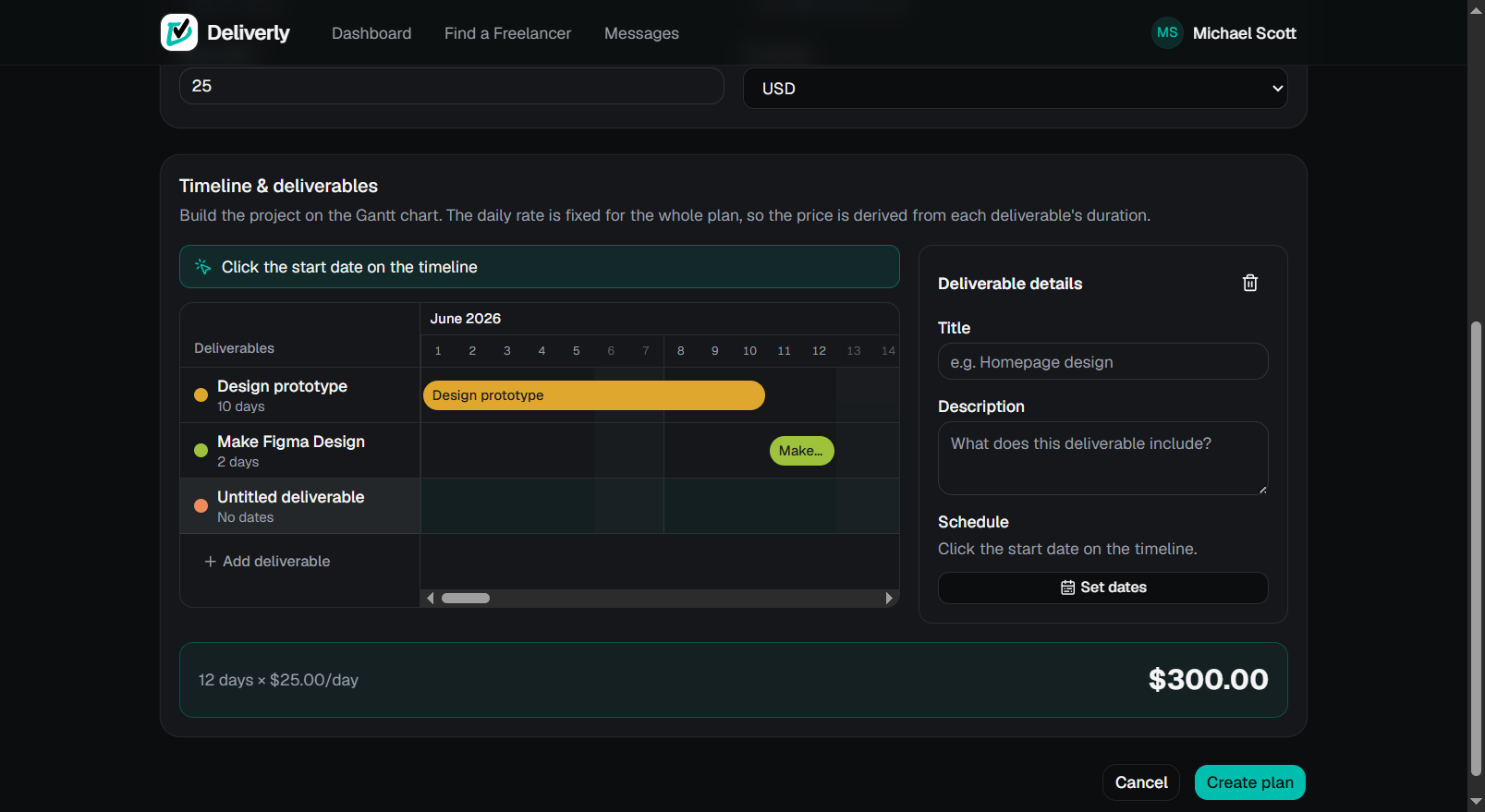
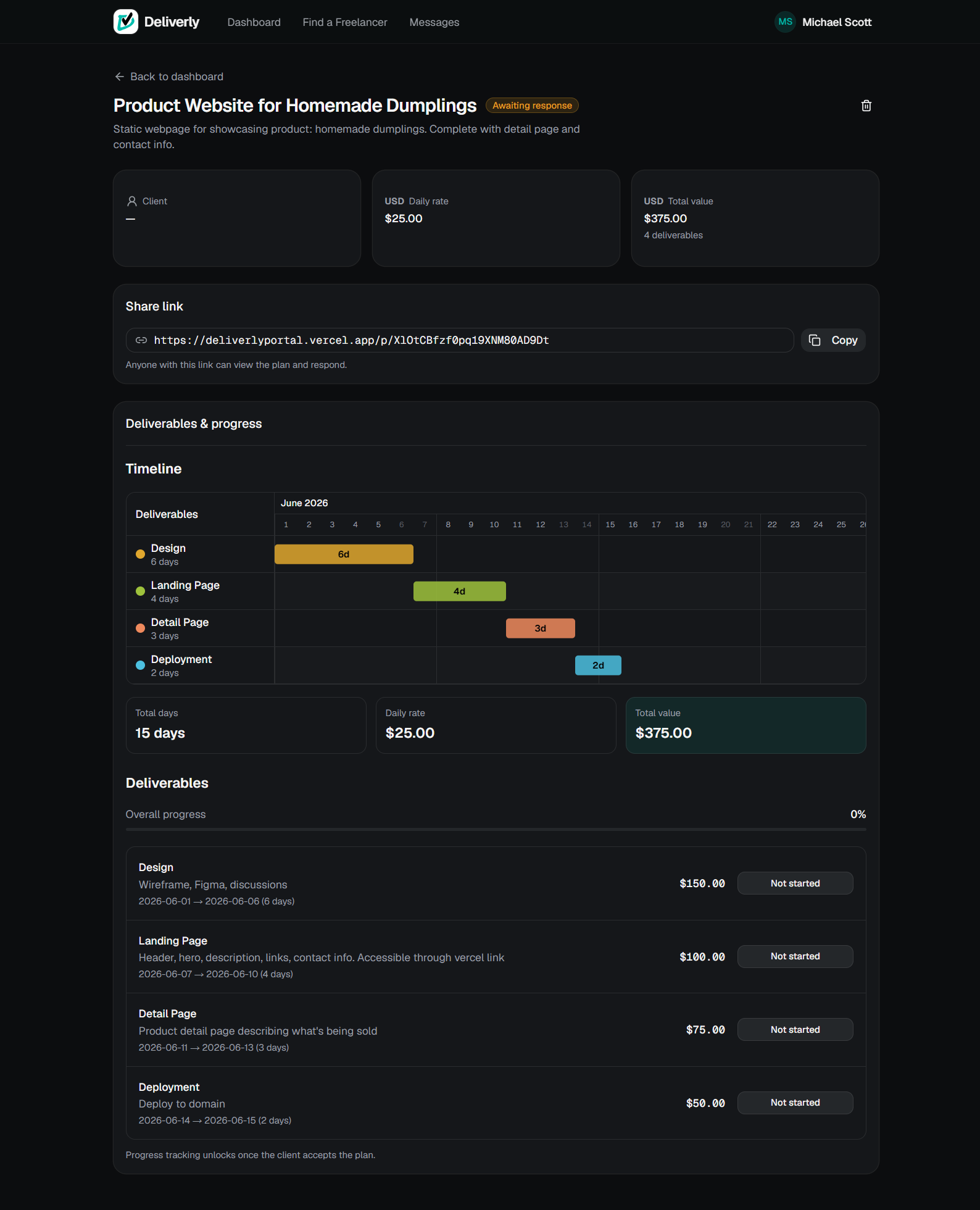
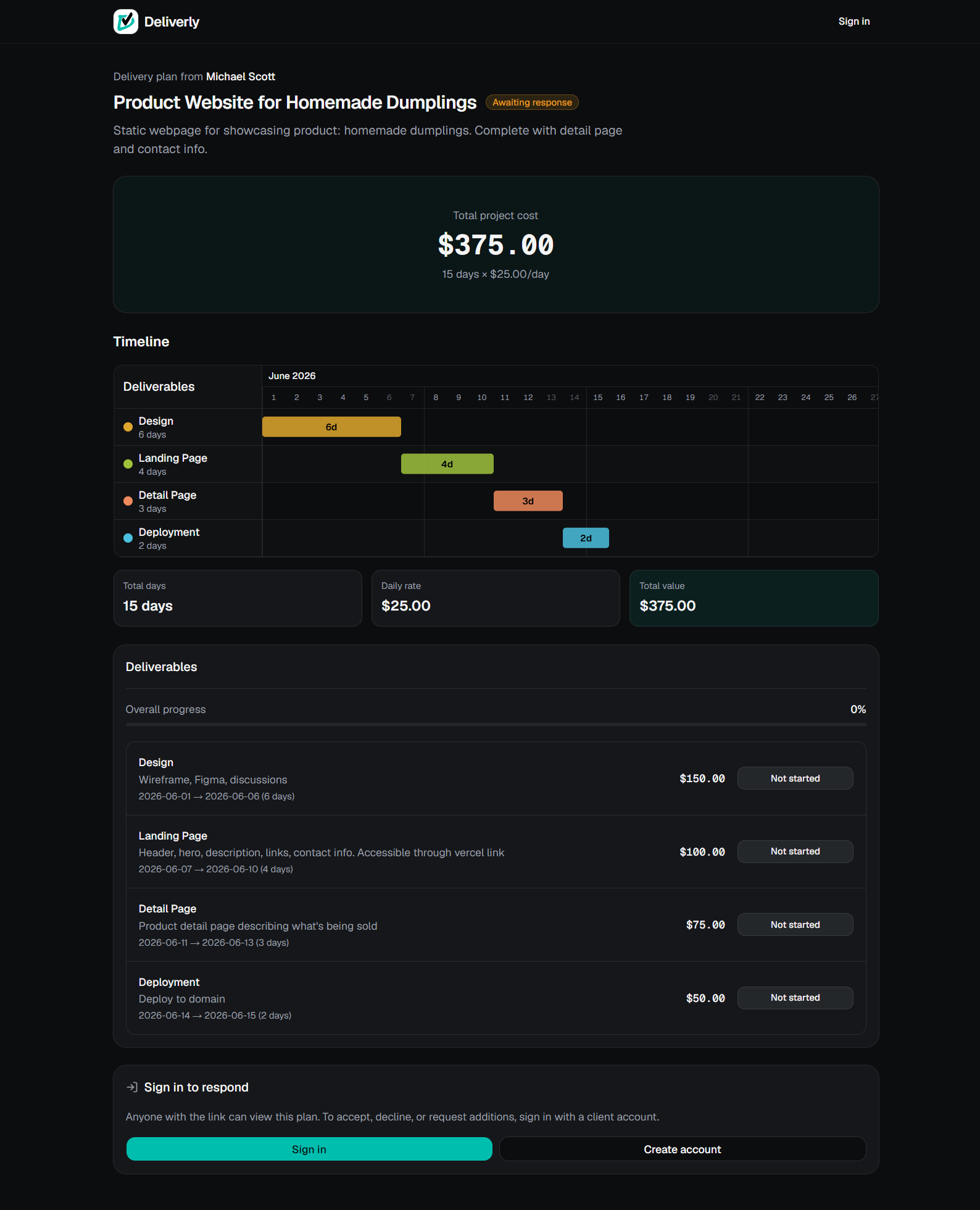
Deliverly allows you to create a concrete project proposal/plan with clear timelines, deliverables, and rate per day. This way your client knows exactly what they're getting into, what they'll receive, when they'll receive it, and how much it's going to cost them. No more being anxious about the ambiguity.
Create Your Proposal/Plan
Send Your Client the Link
Client Accepts
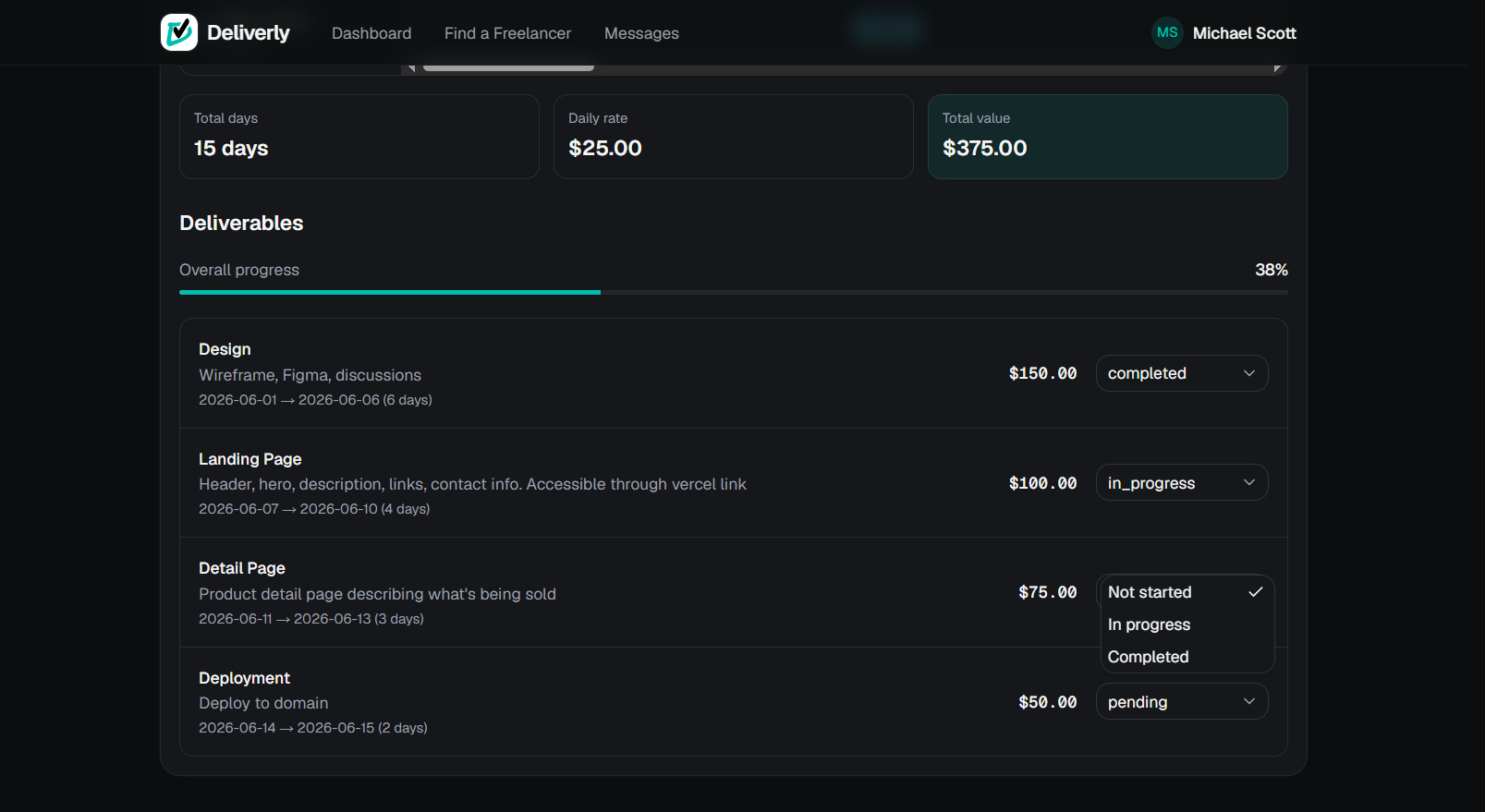
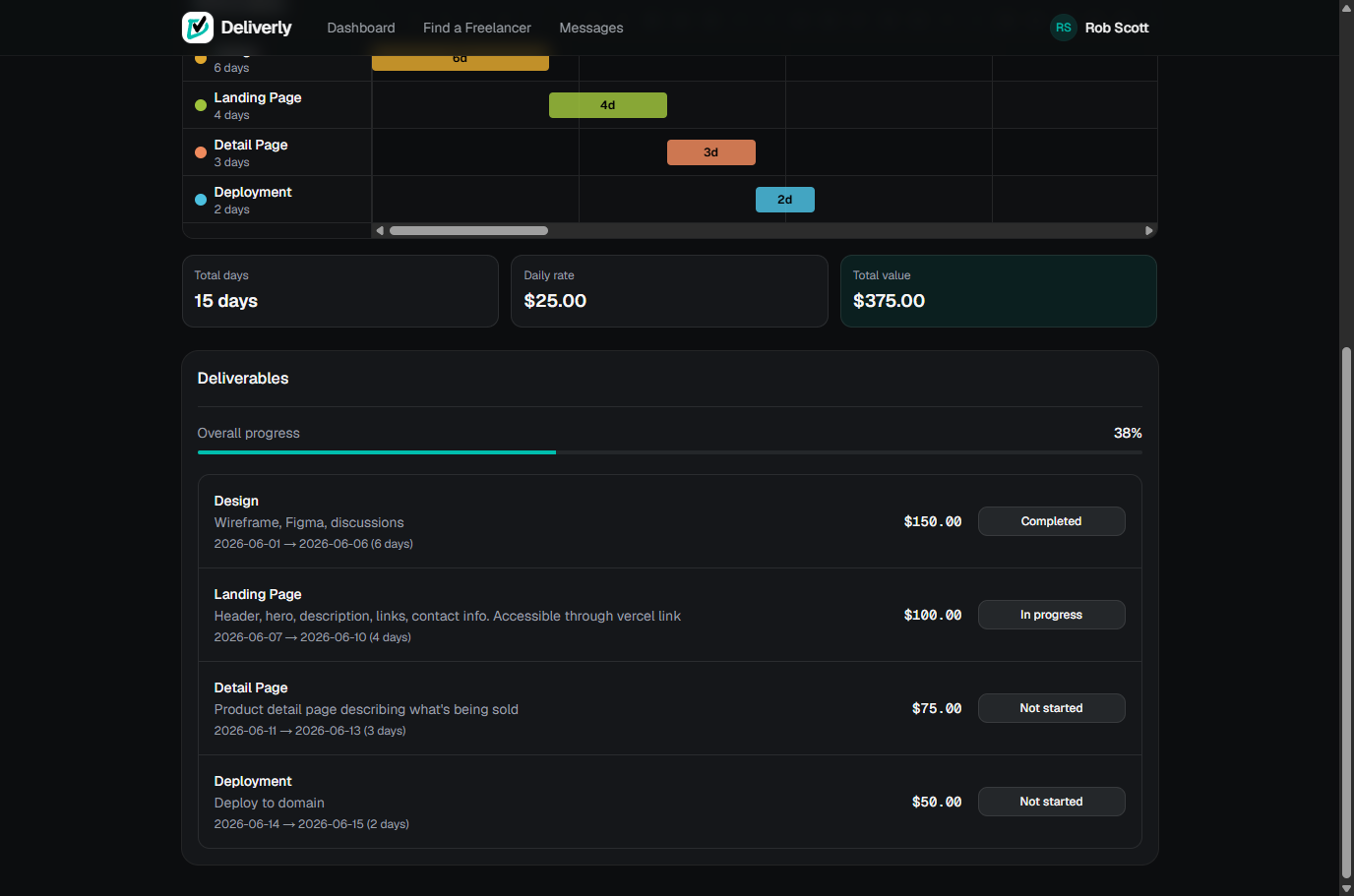
Update Your Progress
You can update your progress as you develop the project:
Client sees it too:
It's Not Just for Freelancers
As a client you could also utilize Deliverly fully. The point is to give full transparency, which benefits both freelancers and clients.
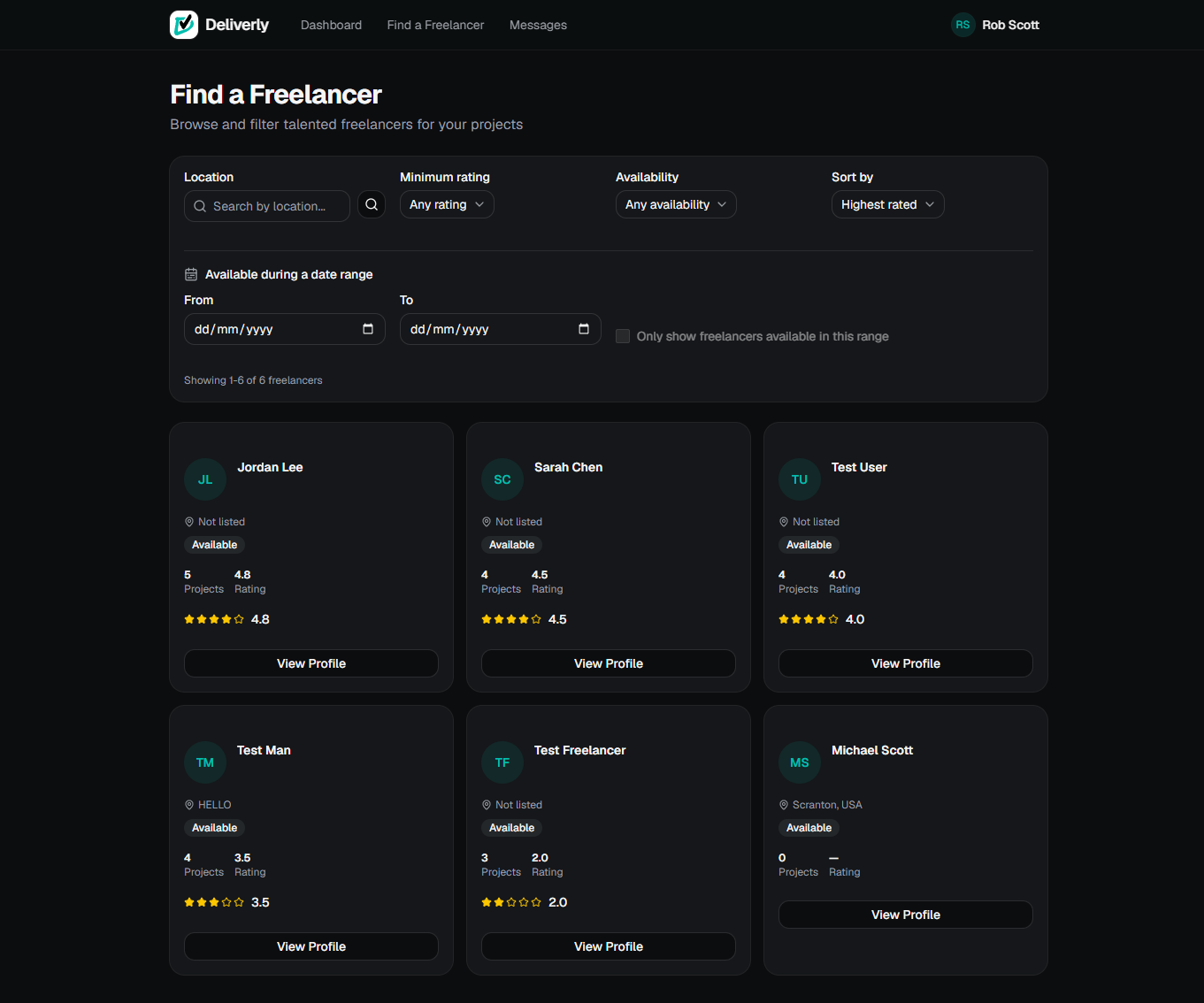
Search Available Freelancers
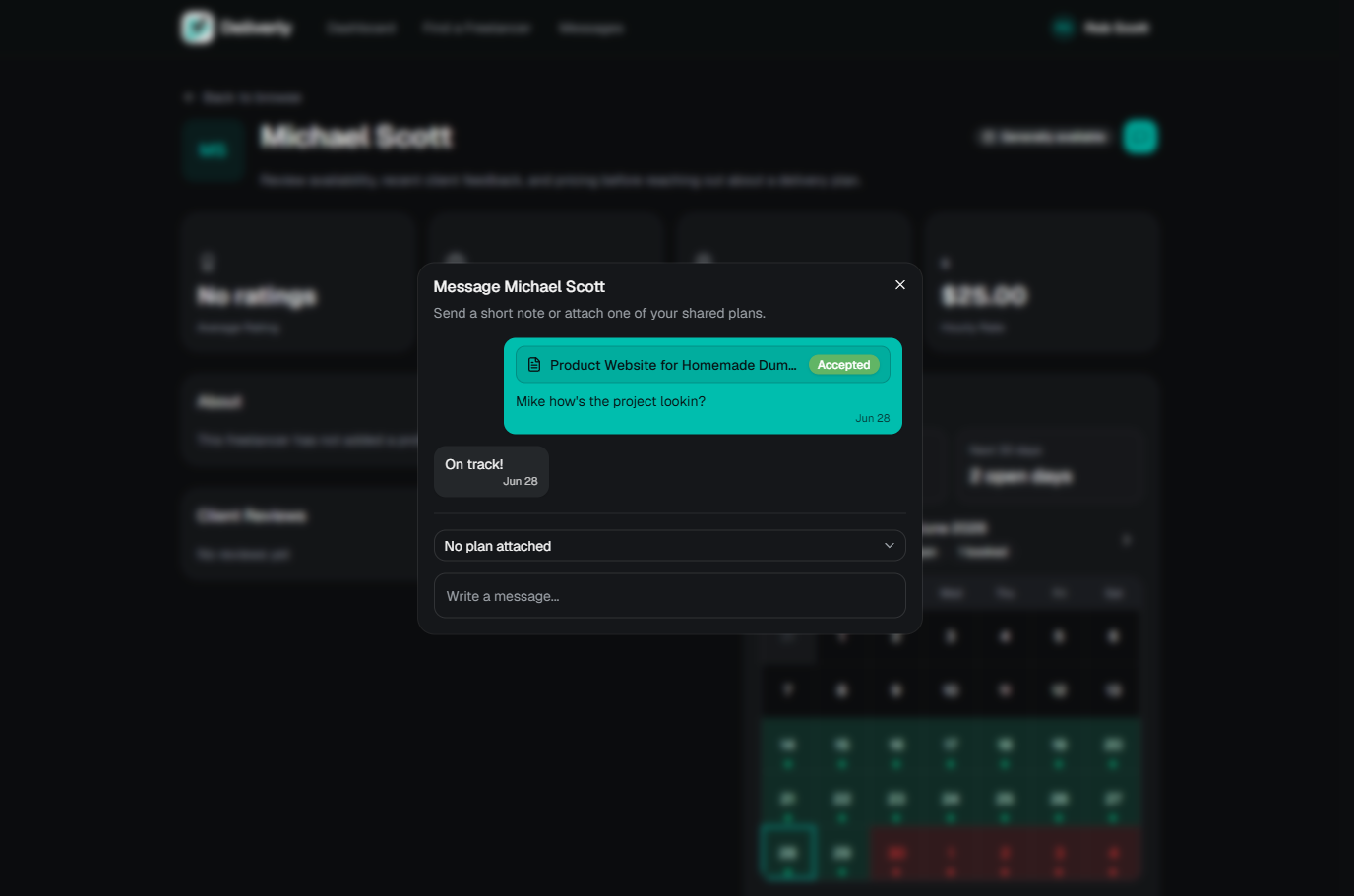
Message Freelancers and Discuss
How we built it
v0 was used to scaffold and develop most of the application. It's also how I integrated Amazon's Aurora PostgreSQL database into it. Then after the core functionality was established, I moved over to local development for some light polishing work.
The choice of database came down to Aurora PostgreSQL and DynamoDB. Though there is a light messaging feature in Deliverly, it was not enough to sway my decision to DynamoDB. There's a lot of filter and sorting requirements.
Especially with availability. Deliverly allows freelancers to carve out chunks of "availability" OR "unavailability" in their calendar that would eventually allow clients to filter them based on a date range.
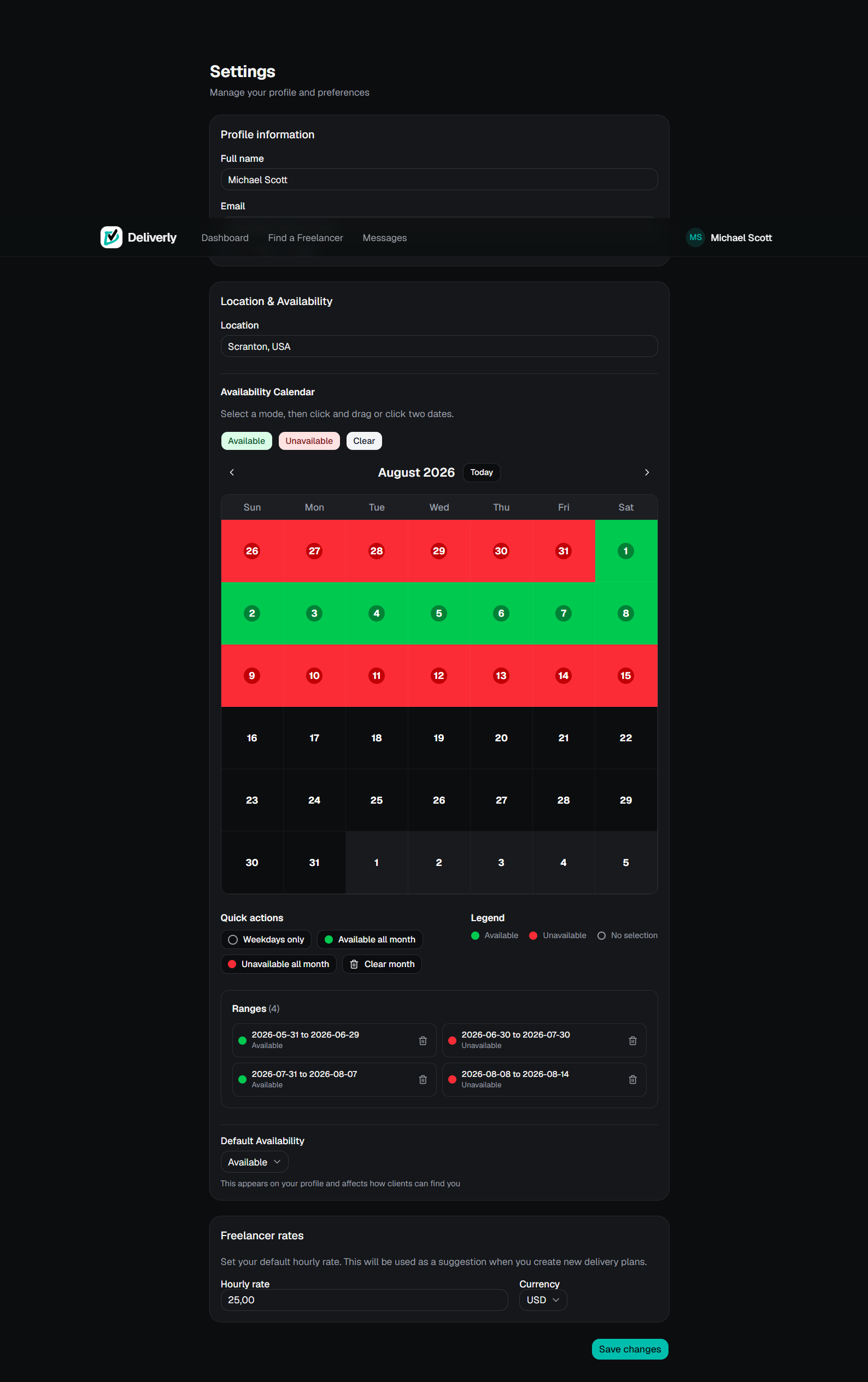
Here's what the client would see:
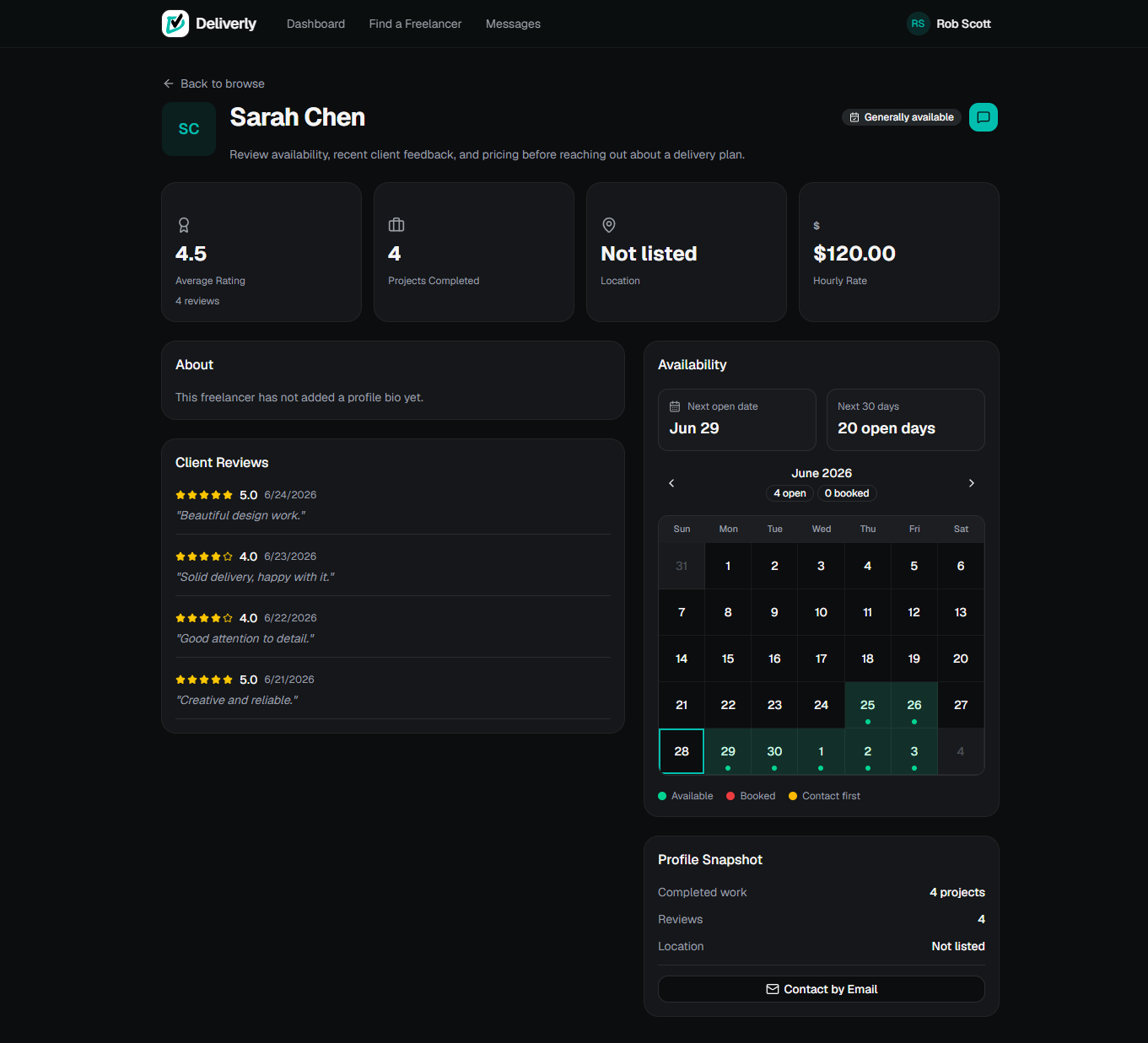
This is represented as "availability_slots" in the database. This was the main pivot point into deciding that PostgreSQL was the right database to choose.
v0 made it super easy to integrate the database into the app. And if I wanted to manually manage it I could simply go over to its integration menu, which would lead me right into the right AWS page, in which I could access cloud console and debug the database myself.
Built With
- ai
- amazon-web-services
- aurora
- nextjs
- v0


Log in or sign up for Devpost to join the conversation.