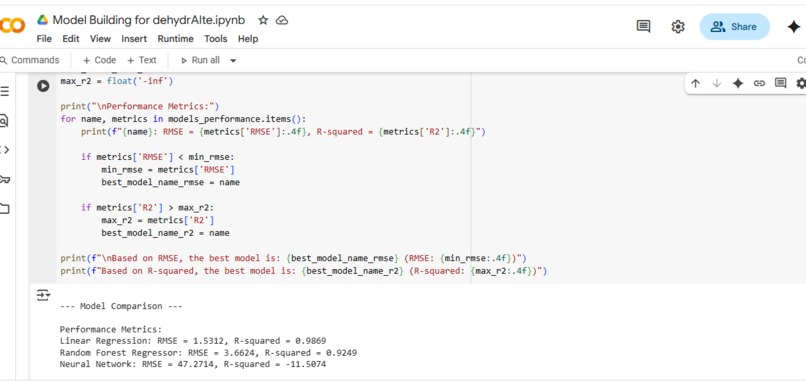
Python script for model building with simulated datasets
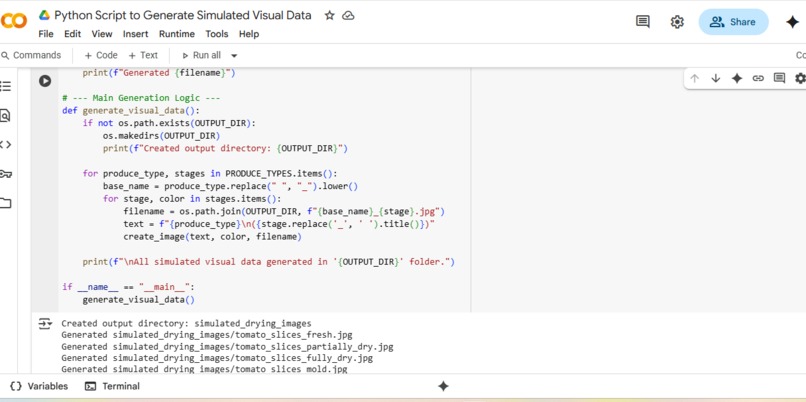
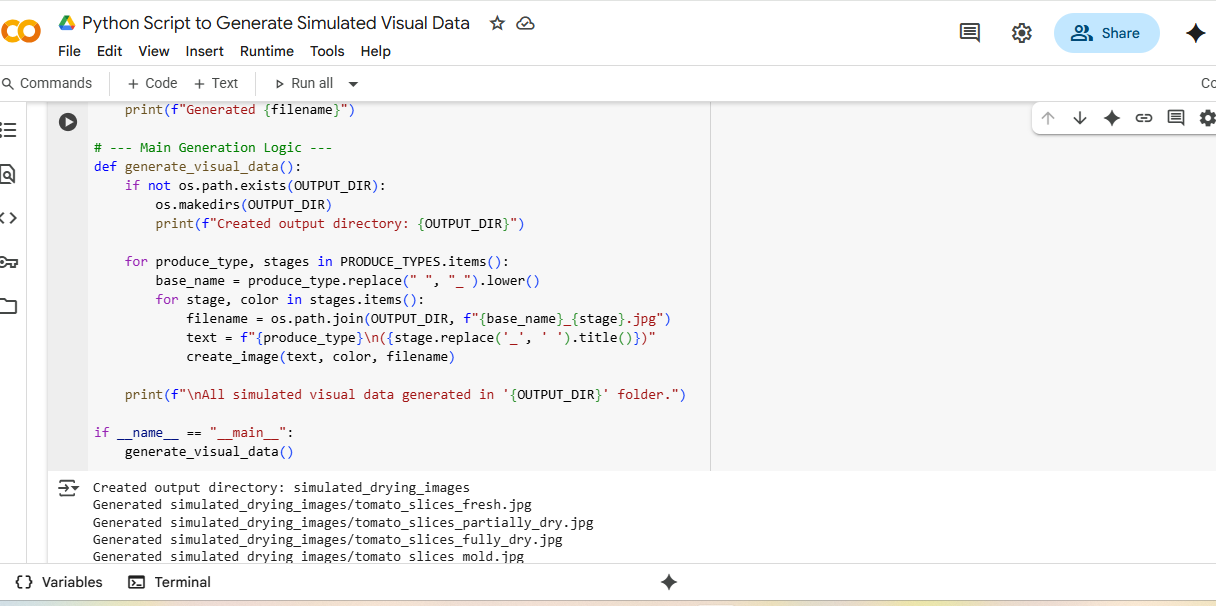
Python script for simulated visual data.
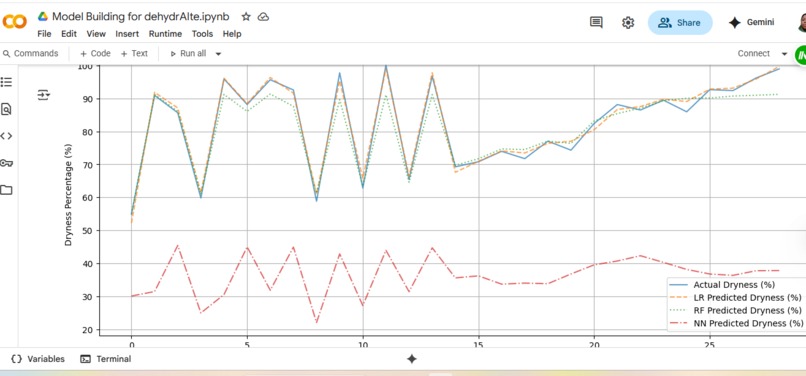
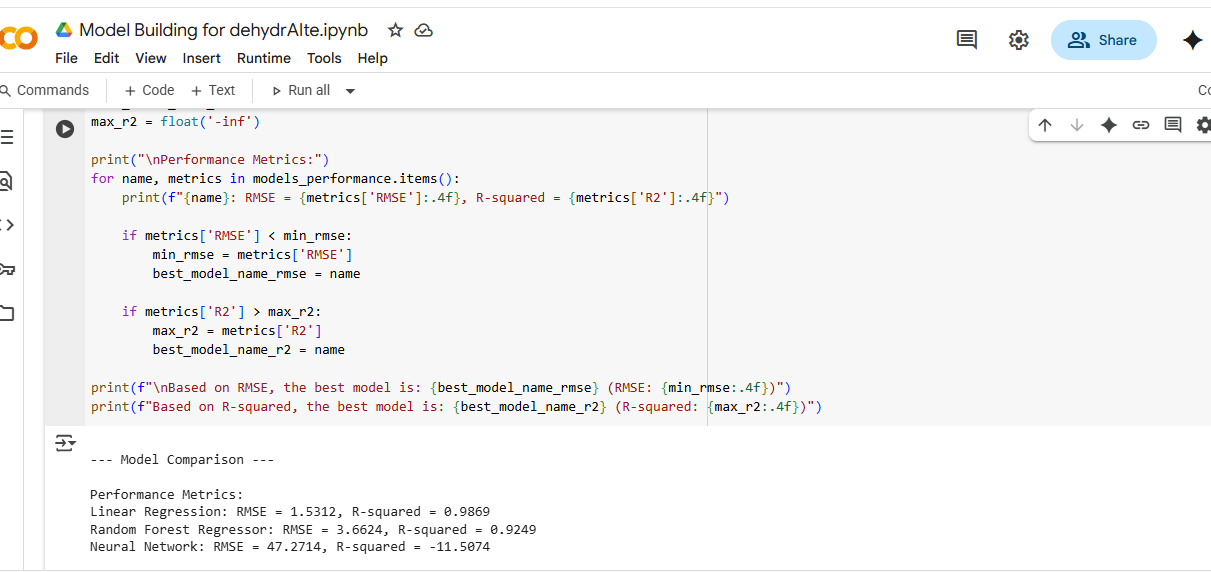
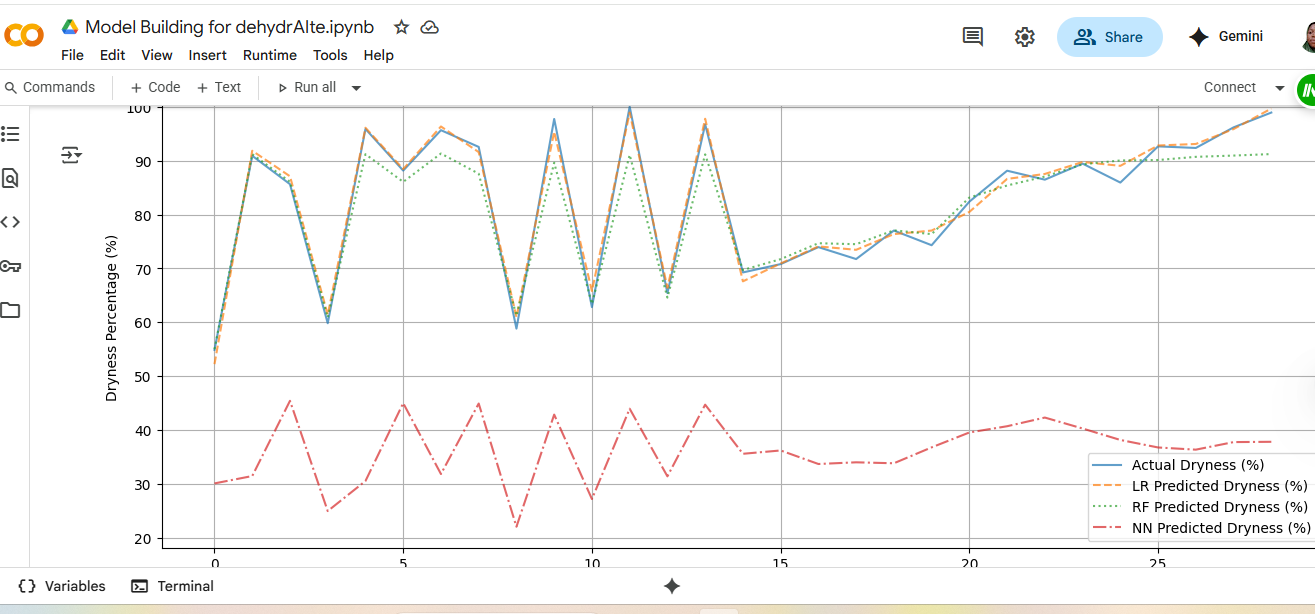
A graph comparing each metrics used for the model building
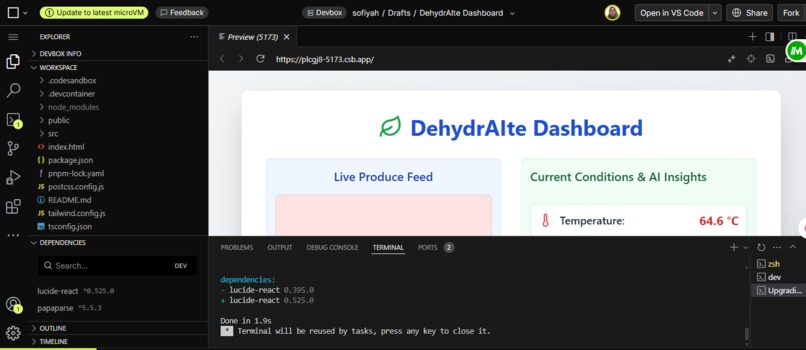
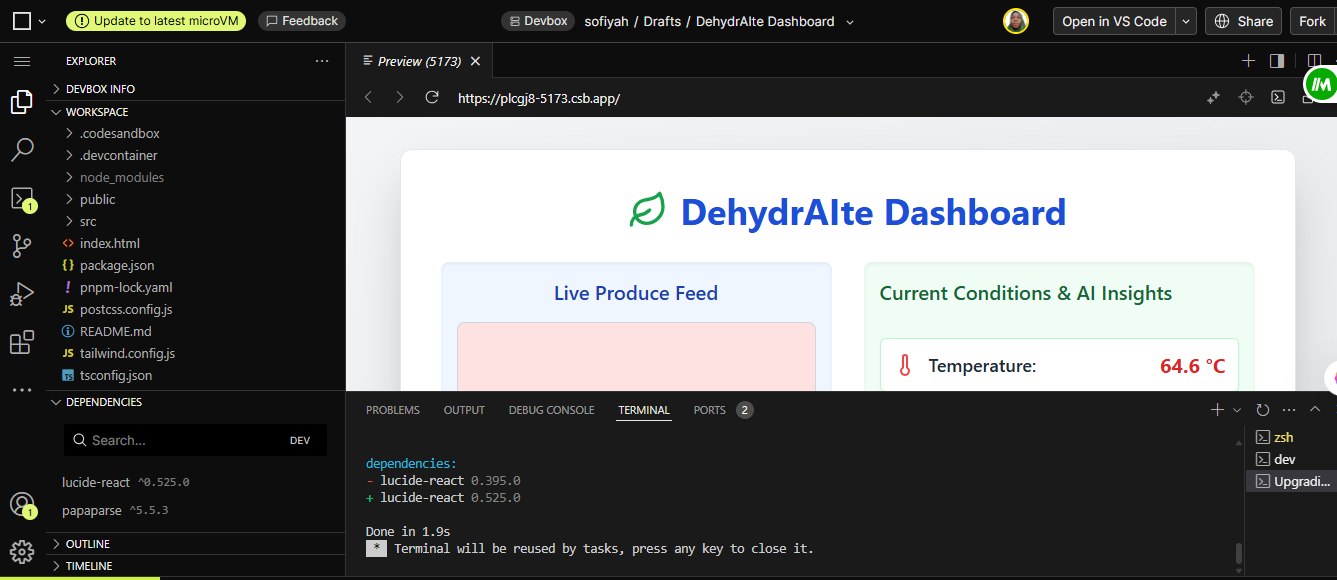
Tailwind interface for DehydrAIte
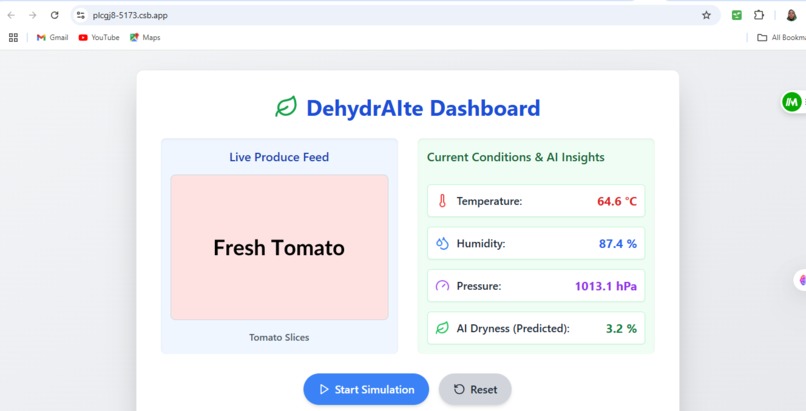
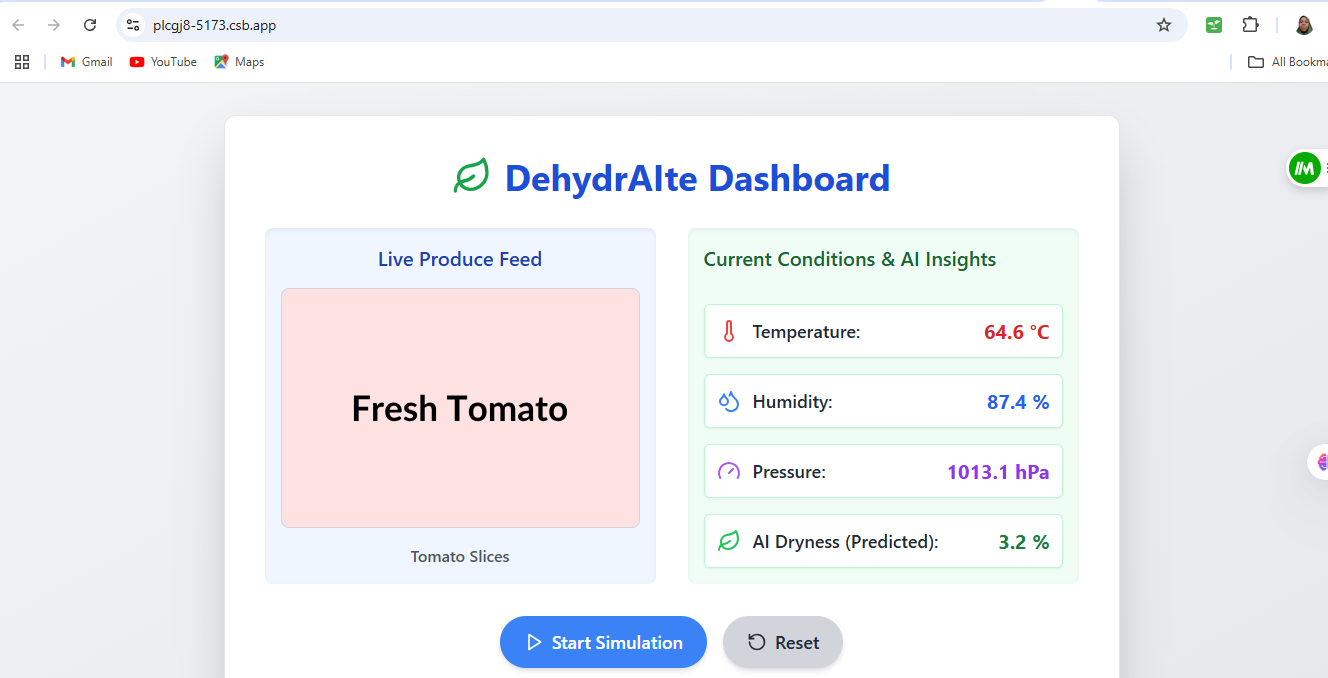
Dashboard prototype
Inspiration: The inspiration behind DehydrAIte stems from a critical observation: the stark paradox of food abundance leading to immense waste during harvest seasons, juxtaposed with severe scarcity and inflated prices during off-seasons, particularly in regions like Nigeria and across sub-Saharan Africa. This cyclical challenge contributes significantly to food insecurity, economic losses for farmers, and environmental degradation. We envisioned a solution that could stabilize food availability and pricing year-round by efficiently preserving perishable produce.
What it does: DehydrAIte is an AI-powered smart dehydrator designed to combat food insecurity and post-harvest losses. It works by collecting real-time environmental data from IoT sensors within the dehydrator (temperature, humidity, pressure). This data feeds into machine learning models that predict produce dryness and detect anomalies like mold or discoloration. The system then provides real-time insights and alerts via an interactive dashboard, optimizing the drying process to minimize spoilage, extend shelf-life, and ensure consistent, affordable food supply throughout the year.
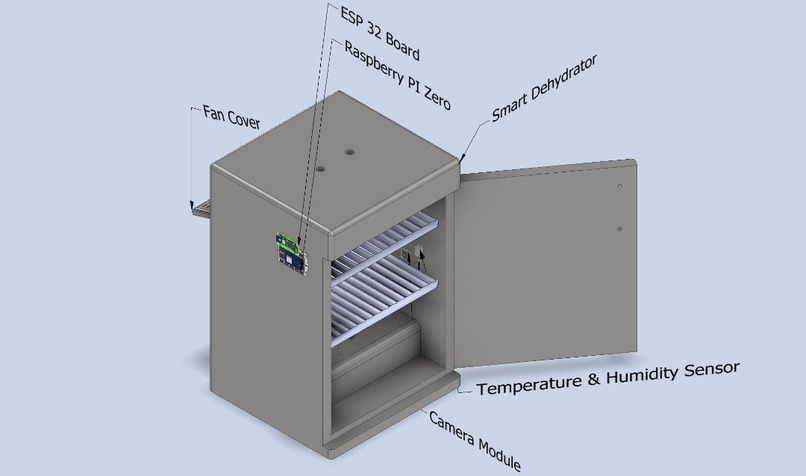
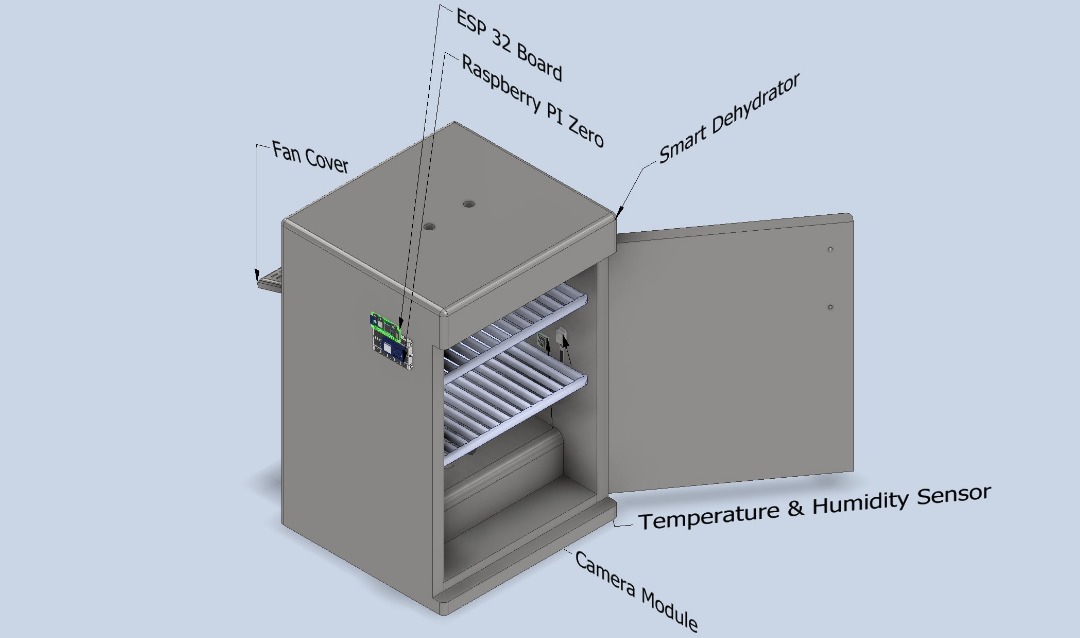
How we built it: DehydrAIte's architecture combines a Raspberry Pi 4 as the edge computing hub with an ESP32-WROOM-32 for precise sensor data acquisition from a BME280 sensor. We developed machine learning models using Scikit-learn for dryness prediction (Linear Regression performed best on our data) and conceptualized a Convolutional Neural Network (CNN) with TensorFlow Lite for visual anomaly detection. Due to financial constraints, we strategically employed Python scripts (with Pandas and NumPy) to generate comprehensive simulated sensor data and augment visual data using Pillow, allowing us to train and validate our AI models and build a functional prototype. The user-friendly web dashboard was developed as a React application with Tailwind CSS, leveraging Generative AI to overcome initial skill gaps. For demonstration, this prototype was effectively run within an Online React Sandbox.
Challenges we ran into: Our journey presented several hurdles. The most significant challenge was the financial constraint preventing us from setting up a physical dehydrator to collect extensive real-world sensor and visual data. This necessitated the development of robust data simulation methods. Additionally, creating the interactive web dashboard was a considerable undertaking, as it required modern web development skills (React, Tailwind CSS) beyond our core academic coursework. Effectively leveraging Generative AI for code generation also proved to be a learning curve, requiring careful prompting and iterative refinement.
Accomplishments that we're proud of: We are immensely proud of successfully building a compelling functional prototype that validates DehydrAIte's core concept. Despite limitations, we demonstrated the potential for real-time monitoring, accurate dryness prediction, and automated anomaly detection using simulated data. The strong performance of our initial machine learning models on this synthetic data is a significant achievement. Furthermore, our ability to bridge skill gaps and rapidly develop the interactive dashboard by effectively utilizing Generative AI is a testament to our adaptability and problem-solving.
What we learned: This project provided invaluable lessons, primarily in applying theoretical training in machine learning, IoT, and software development to a tangible, real-life problem. We gained hands-on experience in data simulation, model training, and dashboard development. Crucially, we learned the power of leveraging tools like Generative AI to overcome technical hurdles and accelerate development, transforming academic concepts into actionable innovations for food security. The entire journey reinforced the importance of interdisciplinary skills and creative problem-solving in engineering solutions for global challenges.
What's next for DehydrAIte: The next steps for DehydrAIte involve transitioning from simulated data to real-world deployment. This includes securing funding for a physical dehydrator prototype to enable comprehensive real-world data collection and further refine our AI models. We plan to optimize our models for efficient edge deployment on the Raspberry Pi, enhance the anomaly detection system with robust CNN training on diverse datasets, and explore the integration of AI-driven sourcing capabilities. Our ultimate goal is to deploy DehydrAIte in agricultural communities to significantly reduce post-harvest losses and truly enhance food security.


Log in or sign up for Devpost to join the conversation.