Inspiration
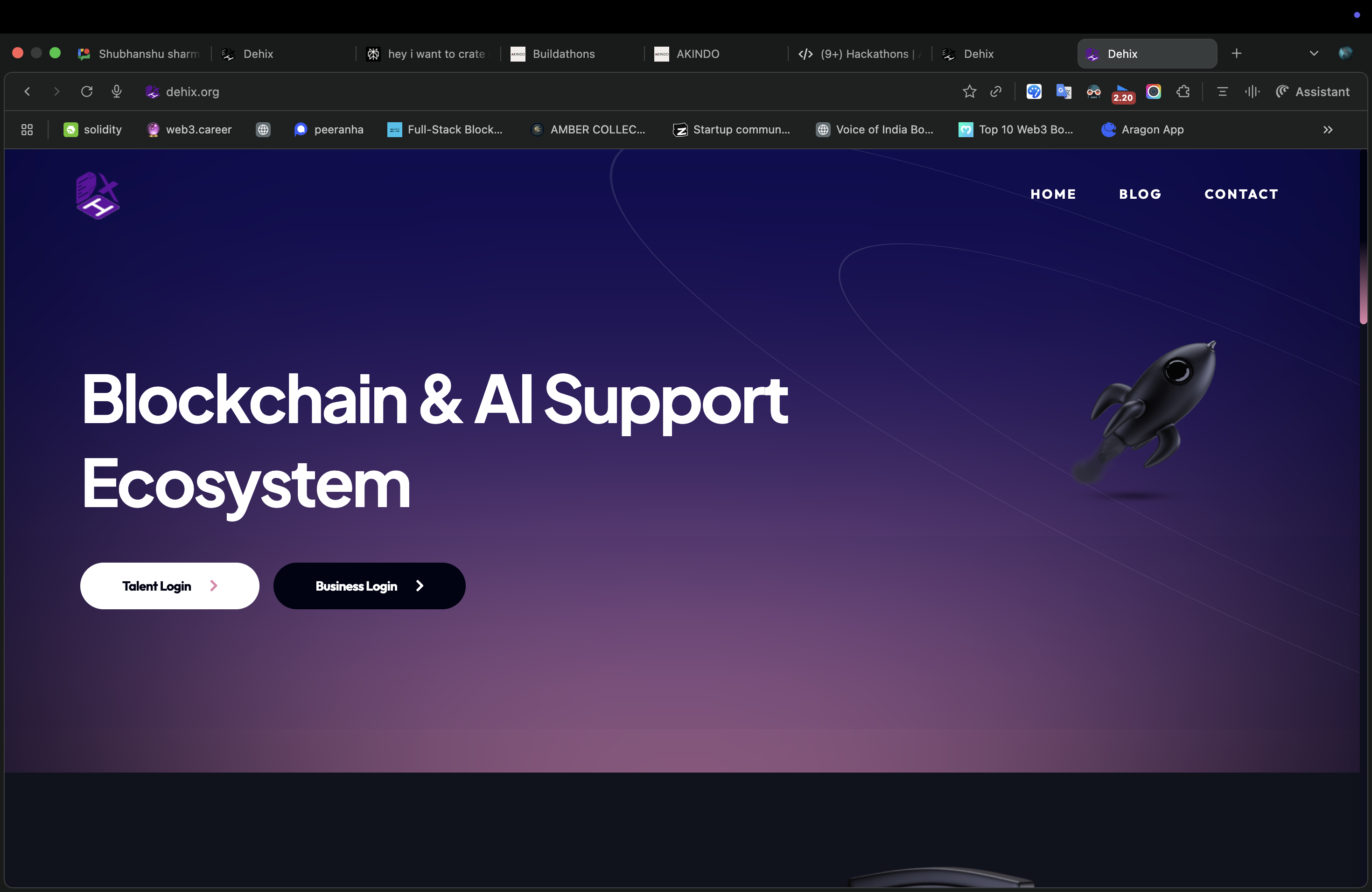
The inspiration behind Dehix comes from experiencing firsthand the limitations of traditional freelancing platforms and the unique needs of the Web3 ecosystem. Existing marketplaces are centralized, resource-intensive, and fail to empower genuine Web3 builders, teams, and DAOs. The lack of trust, transparency, and efficient collaboration poses significant hurdles for decentralized projects. Dehix is designed to solve these problems by bringing together on-chain skill verification, transparent escrow payments, Oracle-supported validation, and DAO-driven governance—creating a truly decentralized, trustless, and efficient workspace for the next generation of builders.
What it does
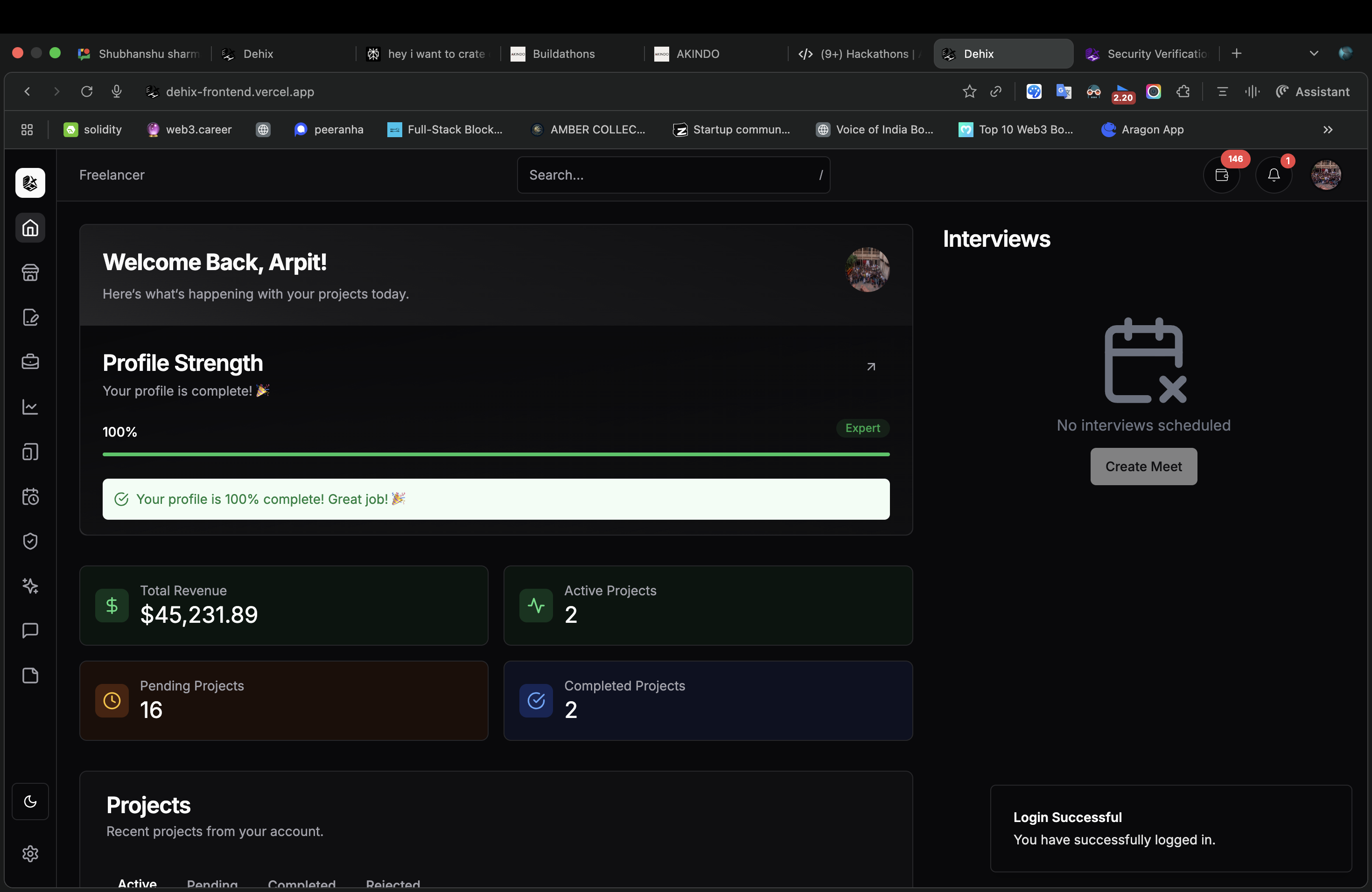
Dehix is a cutting-edge Web3 freelancing and work platform for builders, teams, and communities. It offers:
On-chain skill verification and proof-of-work via GitHub integration.
Smart contract escrow payments supporting both crypto and fiat, with cross-chain and multi-token capabilities.
Oracle-supported data and task validation for reliable credential verification and dispute management.
Robust reputation system preserved on-chain, incentivizing quality and transparency.
Seamless wallet connectivity, onboarding workflows, and decentralized file storage.
DAO governance and community reward mechanisms.
End-to-end decentralized workflows—no backend servers needed, all logic managed on-chain.
Designed to serve genuine Web3 communities, DAOs, and decentralized fundraising initiatives.
How we built it
Dehix was built as a frontend-only dApp with a modular smart contract system:
Frontend: Created using Next.js with React, TypeScript, Tailwind CSS, and Shadcn UI, focused on accessibility and seamless wallet integration.
Smart Contracts: Written in Solidity for both EVM and Polkadot chains, encompassing escrow logic, reputation, and payments.
Web3 Integration: Wagmi, RainbowKit, ethers.js, and wallet SDKs enable secure, cross-chain connectivity.
Protocol Integrations: Used 1inch Fusion+ for fast, multi-token cross-chain swaps; GitHub API for skill and portfolio verification; Oracle services for validation.
Storage: Employed decentralized file systems when needed.
Deployment: Leveraged Vercel for the frontend, deployed smart contracts on multiple testnets.
DAO & Community: Integrated DAO frameworks to manage governance, rewards, and collective upskilling.
Workflow Validation: Tested the full user journey—project posting, escrow, completion, and payout—across testnets with real scenarios.
Challenges we ran into
Integrating cross-chain, multi-token payments with low fees and fast settlements.
Achieving true end-to-end decentralization without backend servers, relying solely on smart contracts and decentralized storage.
Designing onboarding and verification workflows that avoid centralized KYC, using on-chain reputation and GitHub proof-of-work.
Balancing intuitive user experience with the complexity of wallet integration and transaction UX.
Implementing robust, decentralized Oracle-based systems for reliable credential validation and dispute resolution.
Accomplishments that we're proud of
Successfully launched a completely decentralized, backend-free modular dApp with all workflow logic managed on-chain.
Delivered cross-chain escrow payments with seamless multi-token support.
Built and validated a robust, transparent reputation and credential system for freelancers and teams.
Facilitated DAO-driven governance and rewards, empowering genuine Web3 community participation and growth.
Demonstrated a full project cycle—posting, vetting, escrow, completion, and payout—entirely on testnets, proving the platform's reliability and security.
What we learned
True decentralization is achievable with the right modular architecture and integration of Web3 tools.
Oracle-based credentialing and proof-of-work integrations significantly build trust and reduce user risk.
Abstracting complex blockchain operations into user-friendly interfaces is crucial for adoption.
Sustainable growth in Web3 requires community ownership, upskilling, and transparent reputation from the start.
What's next for dehix
Expand into non-EVM chains and experiment with advanced ZK-proof and decentralized identity (DID) integrations.
Launch advanced on-chain reputation, identity, and incentive layers for users.
Scale community DAO governance and introduce new upskilling, learning, and reward opportunities.
Deepen protocol partnerships to enable seamless decentralized workflows.
Prepare for mainnet launch, onboard global users, and further develop the decentralized workforce model for Web3.
Built With
- mern
- polygon
- solidity


Log in or sign up for Devpost to join the conversation.