-
-
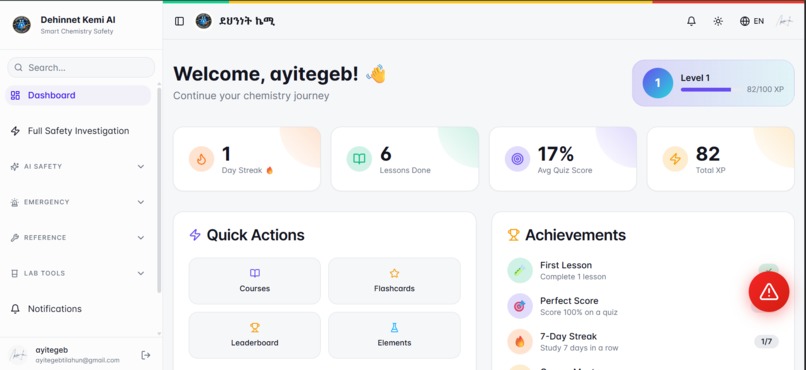
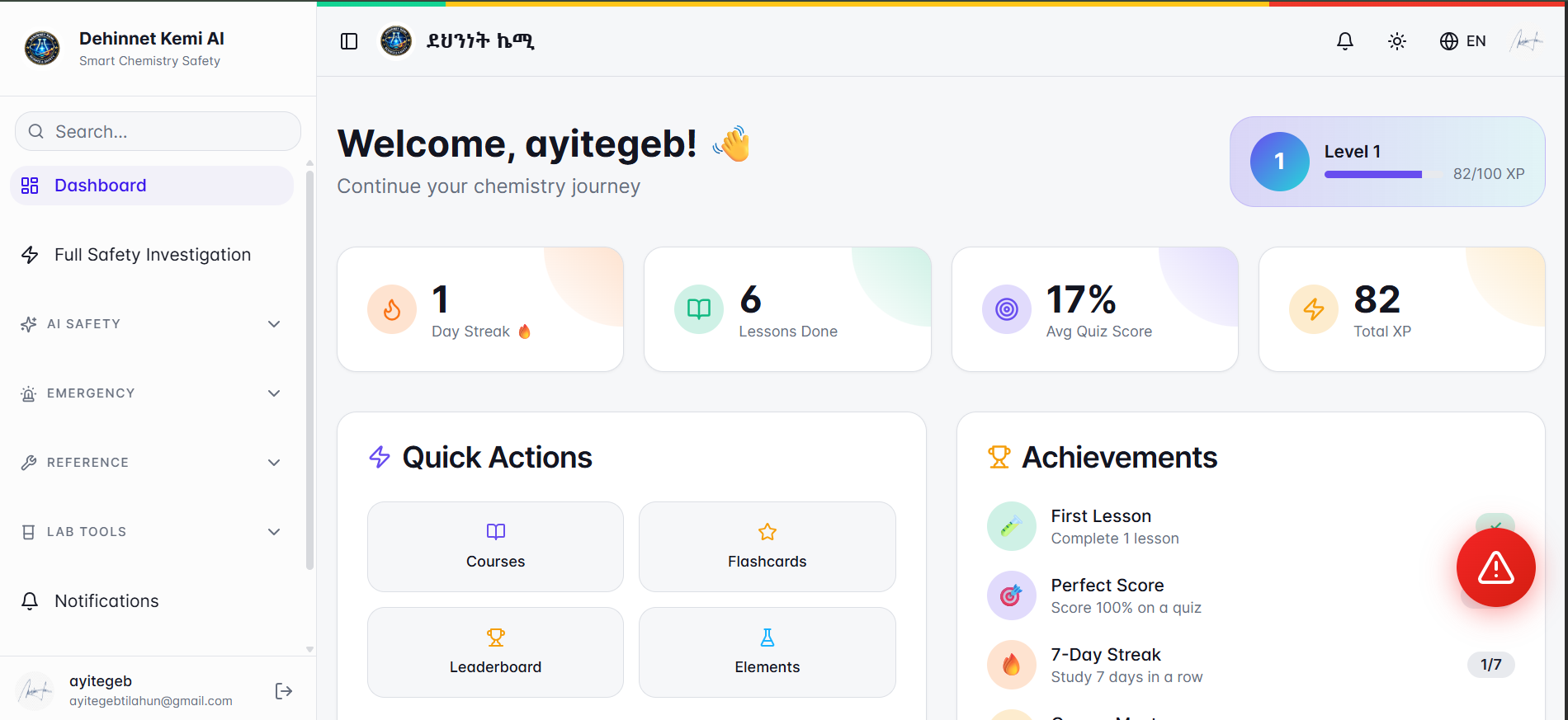
dashboard page
-
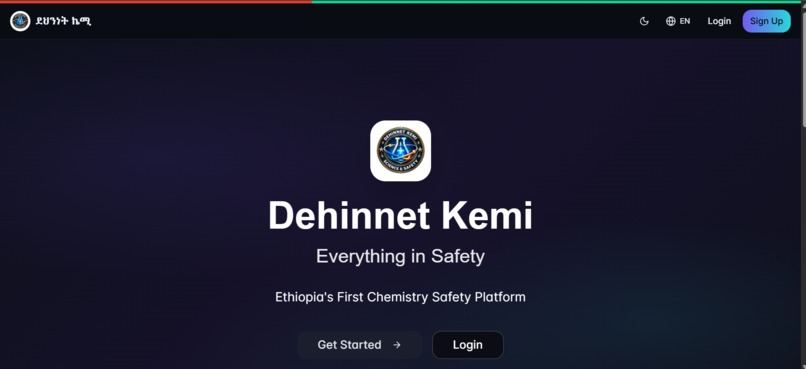
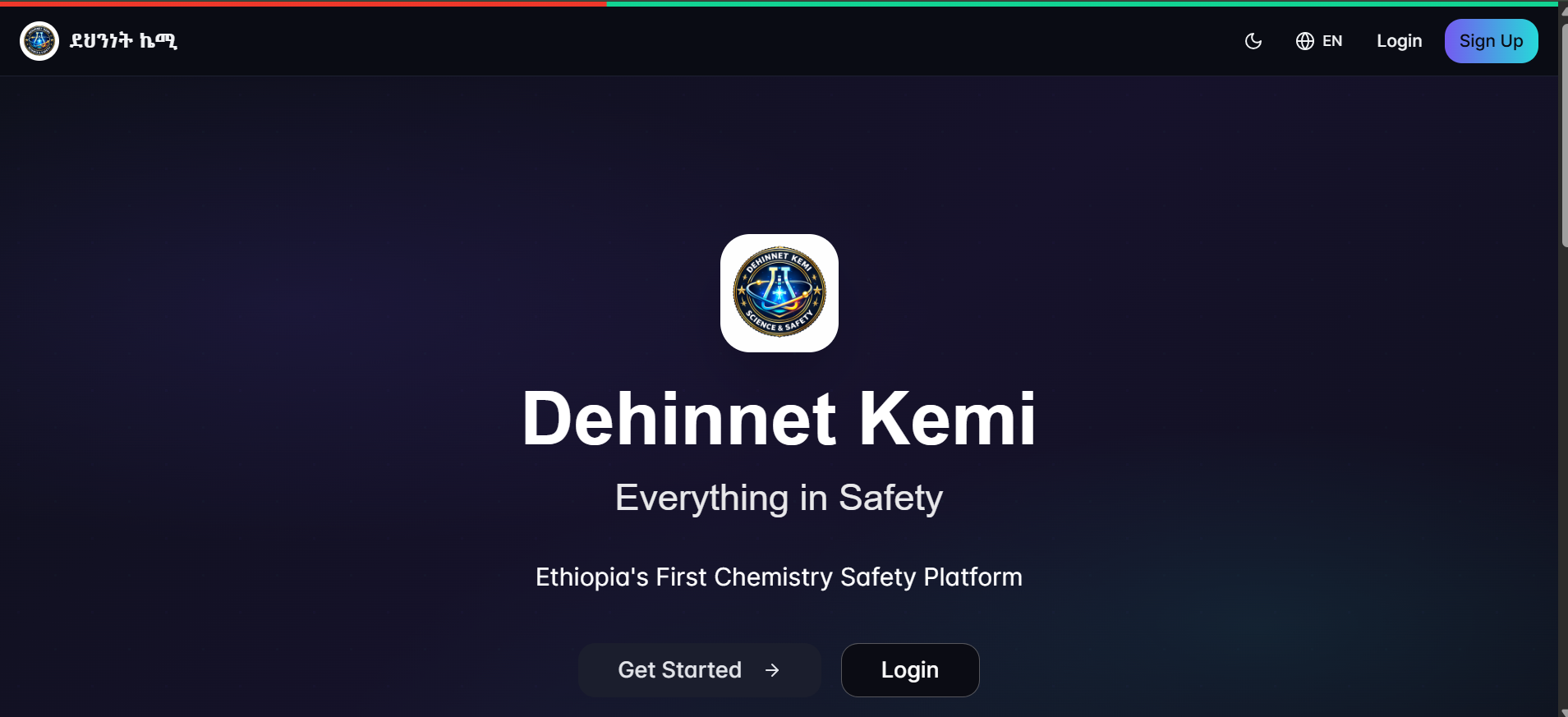
main home page
Inspiration
We were inspired by the lack of intelligent systems in chemical safety management. In laboratories and industrial environments, chemical risk analysis is often manual, slow, and error-prone. Accidents often happen due to missing historical context or lack of proper hazard prediction systems. We wanted to build an AI system that could act like a digital chemical safety expert that never forgets.
What it does
We built an autonomous multi-agent chemical safety intelligence system powered by Qwen Cloud. The system analyzes chemical inputs, predicts risks, evaluates environmental impact, and generates structured safety reports.
Unlike traditional AI chatbots, our system behaves like a coordinated team of AI agents:
Research Agent (chemical understanding) Risk Agent (hazard classification) Environment Agent (impact analysis) Safety Agent (PPE and handling guidance) Memory Agent (stores and recalls past analyses) Report Agent (final structured output)
It also includes a persistent memory system using Supabase, allowing the AI to remember past chemical analyses and improve future decisions.
How we built it
We used:
Lovable AI for frontend development Supabase for database and persistent memory Qwen Cloud API for AI reasoning JavaScript/TypeScript backend logic Multi-agent simulation architecture (single API call structured into agents)
We designed a memory-first architecture where every AI request checks historical data before generating new responses.
Challenges we ran into
Designing a multi-agent system while minimizing API costs Implementing persistent memory without slowing performance Structuring AI outputs into reliable JSON formats Making the system feel autonomous rather than a simple chatbot Balancing complexity with a smooth user experience
Accomplishments that we're proud of
We are proud that we transformed Dehinnet Kemi AI into a working autonomous multi-agent chemical safety intelligence system powered by Qwen Cloud. Unlike a simple chatbot, our system integrates persistent memory using Supabase, allowing it to remember past chemical analyses and improve future decisions based on historical data.
We implemented a multi-agent architecture where different AI roles simulate specialized experts, including research, risk analysis, environmental impact assessment, safety recommendation, memory retrieval, and final report generation. This makes the system behave like a coordinated AI safety laboratory rather than a single model.
Another major achievement is building an autonomous investigation mode, where users can trigger a full end-to-end chemical safety analysis with one click. The system automatically processes input, checks memory, runs agent reasoning, and produces a structured safety report.
Finally, we successfully combined real-world deployment tools (Lovable AI frontend, Supabase database, and Qwen Cloud API) into a single production-like system with real functionality and user access.
What we learned
We learned how to design AI agent systems, implement memory-based architectures, optimize LLM usage for cost efficiency, and structure real-world AI workflows using cloud APIs. We also learned how to transform an AI idea into a production-level system with real users and database integration.
What's next for Dehinnet Kemi AI
Next, we plan to expand Dehinnet Kemi AI into a more advanced industrial safety intelligence platform. We aim to improve the memory system by adding semantic search and deeper historical reasoning so the AI can detect long-term safety patterns across multiple analyses.
We also plan to enhance the multi-agent system by introducing more specialized agents, such as regulatory compliance agents for different countries, emergency simulation agents, and laboratory workflow optimization agents.
In addition, we want to integrate real-time chemical databases and external safety data sources to improve accuracy and expand coverage beyond internal memory.
Finally, we plan to deploy the system at scale for educational institutions and laboratories, turning it into a practical safety assistant that can reduce chemical risks and improve decision-making in real-world environments.
Built With
- agent
- ai
- alibaba
- api
- artificial
- chemical
- cloud
- intelligence
- javascript
- learning
- lovable
- machine
- memory
- multi
- persistent
- postgresql
- qwen
- react
- rest
- safety
- supabase
- systems
- typescript
- vercel
- vite


Log in or sign up for Devpost to join the conversation.