-
-
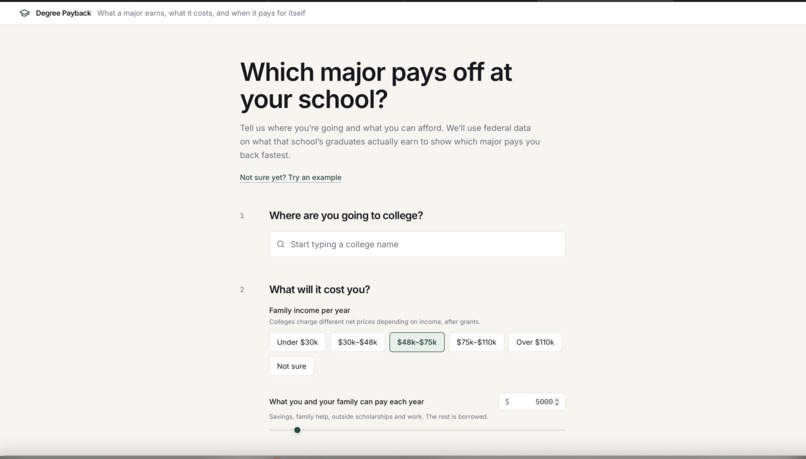
1st top page
-
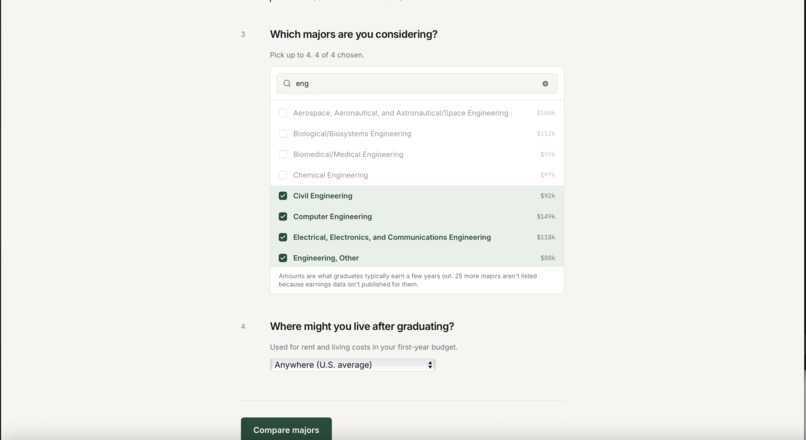
1st bottom page
-
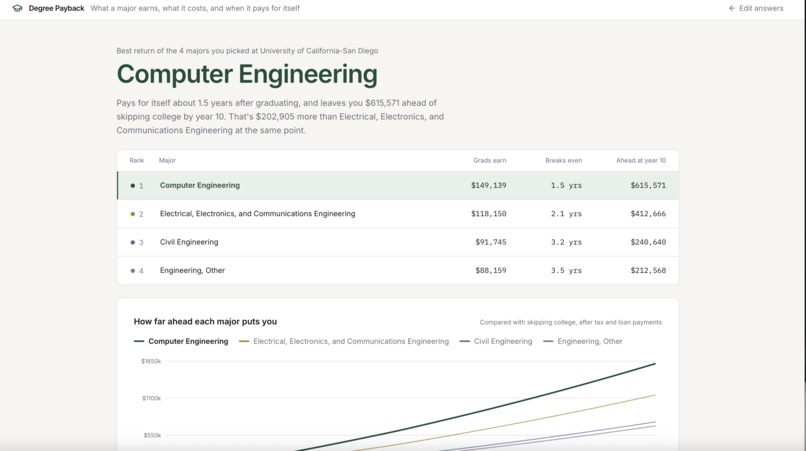
2nd top page
-
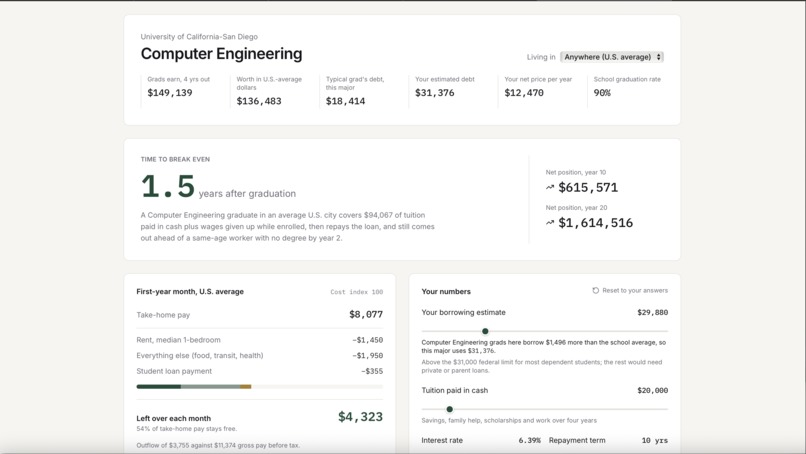
2nd middle page
-
2nd bottom page
Inspiration
We are all either former high school seniors or transfer students, and we remember how disorienting it felt to choose a major and a school at the same time, knowing that choice would shape our finances for years with no clear way to see what it actually meant. There is a real divide between students who have someone to guide them through college costs and career outcomes, and students left digging through a dozen scattered websites alone. We did not have that information was handed to us. That gap is exactly why Degree Payback exists: to make the financial outcome visible enough that students can make a better decision before they enroll.
What it does
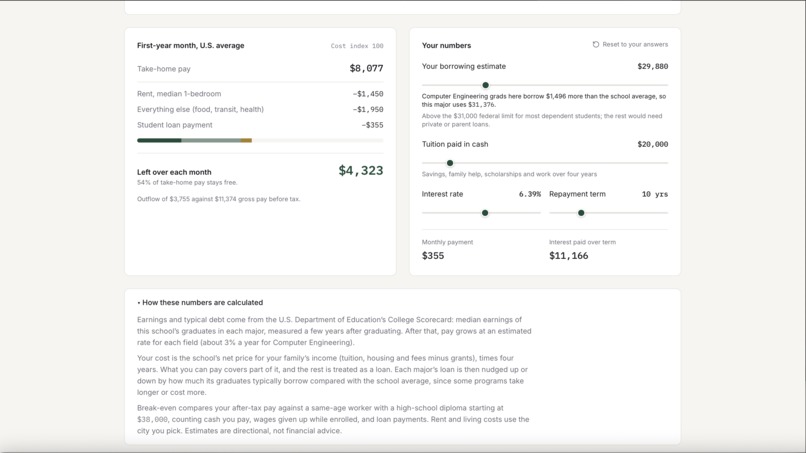
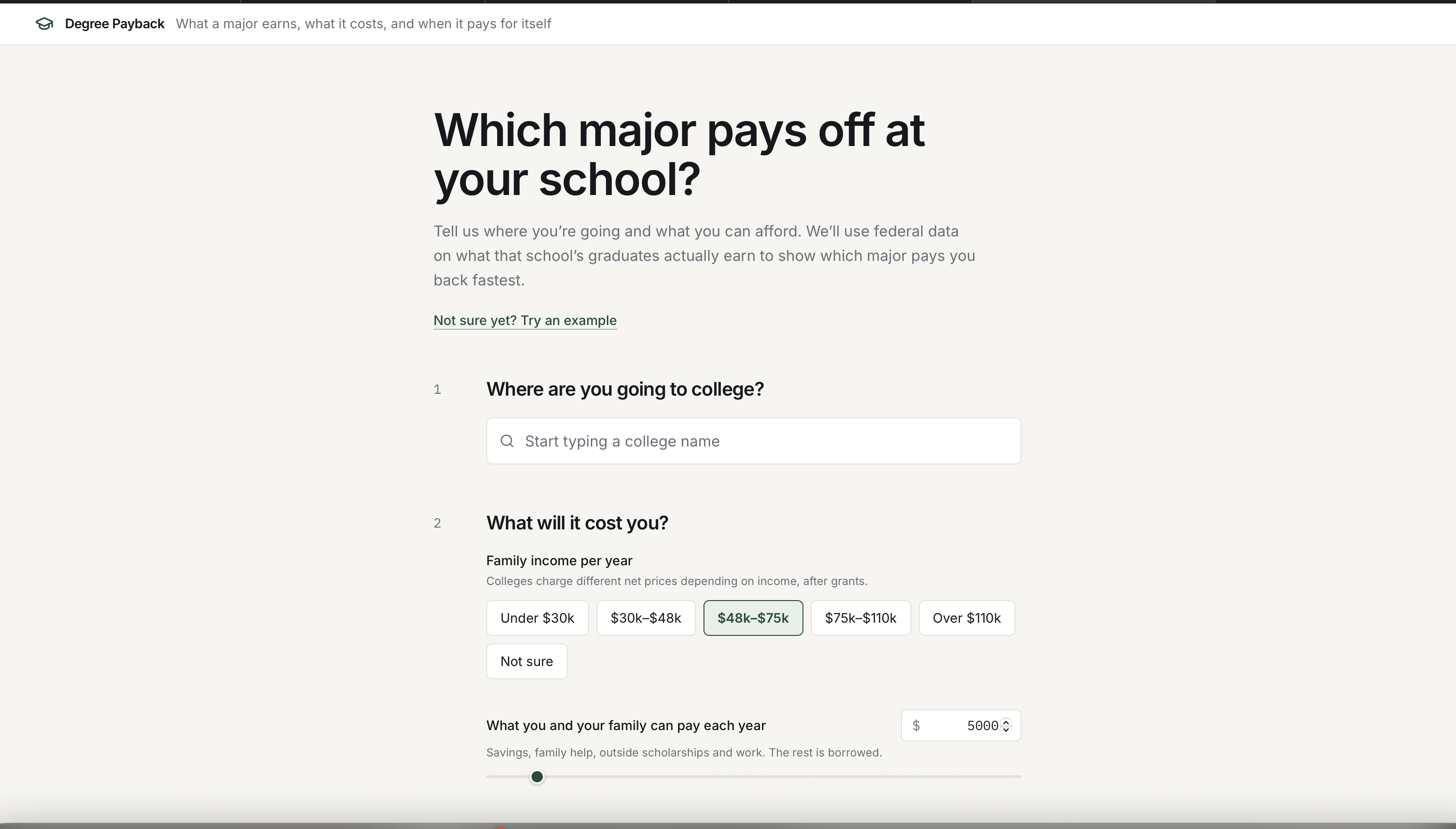
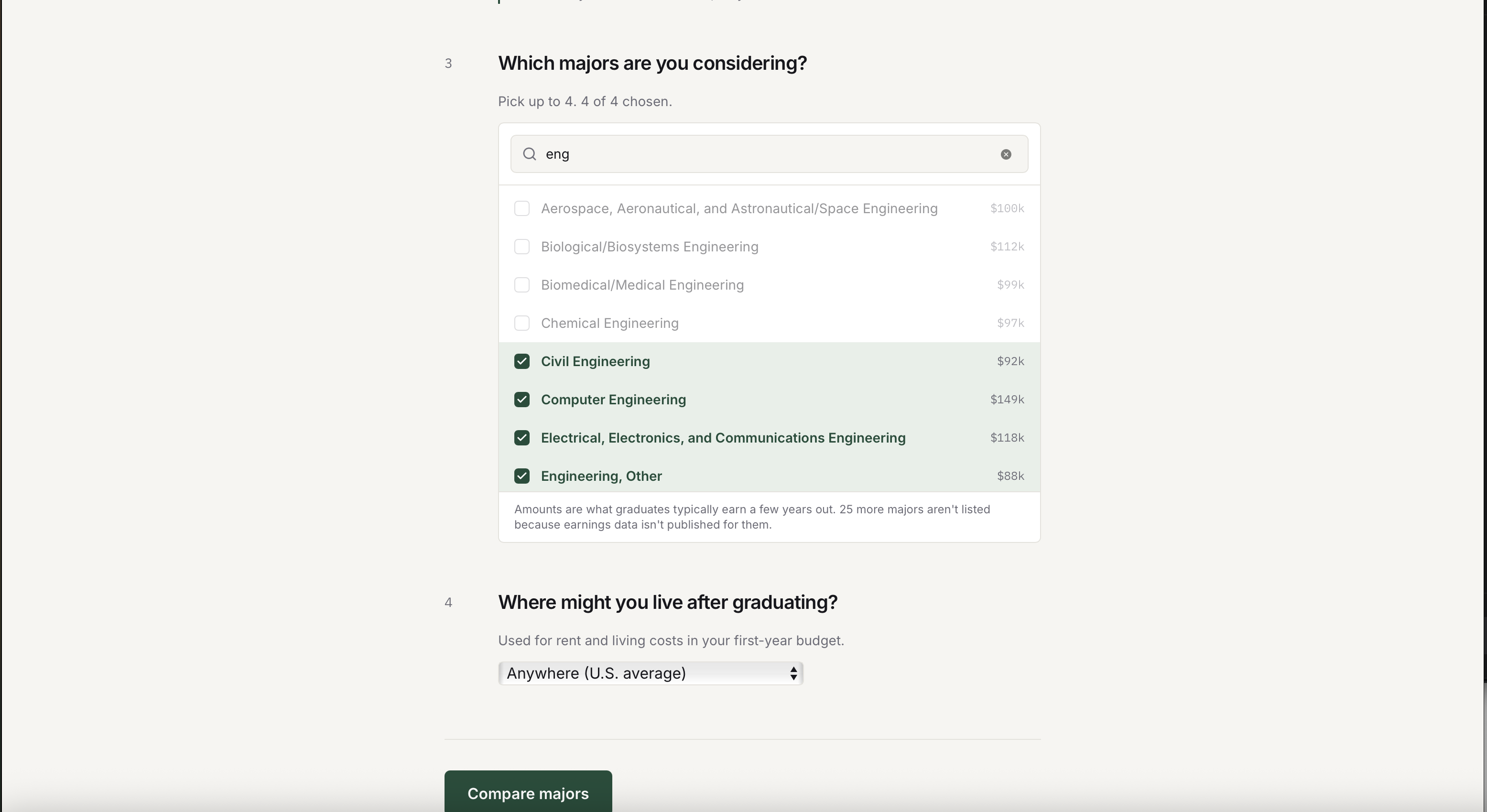
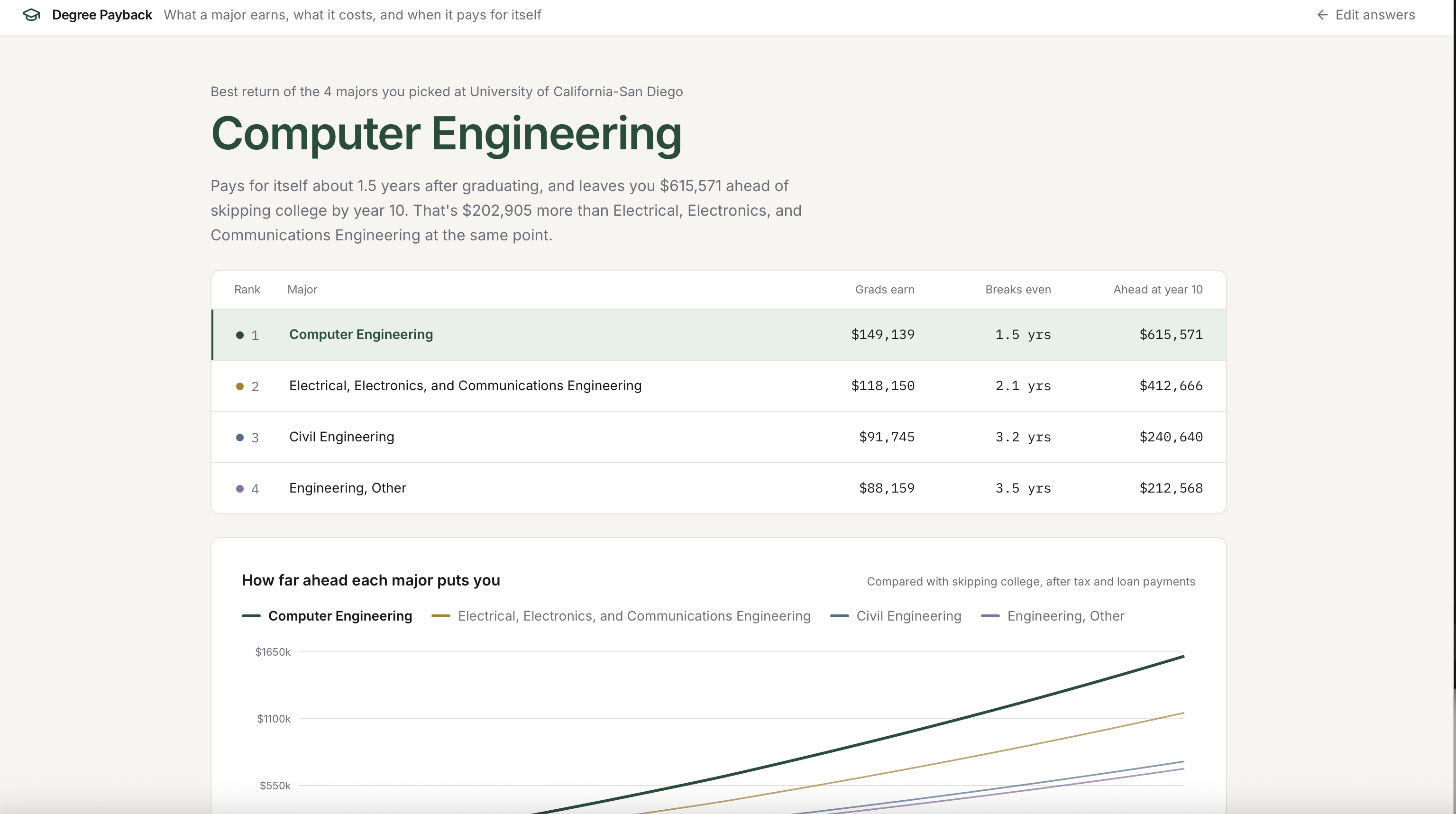
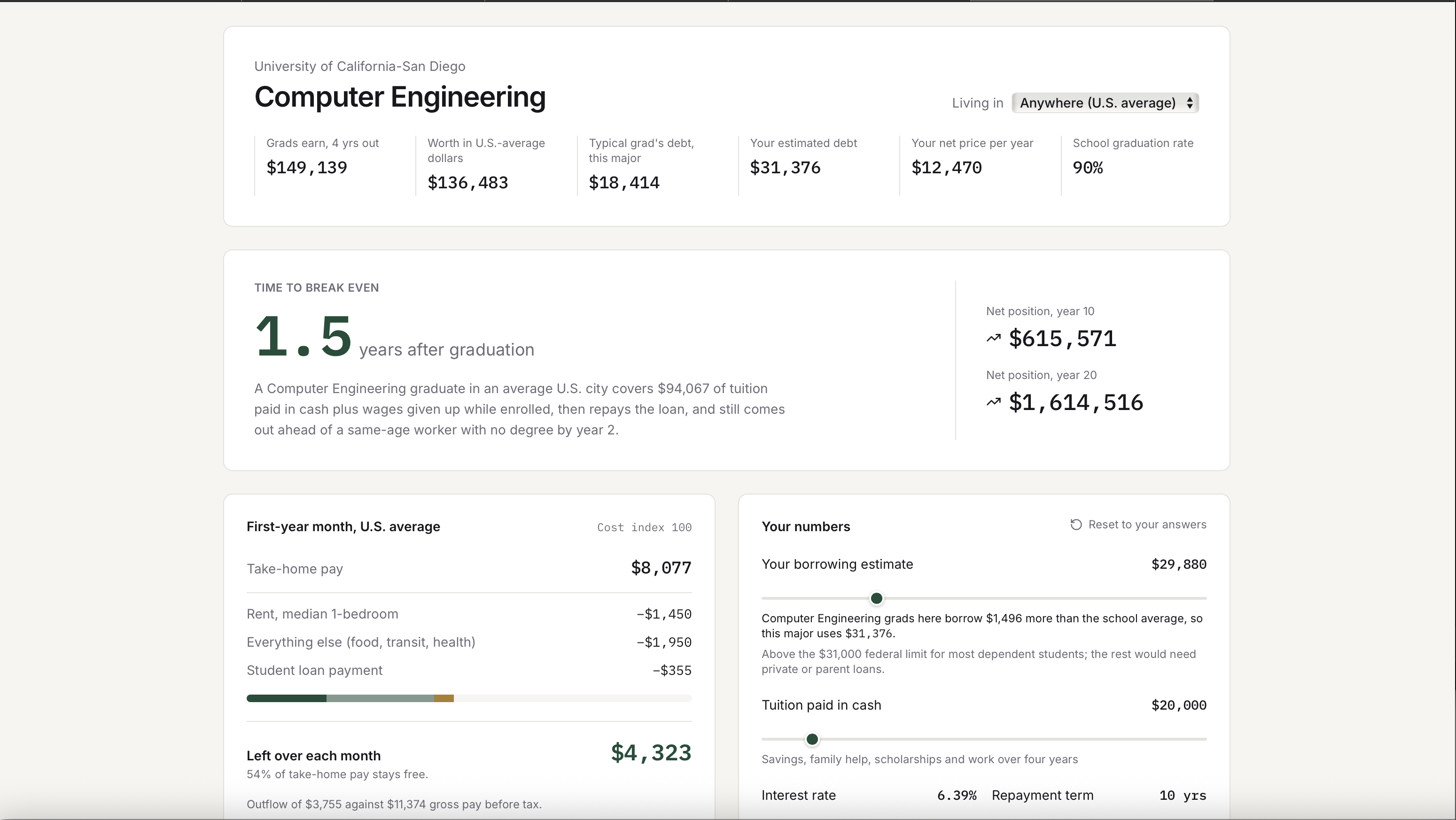
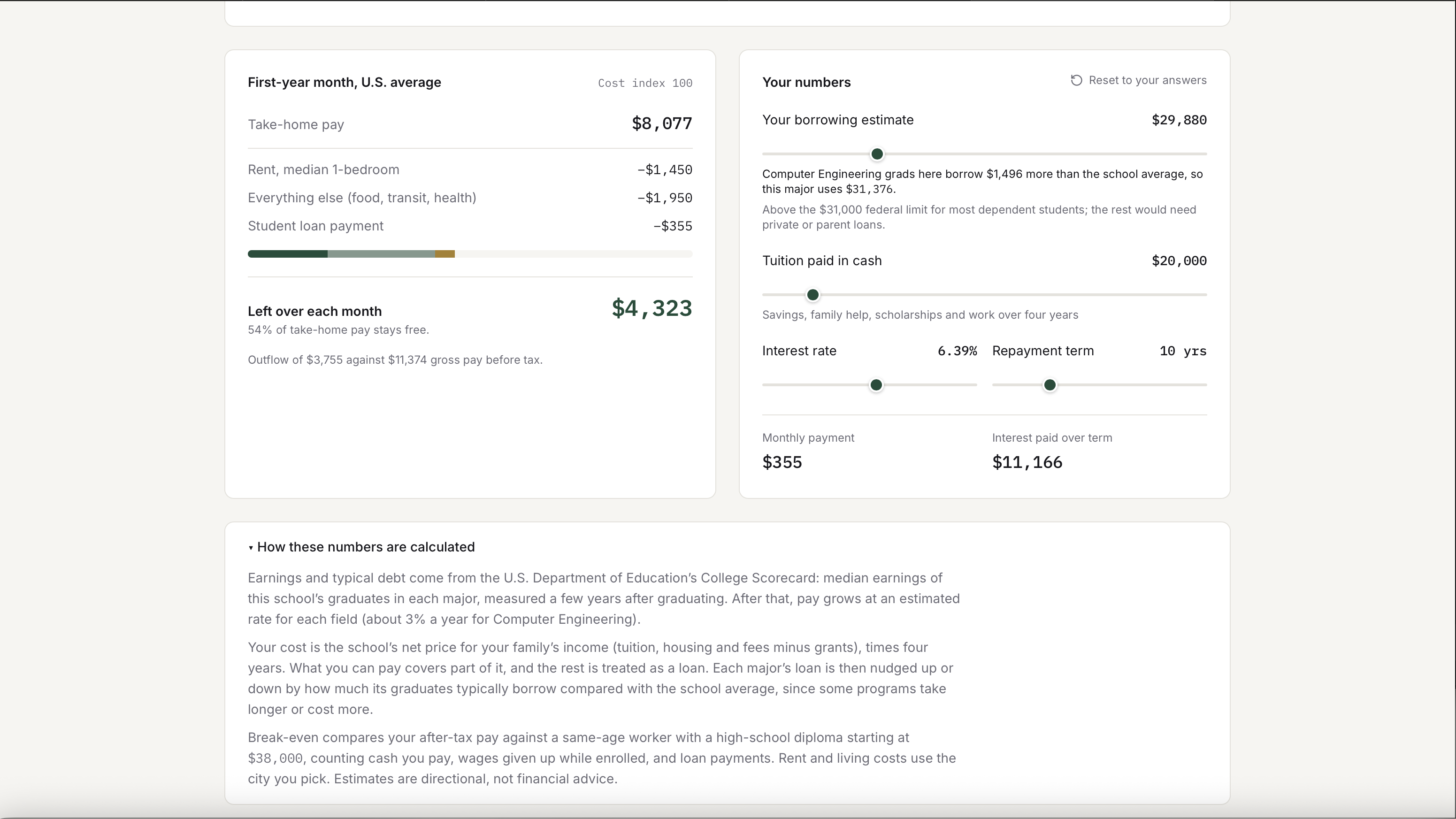
Degree Payback lets a student enter any school and compare up to 4 majors side by side. For each one, it surfaces starting salary, typical debt load, and years to break even, turning a decision usually made on reputation and gut feeling into one grounded in real financial outcomes.
How we built it
The frontend is built with React, structured into components, with the logic written in TypeScript and styled using Tailwind CSS, starting from a Magic Patterns template. The backend pulls real data from api.data.gov. The whole project runs on Next.js and Node.js, deployed through Vercel with automatic GitHub integration.
Challenges we ran into
None of us had been to a hackathon before, so we were learning the format itself, how to scope down, divide 55 hours of work, and prepare a pitch, all while building. Some of us had to shift out of frontend comfort zones into backend and API work for the first time, learning to structure requests and handle responses from api.data.gov. Deploying a live site was new territory too, with environment issues, mismatched dependencies, and build errors we had to debug in real time before our demo. Tying the API data cleanly into the frontend for any school and any combination of majors took several rounds of troubleshooting. AI tools helped us move through these obstacles faster than we could have alone, so we could spend more time building instead Of being stuck.
Accomplishments that we're proud of
We are proud that four first time hackers walked away with a fully working, deployed website. We are also proud of how well we came together as a team under time pressure, especially knowing this was personal to all of us, not just a technical exercise.What we learned We learned how to actually run a team through a fast-moving project, from scheduling meetings to dividing work efficiently under a deadline. Technically, we got far more comfortable with React, TypeScript, Next.js and Node.js, and learned to make the most of every resource and tool available to us.
What we learned
We learned how to actually run a team through a fast-moving project, from scheduling meetings to dividing work efficiently under a deadline. Technically, we got far more comfortable with React, TypeScript, Next.js and Node.js, and learned to make the most of every resource and tool available to us.
What's next for Degree Payback
We want to expand our major list, since certain fields are not represented yet, and look at raising the four-major selection limit. On the business side, we see paths in partnering with high school counselors and transfer advising centers, exploring a freemium model where basic comparisons stay free while deeper features like debt projections sit behind a small subscription, and reaching out to state education departments or nonprofit college access programs about licensing the tool. However, our immediate next step is getting it in front of real users at our own schools for feedback before pursuing any partnerships.


Log in or sign up for Devpost to join the conversation.