Inspiration
The inspiration for DeFi Watchdog stemmed from our firsthand experiences in the Web3 ecosystem, where we've seen the catastrophic consequences of smart contract vulnerabilities in DeFi projects. With billions of dollars lost to exploits and hacks due to insufficient security audits, we recognized a critical need for accessible, high-quality tools. The Linea Developer Hackathon in 2025, emphasizing innovative DeFi solutions on the Linea Network, provided the perfect catalyst. We aimed to democratize professional-grade security audits, making them rapid, free, and available to developers of all levels, ultimately fostering a safer DeFi landscape.
What it does
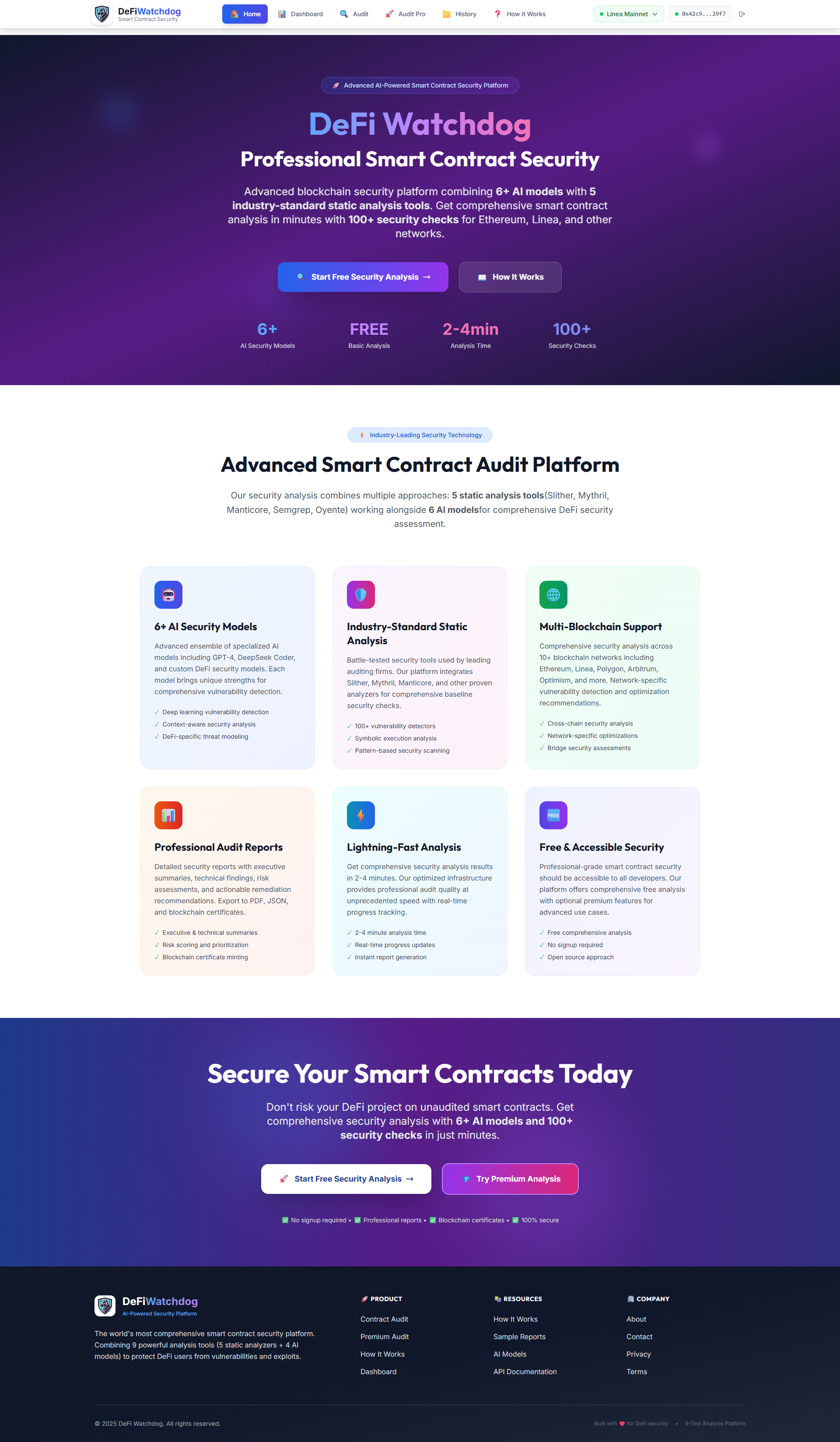
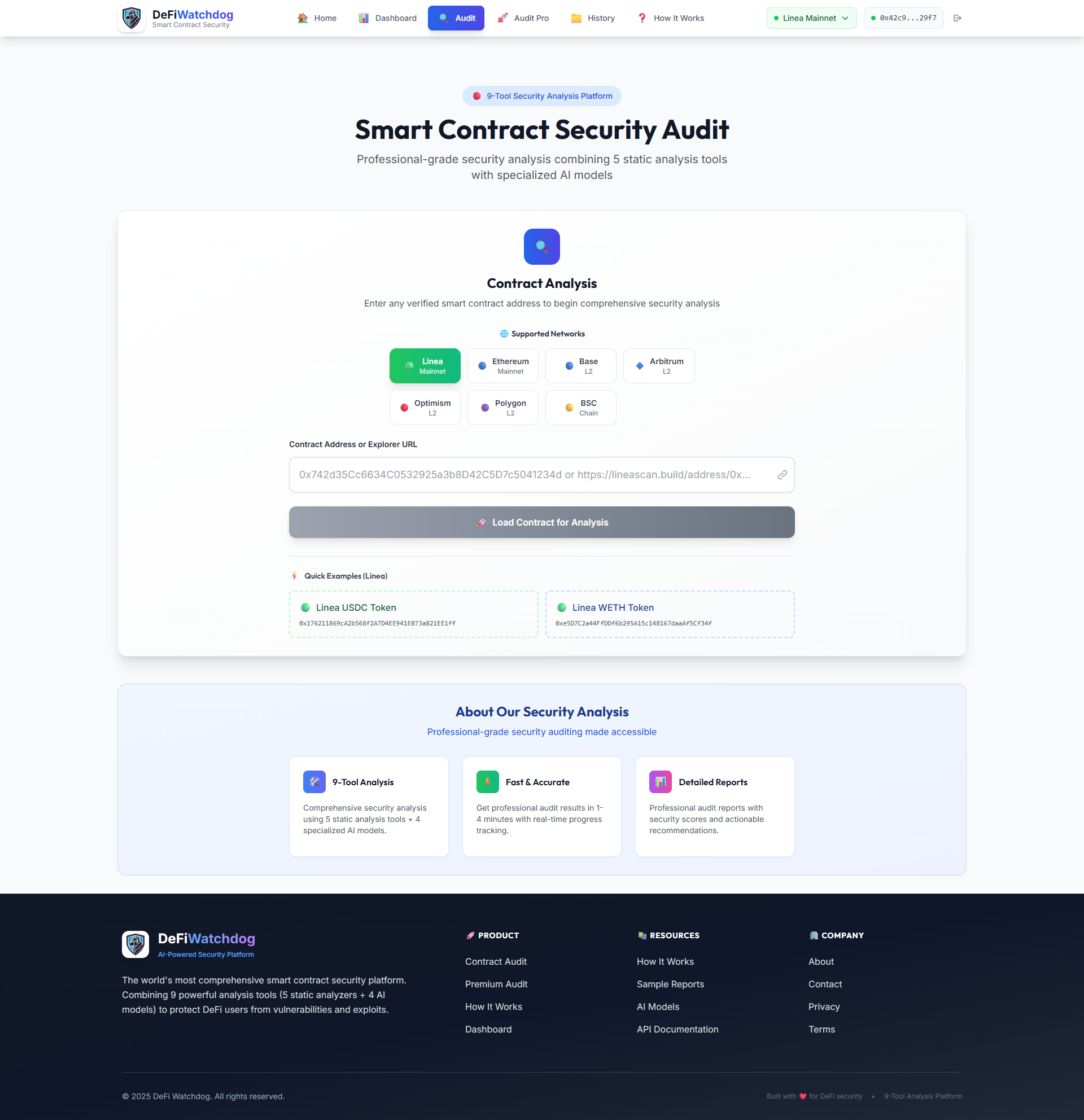
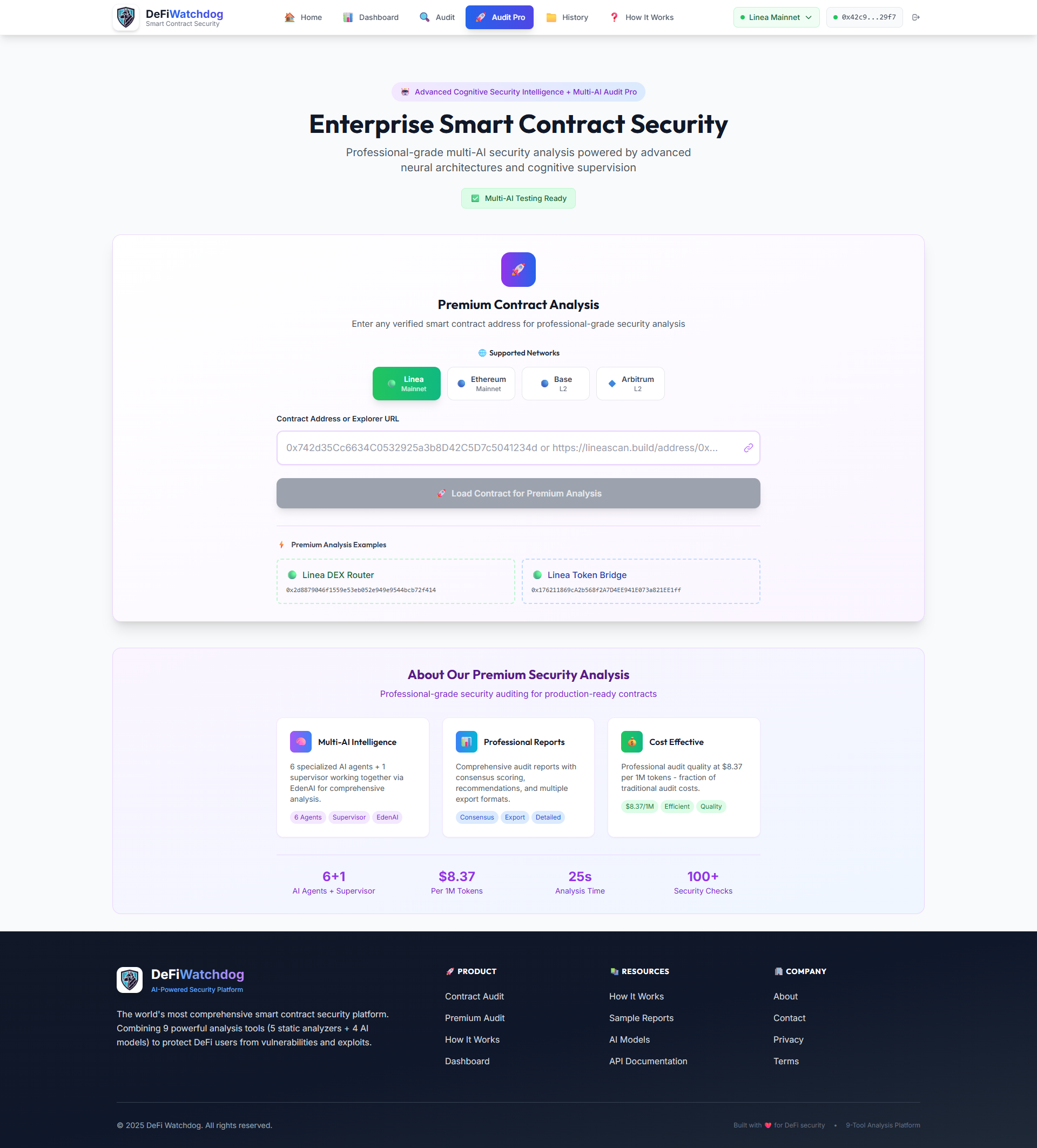
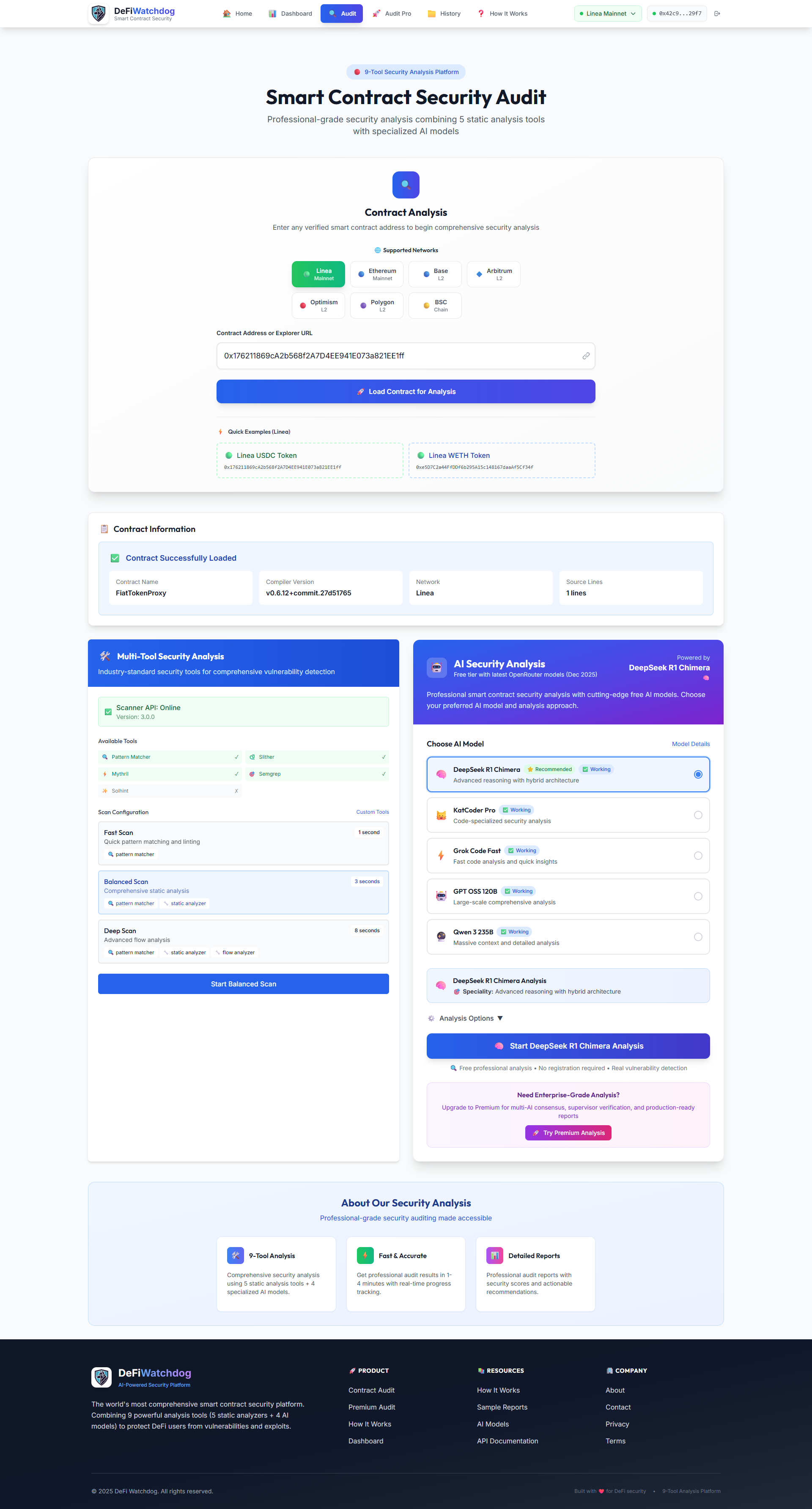
DeFi Watchdog is an AI-powered smart contract security scanner that combines cutting-edge AI models with established static analysis tools to provide instant, comprehensive audits. Users can upload their smart contract code directly—no signups or barriers required—and receive a detailed report in just 2-4 minutes. It supports multiple blockchains like Ethereum, Linea, Polygon, Arbitrum, and Optimism, performing over 100 security checks. The tool detects vulnerabilities through deep learning, symbolic execution, and pattern scanning, generating executive summaries, risk scores, remediation advice, and exportable formats like PDF, JSON, or blockchain certificates. It's designed to empower developers to identify and fix issues early, reducing the risk of exploits.
How we built it
We architected DeFi Watchdog as a hybrid system, integrating over six AI models (such as GPT-4, DeepSeek Coder, and custom DeFi-tuned LLMs) with five proven static analyzers like Slither, Mythril, Manticore, Semgrep, and Oyente. This setup enables multi-faceted vulnerability detection across chains. The frontend uses modern web frameworks for an intuitive interface, allowing seamless code uploads and real-time progress tracking. On the backend, we implemented network-specific optimizations for cross-chain compatibility, parallel processing for speed, and custom logic to reconcile outputs from diverse tools. We focused on user-centric features like automated report generation and ensured scalability through cloud deployment, all built as a functional MVP during the hackathon.
Challenges we ran into
Working under the hackathon's tight timeline was intense—we had to deliver a complete MVP in weeks while managing other commitments. Integrating disparate AI models and static tools proved complex, as they often yielded conflicting results, requiring sophisticated reconciliation algorithms. Achieving true multi-chain support added layers of difficulty, particularly with varying gas mechanics and bridge security. Scalability for high traffic and debugging AI hallucinations in critical security contexts were ongoing hurdles. We iterated rapidly with test contracts to refine accuracy, but prioritizing features amid these constraints tested our agility.
Accomplishments that we're proud of
We're incredibly proud of securing second place in the DeFi track at the Linea Developer Hackathon 2025, validating our solo effort against strong competition. Building a fully operational tool that performs enterprise-level audits in minutes, all without any cost to users, feels like a major win. We've successfully scanned real-world contracts, uncovering vulnerabilities that could have led to losses, and received positive feedback from the community. Proving that innovative "vibe coding" can yield high-impact results as a small team (or even solo) is something we cherish.
What we learned
Through this project, we discovered the effectiveness of "vibe coding"—an intuitive, flow-driven development style that prioritizes creativity and quick prototyping over rigid planning. We gained deep expertise in blending AI with traditional security tools, understanding blockchain-specific patterns, and ensuring multi-chain interoperability. The experience highlighted the value of user-focused design in Web3 and how rapid iterations can spark innovations. We also learned about the nuances of AI in security, like mitigating hallucinations, and the importance of community validation in hackathons.
What's next for DeFi Watchdog
Looking ahead, we plan to expand DeFi Watchdog with advanced features like real-time monitoring for deployed contracts, integration with popular IDEs for seamless workflows, and support for additional blockchains such as Solana and Binance Smart Chain. We'll incorporate community feedback to enhance AI accuracy, add collaborative audit sharing, and explore partnerships with DeFi protocols for automated security gates. Long-term, we're aiming for open-source contributions, a premium tier for enterprise users, and certifications to build trust. Our goal is to evolve it into the go-to standard for DeFi security, preventing future exploits and growing with the ecosystem.
Built With
- ai
- api
- audit
- defi
- security


Log in or sign up for Devpost to join the conversation.