-
-
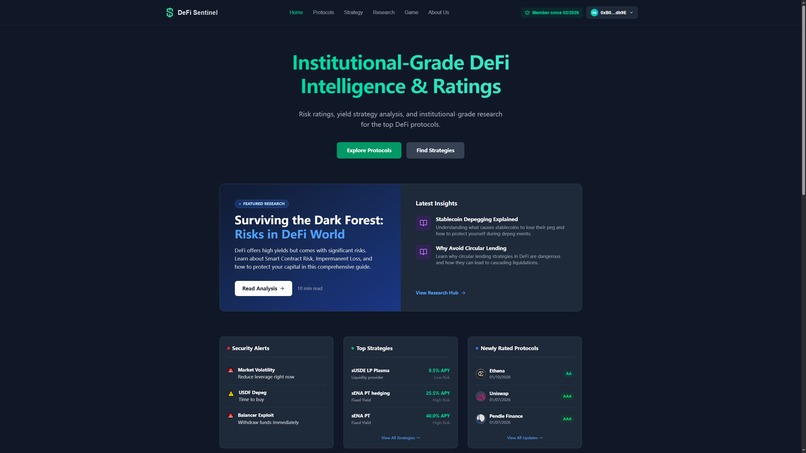
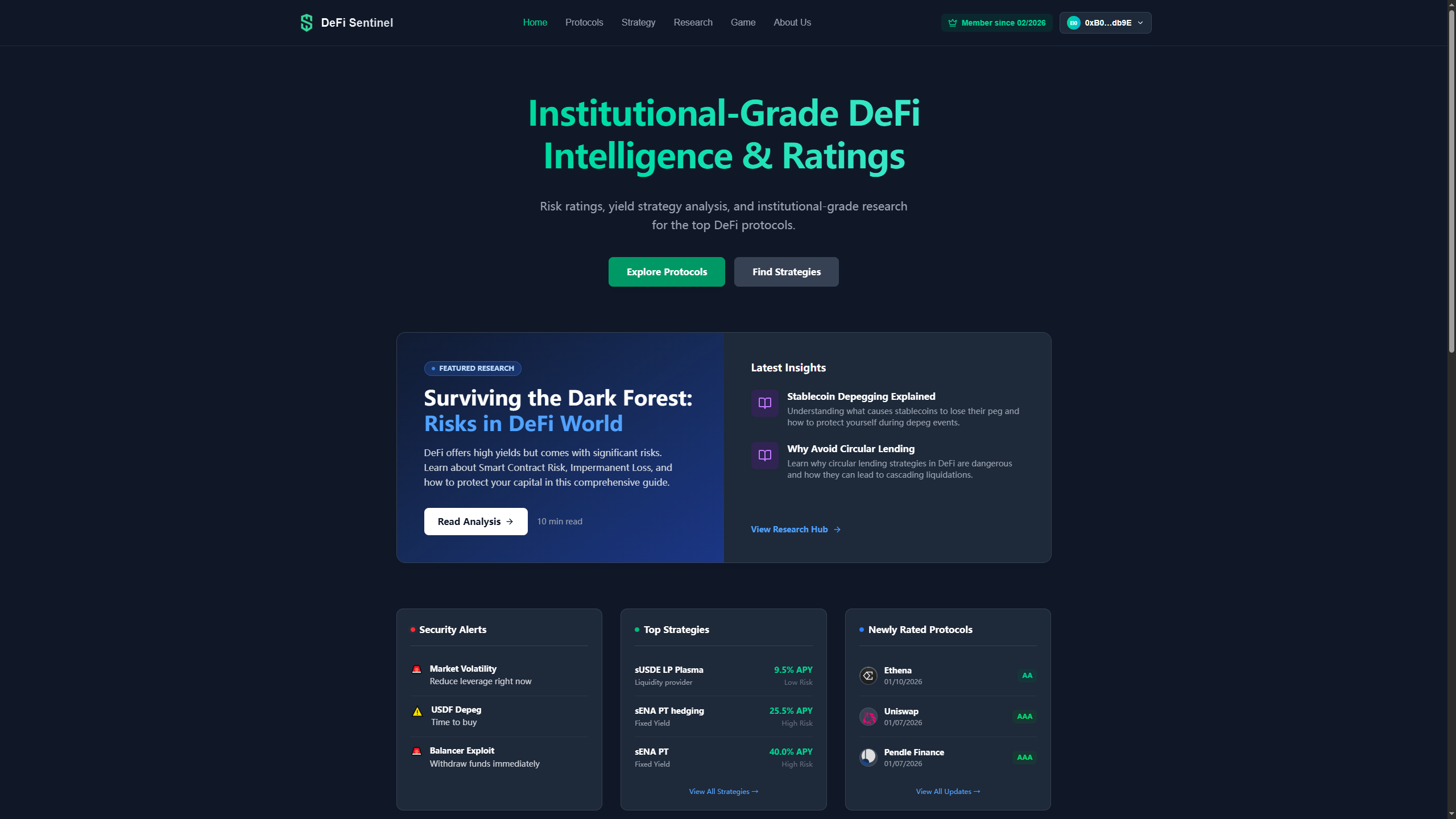
homepage
-
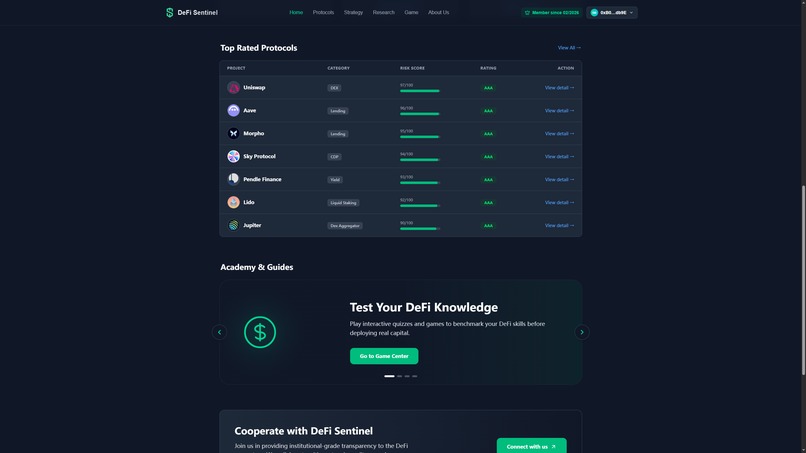
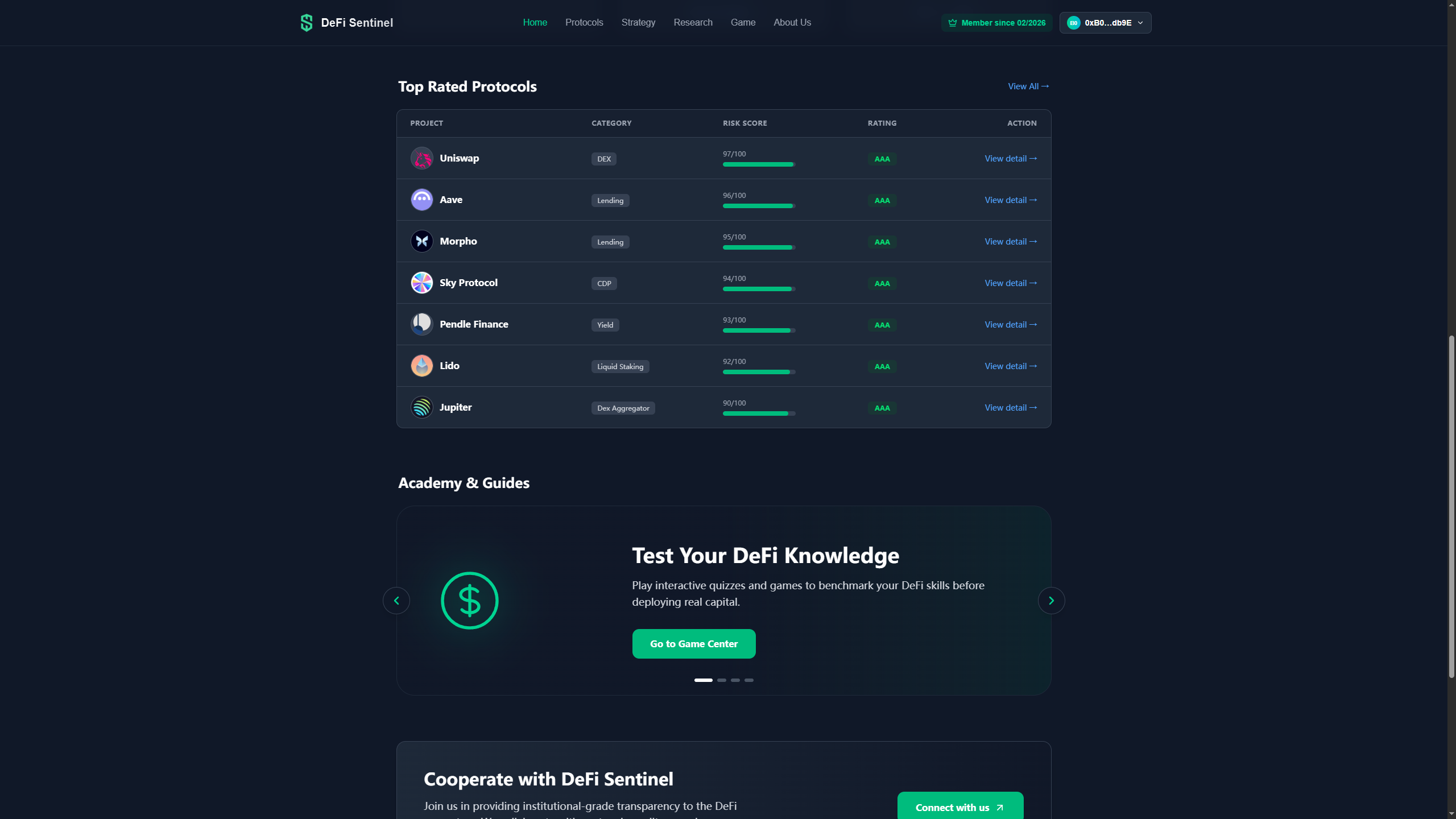
alerts and protocol list
-
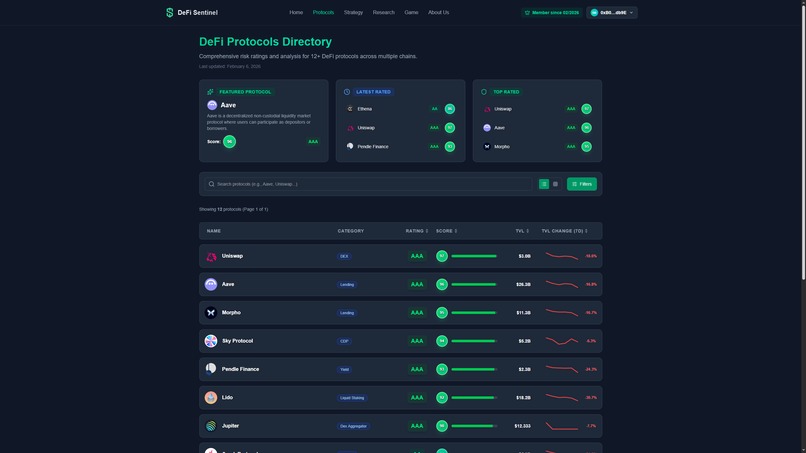
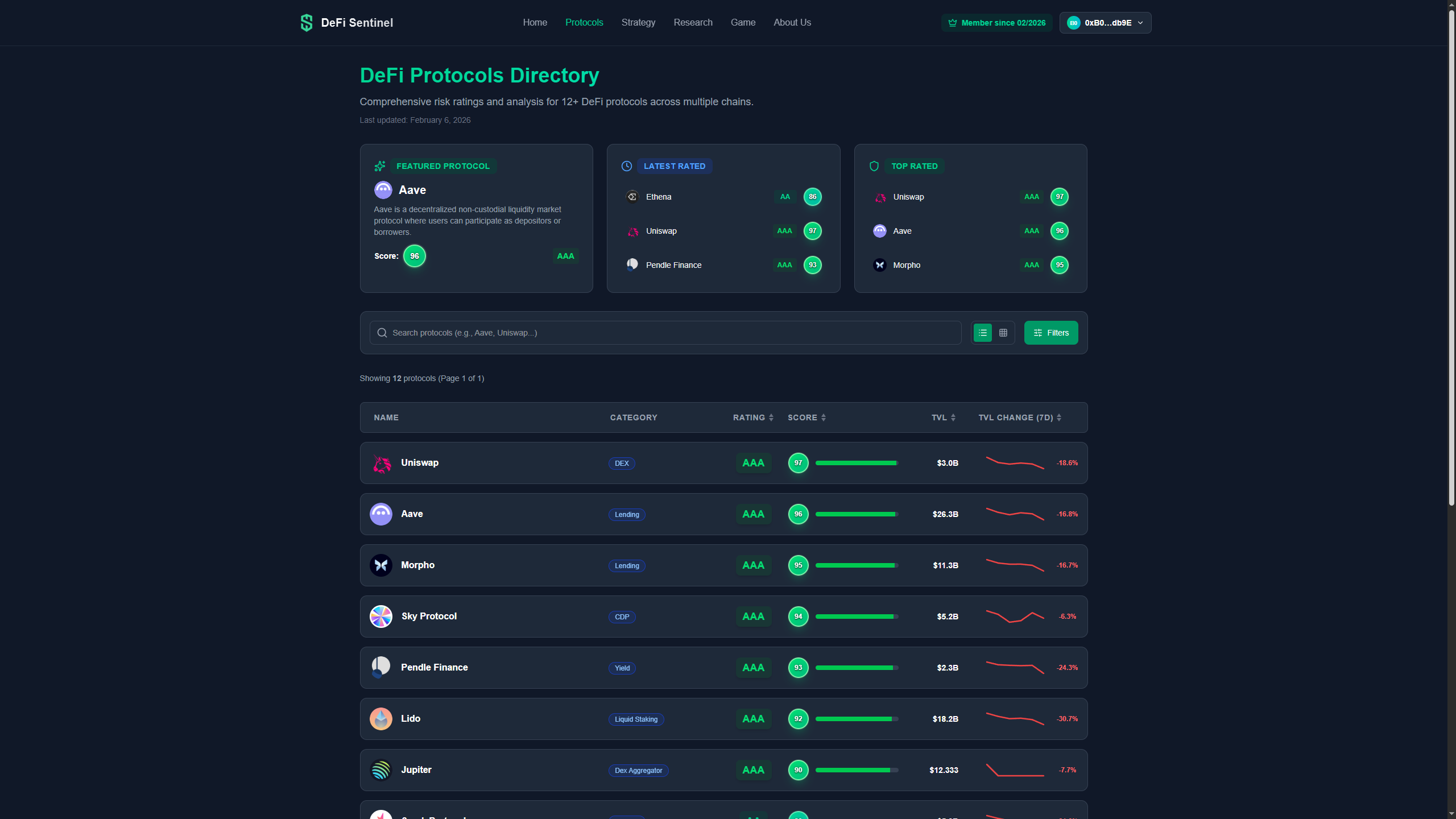
protocols page
-
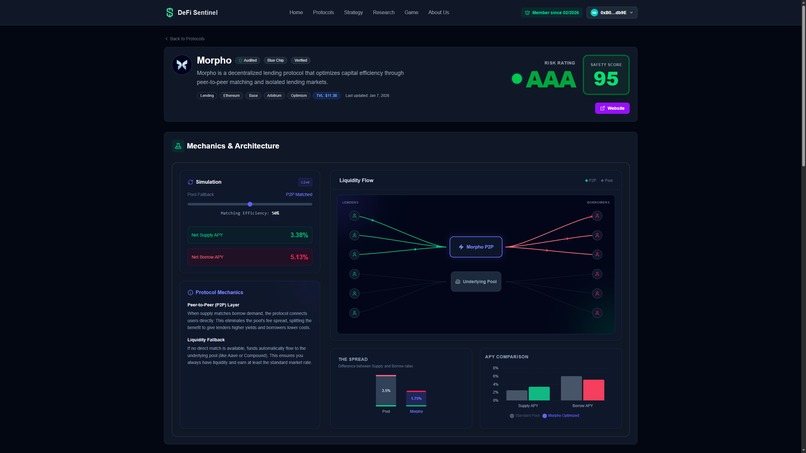
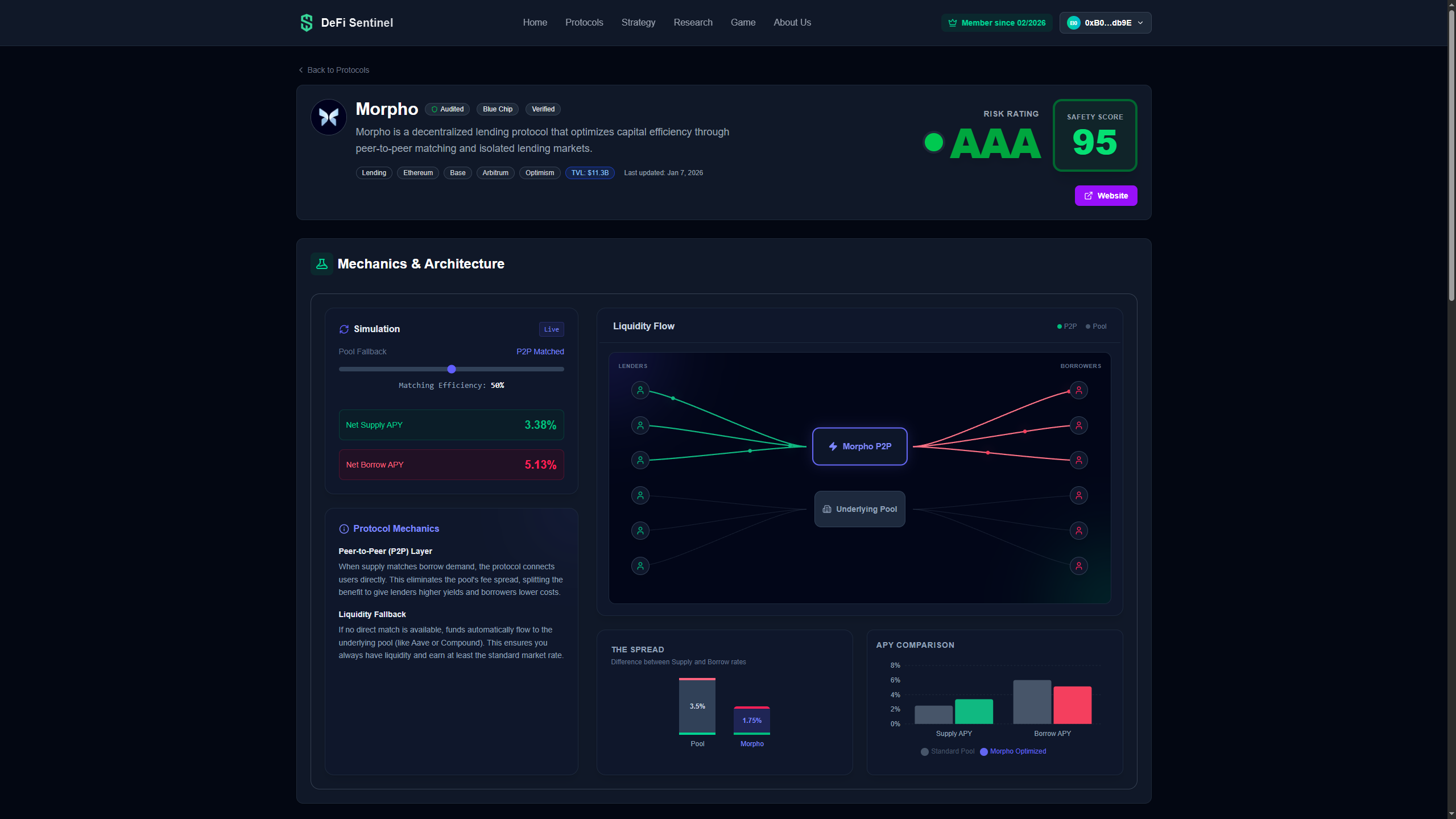
protocol animation
-
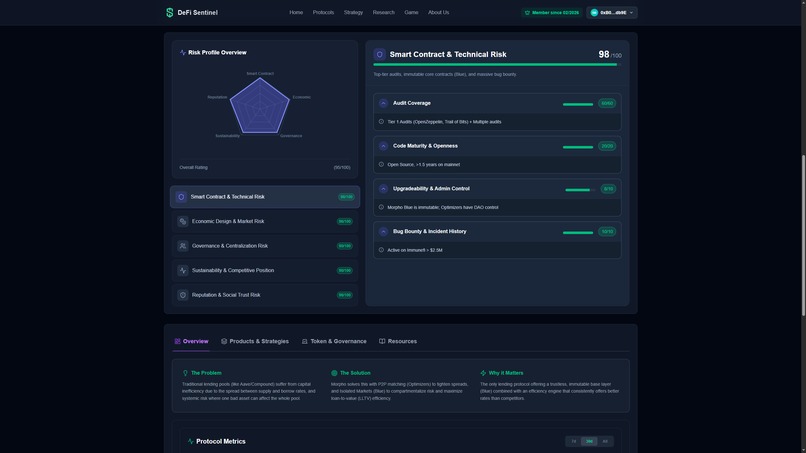
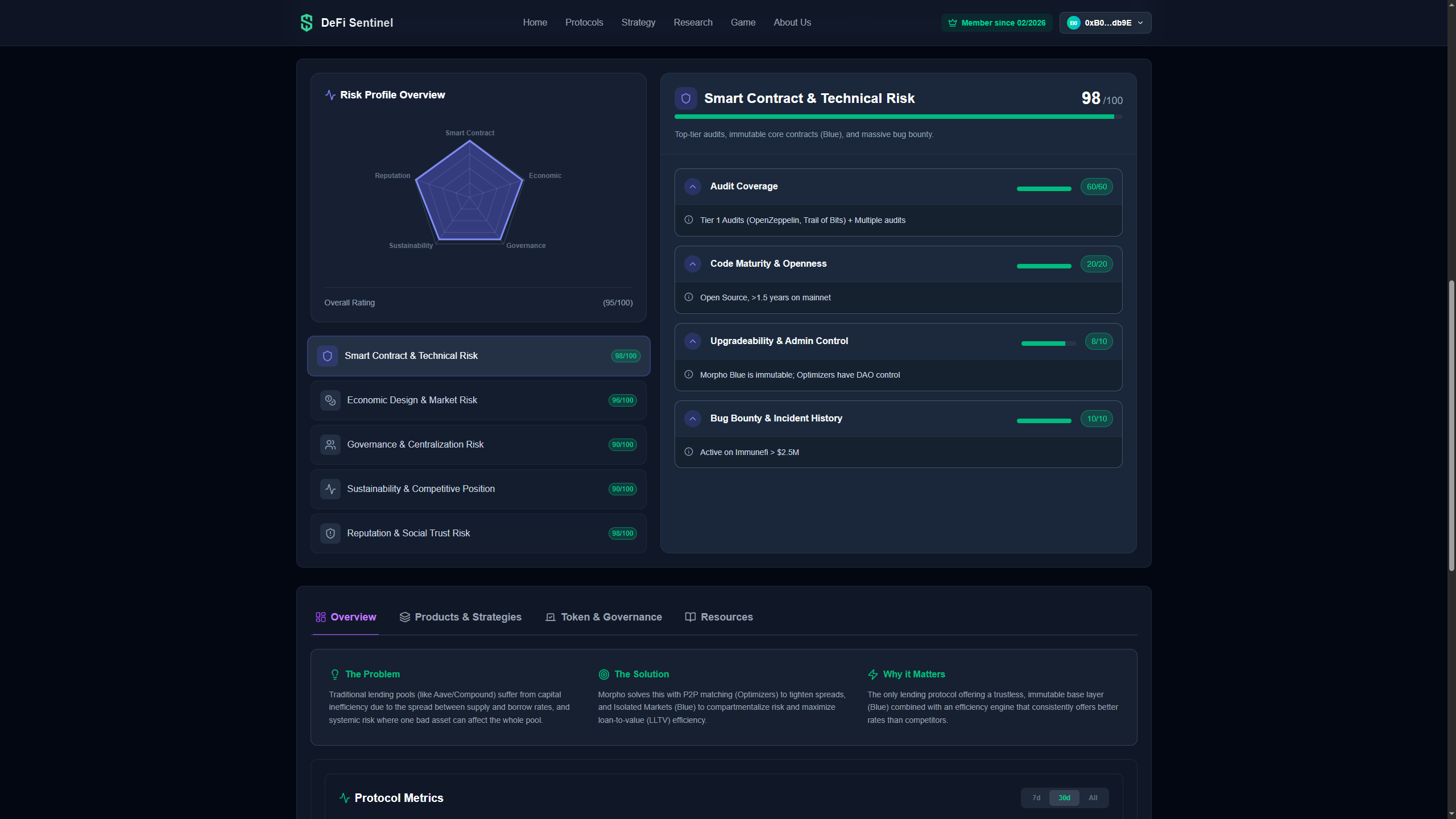
protocol risk rating
-
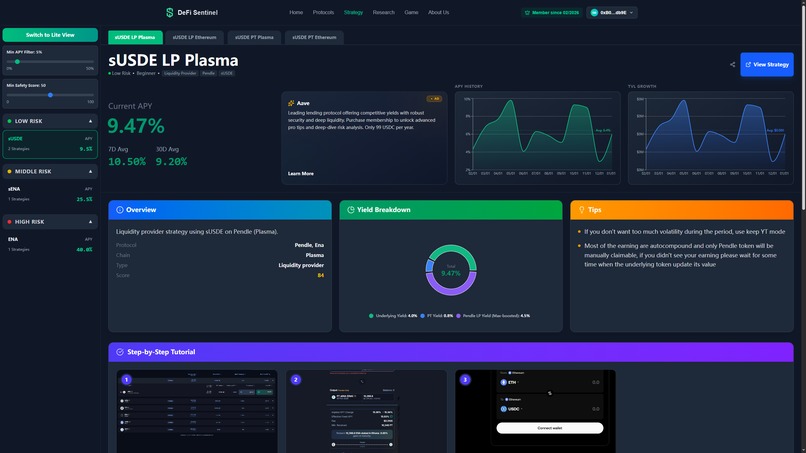
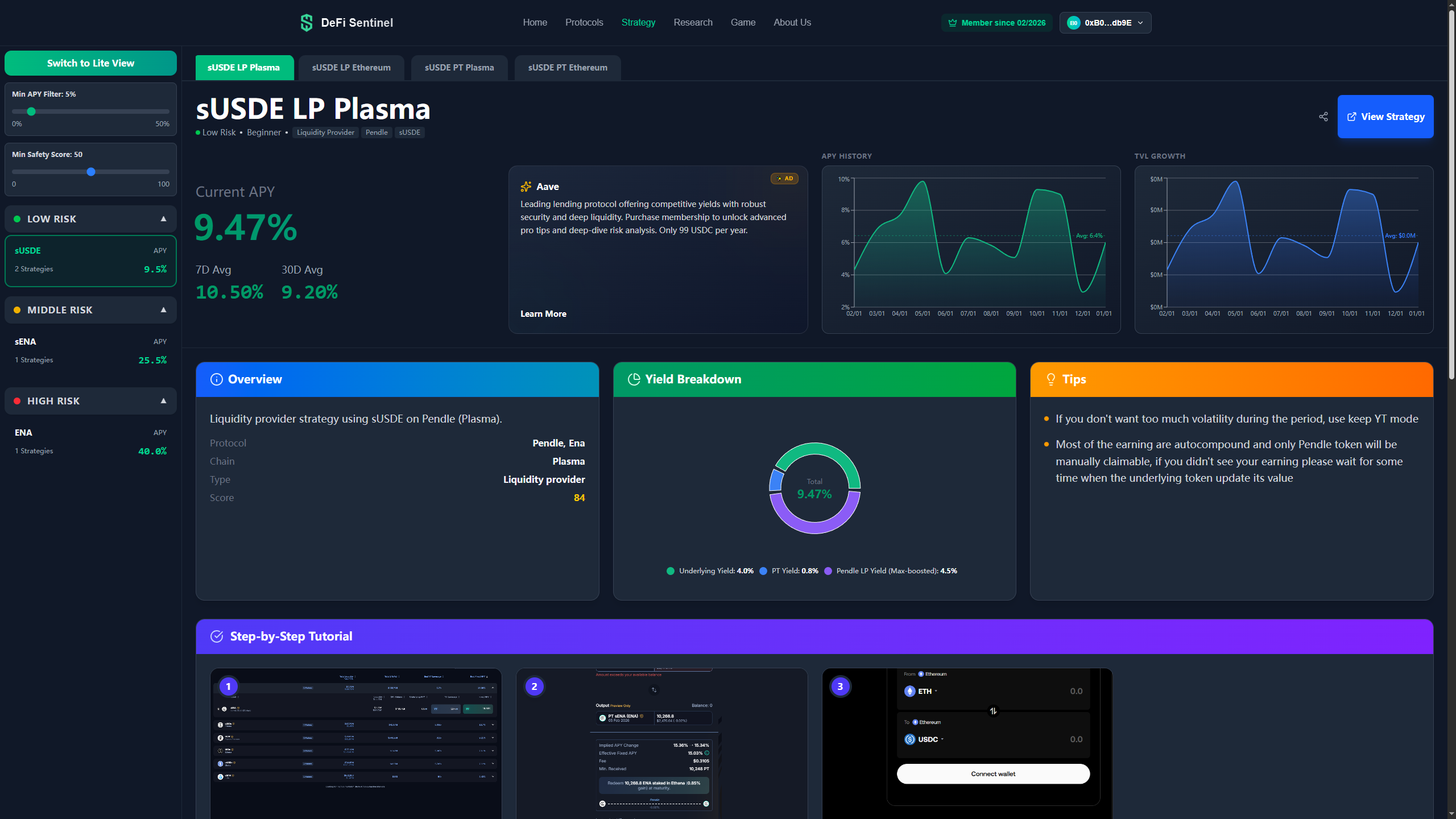
strategy page
-
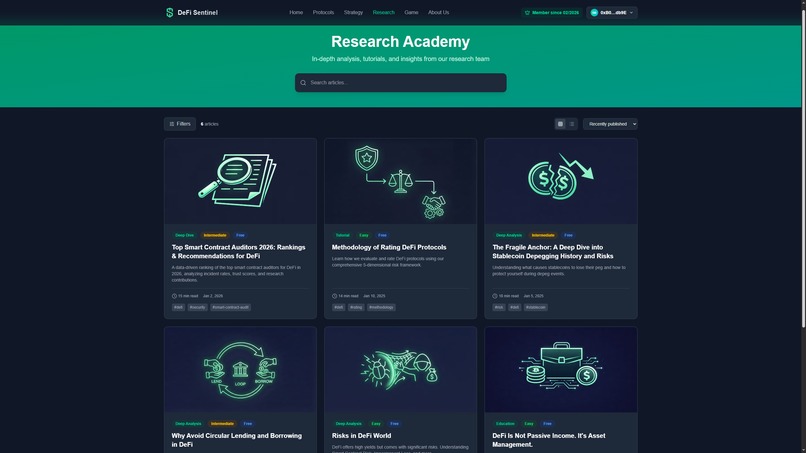
research page
-
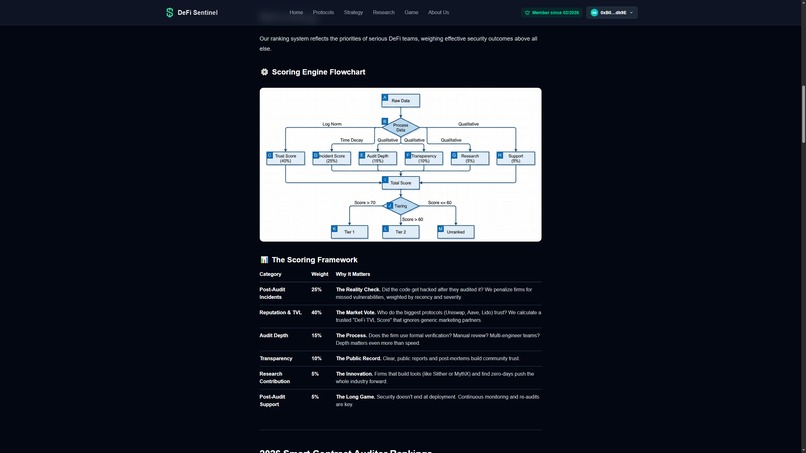
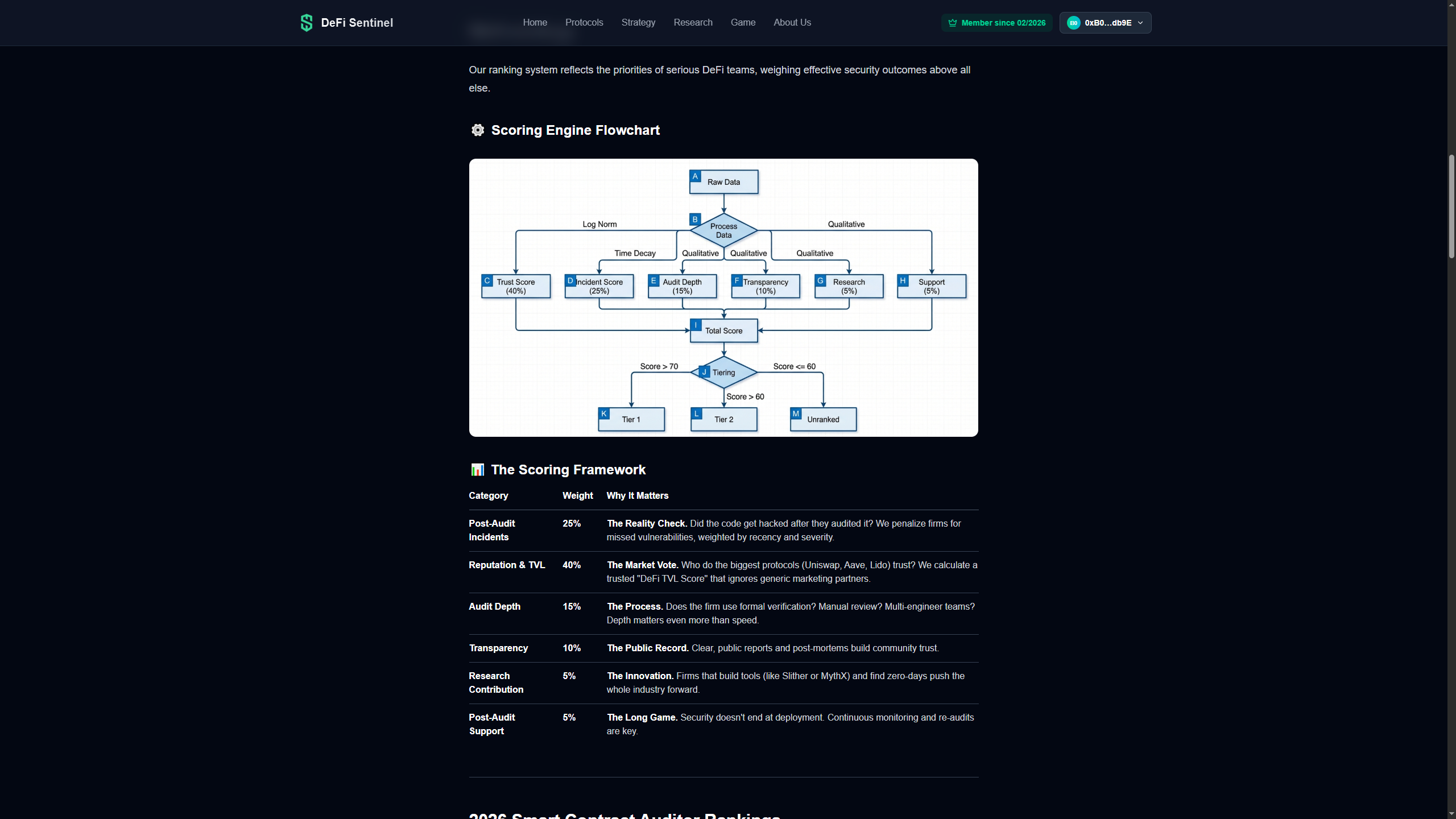
research article
-
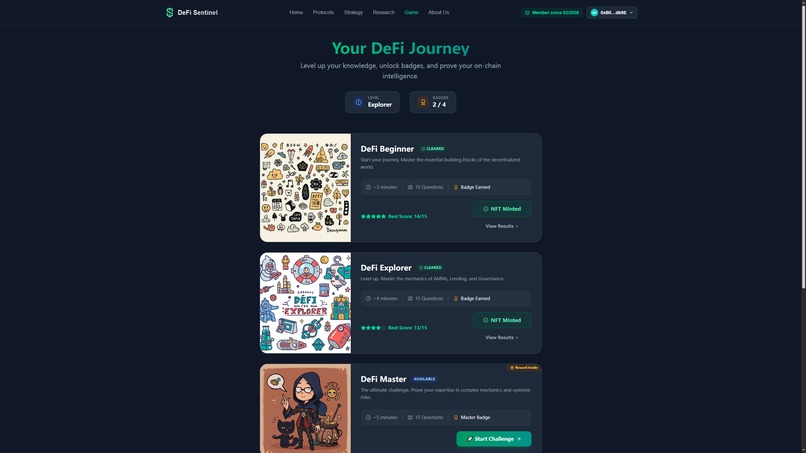
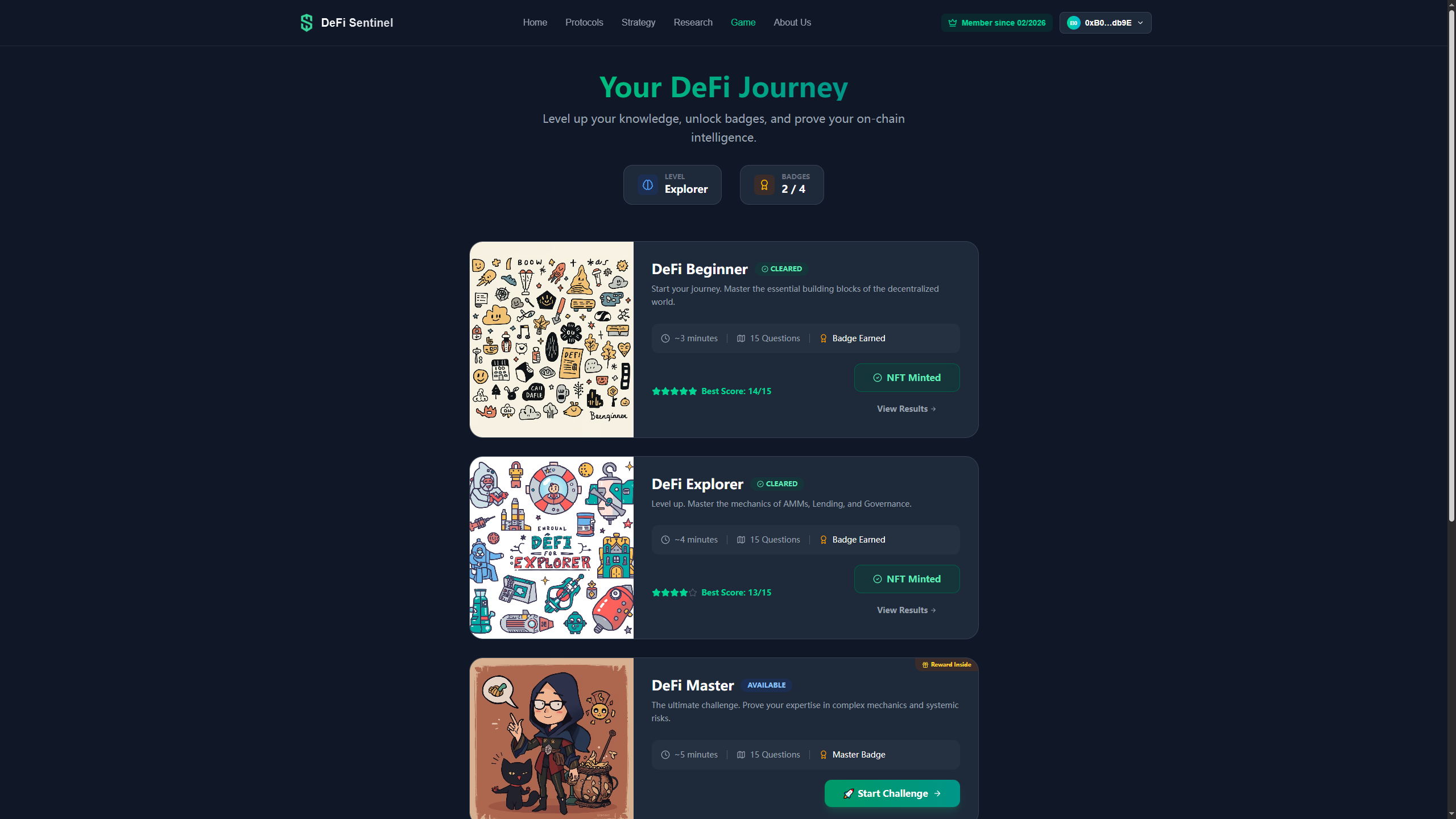
game center

About DeFi Sentinel
DeFi Sentinel began as something we wanted for ourselves.
My partner and I were trying to allocate capital into DeFi—not to speculate, but to find a protocol we could reasonably trust for long-term yield. Very quickly, the research process became overwhelming. Information was scattered across whitepapers, dashboards, social media, and forum threads. Existing DeFi review and rating platforms felt outdated: evaluations were highly subjective, data was often stale, and there was no single place where protocol design, risk, and real usage could be understood together.
That frustration became the starting point for DeFi Sentinel.
The core problem wasn’t a lack of data—it was the lack of a scalable way to turn constantly evolving information into consistent, comparable risk understanding. With modern AI, this no longer felt unsolvable. Instead of relying on static reports or personal opinions, users should be able to understand why a protocol is risky, how that risk evolves, and what trade-offs they are actually making. If AI could finally make this possible, we felt it was worth building.
As we dug deeper, we realized this wasn’t just a personal inconvenience, but a systemic issue across DeFi. High-profile incidents like the Balancer rounding error, the collapse of Terra’s UST, and flash loan exploits such as Euler Finance did not primarily fail because of market volatility, but because of design flaws, hidden dependencies, and misunderstood risks. In many cases, users didn’t lose money because they made the wrong bet—they lost money because risk was never clearly structured or communicated.
What We Built
DeFi Sentinel is an AI-driven DeFi rating platform designed to act as a missing trust layer for decentralized finance.
Similar to how S&P and Moody’s provide structured credit assessments in traditional finance, DeFi Sentinel delivers protocol, asset, and strategy ratings using a unified risk framework. It is not a price prediction or trading tool. Our focus is risk understanding, not performance optimization.
Beyond scores and APYs, we combine normalized risk ratings with visual explanations, step-by-step strategy breakdowns, and interactive education so users can clearly see how risks propagate across a protocol.
How Gemini Powers the System
Gemini plays a foundational role in making this system possible.
We designed an agent-driven research pipeline powered by Gemini 3 that starts from a single official protocol source and expands outward. Gemini analyzes documentation, technical articles, social updates, blog posts, and on-chain data from platforms like DeFiLlama, then synthesizes the results into a structured JSON output.
This output is not a report, but a normalized risk object that feeds directly into our rating engine. Before large-context, structured-output LLMs, maintaining this level of consistent risk analysis would have required a full-time research team.
How We Built It
We first prototyped DeFi Sentinel using Gemini 3 to generate system designs, risk frameworks, and evolving architecture documents that guided the build process. Combined with Antigravity, self-driven AI agents enabled a two-person team to build and iterate across the full stack—from frontend and backend to smart contracts and automated testing.
Challenges & Learnings
One of our biggest challenges was ensuring that AI-generated analysis remained consistent, explainable, and trustworthy. Clear system prompts, constrained reasoning paths, and predefined risk dimensions proved essential to producing comparable results.
Ultimately, DeFi Sentinel demonstrates how Gemini can power scalable, real-world decision support—helping users move from guessing in DeFi to making informed, risk-aware decisions.


Log in or sign up for Devpost to join the conversation.