-
-
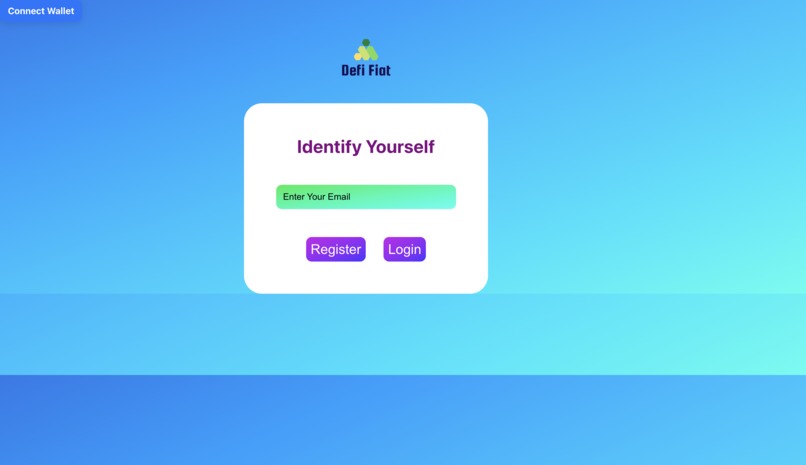
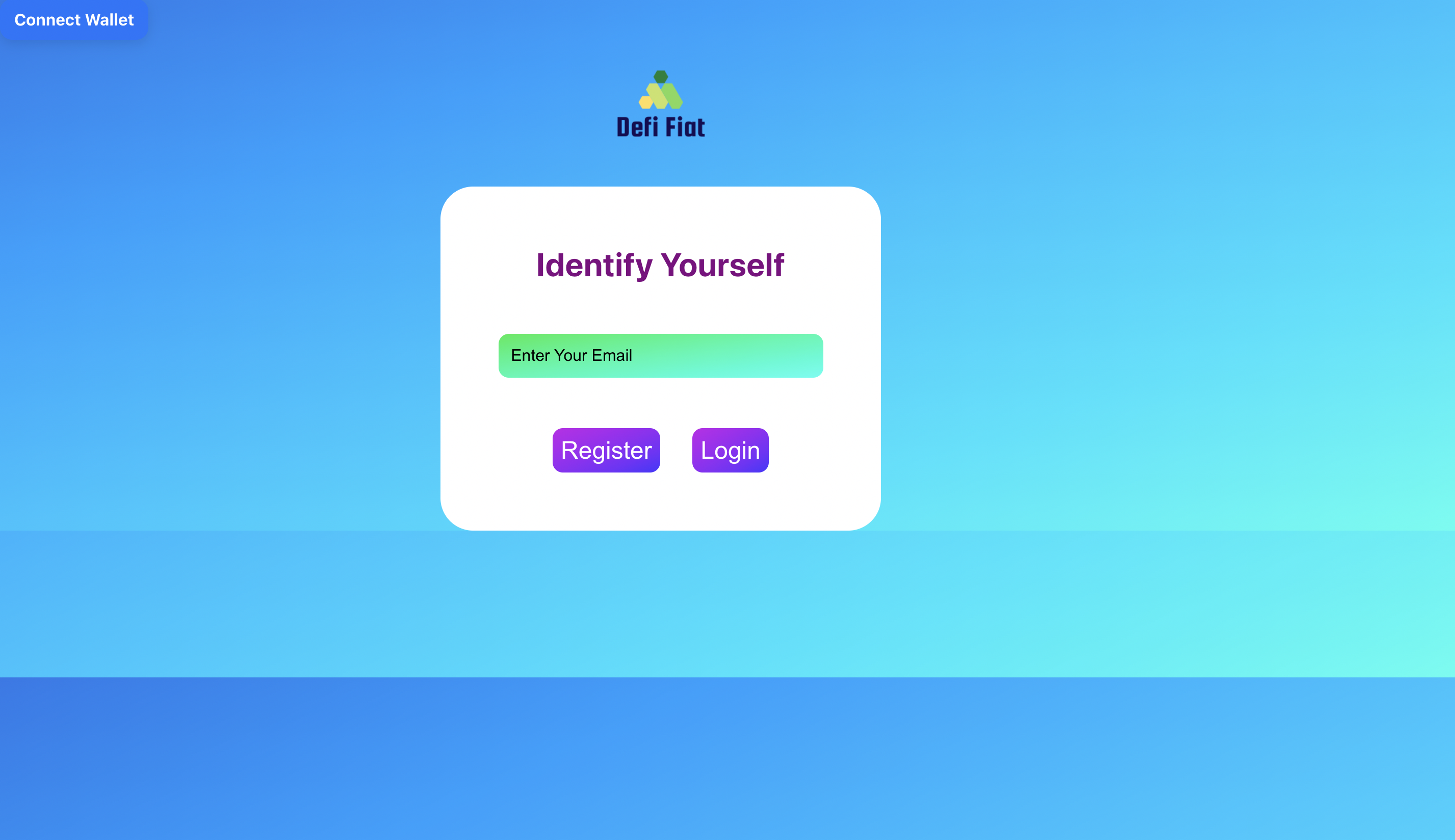
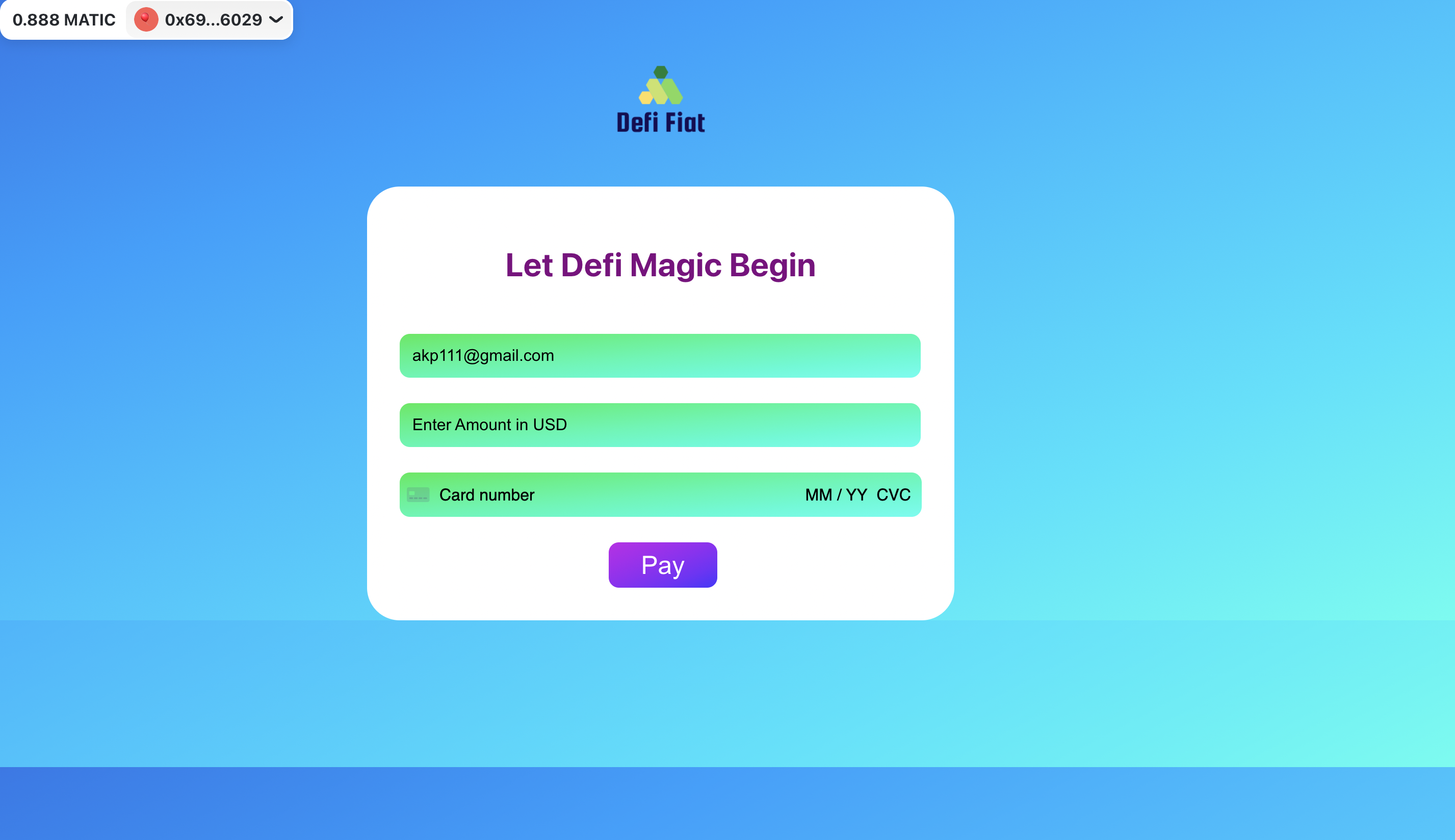
Login and Register Page
-
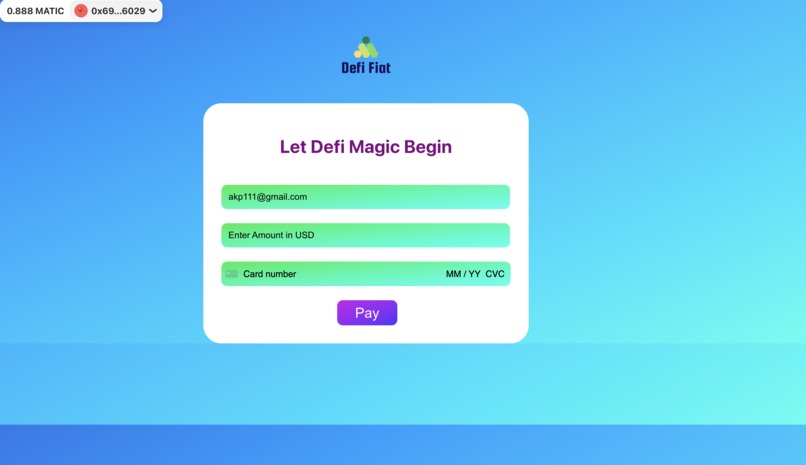
Interface to interact with Defi with your fiat
-
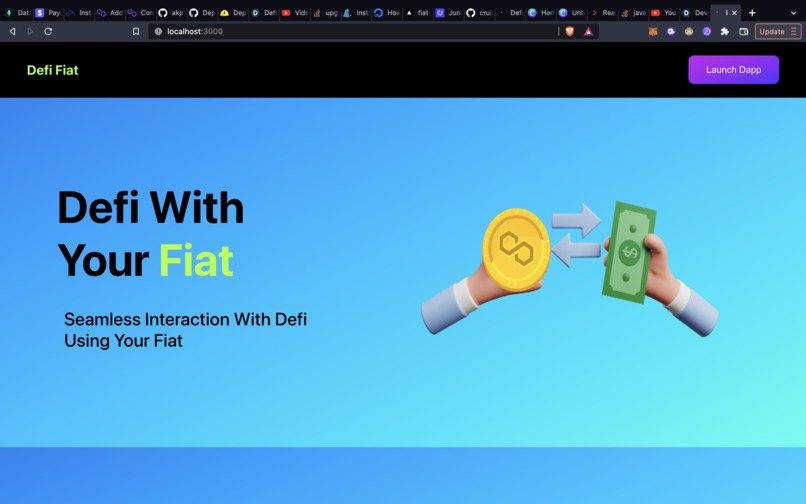
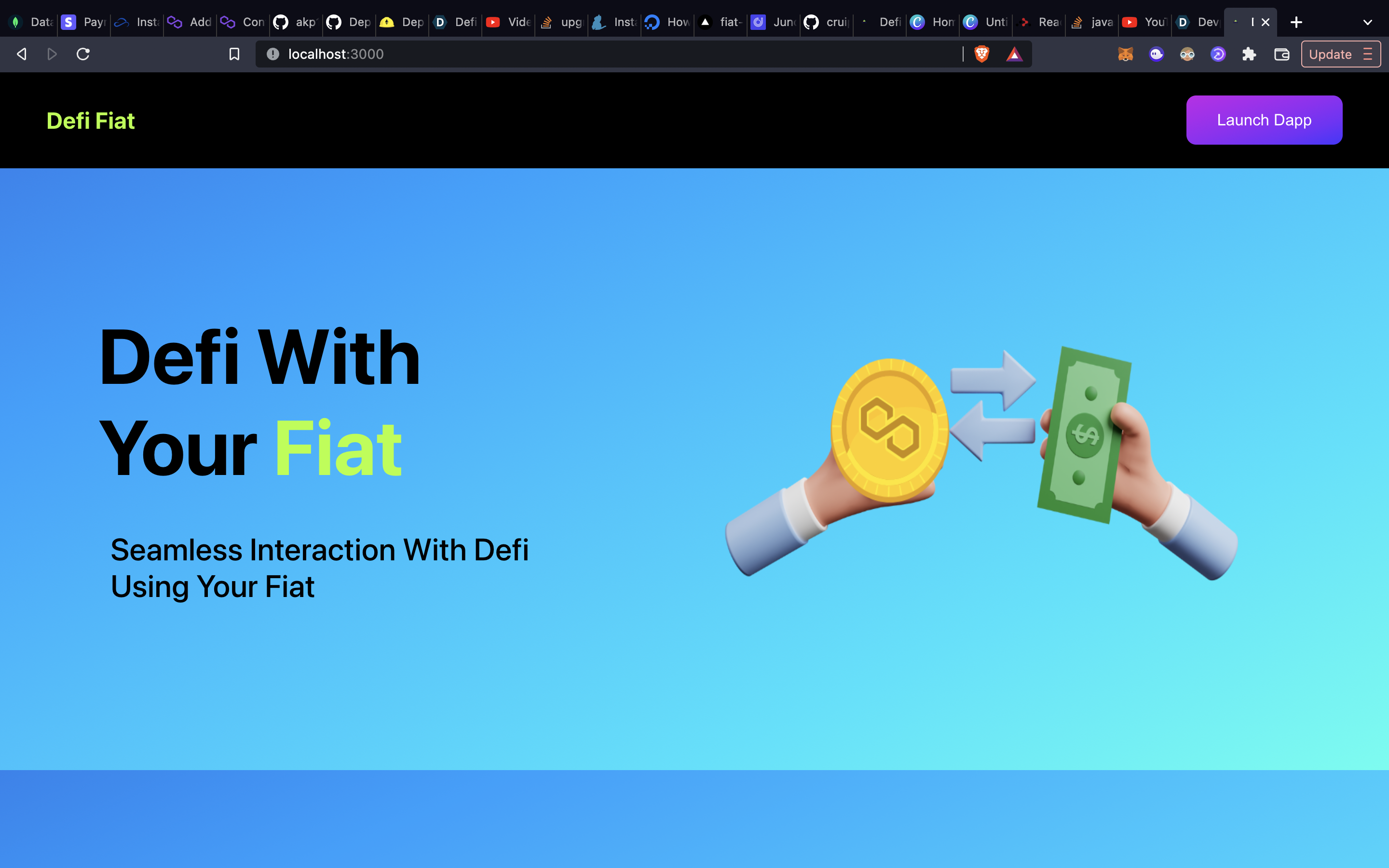
landing
Inspiration
A first-time user must go through many steps to obtain crypto from a CeFi, bridge it to the native blockchain, and then use it to interact with a Defi protocol of their choice. It can be overwhelming as well as time-consuming. This is where Defi Fiat comes into the picture. It allows user to directly use their fiat to interact with any Defi protocol and take custody of the wrapped/LP token generated.
What it does
It allows a user to directly use their fiat and seamlessly use it to interact with their favorite Defi protocol and also take custody of the wrapped/LP token generated from it. More power to the user and enables mass adoption of web3!
How we built it
I used :
- RectJS for frontend. I used wagmi and rainbow-wallet-kit for connecting with the wallet. Also, I used stripe APIs to receive payment. I used Spheron to host the front end.
- Solidity for smart contract. I used the Aave contract to showcase lending Matic. The contract is deployed on Polygon Mumbai.
- NodeJS for backend: The backend allows authentication, initiating fiat payment, and interacting with the defi protocol. The backend is hosted on AWS. ## Challenges we ran into The challenge was to figure out how to generate a proof that can be verified both on-chain and off-chains I came up with EIP-712, a typed signing mechanism to generate a signature that can be verified on both chains as well as off-chain. ## Accomplishments that we're proud of Single-handedly developed the frontend, backend, and contract. Understand Aave contract and use it for lending. Understand Stripe APIs and how they can be used to initiate a transaction. ## What we learned I learned about how Web2 and Web3 work and how it can be a Web2.5 middleware that can connect two different worlds in a censorship manner and drive mass adoption. ## What's next for Defi Fiat The next step is to find a cool name. Decentralize the backend to a validator-based mechanism such that there is not a single point of failure. It would open the stage for a native token which will enable a validator-based mechanism where good actions are promoted through incentives and bad actions are punished through a slashing mechanism.
Built With
- aave
- amazon-ec2
- amazon-web-services
- defi
- ethers
- express.js
- node.js
- polygon
- rainbow
- react
- solidity
- sphereon
- stripe
- wagmi


Log in or sign up for Devpost to join the conversation.