-
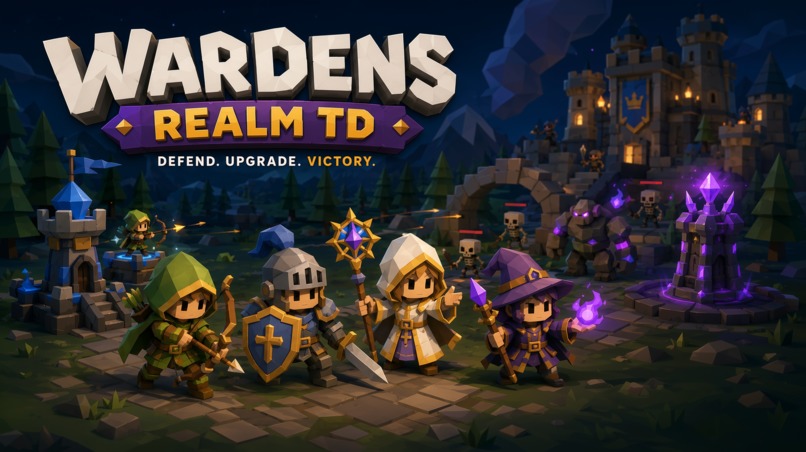
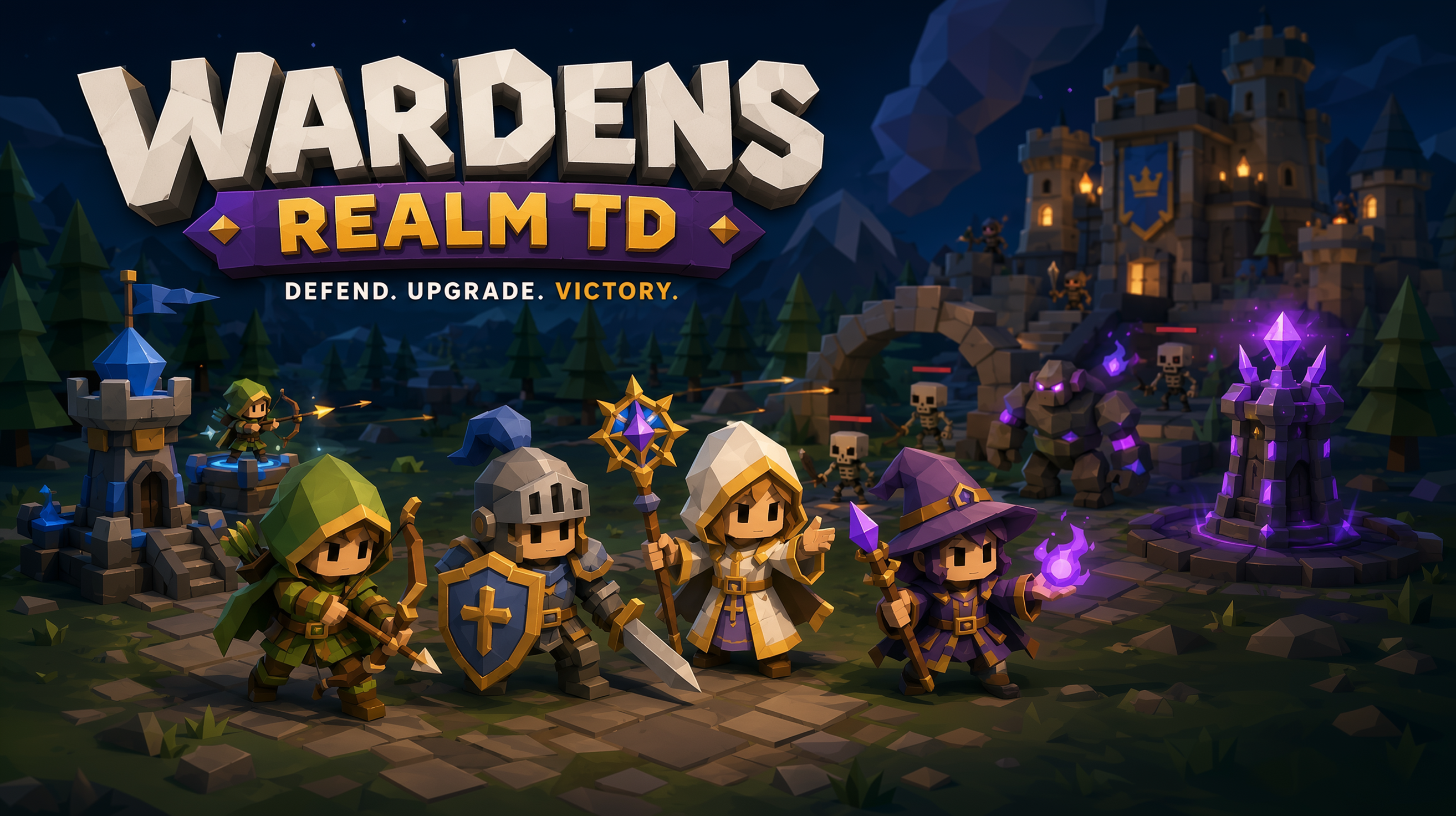
Capsule Image
-
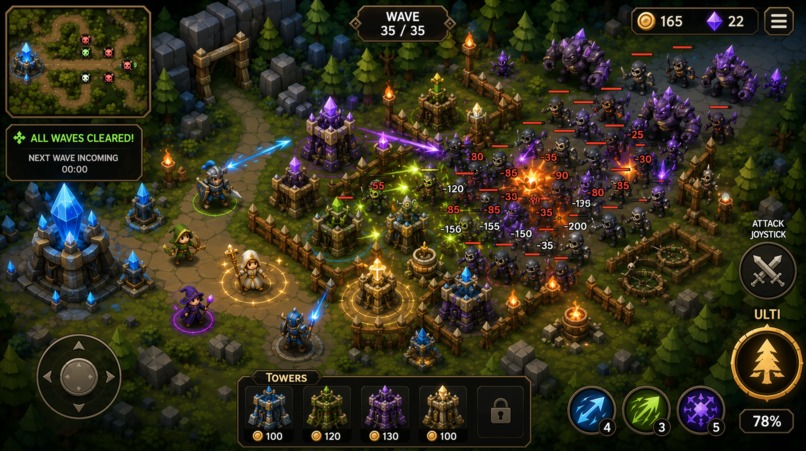
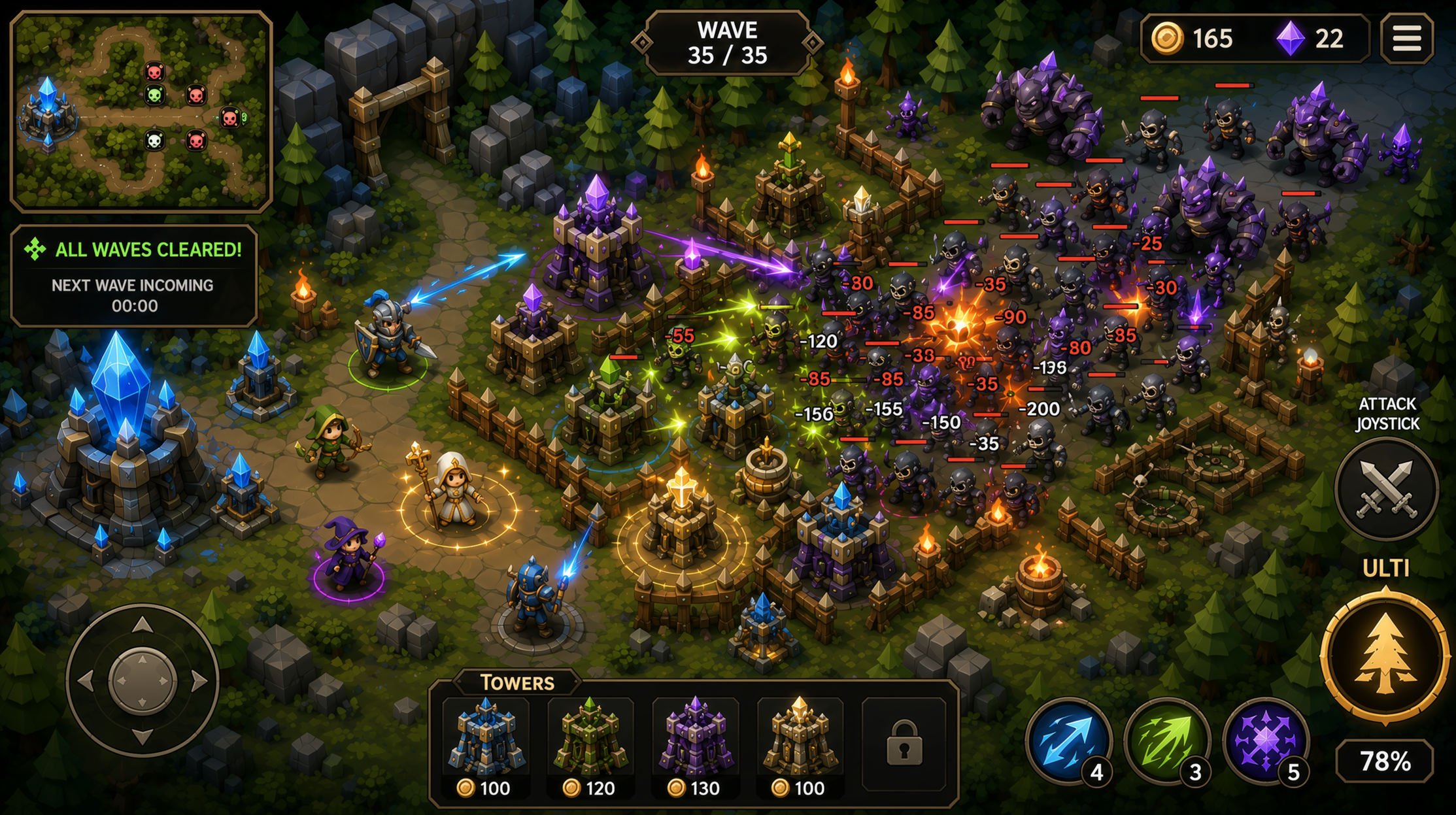
Laning
-
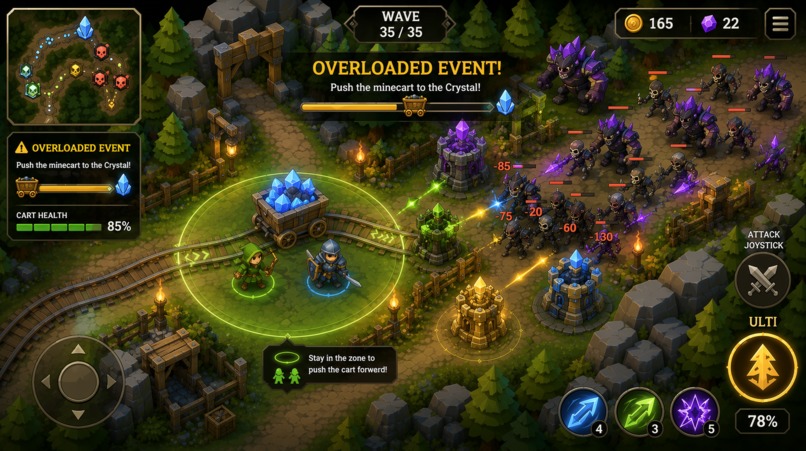
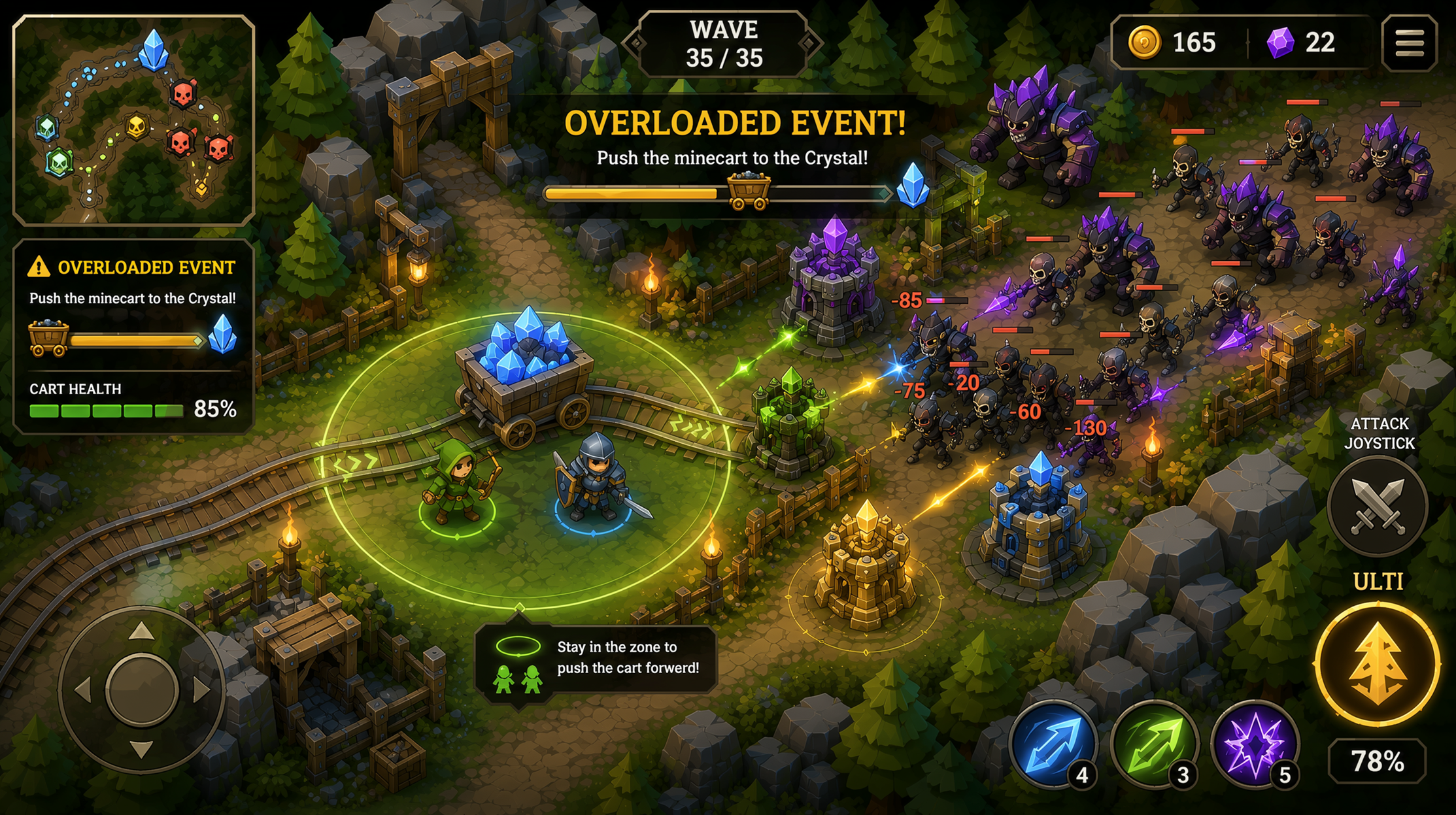
Event Defense
-
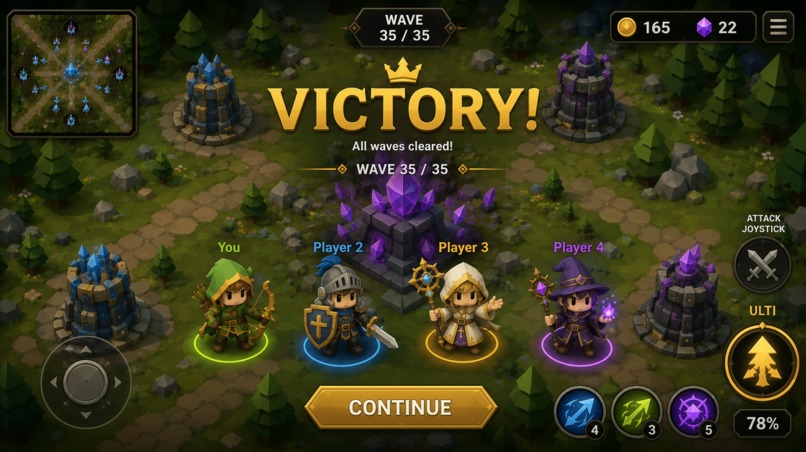
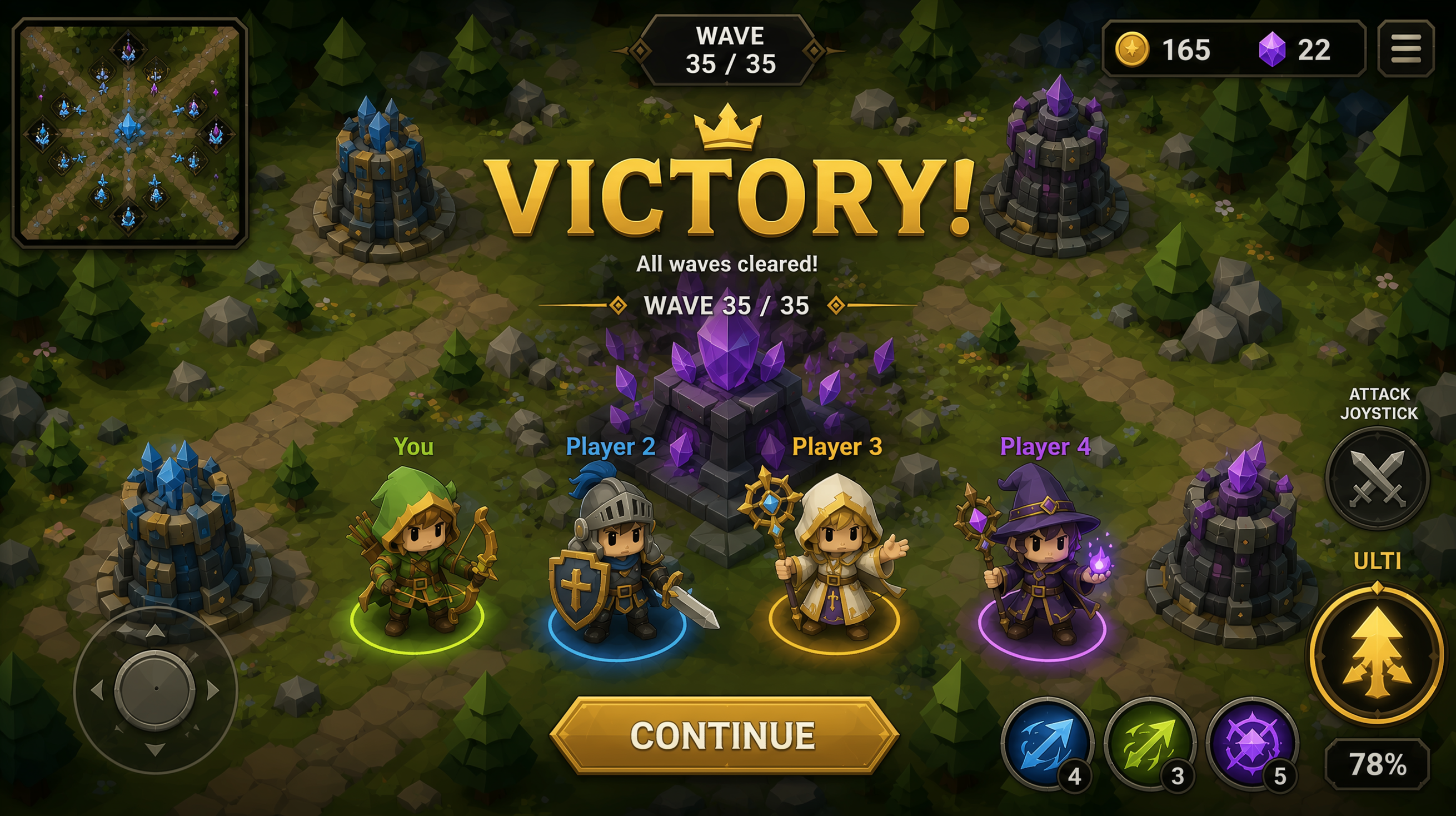
Victory Screen
-
About The Project - Wardens: Realm TD
Inspiration
Most tower defense games hand you a fixed map with pre-drawn paths. You place towers in designated slots and watch enemies walk corridors the designer chose. The strategy is optimization within someone else's constraints.
I wanted to break that. The core question was simple: what if the player drew the enemy path themselves? That question became Wardens. Place Barricades anywhere on an open field, and enemies reroute in real time.
The co-op layer was inspired by watching people play Overcooked: two players sharing a small space, each with their own plan, forced to negotiate without pausing. I wanted that same energy; four Wardens, four Towers to protect, never enough attention for everything at once.
What it does
Wardens: Realm TD is a co-op tower defense game for 4 players on mobile. Enemies spawn from a central Crystal and push toward four outer Towers. Players place structures (Barricades, Bear Traps, Bomb Barrels, Archer Towers) anywhere on open terrain to funnel, slow, and destroy enemy waves.
The signature mechanic is Structure Attack Mode: completely block a path and enemies stop walking, they start destroying your wall instead. Every placement is a trade-off between funneling power and structural risk.
Each player controls a unique Warden (Archer, Knight, Priest, Mage) with active abilities and a game-changing Ultimate. Dynamic Events fire mid-wave forcing the team to split up and improvise under pressure.
Matches run 10 to 15 minutes. Win or lose, every run earns persistent Gold and a Reward Box.
How we built it
Documentation-first. The full Game Design Document was written before any prototype, forcing every system to be described clearly enough that a developer could implement it without clarification. Design contradictions surfaced on paper, not in code.
The build followed four phases:
- Core loop definition: what does the player decide every 30 seconds?
- Economy modeling: dual currency (in-match Coins, persistent Gold) tuned so spending and saving both feel meaningful.
- Structure Attack Mode iteration: three versions before landing on the current balance.
- Retention architecture: Box timers, Daily Quests, and Season Pass designed last, to frame a game that was already fun.
Challenges we ran into
Teaching Structure Attack Mode. It's the game's most important mechanic and the most counterintuitive for TD veterans. Solution: the first wave is a slow, single-lane introduction where the player naturally discovers SAM by accidentally sealing a lane with their first Barricades. Consequence teaches faster than text.
Co-op scaling. Making the game work for 1, 2, 3, or 4 players required wave density and event pacing adjustments per player count. Solo gets fewer simultaneous lane attacks; a full squad faces all four lanes active from mid-game.
Failure state calibration. Early Dynamic Event failures were devastating (50% Tower HP loss). Playtesters stopped engaging with events entirely. Current design uses small, persistent penalties (5% enemy buff) that accumulate across multiple failures.
Scope discipline. Cutting good ideas that didn't belong in version one. Elemental Tower Infusion, Guild Systems, seasonal maps; all strong features, all deferred. The hardest design skill is knowing what to leave out.
Accomplishments that we're proud of
Structure Attack Mode as a single rule that transforms every placement from routine into a genuine risk-reward decision. One mechanic turns a standard TD into a spatial strategy game.
The dual economy where a lost run still produces Gold. No session feels wasted. That single design choice directly addresses the retention problem that kills most session-based competitive games.
Dynamic Events that force co-op without requiring voice chat. The Crystal Overload cart demands an escort while waves are active, the team splits naturally because the situation demands it, not because a UI told them to.
Four structures, not eight. The decision to cut half the original structure roster and find depth through interaction rather than variety. Four pieces with clear trade-offs produced more meaningful decisions per wave than eight ever did.
What we learned
Depth comes from interaction density, not feature count. Four structures with one critical interaction rule (SAM) create a richer decision space than eight structures that each do one isolated thing.
Failure should sting, not end. Small persistent penalties let players feel the weight of mistakes without the hopelessness that makes them quit. A 5% enemy speed buff at wave 8 makes wave 15 tighter but still winnable.
Coordination emerges from scarcity. Four Towers, four players, two Towers under attack, someone has to move. Physical constraint produces more teamwork than any ping system or minimap callout.
Retention wraps the game; it doesn't replace it. Box timers, Daily Quests, and Season Passes were designed after the core loop was fun on its own. If the 30-second decision rhythm doesn't work, no reward system saves it.
What's next for Wardens: Realm TD
Elemental Tower Infusion: socket Fire, Ice, or Lightning cores into structures for cross-system status effects. An Ice Archer Tower slows targets before the Mage's AoE detonates into the cluster.
Seasonal Map Rotations: new terrain layouts each season with environmental hazards (lava flows, fog zones) that break solved strategies and force veterans to rediscover optimal setups.
Warden Guild System: persistent 30-player rosters with shared resources, weekly co-op leaderboards, and exclusive Guild Towers. The feature that transforms Wardens from a session game into a community.
Expanded Warden Roster: new heroes with unique deployables and Ultimates that create fresh team compositions and counter-strategies against the evolving enemy roster.


Log in or sign up for Devpost to join the conversation.