Please visit out website to read about our project: https://gardensentry-gkbsoftware1.c9.io/
Inspiration
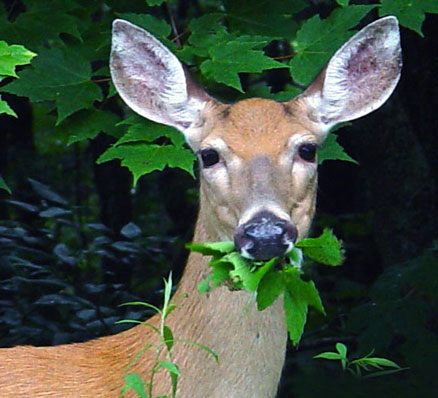
I love to garden, in fact a good portion of the food I eat comes from the yield of the vegetable garden in my front yard. But it can be quite awful to wake up, walk out to your eden of fruits and vegetables that you have passionately cared for month after month, only to find it has been pillaged by the horned, hoofed demons that lurk in the woods nearby. I know this feeling all too well. Plants I had sown as a seed, my children, they had been mercilessly wiped out and the only thing left was a set of hoof prints. What was suppose to be food for me and my family fed the local deer population instead. Not cool. How could I protect my garden without using chemicals or other expensive and ineffective solutions on the market (some of which include literally spraying your produce with coyote urine and/or rotten egg water)?
What it does
That is why I came up with Garden Sentry. It is a wireless enabled device that watches one's garden all day and night, sounds an incredibly obnoxious alarm that deer will absolutely hate, the second they try and sneak off with the fruits of your labor.
The device is powered by 3 solar panels (taken from dollar store lights) mounted on top, charging a battery backup. It uses infrared detection (3 sensors) to determine if someone's sticking their NOT CUTE little noses where they shouldn't be. If this is the case, it will activate it's scare tactics ( a buzzer hijacked from a dollar store alarm system ). The inputs are taken into an atMega and broadcased via rf transceivers to a RaspberryPi-powered web server.
How I built it
Hijacking parts and inspiration from dollar store treasures... 3 solar panels buzzer / alarm body from lawn lamp
CAD + 3D printing for housing our hardware
atMega for managing IOs RaspberryPi for running a ruby-powered web server
Challenges I ran into
Making sure the device could be built affordability so people all around the world, especially in countries that depend on the food they grow locally can use it and replicate the build, but the design has to be durable to weather outdoor conditions.
Accomplishments that I'm proud of
Drawing inspiration and hardware from existing and affordable devices Rapid prototyping
What I learned
Just how incredible DHF and Baltimore's sponsors can be. The tech scene here is exploding and its very exciting to be involved.
What's next for Deer Destroyer
Making variations that can collect and send other data such as weather, soil conditions, etc. Infiltrating the deer's social constructs, befriending key members, and bringing them down from the inside.


Log in or sign up for Devpost to join the conversation.