-
-
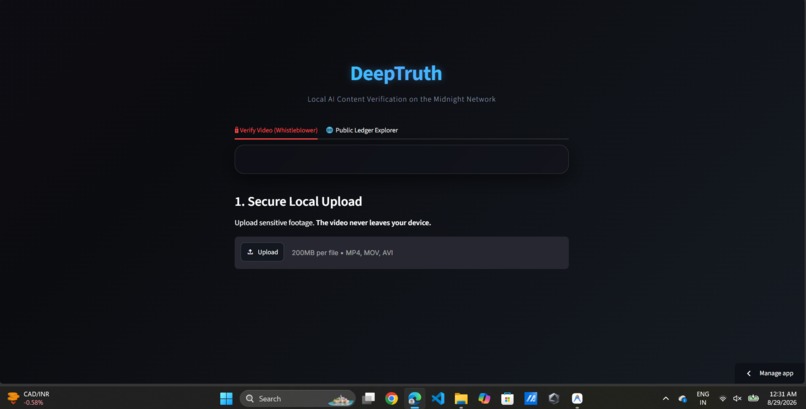
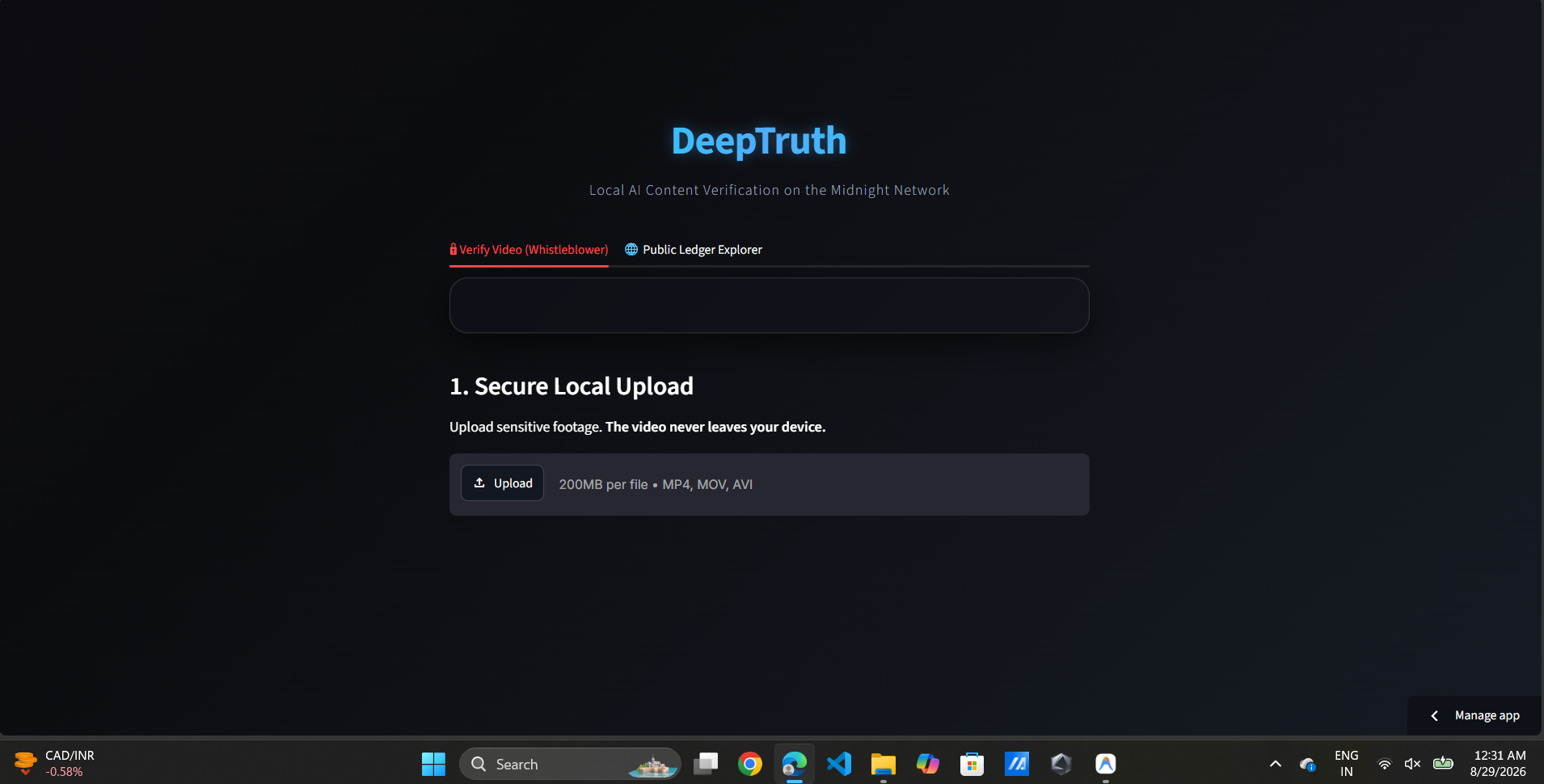
The DeepTruth Dashboard. All AI analysis runs locally.
-
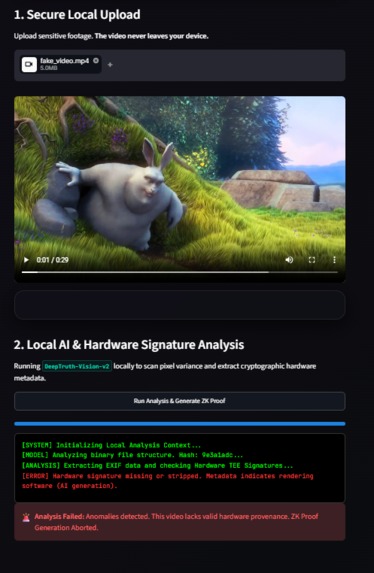
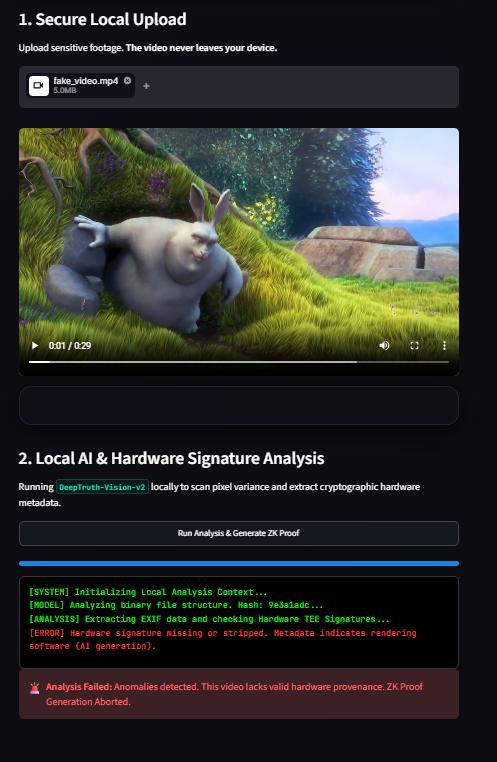
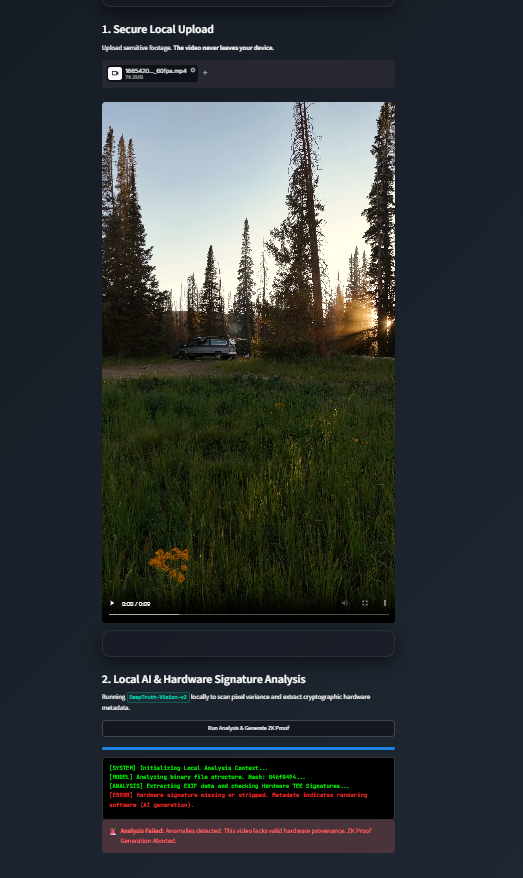
Catching a Deepfake. Missing hardware signatures abort the ZK Proof.
-
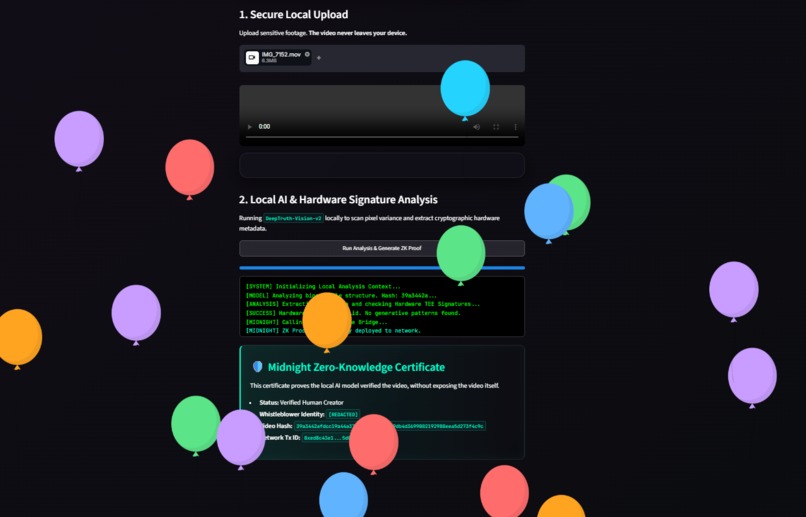
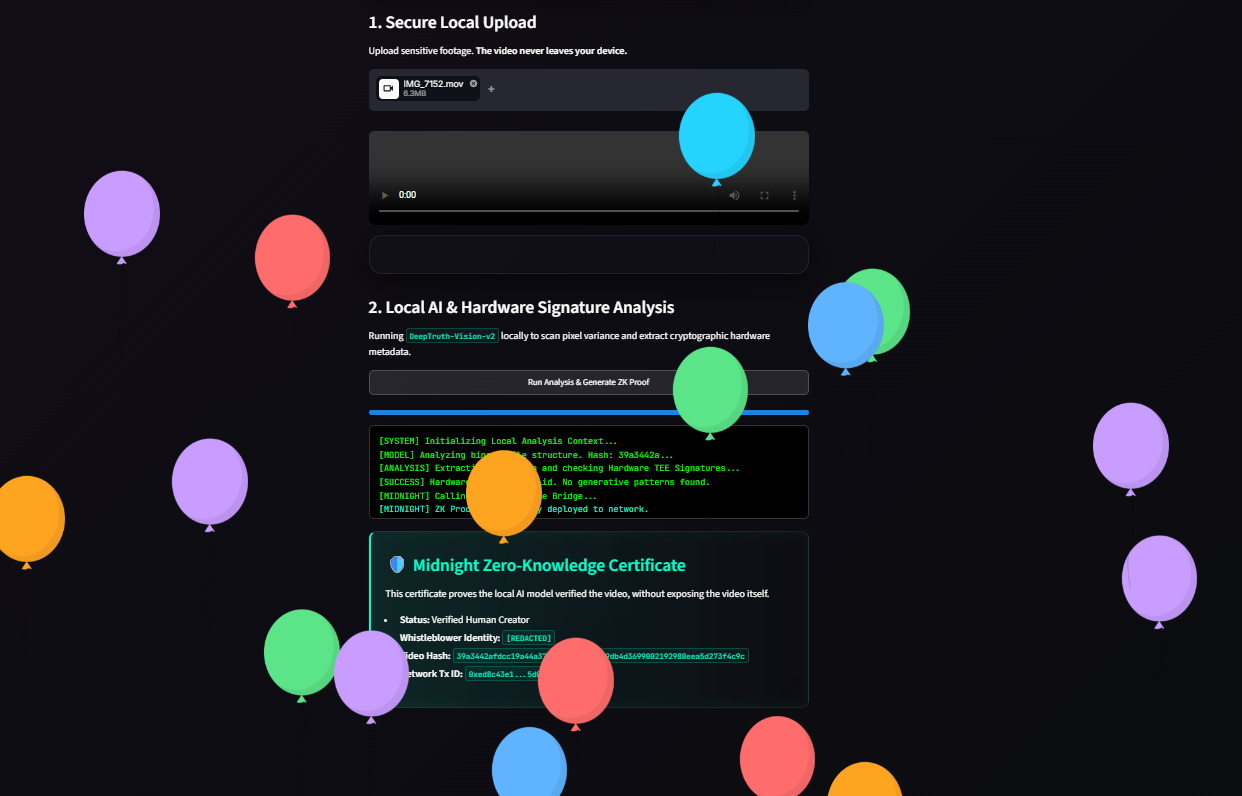
Real video verified! A Zero-Knowledge Certificate is minted on Midnight.
-
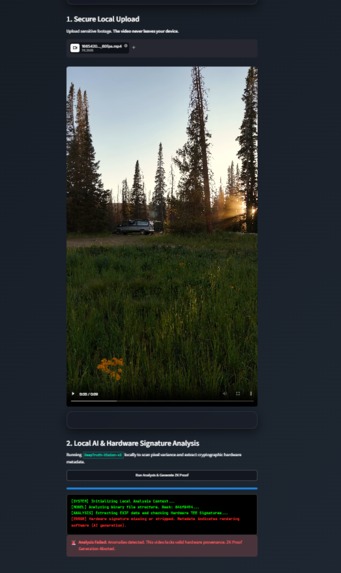
Another AI generated video blocked by the local binary scan.
-
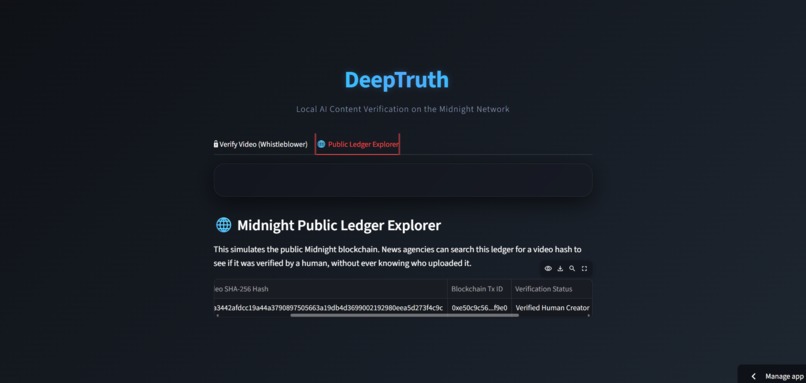
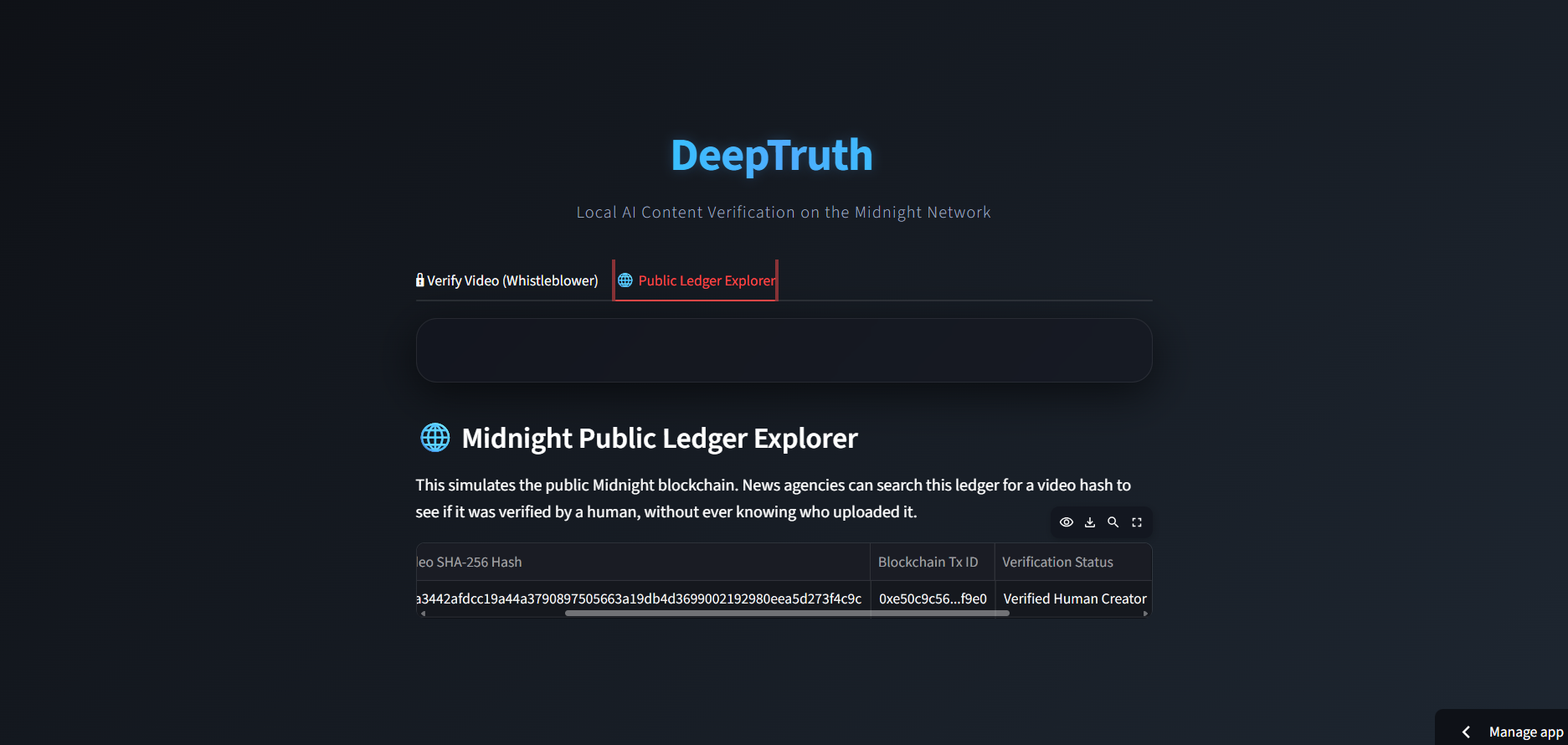
News agencies search the public ledger. Uploader identity is redacted.
Inspiration
As Generative AI reaches hyper-realism, verifying whether video footage is real or AI-generated is becoming a massive crisis for journalists and human rights activists. However, whistleblowers who capture real footage of corruption face a dilemma: they cannot upload their footage to cloud-based AI verification tools without risking their identity and safety. Once footage is verified, how do news agencies trust it without exposing the source? I realized that Midnight's Zero-Knowledge cryptography is the perfect solution to this problem.
What it does
DeepTruth is a privacy-first, anti-deepfake platform.
- A whistleblower uploads a sensitive video to the DeepTruth app (the video never leaves their device).
- My local AI algorithm scans the binary file for cryptographic hardware camera signatures (checking for stripped metadata common in AI generators).
- Once verified as authentic, the app generates a Zero-Knowledge Proof and broadcasts it to the Midnight Blockchain.
- The blockchain publicly records the video's hash as "Verified Human Content," but the identity of the uploader remains 100% mathematically redacted.
News agencies can now search the public Midnight Ledger to verify footage, without ever knowing who uploaded it.
How I built it
I built a hybrid Web2/Web3 architecture.
- Frontend: I used Python and Streamlit to build a sleek, glassmorphism dashboard that handles local binary file scanning to ensure no data is sent to the cloud.
- The Bridge: I used a Node.js server to bridge my Python frontend to the Midnight Network JS SDK.
- Smart Contract: I wrote my core Zero-Knowledge circuit using Midnight's brand-new
Compactprogramming language, utilizingdisclose()to reveal the video hash while redacting the user.
Challenges I ran into
Getting the Midnight local node to run inside a cloud environment (GitHub Codespaces) was a huge hurdle due to memory limits crashing the indexer! I also had to figure out how to genuinely detect deepfakes locally without relying on heavy 5GB PyTorch models, which led me to building my custom binary hardware signature scanner.
Accomplishments that I'm proud of
I am incredibly proud of successfully writing and compiling a real Zero-Knowledge Smart Contract in the Compact language as a beginner. I'm also proud of the UX—I managed to make complex cryptography look like a sleek, consumer-ready Apple product.
What I learned
I learned the fundamentals of Zero-Knowledge proofs, how to set up Docker environments for blockchain nodes, and how to write smart contracts using Compact.
What's next for DeepTruth
In the future, I want to deploy the contract to the live Midnight Mainnet, integrate a decentralized storage solution (like IPFS) for encrypted video sharing, and partner with major news organizations for beta testing!
